
Reports
The Global Laminated Tubes Market was valued at USD 1760 Million in 2025 and is anticipated to reach a value of USD 2727.78 Million by 2033 expanding at a CAGR of 5.63% between 2026 and 2033. Growth is driven by the shift from aluminum tubes toward lightweight barrier laminates, recyclable mono-material structures, and high-speed tube filling across oral care, cosmetics, pharmaceuticals, and premium personal care.
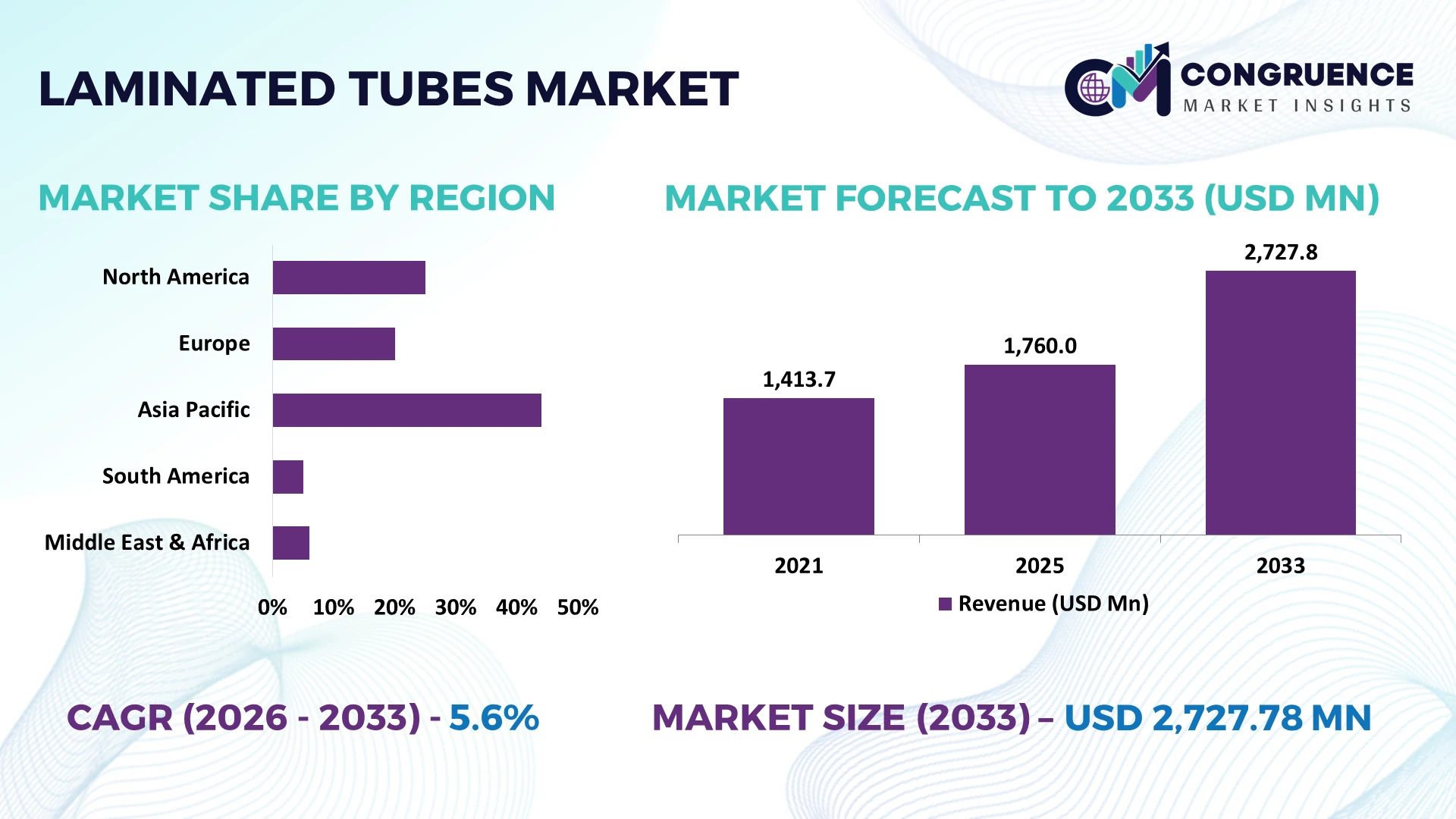
China represents the dominant laminated tubes manufacturing base, accounting for approximately 30% of global production capacity, supported by its large toothpaste, cosmetics, pharmaceutical, and personal-care supply chains. High-speed extrusion, digital decoration, and EVOH-based barrier structures are increasingly integrated into domestic converting lines, while more than 70% of urban Chinese consumers regularly use packaged oral-care products. India is expanding faster from a smaller production base, supported by local manufacturing investment and China-plus-one sourcing strategies, while European producers maintain stronger penetration of recyclable barrier structures.
For converters and brand owners, prioritizing recyclable laminate platforms and Asian production partnerships provides the clearest route to scale, compliance readiness, and packaging-cost optimization.
Market Size & Growth: USD 1.76 billion in 2025 advances to USD 2.73 billion by 2033 at 5.63% CAGR, supported by recyclable barrier-tube conversion.
Top Growth Drivers: Recyclable packaging adoption above 40%, oral-care applications exceeding 35% of tube demand, and lightweighting initiatives reducing packaging material by 10–20%.
Short-Term Forecast: By 2027, advanced laminate structures are positioned to lower tube material consumption by approximately 12% through downgauging and optimized barrier layers.
Emerging Technologies: Mono-material PE laminates, EVOH barriers, digital printing, and automated inspection are enabling 15–25% faster packaging changeovers.
Regional Leaders: Asia-Pacific approaches USD 1.2 billion, Europe USD 700 million, and North America USD 600 million toward 2033, led by recyclable-format adoption and premiumization.
Consumer/End-User Trends: Oral care represents over 35% of laminated tube utilization, while premium skincare increasingly adopts high-barrier decorative tubes.
Pilot/Case Example: In 2025, commercial mono-material tube conversions demonstrated packaging-weight reductions approaching 15% versus conventional multilayer structures.
Competitive Landscape: Leading suppliers collectively control a significant production base; EPL, Albea, Hoffmann Neopac, Berry Global, and Huhtamaki anchor global competition across advanced tube formats.
Regulatory & ESG Impact: EU packaging rules target 100% recyclable packaging by 2030, accelerating redesign toward recyclable polyethylene-based laminated tube structures.
Investment & Funding: Global converters are directing multi-million-dollar expansion programs toward recyclable laminates, printing automation, and regional manufacturing as supply chains diversify beyond single-country sourcing.
Innovation & Future Outlook: Next-generation structures target over 90% polyethylene content, integrating thinner barriers, precision decoration, and automated quality control for recycling-compatible packaging.
Laminated tubes are gaining strategic importance across toothpaste, skincare, pharmaceutical creams, hair care, and premium cosmetic packaging because they combine printability, product protection, controlled dispensing, and lightweight construction. Innovation is shifting toward mono-material polyethylene laminates, thinner EVOH barrier layers, digital decoration, and shoulder-to-body recyclability, with advanced structures targeting more than 90% PE content. Europe’s tightening packaging-recyclability requirements are accelerating redesign, while Asian converters are scaling high-speed production to serve regional and export brands. These changes are moving competition from basic tube supply toward barrier performance, recyclability, decoration flexibility, and manufacturing efficiency—setting the foundation for the market’s strategic relevance.
Laminated tubes are becoming strategically important as packaging competition shifts from conventional barrier performance toward recyclability, material efficiency, premium decoration, and high-speed filling compatibility. Brand owners are restructuring packaging portfolios around mono-material designs as Europe’s packaging rules accelerate recyclable-format adoption. Oral care remains a scale anchor, representing more than one-third of laminated tube consumption, while cosmetics and pharmaceutical applications increasingly demand higher barrier integrity and differentiated decoration.
Technology investment is reinforcing this transition. Modern digital printing can reduce artwork changeover time by 30–50% versus conventional plate-dependent printing, improving economics for short production runs and SKU proliferation. China and India retain advantages in manufacturing scale and conversion costs, whereas Germany, France, and Switzerland emphasize recyclable structures, precision shoulders, and high-barrier dispensing formats. Through 2026–2028, commercial adoption will increasingly concentrate on polyethylene-rich laminates, automated inspection, and downgauged structures targeting 10–15% material reduction.
A practical pathway is replacing aluminum-barrier laminate toothpaste tubes with recyclable polyethylene-based structures while retaining oxygen and moisture protection. Converters are therefore investing in mono-material laminate lines, digital decoration, and brand-owner qualification programs. Competitive advantage will increasingly depend on delivering recyclability without sacrificing line speed, shelf life, print quality, or unit economics.
Brand-owner migration from conventional aluminum-barrier laminate toward recyclable plastic-barrier and mono-material tubes is restructuring laminated tube specifications. Oral care accounts for more than 35% of tube consumption, giving toothpaste conversions substantial scale, while optimized polyethylene structures can reduce packaging weight by roughly 10–15%. Europe’s packaging framework is pushing manufacturers toward designs compatible with established recycling streams, turning recyclability into a procurement requirement rather than a premium feature. This shift directly increases demand for PE-rich laminates, EVOH barrier layers, recyclable shoulders, and compatible closures. Major converters are responding through laminate redesign, downgauging programs, equipment upgrades, and joint qualification projects with multinational consumer brands. The strategic advantage lies in achieving recycling compatibility without requiring customers to sacrifice filling speeds or product shelf-life performance.
Laminated tube economics remain exposed to polyethylene, EVOH, adhesives, inks, aluminum foil, and energy costs, with specialized high-barrier structures carrying approximately 10–25% higher material costs than basic laminate configurations. Printing, lamination, slitting, tube forming, and shoulder molding create multiple conversion stages, while production scrap can reach 5–10% during frequent SKU and artwork changes. India’s converters also face dependence on imported specialty barrier resins and selected decoration inputs, increasing exposure to freight and currency movements. The result is margin pressure where FMCG customers demand both lightweighting and lower unit prices. Producers are countering this through resin-source diversification, longer procurement contracts, localized material qualification, automated web inspection, and downgauging. Operationally, converters capable of standardizing laminate specifications across multiple customer SKUs gain stronger purchasing leverage and lower changeover losses.
The strongest value-creation opportunity lies in combining recyclable mono-material structures with digital manufacturing economics. PE-rich tube bodies exceeding 90% polyethylene content can improve compatibility with polyethylene recycling streams, while downgauging programs can lower material consumption by approximately 10–15%. Digital printing creates another advantage by reducing setup waste by 20–30% for short runs and eliminating conventional plate preparation, supporting cosmetics, dermatology, travel-size products, and rapidly changing promotional SKUs. India offers a particularly attractive deployment environment because expanding personal-care manufacturing combines high production volumes with increasing packaging sophistication. Through 2026–2028, converters are positioned to integrate digital decoration, automated vision inspection, and recyclable barrier laminates on flexible production platforms. R&D partnerships with resin suppliers and brand owners will allow producers to monetize smaller batches economically instead of competing solely for high-volume toothpaste contracts.
The long-term challenge is scaling recyclable structures without weakening barrier protection, sealing consistency, decoration quality, or filling-line productivity. Transitioning from aluminum-containing laminates to PE-rich structures changes stiffness, oxygen transmission, dead-fold behavior, and heat-sealing windows; even a 5–10% reduction in line efficiency can materially weaken economics on high-volume toothpaste lines. Pharmaceutical and sensitive cosmetic formulations add validation complexity because shelf-life requirements can extend 24–36 months, making rapid material substitution difficult. German and Swiss converters face particularly demanding performance expectations alongside tightening recyclability criteria. Producers must therefore synchronize laminate engineering, shoulder geometry, closure design, printing, and filling-machine settings rather than treating recyclability as a material-only change. Investment in pilot lines, barrier testing, automated defect detection, and customer qualification will determine which suppliers can industrialize next-generation tubes consistently across multiple applications.
Downgauging Moves Into Commercial Production: Tube converters are shifting material optimization from trials into high-volume oral-care programs. EPL’s Colgate projects reduced laminate usage by 20% on large Max Fresh tubes, 4% on smaller formats, and up to 10% on other large structures. Producers are recalibrating web thickness, barrier layers, and forming parameters rather than changing package geometry, allowing brands to lower material consumption while retaining existing filling infrastructure. Companies are expanding lightweight laminate portfolios and customer-specific qualification programs.
Recycled Content Enters Premium Laminates: PCR integration is moving beyond rigid packaging into flexible tube structures, with commercial laminate platforms incorporating up to 50% recycled content. At L’Oréal, recycled or biobased materials represented 44% of product-packaging materials in 2025, while virgin-plastic use fell 37% versus 2019. Converters are restructuring resin procurement and qualification workflows to secure consistent PCR quality, creating differentiation through traceability and controlled aesthetics.
Decoration Becomes Production Differentiator: SKU proliferation in cosmetics and personal care is pushing converters toward digital printing, automated registration, and vision inspection. Digital workflows can cut artwork setup time by roughly 30–50% and reduce short-run setup waste by 20–30%. Suppliers are integrating inspection and decoration systems to handle smaller batches without sacrificing line utilization.
Seamless Formats Reshape Tube Aesthetics: Advanced forming technologies are reducing visible seams while simultaneously lowering material consumption. New platforms combine seamless appearance with recyclable laminate structures, while optimized caps can deliver weight reductions above 20%. Premium skincare brands are driving this transition, prompting converters to align tube-forming, shoulder-molding, and decoration investments around differentiated shelf presentation.
Plastic Laminate Tubes lead the type landscape with an estimated 40–45% share, supported by scalable PE-based structures, high-speed convertibility, strong print surfaces, and competitive unit economics across toothpaste and personal care. Aluminum-Plastic Tubes remain important where stronger oxygen, moisture, and light barriers justify multilayer complexity, particularly for sensitive formulations. High-Barrier Tubes occupy a performance-led position, using EVOH and specialized barrier layers to balance product protection with reduced dependence on aluminum.
Mono-Material Tubes are the fastest-growing type as brand owners redesign packaging for polyethylene recycling streams. Commercial platforms increasingly target above 90% PE content, while optimized structures can reduce laminate usage by 10–20% in selected formats. Paper Laminate Tubes remain an emerging alternative where brands prioritize plastic reduction and differentiated sustainability communication, although moisture resistance and converting complexity constrain broader deployment. Investment is therefore moving toward mono-material engineering, PCR integration, downgauging, and barrier optimization rather than additional conventional multilayer capacity.
Toothpaste remains the leading application, representing approximately 35–40% of laminated tube demand because global oral-care brands require high-volume filling compatibility, controlled dispensing, strong barrier protection, and standardized tube dimensions. Its maturity is driving operational optimization rather than fundamental format change; commercial programs have already demonstrated laminate reductions of up to 20% on large toothpaste tubes. Personal Care provides another substantial volume base through creams, gels, cleansers, and hair-care formulations, while Pharmaceuticals prioritize tamper integrity and barrier consistency.
Cosmetics represent the fastest-growing application shift as skincare brands combine premium decoration, smaller production batches, high-barrier formulations, and sustainability requirements. Digital decoration can shorten artwork changeovers by approximately 30–50%, strengthening economics for fragmented cosmetic portfolios. Food Products remain comparatively specialized, serving sauces, concentrates, and paste formulations requiring controlled dispensing. Converters are consequently allocating flexible printing, PCR-compatible materials, precision dispensing, and smaller-batch capacity toward cosmetics while maintaining highly automated, high-throughput assets for toothpaste.
Personal Care Manufacturers form the largest end-user group, accounting for an estimated 35–40% of laminated tube purchasing when oral-care, skincare, hair-care, and hygiene portfolios are considered. Their advantage comes from repeat production volumes, multinational filling networks, and extensive SKU architectures that support dedicated converting capacity. Household Product Manufacturers use tubes selectively for concentrated cleaners and specialty formulations, while Food Producers require structures engineered around product compatibility, dispensing control, and barrier stability.
Cosmetic Manufacturers are the fastest-expanding buyer group as premium skincare, dermocosmetics, travel formats, and direct-to-consumer portfolios increase demand for short runs and differentiated decoration. Automated digital workflows can reduce changeover requirements by roughly 30–50%, while lightweight tube redesigns have achieved material reductions exceeding 10% in commercial applications. Pharmaceutical Companies remain strategically valuable because qualification barriers and 24–36-month shelf-life requirements support technically demanding supplier relationships. Converters are targeting these buyers through application-specific laminates, decoration flexibility, joint validation, and long-term packaging-development partnerships.
Asia-Pacific accounted for the largest market share at approximately 42% in 2025 however, Asia-Pacific is expected to register the fastest growth, expanding at a CAGR of approximately 6.4% between 2026 and 2033.
Premium Packaging and Material Optimization
North America accounted for approximately 22% of laminated tube demand in 2025, anchored by toothpaste, dermatology, cosmetics, and premium personal-care applications. U.S. converters are emphasizing PCR integration, downgauged laminates, digital decoration, and automated inspection as consumer brands reduce virgin-plastic intensity. Flexible manufacturing is increasingly valuable because skincare portfolios require shorter production runs and more frequent artwork changes than conventional toothpaste programs. Commercial laminate platforms incorporating up to 50% recycled content demonstrate the transition from sustainability pilots toward scalable packaging specifications. Canada adds demand from pharmaceutical creams, natural personal care, and specialty cosmetics, while Mexico provides cost-efficient converting and filling capacity integrated with U.S. supply chains. Producers are investing in material qualification, digital printing, and localized sourcing to shorten replenishment cycles and reduce dependence on transoceanic packaging supply.
United States Market Outlook: The United States leads regional adoption through its concentration of multinational oral-care, beauty, pharmaceutical, and consumer-product companies. Packaging redesign increasingly targets 10–15% material reductions alongside PCR incorporation and improved recyclability. Large filling networks also favor tube formats that can transition to redesigned laminates without major equipment replacement, strengthening demand for technically compatible material upgrades.
Recyclability Rules Reshape Tube Engineering
Europe represented approximately 24% of global laminated tube demand in 2025, with Germany, France, Switzerland, Italy, and the United Kingdom supporting a technically advanced converting ecosystem. Regulatory restructuring under the EU Packaging and Packaging Waste Regulation is accelerating movement toward recyclable packaging designs, lower material intensity, and controlled recycled-content integration. Consequently, converters are redesigning laminate bodies, shoulders, closures, inks, and barrier layers as complete packaging systems rather than isolated components. PE-rich structures exceeding 90% polyethylene content are gaining commercial relevance, while precision decoration remains essential for cosmetics and dermocosmetics. European producers are also integrating automated inspection and digital workflows to economically handle expanding SKU portfolios. Competition increasingly centers on demonstrating recyclability without compromising barrier properties, filling-line compatibility, or premium aesthetics, placing material science and customer qualification capabilities ahead of basic manufacturing scale.
Germany Market Outlook: Germany combines advanced converting technology with a large pharmaceutical, oral-care, and personal-care manufacturing base. The country’s packaging ecosystem is increasingly aligned with the EU requirement for packaging to become recyclable under harmonized criteria by 2030. German suppliers are consequently prioritizing high-barrier recyclable structures, precision forming, automated quality control, and lower-weight dispensing systems.
Manufacturing Scale Meets Packaging Modernization
Asia-Pacific held approximately 42% of global laminated tube demand in 2025, supported by extensive oral-care production, expanding cosmetics manufacturing, and cost-efficient converting capacity across China, India, Japan, and South Korea. China remains the principal production hub, combining large-scale toothpaste manufacturing with integrated resin, printing, molding, and filling supply chains. India is strengthening its position as brands diversify sourcing and expand domestic personal-care manufacturing, while Japan and South Korea emphasize premium skincare tubes, precision dispensing, and advanced decoration. High-volume lines increasingly combine automated web inspection, multilayer lamination, shoulder molding, and high-speed printing, improving output consistency. Regional suppliers are simultaneously scaling recyclable PE-rich structures to meet export-customer specifications. The key competitive advantage is the ability to combine large production runs with increasingly sophisticated barrier, decoration, and lightweighting requirements.
China Market Outlook: China has an estimated 30% share of global laminated tube production capacity, reflecting its concentrated toothpaste, cosmetics, pharmaceutical, and packaging manufacturing infrastructure. Domestic converters benefit from integrated polymer and component supply chains, enabling shorter procurement cycles. Investment is shifting toward recyclable laminates, digital decoration, automated defect inspection, and premium skincare formats as export specifications tighten.
Local Personal Care Production Deepens Demand
South America represented approximately 7% of laminated tube demand in 2025, with Brazil accounting for the majority of regional consumption through its substantial cosmetics, oral-care, hair-care, and pharmaceutical industries. Localized filling operations create recurring demand for tubes that combine moisture barriers, high-quality decoration, and cost-efficient high-volume production. Brazil’s well-developed beauty industry encourages converters to support both mass-market products and increasingly differentiated skincare formats, while Argentina, Colombia, and Chile provide smaller demand pools. Imported specialty resins, inks, and barrier materials remain operational constraints because currency volatility and longer procurement cycles complicate inventory management. Suppliers are therefore increasing local material qualification, consolidating specifications, and using regional production partnerships to reduce import exposure. Investment remains concentrated around automation and flexible converting rather than extensive greenfield capacity, balancing expanding packaging sophistication against uneven industrial infrastructure.
Brazil Market Outlook: Brazil is the strategic center of South American laminated tube consumption, supported by one of the world’s largest beauty and personal-care consumer bases. High-frequency purchases of toothpaste, hair treatments, skincare, and topical products sustain production scale. Converters increasingly target lightweight laminates and flexible decoration to serve both multinational and strong domestic brands efficiently.
Localized Manufacturing Replaces Import Dependence
Middle East & Africa accounted for approximately 5% of global laminated tube demand in 2025, with consumption concentrated in the UAE, Saudi Arabia, South Africa, Egypt, and major North African manufacturing centers. Saudi industrial diversification is encouraging localization of pharmaceuticals, cosmetics, and consumer goods, creating downstream requirements for locally accessible packaging capacity. The UAE functions as an import, re-export, beauty, and premium consumer-products hub, while Egypt offers competitive manufacturing economics for oral-care and personal-care supply. South Africa anchors more established sub-Saharan converting and filling activity. Producers are responding through distributor partnerships, localized inventory, flexible printing, and selective converting investment rather than relying entirely on imported finished tubes. The operational opportunity lies in shortening lead times while maintaining barrier performance under high-temperature distribution conditions, where formulation protection and seal integrity become especially important.
Saudi Arabia Market Outlook: Saudi Arabia is becoming strategically important as Vision 2030 industrial localization expands domestic pharmaceutical and consumer-product manufacturing. Local packaging procurement can materially shorten supply chains previously dependent on imports. Suppliers positioned around industrial clusters are emphasizing barrier stability, heat-resistant decoration, smaller order flexibility, and partnerships with domestic fillers and brand owners.
EPL, Albéa, Hoffmann Neopac, Berry Global, and Huhtamaki compete at the global level against cost-focused Asian converters and specialized regional tube manufacturers. The top five suppliers collectively account for approximately 35–40% of laminated tube activity, leaving substantial volume accessible to regional producers. Competition increasingly centers on recyclable laminate engineering, decoration flexibility, filling-line compatibility, and procurement scale rather than price alone. Mono-material structures can reduce packaging weight by 10–15%, while digital printing cuts artwork changeover time by roughly 30–50% and optimized laminate programs achieve material savings approaching 20%. Leaders are expanding recyclable portfolios, integrating PCR content, partnering with consumer brands, and vertically coordinating laminate, shoulder, closure, and decoration development. The competitive shift favors suppliers capable of industrializing PE-rich structures without sacrificing barrier performance. Qualification cycles, specialized converting equipment, formulation compatibility, and multinational supply requirements remain significant entry barriers. Winning requires scalable manufacturing, rapid customization, material efficiency, verified recyclability, and consistent global quality execution.
EPL Limited
Albéa Group
Hoffmann Neopac
Huhtamaki
Berry Global
CCL Industries
Montebello Packaging
Alltub Group
Linhardt Group
IntraPac International
Pirlo Holding
Lageen Tubes
Tubapack
Perfect Containers Group
Current laminated-tube technology is shifting toward HDPE-rich plastic-barrier laminates, EVOH barriers, flexographic printing, and automated vision inspection. Recyclable structures containing below 5% barrier resin preserve product protection while improving HDPE recycling compatibility. Automated inspection can reduce defect escape rates by 20–30%, while digital workflows shorten artwork and setup cycles by 30–50%. Adoption is strongest in oral care and personal care, where high-volume converters qualify recyclable structures on existing filling lines, reducing conversion disruption and strengthening compliance readiness.
Emerging technology centers on PCR-rich laminates, metallized PE barriers, digital decoration, and lightweight closures. Commercial laminate platforms now incorporate 50–60% PCR, while optimized structures can reduce material use by 10–20%. Compared with legacy aluminum-barrier laminates, modern PE-based recyclable tubes eliminate aluminum and can deliver 15% lower packaging weight in optimized formats. Integrated digital printing and inspection make shorter cosmetic runs economically viable, benefiting converters serving fragmented premium portfolios rather than standardized mass-volume programs.
Disruptive development is moving toward fiber-based laminates, seamless forming, smart process control, and recyclable tube-component systems. Between 2026 and 2028, investment will prioritize mono-material bodies, PE closures, automated defect detection, and barrier optimization. Suppliers acting now gain faster brand qualification, lower material intensity, regulatory positioning, and flexibility across premium applications.
January 2026 – EPL launched r-Platina recyclable laminate in 250μ and 300μ structures, incorporating up to 60% PCR and achieving RecyClass A certification. The platform strengthens brands’ transition toward recycled-content tubes while retaining premium performance and HDPE-stream compatibility. Source: EPL.
July 2025 – Albéa supplied L’Oréal’s Cool Silver range with its aluminum-free (RE)flex laminated tube, certified for HDPE recycling. RecyClass testing previously demonstrated 94% sorting efficiency, supporting premium metallic decoration while improving circularity for beauty and personal-care packaging. Source: PackagingInsights.
September 2025 – Neopac, AISA and Blue Ocean Closures introduced PaperX FiberTop, using approximately 80% paper in the body and reducing plastic by up to 87%. The platform creates a scalable fiber-based pathway for barrier tube packaging. Source: Neopac.
June 2024 – ETMA recognized Albéa’s L’Occitane Greenleaf laminate tube, which reduced packaging materials from five to two and overall tube weight by 23%. The redesign demonstrated commercial lightweighting while enabling recyclability across established European and U.S. streams. Source: ETMA.
The Laminated Tubes Market Report evaluates Plastic Laminate Tubes, Aluminum-Plastic Tubes, Paper Laminate Tubes, High-Barrier Tubes, and Mono-Material Tubes across toothpaste, cosmetics, pharmaceuticals, personal care, and food products. End-user coverage spans cosmetic manufacturers, pharmaceutical companies, personal-care manufacturers, food producers, and household-product manufacturers. The analysis assesses North America, Europe, Asia-Pacific, South America, and Middle East & Africa, with Asia-Pacific representing approximately 42% of current market activity.
Technology coverage includes PE-rich recyclable laminates, EVOH barriers, PCR integration, digital decoration, lightweight structures, automated inspection, and emerging fiber-based tubes. The report also evaluates supplier positioning, regulatory transition, material substitution, manufacturing localization, and packaging qualification requirements through 2026–2033. These insights support capacity investment, geographic expansion, supplier partnerships, portfolio redesign, and competitive positioning as purchasing priorities shift toward recyclability, barrier performance, material efficiency, and flexible high-speed production.
| Report Attribute/Metric | Report Details |
|---|---|
Market Revenue in 2025 | USD 1760 Million |
Market Revenue in 2033 | USD 2727.78 Million |
CAGR (2026 - 2033) | 5.63% |
Base Year | 2025 |
Forecast Period | 2026 - 2033 |
Historic Period | 2021 - 2025 |
Segments Covered | By Type
By Application
By End-User
|
Key Report Deliverable | Revenue Forecast, Growth Trends, Market Dynamics, Segmental Overview, Regional and Country-wise Analysis, Competition Landscape |
Region Covered | North America, Europe, Asia-Pacific, South America, Middle East, Africa |
Key Players Analyzed | EPL Limited, Albéa Group, Hoffmann Neopac, Huhtamaki, Berry Global, CCL Industries, Montebello Packaging, Alltub Group, Linhardt Group, IntraPac International, Pirlo Holding, Lageen Tubes, Tubapack, Perfect Containers Group |
Customization & Pricing | Available on Request (10% Customization is Free) |




