
Reports
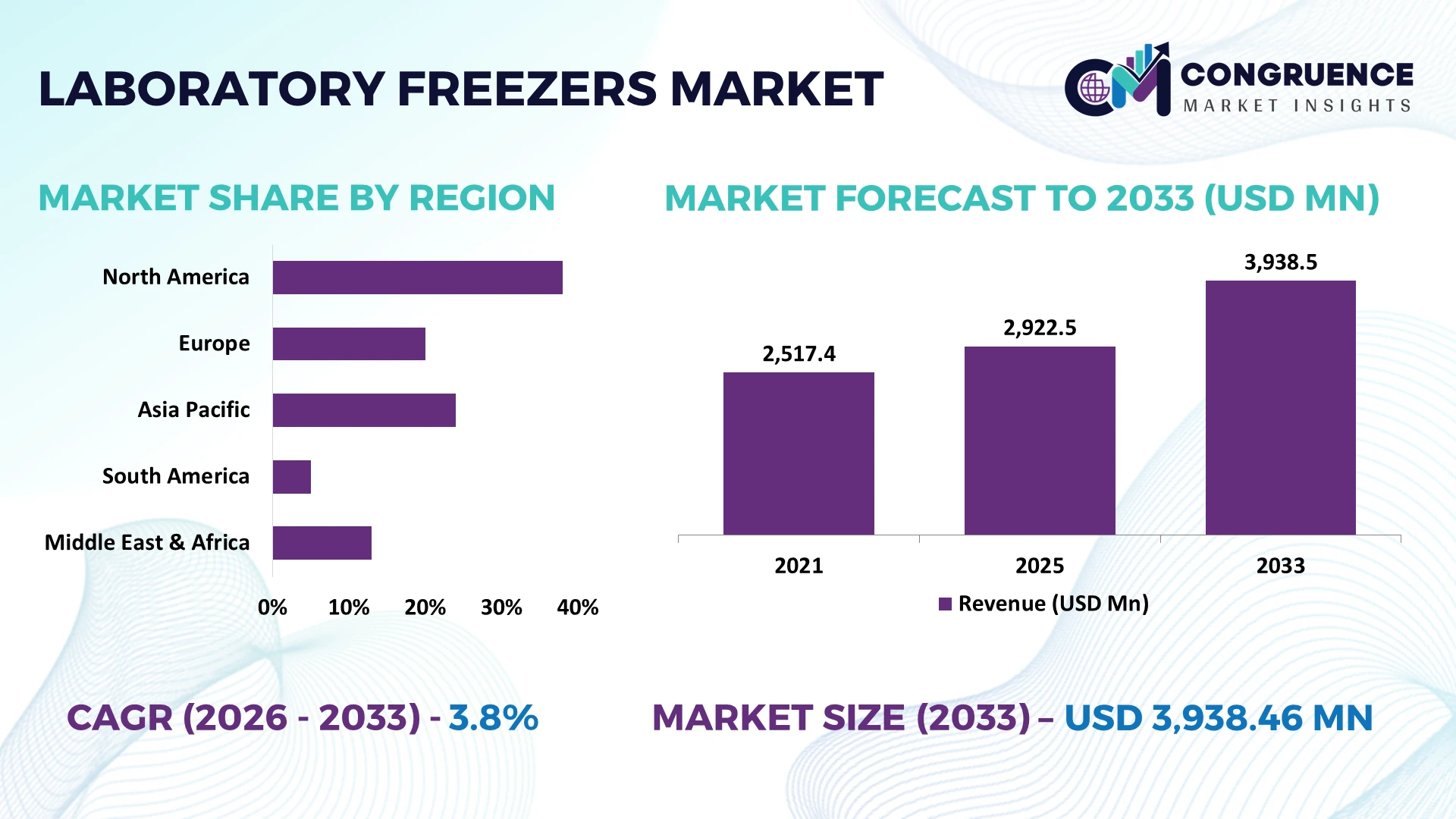
The Global Laboratory Freezers Market was valued at USD 2922.45 Million in 2025 and is anticipated to reach a value of USD 3938.46 Million by 2033 expanding at a CAGR of 3.8% between 2026 and 2033. Growth is being driven by expanding biobanking infrastructure, vaccine and cell therapy storage requirements, stricter laboratory quality standards, and increasing deployment of energy-efficient ultra-low temperature freezing systems across healthcare and life sciences facilities.
The United States remains the dominant country, accounting for approximately 34% of global laboratory freezer demand, supported by sustained investments in biomedical research, pharmaceutical manufacturing, and advanced biobank networks, with over 75% of large research institutions deploying digitally monitored cold storage systems by 2026. Compared with Germany, where laboratory automation adoption exceeds 55%, the U.S. benefits from broader research funding and faster infrastructure expansion despite evolving global trade policies and strategic supply-chain diversification following geopolitical disruptions.
Organizations prioritizing intelligent cold-chain infrastructure, compliance-ready equipment, and regional manufacturing partnerships will strengthen long-term operational resilience and competitive positioning.
Market Size & Growth: USD 2922.45 Million in 2025, reaching USD 3938.46 Million by 2033 at a CAGR of 3.8%, supported by expanding biopharmaceutical cold-storage infrastructure and advanced laboratory modernization.
Top Growth Drivers: Biobank expansion (+22%), biologics production (+18%), and laboratory automation adoption (+16%) continue accelerating global equipment demand.
Short-Term Forecast: By 2028, intelligent monitoring systems reduce freezer downtime by 20% while improving temperature compliance efficiency by 15%.
Emerging Technologies: AI-enabled diagnostics, IoT remote monitoring, and natural refrigerants increase energy efficiency by approximately 18% across advanced laboratory freezer installations.
Regional Leaders: North America exceeds USD 1.45 Billion, Europe approaches USD 980 Million, and Asia-Pacific surpasses USD 890 Million, driven by expanding research laboratories and regional manufacturing investments.
Consumer/End-User Trends: More than 68% of pharmaceutical and biotechnology laboratories prioritize connected ultra-low temperature freezers for continuous monitoring and compliance.
Pilot/Case Example: A 2026 biobank modernization initiative improved sample preservation reliability by 25% through automated temperature monitoring and predictive maintenance.
Competitive Landscape: Thermo Fisher Scientific leads with an estimated 18% market share alongside PHC Holdings, Eppendorf, Haier Biomedical, and Helmer Scientific, benefiting from global product portfolios and regional expansion.
Regulatory & ESG Impact: High-efficiency refrigeration technologies reduce energy consumption by nearly 20%, supporting sustainability targets and stricter laboratory environmental compliance.
Investment & Funding: More than USD 900 Million in facility expansion and strategic partnerships strengthens production capacity amid ongoing global supply-chain diversification.
Innovation & Future Outlook: Smart connected freezers, low-GWP refrigerants, and predictive asset management redefine next-generation laboratory cold storage with stronger digital integration and lifecycle performance.
Laboratory freezers are witnessing stronger demand from biobanks, pharmaceutical production facilities, clinical diagnostics, and academic research laboratories as organizations upgrade temperature-sensitive storage infrastructure. Recent innovations include AI-enabled predictive maintenance, inverter-based cooling systems, and environmentally sustainable refrigerants, improving operational efficiency by approximately 18%. Regional manufacturing expansion and evolving cold-chain compliance requirements continue reshaping procurement strategies, setting the foundation for the following strategic market discussion.
Laboratory freezers have become a strategic asset as pharmaceutical innovation, precision medicine, and advanced diagnostics increase the value of temperature-sensitive biological materials. Competition is shifting from equipment performance alone to intelligent cold-chain management, regulatory compliance, and lifecycle efficiency. Supply-chain restructuring since recent geopolitical disruptions has encouraged manufacturers to diversify production footprints and strengthen component sourcing while laboratories accelerate digital monitoring to improve operational continuity and audit readiness.
Modern inverter-driven ultra-low temperature freezers equipped with AI-enabled diagnostics consume approximately 20% less energy than legacy compressor-based systems while reducing unplanned maintenance by nearly 18%. The United States continues to lead large-scale deployment through extensive biopharmaceutical infrastructure, whereas South Korea is advancing faster in smart laboratory integration supported by automation investments and connected research facilities. Over the next two to three years, digital fleet monitoring adoption is expected to exceed 65% among newly commissioned high-capacity laboratories, improving asset utilization and compliance performance.
A 2026 biobank modernization program integrating remote monitoring and predictive maintenance improved temperature stability by 24% while reducing service interventions. Manufacturers are expanding regional production, strengthening technology partnerships, and investing in sustainable refrigerant platforms to enhance supply resilience. Organizations combining intelligent cold storage, localized manufacturing, and digital service capabilities will secure stronger competitive positioning and long-term operational differentiation.
Rapid expansion of biologics manufacturing, cell therapy research, and national biobanking programs continues to reshape laboratory freezer demand. More than 70% of newly established pharmaceutical research facilities now specify connected temperature monitoring, while energy-efficient refrigeration systems reduce electricity consumption by approximately 18%. The United States has expanded laboratory modernization initiatives alongside stricter sample traceability expectations, encouraging adoption of digitally managed storage assets. This structural shift improves sample integrity, minimizes compliance risks, and strengthens laboratory productivity. In response, manufacturers are increasing production capacity, investing in intelligent freezer platforms, and forming partnerships with laboratory automation providers. Companies integrating monitoring software with cold-storage equipment gain stronger recurring service opportunities while differentiating through compliance-ready, high-reliability product portfolios.
Laboratory freezers require specialized compressors, electronic controllers, and refrigeration components, making procurement sensitive to supply-chain volatility. Equipment prices have increased by nearly 12% in selected procurement categories, while delivery lead times remain approximately 20% longer than pre-disruption levels for certain imported components. Germany and Japan continue supplying critical precision technologies, creating dependency for several manufacturers. Higher ownership costs delay replacement cycles among academic laboratories and smaller diagnostic centers, limiting deployment speed. Companies are reducing exposure by localizing component sourcing, negotiating long-term supplier contracts, and redesigning platforms with standardized modules. These strategies improve procurement flexibility while protecting production continuity against future logistics disruptions and component shortages.
The strongest opportunity lies in combining AI-driven monitoring, predictive maintenance, and environmentally sustainable refrigeration technologies within connected laboratory ecosystems. Intelligent asset management reduces unexpected equipment failures by approximately 22%, while digital energy optimization lowers operating costs by nearly 15%. India is expanding pharmaceutical manufacturing capacity and advanced research infrastructure, creating demand for scalable laboratory cold storage integrated with centralized monitoring platforms. Manufacturers are accelerating R&D for natural refrigerants, cloud-enabled diagnostics, and modular freezer architectures that simplify deployment. Strategic collaborations between equipment producers, software developers, and laboratory automation providers are creating integrated cold-chain solutions that generate higher customer retention and stronger lifecycle service revenues beyond traditional equipment sales.
Long-term competitiveness depends on integrating laboratory freezers with digital laboratory management platforms without compromising operational resilience. Nearly 60% of research organizations are expanding connected laboratory infrastructure, yet integration complexity increases implementation timelines by approximately 18%. The United Kingdom and other advanced research hubs face growing cybersecurity expectations for network-connected laboratory equipment handling sensitive research data. Inconsistent interoperability across monitoring platforms complicates multi-site asset management and predictive maintenance strategies. Companies must invest in secure software architectures, standardized communication protocols, workforce training, and strategic technology partnerships. Organizations that successfully combine cybersecurity, interoperable digital ecosystems, and scalable service infrastructure will achieve more reliable laboratory operations and stronger competitive differentiation.
• Smart Cold Chain Integration Intelligent laboratory freezers are increasingly connected with laboratory information management systems and cloud-based monitoring platforms. More than 68% of newly installed premium units now include remote diagnostics, while automated temperature alerts reduce response times by nearly 40% and improve equipment uptime by approximately 18%. Stricter laboratory accreditation requirements and digital compliance expectations are accelerating deployments. Manufacturers are expanding software partnerships and integrated service offerings to improve lifecycle management and predictive maintenance efficiency.
• Natural Refrigerant Transition Accelerates Sustainability regulations and energy optimization programs are driving adoption of low-GWP refrigerants and inverter-based cooling technologies. Advanced refrigeration systems reduce electricity consumption by around 20% while lowering maintenance requirements by nearly 15%. Germany and Japan continue investing in environmentally compliant laboratory infrastructure, prompting suppliers to redesign product portfolios. Companies are restructuring manufacturing processes and expanding certified product lines to meet evolving procurement standards without compromising ultra-low temperature performance.
• Regional Manufacturing Diversification Supply-chain resilience has become a purchasing priority as laboratories seek shorter delivery cycles and improved component availability. Localized production has reduced lead times by approximately 25%, while multi-country sourcing strategies have lowered procurement risks by nearly 17%. Following recent global logistics disruptions, manufacturers are expanding assembly facilities in India and Southeast Asia while strengthening supplier partnerships to ensure production continuity and faster customer support.
• Modular Storage Deployment Expands Laboratories increasingly prefer modular freezer configurations that simplify expansion without disrupting existing research operations. Flexible storage platforms improve space utilization by approximately 22% and reduce installation complexity by nearly 16%. Large pharmaceutical enterprises are standardizing modular cold-storage architectures across multiple facilities to improve operational consistency. Equipment suppliers are responding through configurable product platforms, scalable service contracts, and automation-ready designs that support evolving laboratory workflows.
Ultra-Low Temperature freezers dominate the laboratory freezers market with an estimated 43% share due to their critical role in preserving biologics, cell therapies, genomic samples, and high-value research materials. Their ability to maintain stable temperatures below -80°C, combined with advanced monitoring and alarm systems, makes them indispensable across pharmaceutical and research environments. Upright freezers remain widely deployed because they improve storage accessibility and optimize laboratory floor space, supporting nearly 30% greater storage efficiency than comparable conventional layouts. Manufacturers continue enhancing these platforms through inverter technology, smart diagnostics, and environmentally sustainable refrigeration.
Chest freezers represent a mature segment valued for long-term thermal stability and lower energy loss during power interruptions, particularly in centralized storage facilities. Plasma freezers are emerging as the fastest-growing category, supported by expanding blood banking infrastructure and increasing compliance requirements for plasma preservation. Adoption has increased by approximately 17% across modern transfusion facilities, while advanced plasma monitoring improves storage reliability by nearly 15%. Companies are prioritizing specialized product development, expanding healthcare partnerships, and introducing application-specific freezer portfolios to strengthen competitive differentiation.
Sample Storage accounts for approximately 41% of laboratory freezer utilization, reflecting sustained demand from pharmaceutical research, genomic sequencing, and long-term biological specimen preservation. Growing laboratory automation and stricter quality management systems continue concentrating investments in high-performance storage platforms capable of continuous monitoring and traceability. Drug Storage is the fastest-growing application as expanding biologics production and advanced therapeutics require tighter temperature control, with automated storage deployments increasing by nearly 19% across newly commissioned pharmaceutical facilities.
Vaccine Storage remains strategically important due to expanding immunization infrastructure and increasing national preparedness programs, while Blood Storage continues benefiting from modernization of transfusion services and hospital cold-chain systems. Automated inventory management improves retrieval efficiency by approximately 18% while reducing temperature excursion risks by nearly 14%. Manufacturers are responding through integrated monitoring platforms, application-specific storage configurations, and scalable cold-chain solutions designed for pharmaceutical production, healthcare networks, and advanced research institutions.
Pharmaceutical companies represent the largest end-user segment with approximately 36% of laboratory freezer demand, supported by biologics manufacturing, clinical development, and stringent product quality requirements. Their extensive cold-storage infrastructure and continuous investment in laboratory modernization sustain high equipment replacement rates and demand for digitally connected systems. Biotechnology companies are the fastest-growing buyers as cell and gene therapy programs expand, with smart freezer deployment increasing by nearly 21% and automated monitoring improving operational efficiency by approximately 17%.
Research laboratories continue expanding freezer capacity to support precision medicine, molecular biology, and biobank initiatives, while hospitals maintain consistent procurement for blood products, pharmaceuticals, and diagnostic specimens. Diagnostic laboratories increasingly adopt compact intelligent freezer systems to improve workflow standardization and regulatory compliance. Equipment manufacturers are strengthening customer-specific product customization, service agreements, financing options, and strategic partnerships with healthcare and life sciences organizations to secure long-term contracts and reinforce competitive positioning.
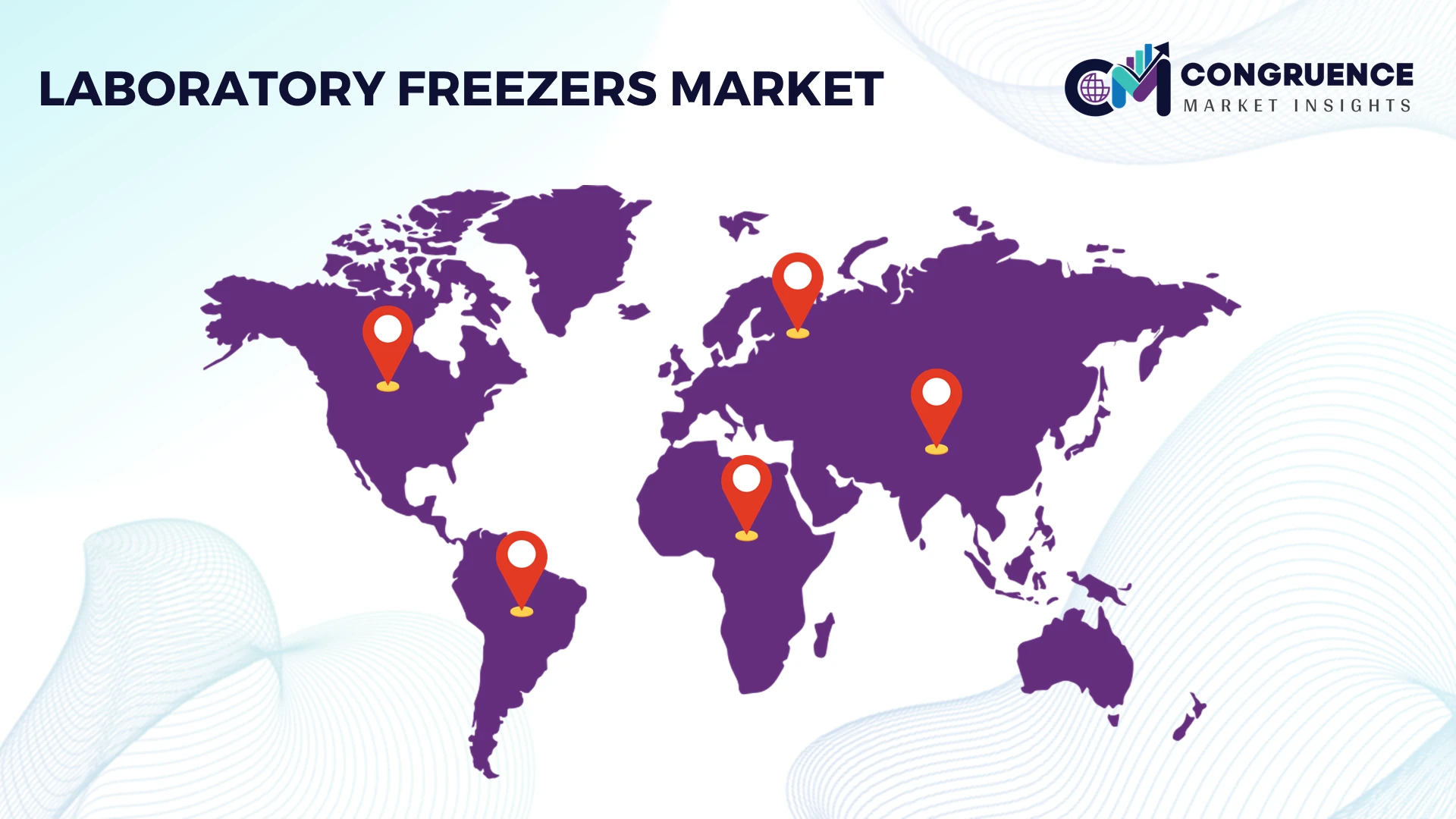
North America accounted for the largest market share at 38.4% in 2025 however, Asia-Pacific is expected to register the fastest growth, expanding at a 5.2% between 2026 and 2033.
 <
<
Strong Biopharma Infrastructure Driving Premium Equipment Deployment
North America maintains leadership through advanced pharmaceutical manufacturing, biotechnology innovation, and extensive research laboratory infrastructure. The region contributes approximately 38.4% of global laboratory freezer demand, supported by high replacement rates and continuous modernization of research facilities. More than 72% of newly installed premium laboratory freezers include cloud-connected monitoring and predictive maintenance capabilities. Large healthcare systems and biopharmaceutical manufacturers continue investing in intelligent cold-storage infrastructure to improve regulatory compliance and sample protection. Strategic collaborations between equipment manufacturers and laboratory automation providers are accelerating deployment efficiency while expanding lifecycle service offerings. Continued investment in biologics production, precision medicine, and digital laboratory management strengthens demand for high-performance ultra-low temperature storage systems.
United States Market Outlook: The United States remains the region's operational leader due to its concentration of pharmaceutical companies, biotechnology enterprises, national laboratories, and academic research institutions. More than 75% of large biomedical research facilities operate digitally monitored laboratory freezer systems integrated with centralized asset management platforms. Manufacturers continue expanding domestic production, strengthening after-sales service networks, and introducing AI-enabled refrigeration technologies to improve operational reliability and laboratory productivity.
Sustainability and Regulatory Compliance Reshaping Procurement
Europe continues strengthening its laboratory freezer market through sustainability-focused procurement, advanced biomedical research, and modernization of healthcare laboratory infrastructure. The region accounts for approximately 29% of global deployment, supported by strong pharmaceutical manufacturing and stringent environmental standards. Nearly 64% of newly procured laboratory freezers incorporate low-GWP refrigerants and energy-efficient compressor technologies. Laboratories increasingly prioritize lifecycle operating efficiency alongside digital compliance capabilities. Equipment suppliers are investing in environmentally compliant product platforms and strengthening engineering partnerships to address evolving refrigeration standards while maintaining high-performance cold storage for sensitive biological materials.
Germany Market Outlook: Germany leads the European market through its advanced life sciences ecosystem, precision engineering capabilities, and strong pharmaceutical manufacturing base. More than 60% of newly commissioned research laboratories deploy connected cold-storage systems supporting automated monitoring and compliance reporting. Domestic manufacturers continue investing in sustainable refrigeration technologies, intelligent monitoring platforms, and export-oriented production to strengthen global competitiveness.
Manufacturing Expansion Accelerates Regional Deployment
Asia-Pacific is emerging as the fastest-expanding laboratory freezer market through pharmaceutical manufacturing growth, healthcare infrastructure development, and increasing investment in biotechnology research. The region contributes nearly 27% of global installations while expanding production capacity for laboratory equipment and refrigeration components. Smart laboratory deployments have increased by approximately 24% across newly established pharmaceutical research facilities. Governments and private enterprises continue investing in research infrastructure, while manufacturers establish localized production facilities to shorten delivery cycles and improve supply resilience. Integrated manufacturing ecosystems strengthen both domestic demand and export competitiveness.
China Market Outlook: China leads regional deployment through its large pharmaceutical manufacturing base, expanding biotechnology industry, and continuous laboratory infrastructure investment. More than 68% of major life science facilities are integrating intelligent monitoring systems into laboratory cold storage operations. Domestic manufacturers are expanding production capacity, accelerating technology development, and strengthening international partnerships to improve product quality and global market presence.
Healthcare Modernization Supporting Specialized Demand
South America is steadily strengthening laboratory freezer deployment through expanding healthcare infrastructure, pharmaceutical manufacturing, and diagnostic laboratory modernization. The region represents approximately 4.8% of global demand, with investment focused on blood banking, vaccine logistics, and clinical research facilities. Modern laboratory projects have increased connected equipment deployment by nearly 16%, improving operational monitoring and compliance performance. Infrastructure limitations and import dependency continue influencing procurement timelines, encouraging suppliers to strengthen regional distribution partnerships and localized technical support. Companies are prioritizing application-specific equipment and service capabilities to improve customer retention and operational continuity.
Brazil Market Outlook: Brazil remains the largest market in South America due to its pharmaceutical production capacity, public healthcare laboratory network, and expanding biotechnology activities. National laboratory modernization initiatives continue supporting digital monitoring adoption, with connected freezer installations increasing by approximately 18% across leading research institutions. Manufacturers are strengthening distribution partnerships and localized maintenance services to improve deployment efficiency.
Healthcare Infrastructure Investment Transforming Cold Storage
The Middle East & Africa market is advancing through healthcare modernization, biotechnology investment, and expansion of specialized diagnostic facilities. The region contributes approximately 3.8% of global laboratory freezer deployment, supported by government investment in advanced medical infrastructure and research capacity. High-performance laboratory freezer installations have increased by nearly 15% within newly commissioned healthcare facilities. Growing emphasis on laboratory accreditation and temperature-controlled storage encourages procurement of digitally monitored systems. Manufacturers continue expanding regional partnerships, technical support capabilities, and localized distribution to improve operational responsiveness and equipment availability.
Saudi Arabia Market Outlook: Saudi Arabia leads regional investment through national healthcare transformation programs, pharmaceutical manufacturing expansion, and research infrastructure development. More than 55% of newly developed reference laboratories include intelligent laboratory cold-storage systems supporting centralized monitoring and regulatory compliance. Equipment suppliers are strengthening regional partnerships, expanding technical service centers, and introducing energy-efficient refrigeration technologies aligned with long-term healthcare modernization priorities.
Global leaders including Thermo Fisher Scientific, PHC Holdings, Eppendorf, Haier Biomedical, and Helmer Scientific compete directly with regional manufacturers focused on cost-efficient laboratory refrigeration, while technology innovators challenge traditional OEMs through intelligent monitoring and connected cold-storage platforms. The top five companies collectively account for approximately 57% of market share, reflecting moderate concentration with strong technology differentiation. Competition centers on energy efficiency, digital connectivity, lifecycle services, and supply-chain resilience, with connected freezer platforms reducing maintenance requirements by nearly 18% and advanced refrigeration systems lowering energy consumption by approximately 20%. Companies are expanding regional manufacturing, strengthening distribution partnerships, investing in sustainable refrigerants, and integrating predictive maintenance capabilities to improve customer retention. Vertical integration and localized component sourcing are reducing procurement risks while strengthening operational flexibility. High certification requirements, validated performance standards, and specialized engineering expertise remain significant entry barriers. Sustained competitive success depends on combining intelligent technology, reliable global service networks, regulatory compliance, and resilient manufacturing operations.
Thermo Fisher Scientific
PHC Holdings Corporation
Eppendorf SE
Haier Biomedical
Helmer Scientific
ARCTIKO A/S
B Medical Systems
Angelantoni Life Science
Liebherr Group
Vestfrost Solutions
Esco Lifesciences
Fiocchetti Scientific
Panasonic Healthcare Biomedical
Labcold Ltd.
Laboratory freezers are rapidly transitioning from conventional compressor-based storage to intelligent, connected cold-storage platforms. Current technologies include inverter-driven compressors, variable-speed refrigeration, and cloud-enabled monitoring, reducing energy consumption by approximately 18% while improving temperature stability by nearly 15%. Around 70% of premium laboratory freezer deployments now incorporate continuous remote monitoring and automated alarm management, enabling laboratories to strengthen compliance, reduce manual inspections, and improve sample security across pharmaceutical, biotechnology, and research environments.
Emerging technologies focus on AI-based predictive maintenance, digital twin diagnostics, and low-GWP natural refrigerants integrated with laboratory information management systems. AI-enabled monitoring reduces unexpected equipment downtime by approximately 22%, while predictive servicing lowers maintenance costs by nearly 16%. Compared with legacy fixed-speed refrigeration, advanced inverter-driven systems improve operational efficiency by roughly 20% and deliver faster temperature recovery after door openings. Global manufacturers gain competitive advantage through integrated software ecosystems, energy-efficient designs, and lifecycle service platforms that improve customer retention beyond equipment sales.
Between 2026 and 2028, autonomous fleet management, edge-based analytics, and modular refrigeration architectures will reshape laboratory cold-chain operations. Connected freezer deployment is expected to exceed 75% across newly commissioned high-capacity research facilities, supporting faster compliance reporting, optimized energy utilization, and scalable asset management. Organizations investing early in intelligent refrigeration infrastructure will strengthen operational resilience, lower ownership costs, and secure long-term competitive differentiation.
February 2024 PHC Corporation of North America launched the PHCbi VIP® ECO SMART dual-voltage ultra-low temperature freezer, allowing operation on both 115V and 220V power while improving installation flexibility for laboratories. Business impact: broader deployment across diverse facilities.
May 2025 Haier Biomedical introduced the UltraECO ULT Freezer range with independently verified Energy Star performance, delivering up to 50% lower energy consumption than previous models through redesigned refrigeration and variable-speed compressors. Business impact: significantly lower laboratory operating costs.
January 2026 PHC Corporation of North America launched the TwinGuard® ECO 703VXH ultra-low temperature freezer with enhanced operational monitoring and improved energy efficiency for biorepositories and research laboratories. Business impact: stronger sample protection with reduced maintenance requirements. Source: PHC Holdings Corporation
April 2026 Thermo Fisher Scientific expanded global biobank capabilities through a strategic collaboration with PRECISE-SG100K Singapore to support population-scale proteomics and advanced sample management infrastructure. Business impact: strengthened large-scale biobank ecosystem and research capacity through strategic partnership.
The report delivers comprehensive analysis across Ultra-Low Temperature, Upright, Chest, and Plasma Freezers while evaluating Sample Storage, Vaccine Storage, Blood Storage, and Drug Storage applications. It further examines demand across Hospitals, Pharmaceutical companies, Biotechnology firms, Research Laboratories, and Diagnostic Laboratories. Regional assessment spans North America, Europe, Asia-Pacific, South America, and the Middle East & Africa, covering more than 20 major country markets and identifying deployment patterns, technology adoption levels, and competitive positioning.
The study evaluates intelligent monitoring, AI-enabled diagnostics, inverter refrigeration, sustainable refrigerants, and connected laboratory infrastructure alongside evolving procurement strategies and operational modernization. It assesses deployment trends exceeding 70% among premium laboratory installations, competitive participation across leading global manufacturers, and shifting investment priorities. The report supports product portfolio planning, regional expansion, partnership evaluation, technology benchmarking, and long-term strategic decision-making by identifying high-value market segments, emerging application areas, and operational opportunities expected to shape industry direction between 2026 and 2033.
| Report Attribute/Metric | Report Details |
|---|---|
Market Revenue in 2025 | USD 2922.45 Million |
Market Revenue in 2033 | USD 3938.46 Million |
CAGR (2026 - 2033) | 3.8% |
Base Year | 2025 |
Forecast Period | 2026 - 2033 |
Historic Period | 2021 - 2025 |
Segments Covered | By Type
By Application
By End-User
|
Key Report Deliverable | Revenue Forecast, Growth Trends, Market Dynamics, Segmental Overview, Regional and Country-wise Analysis, Competition Landscape |
Region Covered | North America, Europe, Asia-Pacific, South America, Middle East, Africa |
Key Players Analyzed | Thermo Fisher Scientific, PHC Holdings Corporation, Eppendorf SE, Haier Biomedical, Helmer Scientific, ARCTIKO A/S, B Medical Systems, Angelantoni Life Science, Liebherr Group, Vestfrost Solutions, Esco Lifesciences, Fiocchetti Scientific, Panasonic Healthcare Biomedical, Labcold Ltd. |
Customization & Pricing | Available on Request (10% Customization is Free) |




