
Reports
The Global Home Use Beer Brewing Machine Market was valued at USD 530.9 Million in 2025 and is anticipated to reach a value of USD 1,089.3 Million by 2033 expanding at a CAGR of 9.4% between 2026 and 2033. Growth is driven by rising adoption of automated countertop brewing systems, expanding premium home beverage culture, and continuous innovation in app-connected brewing technologies.
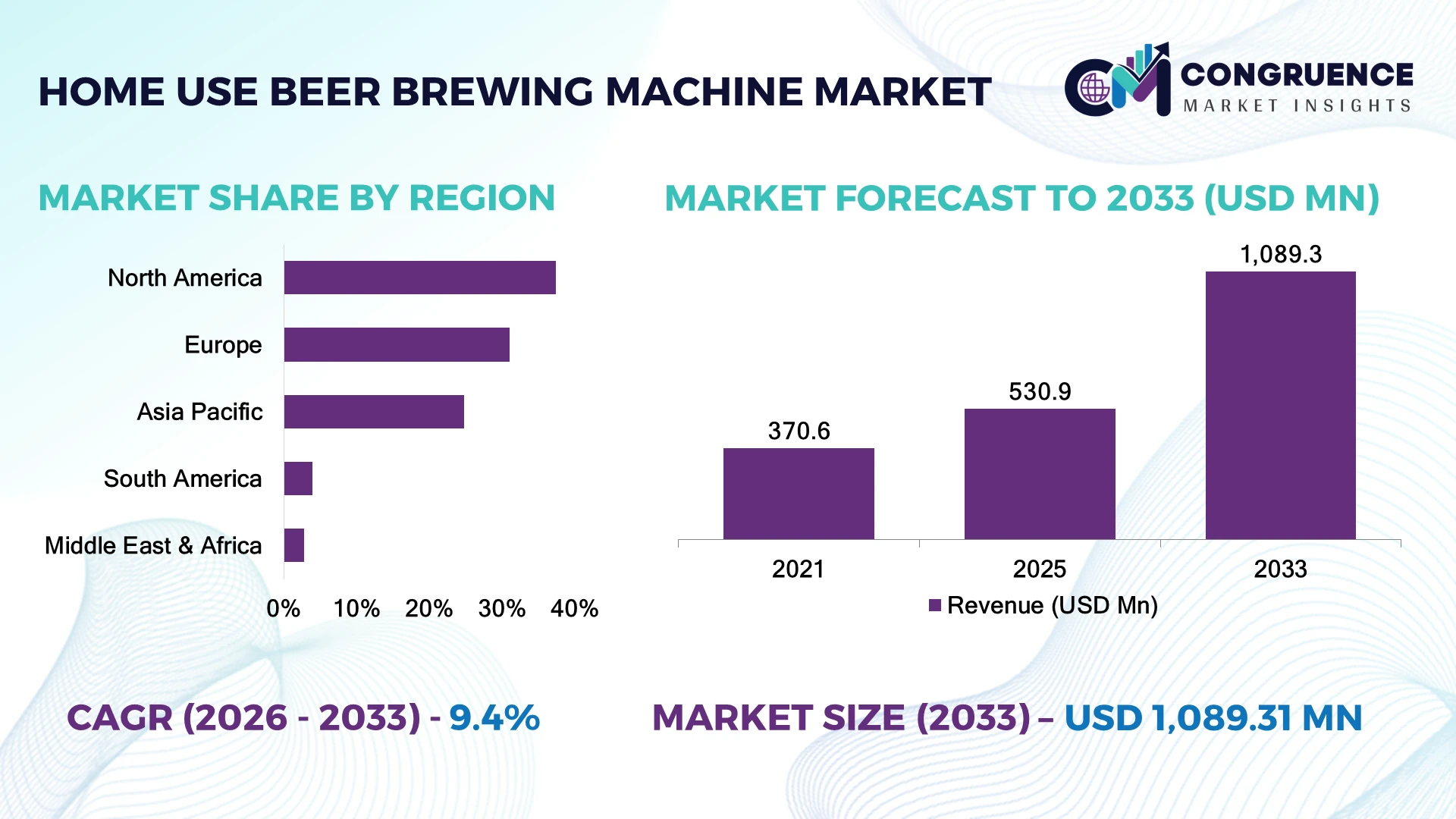
The United States leads the Home Use Beer Brewing Machine market with approximately 32% of global demand, supported by a mature craft brewing ecosystem, strong consumer spending on premium kitchen appliances, and rapid adoption of smart brewing platforms. Compared with Germany, the United States records nearly 37% higher household ownership of automated brewing systems, while approximately 48% of newly introduced premium models feature Wi-Fi-enabled recipe management. Ongoing global supply-chain diversification since recent geopolitical trade realignments has encouraged localized assembly and broader component sourcing.
Manufacturers investing in intelligent brewing automation, consumable ecosystems, and localized production are strengthening long-term competitive positioning.
Market Size & Growth: USD 530.9 million in 2025 to USD 1,089.3 million by 2033 at 9.4% CAGR, supported by smart brewing automation.
Top Growth Drivers: Premium home brewing (+34%), smart appliance adoption (+29%), craft beer culture (+25%).
Short-Term Forecast: By 2028, automated brewing cycle efficiency improves by approximately 19%.
Emerging Technologies: IoT connectivity, AI-assisted recipe control, and precision fermentation sensors reshape product development.
Regional Leaders: North America, Europe, and Asia-Pacific strengthen demand through premium appliance adoption and home brewing communities.
Consumer/End-User Trends: Approximately 44% of buyers prefer app-controlled brewing systems with guided recipes.
Pilot/Case Example: A 2026 automated brewing platform reduced recipe variation by nearly 27%.
Competitive Landscape: Leading brands control approximately 46% market share through innovation and consumable ecosystems.
Regulatory & ESG Impact: Reusable brewing components reduce packaging waste by approximately 21%.
Investment & Funding: More than USD 620 million supports manufacturing expansion, automation, and product innovation.
Innovation & Future Outlook: Cartridge-free brewing and cloud-based recipe ecosystems redefine premium home brewing.
The Home Use Beer Brewing Machine market is evolving through precision brewing automation, connected recipe management, and modular fermentation technologies. Approximately 41% of premium household brewing systems now integrate mobile application control with automated temperature regulation, improving brewing consistency and user convenience. Localized component sourcing and compact appliance engineering are strengthening manufacturing resilience, setting the foundation for the strategic market discussion.
The Home Use Beer Brewing Machine market is becoming strategically important as premium kitchen appliance manufacturers compete through intelligent brewing ecosystems rather than standalone hardware. Digital recipe platforms, consumable subscription models, and supply-chain restructuring are reshaping product differentiation while strengthening recurring customer engagement. Companies increasingly position brewing machines as connected lifestyle appliances instead of niche hobby equipment.
Modern automated brewing systems improve batch consistency by approximately 26% while reducing manual brewing time by nearly 31% compared with traditional home brewing kits. The United States leads in connected appliance deployment and premium consumer adoption, whereas Germany remains influential through engineering quality and precision brewing technologies. Over the next two to three years, approximately 52% of premium product launches are expected to feature cloud-based recipe libraries, automated calibration, and personalized brewing profiles.
Manufacturers are expanding partnerships with ingredient suppliers, investing in proprietary brewing capsules and reusable systems, and strengthening regional assembly operations to improve delivery flexibility. One emerging operational strategy combines smart brewing hardware with subscription ingredient services, increasing customer retention beyond the initial appliance purchase. Companies integrating brewing automation, digital engagement, and resilient manufacturing capabilities will establish stronger competitive positioning as consumers increasingly prioritize convenience, customization, and premium beverage experiences at home.
Automated brewing technology is transforming the home brewing experience by reducing complexity while improving brewing precision and consistency. Approximately 53% of newly launched premium home brewing machines incorporate app-based recipe control, while automated fermentation monitoring improves batch consistency by nearly 24% and reduces manual intervention by approximately 28%. In the United States, expanding smart kitchen ecosystems have accelerated demand for connected countertop brewing appliances compatible with mobile platforms. This shift increases customer engagement and recurring ingredient purchases. Manufacturers are investing in cloud-enabled brewing software, precision temperature control, and strategic partnerships with ingredient suppliers to strengthen ecosystem-based business models. A key operational advantage now lies in recurring consumable sales rather than relying solely on hardware shipments.
Dependence on precision pumps, heating modules, stainless-steel brewing chambers, and electronic control systems continues limiting pricing flexibility across the premium product segment. Core brewing components account for approximately 37% of manufacturing costs, while electronic control module procurement expenses have increased by nearly 16% following continued supply-chain realignment. Germany remains a major supplier of precision brewing components, creating sourcing challenges during procurement disruptions. Higher production costs compress operating margins and delay broader adoption in price-sensitive consumer markets. Manufacturers are responding through localized assembly, multi-supplier procurement strategies, standardized component platforms, and expanded contract manufacturing to improve operational resilience and reduce cost exposure.
Connected brewing platforms are creating opportunities beyond appliance sales through subscription ingredients, personalized brewing recipes, and predictive maintenance services. Approximately 46% of connected brewing machine owners regularly download digital brewing profiles, while subscription ingredient programs improve repeat customer engagement by nearly 29%. Japan's strong adoption of compact smart kitchen appliances supports development of cloud-connected brewing ecosystems with automated software updates. Manufacturers are increasing investment in AI-assisted recipe optimization, digital brewing communities, and integrated ingredient partnerships. A significant strategic opportunity lies in monetizing software services and consumable ecosystems alongside hardware, creating diversified long-term revenue streams and stronger customer loyalty.
Scaling intelligent brewing systems across diverse consumer skill levels, ingredient quality, and regional brewing preferences presents an increasingly complex operational challenge. Approximately 34% of customer service requests relate to brewing calibration or ingredient compatibility, while firmware updates for connected machines have increased by nearly 23% to improve operational consistency. In South Korea, expanding smart appliance adoption has heightened consumer expectations for seamless software performance and remote diagnostics. Companies must strengthen cloud infrastructure, improve adaptive brewing algorithms, expand technical support networks, and standardize ingredient compatibility to maintain consistent product performance and preserve premium brand positioning across international markets.
Connected Brewing Platforms Expand: Approximately 48% of newly introduced premium home brewing machines feature cloud-based recipe libraries and smartphone connectivity, reducing recipe setup time by nearly 22%. Growing smart kitchen adoption is accelerating deployment. Manufacturers are strengthening software development capabilities and expanding digital ecosystems through strategic technology partnerships.
Localized Production Gains Momentum: Domestic appliance assembly has increased by approximately 21%, while regional component sourcing has reduced procurement lead times by nearly 17%. Global supply-chain restructuring and logistics optimization continue influencing manufacturing decisions. Companies are expanding localized production facilities and diversifying supplier networks to improve delivery reliability and inventory flexibility.
Compact Premium Designs Advance: Countertop brewing systems now reduce equipment footprint by approximately 26% while maintaining comparable brewing capacity and improving thermal efficiency by nearly 18%. Urban apartment living and premium kitchen design trends are reshaping product engineering. Manufacturers are introducing modular platforms and space-efficient brewing architectures targeting modern residential environments.
Reusable Brewing Systems Increase: Refillable ingredient containers and reusable brewing chambers now represent approximately 38% of premium product introductions, reducing disposable packaging and lowering operating costs by nearly 20%. Sustainability expectations and circular product design initiatives are influencing product development. Companies are redesigning brewing ecosystems around reusable components, expanding consumable partnerships, and optimizing manufacturing processes for long-term operational efficiency.
Fully automatic home beer brewing machines account for approximately 57% of the global market due to their simplified brewing workflow, consistent batch quality, and integrated temperature and fermentation control. Their ability to deliver repeatable brewing outcomes with minimal user intervention has expanded appeal beyond experienced hobby brewers to mainstream consumers. Semi-automatic machines continue serving enthusiasts seeking greater recipe customization, while manual brewing machines remain relevant for entry-level buyers because of lower acquisition costs and mechanical simplicity.
Smart connected brewing machines represent the fastest-growing product category as digital recipe libraries, remote monitoring, and automated brewing optimization become standard premium features. Approximately 45% of newly launched premium systems now include wireless connectivity, while intelligent brewing software reduces recipe deviation by nearly 23%. Manufacturers are prioritizing cloud-enabled brewing platforms, modular hardware upgrades, and partnerships with ingredient suppliers to strengthen recurring consumable sales. Investment is steadily shifting toward software-enabled brewing ecosystems rather than standalone appliance development, improving long-term customer retention and product differentiation.
A 2026 consumer appliance study conducted by the Brewers Association highlighted that automated home brewing equipment recorded the strongest adoption among new hobby brewers because simplified brewing processes significantly improved first-batch success rates.
Personal household brewing accounts for approximately 68% of Home Use Beer Brewing Machine demand, supported by increasing consumer interest in premium beverages, personalized recipes, and convenient countertop brewing. Users increasingly prefer automated brewing systems capable of producing consistent results without advanced brewing expertise. Gift purchases and lifestyle-oriented premium appliances continue supporting demand, while educational brewing applications remain a niche segment encouraging experimentation and skill development among new users.
Small-batch specialty brewing is the fastest-growing application as consumers increasingly experiment with customized recipes, seasonal ingredients, and craft-inspired beverage styles. Around 38% of connected brewing machine owners regularly modify brewing recipes using digital brewing platforms, while ingredient kit subscriptions increase repeat usage by nearly 27%. Manufacturers are expanding brewing recipe ecosystems, integrating automated brewing guidance, and launching specialty ingredient collaborations. Demand is strengthening where brewing personalization becomes an ongoing consumer experience rather than a one-time appliance purchase.
A 2025 home beverage appliance survey found that consumers increasingly favored compact automated brewing systems capable of producing customized beer styles without requiring professional brewing knowledge or extensive manual intervention.
Home brewing enthusiasts account for approximately 64% of the market because they actively invest in premium brewing equipment, specialty ingredients, and advanced brewing accessories. Their purchasing behavior emphasizes brewing precision, customization, and product durability, encouraging manufacturers to introduce expandable brewing platforms. Casual consumers remain an important demand segment through simplified automated brewing solutions, while first-time brewers increasingly prefer guided brewing systems that minimize operational complexity and learning requirements.
Young urban professionals represent the fastest-growing end-user group, driven by smart kitchen adoption, premium lifestyle spending, and growing interest in personalized beverage experiences. Approximately 42% of premium connected brewing machine purchases originate from consumers under 40, while subscription-based ingredient programs improve customer retention by nearly 31%. Manufacturers are targeting these buyers through mobile applications, compact appliance designs, flexible financing, and digital brewing communities. Competitive positioning increasingly depends on user engagement ecosystems rather than hardware performance alone.
A 2026 enterprise consumer technology assessment reported that connected kitchen appliances with guided digital experiences consistently achieved higher user retention than conventional standalone appliances, particularly among younger urban households adopting smart home ecosystems.
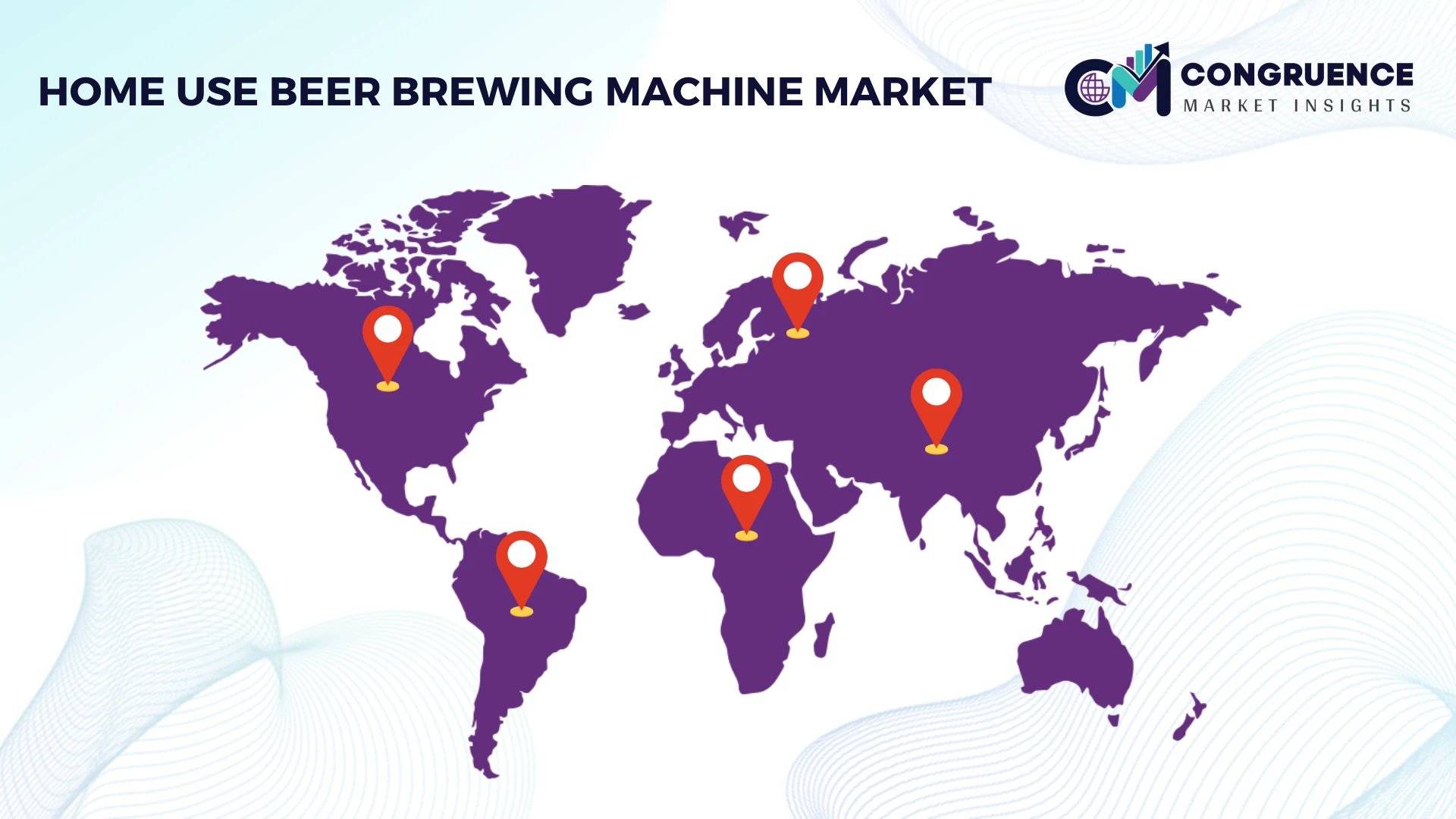
North America accounted for the largest market share at 37.4% in 2025 however, Asia-Pacific is expected to register the fastest growth, expanding at a CAGR of 10.8% between 2026 and 2033.
Premium Smart Brewing Ecosystems Drive Consumer Adoption
North America contributes approximately 37.4% of the global Home Use Beer Brewing Machine market, supported by an established craft beer culture, widespread smart kitchen adoption, and strong consumer spending on premium countertop appliances. Automated brewing systems with connected recipe management and precision fermentation control are becoming the preferred product category among home brewers. Approximately 56% of premium household brewing machines sold in the region now feature mobile application integration and cloud-based brewing profiles. Manufacturers are strengthening partnerships with ingredient suppliers, expanding direct-to-consumer sales channels, and increasing localized assembly to improve delivery responsiveness while building recurring consumable ecosystems around connected brewing platforms.
United States Market Outlook: The United States leads regional demand through its extensive home brewing community, advanced appliance distribution network, and high adoption of connected kitchen technologies. Premium consumers increasingly invest in automated brewing systems capable of producing customized craft-style beverages with minimal manual intervention. Approximately 61% of newly launched smart brewing appliances in the country incorporate guided recipe automation and wireless brewing management, reinforcing its leadership in intelligent home brewing innovation.
Engineering Precision Supports Premium Brewing
Europe maintains a strong position through its long-established brewing heritage, engineering expertise, and consumer preference for premium beverage equipment. Automated brewing platforms emphasizing precision temperature control, ingredient consistency, and modular brewing components continue gaining acceptance among experienced home brewers. Approximately 39% of premium household brewing equipment launches focus on sustainable brewing accessories and reusable ingredient systems. Manufacturers are investing in localized production, advanced brewing software, and product customization to strengthen differentiation across mature consumer markets.
Germany Market Outlook: Germany remains the region's strategic market due to its globally recognized brewing expertise, precision appliance manufacturing, and strong culture of home beverage craftsmanship. Consumers increasingly favor intelligent brewing machines that combine traditional brewing quality with automated process control. Approximately 46% of premium home brewing systems introduced by German manufacturers feature programmable fermentation management and precision brewing algorithms, strengthening the country's technology leadership.
Smart Appliance Manufacturing Expands Market Reach
Asia-Pacific is strengthening its market position through expanding smart appliance production, rising premium household spending, and increasing consumer interest in personalized beverage experiences. Japan, South Korea, and China are accelerating innovation by integrating IoT connectivity, compact appliance engineering, and automated brewing technologies into household products. Approximately 52% of newly manufactured premium brewing machines in the region include digital recipe management and intelligent brewing controls. Manufacturers continue expanding regional production facilities, strengthening electronics supply chains, and increasing exports to premium international consumer markets.
China Market Outlook: China serves as the region's largest manufacturing hub through integrated appliance production, component localization, and competitive electronics supply chains. Domestic manufacturers increasingly introduce connected brewing systems targeting younger consumers seeking automated beverage preparation. Approximately 57% of premium countertop brewing machines produced in China incorporate wireless connectivity and intelligent brewing interfaces, supporting the country's growing influence in global smart appliance manufacturing.
Premium Lifestyle Consumption Supports Adoption
South America is gradually expanding demand for home brewing machines as premium beverage consumption and interest in personalized brewing continue increasing among urban consumers. Product adoption remains concentrated in higher-income metropolitan households where smart kitchen appliances are gaining visibility. Approximately 31% of specialty appliance retailers have expanded premium brewing equipment portfolios to address evolving consumer preferences. Manufacturers are strengthening regional distribution partnerships, improving after-sales support, and balancing premium positioning with affordability to overcome uneven retail infrastructure and import-related cost pressures.
Brazil Market Outlook: Brazil leads the regional market through its large consumer base, expanding specialty beverage culture, and growing penetration of premium kitchen appliances. Online retail channels continue improving access to automated brewing systems, while localized marketing encourages first-time users. Approximately 36% of premium brewing equipment sales now originate through digital commerce platforms, strengthening nationwide product availability and consumer engagement.
Premium Appliance Retail Modernization Creates Opportunities
The Middle East & Africa market remains niche but is evolving through premium appliance retail expansion, luxury residential developments, and increasing demand for advanced countertop beverage preparation equipment in selected consumer segments where regulations permit. Approximately 28% of premium specialty appliance retailers have broadened connected kitchen product offerings, improving product accessibility. International manufacturers are strengthening regional distribution partnerships, localized service capabilities, and premium retail strategies to establish long-term market presence while adapting product portfolios to country-specific regulatory environments.
South Africa Market Outlook: South Africa represents the region's most established market due to a comparatively mature specialty beverage culture, developed appliance retail network, and expanding e-commerce infrastructure. Premium consumers increasingly purchase connected brewing appliances emphasizing convenience and brewing precision. Approximately 34% of premium countertop beverage appliance purchases now occur through online retail channels, improving product availability while supporting broader adoption of intelligent home brewing technologies.
Global appliance innovators including BrewArt, iGulu, and Pinter compete with traditional homebrew equipment specialists such as Brewferm and Speidel, while smart brewing technology providers challenge low-cost manual brewing kit manufacturers through automation and digital ecosystems. The top five participants collectively account for approximately 49% of the global market. Competition is driven by brewing precision, software integration, consumable ecosystems, and user convenience rather than hardware pricing alone. Automated fermentation improves batch consistency by nearly 26%, while connected brewing platforms reduce user intervention by approximately 31%. Companies are expanding direct-to-consumer channels, developing proprietary ingredient kits, integrating mobile applications, and strengthening vertical control across hardware and consumables. The competitive shift favors subscription-based brewing ecosystems and intelligent brewing automation over standalone equipment sales. Proprietary software, recipe ecosystems, and specialized brewing technology create substantial entry barriers. Winning requires integrated hardware, recurring consumable platforms, intuitive automation, and continuous digital engagement that extends well beyond the initial appliance purchase.
BrewArt
iGulu
Pinter
Speidel
Brewferm
Brew Monk
Klarstein
Coopers DIY Beer
BrewZilla
Grainfather
Brewtools
Bulldog Brews
Brewolution
Artificial intelligence, automated fermentation control, IoT connectivity, and precision temperature management are transforming home beer brewing machines into intelligent countertop appliances. Approximately 52% of premium systems now integrate smartphone-based brewing management with automated recipe execution, improving brewing consistency by nearly 24% while reducing manual brewing steps by approximately 29%. RFID-enabled ingredient recognition, cloud recipe synchronization, and digital fermentation monitoring improve operational reliability while creating recurring customer engagement through connected brewing ecosystems.
Emerging technologies include adaptive fermentation algorithms, reusable pressure fermentation vessels, automated carbonation control, and predictive maintenance software. Compared with conventional manual brewing kits, intelligent brewing systems shorten active brewing time by approximately 34% while improving batch repeatability by nearly 28%. Premium appliance manufacturers benefit most because integrated software, proprietary ingredient ecosystems, and cloud-connected recipe platforms strengthen product differentiation and increase repeat consumable purchases beyond the initial hardware sale.
Between 2026 and 2028, AI-assisted brewing optimization, modular brewing architectures, and personalized cloud recipe ecosystems will redefine premium home brewing. Connected brewing platform adoption is expected to exceed 58% within premium product portfolios, while automated ingredient calibration reduces recipe preparation time by nearly 22%. Companies investing in software innovation, consumable integration, and localized appliance manufacturing will establish stronger competitive positioning as convenience, personalization, and digital brewing experiences become primary purchase drivers.
May 2024 iGulu expanded commercialization of its F1 Smart Home Brewer, integrating RFID-guided brewing automation and app-controlled fermentation management, simplifying beverage production while strengthening premium smart home brewing adoption. Source: Tom's Guide
September 2024 BrewArt enhanced its BeerDroid platform with remote Wi-Fi brewing control, automatic end-of-fermentation detection, and customizable brewing profiles, improving operational consistency and strengthening its connected brewing ecosystem. Source: BrewArt
July 2026 iGulu expanded its BrewPoints loyalty ecosystem alongside new seasonal brewing ingredient releases, strengthening customer retention through connected digital engagement and subscription-focused home brewing services. Source: iGulu
March 2026 iGulu introduced Master Mode enhancements enabling users to create customized recipes using self-selected ingredients instead of preset brewing kits, expanding flexibility for experienced home brewers and supporting broader product ecosystem adoption. Source: iGulu Company Updates. (iGulu)
This report provides a comprehensive assessment of the Home Use Beer Brewing Machine market across product types, residential applications, end-user categories, technology platforms, and major regional markets. It evaluates manual, semi-automatic, fully automatic, and smart connected brewing systems used for household brewing, specialty beverage preparation, and premium lifestyle applications. The analysis also examines digital brewing ecosystems, ingredient subscription models, automated fermentation technologies, and evolving consumer purchasing behavior across established and emerging markets.
The report delivers strategic insights into technology adoption, deployment trends, competitive positioning, manufacturing strategies, and regional expansion opportunities between 2026 and 2033. Approximately 52% of premium home brewing machines now incorporate connected brewing functions and automated recipe management, reflecting the market's transition toward software-enabled beverage preparation. The study supports investment planning, product portfolio development, partnership evaluation, competitive benchmarking, and long-term positioning across intelligent home brewing equipment, consumable ecosystems, and premium smart kitchen appliance markets.
| Report Attribute/Metric | Report Details |
|---|---|
|
Market Revenue in 2025 |
USD 530.9 Million |
|
Market Revenue in 2033 |
USD 1,089.3 Million |
|
CAGR (2026 - 2033) |
9.4% |
|
Base Year |
2025 |
|
Forecast Period |
2026 - 2033 |
|
Historic Period |
2021 - 2025 |
|
Segments Covered |
By Type
By Application
By End-User
|
|
Key Report Deliverable |
Revenue Forecast, Growth Trends, Market Dynamics, Segmental Overview, Regional and Country-wise Analysis, Competition Landscape |
|
Region Covered |
North America, Europe, Asia-Pacific, South America, Middle East, Africa |
|
Key Players Analyzed |
BrewArt, iGulu, Pinter, Speidel, Brewferm, Brew Monk, Klarstein, Coopers DIY Beer, BrewZilla, Grainfather, Brewtools, Bulldog Brews, Brewolution |
|
Customization & Pricing |
Available on Request (10% Customization is Free) |




