
Reports
The Global High-Visibility Clothing Market was valued at USD 180.0 Million in 2025 and is anticipated to reach a value of USD 316.3 Million by 2033 expanding at a CAGR of 7.3% between 2026 and 2033. Growth is being propelled by stricter workplace safety compliance mandates, expanding transportation infrastructure projects, and rising adoption of performance-enhanced PPE across construction, logistics, energy, and manufacturing sectors.
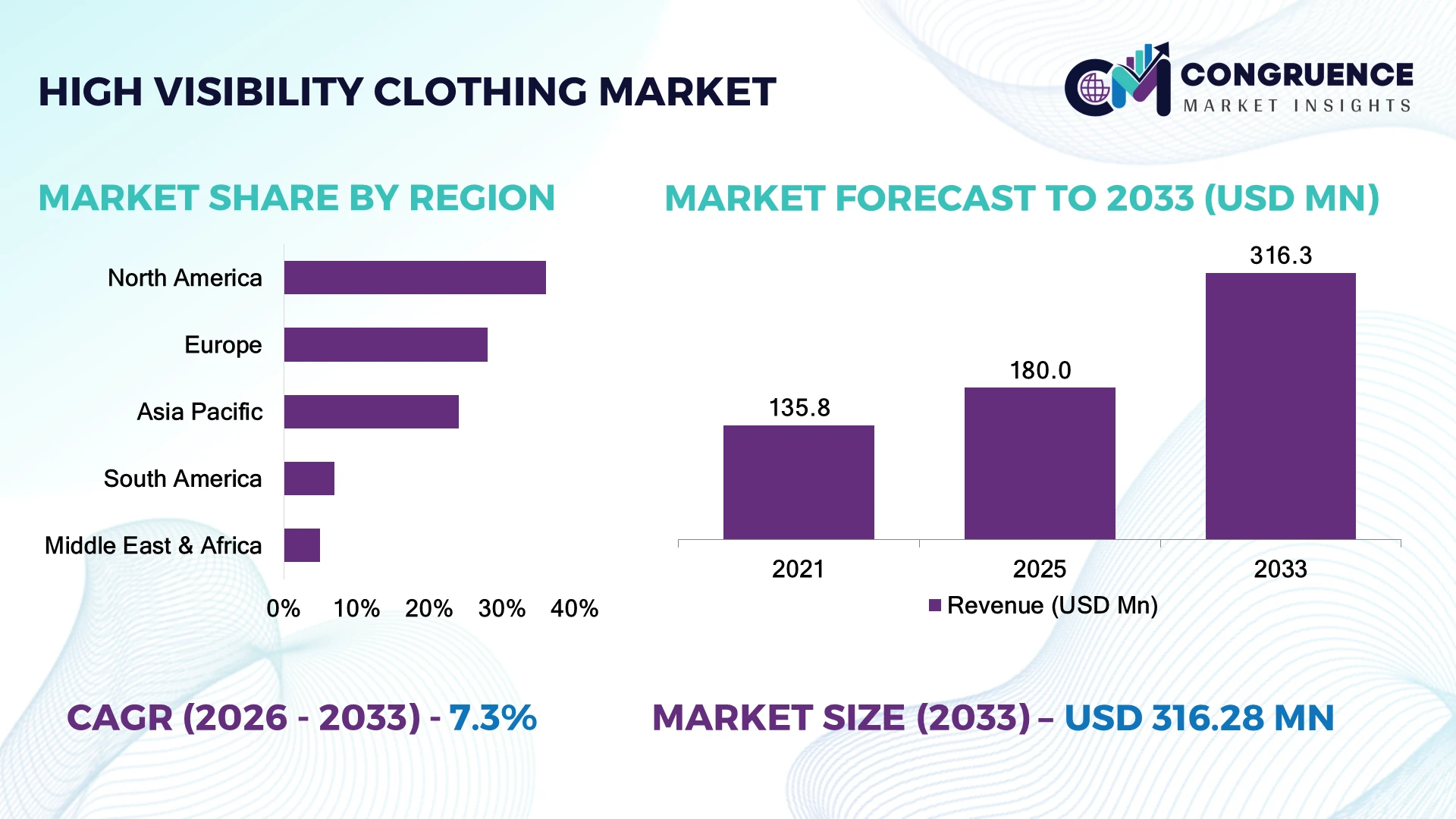
The United States dominates the market with approximately 28% global consumption share, supported by more than USD 1.2 trillion in infrastructure-related investments and widespread OSHA-compliant safety apparel adoption across construction, utilities, and transportation industries. Reflective garment penetration exceeds 70% among regulated industrial workers, compared with nearly 55% in Germany. Ongoing industrial reshoring and supply-chain resilience initiatives linked to post-pandemic and geopolitical manufacturing shifts continue accelerating procurement of advanced visibility solutions.
Strategically, suppliers prioritizing compliant, durable, and smart-integrated visibility apparel are best positioned to capture long-term industrial safety spending.
Market Size & Growth: USD 180.0 Million in 2025, reaching USD 316.3 Million by 2033 at 7.3% annual expansion, driven by advanced PPE adoption and workplace safety digitization.
Top Growth Drivers: Infrastructure workforce expansion (+18%), industrial safety compliance adoption (+22%), and logistics employment growth (+15%) continue strengthening demand.
Short-Term Forecast: By 2028, procurement cycle efficiency is projected to improve by 12% as digital inventory management and centralized sourcing expand.
Emerging Technologies: Smart wearables, sensor-enabled garments, and advanced retroreflective materials improve worker visibility by up to 35% in low-light environments.
Regional Leaders: North America (~USD 92 Million), Europe (~USD 78 Million), and Asia Pacific (~USD 85 Million by 2033) lead through infrastructure modernization and industrial workforce expansion.
Consumer/End-User Trends: More than 68% of large industrial employers now prioritize high-performance, breathable visibility apparel over conventional designs.
Pilot/Case Example: In 2024, a major logistics operator reported a 21% reduction in worker visibility-related incidents after deploying upgraded reflective safety apparel.
Competitive Landscape: Top five companies control approximately 38% of market activity, led by 3M, Lakeland Industries, Portwest, MSA Safety, and Honeywell.
Regulatory & ESG Impact: Enhanced safety standards improved compliance rates by nearly 19%, while recycled-fabric integration increased by over 14%.
Investment & Funding: More than USD 450 Million in manufacturing upgrades, product innovation, and regional expansion initiatives has entered the sector since 2022.
Innovation & Future Outlook: Smart connected garments, lightweight reflective textiles, and digitally traceable PPE platforms are redefining next-generation worker protection strategies.
High-visibility clothing remains critical across construction, transportation, warehousing, mining, and utility operations where worker exposure risks remain elevated. Manufacturers are increasingly introducing moisture-wicking fabrics, lightweight reflective technologies, and sensor-compatible garments to improve comfort and compliance. Nearly 30% of new industrial PPE launches now incorporate enhanced ergonomic features. Supply-chain localization initiatives and evolving workplace safety regulations are further accelerating procurement modernization, setting the stage for deeper strategic market evaluation.
High-visibility clothing has evolved from a compliance-focused product category into a strategic workforce protection solution. Organizations increasingly view worker safety performance as a key operational metric, particularly across construction, logistics, energy, and transportation sectors. Infrastructure modernization programs, industrial automation, and stricter workplace safety frameworks are elevating the role of advanced protective apparel within enterprise risk-management strategies.
Technology differentiation is becoming a competitive advantage. Modern segmented reflective materials and lightweight technical fabrics can improve wearer comfort by nearly 25% while reducing heat stress compared with traditional reflective garments. Smart PPE integration, including location-tracking and sensor-enabled safety monitoring, is gaining traction among large industrial operators seeking better workforce visibility and incident prevention. North America leads large-scale deployment, while Asia-Pacific demonstrates faster adoption across manufacturing hubs supported by industrial workforce expansion and export-oriented production growth.
Recent deployments across logistics and transportation networks have demonstrated measurable reductions in visibility-related workplace incidents after upgrading safety apparel programs. In response, leading manufacturers are expanding regional production capacity, strengthening material partnerships, and investing in performance-oriented product portfolios. Over the next two to three years, procurement decisions will increasingly favor technologically enhanced, compliance-ready, and operationally durable solutions. Companies that align innovation, supply resilience, and regulatory readiness will strengthen competitive positioning and secure long-term industrial safety contracts.
Mandatory workplace safety standards continue driving procurement across construction, transportation, manufacturing, and energy sectors. More than 70% of regulated industrial worksites in the United States require certified visibility apparel, while infrastructure workforce expansion has increased safety equipment demand by approximately 18% over the past three years. Growing logistics employment and large-scale transportation projects are creating sustained purchasing cycles for compliant protective garments. This regulatory shift directly improves worker protection while increasing replacement frequency due to stricter inspection requirements. In response, companies are expanding production capacity, developing lightweight reflective fabrics, and forming material supply partnerships. A notable strategic insight is that visibility apparel is increasingly being standardized across entire contractor ecosystems, significantly expanding procurement volumes beyond direct employers.
Volatility in polyester, reflective tape, and specialty textile inputs continues pressuring manufacturers. Material costs have fluctuated by 12–20% across key sourcing markets, while transportation expenses remain approximately 15% above pre-disruption averages in several industrial supply corridors. Dependence on imported reflective components creates operational challenges for manufacturers serving time-sensitive industrial contracts. These constraints reduce pricing flexibility and compress margins, particularly for mid-sized suppliers competing against larger integrated manufacturers. To mitigate risks, companies are diversifying supplier networks, localizing production, and securing long-term procurement agreements. A critical operational insight is that firms with vertically integrated reflective material capabilities maintain stronger delivery reliability and customer retention during periods of supply-chain instability.
The convergence of wearable technology and industrial safety creates significant opportunities beyond traditional protective apparel. Nearly 35% of large industrial employers are evaluating connected worker platforms that integrate PPE with digital safety systems. Sensor-enabled garments can improve workforce monitoring efficiency by over 20%, while predictive safety analytics reduce response times during workplace incidents. In Japan and South Korea, industrial operators are increasingly testing smart visibility apparel integrated with location-tracking technologies. Manufacturers are responding through R&D investments, technology partnerships, and platform-based safety ecosystems. A unique strategic opportunity lies in combining visibility apparel with workforce analytics solutions, transforming protective clothing from a compliance product into a data-generating operational asset.
Long-term market expansion depends on consistent deployment, user acceptance, and interoperability across diverse industrial environments. Studies indicate that nearly 28% of workers cite comfort-related concerns affecting PPE compliance, while product standardization requirements vary across industries and jurisdictions. Managing multiple certification frameworks increases design complexity and extends product development timelines. Industrial employers also face challenges integrating emerging smart safety technologies into existing operational systems. These execution barriers can limit large-scale deployment consistency despite strong safety objectives. To address the issue, manufacturers are investing in ergonomic designs, digital compatibility, and collaborative standards development. A key strategic insight is that future market leaders will differentiate through usability, integration capability, and workforce adoption rates rather than visibility performance alone.
Smart PPE Integration Expands Industrial employers are increasingly deploying sensor-enabled high-visibility garments that support worker location monitoring, incident alerts, and digital safety workflows. Adoption among large industrial facilities has increased by nearly 28% since 2023, while connected PPE pilot programs have expanded by over 20%. Companies are partnering with industrial IoT providers and workforce-management platforms to improve operational visibility, reduce response times, and strengthen compliance reporting across high-risk worksites.
Sustainable Material Adoption Accelerates Procurement teams are prioritizing recycled polyester fabrics, low-impact dyeing processes, and longer-life reflective materials as corporate sustainability targets tighten. Recycled-content utilization in industrial workwear has increased by approximately 18%, while garment replacement cycles have extended by nearly 12% through durability improvements. Manufacturers are restructuring sourcing strategies, establishing textile recycling partnerships, and expanding environmentally certified product lines to address both procurement standards and operational cost efficiency.
Localization Reshapes Supply Networks Supply-chain disruptions and geopolitical trade uncertainties have pushed manufacturers toward regional production and inventory diversification. Localized sourcing initiatives have increased by roughly 22%, while average lead times have declined by nearly 15% for strategically positioned suppliers. U.S. and European industrial buyers are favoring resilient procurement models, prompting manufacturers to expand regional assembly operations, strengthen supplier redundancy, and improve fulfillment reliability for enterprise contracts.
Performance-Driven Product Engineering Worker retention pressures and labor shortages are driving demand for more comfortable safety apparel. Lightweight technical fabrics have improved wearer acceptance rates by approximately 25%, while breathable garment deployments have increased by nearly 30% across logistics and construction operations. Companies are investing in ergonomic design, segmented reflective technology, and climate-adaptive materials. A notable shift is that purchasing decisions increasingly prioritize worker comfort metrics alongside visibility compliance, influencing product development roadmaps and contract awards.
Safety Vests remain the leading product segment, accounting for approximately 38% of global demand due to their affordability, regulatory acceptance, and ease of deployment across construction, traffic management, logistics, and utility operations. Their lightweight design enables rapid workforce compliance without requiring complete uniform replacement, making them highly scalable for contractors and temporary workforces. Jackets represent the fastest-growing segment as outdoor infrastructure projects, emergency response activities, and all-weather industrial operations increase. Demand for advanced jackets has risen by nearly 20% over the past two years, supported by enhanced durability and multi-functional safety features.
Shirts continue gaining traction in warehousing and manufacturing environments where all-day comfort is critical, while pants are increasingly adopted for comprehensive visibility compliance in transportation and mining applications. Rainwear remains strategically important in regions with demanding weather conditions and year-round outdoor work. Manufacturers are expanding product portfolios with breathable materials, segmented reflective technologies, and ergonomic designs. Investment priorities increasingly favor premium garments that balance safety performance, comfort, and operational durability, creating differentiation opportunities across industrial procurement channels.
Construction represents the largest application segment with an estimated 32% market share, driven by infrastructure modernization programs, road construction activities, and stringent worker safety requirements. Large project sites require visibility apparel across contractors, subcontractors, and maintenance personnel, creating consistent replacement demand. Transportation & Warehousing is the fastest-growing application segment, supported by expanding logistics networks, e-commerce fulfillment operations, and freight infrastructure investments. Visibility apparel deployment across logistics facilities has increased by approximately 18%, reflecting heightened focus on worker safety around vehicles and automated equipment.
Oil & Gas and Mining remain specialized but high-value applications due to hazardous operating conditions and strict compliance frameworks. Public Safety agencies continue upgrading visibility programs for emergency responders, while industrial manufacturing facilities increasingly standardize PPE across production sites. Companies are responding through application-specific product development, automated procurement systems, and expanded distribution partnerships. Demand is becoming more operationally critical in environments where workforce mobility, vehicle interaction, and low-light conditions intersect, strengthening long-term purchasing commitments.
Construction companies remain the dominant end-user group, representing approximately 30% of overall purchasing activity due to large workforce requirements, contractor-intensive operations, and ongoing infrastructure development projects. Visibility apparel deployment is deeply integrated into site-access protocols, creating recurring replacement cycles and standardized procurement practices. Transportation & Warehousing organizations represent the fastest-growing end-user category as distribution centers, freight operators, and logistics providers expand workforce safety initiatives. Adoption within large logistics facilities has increased by nearly 20%, supported by vehicle interaction risks and operational compliance requirements.
Manufacturing, Utilities, Mining, and Public Safety organizations continue expanding investments in specialized visibility solutions tailored to operational conditions. Utilities increasingly require weather-resistant garments, while mining operators prioritize durability and full-body visibility. Companies are targeting these end-users through customized product configurations, strategic distributor partnerships, and sector-specific compliance programs. Competitive positioning is shifting toward solution-based offerings that combine comfort, durability, and application-specific functionality rather than standardized high-visibility garments alone. Procurement teams are also placing greater emphasis on lifecycle performance and workforce acceptance when evaluating suppliers.
North America accounted for the largest market share at 36% in 2025 however, Asia-Pacific is expected to register the fastest growth, expanding at a CAGR of 8.2% between 2026 and 2033.
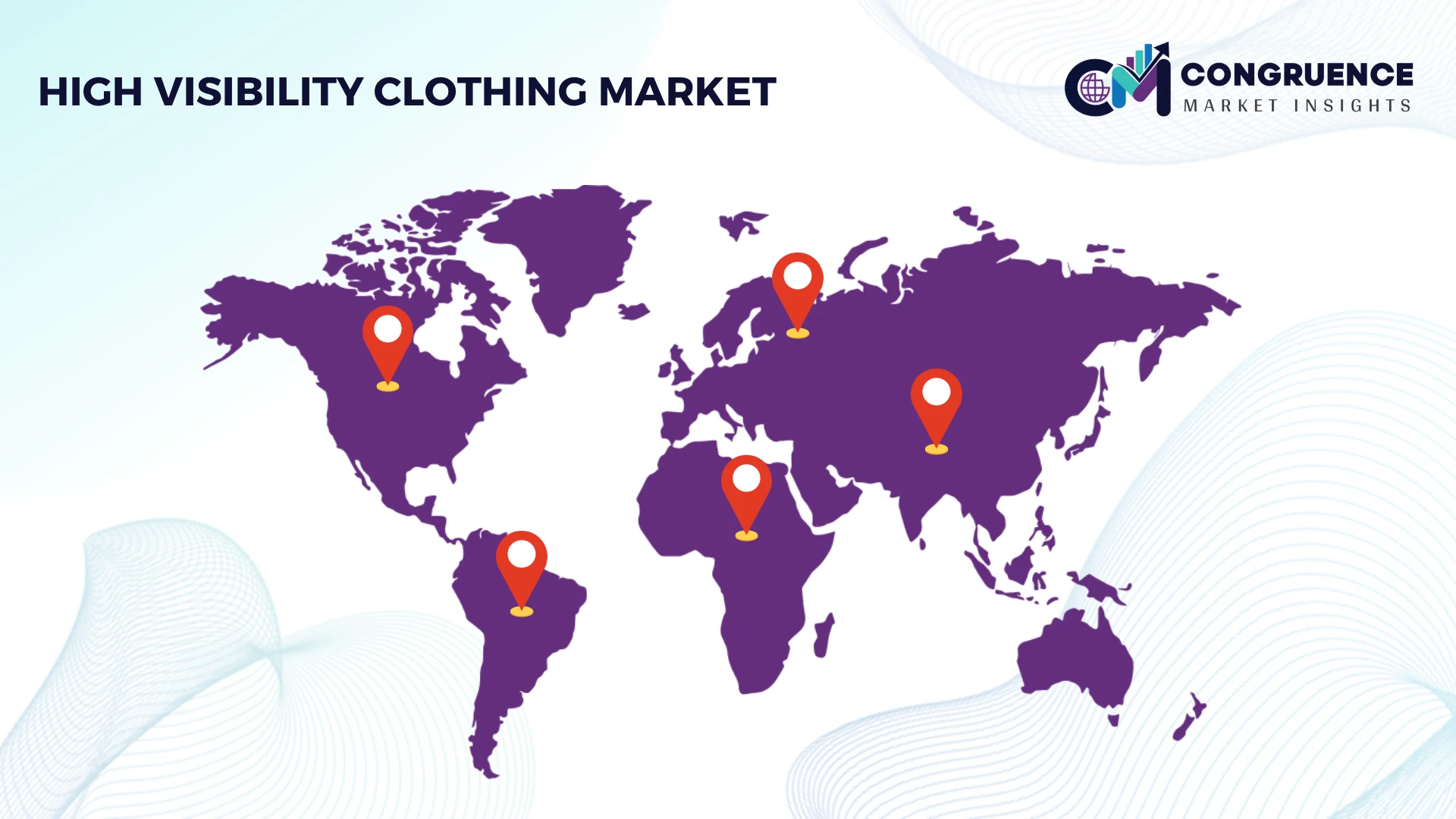
North America maintains a leading position in the High-Visibility Clothing Market, supported by mature workplace safety frameworks, extensive transportation infrastructure activity, and strong adoption across logistics, utilities, and industrial manufacturing. The region represents approximately 36% of global market activity, with deployment concentrated in construction corridors, freight networks, and energy projects. Industrial employers increasingly standardize visibility apparel across contractor ecosystems, expanding procurement volumes beyond direct employees. A notable operational trend is the integration of premium reflective garments with broader workforce safety programs. In 2025, several large transportation and infrastructure operators expanded multi-year PPE procurement contracts covering more than 150,000 workers. Manufacturers continue strengthening regional production capabilities and inventory networks to improve fulfillment speed and reduce supply-chain exposure.
United States Market Outlook: The United States remains the region’s strategic center due to its large construction workforce, extensive logistics infrastructure, and rigorous occupational safety requirements. More than 11 million construction workers and millions of transportation personnel operate within environments requiring visibility-compliant apparel. Federal infrastructure modernization programs continue driving large-scale procurement activity, while industrial employers increasingly prioritize ergonomic and performance-oriented PPE. Domestic manufacturers are also investing in localized production and advanced textile technologies to improve supply resilience and contract responsiveness.
Europe represents approximately 28% of global market demand, supported by stringent worker protection regulations, established industrial sectors, and strong adoption of certified safety apparel. The region continues transitioning toward higher-performance garments incorporating lightweight materials, improved breathability, and sustainable textile inputs. Transportation infrastructure upgrades, renewable energy projects, and industrial modernization programs are reinforcing demand across multiple sectors. Companies increasingly align procurement strategies with environmental targets, accelerating adoption of recycled-content safety garments. During 2025, several European workwear suppliers expanded sustainable textile sourcing programs, increasing recycled material integration by more than 15%. Product differentiation increasingly centers on durability, worker comfort, and lifecycle performance rather than basic compliance features.
Germany Market Outlook: Germany serves as Europe's leading market due to its manufacturing strength, engineering-intensive industries, and highly structured workplace safety culture. The country's automotive, logistics, construction, and industrial production sectors maintain consistent demand for advanced protective apparel. Industrial employers increasingly implement standardized PPE frameworks across multi-site operations. German manufacturers are actively developing durable reflective fabrics and sustainable workwear solutions, while enterprise buyers emphasize long-term garment performance and operational efficiency in procurement decisions.
Asia-Pacific accounts for approximately 24% of global market activity and represents the fastest-evolving deployment environment for high-visibility apparel. Rapid infrastructure development, industrial workforce expansion, and growing enforcement of workplace safety standards are increasing adoption across construction, manufacturing, mining, and logistics sectors. The region also serves as a major production hub for safety garments and reflective materials, creating cost advantages and supply-chain efficiencies. Large-scale transportation and industrial projects continue strengthening procurement volumes. In 2025, several major manufacturing clusters expanded technical textile production capacity by more than 12%, supporting both domestic consumption and export demand. Enterprises increasingly adopt premium visibility solutions as safety expectations rise across industrial operations.
China Market Outlook: China remains the most influential market due to its massive industrial workforce, advanced manufacturing ecosystem, and extensive infrastructure development pipeline. The country supports large-scale production of reflective textiles, safety garments, and industrial workwear. Construction, logistics, mining, and manufacturing sectors continue expanding safety compliance programs. More than 50% of several global reflective material supply chains are linked to Chinese manufacturing operations, reinforcing the country’s strategic role in both production and consumption of visibility apparel.
South America represents approximately 7% of global market demand, with adoption concentrated in mining, construction, energy, and transportation sectors. Infrastructure improvements and workplace safety modernization initiatives are gradually strengthening procurement activity across major industrial economies. Mining operations remain particularly important due to demanding visibility requirements and hazardous working conditions. Several industrial operators have expanded workforce safety programs, increasing certified PPE deployment by nearly 14% over recent years. However, supply-chain inefficiencies and uneven regulatory enforcement continue creating operational variability across countries. Manufacturers are responding through distributor partnerships, localized inventory strategies, and expanded service networks to improve market accessibility and delivery reliability.
Brazil Market Outlook: Brazil leads regional demand through its extensive mining industry, construction sector, and transportation infrastructure network. Industrial employers increasingly implement structured safety compliance programs, particularly within mining, oil and gas, and logistics operations. Large workforce concentrations create recurring procurement requirements for certified visibility apparel. Domestic distributors are expanding product availability and technical support capabilities, while enterprise buyers increasingly favor durable garments that reduce replacement frequency and improve operational consistency across geographically dispersed worksites.
The Middle East & Africa accounts for approximately 5% of global market activity, supported by major infrastructure developments, industrial diversification programs, and expanding energy-sector investments. Large-scale construction projects, transportation corridors, and urban development initiatives are increasing visibility apparel deployment across the region. Safety compliance expectations continue rising as international contractors and engineering firms expand their presence. Several infrastructure projects launched during 2025 incorporated enhanced PPE requirements covering tens of thousands of workers. Procurement increasingly emphasizes durability, heat resistance, and comfort due to demanding operating conditions. Suppliers are strengthening regional partnerships and distribution networks to support project-driven demand and improve service responsiveness.
Saudi Arabia Market Outlook: Saudi Arabia represents the region’s most strategically significant market due to extensive infrastructure investment, industrial expansion, and large-scale development initiatives. Construction, transportation, utilities, and energy projects continue generating substantial demand for certified visibility apparel. Workforce safety requirements are becoming more standardized across government-backed projects, increasing procurement consistency. The country's ongoing industrial transformation programs have accelerated deployment of advanced protective equipment, while contractors increasingly prioritize high-performance garments designed for prolonged use in challenging environmental conditions.
The market is led by 3M, Honeywell, Portwest, Lakeland Fire + Safety, and MSA Safety, with global safety specialists competing against regional workwear manufacturers and cost-focused PPE suppliers. The top five players collectively control approximately 38% of market activity. Competition centers on product performance, compliance certification, supply-chain responsiveness, and customization capabilities. Premium manufacturers achieve up to 20% longer garment service life, while advanced reflective technologies improve visibility performance by nearly 25% compared with standard products. Leading companies are expanding through regional distribution networks, strategic acquisitions, vertically integrated textile sourcing, and specialized product development. Portwest and 3M emphasize innovation and global distribution scale, while regional suppliers compete aggressively on pricing and local contract fulfillment. The current competitive shift favors supply-chain control, sustainable materials, and smart PPE integration rather than basic visibility compliance. Entry barriers stem from certification requirements, established distributor relationships, and technical textile expertise. Winning requires certified performance, dependable supply, product differentiation, and strong enterprise procurement partnerships.
Honeywell International Inc.
Portwest Ltd.
Lakeland Fire + Safety
MSA Safety Incorporated
Ansell Limited
National Safety Apparel (NSA)
Radians Inc.
Ergodyne
PIP Global (Protective Industrial Products)
Delta Plus Group
Cofra S.r.l.
Engelbert Strauss GmbH & Co. KG
Carhartt, Inc.
Advanced reflective textile technology remains the most influential innovation shaping product performance. Segmented reflective tape systems improve flexibility by approximately 20% while enhancing wearer acceptance across construction and logistics environments. Adoption of lightweight moisture-management fabrics has surpassed 60% among premium industrial workwear programs, helping reduce heat stress and improve compliance. Manufacturers increasingly combine reflective performance with durability enhancements, extending garment replacement cycles and lowering operational procurement costs.
Emerging technologies are transforming visibility apparel into connected safety platforms. Smart PPE incorporating sensors, RFID tracking, and workforce monitoring capabilities has expanded by nearly 15% across large industrial employers. Compared with traditional visibility garments, connected solutions improve incident response efficiency by approximately 25% through real-time location awareness and automated safety alerts. Enterprise operators benefit most because workforce visibility data supports broader operational risk-management strategies and compliance reporting requirements.
Disruptive innovation is centered on sustainable technical textiles, digital garment traceability, and intelligent safety ecosystems. Recycled-performance fabrics now reduce material-related environmental impact by more than 18% while maintaining compliance standards. Between 2026 and 2028, adoption of smart-integrated workwear is expected to accelerate across transportation, utilities, and industrial manufacturing. Companies acting now gain stronger workforce analytics, procurement visibility, and differentiated contract positioning as buyers increasingly prioritize performance-driven safety solutions over conventional protective apparel.
November 2024 – Honeywell announced the sale of its Personal Protective Equipment business to Protective Industrial Products for USD 1.325 billion, streamlining its industrial portfolio and reshaping competitive dynamics across industrial safety and protective apparel markets. Business impact is sharper strategic focus and market realignment. Source: honeywell.com
September 2025 – Lakeland Fire + Safety completed the acquisitions of Arizona PPE Recon and California PPE Recon, adding approximately USD 5 million in annual recurring revenue through PPE decontamination, repair, and rental services. Business impact expanded lifecycle service capabilities and customer retention.
March 2026 – Lakeland Fire + Safety completed the divestiture of its HiViz product line to National Safety Apparel, sharpening focus on fire services and core industrial PPE operations. Business impact improved capital allocation and streamlined portfolio strategy. Source: sec.gov filing
June 2026 – MSA Safety introduced next-generation firefighter protective clothing and connected safety technologies at Interschutz 2026, expanding M1 telemetry integration and advanced protective gear capabilities. Business impact is strengthened innovation leadership and accelerated deployment of digitally connected safety solutions.
This report provides comprehensive coverage of the High-Visibility Clothing Market across major product categories including safety vests, jackets, shirts, pants, and rainwear. The analysis evaluates demand across construction, transportation and warehousing, mining, oil and gas, manufacturing, and public safety applications. End-user assessment covers construction firms, logistics operators, industrial manufacturers, utilities, mining companies, and government safety organizations. Regional evaluation spans North America, Europe, Asia-Pacific, South America, and the Middle East & Africa, incorporating deployment trends, procurement patterns, and industrial safety adoption benchmarks.
The report also examines advanced reflective materials, smart PPE integration, sustainable textile innovations, and connected workforce safety technologies. More than 60% of premium product launches now emphasize comfort-enhancing and performance-oriented features, highlighting evolving purchasing priorities. Strategic insights support investment planning, market entry evaluation, expansion initiatives, supplier positioning, and competitive benchmarking. The study further assesses emerging opportunities within digital safety ecosystems, sustainable workwear solutions, and next-generation industrial visibility technologies expected to influence market direction between 2026 and 2033.
| Report Attribute / Metric | Details |
|---|---|
| Market Revenue (2025) | USD 180.0 Million |
| Market Revenue (2033) | USD 316.3 Million |
| CAGR (2026–2033) | 7.3% |
| Base Year | 2025 |
| Forecast Period | 2026–2033 |
| Historic Period | 2021–2025 |
| Segments Covered |
By Type
By Application
By End-User
|
| Key Deliverables | Revenue Forecast; Market Trends; Growth Drivers & Restraints; Technology Insights; Segmentation Analysis; Regional Insights; Competitive Landscape; Regulatory & ESG Overview; Recent Developments |
| Regions Covered | North America; Europe; Asia-Pacific; South America; Middle East & Africa |
| Companies Profiled | 3M Company; Honeywell International Inc.; Portwest Ltd.; Lakeland Fire + Safety; MSA Safety Incorporated; Ansell Limited; National Safety Apparel (NSA); Radians Inc.; Ergodyne; PIP Global (Protective Industrial Products); Delta Plus Group; Cofra S.r.l.; Engelbert Strauss GmbH & Co. KG; Carhartt, Inc. |
| Customization & Pricing | Available on Request (10% Customization Free) |




