
Reports
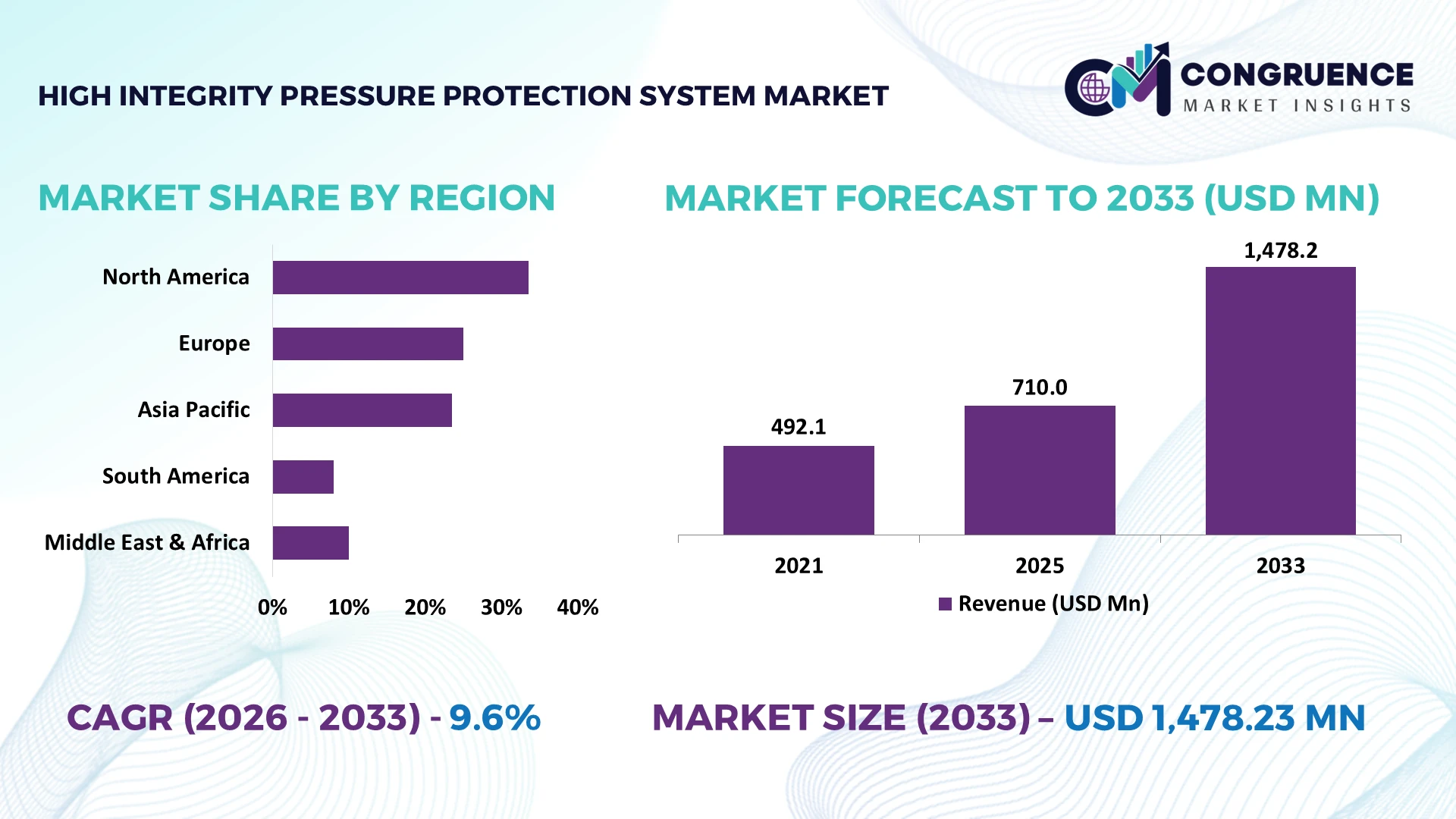
The Global High-Integrity Pressure Protection System Market was valued at USD 710.0 Million in 2025 and is anticipated to reach a value of USD 1,478.2 Million by 2033 expanding at a CAGR of 9.6% between 2026 and 2033. Growth is driven by offshore oil and gas developments, stringent overpressure protection requirements, and the replacement of conventional relief systems with SIL-certified automated safety solutions.
The United States maintains a dominant position in the global High-Integrity Pressure Protection System Market, supported by extensive upstream infrastructure, Gulf of Mexico offshore production, and shale gas processing facilities. U.S. crude oil production exceeded 13 million barrels per day in 2025, compared with approximately 9 million barrels per day in Saudi Arabia. HIPPS adoption increasingly emphasizes SIL 3 certification, redundant pressure transmitters, and rapid shutdown capabilities, particularly as offshore operators strengthen process safety compliance.
Strategically, suppliers integrating certified safety instrumentation, advanced diagnostics, and lifecycle maintenance services are positioned to capture high-value offshore and gas infrastructure contracts.
Market Size & Growth: Valued at USD 710.0 million in 2025, the global market is projected to reach USD 1,478.2 million by 2033, growing at 9.6% CAGR, supported by offshore production safety modernization.
Top Growth Drivers: Offshore infrastructure expansion, SIL 3 safety compliance, and digital shutdown automation underpin growth, with SIL 3 applications targeting risk reduction factors of 99.9% or higher.
Short-Term Forecast: By 2028, advanced HIPPS installations are expected to target 15–20% lower diagnostic maintenance effort through automated testing and condition monitoring.
Emerging Technologies: AI-assisted diagnostics, smart pressure transmitters, and automated partial-stroke testing are transforming 2oo3 voting architectures and safety instrumented systems.
Regional Leaders: Indicative 2033 market allocations place North America near USD 490 million, Europe near USD 355 million, and Asia Pacific near USD 370 million, reflecting offshore modernization, safety retrofits, and LNG expansion.
Consumer/End-User Trends: Oil and gas operators increasingly specify SIL 2 and SIL 3 architectures, emphasizing redundancy, lifecycle verification, and automated shutdown performance.
Pilot/Case Example: A representative 2025 offshore HIPPS modernization scenario targets 20% lower proof-testing downtime through integrated valve diagnostics and remote monitoring.
Competitive Landscape: Schneider Electric, Emerson, HIMA, Yokogawa Electric, and Baker Hughes compete through certified controllers, safety instrumentation, and integrated engineering services; individual market shares remain unverified.
Regulatory & ESG Impact: IEC 61508 and IEC 61511 compliance supports safety lifecycle governance, while appropriately engineered HIPPS can reduce reliance on hydrocarbon-flaring relief arrangements.
Investment & Funding: Capital spending on global LNG infrastructure exceeds USD 100 billion across major development programs, supporting opportunities for certified pressure protection packages and automation partnerships.
Innovation & Future Outlook: Digital twins, predictive valve diagnostics, and redundant sensing architectures are advancing high-integrity protection toward condition-based maintenance and integrated lifecycle services.
The High-Integrity Pressure Protection System Market is increasingly shaped by offshore production facilities, LNG processing terminals, high-pressure gas transmission, and petrochemical installations. Smart final elements, SIL 3-certified logic solvers, and 2oo3 pressure voting improve protection reliability. Safety architectures targeting 99.9% risk reduction reflect the industry's increasing focus on functional safety, while IEC 61511 lifecycle requirements influence equipment selection and modernization strategies.
Note: Forward-looking regional allocations, efficiency targets, and the representative modernization scenario are illustrative estimates rather than verified company-reported results.
High-integrity pressure protection systems are becoming strategic infrastructure components as energy producers prioritize operational continuity, regulatory compliance, and capital-efficient facility design. Offshore oil production, LNG liquefaction, and high-pressure gas processing increasingly require independently engineered safety instrumented functions. The transition from conventional mechanical relief arrangements toward automated isolation architectures reflects tighter functional safety governance and growing pressure to reduce unnecessary flaring infrastructure.
Modern HIPPS architectures combine redundant transmitters, certified logic solvers, and fast-acting shutdown valves to achieve SIL 3 protection, corresponding to risk reduction factors between 1,000 and 10,000 under appropriate design conditions. Digital diagnostics also target 15–20% reductions in maintenance intervention requirements compared with conventional inspection-intensive configurations. The United States emphasizes offshore brownfield modernization, while Qatar and Saudi Arabia prioritize integrated safety engineering within large gas processing and petrochemical developments.
During 2026–2028, suppliers are expected to prioritize automated proof-testing, predictive diagnostics, and standardized safety packages. A practical application involves installing HIPPS upstream of lower-pressure processing equipment to prevent overpressure without expanding conventional relief capacity. Competitive advantage increasingly depends on certification expertise, integrated engineering, and dependable lifecycle support.
Expanding offshore hydrocarbon production and increasingly rigorous functional safety requirements are strengthening demand for high-integrity pressure protection systems. SIL 3 architectures provide risk reduction factors of 1,000–10,000, while redundant 2oo3 pressure voting arrangements improve fault tolerance and reduce vulnerability to individual sensor failures. The United States produces more than 13 million barrels of crude oil daily, reinforcing the importance of reliable pressure isolation across offshore and upstream processing infrastructure. IEC 61511 requirements are also encouraging operators to strengthen safety lifecycle documentation and independent protection layer verification. Emerson, HIMA, and Schneider Electric are responding through certified safety controllers, advanced diagnostics, and integrated shutdown solutions. The operational advantage lies in protecting lower-pressure equipment without automatically requiring extensive conventional relief infrastructure.
High initial engineering costs, stringent certification requirements, and specialized component dependencies constrain HIPPS deployment, particularly across smaller processing facilities. SIL 3 safety functions require risk reduction factors of at least 1,000, while typical 2oo3 architectures involve three independent measurement channels and extensive verification procedures. Specialized shutdown valves, certified transmitters, and safety logic solvers increase procurement complexity and extend equipment qualification cycles. German and Japanese instrumentation suppliers face pressure to maintain certified product availability amid semiconductor sourcing and precision-component manufacturing constraints. These requirements increase project expenditure and discourage adoption where conventional pressure relief arrangements remain technically adequate. Manufacturers are responding through modular HIPPS packages, standardized component libraries, regional assembly capabilities, and long-term supply agreements. Standardization is becoming essential for reducing engineering costs without compromising functional safety integrity.
Digital transformation and emerging high-pressure energy infrastructure are creating opportunities for advanced HIPPS solutions beyond conventional upstream installations. Qatar's North Field expansion targets LNG production capacity of 142 million tonnes annually by 2030, increasing the scale of high-pressure gas processing infrastructure requiring engineered protection. Meanwhile, SIL 3 safety architectures support risk reduction factors exceeding 99.9%, creating opportunities for integrated protection packages in hydrogen compression, gas storage, and petrochemical processing. Smart transmitters, automated partial-stroke testing, and predictive valve diagnostics offer opportunities to target 15–20% reductions in routine maintenance intervention requirements. Yokogawa Electric, Emerson, and specialized valve manufacturers are strengthening automation integration and diagnostic capabilities. Suppliers combining pressure protection engineering with lifecycle analytics can capture recurring service opportunities alongside initial equipment installations.
Maintaining functional safety performance throughout extended operating lifecycles represents a critical challenge for HIPPS suppliers and industrial operators. SIL 3 installations require rigorous verification, while 2oo3 sensor voting introduces additional diagnostic, configuration, and common-cause failure considerations. A 99.9% risk reduction objective depends on the complete safety function, including sensors, logic solvers, shutdown valves, and maintenance procedures. Offshore facilities in the United States and Brazil also face integration challenges when connecting modern safety controllers with aging distributed control systems. Cybersecurity requirements, proof-test scheduling, and specialist engineering shortages increase lifecycle management complexity. Companies must invest in independent safety validation, secure automation architectures, digital maintenance records, and workforce certification. Long-term competitiveness depends on demonstrating dependable shutdown performance under real operating conditions rather than relying exclusively on component-level certification.
Modular Safety Packages Streamline Project Execution: HIPPS manufacturers are increasingly supplying pre-engineered skids integrating pressure transmitters, logic solvers, and shutdown valves. Standardized configurations target 15–20% shorter engineering cycles and 10–15% fewer interface modifications compared with individually assembled systems. Emerson and specialized valve integrators are expanding factory acceptance testing and modular assembly capabilities. This approach improves installation predictability, particularly for offshore brownfield projects where shutdown windows remain restricted.
Remote Diagnostics Reshape Maintenance Workflows: Industrial operators are integrating valve position monitoring, diagnostic event logging, and automated proof-test documentation into existing asset management platforms. Advanced diagnostic configurations target 15–25% fewer unnecessary maintenance interventions and 10–15% faster fault identification. Yokogawa Electric and Schneider Electric are strengthening connectivity between safety controllers and maintenance systems. The operational shift reduces technician exposure while improving maintenance planning across geographically dispersed production assets.
Localization Changes Safety Equipment Procurement: Supply-chain uncertainty is encouraging EPC contractors to diversify certified instrumentation and valve sourcing. Standardized procurement programs target 10–20% shorter component lead times and 15% lower emergency inventory requirements. Suppliers are strengthening regional assembly, qualification documentation, and service partnerships in Saudi Arabia and the United Arab Emirates. Local technical support increasingly influences contract awards alongside equipment performance.
Lifecycle Documentation Becomes Digitally Integrated: Operators are replacing fragmented safety records with centralized digital verification workflows covering configuration changes, testing, and equipment histories. Integrated platforms target 20–30% faster audit preparation and 10–15% fewer documentation discrepancies. HIMA and automation engineering partners are strengthening lifecycle management capabilities. The less obvious advantage is faster management-of-change approval, reducing delays when facilities modify operating pressures or production configurations.
The Hydraulic/Mechanical HIPPS segment dominates the global High-Integrity Pressure Protection System Market, accounting for approximately 61.2% of market share in 2025. Its leadership reflects dependable fail-safe operation, hydraulic actuation reliability, and suitability for offshore installations where external power availability presents operational concerns. Mechanical pressure sensing and shutdown arrangements remain particularly relevant in high-pressure oil and gas facilities across Saudi Arabia, Norway, and the United States. Their established engineering practices and robust operating characteristics support continued adoption in demanding industrial environments. Manufacturers are improving actuator response, corrosion resistance, and mechanical component durability to strengthen lifecycle performance.
Electronic HIPPS represents approximately 38.8% of the market and is positioned as the fastest-growing type, supported by digital pressure transmitters, programmable safety logic solvers, and remote diagnostic capabilities. Electronic configurations enable sophisticated voting architectures and integration with plant automation systems, strengthening their appeal in modern LNG and petrochemical installations. Emerson, HIMA, and Yokogawa Electric are emphasizing certified electronic safety platforms and integrated diagnostics to address increasingly complex protection requirements.
Oil and gas applications dominate the High-Integrity Pressure Protection System Market, representing approximately 46.3% of global demand in 2025. Offshore production platforms, subsea tiebacks, gas processing facilities, and LNG infrastructure require dependable overpressure isolation to protect downstream equipment. Chemicals and petrochemicals represent another significant application, supported by high-pressure reactors, processing vessels, and complex feedstock handling operations. Power generation facilities employ HIPPS where pressure isolation requirements justify independent safety instrumented functions, while pharmaceutical and food processing installations use specialized configurations for critical process protection. Suppliers are tailoring shutdown valves, pressure transmitters, and logic solver configurations to specific operating conditions.
Hydrogen processing and carbon capture applications are emerging as the fastest-growing application areas, supported by expanding high-pressure compression and transportation infrastructure. These projects introduce additional material compatibility, pressure containment, and functional safety requirements. Manufacturers are responding through specialized valve engineering, advanced sensing technologies, and partnerships with EPC contractors. Demand is increasingly shifting toward integrated protection packages capable of meeting application-specific safety requirements while minimizing unnecessary pressure relief infrastructure.
Oil and gas companies remain the largest end-user group in the global High-Integrity Pressure Protection System Market, accounting for approximately 46.3% of market demand in 2025. Their leadership reflects extensive high-pressure production infrastructure, offshore operating complexity, and strict requirements for preventing loss of containment. Major energy operators in the United States, Qatar, and Saudi Arabia increasingly specify independently verified safety functions for critical processing facilities. Chemical and petrochemical manufacturers form another important customer group, particularly in facilities operating high-pressure reactors, compressors, and interconnected processing systems. Power generation companies and metal and mining operators represent additional industrial buyers requiring specialized pressure isolation capabilities.
Hydrogen infrastructure developers and carbon capture operators represent the fastest-growing emerging end-user category, driven by investment in compression, transportation, and storage systems. Pharmaceutical and food and beverage manufacturers maintain more specialized purchasing requirements linked to process integrity and equipment protection. Emerson, Schneider Electric, and specialized valve suppliers are strengthening application engineering, certified system integration, and maintenance partnerships to address these different operating environments. Competitive positioning increasingly depends on delivering complete protection functions rather than individual safety components.
North America accounted for the largest market share at 33.5% in 2025 however, Asia Pacific is expected to register the fastest growth, expanding at a CAGR of 11.2% between 2026 and 2033.
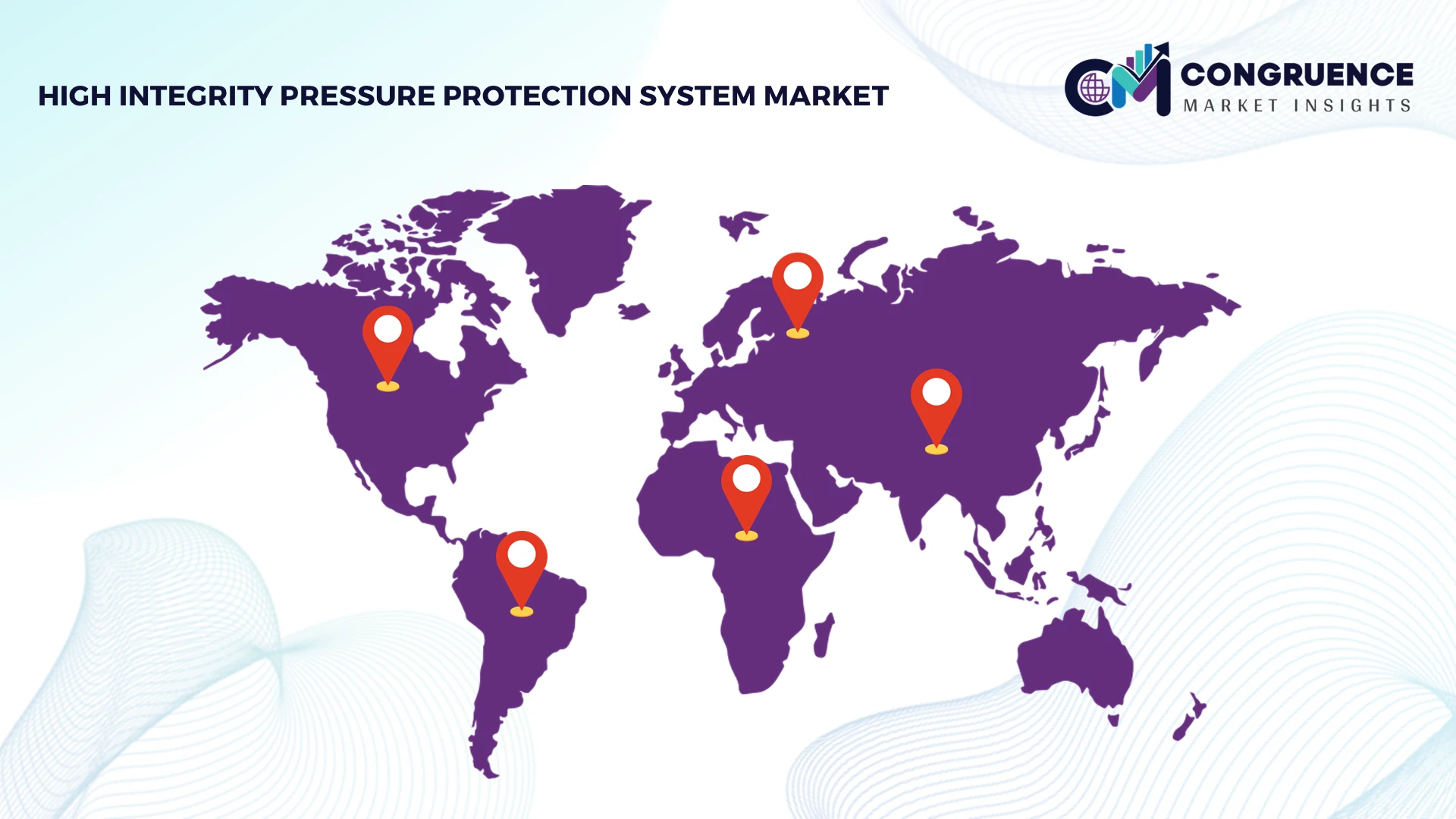
North America dominates the global High-Integrity Pressure Protection System Market, accounting for approximately 33.5% of market share in 2025. The region benefits from extensive offshore hydrocarbon production, established process automation infrastructure, and stringent industrial safety requirements. The United States leads regional deployment through Gulf of Mexico production platforms, shale gas processing facilities, and high-pressure pipeline infrastructure. Canada contributes through oil sands processing, natural gas compression, and petrochemical operations. U.S. crude oil production exceeded 13 million barrels per day in 2025, reinforcing the importance of reliable overpressure protection across production and processing facilities. Operators increasingly integrate SIL 3-certified logic solvers, redundant pressure transmitters, and automated shutdown valves into modernization programs. Emerson, Baker Hughes, and Schneider Electric are strengthening integrated safety solutions and lifecycle services, supporting equipment reliability and reducing operational disruptions.
United States Market Outlook: The United States maintains a competitive advantage through established safety engineering expertise, advanced instrumentation manufacturing, and extensive industrial automation adoption. Offshore operators increasingly prioritize independently verified safety instrumented functions under IEC 61511 frameworks. SIL 3 protection architectures provide risk reduction factors between 1,000 and 10,000, supporting deployment in critical high-pressure processing applications. Domestic engineering capabilities and established service networks strengthen equipment qualification, commissioning efficiency, and long-term maintenance support.
Europe represents approximately 25.0% of the global High-Integrity Pressure Protection System Market in 2025, supported by mature offshore energy infrastructure, sophisticated process automation capabilities, and established functional safety regulations. Norway and the United Kingdom remain important deployment centers because of extensive North Sea production facilities requiring dependable pressure isolation and lifecycle safety verification. Germany contributes through advanced chemical processing, industrial instrumentation manufacturing, and specialized safety engineering capabilities. European operators increasingly emphasize digital proof-testing, certified shutdown systems, and integration with distributed control architectures. Norway's Johan Sverdrup development has a combined production capacity of approximately 755,000 barrels of oil per day, illustrating the operational scale requiring sophisticated protection infrastructure. Manufacturers including HIMA, Siemens, and Schneider Electric are strengthening safety automation portfolios, engineering services, and diagnostic capabilities to support industrial modernization and regulatory compliance.
Germany Market Outlook: Germany holds a strategically important position through its advanced industrial automation ecosystem, chemical manufacturing clusters, and specialized safety controller engineering. BASF's Ludwigshafen integrated chemical complex spans approximately 10 square kilometers, demonstrating the scale of interconnected processing infrastructure requiring coordinated pressure protection. German suppliers emphasize IEC 61508-certified safety systems, redundant control architectures, and digital maintenance integration. Strong engineering capabilities support exports of high-integrity protection technologies to international petrochemical and energy infrastructure projects.
Asia Pacific accounts for approximately 23.5% of the global High-Integrity Pressure Protection System Market in 2025, supported by expanding LNG infrastructure, petrochemical manufacturing, and high-pressure industrial processing facilities. China leads regional demand through extensive refining capacity, integrated chemical complexes, and natural gas infrastructure development. India is strengthening deployment opportunities through refinery modernization, gas processing investments, and industrial safety upgrades. Australia contributes through large-scale LNG production and offshore gas developments requiring sophisticated pressure isolation systems. China's refining capacity exceeds 18 million barrels per day, demonstrating the substantial industrial infrastructure supporting advanced process protection requirements. Manufacturers are increasingly supplying modular HIPPS packages, electronic safety controllers, and digitally integrated shutdown systems. Yokogawa Electric, Emerson, and regional engineering contractors are expanding technical partnerships and application-specific engineering capabilities to address diverse operating conditions and industrial safety requirements.
China Market Outlook: China benefits from extensive petrochemical manufacturing capacity, established industrial equipment supply chains, and accelerating automation integration. Major refining and chemical clusters in Zhejiang, Guangdong, and Shandong support demand for certified pressure protection systems. Integrated refining complexes with processing capacities exceeding 20 million tonnes annually require coordinated safety instrumentation and high-pressure isolation technologies. Domestic manufacturers are strengthening automation capabilities, while international suppliers compete through advanced diagnostics, certification expertise, and specialized shutdown valve solutions.
South America represents approximately 8.0% of the global High-Integrity Pressure Protection System Market in 2025, with Brazil accounting for the largest concentration of regional demand. Offshore exploration and production activities in the Santos and Campos basins require dependable pressure protection across subsea processing interfaces, floating production facilities, and high-pressure hydrocarbon handling systems. Petrobras continues expanding deepwater production capabilities, increasing requirements for certified safety instrumentation and automated isolation systems. Brazil's crude oil production exceeded 3 million barrels per day during 2025, demonstrating the operating scale supporting specialized protection equipment. Argentina contributes through Vaca Muerta shale development and natural gas processing infrastructure. However, imported instrumentation dependencies, offshore logistics complexity, and specialized maintenance requirements influence project execution. Suppliers are responding through local engineering partnerships, service infrastructure development, and standardized safety packages designed for offshore operating environments.
Brazil Market Outlook: Brazil dominates regional HIPPS deployment through its extensive deepwater oil and gas infrastructure and specialized offshore engineering capabilities. Petrobras operates production facilities in water depths exceeding 2,000 meters, requiring reliable pressure containment and automated emergency isolation. The country's offshore equipment ecosystem supports opportunities for safety valve manufacturers, instrumentation suppliers, and system integrators. Local-content requirements and technical qualification procedures encourage international manufacturers to strengthen Brazilian partnerships, maintenance facilities, and engineering support networks.
The Middle East & Africa accounts for approximately 10.0% of the global High-Integrity Pressure Protection System Market in 2025, supported by large-scale hydrocarbon production, LNG infrastructure expansion, and petrochemical investment. Saudi Arabia, Qatar, and the United Arab Emirates lead deployment through high-pressure gas processing facilities, offshore production systems, and integrated refining complexes. Qatar's North Field expansion is designed to increase LNG production capacity to 142 million tonnes annually by 2030, creating substantial requirements for sophisticated process safety engineering. Saudi Aramco's gas processing investments further strengthen demand for certified pressure transmitters, shutdown valves, and integrated safety controllers. South Africa contributes through petrochemical processing and industrial infrastructure modernization. International manufacturers are strengthening regional engineering partnerships, local assembly capabilities, and lifecycle maintenance services to meet demanding equipment qualification requirements and improve project execution efficiency.
Saudi Arabia Market Outlook: Saudi Arabia maintains a strategic advantage through extensive oil and gas infrastructure, large-scale petrochemical operations, and continuing investment in gas processing capacity. Saudi Aramco's Jafurah unconventional gas development targets approximately 2 billion standard cubic feet of sales gas per day by 2030, reinforcing demand for high-pressure safety instrumentation. Localization initiatives under Vision 2030 encourage international automation suppliers to expand domestic engineering, equipment assembly, and technical training capabilities, strengthening long-term industrial safety system deployment.
The global High-Integrity Pressure Protection System Market features strong competition between integrated automation leaders Emerson, Schneider Electric, and Yokogawa Electric, specialized safety supplier HIMA, and valve technology providers Baker Hughes and IMI. The leading five suppliers collectively hold an estimated 48–55% market share, reflecting moderate concentration across certified safety solutions. Integrated automation providers compete through SIL 3 certification, diagnostics, and lifecycle services, while valve specialists emphasize rapid isolation and customized engineering. Standardized packages target 15–20% shorter commissioning cycles, while digital diagnostics offer 10–15% maintenance efficiency improvements. Companies are expanding regional assembly, partnering with EPC contractors, and integrating pressure sensing, logic solvers, and final elements. Competition is shifting toward complete safety lifecycle ownership rather than standalone component supply. Certification expenses, application engineering complexity, and lengthy customer qualification cycles restrict entry. Winning requires independently verified reliability, responsive technical support, and cost-efficient integration across demanding industrial operating environments worldwide.
Emerson Electric Co.
Schneider Electric SE
Yokogawa Electric Corporation
HIMA Group
Baker Hughes Company
IMI plc
ABB Ltd.
Siemens AG
Honeywell International Inc.
Rockwell Automation, Inc.
SLB
Mokveld Valves BV
Valmet Corporation
Rotork plc
Current HIPPS technology centers on SIL-certified safety logic solvers, redundant pressure transmitters, and fast-acting shutdown valves. Hydraulic and mechanical configurations retain approximately 61.2% market share, reflecting established reliability in demanding offshore environments. Electronic systems increasingly integrate 2oo3 voting architectures, automated diagnostics, and digital valve position monitoring. Compared with conventional inspection-intensive arrangements, digitally monitored configurations target 15–20% lower maintenance intervention requirements, improving operational availability and reducing technician exposure across remote production facilities.
Emerging technologies include intelligent partial-stroke testing, condition-based valve maintenance, and integrated safety lifecycle platforms. Advanced diagnostic systems target 10–15% faster fault identification, while automated verification workflows offer 20–25% reductions in documentation processing effort. Emerson, HIMA, and Yokogawa benefit from combining certified safety controllers with instrumentation and asset management capabilities. Specialized valve manufacturers strengthen competitiveness through actuator monitoring, rapid isolation performance, and application-specific materials engineering for high-pressure hydrocarbon services.
Between 2026 and 2028, digital twins, secure remote diagnostics, and predictive failure analytics will increasingly influence HIPPS procurement. Operators are prioritizing interoperable architectures connecting independent safety functions with enterprise maintenance systems without compromising functional independence. Suppliers offering integrated validation, cybersecurity engineering, and lifecycle optimization will secure stronger positions in offshore modernization, LNG processing, and emerging hydrogen infrastructure projects worldwide.
May 2024 IMI introduced a hydrogen-specific HIPPS designed to prevent overpressure propagation during post-production storage. Electronic transmitters and fail-safe valves deliver isolation within 2 seconds, strengthening hydrogen infrastructure safety while reducing dependence on conventional pressure relief arrangements. Source: imi-critical.com.
August 2025 Emerson launched its PACSystems RX3i CPS400 Safety Controller, supporting SIL 2 applications and up to 2,000 I/O points. The product simplifies certified safety engineering and expands scalable emergency shutdown automation, although it is not specifically marketed as HIPPS. Source: emerson.com.
October 2025 HIMA and DEUTA introduced SafeHMI, combining certified safety systems with monitored operator visualization. The SIL 3-capable interface improves alarm handling and safety-critical display integrity, supporting broader digital safety integration beyond conventional pressure protection applications and workflows. Source: hima.com.
2025 Mokveld supplied four axial injection choke valves for the Netherlands' Porthos carbon capture project. Designed for gaseous and dense-phase CO₂, the equipment strengthens pressure-control reliability and demonstrates the company's expansion into demanding carbon management infrastructure applications. Source: mokveld.com.
The High-Integrity Pressure Protection System Market Report provides comprehensive analysis of industry developments, competitive positioning, and technology adoption between 2026 and 2033. Segmentation covers hydraulic/mechanical and electronic HIPPS technologies, alongside applications in oil and gas, chemicals and petrochemicals, power generation, and emerging hydrogen infrastructure. End-user coverage includes energy operators, chemical manufacturers, industrial processing companies, and specialized infrastructure developers. Hydraulic/mechanical systems account for an estimated 61.2% of the market, highlighting the continued importance of established protection architectures.
Geographical analysis examines North America, Europe, Asia Pacific, South America, and Middle East & Africa, including country-specific infrastructure and investment dynamics. The report evaluates SIL-certified controllers, redundant sensing, automated shutdown valves, digital diagnostics, and lifecycle services. Strategic insights support investment planning, supplier benchmarking, market entry decisions, partnership development, and long-term competitive positioning across high-pressure industrial applications.
| Report Attribute / Metric | Details |
|---|---|
| Market Revenue (2025) | USD 710.0 Million |
| Market Revenue (2033) | USD 1,478.2 Million |
| CAGR (2026–2033) | 9.6% |
| Base Year | 2025 |
| Forecast Period | 2026–2033 |
| Historic Period | 2021–2025 |
| Segments Covered |
By Type
By Application
By End-User
|
| Key Report Deliverables | Revenue Forecast; Market Trends; Growth Drivers & Restraints; Technology Insights; Segmentation Analysis; Regional Insights; Competitive Landscape; Regulatory & ESG Overview; Recent Developments |
| Regions Covered | North America; Europe; Asia-Pacific; South America; Middle East & Africa |
| Key Players Analyzed | Emerson Electric Co.; Schneider Electric SE; Yokogawa Electric Corporation; HIMA Group; Baker Hughes Company; IMI plc; ABB Ltd.; Siemens AG; Honeywell International Inc.; Rockwell Automation, Inc.; SLB; Mokveld Valves BV; Valmet Corporation; Rotork plc |
| Customization & Pricing | Available on Request (10% Customization Free) |




