
Reports
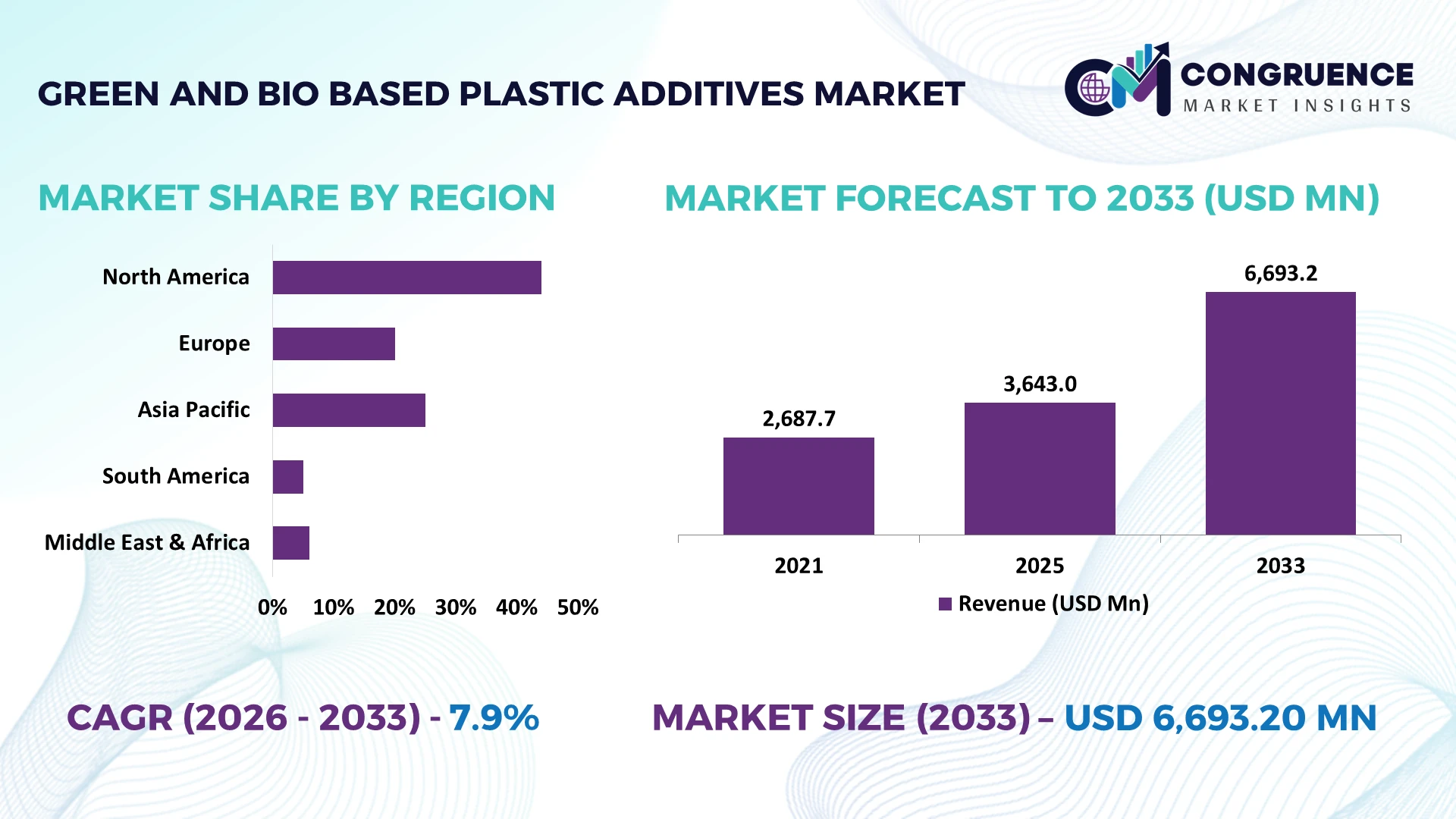
The Global Green and Bio-based Plastic Additives Market was valued at USD 3643.02 Million in 2025 and is anticipated to reach a value of USD 6693.2 Million by 2033 expanding at a CAGR of 7.9% between 2026 and 2033. Real growth drivers: Adoption is accelerating through bio-based plasticizers, biodegradable polymer processing aids, renewable-origin stabilizers, and compatibilizers that improve recycled-resin performance while helping manufacturers meet packaging regulations and reduce dependence on fossil-derived additive feedstocks.
China holds a strategic position through its extensive plastics-processing capacity, packaging production, and chemical-manufacturing ecosystem. Its scale supports commercial deployment of bio-based additives in flexible packaging, consumer goods, agricultural films, and automotive plastics. The European Union, by contrast, exerts strong influence through regulatory requirements and packaging circularity targets, including a 2030 objective for all packaging on the EU market to be recyclable. This divergence creates a clear competitive distinction: China offers manufacturing scale, while Europe drives compliance-led material reformulation and traceability.
Strategic implication: Prioritize scalable bio-based additive formulations that maintain processing performance, meet destination-market regulations, and support cost-efficient integration into existing polymer production lines.
Market Size & Growth: Valued at USD 3643.02 Million in 2025, projected to USD 6693.2 Million by 2033 at 7.9% CAGR, driven by global plastics treaty negotiations and PFAS restriction mandates.
Top Growth Drivers: Phthalate phase-out mandates driving plasticizer substitution, halogen-free flame retardant regulations in electronics and automotive, and packaging industry sustainability commitments.
Short-Term Forecast: By 2027, PFAS-free processing aid adoption accelerates as Clariant's AddWorks PPA line demonstrates performance parity with traditional fluoropolymer-based alternatives.
Emerging Technologies: Bio-based BDO from fermentation routes achieving commercial scale in China, plant oil-derived plasticizers from Cargill's expanded bio-industrial portfolio, and waste-to-material additive platforms.
Regional Leaders: North America at largest market share with US food packaging demand, Asia-Pacific fastest-growing at over 41% of global demand by 2030, and Germany leading European consolidation.
Consumer/End-User Trends: Packaging commands dominant application share; automotive interiors and EV components represent fastest-growing segments with 2.5-4.0 kg additives per vehicle.
Pilot/Case Example: Yuanli Technology achieved commercial-scale bio-based BDO production in 2025 from corn-derived biomass, with 115,000 tons of new capacity across four product lines commissioning in 2026-2027.
Competitive Landscape: BASF, Dow, Evonik, Clariant, and Arkema lead; Asian manufacturers including Yuanli Technology and Cathay Industrial Biotech compete on fermentation-derived bio-BDO and specialty plasticizers.
Regulatory & ESG Impact: Global Plastics Treaty negotiations covering 175+ countries target phthalates, BPA, and PFAS restrictions; EU PPWR packaging regulation mandates recyclability and food-contact safety.
Investment & Funding: Henkel's USD 2.5 billion Stahl Holdings acquisition (February 2026) signals consolidation; Sirmax invested EUR 20 million to double bio-compound capacity to 16,000 tons annually.
Innovation & Future Outlook: ASTM D6866 bio-content certification and ISCC+ supply chain validation drive verifiable renewable additive procurement; renewable sub-segment growing at fastest rate as certification frameworks mature.
The green and bio-based plastic additives market is expanding across flexible packaging, agricultural films, automotive plastics, consumer goods, and durable polymer products. Bio-based plasticizers, renewable stabilizers, and compatibilizers help improve flexibility, thermal stability, and processing performance while supporting the transition away from fossil-derived ingredients. European Bioplastics reported that packaging represented 41.3% of global bioplastics production capacity in 2025, highlighting a major application area for additive innovation. However, the European Commission's Joint Research Centre estimates bio-based and biodegradable plastics cost approximately 1.5–2 times more than conventional alternatives, making processing efficiency and commercial scalability decisive purchasing criteria.
Green and bio-based plastic additives are becoming strategic inputs because they influence polymer performance, regulatory compliance, recycled-content compatibility, and manufacturers’ exposure to fossil-derived feedstocks. Bio-based plasticizers, renewable stabilizers, and compatibilizers help processors reformulate products without redesigning entire production systems. European Bioplastics estimated global bioplastics production capacity at approximately 2.31 million tonnes in 2025, highlighting an expanding material ecosystem that requires compatible additive technologies.
Regulatory change is accelerating investment in formulations that support recyclability, traceability, and lower fossil-resource dependence. The European Union’s Packaging and Packaging Waste Regulation entered into force in February 2025 and generally applies from August 2026, pushing packaging manufacturers to reassess material specifications and end-of-life performance. European companies face strong compliance-driven incentives, while Chinese producers benefit from manufacturing scale and integrated chemical supply chains.
Over the next two to three years, competitive differentiation will depend on processing compatibility, formulation stability, and cost per finished product. Conventional additives remain attractive where price dominates, while bio-based alternatives gain traction when they meet performance requirements without major equipment changes. For example, packaging converters can test renewable plasticizers and compatibilizers within existing extrusion workflows before committing to full-scale reformulation. Manufacturers should prioritize application trials, diversified feedstock sourcing, and partnerships with polymer producers to reduce qualification delays and secure commercially viable sustainable-material portfolios.
Packaging redesign and recycled-plastic integration are accelerating demand for renewable plasticizers, compatibilizers, and processing aids. Packaging represented approximately 41.3% of global bioplastics production capacity in 2025, making film flexibility, seal integrity, and processing stability commercially important. The EU Packaging and Packaging Waste Regulation, generally applicable from August 2026, intensifies pressure on manufacturers to reassess packaging specifications and end-of-life performance. This shift encourages additive suppliers to develop formulations compatible with recycled resins and bio-based polymers. Companies are expanding application testing and collaborating with packaging converters to validate performance on existing extrusion lines. The strategic advantage lies in delivering compliance-ready formulations without requiring costly production-line replacement.
Bio-based plastic additives face a structural cost disadvantage when renewable feedstocks, purification requirements, and specialized processing increase formulation costs. Bio-based and biodegradable plastics have been estimated to cost approximately 1.5–2 times as much as conventional plastics, illustrating the price sensitivity affecting adjacent sustainable-material supply chains. Feedstock availability also competes with agricultural, food, and industrial uses, exposing manufacturers to seasonal variation and procurement uncertainty. In India, limited access to consistent specialty feedstocks and advanced formulation infrastructure can complicate commercialization. These constraints pressure margins and slow adoption in price-sensitive packaging applications. Companies are mitigating exposure through multi-source procurement, longer-term supply contracts, localized formulation, and concentrated additive dosing that reduces cost per finished unit without sacrificing performance.
Compatibilizers, reactive processing aids, and renewable-origin stabilizers offer an opportunity to improve recycled-polymer performance without relying exclusively on virgin bioplastics. With packaging representing approximately 41.3% of global bioplastics production capacity in 2025, packaging converters provide a substantial application base for formulations that improve flexibility, melt stability, and material consistency. Advanced reactive extrusion and automated dosing can support more repeatable additive dispersion and reduce formulation variability. China's large plastics-processing ecosystem offers scale for commercial trials, while European converters face stronger incentives to validate circular packaging designs. Suppliers are investing in application laboratories, recycler partnerships, and customer-specific formulations. A particularly valuable opportunity is upgrading lower-quality recycled feedstocks for applications with defined performance requirements, expanding usable material supply rather than competing solely on renewable content.
Scaling green additives requires consistent performance across polymer grades, processing temperatures, and recycling cycles. Biodegradable formulations must meet specified degradation conditions; bio-based origin alone does not establish biodegradability or recyclability. With bioplastics representing approximately 0.5% of global plastics production, limited deployment scale also restricts feedstock availability and industrial learning. European packaging rules add pressure to substantiate recyclability claims and validate material composition. Manufacturers face the technical challenge of preserving tensile strength, color stability, seal performance, and additive effectiveness across successive processing stages. Companies must invest in standardized testing, batch-level traceability, accelerated aging studies, and partnerships with recyclers and converters. Competitive success depends on proving repeatable performance under real processing and end-of-life conditions, not relying solely on renewable-content claims.
Plasticizers Anchor Demand as Stabilizers Gain Traction
Bio-based plasticizers are the leading type, accounting for an estimated 30.35% of the broader bio-based polymer additives market in 2025. Their dominance reflects established use in packaging films, automotive components, and consumer products, where flexibility and processability are critical. Stabilizers are an emerging growth focus as manufacturers seek better thermal stability, UV resistance, and longer product life. Compatibilizers and processing aids support material blending and manufacturing consistency, while natural antioxidants, bio-based lubricants, natural colorants, and bio-based flame retardants address more specialized performance requirements. Suppliers are prioritizing formulations that integrate into existing processing lines and meet application-specific specifications.
The strategic distinction is between high-volume additives with established uses and specialized additives that solve demanding performance problems. Investment is therefore shifting toward formulation development, application testing, and partnerships with polymer producers and converters. Companies that demonstrate reliable processing performance alongside renewable feedstock credentials can strengthen customer retention without requiring manufacturers to overhaul production equipment.
Packaging Films Lead, Automotive Applications Expand
Packaging Films are a major demand category because high-volume conversion requires consistent flexibility, melt flow, and sealing performance. Food Packaging adds stringent requirements for migration control, odor, traceability, and regulatory compliance. In the broader green and bio-based plastic additives market, packaging accounted for 33.2% of application revenue in 2022, providing a historical benchmark rather than a current share for the eight specified applications. Suppliers are focusing on film-compatible formulations that preserve line efficiency and finished-product quality.
Automotive Components represent an important specialized use case as manufacturers evaluate lightweight materials with reliable thermal and mechanical properties. Consumer Goods and Agricultural Films prioritize processability and fit-for-purpose durability; Building Materials require long service life; Electrical and Electronics applications emphasize insulation and flame performance; and Medical Products require stringent quality control. Companies are tailoring formulations to specific operating conditions and investing in qualification trials with converters and component manufacturers. The commercial opportunity lies in solving application-specific performance requirements, not assuming every end use will adopt the same additive chemistry.
Packaging Manufacturers Anchor Volume-Based Purchasing
Packaging Manufacturers are a central end-user group because film, container, and flexible-packaging operations consume materials at scale and require consistent processing performance. Their purchasing decisions balance formulation cost, product quality, equipment compatibility, and compliance requirements. A verified percentage share for this specific end-user category is not established by the available industry data. Suppliers are therefore competing through technical support, stable product specifications, converter trials, and dependable supply rather than relying on unsupported market-share claims.
Automotive Manufacturers have distinct requirements around durability, thermal stability, and material qualification. Agriculture buyers prioritize application life and end-of-life suitability, while Construction buyers emphasize durability and specification compliance. Consumer Goods Manufacturers focus on appearance and consistent processing; Electrical and Electronics manufacturers require dependable insulation and flame performance; and Healthcare buyers demand rigorous validation and traceability. Companies are responding with customized formulations, targeted technical partnerships, and end-user-specific testing. The strategic priority is to match additive performance to each buyer’s qualification process, enabling stronger customer relationships and reducing the risk of inconsistent results across production facilities.
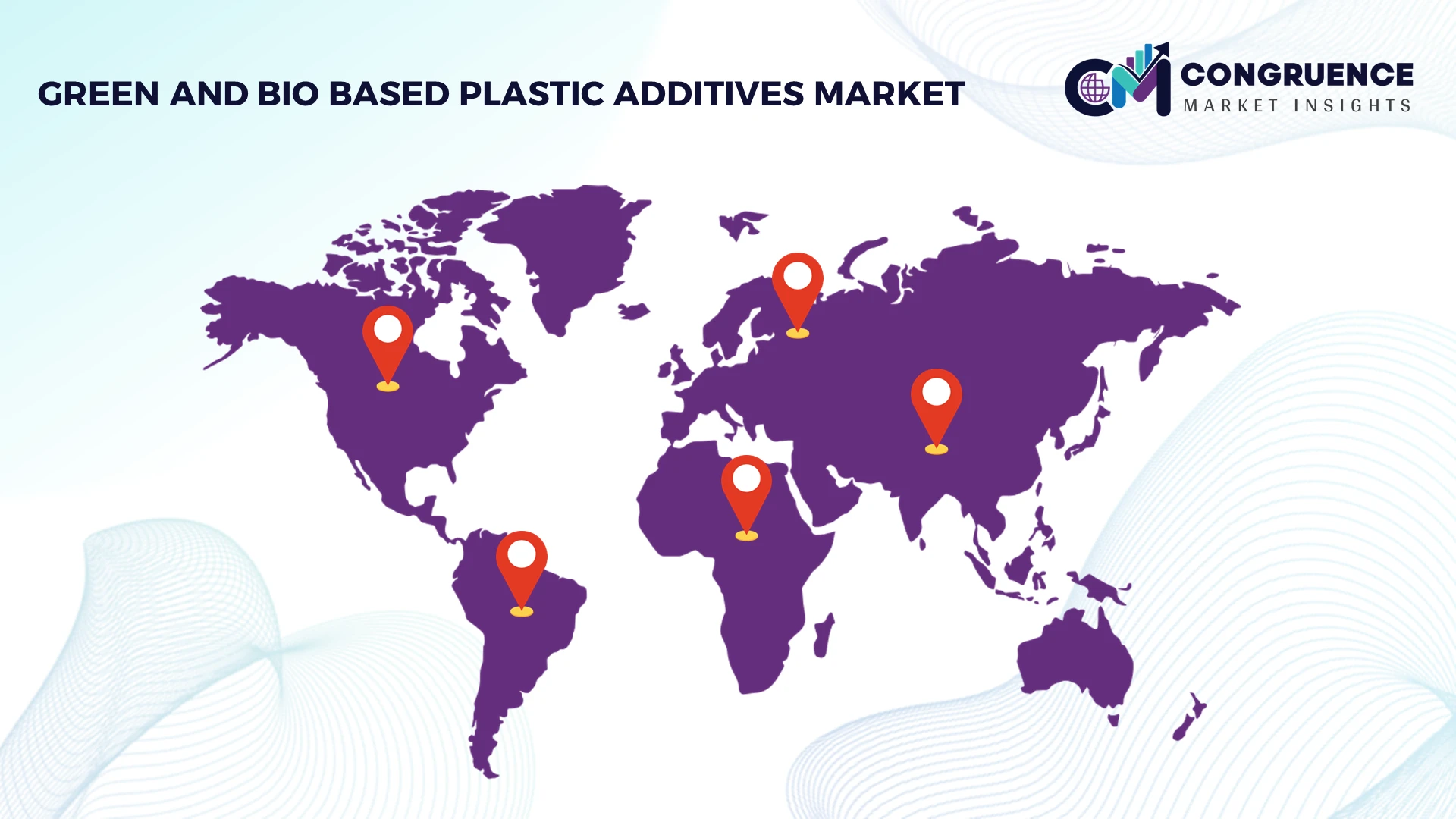
Europe accounted for the largest market share at approximately 36% in 2025 however, Asia-Pacific is expected to register the fastest growth, expanding at a CAGR of 13.5% between 2026 and 2033.
Specialty Formulations and Established Processing Infrastructure Shape Adoption
North America benefits from specialty-chemical manufacturing, polymer-processing expertise, and demand for higher-performance additives in packaging, automotive components, consumer goods, and medical products. The United States anchors regional innovation through chemical producers, resin suppliers, and converters capable of qualifying formulations within established production systems. Canada contributes through bioresource availability and industrial materials development, while Mexico connects additive demand to packaging and automotive supply chains. Regional adoption depends on balancing renewable feedstock content with processing reliability, regulatory compliance, and delivered costs. Suppliers are emphasizing renewable-origin plasticizers, stabilizers, and compatibilizers that can operate on existing equipment. Partnerships between additive developers and converters are important because formulation qualification and feedstock consistency determine whether laboratory performance translates into repeatable industrial production.
United States Market Outlook: The United States benefits from a broad chemical manufacturing base and collaboration between specialty-material suppliers, research institutions, and industrial customers. Packaging and automotive manufacturers can test renewable additives within existing quality-control systems. Investment priorities include application testing, feedstock qualification, and formulation development that reduces processing disruption while meeting customer specifications.
Packaging Regulation Accelerates Material Redesign and Traceability
Europe's market is shaped by packaging regulation, circular-material targets, and established specialty-chemical capabilities. The EU Packaging and Packaging Waste Regulation began applying on 12 August 2026, strengthening requirements affecting packaging design, recyclability, and material selection. This creates demand for additives that support processing performance without compromising downstream recycling compatibility. Germany, France, Italy, and the Netherlands contribute through chemical manufacturing, polymer conversion, packaging technology, and industrial research. European Bioplastics reported that packaging represented 41.3% of global bioplastics production capacity in 2025, highlighting the importance of packaging-related material development, although this is not a direct additive-market share. Suppliers are investing in formulation validation, ingredient traceability, and collaboration with converters to reduce redesign costs and support compliance across product portfolios.
Germany Market Outlook: Germany's established chemical industry, automotive supply chains, and engineering expertise make it strategically important for high-performance additive development. Manufacturers can test renewable plasticizers, processing aids, and flame-retardant formulations against demanding industrial specifications. Suppliers that coordinate with polymer processors and automotive component producers can strengthen qualification pipelines and secure longer-term supply relationships.
Manufacturing Scale and Packaging Conversion Drive Adoption
Asia-Pacific combines large polymer-processing industries, extensive packaging production, and expanding demand for performance-enhancing additives. China anchors regional manufacturing scale, while Japan and South Korea contribute advanced materials engineering and specialty-chemical capabilities. India adds demand through packaging conversion, agriculture, consumer products, and expanding domestic manufacturing. Global bioplastics capacity reached approximately 2.31 million tonnes in 2025, with Asia maintaining an important role in production infrastructure; this broader industry measure does not quantify the region's share of additive sales. Cost-sensitive converters prioritize formulations that preserve throughput, minimize scrap, and maintain product consistency. Suppliers are strengthening regional distribution, technical service, and partnerships with resin manufacturers to shorten qualification cycles and improve feedstock availability. Localized formulation support is a competitive advantage where manufacturing volumes are high but application requirements vary significantly.
China Market Outlook: China offers a strong combination of polymer manufacturing, packaging conversion, and chemical supply-chain depth. Its industrial clusters enable additive suppliers to collaborate with resin producers and converters on production-scale trials. Investment is best positioned around consistent renewable feedstocks, application-specific formulations, and compatibility with existing extrusion and molding infrastructure, allowing suppliers to compete on both cost and performance.
Renewable Feedstock Availability Supports Local Formulation Potential
South America offers opportunities through agricultural feedstocks, established packaging demand, and polymer-processing industries concentrated in major manufacturing markets. Brazil is particularly relevant because its sugarcane-based industrial ecosystem provides experience in renewable raw materials and bio-based chemicals. Adoption of green plastic additives nevertheless depends on reliable supply, competitive formulation costs, and the ability to meet customer processing requirements. Packaging films, consumer goods, agricultural films, and selected construction applications offer potential use cases, while uneven recycling infrastructure can complicate material selection and end-of-life claims. Suppliers are exploring local feedstock relationships, distributor partnerships, and application testing with converters to reduce logistics exposure. The strategic advantage lies in linking renewable-resource availability with industrial-grade formulation performance rather than relying on feedstock abundance alone.
Brazil Market Outlook: Brazil's sugarcane industry and established biofuel and bio-based chemical capabilities provide a foundation for renewable-material development. Its large domestic packaging and agricultural sectors create opportunities for plasticizers, processing aids, and stabilizers tailored to local production conditions. Companies can strengthen market access through partnerships with feedstock processors and polymer converters while controlling costs and maintaining consistent product specifications.
Industrial Diversification Creates Selective Adoption Opportunities
The Middle East & Africa market is influenced by petrochemical infrastructure, packaging conversion, construction demand, and efforts to diversify industrial production. Saudi Arabia and the United Arab Emirates offer established chemical and polymer-processing capabilities, while South Africa provides a manufacturing base serving packaging, consumer products, and selected industrial applications. Adoption remains selective because conventional fossil-derived additives often benefit from established supply chains and competitive pricing. Demand for renewable formulations is therefore strongest where customers require regulatory alignment, differentiated product specifications, or access to international supply chains. Producers are evaluating specialty formulations, technical partnerships, and distribution arrangements rather than pursuing broad capacity expansion without confirmed demand. The key operational issue is building dependable feedstock sourcing and application support alongside existing petrochemical infrastructure.
Saudi Arabia Market Outlook: Saudi Arabia's integrated petrochemical industry, industrial investment programs, and established polymer manufacturing base provide opportunities for specialty additive suppliers. Companies can use existing industrial infrastructure to test renewable-origin additives in packaging and consumer applications. Commercial progress will depend on demonstrating cost competitiveness, reliable supply, and compatibility with local processing equipment while developing partnerships with converters and chemical producers.
The green and bio-based plastic additives market features global chemical suppliers such as BASF, Emery Oleochemicals, and Cargill competing with specialty formulators and regional producers on formulation performance, feedstock access, and customer qualification. BASF competes through broad chemical capabilities, while Emery Oleochemicals emphasizes oleochemical-derived solutions; Cargill brings renewable feedstock expertise. Specialized suppliers differentiate through application customization and technical support rather than portfolio breadth alone. A verified combined market share for the top five players is not established for this specific market, so a concentration percentage cannot be stated reliably. Competition is shaped by feedstock price volatility, processing efficiency, and compliance requirements, with packaging regulations accelerating demand for traceable formulations. Producers are strengthening partnerships with polymer manufacturers and converters, developing application-specific grades, and expanding renewable raw-material sourcing. Entry barriers include formulation know-how, consistent feedstock quality, performance validation, and customer approval cycles. Cost leaders benefit from scale, while technology-focused suppliers win where durability and process stability justify a premium. Competitive advantage ultimately depends on reproducible performance, dependable supply, and commercially viable formulations.
BASF SE
Cargill, Incorporated
Emery Oleochemicals
Clariant AG
Evonik Industries AG
Arkema S.A.
Dow Inc.
DuPont de Nemours, Inc.
LANXESS AG
Croda International Plc
Solvay S.A.
Milliken & Company
Avient Corporation
Galata Chemicals LLC
Mass-balanced feedstock substitution is the most deployable technology. Certified renewable inputs enter existing chemical systems, allowing drop-in plasticizers to retain conventional processing behavior. In 2024, a commercial grade reached 100% renewable carbon content and reported an approximately 80% lower cradle-to-gate carbon footprint than its fossil equivalent. This favors suppliers with integrated sourcing and certification, although mass balance attributes feedstock rather than tracing every molecule.
Molecular design targets performance gaps in biodegradable polymers. A 2025 laboratory study found a cardanol-derived plasticizer raised polylactic acid elongation at break to 276% and reduced additive migration to 0.19%. These gains could expand flexible packaging and durable-product uses, but pilot validation and food-contact testing remain essential before industrial adoption.
Digital formulation tools, high-throughput testing, and application labs increasingly connect additive chemistry with converter line conditions. They can improve screening speed and repeatability, although no reliable market-wide adoption percentage is available. Legacy grades can remain cheaper, making total-cost validation critical before broad production conversion across price-sensitive applications. During 2026–2028, suppliers combining certified feedstocks, predictive formulation, and customer trials should qualify products faster and compete on verified performance rather than renewable content alone. Converters should test additives against throughput, durability, migration, and end-of-life requirements now.
The report evaluates the green and bio-based plastic additives market across eight types: bio-based plasticizers, biodegradable additives, natural antioxidants, bio-based lubricants, natural colorants, bio-based flame retardants, compatibilizers, and processing aids. Application coverage includes packaging films, food packaging, automotive components, consumer goods, agricultural films, building materials, electrical and electronics, and medical products. End-user analysis examines packaging manufacturers, automotive manufacturers, agriculture, construction, consumer goods manufacturers, electrical and electronics, and healthcare.
Regional assessment covers North America, Europe, Asia-Pacific, South America, and the Middle East and Africa, highlighting country-level manufacturing capabilities, regulatory conditions, feedstock availability, and adoption patterns. Technology coverage includes renewable feedstock substitution, mass-balance certification, formulation engineering, and processing compatibility. Competitive analysis assesses product differentiation, partnerships, supply-chain positioning, and innovation priorities. The report supports investment screening, market-entry decisions, product development, capacity planning, and competitive positioning, helping businesses identify commercially relevant opportunities and operational priorities through 2033.
| Report Attribute/Metric | Report Details |
|---|---|
Market Revenue in 2025 | USD 3643.02 Million |
Market Revenue in 2033 | USD 6693.2 Million |
CAGR (2026 - 2033) | 7.9% |
Base Year | 2025 |
Forecast Period | 2026 - 2033 |
Historic Period | 2021 - 2025 |
Segments Covered | By Type
By Application
By End-User
|
Key Report Deliverable | Revenue Forecast, Growth Trends, Market Dynamics, Segmental Overview, Regional and Country-wise Analysis, Competition Landscape |
Region Covered | North America, Europe, Asia-Pacific, South America, Middle East, Africa |
Key Players Analyzed | BASF SE, Cargill, Incorporated, Emery Oleochemicals, Clariant AG, Evonik Industries AG, Arkema S.A., Dow Inc., DuPont de Nemours, Inc., LANXESS AG, Croda International Plc, Solvay S.A., Milliken & Company, Avient Corporation, Galata Chemicals LLC |
Customization & Pricing | Available on Request (10% Customization is Free) |




