
Reports
The Global Glycyrrhetinic Acid Market was valued at USD 2,690.0 Million in 2025 and is anticipated to reach a value of USD 3,761.5 Million by 2033 expanding at a CAGR of 4.28% between 2026 and 2033. Growth is driven by rising incorporation of glycyrrhetinic acid in anti-inflammatory pharmaceuticals, advanced skincare formulations, and clean-label cosmetic ingredients supported by extraction optimization and bioactive compound research.
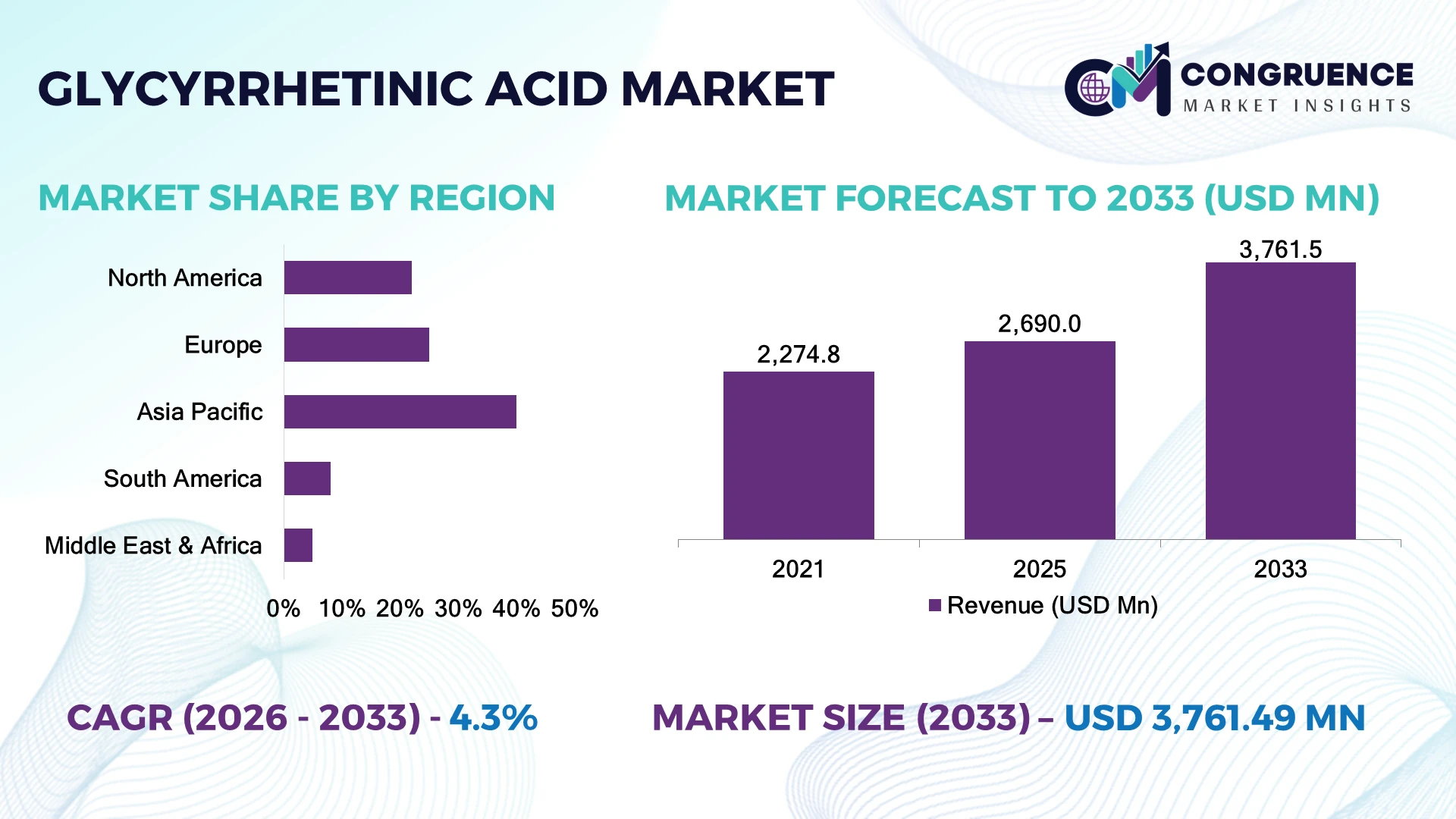
China dominates the market with nearly 38% share, supported by large-scale licorice cultivation capacity, pharmaceutical manufacturing clusters, and cosmetic ingredient exports. The country has expanded botanical extract processing investments by over 20% since 2022, while Japan focuses on premium dermatology applications with nearly 15% higher adoption of functional skincare ingredients compared with several Asian markets. Global supply chains are shifting toward diversified botanical sourcing after recent trade disruptions affecting agricultural raw materials.
Strategic localization of extraction facilities and formulation partnerships will determine future competitive advantage.
Market Size & Growth: USD 2.69 Billion (2025) to USD 3.76 Billion (2033), 4.28% CAGR, driven by pharmaceutical-grade ingredient innovation and premium skincare adoption.
Top Growth Drivers: Pharmaceutical formulations 35%, cosmetic applications 30%, nutraceutical usage 20% contribution to demand expansion.
Short-Term Forecast: By 2028, automated extraction processes reduce processing waste by 15% and improve ingredient consistency by 20%.
Emerging Technologies: Advanced extraction systems, AI-based formulation optimization, and biotechnology-enabled active ingredient development are reshaping production.
Regional Leaders: Asia-Pacific reaches USD 1.6 Billion by 2033 with botanical sourcing growth; Europe USD 1.1 Billion with clean beauty adoption; North America USD 900 Million with dermatology innovation.
Consumer/End-User Trends: More than 40% of premium skincare brands incorporate plant-derived active ingredients to meet natural formulation preferences.
Pilot/Case Example: 2024 botanical extraction upgrades in China improved glycyrrhetinic acid purification efficiency by 18% and reduced solvent consumption.
Competitive Landscape: Chinese manufacturers lead with approximately 35% market share, alongside key players including Shaanxi Huike Botanical Development, Select Botanical, and Sabinsa Corporation.
Regulatory & ESG Impact: Sustainable sourcing programs improve traceability by 25%, driven by stricter botanical ingredient compliance requirements in Europe.
Investment & Funding: Over USD 150 Million invested in botanical extraction, cosmetic ingredient innovation, and pharmaceutical supply-chain expansion initiatives.
Innovation & Future Outlook: Next-generation fermentation techniques, precision extraction, and sustainable cultivation models are creating stronger competitive differentiation.
Glycyrrhetinic acid is gaining strategic importance across pharmaceutical, cosmetic, and nutraceutical industries due to its anti-inflammatory and skin-conditioning properties. Demand is rising from premium dermatology products, with nearly 35% of new botanical skincare launches emphasizing active plant compounds. Manufacturers are improving extraction efficiency through solvent-reduction technologies while adapting supply chains to stricter European sustainability requirements and changing agricultural conditions.
Glycyrrhetinic acid is becoming strategically important as pharmaceutical and cosmetic companies compete for high-purity botanical ingredients with proven functional benefits. Increasing preference for natural actives, tighter ingredient traceability requirements, and supply-chain restructuring after global agricultural disruptions are pushing companies toward controlled cultivation networks and localized processing capabilities.
Technology adoption is improving operational efficiency, with advanced membrane purification and optimized extraction systems reducing processing losses by approximately 15–20% compared with conventional extraction methods. China maintains production scale advantages through integrated licorice cultivation and processing ecosystems, while European companies lead in sustainable formulation innovation and regulatory compliance.
Over the next 2–3 years, manufacturers are prioritizing partnerships with botanical suppliers, expanding extraction capacity, and investing in cleaner production methods. For example, pharmaceutical ingredient producers are integrating digital quality monitoring systems to maintain batch consistency across international supply chains. Companies strengthening traceability, formulation expertise, and sustainable sourcing capabilities will gain stronger positioning as demand shifts toward premium bioactive ingredients.
Growing demand for bioactive botanical compounds is accelerating glycyrrhetinic acid adoption across dermatology, pharmaceuticals, and premium cosmetics. Cosmetic formulations containing plant-derived actives have increased by approximately 30%, while anti-inflammatory skincare segments continue expanding through dermatologist-backed products. China’s pharmaceutical and cosmetic manufacturing ecosystem supports large-scale ingredient processing, with companies investing in extraction automation and quality-control systems. Rising regulatory preference for traceable natural ingredients in markets such as Germany and Japan is further strengthening supplier upgrades. Companies are responding through partnerships with licorice cultivators, improved purification technologies, and expanded production facilities to secure consistent high-grade supply.
The market faces limitations from agricultural dependency, seasonal licorice availability, and extraction cost fluctuations. Raw botanical material prices have experienced volatility of nearly 10–15% due to climate variability and farming constraints in major cultivation areas. China and Central Asian suppliers remain critical sources, creating supply concentration risks for global manufacturers. High purification requirements can increase processing expenses by approximately 20% compared with standard botanical extraction methods. Companies are reducing exposure through multi-country sourcing agreements, contract cultivation programs, and investments in efficient extraction technologies. Strategic supply diversification is becoming essential for maintaining profitability and operational stability.
Emerging opportunities are developing through biotechnology-enhanced extraction, clean beauty formulations, and personalized skincare applications. Advanced processing methods can improve active compound recovery rates by 15–25%, creating cost advantages for manufacturers. Demand for premium dermatological products is expanding as consumers increasingly select multifunctional ingredients with scientifically supported benefits. South Korea and Japan are accelerating innovation through cosmetic research ecosystems focused on botanical actives. Companies are expanding R&D partnerships, developing high-purity grades, and targeting untapped nutraceutical applications. Sustainable cultivation models and digital ingredient traceability platforms provide additional opportunities for differentiation in competitive markets.
Long-term market expansion depends on solving scalability, standardization, and compliance challenges across global supply networks. Variations in licorice cultivation conditions can affect active compound concentration by more than 10%, creating consistency issues for pharmaceutical-grade applications. Manufacturers also face increasing pressure to meet environmental standards while maintaining competitive production costs. European regulatory frameworks require stronger documentation and sourcing transparency, increasing operational complexity. Companies must invest in precision agriculture, automated quality testing, and supplier collaboration platforms to maintain consistent output. Building resilient production ecosystems will determine which manufacturers achieve sustainable competitiveness in global markets.
Precision Extraction Expansion: Manufacturers are shifting toward advanced purification and extraction workflows, with automated processing improving yield consistency by 15–20% and reducing solvent usage by nearly 10%. Chinese botanical ingredient producers are deploying closed-loop extraction systems to address raw material volatility and improve pharmaceutical-grade quality control. This transition is enabling faster production cycles, lower waste generation, and stronger compliance with international ingredient standards.
Clean Beauty Formulation Shift: Cosmetic companies are increasing glycyrrhetinic acid integration into multifunctional skincare products, with plant-based active ingredient launches rising by approximately 30% and premium dermatology products accounting for over 40% of new botanical-focused introductions. South Korean and Japanese brands are restructuring formulation strategies around traceable natural compounds, responding to consumer preference shifts and stricter ingredient transparency expectations.
Supply Chain Localization Growth: Global manufacturers are reducing dependence on concentrated botanical supply networks after agricultural disruptions affected raw material availability. Companies are increasing contract farming partnerships by nearly 20% and expanding regional processing capabilities to improve inventory resilience. This operational shift is creating stronger supplier relationships and reducing procurement uncertainty across pharmaceutical and cosmetic production networks.
Digital Quality Monitoring Adoption: Ingredient producers are implementing digital batch tracking and automated quality assessment platforms, improving manufacturing traceability by approximately 25% and reducing quality-related delays by 15%. Regulatory pressure from European markets is accelerating adoption of real-time documentation systems. Companies are investing in connected manufacturing infrastructure to strengthen export readiness and maintain consistent active compound specifications.
Pharmaceutical-grade glycyrrhetinic acid remains the leading type segment, accounting for approximately 55% of market demand due to strict purity requirements, therapeutic applications, and higher value positioning. Its dominance is supported by consistent quality standards and integration into anti-inflammatory and dermatological formulations. Cosmetic-grade variants represent nearly 35% share, benefiting from rising clean beauty adoption and premium skincare innovation. Food-grade applications maintain a smaller position but support diversification across functional ingredients. The fastest-growing shift is occurring in high-purity customized formulations, where demand is increasing by around 15% as manufacturers seek specialized active compounds for targeted applications. Companies are expanding purification capabilities, forming partnerships with botanical suppliers, and investing in scalable extraction platforms. Mature pharmaceutical applications continue prioritizing reliability, while cosmetic manufacturers are focusing on formulation flexibility and faster product development cycles.
Skincare and personal care applications lead the glycyrrhetinic acid market with approximately 50% share, driven by demand for anti-inflammatory, soothing, and skin-barrier formulations. Pharmaceutical applications account for nearly 35%, supported by continued use in topical treatments and therapeutic products. Nutraceutical and other emerging applications represent smaller segments but are gaining attention as consumers seek plant-derived wellness ingredients. The fastest-growing application area is premium dermatological skincare, expanding as brands incorporate multifunctional botanical compounds into advanced formulations. Adoption among cosmetic manufacturers has increased by approximately 25% as companies develop cleaner ingredient portfolios. Pharmaceutical producers are improving formulation efficiency through optimized delivery systems, while cosmetic enterprises are accelerating partnerships with biotechnology firms to create differentiated products. The shift toward scientifically validated natural ingredients is strengthening demand across established and emerging applications.
Cosmetic and personal care manufacturers represent the dominant end-user group with approximately 52% market share due to large-scale adoption in skincare, anti-aging, and sensitive skin product categories. Pharmaceutical companies contribute around 35% of demand through therapeutic formulations requiring high-purity ingredients. Research institutions and specialty ingredient developers account for the remaining demand while supporting innovation pipelines. The fastest-growing end-user segment is biotechnology-driven ingredient developers, where adoption is increasing by nearly 18% due to investments in advanced extraction and formulation technologies. Cosmetic companies are expanding supplier networks and prioritizing customized ingredient solutions, while pharmaceutical manufacturers are strengthening quality partnerships to ensure regulatory compliance. Emerging buyers are focusing on sustainable sourcing, digital traceability, and flexible production models to improve competitiveness. Companies are increasingly targeting enterprise collaborations rather than standalone ingredient sales to build long-term ecosystem advantages.
Asia Pacific accounted for the largest market share at 38% in 2025 however, Asia Pacific is expected to register the fastest growth, expanding at a CAGR of 5.1% between 2026 and 2033.
North America represents a strong demand center for glycyrrhetinic acid, contributing approximately 22% of global consumption in 2025 through pharmaceutical and advanced skincare applications. The United States dominates regional demand due to established dermatology brands, nutraceutical companies, and regulated ingredient supply chains. Adoption of botanical active ingredients in premium skincare formulations has increased by nearly 25%, encouraging manufacturers to strengthen formulation partnerships and quality certification processes. Companies are investing in advanced purification technologies and supplier diversification to improve ingredient consistency. Growing emphasis on transparent sourcing and clean-label products is reshaping procurement strategies among cosmetic enterprises.
United States Market Outlook: The United States remains the key North American market due to its pharmaceutical innovation ecosystem and strong cosmetic manufacturing base. More than 40% of premium skincare launches emphasize functional botanical ingredients, supporting increased demand for high-purity glycyrrhetinic acid. Companies are expanding partnerships with specialty ingredient suppliers to meet regulatory and consumer expectations.
Europe holds approximately 25% of global glycyrrhetinic acid demand, supported by strict cosmetic regulations, pharmaceutical quality standards, and rising preference for sustainable ingredients. Germany, France, and Italy represent major consumption centers due to advanced personal care industries and established botanical ingredient networks. The implementation of stronger ingredient traceability requirements has increased documentation adoption among manufacturers by nearly 30%. Companies are restructuring supply chains, improving sustainability reporting, and investing in certified botanical sourcing programs. Demand is strengthening for naturally derived ingredients as European brands prioritize environmentally responsible formulations and transparent product development.
Germany Market Outlook: Germany leads European adoption through its pharmaceutical manufacturing capabilities, research infrastructure, and advanced regulatory environment. The country’s cosmetic sector has increased investment in sustainable ingredient sourcing by nearly 20% since 2022. Manufacturers are focusing on high-quality botanical extracts, automated testing systems, and long-term supplier partnerships to improve operational reliability.
Asia-Pacific dominates the glycyrrhetinic acid market with approximately 40% share in 2025 due to large-scale licorice cultivation, processing capacity, and expanding pharmaceutical production. China remains the primary manufacturing hub, supported by integrated agricultural supply chains and export-oriented botanical extraction facilities. Regional producers have increased processing capacity by nearly 25% through automation and advanced purification systems. Japan and South Korea are accelerating demand through premium skincare innovation and biotechnology-based formulations. Companies are investing in local sourcing networks, production upgrades, and international partnerships to strengthen supply reliability and improve product quality.
China Market Outlook: China maintains the strongest position due to its extensive licorice cultivation base and established botanical extraction infrastructure. The country contributes nearly 38% of global market supply and continues expanding pharmaceutical and cosmetic ingredient production capabilities. Manufacturers are adopting automated extraction technologies and improving export compliance to serve international markets.
South America represents an emerging market with approximately 8% global demand share, supported by expanding natural ingredient industries and increasing adoption of plant-based cosmetic formulations. Brazil leads regional activity due to its large personal care market and growing interest in sustainable botanical ingredients. Local manufacturers are developing partnerships with international suppliers to improve processing capabilities and supply consistency. Investment in botanical ingredient infrastructure has increased by nearly 15% as companies seek alternatives to concentrated sourcing networks. However, limited advanced extraction facilities remain a constraint, encouraging collaborations with global technology providers and ingredient specialists.
Brazil Market Outlook: Brazil is the leading South American market due to its strong cosmetics sector and established natural product ecosystem. More than 35% of local premium skincare brands emphasize botanical-based formulations, creating opportunities for glycyrrhetinic acid suppliers. Companies are expanding distribution partnerships and improving processing capabilities to capture rising demand.
Middle East & Africa accounts for nearly 5% of global glycyrrhetinic acid demand, with growth supported by expanding healthcare infrastructure, premium personal care consumption, and specialty ingredient imports. Gulf countries are increasing investment in advanced cosmetic retail and pharmaceutical distribution networks, while South Africa supports regional research and formulation activity. Adoption of imported botanical ingredients has increased by approximately 15% as manufacturers expand product portfolios. Companies are strengthening distribution partnerships, improving supply-chain reliability, and targeting premium skincare segments. Limited local extraction capacity remains a challenge, increasing reliance on international suppliers and technology collaborations.
United Arab Emirates Market Outlook: The United Arab Emirates is emerging as a strategic market due to its premium beauty sector, healthcare investments, and regional distribution capabilities. The country’s cosmetic industry has recorded strong adoption of imported natural ingredients, with luxury skincare demand increasing by nearly 20%. Companies are using the UAE as a regional hub for specialty ingredient distribution and partnerships.
The glycyrrhetinic acid market features global botanical ingredient suppliers competing with regional extract manufacturers, pharmaceutical-grade producers, and cosmetic formulation specialists. Key participants such as Sabinsa, Select Botanical, and Chinese extraction companies compete through purity control, supply reliability, and customization capabilities. The top five players collectively account for approximately 45% of market supply, creating a moderately consolidated structure. Competition is shaped by extraction technology, with advanced purification improving yield efficiency by 15–20%, while cost-focused suppliers compete through cultivation scale and integrated sourcing. Companies are expanding processing facilities, forming cosmetic partnerships, and strengthening vertical integration from licorice cultivation to finished ingredients. The market is shifting toward traceable supply chains and high-purity formulations as regulatory requirements increase. Entry barriers include botanical sourcing expertise, quality certifications, and specialized extraction infrastructure. Winning players will require sustainable supply control, technological differentiation, and rapid customization capabilities.
Select Botanical
Shaanxi Huike Botanical Development Co., Ltd.
Xi’an Le Sen Bio-technology Co., Ltd.
Tiansheng Pharmaceutical Group
Indena S.p.A.
Hunan Nutramax USA Co., Ltd.
Monteloeder S.L.
Martin Bauer Group
Naturex
Botanic Innovations
Bio-Botanica Inc.
Advanced extraction technologies are transforming glycyrrhetinic acid production through improved purification, automation, and quality monitoring systems. Supercritical fluid extraction and membrane filtration technologies are improving active compound recovery by 15–25% compared with conventional solvent methods. Adoption of automated processing lines is increasing among large-scale suppliers, enabling better batch consistency and reducing production losses. These improvements benefit pharmaceutical-grade producers seeking higher purity standards and stronger export capabilities.
Digital quality management and traceability platforms are becoming critical as manufacturers address stricter regulatory expectations. Real-time monitoring systems improve documentation efficiency by approximately 20% and help companies reduce compliance-related delays. Traditional manual quality checks are gradually being replaced by connected production workflows, giving technology-focused suppliers a competitive advantage.
Between 2026 and 2028, biotechnology-enabled extraction, AI-supported formulation optimization, and sustainable cultivation technologies will influence competitive positioning. Companies investing in precision processing and supply-chain visibility will gain advantages through faster product development, lower operational risks, and improved customization capabilities. Technology leaders will outperform cost-focused suppliers by delivering consistent, high-value ingredients.
April 2025 Indena S.p.A. showcased its botanical extract innovation portfolio at Health Food Expo 2025 in Japan, strengthening its nutraceutical market presence. The company highlighted high-quality botanical solutions and expanded customer engagement activities. The initiative supports stronger positioning in premium natural ingredient supply chains. Source: www.indena.com
May 2025 Indena S.p.A. introduced new botanical ingredient solutions at Vitafoods Europe 2025, focusing on natural health and beauty-from-within applications. The company expanded its innovation pipeline with new product developments and sustainability-focused initiatives, strengthening its competitive position in advanced botanical ingredients. Source: www.indena.com
October 2025 Indena S.p.A. announced participation in SupplySide Global 2025 to present innovative botanical ingredients focused on healthy aging and wellness applications. The company emphasized expanded ingredient capabilities and market-focused solutions, supporting continued growth in high-value botanical ingredient categories. Source: www.indena.com
August 2025 Indena S.p.A. announced a collaboration with TCG GreenChem to advance next-generation technologies related to complex molecule development. The partnership strengthens technical capabilities and supports innovation-driven manufacturing approaches within advanced pharmaceutical and botanical ingredient ecosystems.
The Glycyrrhetinic Acid Market Report covers comprehensive analysis across product types, including pharmaceutical-grade, cosmetic-grade, and specialty formulations, along with applications spanning skincare, pharmaceuticals, nutraceuticals, and emerging wellness categories. The report evaluates end-user groups such as cosmetic manufacturers, pharmaceutical companies, research organizations, and specialty ingredient developers across North America, Europe, Asia-Pacific, South America, and Middle East & Africa.
The study examines extraction technologies, supply-chain developments, sustainability initiatives, competitive strategies, and innovation trends shaping the market between 2026 and 2033. It provides strategic insights into segment positioning, adoption patterns, regional opportunities, company expansion priorities, and investment considerations. The analysis supports businesses in identifying growth opportunities, optimizing sourcing strategies, strengthening competitive positioning, and planning future market entry decisions.
| Report Attribute / Metric | Details |
|---|---|
| Market Revenue (2025) | USD 2,690.0 Million |
| Market Revenue (2033) | USD 3,761.5 Million |
| CAGR (2026–2033) | 4.28% |
| Base Year | 2025 |
| Forecast Period | 2026–2033 |
| Historic Period | 2021–2025 |
| Segments Covered |
By Type
By Application
By End-User
|
| Key Deliverables | Revenue Forecast; Market Trends; Growth Drivers & Restraints; Technology Insights; Segmentation Analysis; Regional Insights; Competitive Landscape; Regulatory & ESG Overview; Recent Developments |
| Regions Covered | North America; Europe; Asia-Pacific; South America; Middle East & Africa |
| Companies Profiled | Sabinsa Corporation; Select Botanical; Shaanxi Huike Botanical Development Co., Ltd.; Xi’an Le Sen Bio-technology Co., Ltd.; Tiansheng Pharmaceutical Group; Indena S.p.A.; Hunan Nutramax USA Co., Ltd.; Monteloeder S.L.; Martin Bauer Group; Botanic Innovations; Bio-Botanica Inc. |
| Customization & Pricing | Available on Request (10% Customization Free) |




