
Reports
The Global Genomic Library Preparation Kits Market was valued at USD 207.0 Million in 2025 and is anticipated to reach a value of USD 568.9 Million by 2033 expanding at a CAGR of 13.47% between 2026 and 2033, according to an analysis by Congruence Market Insights, driven by accelerated adoption of advanced sequencing workflows and increasing genomic research investments. This growth is supported by enhanced automation and miniaturization of library protocols that improve throughput and efficiency.
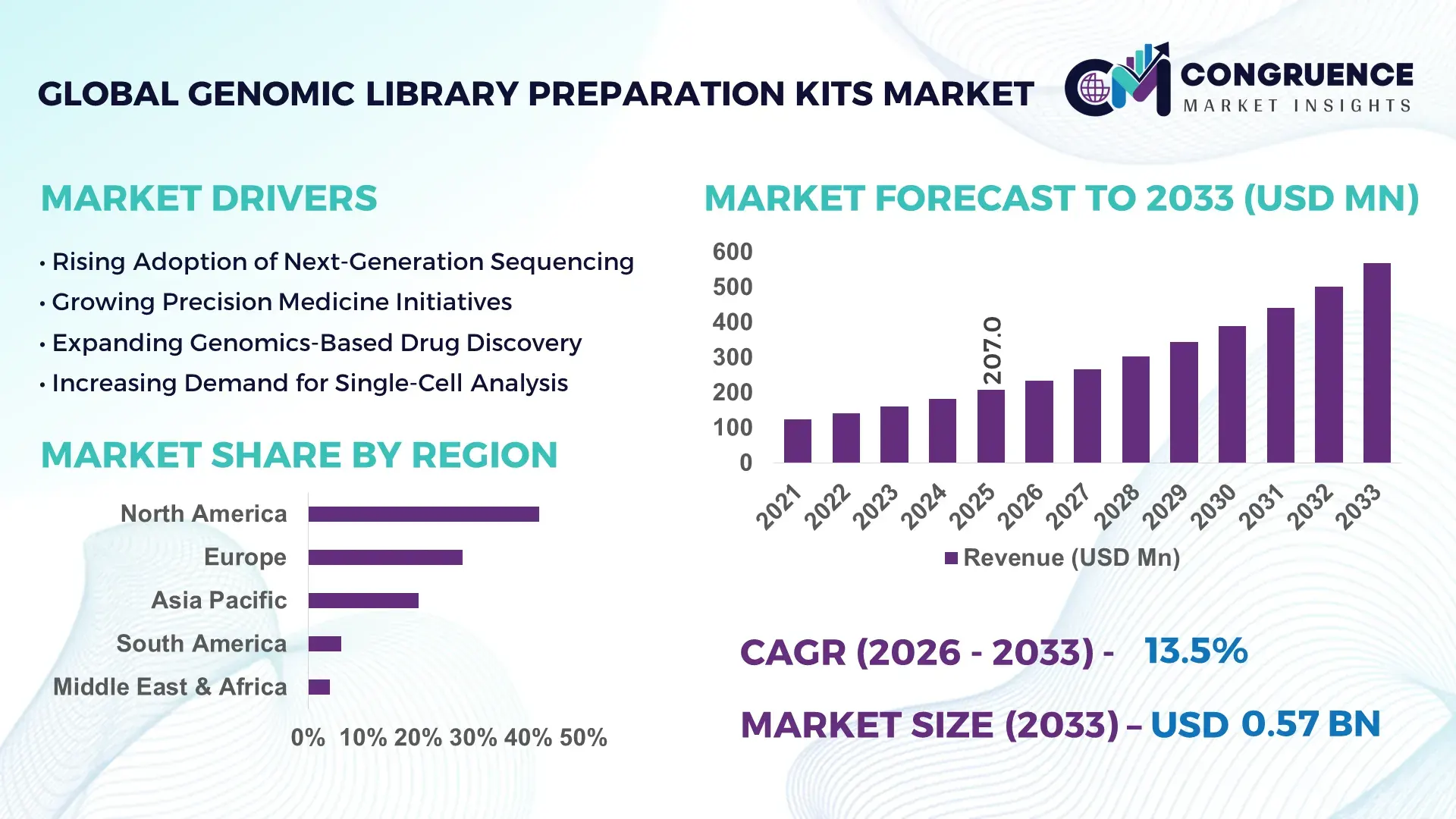
North America remains the most advanced market for genomic library preparation kits, with the United States exhibiting strong production capacity supported by over 200 specialized reagent manufacturers and deep R&D investment exceeding USD 3.5 billion in genomic research infrastructure. Academic and clinical genomics centers in the region handle more than 50,000 sequencing runs annually, underpinned by high-throughput workflows that integrate automated prep platforms and advanced chemistry kits, improving turnaround time by up to 30%. North American laboratories also report adoption rates above 45% for automated library prep solutions, reflecting robust investment in precision medicine and translational research.
Market Size & Growth: Valued at USD 207.0 M in 2025; projected to USD 568.9 M by 2033; CAGR of 13.47% driven by increasing genomic research and clinical sequencing demand.
Top Growth Drivers: Adoption of automation (42%), increased clinical genomics projects (38%), and expansion of biotech R&D programs (35%).
Short-Term Forecast: By 2028, workflow automation is expected to improve efficiency by ~28% across core labs.
Emerging Technologies: Integration of microfluidics in prep workflows, AI‑guided protocol optimization, and low‑input single‑cell library kits.
Regional Leaders: North America ~USD 680 M by 2033 with strong clinical adoption trend; Asia‑Pacific ~USD 420 M with rapid investment in genomic research; Europe ~USD 350 M led by precision medicine programs.
Consumer/End‑User Trends: Clinical laboratories and biotech firms increasingly prefer high‑throughput automated kits for faster results and reproducibility.
Pilot or Case Example: In 2025, a U.S. genomic center implemented automated library prep, cutting prep time by 30% and reducing error rates by 22%.
Competitive Landscape: Market leader ~24% share; major competitors include Illumina, Thermo Fisher Scientific, QIAGEN, New England Biolabs, and Takara Bio.
Regulatory & ESG Impact: Strengthened genomic data guidelines and reagent sustainability initiatives are influencing adoption.
Investment & Funding Patterns: Recent investments top USD 150 M in specialized library kit platforms and automation technologies.
Innovation & Future Outlook: Continued innovation in low‑input kits and integration with real‑time quality control are shaping future market directions.
Genomic library preparation kits are essential across clinical diagnostics, pharmaceutical R&D, and academic research, facilitating high‑quality sample prep for DNA/RNA sequencing. Recent innovations include automated and single‑cell prep technologies, while regional consumption patterns show higher adoption in developed health systems and growing demand in emerging economies driven by personalized medicine and genomic disease studies.
The genomic library preparation kits market is strategically critical as it underpins the advancement of high‑throughput sequencing applications essential for precision medicine, drug discovery, and advanced diagnostics. With automated microfluidic systems delivering up to 28% faster throughput compared to traditional bench‑top methods, laboratories can handle larger sample volumes with improved repeatability and reduced hands‑on time. North America dominates in sequencing volume and infrastructure, while Asia‑Pacific leads in adoption velocity with more than 40% growth in setup of genomics facilities year‑over‑year. By 2028, integrated AI‑driven process optimizers are expected to enhance library prep accuracy by 25% and cut reagent waste by 18%, enhancing operational efficiency.
Compliance with stringent genomic data handling and storage regulations is also shaping market strategies, as firms commit to best‑in‑class data integrity while reducing environmental impact through reagent miniaturization and recycling initiatives. In 2025, several genomic centers in Europe and the U.S. reported up to a 20% reduction in lab waste after switching to lyophilized kits, illustrating measurable ESG benefits. Comparatively, next‑gen microfluidics‑augmented prep tech delivers approximately 15% improvement in reagent utilization compared to standard enzymatic workflows, making it a benchmark for future innovation.
Strategically, firms are aligning product roadmaps with clinical sequencing expansion, leveraging partnerships to deploy scalable solutions that meet demand for complex genomic analyses. Forward‑looking investments in automated high‑throughput systems and AI‑enabled workflows position the genomic library preparation kits market as a pillar of resilience, compliance, and sustainable growth in the broader genomics ecosystem.
The genomic library preparation kits market is influenced by rapid advancements in sequencing technologies, increasing demand for precision medicine, and expansion of genomic research in human health and disease areas. These kits are integral to converting DNA/RNA samples into sequence‑ready libraries, necessitating precision and reproducibility. Market dynamics reflect growing investments in automation and workflow integration, lowering turnaround times and enhancing throughput. Adoption is higher in clinical diagnostics and biotech R&D, where the need for robust, scalable solutions is paramount. Drive toward cost‐efficient and accurate sequencing workflows fuels innovation in library prep chemistries and protocols.
Increasing genomic research funding globally has substantially impacted the demand for library preparation kits. Government and private sector investments in genomics projects, including cancer genomics and rare disease research, have accelerated demand for high‑precision sequencing workflows. With research institutions expanding their sequencing capabilities, there is a corresponding need for reliable library prep solutions that support complex study designs. For example, major research grants have enabled laboratories to adopt automated systems that reduce manual errors and improve repeatable results.
High costs associated with advanced genomic library preparation kits can limit adoption, especially among smaller laboratories and research centers. Premium pricing for next‑generation chemistry kits and automated platforms may pose budgetary constraints. Many institutions must balance investment in cutting‑edge prep solutions with other operational expenses, resulting in slower uptake in cost‑sensitive environments.
The rise in personalized medicine presents significant opportunities for genomic library preparation kits, as tailored therapies require comprehensive genomic profiling. Increasing demand for individualized genomic data drives the need for efficient, accurate prep workflows that support precision diagnostics and targeted treatments. This trend is leading to development of specialized kit variants optimized for clinical use cases.
Technical complexities involved in library preparation workflows, such as multi‑step protocols and sensitivity to sample quality, present challenges. Laboratories must ensure rigorous training and quality control, which can slow implementation and impact throughput. Overcoming these requires ongoing innovation in simplified workflows and user‑friendly solutions.
Increasing Automation Adoption: Automated library preparation systems are reducing hands‑on time by up to 30% and improving consistency across large sample batches. Integration of robotic handling platforms is becoming standard in high‑throughput labs.
Rise of Single‑Cell Prep Technologies: Single‑cell library prep kits are enabling detailed genomic profiles from minimal sample inputs, supporting advanced research in oncology and immunology with more than 15% growth in laboratory uptake.
AI‑Assisted Workflow Optimization: AI‑guided protocols are delivering up to 20% improvements in success rates and lowering reagent usage through predictive adjustments, enhancing lab efficiency.
Integration of Miniaturized Chemistry: Miniaturized library prep chemistries are cutting reagent consumption by more than 25%, reducing per‑sample cost and environmental footprint while maintaining data quality.
The Genomic Library Preparation Kits Market is organized into multiple key segments that reflect product diversity, application breadth, and end-user specialization. By type, the market is structured around enzymatic, mechanical, and automated library preparation kits, each tailored for specific sequencing workflows. Applications span clinical diagnostics, pharmaceutical R&D, and academic research, with workflows designed to support targeted sequencing, whole-genome studies, and transcriptomics. End-users include hospitals, research laboratories, and biotechnology companies, with adoption rates influenced by laboratory scale, automation capabilities, and throughput requirements. This segmentation enables precise targeting of solutions, efficient resource allocation, and informed decision-making for stakeholders seeking to optimize genomic research and clinical outcomes. Regional adoption varies based on infrastructure readiness and technological integration, with North America and Europe demonstrating the highest levels of automated kit utilization.
Enzymatic library preparation kits lead the market, accounting for 48% of total adoption due to their streamlined workflows and compatibility with high-throughput sequencing platforms. Mechanical kits hold approximately 20% of adoption, preferred for robust sample handling in specialized research applications. Automated kits, while representing 15% of the current market, are the fastest-growing segment, driven by increasing demand for reproducibility and efficiency in clinical and industrial sequencing laboratories. Other niche types, including low-input and single-cell kits, make up the remaining 17%, offering specialized solutions for challenging sample types.
In 2025, a leading genomics research facility implemented automated enzymatic prep kits, reducing hands-on processing time by 30% while maintaining high library quality for over 50,000 samples.
Clinical diagnostics dominate the market with a 45% adoption share, primarily due to the need for rapid, accurate sequencing in oncology, infectious disease, and rare genetic disorder testing. Research applications, including pharmaceutical development and academic studies, account for 30% of usage, with the fastest growth observed in high-throughput genomics studies that integrate single-cell workflows. Other applications, such as agricultural genomics and environmental monitoring, contribute 25% of the segment collectively. Consumer trends indicate that over 42% of hospitals in the U.S. have integrated automated library prep solutions to support precision medicine initiatives, while more than 38% of research institutions globally have adopted kits for multi-omics studies.
In 2025, a major hospital network adopted automated library preparation kits for oncology diagnostics, reducing sample-to-result time by 28% and enhancing throughput for over 2 million patient samples.
Research laboratories are the leading end-user segment with 50% adoption, reflecting their extensive sequencing needs and investment in high-throughput automation. Hospitals and clinical laboratories represent 28%, with rapid adoption in genomics-based diagnostics. Biotechnology companies, accounting for 22%, are the fastest-growing segment due to expansion in personalized medicine and novel therapeutics development. Smaller academic and specialty labs collectively contribute to ongoing diversification in the market. Enterprise adoption trends show that in 2025, more than 38% of global biotech firms piloted automated library preparation systems to enhance workflow efficiency, while over 60% of clinical centers increased reliance on high-throughput kits to meet diagnostic demand.
In 2025, AI-driven workflow integration in U.S. research labs improved library preparation efficiency by 25%, enabling over 500 genomic projects to be completed with reduced error rates and faster turnaround times.
North America accounted for the largest market share at 42% in 2025; however, Asia-Pacific is expected to register the fastest growth, expanding at a CAGR of 14% between 2026 and 2033.
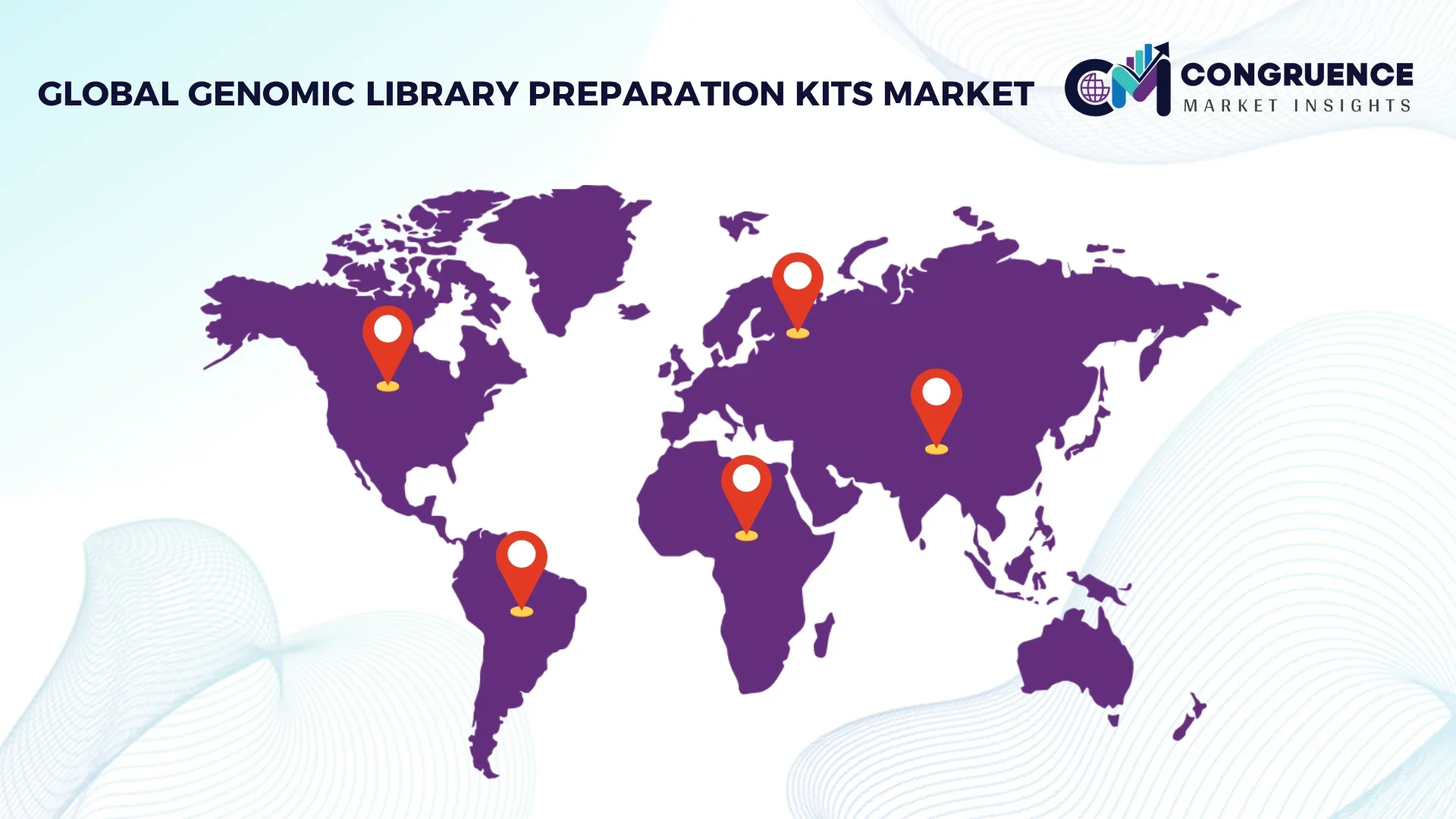
In 2025, North America recorded over 50,000 sequencing runs annually supported by 200+ specialized reagent manufacturers and more than USD 3.5 billion in genomic infrastructure investment. Europe held 28% of the market share with Germany, UK, and France leading clinical and research applications. Asia-Pacific contributed 20% of total adoption with China performing 12,500 sequencing runs and India over 6,000, reflecting growing infrastructure and digital lab expansion. South America and Middle East & Africa accounted for 6% and 4%, respectively, supported by emerging biotech hubs and regional government incentives targeting genomics and life sciences.
North America represents approximately 42% of the global Genomic Library Preparation Kits Market. Key industries driving demand include clinical diagnostics, oncology research, and pharmaceutical R&D, with hospitals and research labs adopting automated workflows extensively. Regulatory advancements, such as streamlined approvals for clinical sequencing kits, have accelerated adoption. Technological trends include AI-assisted protocol optimization, robotic liquid handling, and integration with laboratory information management systems (LIMS). Local players like Thermo Fisher Scientific have expanded automated prep platforms capable of handling over 100,000 samples annually. Regional consumer behavior shows higher enterprise adoption in healthcare and biotech, with labs prioritizing reproducibility and throughput over cost constraints.
Europe accounts for around 28% of the Genomic Library Preparation Kits Market, with Germany, the UK, and France as leading contributors. Adoption is heavily influenced by regulatory bodies emphasizing quality, traceability, and sustainability of reagents. Emerging technologies, such as single-cell prep kits and microfluidic automation, are increasingly integrated into research workflows. Local companies like QIAGEN have expanded their enzymatic library prep platforms across hospitals and academic centers. European consumers prioritize compliance and reproducibility, driving preference for explainable and standardized solutions, while research institutions focus on minimizing reagent waste and optimizing high-throughput sequencing capacity.
Asia-Pacific holds a 20% share of the Genomic Library Preparation Kits Market. Top-consuming countries include China, India, and Japan, with China performing 12,500 sequencing runs and India over 6,000 annually. Infrastructure investments in automated labs and manufacturing of reagents are expanding rapidly. Technology trends include AI-guided prep optimization and adoption of single-cell library kits. Local players such as BGI are scaling automated platforms for multi-omics research, supporting over 30,000 processed samples per year. Regional consumer behavior is shaped by high demand in biotechnology R&D and academic genomics projects, with growing government-backed genomics initiatives enhancing adoption.
South America represents approximately 6% of the Genomic Library Preparation Kits Market, with Brazil and Argentina as major contributors. Infrastructure expansion in clinical laboratories and biotech hubs supports growing sequencing capabilities. Government incentives, including research grants and trade policy facilitation, promote local adoption of high-throughput kits. Local players like Dasa are implementing automated enzymatic library prep workflows to enhance diagnostics in oncology and infectious diseases. Consumer behavior reflects demand for rapid genomic testing in healthcare and increasing adoption in academic research centers focused on agricultural genomics and personalized medicine.
Middle East & Africa account for 4% of the Genomic Library Preparation Kits Market, with the UAE and South Africa leading adoption. Growth is supported by investments in medical research, modernized laboratory infrastructure, and collaboration with global biotech firms. Technological modernization trends include automated liquid handling and cloud-based data integration. Local players, such as Mediclinic Middle East, have adopted automated library prep platforms to support clinical genomics workflows. Consumer behavior in the region emphasizes efficiency and digital integration, with hospitals and research labs increasingly adopting high-throughput sequencing to meet diagnostic and research demands.
United States – 42% Market Share: Dominance supported by advanced production capacity, high sequencing volume, and strong end-user demand in healthcare and research.
Germany – 12% Market Share: Leading due to regulatory emphasis on quality, widespread adoption in clinical diagnostics, and robust biotech research infrastructure.
The competitive environment in the Genomic Library Preparation Kits Market is robust and characterized by a mixture of long‑established leaders and innovative challengers driving technological advancement and broader market reach. There are 20+ active competitors globally competing across reagent kits, automation platforms, and integration workflows. The market exhibits a moderately consolidated structure, with the combined share of the top 5 companies around 55–60%, while the remainder represents a diverse group of niche innovators, regional players, and emerging entrants. Industry leaders have positioned themselves through strategic product launches, platform partnerships, and expanded automation‑ready kits that cater to high‑throughput sequencing workflows. For instance, several automation collaborations have yielded integrated liquid‑handling solutions that reduce hands‑on time by 20–30%, supporting clinical and research lab adoption.
Key strategic initiatives observed include product innovations, such as multimodal DNA/RNA kits that support flexible workflows, and partnerships aligning enrichment panels with sequencing instruments to ensure seamless end‑to‑end solutions. Mergers and alliances have enhanced distribution footprints across Europe and Asia‑Pacific, increasing accessibility of high‑precision library kits in expanding genomic research hubs. Innovation trends such as AI‑assisted protocol optimization, microfluidics integration, and single‑cell library workflows are influencing competitive differentiation and driving labs towards automation and higher efficiency. This competitive intensity fosters continual enhancements in throughput, error minimization, and broader applicability to clinical, agricultural, and industrial genomics contexts, making the landscape dynamic and strategically significant for decision‑makers steering procurement and R&D investments.
New England Biolabs Inc.
QIAGEN N.V.
Roche Holding AG
Pacific Biosciences of California, Inc.
Integrated DNA Technologies
Beckman Coulter Inc.
Becton, Dickinson and Company
PerkinElmer Inc.
Tecan Group Ltd.
Bio‑Rad Laboratories, Inc.
Oxford Nanopore Technologies Ltd.
Technological advancements continue to redefine operational efficiencies and analytical capabilities in the Genomic Library Preparation Kits Market, with innovations targeting throughput, precision, and workflow automation. Automated liquid handling platforms are increasingly integrated with library prep chemistry, enabling labs to process larger batches with reduced manual steps and enhanced reproducibility. Advanced integration of microfluidics technology allows precise control of reagent volumes at microscale, enabling labs to conserve expensive reagents and maintain high fidelity across samples.
Emerging AI‑assisted protocol optimization tools are being embedded into library prep workflows, delivering predictive adjustments that enhance success rates and minimize errors in critical steps such as fragmentation, ligation, and indexing. This trend supports decision‑makers seeking scalable solutions that align with high‑volume sequencing demands in clinical diagnostics and translational research. Single‑cell and low‑input library kits are another key innovation focus, providing the ability to generate high‑quality sequencing libraries from minimal amounts of DNA or RNA, a critical requirement in oncology, immunology, and rare disease studies.
Companies are also improving platform interoperability, ensuring library kits are compatible with multiple sequencing instruments from short‑read to long‑read technologies, broadening utility across research applications. Automation readiness is now a baseline expectation for new product releases, reflecting the market’s transition toward end‑to‑end integrated workflows that reduce hands‑on time by up to 30% and enhance throughput without compromising data quality. This confluence of digital and biological innovation solidifies the strategic relevance of technology in enabling faster adoption and higher operational efficiency across research, clinical, and industrial genomics workflows in 2024–2025.
• In May 2024, QIAGEN N.V. launched the QIAseq Multimodal DNA/RNA Library Kit, enabling the preparation of both DNA and RNA libraries from a single sample for next‑generation sequencing. This kit streamlines workflows for whole‑genome and whole‑transcriptome sequencing, reducing sample use and preparation time while supporting multiomic studies. Source: www.qiagen.com
• In January 2025, Illumina, Inc. advanced its NovaSeq X Series with new sequencing kits and software enhancements to support multiomic applications, including expanded library prep compatibility and improved DRAGEN analytics for combined genomic and epigenomic insights. Source: www.illumina.com
• In 2025, New England Biolabs enhanced its library preparation offerings with the NEBNext UltraExpress® RNA Library Prep Kit, which delivers high‑quality directional RNA libraries in approximately 3 hours using a streamlined protocol compatible with mRNA enrichment or rRNA depletion workflows. Source: www.biocompare.com
• In 2025, QIAGEN N.V. completed the acquisition of Parse Biosciences, expanding its sample technologies portfolio into single‑cell analysis and integrating Evercode chemistry used by more than 3,000 customers, strengthening its position in high‑throughput genomic research and library preparation workflows. Source: www.qiagen.com
The scope of the Genomic Library Preparation Kits Market Report encompasses a comprehensive evaluation of product types, technological innovations, key applications, geographic regions, and end‑user segments that define the competitive landscape and future opportunities. Product types span enzymatic kits, automated platforms, single‑cell solutions, and low‑input workflows, addressing diverse sequencing needs from clinical diagnostics to high‑throughput research. Technological insights detail workflow automation, microfluidics integration, and AI‑enabled optimization, emphasizing operational efficiencies and reproducibility enhancements that influence purchasing and deployment decisions.
Application coverage includes clinical diagnostics, pharmaceutical R&D, agricultural genomics, and environmental sequencing, highlighting how library prep solutions cater to broad scientific objectives. The report further analyzes end‑user categories such as hospitals, biotech companies, research institutions, and specialized genomics centers, offering insights into adoption patterns and investment drivers. Geographic segmentation spans North America, Europe, Asia‑Pacific, South America, and Middle East & Africa, detailing regional infrastructure readiness, innovation hubs, and consumer behavior variations that influence kit preferences and infrastructure deployment.
Emerging and niche segments, such as multiomic profiling and single‑cell sequencing, are explored for their potential to shape future market trajectories. The report also covers competitive strategies, including product launches, partnerships, and automation integrations that are shaping market leadership. Overall, the report provides decision‑makers with a strategic framework to evaluate current capabilities, emerging technologies, and regional dynamics essential for informed investments and long‑term planning in the genomics ecosystem.
| Report Attribute / Metric | Details |
|---|---|
| Market Revenue (2025) | USD 207.0 Million |
| Market Revenue (2033) | USD 568.9 Million |
| CAGR (2026–2033) | 13.47% |
| Base Year | 2025 |
| Forecast Period | 2026–2033 |
| Historic Period | 2021–2025 |
| Segments Covered |
By Type
By Application
By End-User Insights
|
| Key Report Deliverables | Revenue Forecast; Market Trends; Growth Drivers & Restraints; Technology Insights; Segmentation Analysis; Regional Insights; Competitive Landscape; Regulatory & ESG Overview; Recent Developments |
| Regions Covered | North America; Europe; Asia-Pacific; South America; Middle East & Africa |
| Key Players Analyzed | Illumina Inc.; Thermo Fisher Scientific Inc.; Agilent Technologies Inc.; New England Biolabs Inc.; QIAGEN N.V.; Roche Holding AG; Pacific Biosciences of California, Inc.; Integrated DNA Technologies; Beckman Coulter Inc.; Becton, Dickinson and Company; PerkinElmer Inc.; Tecan Group Ltd.; Bio-Rad Laboratories, Inc.; Oxford Nanopore Technologies Ltd. |
| Customization & Pricing | Available on Request (10% Customization Free) |




