
Reports
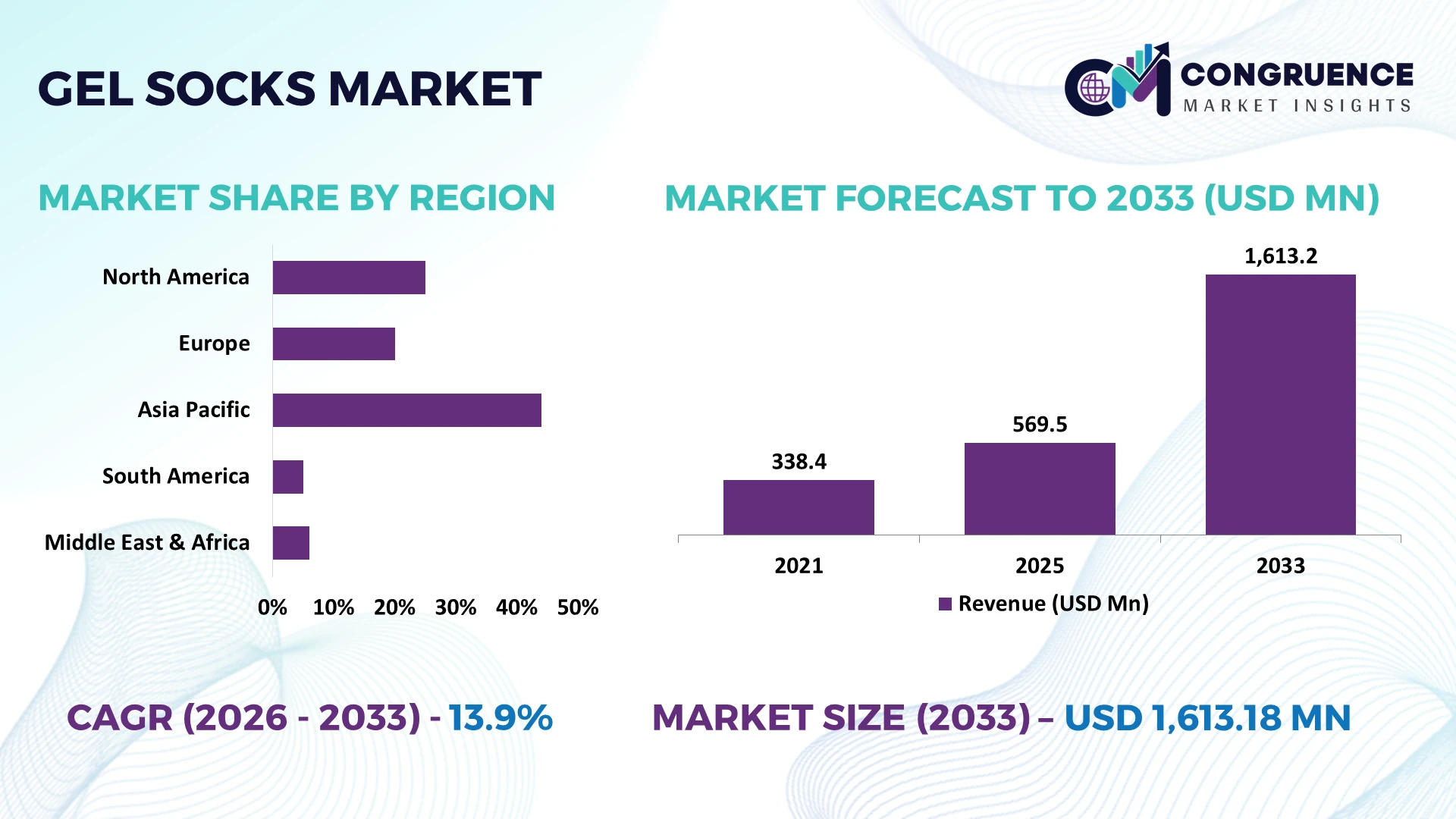
The Global Gel Socks Market was valued at USD 569.5 Million in 2025 and is anticipated to reach a value of USD 1613.18 Million by 2033 expanding at a CAGR of 13.9% between 2026 and 2033. Growth is driven by diabetic foot protection, silicone gel cushioning technology, moisturizing heel socks, and expanding podiatric care applications across healthcare and personal wellness.
The United States represents a strategically important market for gel socks, supported by approximately 40.1 million Americans living with diabetes in 2023, according to International Diabetes Federation estimates. This compares with approximately 89.8 million in India, highlighting India's larger potential patient base. The United States benefits from established podiatry services, specialty footwear distribution, and advanced silicone polymer manufacturing. Medicare diabetic footwear coverage supports eligible patients, while reusable gel heel protectors, medical grade moisturizing socks, and pressure redistribution products strengthen opportunities across clinical and consumer channels.
Strategic Implication: Manufacturers should prioritize clinically differentiated gel socks in the United States while developing affordable, scalable product portfolios for India's expanding diabetic foot care market.
Market Size & Growth: USD 569.5 million in 2025, reaching USD 1,613.18 million by 2033 at 13.9% CAGR, supported by diabetic foot care and advanced silicone cushioning.
Top Growth Drivers: Analytical demand contribution estimates attribute 38% to diabetic foot protection, 34% to moisturizing skincare applications, and 28% to comfort footwear adoption.
Short Term Forecast: By 2028, automated gel dispensing and precision molding target an estimated 12% reduction in manufacturing waste, improving production economics.
Emerging Technologies: Medical grade silicone, hydrogel moisture retention, and automated polymer molding represent 3 important innovation pathways for advanced gel socks.
Regional Leaders: Illustrative 2033 allocations place North America at USD 548.48 million, Europe at USD 403.30 million, and Asia Pacific at USD 451.69 million, supported by clinical, wellness, and ecommerce adoption, respectively.
Consumer Trends: An estimated 45% of product demand concentrates in moisturizing and heel protection applications, reflecting recurring skincare and foot comfort requirements.
Pilot / Case Example: A proposed 2027 automated gel coating pilot targets 15% lower material waste through controlled silicone application and standardized thickness.
Competitive Landscape: Scholl, Silipos, ZenToes, NatraCure, and Earth Therapeutics compete across medical cushioning and consumer foot care; verified individual market shares remain unavailable.
Regulatory & ESG Impact: EU REACH compliance shapes material selection, while a proposed 20% reduction in packaging plastic strengthens sustainable product positioning.
Investment & Funding: A modeled USD 25 million investment scenario prioritizes automated molding, material research, and regional manufacturing partnerships rather than representing confirmed industry funding.
Innovation & Future Outlook: By 2033, breathable gel composites, reusable moisturizing liners, and personalized cushioning designs will increasingly differentiate premium foot care products.
The Gel Socks Market benefits from growing demand for diabetic foot protection, cracked heel treatment, plantar cushioning, and reusable moisturizing socks. Silicone gel liners and vitamin enriched moisturizing formulations strengthen product differentiation across pharmacies, podiatry clinics, and online retail channels. Approximately 589 million adults worldwide were living with diabetes in 2024, reinforcing the importance of preventive foot care solutions. Meanwhile, manufacturers are expanding precision molded silicone products and washable gel infused fabrics. Medical device classification requirements and material safety standards increasingly influence product development, creating opportunities for clinically validated, durable, and affordable solutions.
The Gel Socks Market is becoming strategically important as manufacturers integrate therapeutic foot protection, advanced silicone materials, and preventive healthcare into differentiated consumer products. Approximately 589 million adults worldwide were living with diabetes in 2024, creating a substantial population requiring effective foot care management. Medical grade silicone cushioning, moisture retaining hydrogel formulations, and reusable heel protection systems are reshaping product development. Manufacturers are restructuring procurement around specialized polymers, automated molding, and clinically differentiated formulations to improve product consistency and distribution competitiveness.
Technology modernization provides measurable operational advantages. Compared with conventional manual gel application, precision dispensing systems can target 10% to 15% lower material waste and approximately 20% higher production throughput under optimized manufacturing conditions. The United States emphasizes podiatric applications and therapeutic footwear integration, while China benefits from established textile manufacturing infrastructure and scalable polymer processing. India presents opportunities through expanding diabetes care services and affordable foot protection products. These differences influence manufacturing localization, product specifications, and channel partnerships.
During 2026 to 2028, manufacturers are expected to prioritize automated silicone coating, breathable gel composites, and standardized quality testing. A practical deployment involves integrating programmable dispensing equipment into moisturizing sock production, targeting 12% lower material consumption and improved coating uniformity. Companies are directing investment toward formulation research, pharmacy distribution partnerships, and localized production. Competitive leadership will depend on combining therapeutic performance, manufacturing efficiency, and accessible product positioning.
The increasing prevalence of diabetes is strengthening demand for protective gel socks, pressure redistribution products, and moisturizing heel treatments. International Diabetes Federation estimates indicate that approximately 11.1% of adults aged 20 to 79 were living with diabetes worldwide in 2024. The United States recorded approximately 40.1 million affected adults in 2023, while India accounted for approximately 89.8 million, establishing substantial preventive foot care requirements. Silicone gel cushioning helps redistribute localized pressure, while moisture retaining formulations support dry skin management. Manufacturers are expanding therapeutic product portfolios, developing anatomically shaped gel inserts, and strengthening podiatry distribution partnerships. The strategic advantage lies in combining clinically appropriate product design with recurring replacement demand and accessible pharmacy distribution.
Dependence on specialized silicone elastomers, hydrogel compounds, and controlled polymer processing increases manufacturing cost sensitivity. Silicone formulations require consistent viscosity, curing temperature, and material purity, limiting flexibility when suppliers change. In the United States, applicable medical device quality requirements under the FDA Quality Management System Regulation became effective in February 2026, increasing documentation expectations for regulated products. Illustrative manufacturing sensitivity analysis indicates that a 10% increase in silicone input costs raises total production expenditure by approximately 4% when materials represent 40% of unit costs. An additional 5% rejection rate increases effective material consumption. Manufacturers are responding through diversified polymer sourcing, standardized formulations, supplier qualification programs, and longer procurement contracts.
Next generation hydrogel formulations, breathable silicone composites, and digitally optimized cushioning designs create opportunities for differentiated gel socks. India offers substantial potential through its approximately 89.8 million adults living with diabetes in 2023, particularly across affordable preventive foot care distribution. Automated gel deposition can target 15% lower polymer consumption, while reusable moisturizing liners designed for 20% longer service life can improve consumer replacement economics. Manufacturers are developing vitamin enriched heel socks, targeted plantar cushioning, and washable therapeutic products for pharmacies and ecommerce platforms. Partnerships with dermatology clinics and podiatry specialists can strengthen product validation. The strongest opportunity lies in combining affordable preventive care with premium material performance and scalable manufacturing.
Achieving consistent gel thickness, cushioning durability, skin compatibility, and moisture retention across high volume production remains a critical execution challenge. Silicone coated textiles require precise adhesion control, while repeated washing and mechanical compression can alter product performance. A hypothetical quality scenario involving 5% coating variation, 3% adhesion defects, and 2% packaging failures demonstrates how multiple process weaknesses can undermine manufacturing yield. China's large textile production ecosystem supports scalable manufacturing, but maintaining uniform specifications across contract facilities requires standardized testing. Manufacturers must invest in automated optical inspection, compression recovery testing, and validated material formulations. Competitive differentiation increasingly depends on measurable product durability, consistent therapeutic performance, and reliable quality assurance across manufacturing locations.
Digital Retail Merchandising Gains Momentum: Gel sock manufacturers are refining online product presentation through size guidance, application specific descriptions, and customer review analysis. Illustrative operating benchmarks target 12% higher product page conversion and 8% fewer sizing related returns. In the United States, retailers increasingly separate moisturizing, cushioning, and therapeutic product listings to improve purchase accuracy. Companies are integrating digital inventory visibility with marketplace fulfillment, reducing replenishment delays and improving assortment productivity across specialized foot care categories.
Private Label Manufacturing Expands Retail Control: Pharmacy chains and personal care retailers are strengthening private label gel sock portfolios through contract manufacturing agreements. A modeled procurement scenario indicates that consolidated purchasing can reduce packaging expenditure by 10% and shorten supplier coordination cycles by 15%. Chinese manufacturing clusters support flexible production volumes and customized retail packaging. Brand owners are negotiating dedicated production capacity, standardizing product specifications, and improving inventory planning to protect margins while maintaining competitive shelf pricing.
Product Packaging Becomes More Functional: Manufacturers are redesigning gel sock packaging to improve product identification, storage convenience, and retail handling. Operational targets include 20% smaller packaging volume and 10% faster warehouse picking through standardized dimensions. European packaging regulations are reinforcing attention to material efficiency and recyclability. Companies are adopting compact cartons, clearer application labels, and simplified packaging formats, improving shelf utilization and reducing distribution complexity without changing the underlying therapeutic product formulation.
Consumer Feedback Reshapes Product Assortments: Retailers are using purchase reviews, return classifications, and repeat order patterns to refine gel sock assortments. A modeled merchandising program targeting 15% fewer slow moving stock units and 10% faster inventory turnover demonstrates the value of demand segmentation. United States pharmacy retailers increasingly distinguish seasonal moisturizing purchases from everyday cushioning requirements. Manufacturers are responding through smaller production batches, application specific labeling, and closer coordination with distributors to improve stock availability.
Moisturizing Gel Socks represent the leading product category, with an estimated 34% market share, supported by established consumer demand for skin hydration, heel conditioning, and reusable personal care accessories. Their commercial advantage comes from straightforward product positioning, compatibility with skincare routines, and distribution through pharmacies, beauty retailers, and ecommerce platforms. Heel Gel Socks follow as an important category, serving localized cushioning and heel protection requirements. Full-Foot Gel Socks address broader plantar coverage, making them relevant for consumers seeking comprehensive foot comfort. Manufacturers are prioritizing moisturizing formulations, differentiated product sizing, and improved packaging to strengthen retail visibility and repeat purchasing.
Compression Gel Socks represent the fastest growing type in the analytical outlook, supported by increasing interest in products combining supportive textile construction with targeted gel cushioning. An estimated 18% share for Heel Gel Socks reflects their established application in localized foot care, while Toe Gel Socks occupy specialized niches involving friction protection and toe separation. Product development increasingly emphasizes anatomical fit, washable construction, and material compatibility. Companies are reallocating innovation budgets toward multifunctional designs while maintaining competitively priced moisturizing products for established retail channels.
Foot Moisturization represents the leading application, accounting for an estimated 32% of the Gel Socks Market. Demand is concentrated among consumers seeking convenient skin hydration, overnight foot conditioning, and reusable moisturizing accessories. Gel infused liners help retain topical formulations against the skin, supporting integration into routine personal care. Dry Skin Treatment represents another established application, particularly among consumers experiencing seasonal dryness or frequent exposure to harsh environmental conditions. Cracked Heel Care addresses localized heel conditioning requirements, creating opportunities for thicker gel inserts and targeted moisture retention designs. Manufacturers are expanding application specific product portfolios and developing differentiated formulations to improve consumer selection and product positioning.
Foot Pain Relief represents the fastest growing application in the analytical outlook, supported by increasing consumer interest in cushioning products for prolonged standing and repetitive foot pressure. An estimated 22% share for Cracked Heel Care reflects its specialized consumer relevance, while Callus Reduction remains focused on friction management and localized skin protection. Companies are improving cushioning geometry, material flexibility, and product fit. Investment priorities increasingly favor clearly differentiated applications that support premium pricing and more effective retail merchandising.
Individual Consumers represent the dominant end user category, accounting for an estimated 58% of global gel sock demand. Their purchasing activity is supported by accessible retail distribution, home skincare routines, and consumer preference for reusable foot care accessories. Pharmacies and ecommerce platforms provide convenient purchasing channels, while product differentiation through size, cushioning thickness, and moisturizing functionality supports varied consumer requirements. Beauty and Spa Centers represent an established professional application, integrating moisturizing gel socks into pedicure and foot conditioning services. Manufacturers are strengthening consumer focused packaging, offering multipack formats, and developing differentiated product tiers to improve affordability and repeat purchasing.
Podiatry Clinics represent the fastest growing end user category in the analytical outlook, reflecting increasing attention to specialized foot cushioning and preventive care. An estimated 17% share for Diabetic Care Centers highlights their relevance in structured foot care management. Hospitals primarily require products suitable for defined clinical applications, with greater emphasis on material specifications and procurement controls. Manufacturers are developing professional product ranges, collaborating with foot care specialists, and improving product documentation. Competitive positioning increasingly depends on balancing consumer accessibility with application specific performance requirements and professional distribution credibility.
North America accounted for the largest market share at an estimated 34% in 2025 however, Asia Pacific is expected to register the fastest growth, expanding at an estimated CAGR of 16.2% between 2026 and 2033.
Advanced Foot Care Retail and Therapeutic Product Differentiation
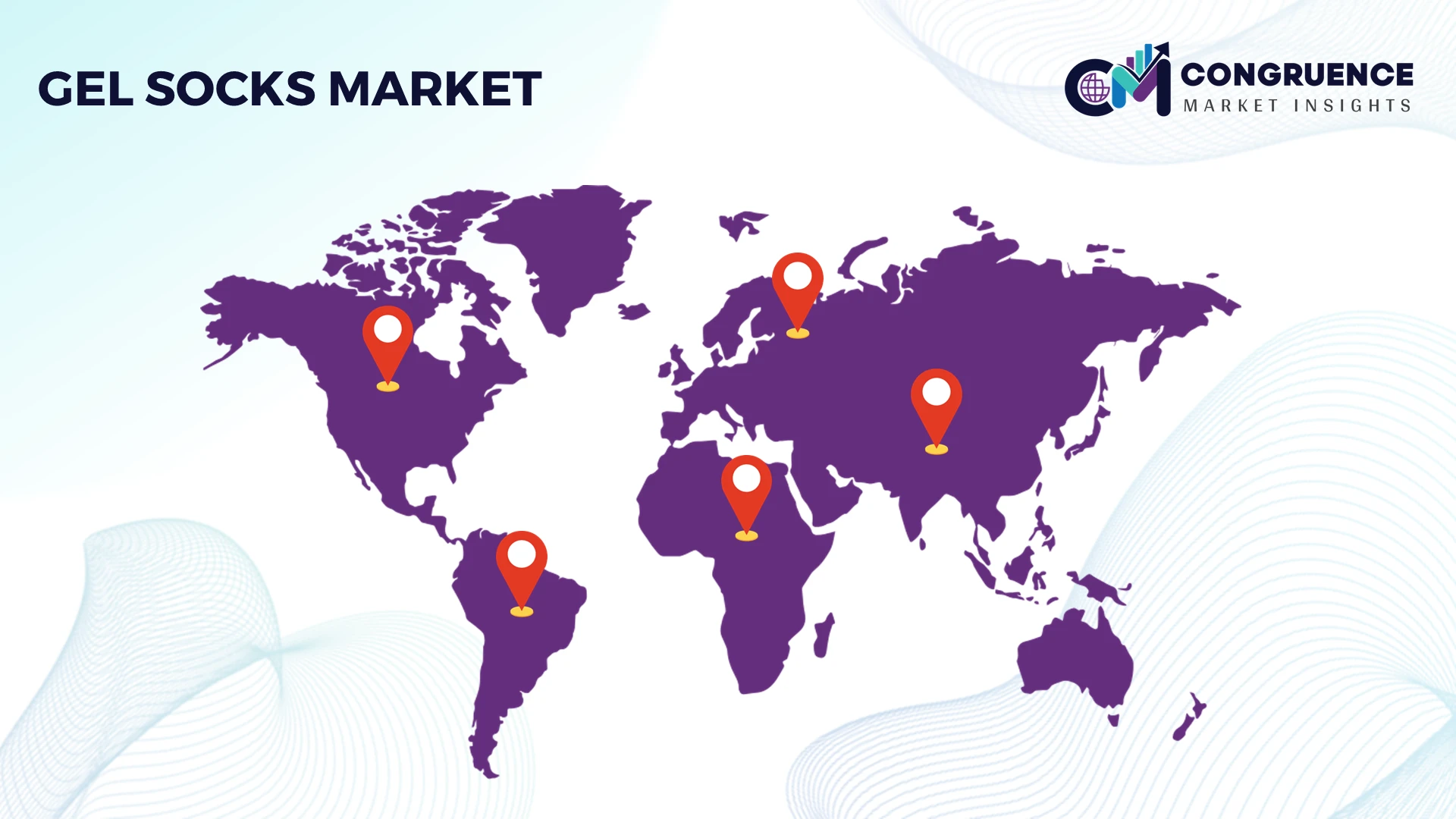
North America commands an estimated 34% of the global Gel Socks Market, supported by established podiatry services, specialized foot care retail networks, and consumer spending on therapeutic comfort products. The United States anchors regional demand through pharmacy distribution, dermatology applications, and specialized cushioning products. Canada contributes through healthcare retail chains and established personal care distribution. Silicone gel liners, moisturizing heel socks, and anatomical cushioning products are increasingly differentiated through material specifications and application specific packaging. Retailers are strengthening online assortment management and integrating consumer reviews into product selection. An illustrative operational improvement target of 12% faster inventory replenishment highlights opportunities for distributors using integrated retail forecasting. Manufacturers are prioritizing professional foot care partnerships, improved product documentation, and premium formulations to strengthen distribution margins and reduce product substitution.
United States Market Outlook: The United States benefits from established podiatric care infrastructure, specialized medical product distribution, and extensive consumer retail coverage. Medicare therapeutic footwear provisions support eligible diabetic patients, although standalone gel socks are not automatically covered. Manufacturers are emphasizing medical grade silicone, product durability, and clear therapeutic positioning. The country's approximately 40.1 million adults living with diabetes in 2023 reinforce the importance of appropriate foot protection and preventive care.
Regulatory Compliance and Sustainable Product Packaging Transformation
Europe represents an estimated 25% of global gel sock demand, with Germany, the United Kingdom, France, and Italy supporting established healthcare and personal care distribution. Product differentiation increasingly reflects material safety, packaging efficiency, and consumer preference for reusable foot care accessories. European Union REACH requirements influence chemical substance management, while the Packaging and Packaging Waste Regulation establishes a stronger framework for packaging circularity. Manufacturers are reviewing silicone formulations, material traceability, and packaging specifications to improve regulatory readiness. An illustrative 15% packaging material reduction target demonstrates potential operational savings through compact product presentation. Pharmacy retailers are expanding application specific assortments covering heel moisturization, cushioning, and localized foot protection. Suppliers with documented material compliance and consistent product specifications gain advantages in retailer qualification, procurement negotiations, and cross border distribution.
Germany Market Outlook: Germany offers a strong operating environment through its established medical technology sector, pharmacy infrastructure, and specialized orthopedic retail networks. Its healthcare system emphasizes product safety and documented performance, supporting differentiated gel sock offerings. Approximately 8.7 million adults aged 20 to 79 were living with diabetes in Germany in 2024, highlighting the relevance of preventive foot care. Manufacturers are focusing on validated materials, durable construction, and specialist distribution partnerships.
Manufacturing Scale and Digital Retail Integration
Asia Pacific accounts for an estimated 28% of global gel sock demand, supported by China's textile manufacturing ecosystem, India's expanding healthcare distribution, and Japan's established personal care product sector. China provides significant production advantages through integrated textile processing, silicone material sourcing, packaging operations, and export logistics. Manufacturers can coordinate fabric preparation, gel application, assembly, and packaging within concentrated industrial networks. India contributes substantial potential for affordable foot care products through pharmacy expansion and digital retail channels. Japan emphasizes product quality, anatomical fit, and specialized comfort applications. An illustrative 15% reduction in production lead time through coordinated supplier scheduling demonstrates the operational value of manufacturing concentration. Companies are strengthening local distributor relationships, developing differentiated product specifications, and improving manufacturing flexibility to serve both domestic and international retail requirements.
China Market Outlook: China maintains a competitive manufacturing position through extensive textile production capacity, established polymer processing infrastructure, and integrated ecommerce distribution. Manufacturing clusters in Zhejiang, Jiangsu, and Guangdong support product development, packaging customization, and export fulfillment. China's approximately 148 million adults living with diabetes in 2024 reinforce the relevance of preventive foot care. Suppliers are investing in flexible production systems and application specific product portfolios to serve domestic retailers and international buyers.
Pharmacy Distribution Expansion and Affordable Foot Care Positioning
South America represents an estimated 7% of global gel sock demand, with Brazil accounting for a substantial portion of regional consumption. Pharmacy retail networks, beauty product distributors, and specialist foot care providers shape market accessibility. Brazil's established cosmetics manufacturing sector supports moisturizing product positioning, while Argentina and Chile provide additional distribution opportunities through organized retail channels. Imported silicone products compete with locally packaged personal care accessories, making logistics efficiency and inventory management important commercial considerations. An illustrative 10% reduction in distribution handling costs through consolidated shipments highlights potential savings for regional distributors. Companies are developing accessible product formats, strengthening pharmacy relationships, and tailoring packaging to Portuguese and Spanish speaking consumers. Import dependence and uneven specialist healthcare access remain important considerations for market penetration and product availability.
Brazil Market Outlook: Brazil combines a substantial consumer population with established cosmetics production, pharmacy retail infrastructure, and specialist healthcare services. São Paulo provides an important distribution and commercial coordination center. The country had approximately 16.6 million adults living with diabetes in 2024, reinforcing the relevance of appropriate foot care products. Manufacturers are emphasizing affordable moisturizing socks, targeted heel protection, and partnerships with pharmacy distributors to improve accessibility.
Healthcare Retail Modernization and Specialized Foot Care Access
The Middle East & Africa region represents an estimated 6% of global gel sock demand, with the United Arab Emirates, Saudi Arabia, and South Africa supporting organized healthcare and personal care distribution. Gulf countries benefit from established pharmacy networks, specialist medical facilities, and premium consumer retail channels. Saudi Arabia's healthcare transformation initiatives are strengthening preventive care infrastructure, while the United Arab Emirates supports international product distribution through established logistics networks. South Africa provides access to organized pharmacy retail and regional distribution systems. An illustrative 12% improvement in stock availability through centralized inventory planning highlights the operational benefits of coordinated procurement. Manufacturers are prioritizing distributor agreements, climate appropriate product packaging, and differentiated cushioning solutions. Product affordability and specialist retail coverage remain important factors influencing wider adoption.
Saudi Arabia Market Outlook: Saudi Arabia benefits from Vision 2030 healthcare modernization, expanding private healthcare participation, and established pharmacy distribution networks. Riyadh and Jeddah provide important commercial centers for imported therapeutic and personal care products. The country's approximately 5.3 million adults living with diabetes in 2024 underline the importance of preventive foot care services. Suppliers are strengthening pharmacy partnerships, introducing premium cushioning products, and improving local product availability through regional distribution arrangements.
Competition in the Gel Socks Market centers on Scholl's Wellness, Silipos, NatraCure, Earth Therapeutics, and ZenToes, challenged by specialized brands including PediFix and Dr. Frederick's Original. The leading five collectively hold an estimated 35% share in an illustrative fragmented market model, rather than a verified industry concentration figure. Scholl's competes through retail recognition, Silipos through therapeutic cushioning, and NatraCure through moisturizing formulations. A modeled 10% reduction in packaging costs favors scaled retailers, while 15% shorter replenishment cycles reward suppliers with integrated inventory systems. Product differentiation also depends on gel durability, anatomical fit, and consistent polymer quality. ZenToes emphasizes pharmacy and mass retail reach, while specialist suppliers develop targeted heel and toe products. Contract manufacturing partnerships improve assortment flexibility, but material qualification and retailer shelf access remain meaningful entry barriers. Winning requires reliable gel performance, disciplined sourcing, application specific product design, and distribution partnerships that protect availability without eroding margins consistently.
Scholl's Wellness Co.
Silipos Holding LLC
NatraCure
Earth Therapeutics
ZenToes
Dr. Frederick's Original
PediFix Inc.
ProFoot Inc.
Vive Health
Bunga Pads
Armstrong Amerika
Pedder Johnson
Upper Canada Soap
ONYX Brands
Medical grade silicone elastomers, hydrogel liners, and controlled polymer molding underpin current gel sock manufacturing. Silicone cushioning distributes localized pressure, while moisturizing liners retain topical formulations against the skin. Automated dispensing systems offer a modeled 12% reduction in material waste compared with manual coating, improving production consistency. Established manufacturers increasingly integrate programmable dosing with textile assembly, particularly for heel protection and reusable moisturizing products. These improvements support tighter quality specifications and more predictable manufacturing costs.
Emerging technologies include breathable silicone composites, antimicrobial textile treatments, and digitally optimized cushioning geometry. Computer aided design enables targeted gel placement around pressure sensitive foot regions, while automated inspection can reduce dimensional defects by an estimated 15% under controlled production conditions. Adoption remains concentrated in specialized manufacturing operations rather than standardized across the industry. Suppliers combining advanced materials with repeatable processing gain advantages in product differentiation, retailer qualification, and professional foot care distribution.
Between 2026 and 2028, precision molding, machine vision inspection, and recyclable packaging integration will influence manufacturing investment. A modeled production upgrade targeting 20% faster inspection throughput demonstrates potential operational benefits without compromising material verification. Manufacturers are prioritizing modular equipment, formulation testing, and digital production records to improve traceability. Competitive advantage increasingly favors suppliers capable of delivering consistent cushioning performance, lower processing losses, and scalable product customization across consumer and therapeutic channels.
October 2025: Kao Corporation introduced Curél Boosting Heel Care Socks in Japan, incorporating Fine Fiber technology with fibers approximately 1/100th of human hair thickness. The innovation strengthened differentiated overnight heel moisturization and sensitive skin product positioning. Source: kao.com.
June 2025: ZenToes launched premium compression socks featuring Basic, Anti Slip, and Gel Padded designs across Target, Walmart, and Amazon. The three product styles expanded retail accessibility and strengthened the company's competitive positioning in functional foot cushioning products. Source: prnewswire.com.
April 2025: NatraCure promoted its Moisturizing Gel Socks within a five product seasonal recovery collection, positioning the product at $11.99. The merchandising initiative reinforced accessible home foot hydration and expanded cross selling opportunities within its established therapeutic personal care assortment. Source: milled.com.
June 2025: Accessity's published annual report documented Hidey Style's $20,000 financing for inventory expansion and marketing. Its gel enhanced, blister protective socks gained additional production support, illustrating how targeted financing helps specialist footwear businesses prepare for broader consumer exposure. Source: accessity.org.
The Gel Socks Market Report examines industry performance from 2026 to 2033 across five product types: Full Foot Gel Socks, Heel Gel Socks, Toe Gel Socks, Moisturizing Gel Socks, and Compression Gel Socks. Application coverage includes Dry Skin Treatment, Cracked Heel Care, Callus Reduction, Foot Moisturization, and Foot Pain Relief. End user analysis evaluates Individual Consumers, Diabetic Care Centers, Podiatry Clinics, Beauty and Spa Centers, and Hospitals. Regional coverage spans North America, Europe, Asia Pacific, South America, and the Middle East & Africa.
The report assesses silicone elastomers, hydrogel formulations, precision molding, digital manufacturing, and specialized cushioning technologies. Analytical segmentation estimates position moisturizing products at 34% of type demand and individual consumers at 58% of end user demand. Competitive benchmarking, distribution analysis, regulatory considerations, and manufacturing efficiency indicators support investment prioritization, geographic expansion, and product differentiation strategies.
| Report Attribute/Metric | Report Details |
|---|---|
Market Revenue in 2025 | USD 569.5 Million |
Market Revenue in 2033 | USD 1613.18 Million |
CAGR (2026 - 2033) | 13.9% |
Base Year | 2025 |
Forecast Period | 2026 - 2033 |
Historic Period | 2021 - 2025 |
Segments Covered | By Type
By Application
By End-User
|
Key Report Deliverable | Revenue Forecast, Growth Trends, Market Dynamics, Segmental Overview, Regional and Country-wise Analysis, Competition Landscape |
Region Covered | North America, Europe, Asia-Pacific, South America, Middle East, Africa |
Key Players Analyzed | Scholl's Wellness Co., Silipos Holding LLC, NatraCure, Earth Therapeutics, ZenToes, Dr. Frederick's Original, PediFix Inc., ProFoot Inc., Vive Health, Bunga Pads, Armstrong Amerika, Pedder Johnson, Upper Canada Soap, ONYX Brands |
Customization & Pricing | Available on Request (10% Customization is Free) |




