
Reports
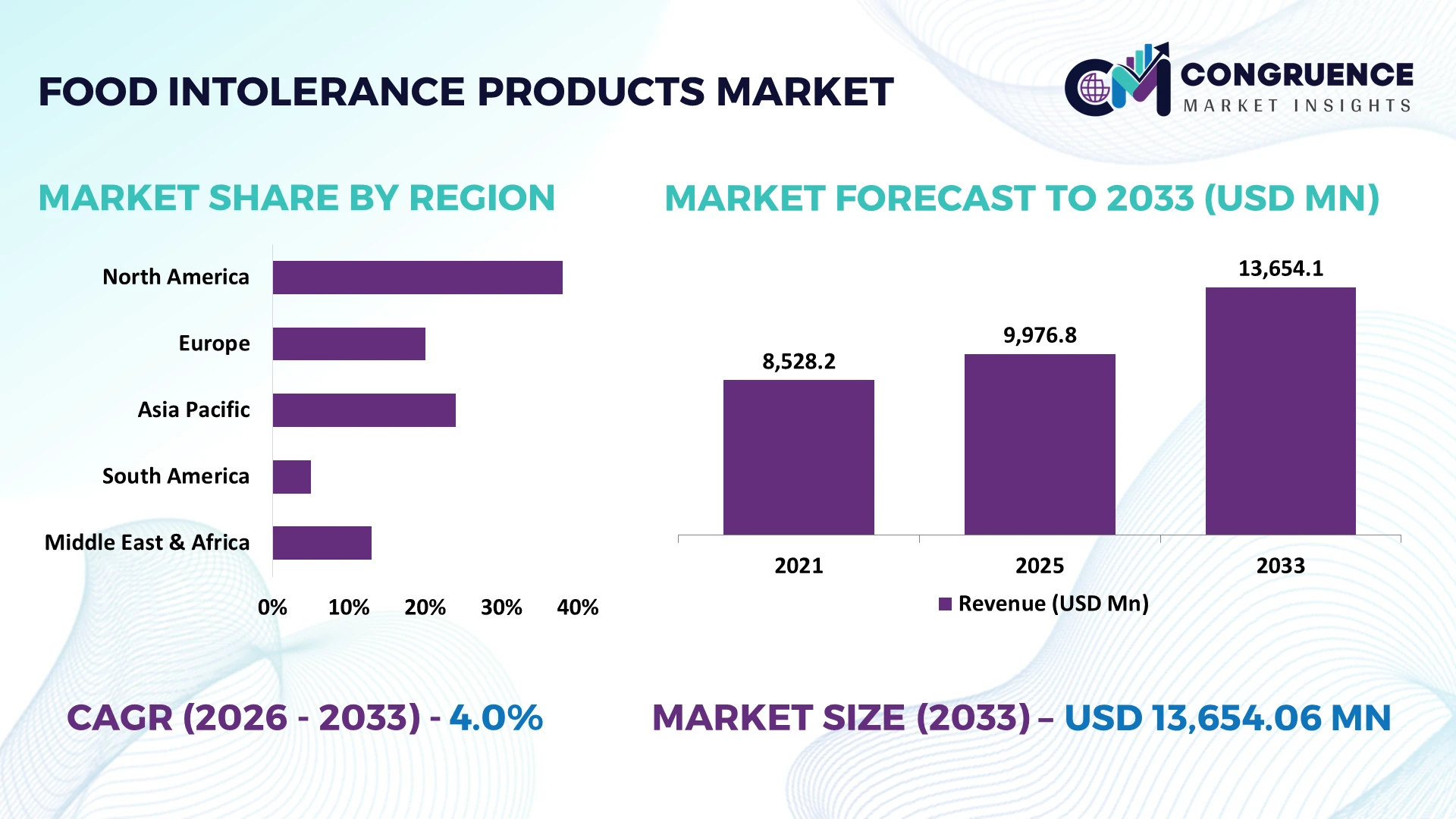
The Global Food Intolerance Products Market was valued at USD 9976.8 Million in 2025 and is anticipated to reach a value of USD 13654.06 Million by 2033 expanding at a CAGR of 4% between 2026 and 2033. Growth is driven by medically diagnosed lactose intolerance and celiac disease, improved availability of enzyme-treated dairy alternatives, gluten-free product innovation, and mandatory allergen labeling requirements.
The United States represents a major market for food intolerance products, supported by extensive specialty food distribution, established dairy-alternative manufacturing, and advanced ingredient processing capabilities. Approximately 1% of Americans have celiac disease, while lactose malabsorption affects an estimated 36% of the population. Compared with Germany, the United States benefits from a larger domestic packaged food market and extensive retail distribution infrastructure. FDA gluten-free labeling requirements establish a threshold below 20 parts per million, encouraging manufacturers to invest in validated testing, ingredient traceability, and dedicated production controls.
Manufacturers prioritizing clinically appropriate formulations, certified ingredient sourcing, and accessible retail distribution are positioned to strengthen consumer confidence and premium product differentiation.
Market Size & Growth: USD 9,976.8 million in 2025, reaching USD 13,654.06 million by 2033 at 4% CAGR, supported by lactose-free dairy innovation and specialized dietary formulations.
Top Growth Drivers: Approximately 65% global lactose malabsorption prevalence, 1% celiac disease prevalence, and growing demand for clinically appropriate gluten-free alternatives.
Short-Term Forecast: By 2028, manufacturers will prioritize lower-cost enzymatic processing and improved gluten testing to strengthen product affordability and compliance.
Emerging Technologies: Lactase enzyme processing, precision fermentation, and AI-assisted formulation are transforming 3 major product categories: dairy, bakery, and specialized nutrition.
Regional Leaders: Asia-Pacific leads lactose-free consumption opportunities; North America emphasizes certified gluten-free products; Europe advances allergen-controlled food manufacturing under EU Regulation 1169/2011.
Consumer/End-User Trends: Approximately 36% of Americans experience lactose malabsorption, strengthening demand for lactose-free milk, yogurt, and digestive-friendly dairy products.
Pilot/Case Example: In 2026, Philadelphia introduced lactose-free cream cheese in the United States, extending enzyme-treated dairy innovation into a new mainstream product category.
Competitive Landscape: Danone, Nestlé, General Mills, Dr. Schär, and Arla Foods compete through specialized formulations, retail distribution, and differentiated dietary product portfolios.
Regulatory & ESG Impact: FDA regulations require gluten-free labeled foods to contain less than 20 ppm gluten, reinforcing laboratory testing and ingredient traceability.
Investment & Funding: Manufacturers are prioritizing investments across 3 areas: allergen-controlled production, enzyme-processing capacity, and alternative ingredient sourcing.
Innovation & Future Outlook: By 2033, dual-claim formulations, personalized nutrition, and advanced ingredient processing will reshape product development across gluten-free and lactose-free categories.
The Food Intolerance Products Market is expanding across lactose-free dairy, gluten-free bakery, specialized nutritional products, and digestive-friendly packaged foods. Manufacturers are introducing enzyme-treated milk products, improved gluten-free flour blends, and plant-based alternatives designed to deliver familiar taste and texture. Approximately 65% of the global population experiences reduced lactose digestion after infancy, creating substantial opportunities for targeted product development. European allergen-labeling requirements and stricter manufacturing traceability are encouraging dedicated production lines and ingredient verification. The growing availability of products addressing multiple dietary restrictions is reshaping retail assortments, establishing important strategic considerations for manufacturers and distributors.
Food intolerance products are becoming strategically important as manufacturers shift from specialized dietary offerings toward mainstream food portfolios with clinically relevant formulations. Approximately 65% of adults worldwide experience lactose malabsorption, creating substantial demand for enzyme-treated dairy products and suitable alternatives. Regulatory requirements are also restructuring ingredient procurement and manufacturing practices. The European Union's mandatory allergen disclosure framework encourages manufacturers to strengthen supplier verification, production segregation, and product traceability, making compliance capabilities increasingly important for competitive positioning.
Technological innovation is improving manufacturing efficiency and product acceptance. Modern lactase enzyme processing can achieve over 99% lactose hydrolysis under validated processing conditions, compared with conventional untreated milk, which retains approximately 4.5–5% lactose. The United States emphasizes certified gluten-free packaged foods, while China offers substantial opportunities for lactose-reduced dairy formulations. Manufacturers are introducing improved starch blends, enzymatic processing systems, and alternative protein ingredients to address texture, nutritional quality, and digestive compatibility.
Between 2026 and 2028, investment priorities will emphasize automated allergen testing, formulation optimization, and dedicated manufacturing capacity. Arla Foods and Danone are expanding specialized dairy capabilities, while Dr. Schär emphasizes gluten-free product innovation. Companies integrating ingredient verification, efficient processing, and established distribution networks will strengthen product differentiation and operational resilience.
Increasing recognition of lactose intolerance and celiac disease is reshaping food manufacturing and retail assortment strategies. Approximately 65% of the global population experiences reduced lactose digestion after infancy, while celiac disease affects around 1% of people worldwide. In the United States, lactose malabsorption affects approximately 36% of the population, supporting demand for suitable dairy alternatives and enzyme-treated products. FDA gluten-free labeling regulations establish a threshold below 20 parts per million, encouraging investment in verified formulations and ingredient controls. Danone, Lactalis, and General Mills are strengthening specialized product portfolios through formulation improvements and retail distribution. Manufacturers offering familiar taste, nutritional equivalence, and reliable dietary suitability gain stronger repeat-purchase potential than brands relying exclusively on free-from labeling.
Food intolerance product manufacturing faces cost pressures from certified raw materials, dedicated processing equipment, and restricted ingredient sourcing. Gluten-free formulations frequently require specialized starches, hydrocolloids, and protein blends to compensate for the absence of gluten functionality. Conventional wheat flour typically contains approximately 8–13% protein, making direct replacement technically difficult in bakery applications. FDA regulations require gluten-free labeled products to contain less than 20 ppm gluten, increasing verification and segregation requirements. In the United States, manufacturers also face variability in specialty grain procurement and certified ingredient availability. Dr. Schär and General Mills mitigate these pressures through supplier qualification, controlled manufacturing processes, and optimized ingredient combinations. Efficient formulation design becomes critical for maintaining accessible pricing without compromising product integrity.
Advanced fermentation and ingredient engineering create opportunities to improve nutritional quality and expand specialized food applications. Lactase treatment can achieve over 99% lactose hydrolysis under optimized processing conditions, enabling manufacturers to develop lactose-free dairy products without eliminating milk proteins. Precision fermentation also offers routes to produce selected dairy proteins without conventional animal milk production, although finished formulations still require appropriate allergen labeling. In India, lactose malabsorption prevalence varies substantially across population groups, creating opportunities for targeted dairy innovation. Manufacturers are developing products combining lactose-free, reduced-sugar, and high-protein characteristics. Danone, Nestlé, and emerging food biotechnology companies are investing in formulation research and ingredient partnerships. Competitive differentiation increasingly depends on delivering multiple nutritional benefits without sacrificing texture, taste, or manufacturing efficiency.
Maintaining dietary suitability across large-scale production networks presents significant operational challenges. Celiac disease affects approximately 1% of the global population, making gluten cross-contact prevention essential for products intended for affected consumers. FDA requirements limit gluten in labeled products to less than 20 ppm, while European regulations establish mandatory disclosure of 14 specified allergens. These requirements demand coordinated supplier documentation, validated cleaning procedures, and consistent analytical testing. In Germany, manufacturers distributing products across European markets must maintain traceability through complex ingredient supply networks. General Mills, Dr. Schär, and specialized contract manufacturers are strengthening quality assurance systems, employee training, and manufacturing segregation. The central competitive challenge is maintaining consistent nutritional composition and verified dietary suitability while expanding production across multiple facilities and product categories.
Private Labels Expand Specialized Food Access: Retailers are extending gluten-free and lactose-free assortments beyond premium brands into mainstream grocery categories. In the United States, FDA gluten-free labeling requires less than 20 ppm gluten, while conventional dairy milk contains approximately 4.5–5% lactose. Walmart and Aldi are strengthening private-label specialty offerings, using consolidated purchasing and supplier partnerships to improve affordability and shelf availability.
Texture Engineering Improves Gluten-Free Bakery: Manufacturers are adopting hydrocolloid systems, enzyme-modified starches, and alternative flour combinations to improve bread elasticity and moisture retention. Wheat flour commonly contains 8–13% protein, creating functional differences when replaced with gluten-free ingredients. Dr. Schär and General Mills are refining formulations and processing conditions, improving product consistency while reducing dependence on expensive specialty ingredients.
Digital Allergen Traceability Gains Importance: European Regulation 1169/2011 requires disclosure of 14 specified allergens, while US food labeling rules recognize 9 major allergens. Manufacturers increasingly integrate ingredient databases, barcode verification, and digital batch records into quality management workflows. Nestlé and Unilever are strengthening supplier traceability and ingredient verification, improving recall responsiveness and reducing labeling errors across complex product portfolios.
Foodservice Dietary Transparency Becomes Operational Priority: Restaurants, institutional kitchens, and catering providers are standardizing ingredient documentation for specialized meals. European requirements cover 14 specified allergens, while US gluten-free claims remain subject to the 20 ppm threshold. Foodservice operators are adopting digital menus, staff training, and segregated preparation procedures. Ingredient suppliers are responding with portion-controlled products and standardized specifications, improving kitchen consistency and dietary communication.
Lactose-Free Products represent a major established segment of the Food Intolerance Products Market, supported by extensive dairy processing infrastructure and widespread consumer familiarity. Approximately 65% of the global population experiences lactose malabsorption, although symptoms and dietary requirements differ substantially. Lactase-treated milk, yogurt, and cheese benefit from established cold-chain distribution and processing methods that preserve conventional dairy characteristics. Danone, Arla Foods, and Lactalis compete through product diversification and expanded retail availability. Gluten-Free Products form another important segment, particularly across packaged bakery and cereal categories, where manufacturers emphasize certified ingredients and improved sensory quality.
Low-FODMAP Products represent an emerging growth opportunity as dietary management of irritable bowel syndrome becomes more structured. Irritable bowel syndrome affects approximately 4% of adults globally under Rome IV diagnostic criteria, supporting specialized formulation opportunities. Dairy-Free Products address consumers avoiding milk ingredients, while Allergen-Free Products emphasize controlled ingredient sourcing and cross-contact prevention. Manufacturers are strengthening formulation research, certification partnerships, and specialized distribution. Investment priorities increasingly favor products offering verified dietary suitability alongside familiar taste and convenient consumption formats.
Dairy Alternatives represent a leading application for food intolerance products, supported by frequent consumption occasions and established retail distribution. Milk, yogurt, cheese alternatives, and lactose-reduced formulations address consumers seeking digestive compatibility without sacrificing familiar dietary habits. Conventional milk contains approximately 4.5–5% lactose, making enzymatic treatment commercially relevant for mainstream dairy processing. Danone, Arla Foods, and Nestlé are refining formulations and expanding specialized product ranges. Bakery and Confectionery remains important for gluten-free breads, biscuits, and desserts, where texture development and ingredient functionality influence consumer acceptance.
Snacks and Convenience Foods represent an emerging application opportunity as consumers seek portable products meeting multiple dietary requirements. Beverages benefit from lactose-free dairy drinks and plant-based formulations, while Nutritional Supplements serve individuals requiring specialized digestive or nutritional support. Manufacturers increasingly combine ingredient screening, sensory testing, and automated quality control to strengthen product consistency. In the United States, the 20 ppm gluten-free labeling threshold influences supplier selection and manufacturing verification. Companies offering convenient formats with reliable ingredient transparency gain stronger access to mainstream retail channels.
Retail Consumers represent the primary final-demand group for food intolerance products, purchasing specialized foods through supermarkets, pharmacies, specialty retailers, and digital grocery platforms. Consumer purchasing decisions reflect diagnosed dietary conditions, digestive comfort, ingredient transparency, and product affordability. Approximately 36% of Americans experience lactose malabsorption, although not all require complete lactose avoidance. Food and Beverage Manufacturers form an important commercial customer group, incorporating specialized ingredients into packaged products and private-label formulations. Danone, General Mills, and Dr. Schär compete through differentiated assortments, recognizable labeling, and established distribution partnerships.
Healthcare and Nutrition Providers represent a specialized growth opportunity as dietitians and clinical nutrition professionals guide structured dietary interventions. Foodservice Providers are expanding dietary accommodation practices across restaurants, institutional catering, and hospitality operations. European labeling rules identify 14 specified allergens, increasing requirements for ingredient documentation and communication. Manufacturers are developing portion-controlled products, professional-use ingredient specifications, and targeted educational materials. Competitive positioning increasingly depends on combining clinically appropriate formulations with accessible purchasing channels and dependable product information.
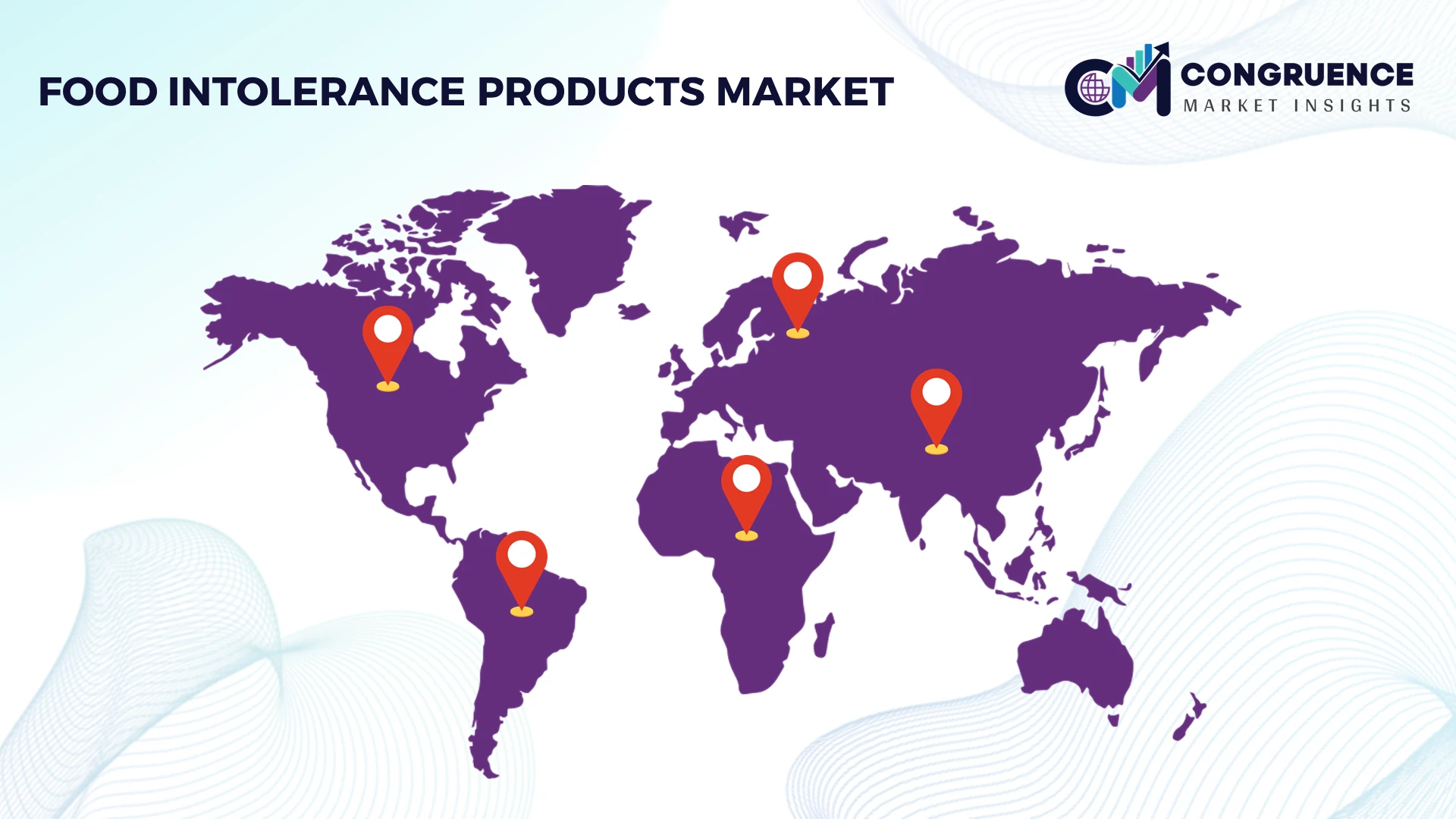
North America accounted for the largest market share at approximately 35% in 2025 however, Asia-Pacific is expected to register the fastest growth, expanding at a CAGR of approximately 5.8% between 2026 and 2033.
Specialized Nutrition Innovation Strengthens Mainstream Retail Penetration
North America leads the Food Intolerance Products Market through established specialty food manufacturing, extensive retail distribution, and strong consumer awareness of dietary restrictions. The United States accounts for the largest regional demand concentration, supported by gluten-free bakery manufacturing, lactose-free dairy processing, and specialized nutritional formulations. Canada contributes through plant-based dairy alternatives, allergen-controlled food production, and expanding specialty grocery distribution. Approximately 1% of Americans have celiac disease, reinforcing requirements for certified gluten-free products and dedicated manufacturing controls. FDA labeling regulations establish a gluten threshold below 20 parts per million, encouraging manufacturers to strengthen ingredient verification and analytical testing. General Mills, Danone, and Conagra Brands compete through differentiated product portfolios, private-label partnerships, and expanded retail accessibility. Regional investment increasingly emphasizes affordable specialized foods, formulation quality, and efficient manufacturing systems that support mainstream purchasing.
United States Market Outlook: The United States benefits from extensive packaged food manufacturing infrastructure, advanced ingredient processing capabilities, and established dietary product distribution. Approximately 36% of Americans experience lactose malabsorption, creating substantial opportunities for enzyme-treated dairy products and digestive-friendly alternatives. Companies including Lactalis, Nestlé, and Dr. Schär are strengthening specialized product offerings, while digital grocery platforms improve access to certified dietary products beyond conventional specialty retailers.
Regulatory Standardization Advances Certified Dietary Food Manufacturing
Europe maintains a strong competitive position through established gluten-free food production, sophisticated dairy processing, and comprehensive ingredient labeling regulations. Germany, Italy, France, and the United Kingdom represent important markets, supported by specialty food manufacturers and established grocery distribution networks. European Regulation 1169/2011 requires disclosure of 14 specified allergens, encouraging standardized ingredient documentation and supplier verification. Gluten-free labeling regulations establish a maximum gluten concentration of 20 mg/kg, strengthening demand for validated manufacturing processes. Dr. Schär, Arla Foods, and Lactalis compete through specialized formulations, controlled production facilities, and product certification capabilities. European manufacturers are also developing lactose-reduced dairy products and improved gluten-free bakery formulations using alternative starches and functional ingredients. Competitive differentiation increasingly depends on reliable ingredient traceability, consistent sensory performance, and efficient distribution across national markets with different consumer preferences.
Germany Market Outlook: Germany benefits from sophisticated food processing infrastructure, established discount retail networks, and extensive private-label manufacturing capabilities. German food labeling requirements align with European allergen regulations, supporting standardized product verification. Retailers including Aldi and Lidl distribute specialized dietary products through mainstream grocery channels. Domestic manufacturers emphasize gluten-free bakery innovation, dairy-alternative formulations, and ingredient transparency, creating opportunities for certified suppliers and efficient contract manufacturers.
Dairy Reformulation and Urban Retail Expansion Accelerate Adoption
Asia-Pacific represents a major opportunity for food intolerance products, supported by widespread lactose malabsorption, expanding packaged food manufacturing, and increasingly diversified urban diets. China, Japan, India, and Australia contribute distinct consumption patterns and production capabilities. Lactose malabsorption affects substantial proportions of East Asian populations, supporting commercial interest in lactose-reduced dairy products and suitable alternatives. China's large dairy processing industry is introducing specialized formulations, while Japan emphasizes digestive-friendly packaged foods and functional ingredients. Australia contributes established gluten-free manufacturing capabilities and sophisticated food labeling standards. Food Standards Australia New Zealand regulates allergen declarations, encouraging manufacturers to maintain ingredient transparency and controlled processing. Danone, Nestlé, and regional dairy processors are adapting product formulations to local dietary habits. Competitive advantage depends on accessible pricing, localized flavors, and distribution through supermarkets and digital grocery platforms.
China Market Outlook: China benefits from extensive food manufacturing infrastructure, large-scale dairy processing, and established digital commerce networks. National dietary guidelines recommend approximately 300–500 grams of dairy products daily, encouraging manufacturers to develop accessible dairy formulations. Yili and Mengniu have established substantial domestic processing and distribution capabilities, while international suppliers introduce specialized nutritional products. Lactose-reduced formulations and convenient packaged beverages provide opportunities to address digestive preferences without requiring complete dairy avoidance.
Specialized Dairy Processing Expands Dietary Product Accessibility
South America's Food Intolerance Products Market is shaped by established dairy production, expanding specialty bakery manufacturing, and increasing availability of dietary alternatives through mainstream retailers. Brazil dominates regional manufacturing and consumption, supported by extensive dairy processing facilities and established packaged food companies. Argentina contributes dairy ingredient production, while Chile emphasizes specialized nutrition and premium grocery products. Brazil's food labeling regulations require clear identification of specified allergens, supporting standardized ingredient documentation and controlled production. The country's lactose labeling framework distinguishes products based on lactose content, encouraging manufacturers to develop verified formulations. Lactalis, Nestlé, and regional dairy producers compete through lactose-free milk, yogurt, and specialized packaged foods. Distribution limitations outside major metropolitan areas and variable specialty ingredient costs influence product accessibility, encouraging localized manufacturing, supplier diversification, and partnerships with national retail chains.
Brazil Market Outlook: Brazil maintains a strong market position through established dairy manufacturing, large consumer markets, and specialized food labeling requirements. ANVISA regulations classify lactose-free foods using defined lactose concentration limits, including a maximum of 100 mg per 100 grams or milliliters for lactose-free claims. Manufacturers are expanding enzyme-treated dairy offerings and improving analytical verification. São Paulo's extensive food processing and distribution infrastructure supports specialized product development and national retail penetration.
Modern Retail Infrastructure Supports Specialized Nutrition Distribution
The Middle East & Africa Food Intolerance Products Market is influenced by expanding modern grocery networks, imported specialty food availability, and growing investment in local food manufacturing. Saudi Arabia and the United Arab Emirates lead premium dietary product distribution through established supermarkets, pharmacies, and international foodservice networks. South Africa contributes specialized food processing capabilities and established retail infrastructure. Gulf countries increasingly emphasize food security and domestic manufacturing, encouraging investments in dairy processing and alternative ingredient supply chains. Saudi Arabia's Vision 2030 economic diversification supports food manufacturing modernization and private-sector participation. Danone, Nestlé, and regional dairy manufacturers compete through specialized nutritional formulations and distribution partnerships. Imported gluten-free ingredients and temperature-sensitive dairy products require reliable logistics, making localized processing and controlled storage important operational advantages for suppliers targeting expanding urban consumer markets.
Saudi Arabia Market Outlook: Saudi Arabia benefits from substantial domestic dairy processing capacity, modern retail infrastructure, and government initiatives supporting food manufacturing localization. Almarai operates extensive integrated dairy production and distribution facilities, providing a foundation for specialized product development. The Saudi Food and Drug Authority regulates food labeling and allergen disclosure, strengthening requirements for accurate product information. Manufacturers are introducing lactose-free dairy formulations and specialized packaged foods to serve consumers seeking digestive compatibility and convenient dietary alternatives.
The Food Intolerance Products Market features competition between diversified food manufacturers and specialized dietary brands. Danone, Nestlé, General Mills, Lactalis, and Dr. Schär compete through dairy processing capabilities, gluten-free formulations, distribution access, and product certification. Their combined market share is not publicly established across consistently defined intolerance categories. Lactase processing can achieve over 99% lactose hydrolysis under validated conditions, while gluten-free products must satisfy the 20 ppm labeling threshold in major regulated markets. Manufacturers compete through ingredient functionality, sensory quality, manufacturing efficiency, and retail pricing. Danone and Lactalis emphasize dairy reformulation, while Dr. Schär concentrates on specialized gluten-free production. General Mills leverages established packaged food distribution, and Nestlé integrates nutritional research with diversified manufacturing. Private-label expansion increases pressure on premium pricing, while certified ingredient availability and dedicated production controls create entry barriers. Competitive leadership requires clinically appropriate formulations, dependable compliance, efficient processing, and accessible distribution networks.
Danone S.A.
Nestlé S.A.
General Mills, Inc.
Dr. Schär AG
Arla Foods
Lactalis Group
Conagra Brands, Inc.
The Hain Celestial Group, Inc.
Valio Ltd.
Freedom Foods Group (Noumi Limited)
Oatly Group AB
Beyond Meat, Inc.
Almarai Company
Yili Group
Enzymatic lactose hydrolysis, gluten-free extrusion, and allergen detection technologies underpin specialized food manufacturing. Industrial lactase treatment converts lactose into glucose and galactose, achieving over 99% hydrolysis under validated processing conditions, compared with untreated milk containing approximately 4.5–5% lactose. High-performance liquid chromatography and immunoassay testing strengthen ingredient verification, while automated dosing improves formulation consistency. Established dairy processors benefit from integrating enzyme treatment with existing pasteurization and packaging infrastructure, reducing equipment replacement requirements and preserving familiar product characteristics.
Emerging technologies include precision fermentation, enzyme-modified starches, and advanced protein structuring. Precision fermentation enables targeted production of selected dairy proteins, while hydrocolloid-assisted extrusion improves gluten-free bakery texture. Digital formulation platforms integrate ingredient functionality, nutritional composition, and allergen restrictions into product development workflows. Manufacturers are also deploying rapid gluten detection systems capable of measuring concentrations below 20 parts per million. Dr. Schär, Danone, and specialized ingredient suppliers gain competitive advantages through controlled processing, differentiated formulations, and improved manufacturing reproducibility.
Between 2026 and 2028, automated allergen monitoring, machine-learning formulation optimization, and continuous fermentation technologies will reshape specialized food production. Integrated traceability systems connect supplier documentation, batch records, and laboratory results, strengthening compliance and recall preparedness. Companies investing in validated processing technologies and scalable ingredient platforms will improve operational flexibility while addressing increasingly complex dietary requirements.
April 2025: Dr. Schär announced a USD 28 million expansion of its Swedesboro, New Jersey, manufacturing facility, incorporating advanced bakery production improvements. The investment strengthens gluten-free product consistency, manufacturing efficiency, and domestic supply capabilities for North American consumers.
August 2025: Danone introduced OIKOS FUSION, a lactose-free cultured dairy drink containing 23 grams of protein and 5 grams of prebiotic fiber. The innovation expands specialized nutrition into convenient functional beverages, addressing digestive health and muscle maintenance requirements.
February 2025: Arla Foods reported 4.1% growth across the Netherlands, Belgium, and France, supported partly by strong performance from Arla Lactofree. The development demonstrates established retail acceptance of lactose-free dairy and supports continued specialized product portfolio investment.
October 2025: General Mills reported that more than 1,200 North American product SKUs, representing over 25% of its portfolio, carried gluten-free labels. This established scale strengthens mainstream dietary accessibility and demonstrates extensive integration of specialized formulations across brands.
The Food Intolerance Products Market Report evaluates industry performance, manufacturing developments, competitive positioning, and investment opportunities between 2026 and 2033. Type segmentation covers Lactose-Free Products, Gluten-Free Products, Dairy-Free Products, Low-FODMAP Products, and Allergen-Free Products. Application analysis examines Bakery and Confectionery, Dairy Alternatives, Beverages, Snacks and Convenience Foods, and Nutritional Supplements. End-user coverage includes Food and Beverage Manufacturers, Retail Consumers, Foodservice Providers, and Healthcare and Nutrition Providers. Geographic assessment encompasses North America, Europe, Asia-Pacific, South America, and Middle East & Africa.
The report assesses enzymatic lactose processing, precision fermentation, gluten-free formulation engineering, and automated allergen verification. Quantitative analysis considers the 20 ppm gluten-free labeling threshold and global lactose malabsorption prevalence of approximately 65%. Competitive evaluation examines product innovation, ingredient sourcing, certification capabilities, and distribution strategies, supporting manufacturing investment, market entry, and long-term portfolio planning.
| Report Attribute/Metric | Report Details |
|---|---|
Market Revenue in 2025 | USD 9976.8 Million |
Market Revenue in 2033 | USD 13654.06 Million |
CAGR (2026 - 2033) | 4% |
Base Year | 2025 |
Forecast Period | 2026 - 2033 |
Historic Period | 2021 - 2025 |
Segments Covered | By Type
By Application
By End-User
|
Key Report Deliverable | Revenue Forecast, Growth Trends, Market Dynamics, Segmental Overview, Regional and Country-wise Analysis, Competition Landscape |
Region Covered | North America, Europe, Asia-Pacific, South America, Middle East, Africa |
Key Players Analyzed | Danone S.A., Nestlé S.A., General Mills, Inc., Dr. Schär AG, Arla Foods, Lactalis Group, Conagra Brands, Inc., The Hain Celestial Group, Inc., Valio Ltd., Freedom Foods Group (Noumi Limited), Oatly Group AB, Beyond Meat, Inc., Almarai Company, Yili Group |
Customization & Pricing | Available on Request (10% Customization is Free) |