
Reports
The Global Fog Computing Market was valued at USD 83.28 Million in 2025 and is anticipated to reach a value of USD 1565.7 Million by 2033 expanding at a CAGR of 44.3% between 2026 and 2033. Rising deployment of edge-enabled industrial automation, AI-driven analytics, private 5G networks, and latency-sensitive IoT infrastructure across manufacturing, energy, healthcare, and smart mobility is accelerating enterprise-scale fog computing adoption.
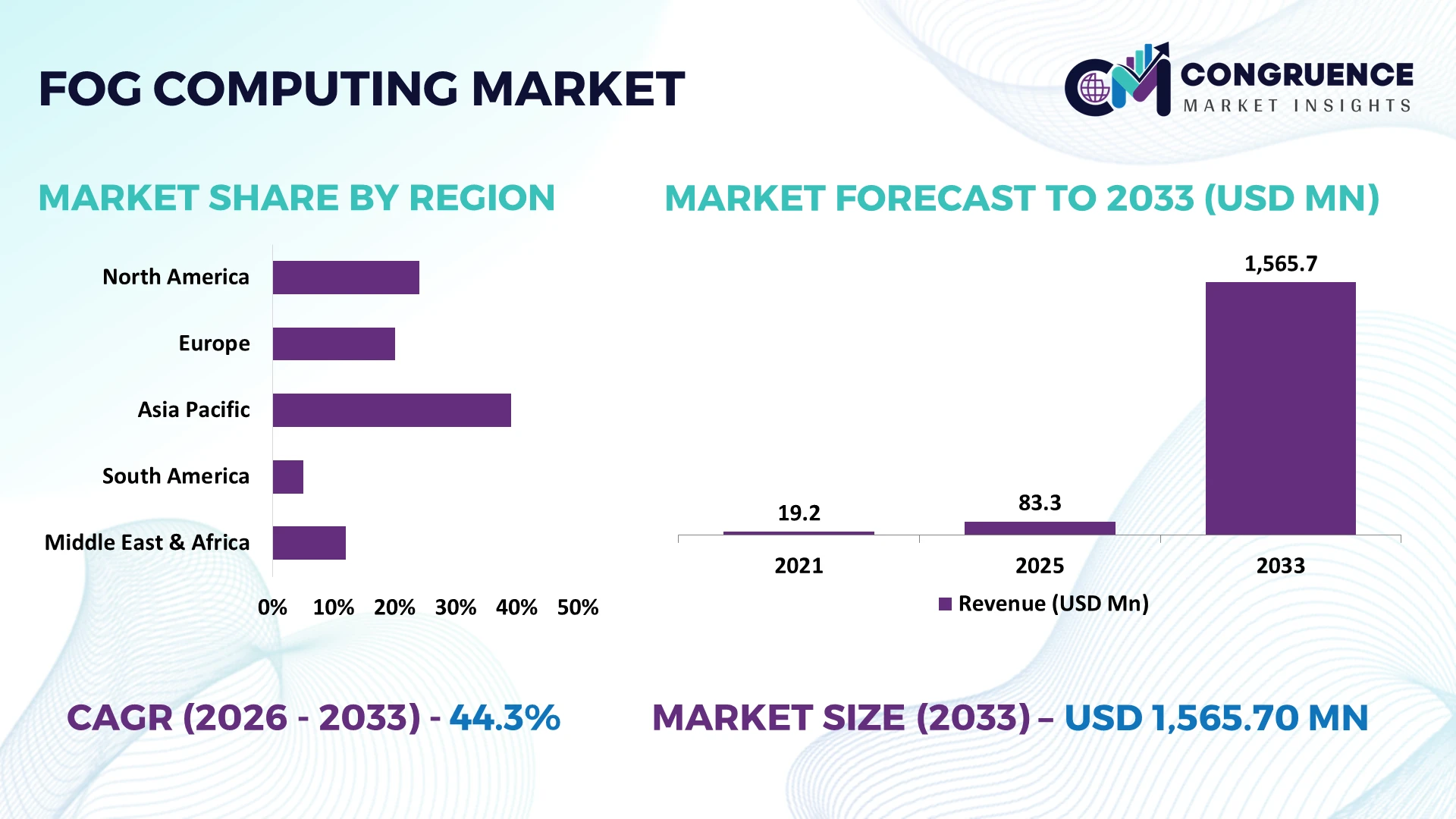
The United States leads the global Fog Computing Market with approximately 34% of deployment activity, supported by multi-billion-dollar investments in AI infrastructure, semiconductor manufacturing, and industrial digitalization across manufacturing, defense, and healthcare. China follows with nearly 27% share, driven by large-scale smart city deployments and advanced industrial IoT adoption, while ongoing technology supply-chain realignment encourages regional edge infrastructure expansion. More than 68% of large industrial enterprises in the U.S. have integrated edge-enabled computing architectures, reinforcing operational resilience and real-time decision-making.
Organizations investing early in scalable fog computing platforms gain stronger operational agility, lower network congestion, and faster AI-driven business execution across distributed environments.
Market Size & Growth: USD 83.28 Million in 2025, reaching USD 1565.7 Million by 2033 at 44.3% CAGR, driven by enterprise edge AI and distributed IoT infrastructure expansion.
Top Growth Drivers: AI-enabled edge analytics improves processing efficiency by 35%, industrial IoT deployments increase 30%, and private 5G adoption expands over 28%.
Short-Term Forecast: By 2028, real-time data processing reduces network latency by 45% while lowering cloud bandwidth costs by nearly 30%.
Emerging Technologies: AI inference, edge orchestration, digital twins, and containerized microservices improve workload efficiency by over 40% across distributed environments.
Regional Leaders: North America exceeds USD 540 Million, Asia-Pacific approaches USD 490 Million, and Europe surpasses USD 360 Million with accelerating industrial edge adoption.
Consumer/End-User Trends: More than 65% of large enterprises prioritize localized data processing to strengthen cybersecurity and support mission-critical operations.
Pilot/Case Example: In 2026, an industrial edge deployment improved predictive maintenance accuracy by 32% while reducing equipment downtime by 25%.
Competitive Landscape: Cisco holds approximately 18% market presence alongside IBM, Dell Technologies, Hewlett Packard Enterprise, and Intel through advanced edge platforms.
Regulatory & ESG Impact: Localized processing cuts data transmission energy requirements by around 20%, supporting digital sovereignty and sustainability initiatives amid evolving compliance frameworks.
Investment & Funding: More than USD 8 Billion supports edge infrastructure, strategic partnerships, AI integration, and regional expansion despite global supply-chain restructuring.
Innovation & Future Outlook: AI-native fog orchestration, autonomous edge management, and secure distributed computing accelerate enterprise transformation with faster operational intelligence.
Fog Computing Market demand is strengthening across industrial automation, connected healthcare, smart utilities, logistics, and autonomous mobility where ultra-low-latency processing is essential. AI-powered edge orchestration, lightweight container platforms, and secure device management improve operational efficiency by approximately 40%. Increasing digital sovereignty requirements and resilient semiconductor supply-chain strategies are accelerating localized computing deployments, setting the foundation for the strategic market assessment that follows.
Fog computing has become a strategic technology layer as enterprises shift mission-critical workloads closer to data sources to improve responsiveness, cybersecurity, and operational continuity. Infrastructure modernization, industrial automation, and digital sovereignty requirements are accelerating decentralized computing architectures, while supply-chain restructuring encourages localized processing across manufacturing, logistics, utilities, and healthcare environments. This transition strengthens business resilience by reducing dependence on centralized cloud infrastructure for latency-sensitive operations.
Modern fog computing platforms process real-time workloads up to 45% faster than legacy cloud-only architectures while reducing bandwidth utilization by nearly 35% through localized analytics. The United States maintains leadership through advanced industrial edge deployments and AI-enabled manufacturing, whereas Germany emphasizes Industry 4.0 integration with secure factory automation and deterministic networking. Over the next two to three years, enterprise edge orchestration adoption is expected to exceed 60% among large industrial organizations, supported by expanding private 5G and intelligent sensor ecosystems.
Manufacturers are deploying fog-enabled predictive maintenance platforms that reduce unplanned equipment downtime by approximately 28% while improving production scheduling accuracy. Technology providers are expanding edge software ecosystems, strengthening semiconductor partnerships, and investing in AI-ready infrastructure to improve deployment flexibility. Organizations that establish scalable fog computing ecosystems today will secure stronger competitive differentiation through faster operational intelligence, resilient infrastructure, and lower network dependency.
Industrial enterprises are prioritizing fog computing to support AI inference, machine vision, and real-time operational analytics closer to connected assets. More than 68% of large manufacturers are expanding edge computing deployments, while localized processing lowers network latency by around 45% and reduces cloud data transfer by nearly 30%. The United States continues investing in advanced semiconductor manufacturing and private 5G infrastructure, enabling broader deployment across factories, utilities, and transportation networks. In response, technology companies are expanding edge software portfolios, forming industrial automation partnerships, and developing AI-enabled orchestration platforms. The strategic outcome extends beyond faster processing, allowing organizations to improve production continuity, strengthen cybersecurity, and optimize distributed operational decision-making.
Fragmented hardware ecosystems and inconsistent communication standards remain structural barriers to large-scale fog computing implementation. Nearly 40% of enterprises report integration challenges between legacy operational technology and modern edge platforms, while deployment complexity increases implementation timelines by approximately 25%. Japan and several industrial economies continue operating mixed-generation manufacturing systems, complicating standardized deployment strategies. Hardware availability fluctuations and specialized networking component dependencies also create procurement uncertainty for infrastructure projects. Companies are addressing these limitations through open architecture adoption, localized supplier partnerships, long-term component agreements, and standardized edge management frameworks. Organizations capable of simplifying interoperability achieve lower deployment costs and faster enterprise-wide scalability without extensive infrastructure replacement.
The integration of generative AI, digital twins, and autonomous edge orchestration is creating new value across industrial and commercial operations. Intelligent edge processing improves predictive maintenance efficiency by nearly 32%, while automated workload distribution reduces processing overhead by around 27%. India is rapidly expanding smart manufacturing initiatives, creating opportunities for scalable fog-enabled industrial automation supported by national digital infrastructure programs. Technology vendors are increasing R&D investment, strengthening cloud-edge partnerships, and building software ecosystems that simplify multi-site deployment. A less visible opportunity lies in processing sensitive operational data locally, enabling faster compliance while lowering recurring cloud transmission costs and improving operational responsiveness across distributed facilities.
The long-term challenge extends beyond deployment toward managing secure, scalable, and interoperable distributed infrastructure. More than 55% of industrial organizations identify cybersecurity across connected edge devices as a primary operational concern, while nearly 30% report shortages of skilled edge infrastructure specialists. Germany and the United States continue strengthening industrial cybersecurity requirements, increasing compliance expectations for distributed computing environments. Companies must integrate zero-trust architectures, automated lifecycle management, and AI-driven monitoring without disrupting existing industrial processes. Investment in workforce development, secure software platforms, and collaborative technology ecosystems will determine which organizations achieve sustainable operational consistency, resilient digital infrastructure, and long-term competitive advantage.
Advanced Edge AI Integration Enterprise deployments increasingly combine fog computing with edge AI inference, reducing response latency by nearly 45% while lowering cloud traffic by around 32%. The United States is expanding AI-ready industrial facilities as data localization requirements intensify. Technology vendors are strengthening semiconductor partnerships and embedding intelligent orchestration into distributed platforms, enabling faster operational decisions and improving production continuity without increasing centralized infrastructure dependency.
Private 5G Network Expansion Private 5G adoption is accelerating fog computing implementation across factories, logistics hubs, and ports, improving device connectivity by approximately 38% and increasing real-time asset visibility by nearly 30%. Japan and Germany continue modernizing industrial communications to support deterministic networking. Companies are integrating edge gateways with automation platforms, restructuring digital workflows, and deploying unified management systems that simplify large-scale industrial operations while reducing maintenance complexity.
Containerized Edge Platform Adoption Enterprises are replacing proprietary edge architectures with containerized platforms that shorten application deployment cycles by almost 40% and improve infrastructure utilization by around 28%. Rising software interoperability requirements and multi-vendor ecosystems are driving this transition. Companies are expanding Kubernetes-based edge management, strengthening software partnerships, and standardizing deployment models that accelerate application updates while reducing operational overhead across geographically distributed sites.
Cybersecurity-Centric Distributed Operations Growing cyber threats and stricter industrial compliance frameworks are shifting investment toward secure fog computing architectures. Zero-trust deployment models improve threat detection efficiency by approximately 35%, while automated device management reduces configuration errors by nearly 25%. Critical infrastructure operators are integrating AI-powered security monitoring and encrypted edge communications, enabling resilient operations as connected infrastructure expands across energy, transportation, and healthcare environments.
Hardware remains the leading segment with an estimated 47% market share, driven by demand for edge servers, industrial gateways, networking devices, and AI-enabled processors that support localized computing. Enterprises prioritize hardware investments because dedicated edge infrastructure delivers lower latency, stronger reliability, and seamless integration with industrial control systems. Software follows closely as organizations expand centralized orchestration, workload automation, and security management capabilities. Hardware vendors continue introducing AI-optimized platforms and ruggedized edge systems while strengthening technology alliances to improve deployment flexibility across manufacturing and utilities.
Services represent the fastest-growing segment as enterprises increasingly require deployment consulting, lifecycle management, cybersecurity integration, and managed edge operations. More than 58% of large implementations now include managed service contracts, while automated software deployment reduces implementation effort by approximately 30%. Companies are expanding service portfolios, developing subscription-based delivery models, and building ecosystem partnerships that simplify enterprise adoption. Investment priorities are gradually shifting from standalone hardware procurement toward integrated hardware-software-service ecosystems that maximize long-term operational efficiency.
Industrial IoT accounts for approximately 39% of market demand, supported by continuous monitoring, predictive maintenance, machine automation, and factory digitalization. Manufacturing facilities increasingly depend on localized analytics to improve production efficiency and minimize downtime. Connected Vehicles represent the fastest-growing application as autonomous driving technologies, intelligent traffic systems, and vehicle-to-everything communications require ultra-low-latency processing. Nearly 34% of automotive edge deployments now utilize distributed computing for real-time decision support.
Smart Cities continue expanding through intelligent surveillance, traffic optimization, and public infrastructure monitoring, while Smart Grid deployments strengthen electricity distribution using decentralized analytics. Healthcare is also increasing adoption for connected medical devices and remote patient monitoring where localized processing improves response speed and data privacy. Companies are expanding application-specific platforms, integrating AI capabilities, and forming strategic partnerships with industrial automation providers. Business demand is increasingly concentrated in operational environments where immediate decision-making directly influences safety, efficiency, and infrastructure resilience.
Manufacturing remains the dominant end-user with approximately 36% of deployments, reflecting extensive use of predictive maintenance, robotics, quality inspection, and industrial automation. High infrastructure intensity and continuous production environments make fog computing essential for localized analytics and rapid operational response. Telecommunications is the fastest-growing end-user as operators expand private 5G networks and distributed edge infrastructure to support low-latency enterprise applications. More than 42% of telecom edge deployments now incorporate AI-enabled traffic optimization and intelligent network management.
Healthcare, Transportation, and Energy & Utilities continue expanding adoption through mission-critical applications requiring secure real-time processing. Healthcare providers deploy localized computing for connected diagnostics, while transportation operators improve fleet visibility and traffic coordination. Utility companies strengthen grid resilience using decentralized monitoring systems. Technology providers are developing industry-specific platforms, expanding channel partnerships, and offering customized deployment models to address operational requirements. Competitive positioning increasingly depends on vertical expertise, integrated ecosystems, and scalable deployment capabilities rather than standalone computing infrastructure.
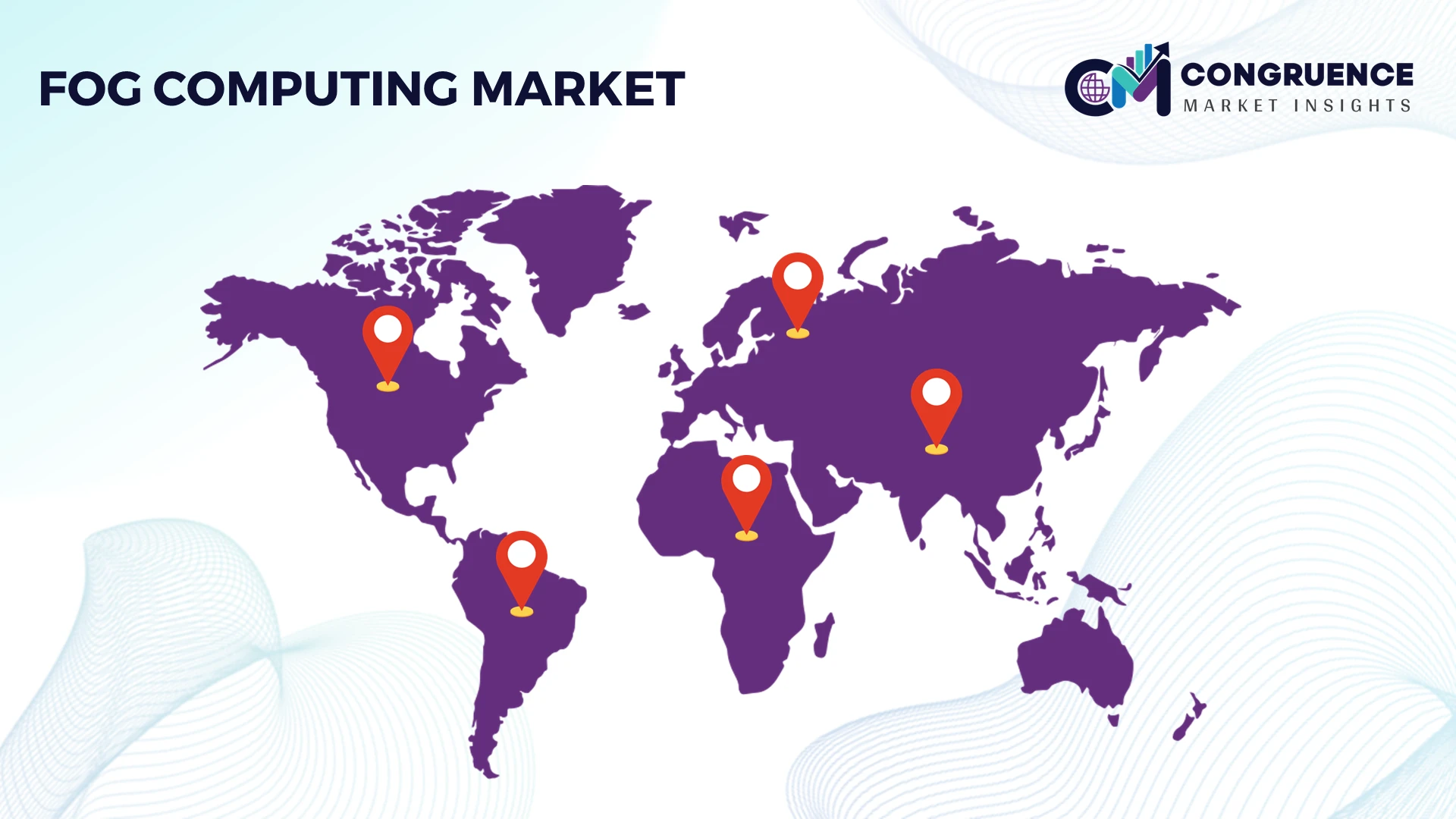
North America accounted for the largest market share at 38.4% in 2025 however, Asia-Pacific is expected to register the fastest growth, expanding at a 47.8% CAGR between 2026 and 2033.
Industrial AI and Edge Infrastructure Leadership
North America maintains its leadership through advanced enterprise digitalization, large-scale AI deployment, and extensive private 5G infrastructure supporting distributed computing environments. The region contributes approximately 38.4% of global deployment activity, with manufacturing, healthcare, defense, logistics, and telecommunications representing the largest implementation sectors. More than 69% of large industrial enterprises utilize edge-enabled data processing for operational decision-making, while hyperscale cloud providers continue extending distributed edge capabilities. Ongoing semiconductor investments and modernization of industrial infrastructure strengthen deployment capacity across the United States and Canada. Companies are accelerating software-defined edge platforms, expanding ecosystem partnerships, and integrating AI orchestration to improve operational responsiveness, cybersecurity, and infrastructure resilience for mission-critical enterprise applications.
United States Market Outlook: The United States represents the region's strongest market, supported by advanced semiconductor manufacturing, AI innovation, and enterprise digital transformation initiatives. More than 70% of Fortune 500 industrial organizations are expanding distributed computing infrastructure to improve production efficiency and cybersecurity. Continued investment in private 5G, industrial automation, and intelligent manufacturing strengthens the country's leadership, while technology providers prioritize AI-ready edge platforms, strategic cloud partnerships, and localized processing architectures to support large-scale enterprise deployment.
Industry 4.0 Modernization Driving Deployment
Europe continues expanding fog computing through industrial modernization, smart manufacturing, and stringent digital governance frameworks. The region accounts for approximately 26% of global adoption, supported by automotive manufacturing, advanced engineering, healthcare digitization, and energy infrastructure modernization. Nearly 62% of industrial digital transformation projects incorporate localized computing to strengthen operational efficiency and data governance. Edge-enabled factory automation and intelligent utility infrastructure remain strategic priorities as enterprises improve production flexibility and operational visibility. Companies are increasing investment in AI-enabled industrial software, secure networking, and collaborative automation ecosystems while strengthening partnerships across manufacturing technology providers and telecommunications operators.
Germany Market Outlook: Germany leads regional deployment through its strong industrial manufacturing base and Industry 4.0 initiatives. Approximately 66% of advanced manufacturing facilities have integrated intelligent edge technologies for predictive maintenance and production optimization. Engineering expertise, industrial automation leadership, and coordinated digital infrastructure investment enable German enterprises to expand secure fog computing deployments while supporting connected factories, intelligent logistics, and energy-efficient production environments.
Large-Scale Digital Infrastructure Expansion
Asia-Pacific represents the fastest-expanding regional market due to extensive smart manufacturing, telecommunications investment, and digital infrastructure development. The region contributes nearly 31% of global deployment activity, supported by electronics manufacturing, automotive production, logistics modernization, and expanding smart city programs. More than 36% of newly deployed industrial IoT projects integrate distributed edge processing, while enterprise investment in AI-enabled infrastructure continues rising. Governments and private enterprises are strengthening semiconductor ecosystems, cloud-edge integration, and industrial connectivity. Companies are expanding regional production capacity, building localized technology partnerships, and accelerating deployment of scalable edge platforms to support increasingly complex industrial environments.
China Market Outlook: China dominates the regional landscape through large-scale manufacturing, industrial automation, and smart city deployment. More than 40% of advanced industrial parks utilize edge-enabled computing for operational monitoring and intelligent process control. Strong domestic hardware manufacturing capabilities, expanding AI infrastructure, and coordinated industrial digitalization strategies allow enterprises to accelerate localized computing deployment while strengthening supply-chain resilience and production efficiency.
Enterprise Digitalization Supporting New Demand
South America is steadily strengthening its position as enterprises modernize industrial operations and expand cloud-edge infrastructure. The region contributes approximately 5% of global deployment activity, with manufacturing, mining, logistics, and utilities representing the primary implementation sectors. More than 29% of industrial digital transformation programs now incorporate localized data processing to improve operational continuity. Infrastructure limitations remain a practical constraint, yet telecommunications upgrades and enterprise partnerships continue expanding deployment opportunities. Technology providers are introducing scalable edge platforms and managed services designed for distributed industrial environments, allowing organizations to improve efficiency without extensive centralized infrastructure investments.
Brazil Market Outlook: Brazil represents the largest market in South America due to its extensive industrial base, expanding telecommunications infrastructure, and growing manufacturing modernization programs. Nearly one-third of large industrial organizations have initiated edge-enabled automation projects to strengthen production visibility and predictive maintenance. Technology partnerships, expanding data center capacity, and smart utility investments continue improving enterprise readiness for distributed computing deployment across multiple industries.
Infrastructure Modernization Accelerating Adoption
The Middle East & Africa market is expanding through digital infrastructure modernization, smart city investment, and industrial diversification initiatives. The region contributes approximately 4% of global deployment activity, supported by energy, transportation, logistics, and government digital transformation programs. More than 25% of newly commissioned smart infrastructure projects now integrate localized computing capabilities to improve operational responsiveness. Expanding hyperscale data center investment, intelligent transportation systems, and industrial automation projects continue strengthening enterprise deployment opportunities. Companies are establishing regional technology partnerships, expanding managed edge services, and integrating AI-enabled infrastructure to improve operational resilience and secure distributed processing.
United Arab Emirates Market Outlook: The United Arab Emirates leads regional deployment through ambitious smart city initiatives, advanced digital infrastructure, and enterprise technology investment. More than 35% of government-led digital transformation projects incorporate edge-enabled computing to improve real-time service delivery and intelligent infrastructure management. Strong telecommunications networks, expanding AI adoption, and supportive innovation policies position the country as the regional hub for advanced fog computing deployment.
The competitive landscape is led by Cisco Systems, Hewlett Packard Enterprise, Dell Technologies, IBM, and Intel, competing directly with VMware and regional edge infrastructure specialists for enterprise digital transformation projects. The top five players collectively control approximately 57% of market activity through integrated hardware, edge software, and AI-enabled orchestration platforms. Competition centers on processing performance, cybersecurity, deployment speed, and ecosystem integration rather than pricing alone. AI-enabled edge platforms improve workload efficiency by nearly 40%, while automated lifecycle management reduces deployment time by about 30%, creating clear differentiation. Vendors are expanding through industrial partnerships, private 5G integration, software acquisitions, and vertically integrated edge ecosystems. Technology transitions toward AI-native distributed computing are intensifying competition between established infrastructure providers and software-focused innovators. High interoperability requirements and enterprise-grade cybersecurity certifications remain significant entry barriers. Sustained success depends on delivering scalable, secure, interoperable, and industry-specific edge computing solutions that generate measurable operational value.
Cisco Systems
Hewlett Packard Enterprise
Dell Technologies
IBM
Intel Corporation
Microsoft Corporation
Amazon Web Services
VMware
Schneider Electric
Huawei Technologies
Nokia Corporation
Fujitsu Limited
Advantech Co., Ltd.
Red Hat, Inc.
Fog computing technology is evolving from distributed data processing toward AI-native edge intelligence capable of supporting industrial automation, healthcare diagnostics, and connected mobility. AI inference engines, containerized edge platforms, and software-defined networking improve application response times by nearly 45% while reducing bandwidth consumption by approximately 30%. Around 65% of large enterprise edge deployments now integrate Kubernetes-based orchestration, enabling centralized management of geographically distributed workloads. The result is lower operational latency, stronger cybersecurity, and improved resilience for mission-critical environments.
Emerging technologies include digital twins, private 5G integration, confidential computing, and AI-powered workload orchestration. Compared with legacy cloud-only architectures, modern fog computing platforms deliver nearly 40% faster real-time processing and reduce infrastructure operating costs by about 25% through localized analytics and automated resource allocation. Semiconductor vendors, industrial automation providers, and cloud platform companies benefit most as enterprises increasingly deploy intelligent edge ecosystems across manufacturing, utilities, and transportation.
Between 2026 and 2028, autonomous edge management, federated AI, and zero-trust security frameworks will become core competitive differentiators. More than 70% of advanced industrial deployments are expected to combine AI inference with distributed edge computing for operational intelligence. Organizations investing now in interoperable fog platforms, AI-ready hardware, and secure orchestration capabilities will achieve faster decision cycles, scalable infrastructure, and stronger competitive positioning as enterprise computing shifts from centralized clouds toward intelligent distributed architectures.
April 2024 Dell Technologies expanded its NativeEdge platform with enhanced edge operations and enterprise AI integration, enabling centralized management across thousands of distributed endpoints with up to 20% faster deployment efficiency. Business impact: simplified large-scale edge operations. Source: dell.com
November 2025 Cisco introduced Cisco Unified Edge, integrating compute, networking, storage, and security into a single platform for AI inference at distributed locations. AI agent workloads can generate up to 25× more network traffic, making localized processing critical. Business impact: accelerated enterprise edge AI deployment. Source: newsroom.cisco.com
March 2026 Cisco and NVIDIA expanded the Secure AI Factory architecture from centralized data centers to edge locations, compressing AI deployment timelines from months to weeks. Business impact: faster enterprise AI rollout with integrated security across distributed infrastructure. Source: investor.cisco.com
February 2026 AT&T and Cisco commercially launched a 5G Standalone-native IoT platform integrating Cisco Mobility Services Platform with AT&T's nationwide 5G SA core, enabling network slicing and application-aware performance. Business impact: stronger support for latency-sensitive industrial edge applications. Source: newsroom.cisco.com
This report provides a comprehensive assessment of the global Fog Computing Market across Hardware, Software, and Services while evaluating deployment trends across Smart Cities, Industrial IoT, Connected Vehicles, Smart Grid, and Healthcare applications. It further examines demand across Manufacturing, Healthcare, Transportation, Energy & Utilities, and Telecommunications, covering North America, Europe, Asia-Pacific, South America, and the Middle East & Africa. More than 60% of enterprise deployments analyzed focus on AI-enabled distributed computing and real-time edge intelligence.
The study evaluates technology evolution, enterprise adoption patterns, competitive positioning, digital infrastructure development, and emerging edge computing ecosystems between 2026 and 2033. It assesses deployment strategies, regional investment priorities, industry-specific adoption, and innovation pipelines while profiling major technology participants and operational trends. The report supports investment planning, market entry, partnership evaluation, product positioning, and long-term expansion strategies through detailed segmentation, regional benchmarking, technology assessment, and competitive intelligence tailored for business decision-makers.
| Report Attribute/Metric | Report Details |
|---|---|
Market Revenue in 2025 | USD 83.28 Million |
Market Revenue in 2033 | USD 1565.7 Million |
CAGR (2026 - 2033) | 44.3% |
Base Year | 2025 |
Forecast Period | 2026 - 2033 |
Historic Period | 2021 - 2025 |
Segments Covered | By Type
By Application
By End-User
|
Key Report Deliverable | Revenue Forecast, Growth Trends, Market Dynamics, Segmental Overview, Regional and Country-wise Analysis, Competition Landscape |
Region Covered | North America, Europe, Asia-Pacific, South America, Middle East, Africa |
Key Players Analyzed | Cisco Systems, Hewlett Packard Enterprise, Dell Technologies, IBM, Intel Corporation, Microsoft Corporation, Amazon Web Services, VMware, Schneider Electric, Huawei Technologies, Nokia Corporation, Fujitsu Limited, Advantech Co., Ltd., Red Hat, Inc. |
Customization & Pricing | Available on Request (10% Customization is Free) |




