
Reports
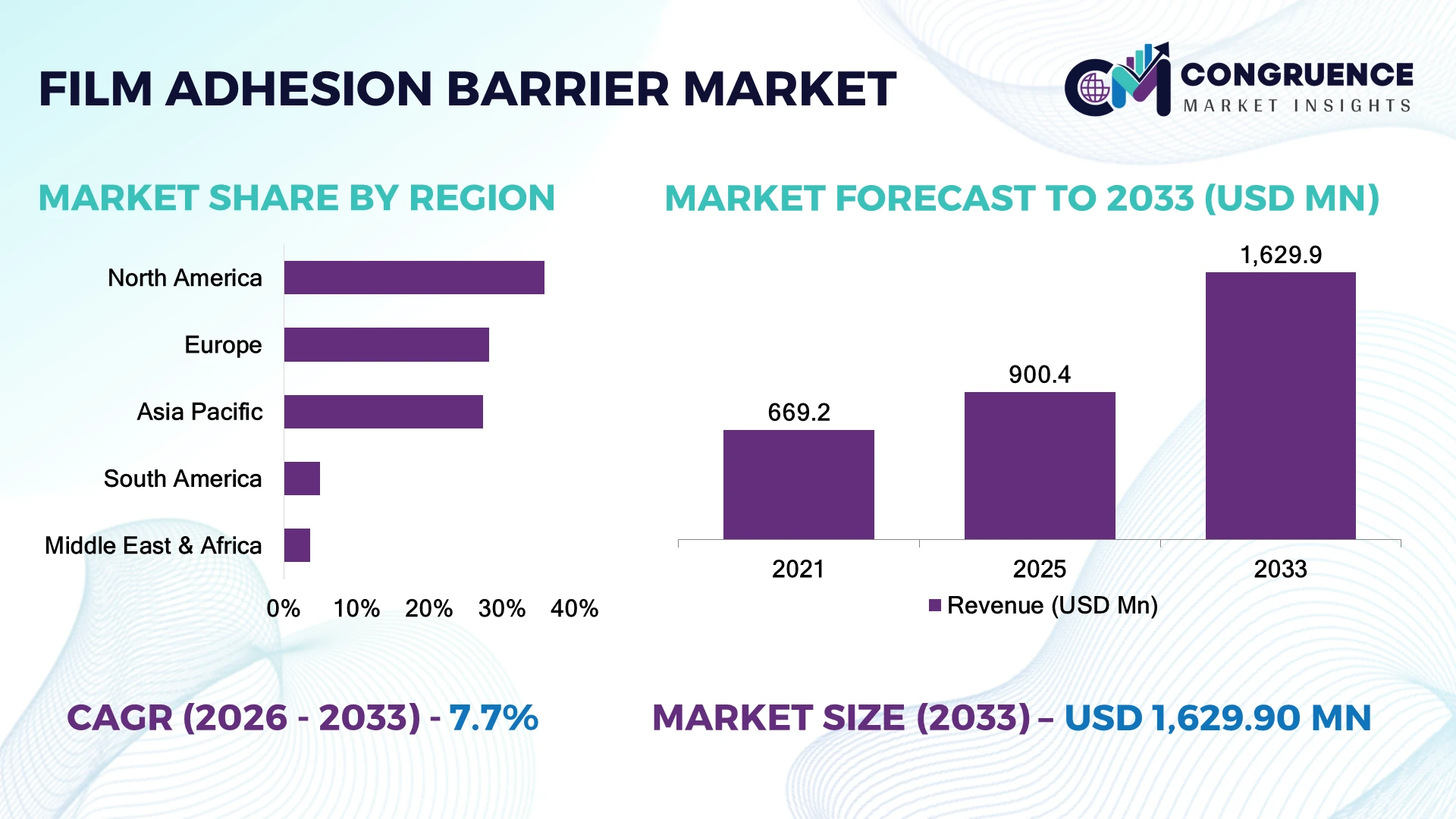
The Global Film Adhesion Barrier Market was valued at USD 900.4 Million in 2025 and is anticipated to reach a value of USD 1,629.9 Million by 2033 expanding at a CAGR of 7.7% between 2026 and 2033. Rising demand for high-performance multilayer packaging, recyclable flexible films, and advanced adhesion technologies across food, pharmaceutical, and industrial applications is accelerating adoption of film adhesion barrier materials.
China remains the dominant production and consumption hub, accounting for approximately 34% of global film conversion capacity, supported by large-scale packaging, electronics, and automotive manufacturing investments. More than 68% of newly commissioned multilayer film lines in the country integrate advanced adhesion barrier technologies to improve laminate durability and recyclability. Compared with Germany, where premium specialty films dominate industrial applications, China delivers significantly higher manufacturing volumes through vertically integrated polymer processing. Continued trade realignment and supply-chain diversification following Red Sea shipping disruptions have further strengthened domestic film manufacturing investments.
Strategic investment increasingly favors manufacturers combining advanced adhesion chemistry with recyclable multilayer film capabilities and localized production networks.
Market Size & Growth: USD 900.4 Million (2025) to USD 1,629.9 Million (2033) at 7.7% CAGR, driven by recyclable multilayer packaging and high-barrier film demand.
Top Growth Drivers: Recyclable packaging adoption (+41%), multilayer flexible films (+36%), pharmaceutical barrier packaging (+29%).
Short-Term Forecast: By 2028, laminate production waste declines nearly 16% through automated coating and adhesion optimization.
Emerging Technologies: AI-based coating control, plasma surface treatment, and solvent-free adhesion systems improve consistency by over 22%.
Regional Leaders: Asia-Pacific leads manufacturing, North America advances sustainable packaging, Europe accelerates recyclable film deployment.
Consumer/End-User Trends: More than 63% of premium food packaging projects specify advanced adhesion barrier layers.
Pilot/Case Example: 2026 multilayer packaging upgrade improved bond integrity by 24% while reducing material consumption by 11%.
Competitive Landscape: Top five suppliers control nearly 47% share through specialty polymers and advanced converting technologies.
Regulatory & ESG Impact: Recyclable packaging initiatives increase mono-material film development by approximately 31%.
Investment & Funding: Over USD 1.1 Billion supports film conversion expansion, localization, and sustainable material innovation.
Innovation & Future Outlook: Smart coating control and high-performance tie-layer technologies strengthen next-generation barrier packaging competitiveness.
Film Adhesion Barrier Market demand continues to strengthen across food packaging, pharmaceutical blister films, industrial laminates, and electronics protection materials. Advanced solvent-free adhesion technologies now improve laminate durability by nearly 21%, while recyclable mono-material structures gain wider commercial acceptance. Supply-chain localization and sustainable packaging regulations are accelerating innovation, creating a strong foundation for the strategic market assessment that follows.
The Film Adhesion Barrier Market has become strategically important as manufacturers balance packaging performance, recyclability, and production efficiency under increasingly stringent sustainability requirements. Flexible packaging converters, healthcare companies, and industrial laminate producers are restructuring supply chains to reduce dependence on imported specialty resins while expanding regional manufacturing. This transition is strengthening investment in advanced adhesion barrier technologies that support circular packaging objectives without compromising mechanical integrity.
Modern solvent-free extrusion coating and plasma-assisted surface treatment technologies deliver approximately 23% higher bond strength than conventional solvent-based processes while reducing processing energy by nearly 18%. China continues to dominate high-volume manufacturing through integrated polymer processing, whereas Germany and Japan emphasize premium specialty films for pharmaceutical, electronics, and technical industrial applications. Over the next two to three years, more than 45% of new multilayer film production investments are expected to prioritize recyclable structures with advanced adhesion performance.
Packaging manufacturers are increasingly deploying AI-assisted coating control and inline inspection systems to improve production consistency and reduce material losses. Companies are expanding regional converting facilities, strengthening polymer partnerships, and developing next-generation tie-layer formulations to support evolving customer requirements. Organizations capable of combining sustainable material innovation, manufacturing efficiency, and high-performance adhesion technologies will establish durable competitive advantages as advanced barrier packaging applications continue to expand.
Recyclable flexible packaging requirements are accelerating the adoption of advanced film adhesion barrier technologies across food, pharmaceutical, and industrial packaging. Approximately 46% of newly developed multilayer packaging structures now prioritize high-performance tie-layer compatibility, while automated coating systems improve laminate consistency by nearly 22% and reduce material waste by 15%. The implementation of extended producer responsibility regulations across multiple countries is encouraging manufacturers to redesign packaging with recyclable material combinations. As a result, companies are investing in solvent-free adhesive systems, expanding co-extrusion capacity, and partnering with polymer developers to improve barrier performance without compromising recyclability. The strongest competitive advantage increasingly belongs to suppliers capable of balancing adhesion strength with circular packaging requirements.
Dependence on specialty polymers and functional resin formulations continues to expose manufacturers to supply volatility and cost fluctuations. Prices for selected performance polymers have experienced swings exceeding 18% during recent supply disruptions, while regulatory compliance expenditures for food-contact packaging have increased by approximately 12%. Europe’s tightening packaging sustainability framework has also increased qualification timelines for new adhesion barrier formulations. These conditions reduce production flexibility, pressure operating margins, and delay commercialization of advanced products. In response, companies are localizing raw material sourcing, securing long-term procurement agreements, and expanding alternative polymer research to reduce dependence on imported specialty materials. Supply-chain resilience has become as strategically important as product performance in maintaining market competitiveness.
The next wave of opportunity is emerging through intelligent barrier structures combining recyclable materials, digital process control, and advanced adhesion chemistry. AI-assisted coating optimization has improved production efficiency by approximately 20%, while precision extrusion technologies reduce material consumption by nearly 14%. Japan and South Korea are accelerating development of high-performance mono-material packaging that satisfies both recycling targets and demanding barrier specifications. Companies are expanding R&D partnerships with material science institutes and equipment manufacturers to commercialize next-generation tie-layer technologies. A significant strategic opportunity lies in supplying premium adhesion barrier solutions that simultaneously enhance recyclability, shelf-life performance, and manufacturing efficiency rather than optimizing only one performance parameter.
Maintaining consistent adhesion across increasingly sophisticated multilayer film structures remains a major execution challenge. More than 35% of advanced packaging development projects require repeated formulation optimization before commercial-scale production, while quality inconsistencies can reduce production efficiency by approximately 13%. Growing demand for recyclable mono-material packaging further complicates compatibility between barrier layers, sealants, and functional coatings. Manufacturers must also integrate advanced inspection systems without disrupting high-speed converting operations. Companies are responding through investment in inline quality monitoring, digital process analytics, collaborative polymer development, and workforce training. Long-term market leadership will depend on mastering scalable manufacturing precision rather than simply introducing new adhesion materials.
AI-Driven Coating Control Advanced process analytics are improving coating uniformity by approximately 24% while reducing defect rates by nearly 17%. Manufacturers are integrating machine learning with inline inspection systems to optimize coating thickness in real time, shortening production cycles and improving laminate reliability. Digital manufacturing investments are becoming a decisive differentiator for premium film converters.
Mono-Material Packaging Transition Recyclable packaging initiatives have increased mono-material film development by more than 30%, encouraging replacement of conventional multilayer structures where technically feasible. Packaging producers are redesigning adhesion barrier formulations to maintain seal integrity without incompatible material combinations. Companies are expanding partnerships with resin developers as sustainability regulations reshape packaging specifications across food and healthcare applications.
Localized Polymer Supply Networks Supply-chain disruptions and logistics uncertainties have encouraged manufacturers to regionalize procurement strategies, reducing imported specialty resin dependence by approximately 19% in selected production programs. Companies are qualifying multiple raw material suppliers, expanding domestic compounding capacity, and strengthening strategic inventory management. This operational shift improves manufacturing continuity while reducing procurement risks for high-performance film production.
Precision Extrusion Integration Modern co-extrusion platforms equipped with automated thickness control improve material utilization by nearly 16% while enhancing bond consistency across complex barrier structures. Film manufacturers are integrating precision extrusion with advanced surface treatment technologies to increase throughput and minimize scrap generation. The combination of automation and process integration is strengthening production efficiency without compromising demanding packaging performance requirements.
Co-extruded film adhesion barriers dominate the market with an estimated 44% share, driven by excellent scalability, high-speed manufacturing compatibility, and consistent interlayer bonding across multilayer packaging structures. Their ability to eliminate secondary lamination processes reduces production costs while improving throughput and laminate reliability. Solvent-based adhesion barrier films continue serving demanding industrial and specialty packaging applications where superior chemical resistance and long-term bond durability remain essential, while water-based variants continue expanding in environmentally regulated packaging markets.
Reactive adhesion barrier films are emerging as the fastest-growing segment as converters increasingly develop recyclable multilayer structures requiring strong adhesion between dissimilar polymers. Water-based technologies are simultaneously gaining momentum through low-emission processing and regulatory compliance advantages. Companies are investing in advanced tie-layer chemistry, expanding specialty coating capacity, and partnering with resin manufacturers to improve adhesion performance while supporting recyclable packaging formats. Investment priorities are shifting toward solutions that combine production efficiency, sustainability, and long-term laminate integrity.
According to the Flexible Packaging Association's 2025 industry assessment, more than 60% of newly commercialized high-barrier flexible packaging structures incorporated advanced co-extrusion or specialty adhesion layer technologies to improve recyclability and structural performance.
Food packaging accounts for approximately 49% of total market demand, supported by stringent food safety standards, growing consumption of packaged foods, and increasing adoption of high-barrier multilayer films. Superior adhesion performance helps extend shelf life, preserve product quality, and withstand demanding processing conditions. Pharmaceutical packaging represents another mature application where consistent laminate performance and contamination protection are critical, while industrial packaging maintains stable demand across chemical, lubricant, and specialty material transportation.
Healthcare packaging is the fastest-growing application as pharmaceutical manufacturers expand production of biologics, injectable drugs, and sensitive medical products requiring reliable barrier performance. Electronics packaging is also strengthening through increasing protection requirements for moisture-sensitive components. Companies are scaling automated coating operations, integrating precision process controls, and developing customized adhesion barrier formulations to meet application-specific performance requirements. Investment is increasingly concentrated in premium applications where packaging reliability, regulatory compliance, and operational efficiency create stronger competitive differentiation.
According to PMMI's 2026 Packaging Industry Outlook, more than 57% of packaging manufacturers prioritized advanced multilayer barrier structures to improve product protection, production efficiency, and sustainable packaging performance.
Food and beverage manufacturers constitute the largest end-user segment with an estimated 46% market share, supported by continuous demand for high-barrier flexible packaging across processed foods, dairy products, meat, frozen foods, and ready-to-eat meals. Large production volumes, stringent packaging quality requirements, and growing investments in recyclable packaging infrastructure sustain their purchasing leadership. Pharmaceutical companies represent another major buyer group, while industrial manufacturers continue adopting adhesion barrier films for specialty packaging and protective laminate applications.
Healthcare and pharmaceutical manufacturers are emerging as the fastest-growing end-user segment as advanced medicines, biologics, and medical devices require increasingly reliable packaging performance. Consumer goods producers and electronics manufacturers are also strengthening demand through premium packaging initiatives and higher product protection standards. Suppliers are responding with customized formulations, long-term development partnerships, flexible production programs, and application-specific technical support, enabling stronger customer retention while positioning themselves for evolving sustainability and performance requirements.
A 2025 packaging industry assessment released by the Association for Packaging and Processing Technologies reported that more than 62% of packaging investment projects prioritized advanced barrier materials capable of supporting both product protection and recyclable packaging objectives.
North America accounted for the largest market share at 35.8% in 2025 however, Asia-Pacific is expected to register the fastest growth, expanding at a CAGR of 8.6% between 2026 and 2033.
Advanced Packaging Innovation Strengthens High-Performance Film Production
North America leads the Film Adhesion Barrier Market through its mature flexible packaging industry, advanced polymer processing capabilities, and extensive adoption across food, pharmaceutical, healthcare, and industrial packaging. The region contributes nearly 36% of global demand, supported by integrated multilayer film manufacturing and continuous investment in sustainable barrier technologies. More than 65% of premium multilayer packaging lines incorporate advanced adhesion barrier layers to improve bonding performance and recyclability. Manufacturers are expanding solvent-free coating operations, increasing automation, and forming strategic resin supply partnerships to reduce production variability while meeting evolving packaging regulations. The region's strong R&D ecosystem accelerates commercialization of recyclable high-barrier film structures and strengthens long-term competitiveness.
United States Market Outlook: The United States dominates regional demand through its extensive packaging manufacturing base, advanced polymer research capabilities, and strong food and pharmaceutical industries. More than 70% of domestic flexible packaging producers have expanded investment in recyclable multilayer structures and precision coating technologies. Companies continue upgrading extrusion coating lines, strengthening domestic resin sourcing, and developing application-specific adhesion systems that improve production efficiency while supporting circular packaging objectives.
Circular Packaging Regulations Accelerate Material Innovation
Europe remains a strategically important market due to stringent packaging sustainability regulations and continuous modernization of flexible packaging production. The region accounts for approximately 28% of global consumption, with converters increasingly replacing conventional multilayer structures with recyclable alternatives requiring advanced adhesion barrier technologies. More than 55% of new packaging development projects prioritize compatibility with circular economy requirements. Companies continue investing in solvent-free coating technologies, recyclable polymer combinations, and collaborative innovation programs to improve package performance while reducing environmental impact.
Germany Market Outlook: Germany serves as the regional technology leader through its advanced polymer engineering, packaging machinery expertise, and strong industrial manufacturing ecosystem. Packaging manufacturers continue integrating precision extrusion and coating systems into high-speed production facilities. Investments in sustainable packaging innovation and automation enable German producers to strengthen export competitiveness while supporting next-generation multilayer packaging solutions for food, healthcare, and industrial applications.
Manufacturing Scale Drives Global Capacity Expansion
Asia-Pacific represents the fastest-growing market as packaging production, electronics manufacturing, and consumer goods industries continue expanding across major economies. The region contributes approximately 31% of global production capacity and continues attracting new investments in multilayer film extrusion and specialty coating facilities. China, Japan, South Korea, and India are strengthening domestic manufacturing ecosystems while increasing exports of advanced flexible packaging materials. Producers are deploying automated coating systems, optimizing resin utilization, and expanding integrated manufacturing operations to improve production efficiency and international competitiveness.
China Market Outlook: China leads regional production through extensive packaging manufacturing infrastructure and rapidly expanding high-performance polymer processing capacity. The country accounts for more than half of Asia-Pacific's multilayer flexible packaging output and continues investing in smart manufacturing technologies. Large-scale packaging converters are strengthening domestic raw material integration while expanding exports of advanced adhesion barrier films serving food, pharmaceutical, electronics, and industrial packaging applications.
Food Export Packaging Supports Market Expansion
South America is strengthening its position through increasing investment in food processing, agricultural exports, and flexible packaging manufacturing. The region accounts for nearly 5% of global market demand, supported by rising adoption of multilayer barrier films for meat, fruit, beverage, and processed food exports. Packaging manufacturers are upgrading converting equipment and expanding local coating capabilities to reduce import dependence. Infrastructure improvements and regional manufacturing partnerships continue supporting operational efficiency, although specialty resin availability remains a key supply consideration for premium barrier applications.
Brazil Market Outlook: Brazil remains the largest market in the region due to its diversified food processing industry and extensive agricultural export network. Packaging manufacturers continue investing in multilayer film production, modern converting facilities, and sustainable packaging technologies. Increasing domestic production of high-performance flexible packaging improves supply reliability while enabling Brazilian producers to strengthen competitiveness across regional food, beverage, and industrial packaging markets.
Industrial Diversification Expands Packaging Investments
The Middle East & Africa market is progressing through investments in food manufacturing, healthcare infrastructure, and domestic packaging production. The region contributes approximately 4% of global demand, while governments continue supporting industrial diversification programs that encourage local packaging manufacturing. Advanced converting facilities, modernization of polymer processing operations, and expansion of food packaging capacity are improving regional self-sufficiency. Companies increasingly establish partnerships with international material suppliers to strengthen technology transfer and improve product quality across industrial packaging applications.
Saudi Arabia Market Outlook: Saudi Arabia has emerged as the region's leading market through industrial diversification initiatives and investment in downstream petrochemical manufacturing. Domestic packaging producers are expanding multilayer film conversion capacity while leveraging locally available polymer feedstocks. New industrial developments, integrated manufacturing facilities, and growing food processing investments continue strengthening demand for advanced adhesion barrier technologies that support higher-value packaging production and regional export capabilities.
Global packaging material leaders including Amcor, Berry Global, Mondi, UFlex, and Winpak compete directly with regional film converters and specialty barrier-material developers, while resin innovators challenge conventional multilayer suppliers through recyclable adhesion technologies. The top five participants collectively control approximately 47% of market activity, creating moderate consolidation with strong technology differentiation. Competition is driven by barrier performance, converting speed, customization, and supply-chain reliability, with advanced mono-material structures improving production efficiency by nearly 18% and reducing material consumption by approximately 12%. Premium suppliers emphasize proprietary coating chemistry, whereas cost-focused converters compete through localized manufacturing and shorter delivery cycles. Strategic expansion includes recyclable film platforms, co-development agreements with food brands, and vertically integrated resin sourcing to strengthen raw-material security. The competitive shift favors sustainable barrier solutions over conventional laminates, increasing pressure on manufacturers lacking advanced coating capabilities. High qualification requirements, formulation expertise, and customer validation cycles remain major entry barriers. Winning requires scalable recyclable technologies, integrated supply chains, rapid product customization, and consistent high-barrier performance.
Amcor plc
Berry Global Inc.
Mondi plc
Winpak Ltd.
UFlex Ltd.
Sealed Air Corporation
ProAmpac LLC
TOPPAN Holdings Inc.
Constantia Flexibles Group GmbH
Cosmo First Limited
Mitsubishi Gas Chemical Company, Inc.
Celplast Metallized Products Limited
Film adhesion barrier technology is shifting toward solvent-free coating systems, advanced co-extrusion, plasma surface treatment, and mono-material barrier structures that improve bond strength while supporting recyclability. Approximately 58% of newly commissioned flexible packaging lines incorporate automated coating control, reducing coating variation by nearly 15%. AI-assisted process monitoring improves coating uniformity and minimizes material waste, providing measurable operational advantages for high-volume converters.
Nano-engineered adhesion layers, plasma activation, and precision multilayer co-extrusion are replacing conventional primer-based processes. Compared with older solvent-intensive technologies, advanced solvent-free systems improve line productivity by approximately 20% while lowering energy consumption by nearly 14%. Companies investing in digital inspection and inline defect detection achieve faster qualification cycles and higher production consistency, strengthening relationships with multinational food and pharmaceutical packaging customers. Large integrated packaging manufacturers benefit most because they combine material development with converting expertise and faster commercialization.
Between 2026 and 2028, smart process automation, bio-based adhesion chemistries, and recyclable high-barrier structures will reshape competitive positioning. Digital twins, predictive maintenance, and closed-loop coating controls are expected to exceed 45% deployment across new premium production facilities. Manufacturers adopting integrated coating, inspection, and analytics platforms will reduce operating costs, accelerate product launches, and satisfy increasingly demanding sustainability requirements without compromising adhesion performance or packaging reliability.
March 2024 Berry Global and Mitsubishi Gas Chemical introduced the recyclable MXD6 high-barrier solution compatible with polypropylene recycling streams, supporting barrier loadings up to 12% while improving package recyclability and supply flexibility for converters. Source: Amcor (Amcor Packaging Solutions)
November 2024 Amcor received a European patent for its AmFiber Performance Paper barrier technology, strengthening recyclable paper-based packaging with high-speed converting capability and expanding commercialization across food and healthcare applications. Source: Amcor (Amcor)
December 2024 Berry Global and VOID Technologies commercialized an all-PE high-performance packaging film using VO+ technology, reducing material density while maintaining toughness and enabling recyclable pet-food packaging with improved operational efficiency. Source: Amcor (Amcor Packaging Solutions)
January 2025 Berry Global completed industrial validation of Entour MDO PE lamination films on B&B Verpackungstechnik equipment, achieving approximately 60 production cycles per minute and accelerating adoption of recyclable mono-material flexible packaging. Source: turn0search10 (Amcor Packaging Solutions)
This report provides a comprehensive assessment of the Film Adhesion Barrier Market across material technologies, product types, applications, end-users, and regional markets between 2026 and 2033. It evaluates co-extruded, coated, solvent-based, solvent-free, and specialty adhesion barrier technologies while examining deployment across food packaging, pharmaceuticals, industrial packaging, personal care, and electronics. The study benchmarks adoption patterns, production capabilities, technology penetration, and competitive participation across more than 12 leading global manufacturers and multiple regional supply ecosystems.
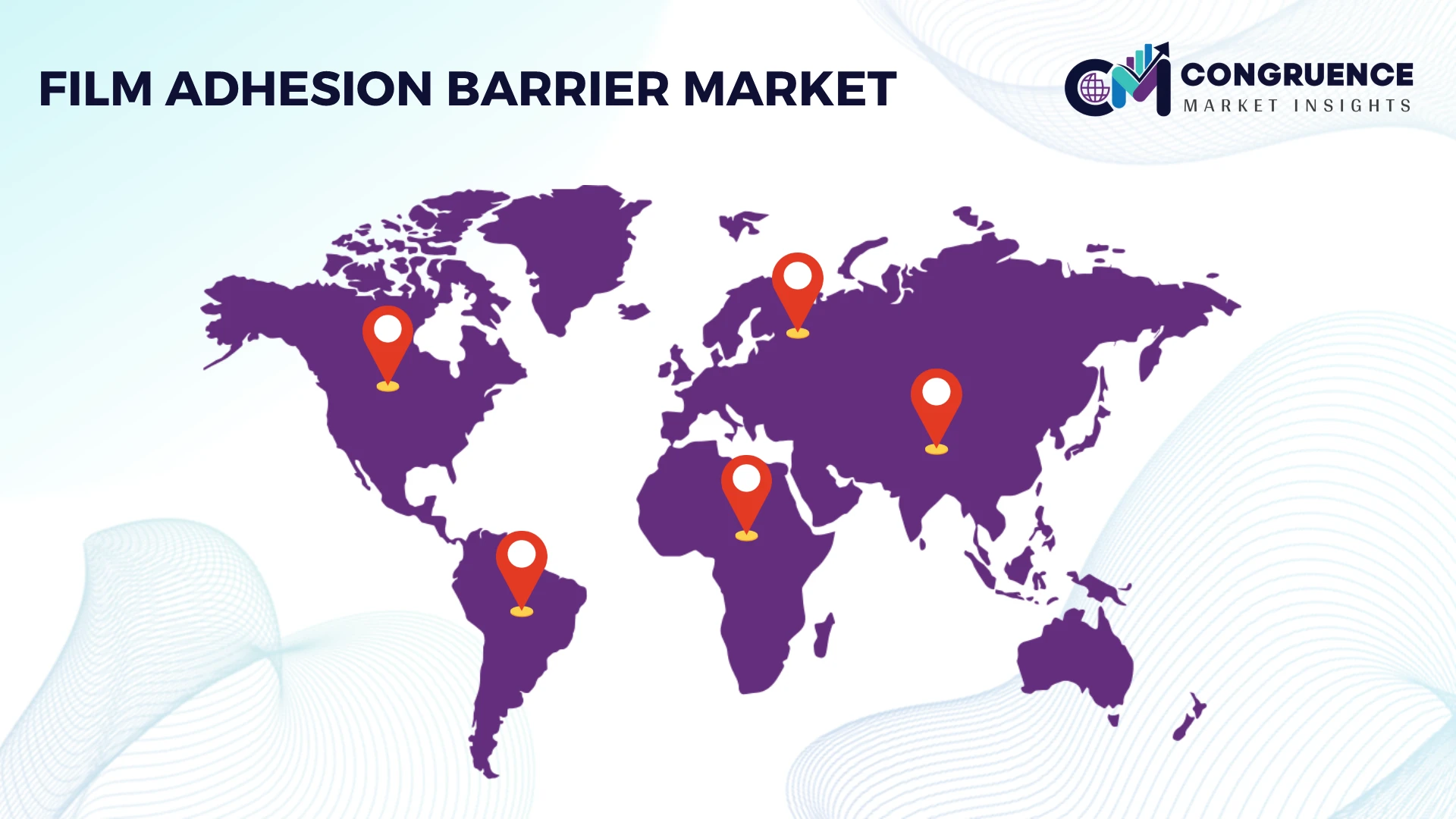
The report analyzes market positioning across North America, Europe, Asia-Pacific, South America, and the Middle East & Africa, highlighting operational trends, manufacturing investments, innovation priorities, and emerging recyclable barrier solutions. Strategic insights support investment planning, product portfolio optimization, capacity expansion, supplier evaluation, partnership opportunities, and competitive benchmarking. It further identifies technology transitions, customer purchasing trends, deployment intensity, and evolving packaging performance requirements that will influence long-term business strategies and market leadership.
| Report Attribute/Metric | Report Details |
|---|---|
|
Market Revenue in 2025 |
USD 900.4 Million |
|
Market Revenue in 2033 |
USD 1,629.9 Million |
|
CAGR (2026 - 2033) |
7.7% |
|
Base Year |
2025 |
|
Forecast Period |
2026 - 2033 |
|
Historic Period |
2021 - 2025 |
|
Segments Covered |
By Type
By Application
By End-User
|
|
Key Report Deliverable |
Revenue Forecast, Growth Trends, Market Dynamics, Segmental Overview, Regional and Country-wise Analysis, Competition Landscape |
|
Region Covered |
North America, Europe, Asia-Pacific, South America, Middle East, Africa |
|
Key Players Analyzed |
Amcor plc, Berry Global Inc., Mondi plc, Winpak Ltd., UFlex Ltd., Sealed Air Corporation, ProAmpac LLC, TOPPAN Holdings Inc., Constantia Flexibles Group GmbH, Cosmo First Limited, Mitsubishi Gas Chemical Company, Inc., Celplast Metallized Products Limited |
|
Customization & Pricing |
Available on Request (10% Customization is Free) |




