
Reports
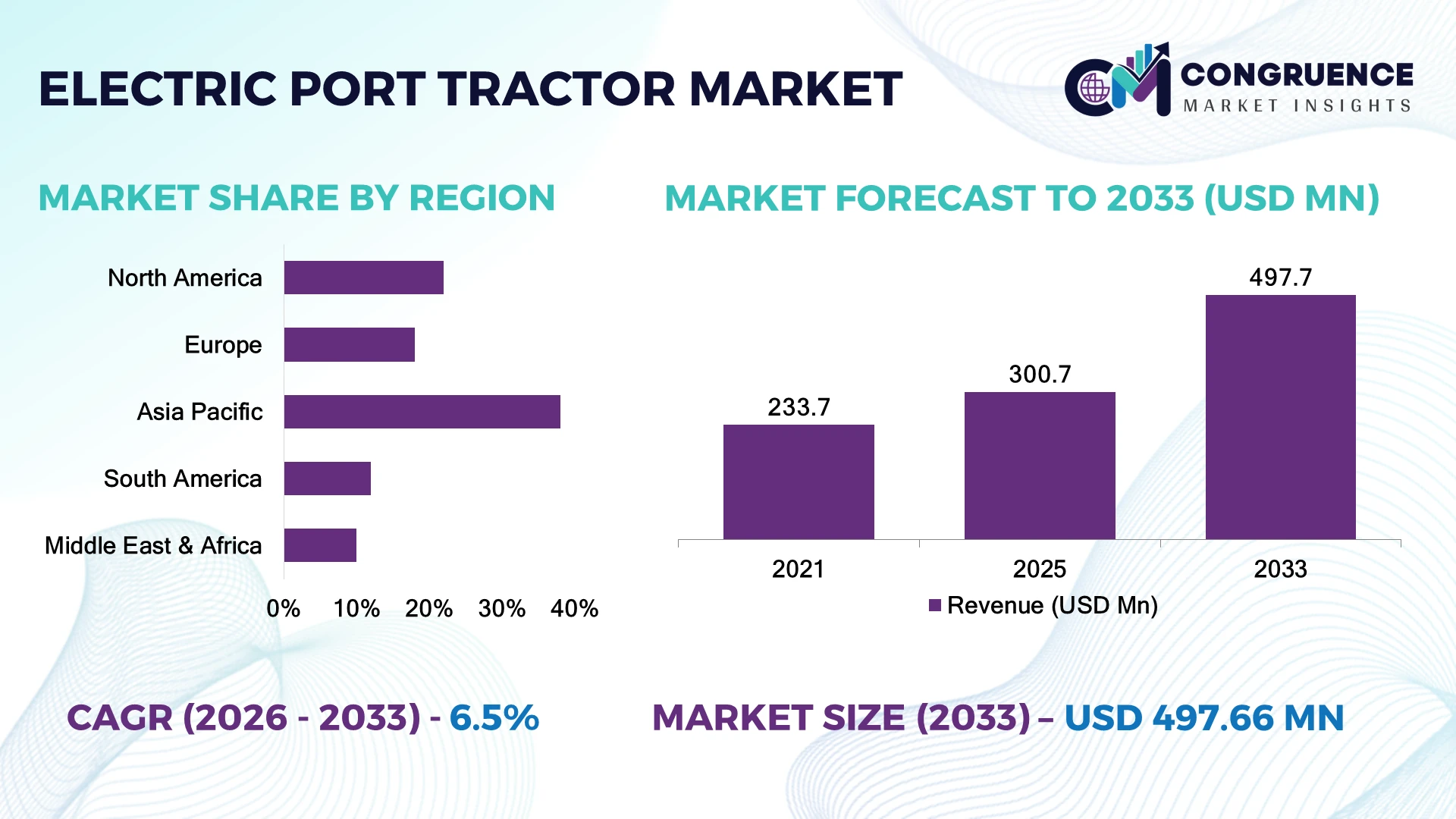
The Global Electric Port Tractor Market was valued at USD 300.7 Million in 2025 and is anticipated to reach a value of USD 497.7 Million by 2033 expanding at a CAGR of 6.5% between 2026 and 2033. Growth is driven by port fleet-replacement programs, lower electric powertrain maintenance requirements, and terminal decarbonization projects that favor high-utilization yard tractors over diesel equipment.
The United States benefits from established terminal-equipment suppliers and active port electrification projects. At Los Angeles Pier 400, an initial 20-unit Orange EV deployment replaced nearly 30% of the terminal's diesel tractor fleet. In June 2026, a further 40-unit contract was announced, taking the planned electric fleet to 60 tractors, or approximately 60% of its 101-unit fleet. This investment connects equipment replacement with charging infrastructure and workforce training.
Manufacturers should compete on verified uptime, charging compatibility, lifecycle economics, and service coverage rather than purchase price alone.
Market Size & Growth: The market is valued at USD 300.7 million in 2025 and is projected to reach USD 497.7 million by 2033, supported by port electrification and replacement of diesel yard equipment.
Top Growth Drivers: Fleet decarbonization, lower maintenance requirements, and high daily equipment utilization are key adoption factors; a 2026 industry survey found 60% of respondents ranked direct economic benefit as an adoption reason.
Short-Term Forecast: By 2028, terminal operators can target a 5–10% reduction in avoidable charging-related delays through duty-cycle planning and charger scheduling; this is a site-level target, not a market forecast.
Emerging Technologies: Battery-electric drivetrains, battery swapping, telematics, and dynamic charging are changing tractor utilization and energy management in high-throughput terminals.
Regional Leaders: Asia-Pacific, Europe, and North America are major markets. Indicative allocations of the supplied 2025 global baseline imply approximately USD 120 million, USD 85 million, and USD 66 million, respectively; these are directional estimates, not audited regional valuations.
End-User Trends: Container terminals and intermodal yards are priority buyers because repeated short-distance movements create predictable operating cycles and centralized charging opportunities.
Deployment Example: In 2026, APM Terminals Los Angeles announced a 40-unit order that is expected to raise its planned electric terminal tractor fleet to 60 units.
Competitive Landscape: Kalmar, Orange EV, Terberg, SANY, and Westwell compete through equipment performance, charging models, service networks, and deployment experience.
Regulatory & ESG Impact: Zero-tailpipe-emission tractors support port air-quality targets; actual lifecycle emissions benefits depend on electricity generation, battery production, and charging practices.
Investment & Funding: Port investment is increasingly directed toward fleet orders and charging infrastructure. APM Terminals' 2026 Los Angeles order covers 40 additional tractors, although the contract value was not publicly disclosed.
Innovation & Future Outlook: Competition is shifting toward integrated tractor-and-energy systems, including battery swapping, fleet telematics, and charging optimization, with operational reliability determining whether pilot deployments scale.
The electric port tractor market is moving from trial deployments toward larger fleet-replacement programs. Container terminals, intermodal yards, and distribution facilities are prioritizing high-utilization equipment where predictable routes simplify charging. In 2026, larger orders at major ports demonstrated that electrification decisions increasingly depend on uptime, maintenance performance, and infrastructure readiness. This shift places fleet economics and operational planning at the center of purchasing decisions.
Electric port tractors are becoming strategically important because terminal operators can electrify repetitive yard movements without redesigning the entire cargo-handling system. Compared with long-haul trucks, terminal tractors typically follow more predictable routes and return to defined operating areas, making charging logistics easier to plan. Port operators are therefore evaluating fleet replacement alongside grid capacity, charger placement, maintenance training, and terminal throughput requirements.
Operational evidence strengthens the business case but also exposes important trade-offs. A North American Council for Freight Efficiency demonstration found electric terminal tractors can reduce maintenance costs by approximately 60–75% against comparable diesel models, although the payback period can exceed eight years without incentives or favorable operating conditions. Asia-Pacific benefits from large port networks and equipment manufacturing capacity, while North American deployments increasingly emphasize documented uptime and domestic service support. European buyers are also pursuing electrification through equipment modernization and terminal sustainability programs.
Between 2026 and 2028, purchasing decisions will increasingly depend on total cost of ownership, battery duty-cycle suitability, and charger utilization rather than emissions claims alone. Operators are expanding workforce training and coordinating equipment orders with electrical infrastructure upgrades. Suppliers that provide dependable service, energy-management software, and flexible charging solutions will have an advantage. The strongest competitive position belongs to manufacturers that demonstrate sustained terminal productivity alongside measurable lifecycle savings.
Terminal tractors repeatedly move containers and trailers over short distances, creating duty cycles well suited to battery-electric drivetrains. Regenerative braking, fewer conventional powertrain components, and reduced diesel after-treatment maintenance support lower operating costs. The North American Council for Freight Efficiency's terminal-tractor demonstration estimated maintenance costs could be 60–75% lower than those of comparable modern diesel units. In 2026, an industry survey also found 60% of fleet respondents cited direct economic benefit as an adoption reason. Operators are responding by prioritizing high-utilization routes, tracking energy use per shift, and pairing purchases with charging plans. The non-obvious advantage is that predictable duty cycles allow fleets to right-size batteries and avoid paying for range that terminal operations rarely require.
Electric port tractor deployment requires coordinated investment in vehicles, grid connections, charging equipment, site engineering, and maintenance training. Terminals operating continuously cannot assume that charging downtime will fit naturally into vessel schedules. High-power charging also competes with cranes, yard equipment, and other electrified assets for available electrical capacity. The North American Council for Freight Efficiency has noted that electric terminal tractor payback can exceed eight years in some applications without incentives or favorable operating conditions. This creates pressure on capital budgets, particularly where electricity tariffs or equipment utilization vary. Operators are reducing exposure through phased fleet conversion, load-management systems, infrastructure grants, and pilot deployments that validate energy demand before larger procurement commitments.
Battery swapping and managed charging create opportunities for terminals where vehicles operate across multiple shifts and charging windows are limited. Swappable systems can reduce the time a tractor spends connected to a charger, while telematics can align charging with operating schedules and available electrical capacity. In 2026, Westports Malaysia received 60 Westwell electric terminal tractors equipped with a battery-swapping system, illustrating how vehicle and energy infrastructure can be deployed together. Companies can develop service packages combining tractors, batteries, charging or swapping equipment, software, and maintenance. A 5–10% reduction in avoidable charging-related delays is a practical site-level target, not a measured industry average. Suppliers that design around terminal-specific duty cycles can compete through availability and service economics rather than hardware pricing alone.
Scaling electric port tractors across multiple terminals introduces challenges in charger interoperability, battery-health management, technician capability, and continuity of operations. Equipment that performs well on a single shift may require different battery capacity or charging arrangements under continuous, high-load use. Port operators must also manage battery degradation, extreme temperatures, spare-vehicle availability, and the safe handling of high-voltage systems. Kalmar's third-generation electric terminal tractor underwent 240 hours of climate-controlled performance testing across temperatures from -22°F to 122°F, illustrating the importance of environmental validation. Operators and manufacturers need shared maintenance data, trained technicians, and clear service-level commitments. Long-term competitiveness depends on proving dependable operation across real terminal cycles, not simply demonstrating zero-emission performance under controlled conditions.
Fleet Orders Move Beyond Pilots — Port operators are progressing from limited trials to larger procurement commitments. In June 2026, APM Terminals Los Angeles announced a 40-unit Orange EV order, taking its planned electric tractor fleet to 60 units, approximately 60% of its 101-tractor fleet. Larger deployments make service coverage, charging capacity, and uptime evidence central to supplier selection.
Battery Swapping Enters Port Operations — Westports Malaysia received 60 Westwell electric terminal tractors with swappable batteries in August 2026. The system links vehicles with a dedicated swapping station and targets reduced charging interruption. This model is particularly relevant where tractors run intensively, although its economics depend on battery inventory, station utilization, and maintenance arrangements.
Charging Performance Shapes Product Design — Kalmar's OT2 EV launch in 2025 included up to 150 kW charging capability and testing across 240 hours of controlled temperature conditions. Manufacturers are prioritizing thermal management, charging flexibility, and reliable performance across climates. Buyers increasingly compare energy replenishment windows with shift schedules rather than relying on nominal battery range alone.
Economics Outweigh Sustainability Alone — A 2026 industry survey found 60% of fleet respondents identified direct economic benefit as a reason to adopt electric terminal tractors, while 57% cited corporate sustainability goals. Operators are building procurement cases around energy costs, maintenance, uptime, and emissions together. The non-obvious shift is that sustainability commitments accelerate adoption most effectively when supported by measurable operating performance.
Battery-electric port tractors are estimated to represent approximately 85–90% of electric port tractor demand, reflecting commercial availability, mature lithium-ion powertrains, and suitability for repetitive container movements. Their zero-tailpipe-emission operation, regenerative braking, and compatibility with depot charging make them the established choice for terminals seeking to replace diesel fleets. Fuel-cell electric tractors remain an emerging alternative for applications requiring rapid refuelling and extended operating periods, although hydrogen availability, infrastructure investment, and fuel costs limit wider deployment. These shares are directional estimates for strategic analysis rather than audited industry measurements.
Battery-swapping configurations are gaining attention where continuous operation makes conventional charging windows difficult to accommodate. In 2026, Westports Malaysia received 60 Westwell electric terminal tractors with swappable batteries and a dedicated swapping station. This deployment illustrates how suppliers are differentiating through energy-management systems as well as vehicle performance. Operators are evaluating battery utilization, charging downtime, and infrastructure costs together; reducing avoidable energy-related delays by 5–10% is a potential site-level target, not a verified industry average. Investment is consequently shifting toward integrated vehicle, battery, and energy-service packages, while fuel-cell development remains relevant for demanding duty cycles.
Ports and container terminals are estimated to account for approximately 70% of electric port tractor demand, reflecting high equipment utilization, concentrated vehicle movements, and growing pressure to reduce diesel emissions near port communities. Electric tractors support repetitive container transfers between quay-side operations, stacking areas, and on-dock rail facilities. Intermodal and rail yards represent an important secondary application, while distribution centers and industrial logistics yards offer additional opportunities where routes are predictable and charging can be centralized. These application shares are directional estimates because market classifications differ across terminal tractors, electric yard tractors, and broader material-handling equipment.
Intermodal and logistics yards are attractive growth areas because operators can electrify defined operating zones without converting every vehicle across an entire logistics network. Port operators, by contrast, often require larger fleets, stronger service coverage, and charging systems designed around vessel schedules and continuous shifts. In June 2026, APM Terminals Los Angeles ordered 40 additional Orange EV tractors, bringing its planned electric fleet to 60 units. The initial 20 units had recorded 98.8% average uptime across 42,000 operating hours. This deployment strengthens the case for performance-led procurement. Operators are prioritizing verified uptime, infrastructure readiness, and measurable emissions reductions when selecting suppliers.
Port authorities and container-terminal operators are estimated to account for approximately 70–75% of electric port tractor purchases, supported by concentrated fleets, intensive daily duty cycles, and direct responsibility for terminal productivity and local emissions. Third-party logistics providers, intermodal operators, and industrial-yard managers form the remaining buyer base, with requirements shaped by trailer movements, shift patterns, and site-specific charging capacity. These directional estimates distinguish direct port-terminal demand from wider electric yard-tractor applications. Large terminal operators generally procure fleets through structured contracts and infrastructure plans, whereas smaller logistics buyers often prioritize acquisition cost, charging access, and maintenance support.
Third-party logistics and intermodal operators represent an important expansion opportunity as electrification extends beyond waterfront terminals into inland freight facilities. Port operators are increasingly evaluating tractor uptime, energy systems, and service agreements as a combined procurement decision. Suppliers are responding with configurable battery capacities, charging or swapping options, remote diagnostics, and maintenance packages. A 5–10% reduction in avoidable downtime is a reasonable deployment target where baseline data supports it, rather than a universal industry result. Buyers with multiple facilities increasingly favor suppliers that can standardize maintenance and energy management across sites, while port-specific providers retain an advantage in heavy-duty applications requiring proven performance under continuous operation.
Asia-Pacific accounted for the largest market share at an estimated 38% in 2025; however, South America is emerging as a high-momentum market as major terminals accelerate electric equipment procurement expanding at a CAGR of 6.8% between 2025 and 2033.
North America benefits from established terminal-equipment suppliers, structured port decarbonization programs, and growing experience with battery-electric yard tractors. The United States anchors regional activity through container terminals seeking to reduce diesel consumption without compromising cargo throughput. Buyers increasingly assess uptime, battery performance, charging availability, and maintenance requirements alongside acquisition cost. Canada's adoption opportunities are linked to port modernization and the electrification of intermodal operations, although project economics depend on electricity capacity and local operating conditions. Suppliers are strengthening service networks and integrating telematics to support high-utilization fleets. Competitive advantage increasingly rests on documented operating performance and dependable support rather than emissions claims alone, particularly as terminal operators move from pilots toward larger fleet orders.
United States Market Outlook: The United States benefits from a mature terminal-equipment ecosystem and established manufacturers of electric yard tractors. Operators are evaluating fleet electrification alongside charging infrastructure, workforce training, and maintenance planning. Major container gateways provide concentrated opportunities for suppliers capable of servicing large fleets and supporting continuous operations. Buyers increasingly require evidence of reliable performance under real terminal conditions, including battery availability across shifts. Suppliers that offer charging plans, remote diagnostics, and responsive parts support are better positioned to win multi-unit procurement contracts.
Europe combines environmental objectives with strong terminal-automation capabilities and established manufacturers such as Kalmar and Terberg. The Netherlands, Germany, Finland, and the Nordic port network are important centers for equipment innovation and deployment. At Rotterdam's Maasvlakte II terminal, APM Terminals, Embotech, and Terberg expanded their electric automated tractor deployment to 10 vehicles in April 2026, with a planned fleet of 30. The project illustrates how electrification is increasingly integrated with autonomous transport and terminal-control systems. Buyers must nevertheless balance automation readiness, safety validation, charging infrastructure, and integration with existing cargo-handling operations.
Netherlands Market Outlook: The Netherlands benefits from Rotterdam's scale, advanced container-terminal infrastructure, and strong collaboration between terminal operators and equipment-technology providers. The Maasvlakte II program targets 30 electric automated terminal tractors, combining battery-electric operation with autonomous movement. This creates opportunities for suppliers offering vehicle platforms, control software, maintenance support, and integration expertise. Dutch deployments also provide practical environments for validating automated yard operations before wider rollout. Suppliers that demonstrate safe operation and compatibility with terminal workflows can strengthen their position in Europe's advanced port-equipment market.
Asia-Pacific benefits from extensive container-port networks, strong terminal-equipment manufacturing, and growing investment in electric cargo-handling systems. China contributes manufacturing capacity and technology development, while Malaysia and other major maritime hubs are adopting electric tractors to support high-throughput terminal operations. In August 2026, Westports Malaysia received 60 Westwell electric terminal tractors alongside a battery-swapping station. The deployment demonstrates how operators are procuring vehicles and energy infrastructure as a coordinated system. Adoption is being shaped by battery availability, shift intensity, port expansion, and the ability to maintain throughput during charging or swapping. Suppliers with local service capabilities and scalable energy systems are positioned to benefit.
China Market Outlook: China combines a large port network with domestic manufacturers of electric terminal tractors, batteries, and intelligent logistics systems. This industrial base supports equipment customization and the integration of vehicle controls with terminal automation. Chinese suppliers can also draw on a broad domestic ecosystem for batteries, power electronics, and charging equipment, helping address procurement and maintenance requirements. International expansion depends on meeting local safety standards, adapting products to different terminal operating conditions, and establishing dependable overseas service networks. These capabilities are important as Chinese manufacturers compete for deployments across Southeast Asia and other maritime markets.
South America is gaining traction through port modernization projects that combine electric tractors with broader cargo-handling upgrades. Brazil is the regional focal point because of its major container gateways, industrial logistics demand, and investment in terminal productivity. Portonave announced the acquisition of 30 electric terminal tractors in March 2026, supported by charging infrastructure and an investment plan covering additional electric equipment. The project demonstrates that electrification is progressing beyond isolated trials. However, upfront capital requirements, grid readiness, import logistics, and maintenance support remain important constraints. Suppliers that offer phased deployment, local technical assistance, and clear lifecycle-cost evidence can reduce procurement risk for terminal operators.
Brazil Market Outlook: Brazil offers the region's strongest near-term opportunity, supported by major ports and active investment in electric cargo-handling equipment. Portonave's 2026 procurement of 30 electric terminal tractors is expected to reduce greenhouse-gas emissions from its tractor fleet by approximately 30% compared with diesel equipment. The project also includes charging infrastructure and staff training, highlighting the importance of operational readiness. Suppliers that coordinate equipment delivery, charging systems, maintenance, and financing can improve their competitiveness as Brazilian terminals modernize fleets and expand handling capacity.
The Middle East and Africa market is shaped by major port investment, logistics-hub development, and growing interest in lower-emission cargo handling. Gulf terminals are increasingly combining equipment modernization with broader capacity and efficiency programs, while African deployments remain more dependent on individual terminal investment plans and infrastructure readiness. In July 2026, DP World deployed 35 electric terminal tractors at Jeddah Islamic Port's South Container Terminal, expanding the terminal tractor fleet by more than 20%. The deployment demonstrates that electric tractors can be incorporated into active terminal operations at meaningful scale. Grid capacity, heat management, maintenance access, and spare-parts availability remain central purchasing considerations.
Saudi Arabia Market Outlook: Saudi Arabia benefits from investment in port infrastructure, logistics connectivity, and industrial diversification. DP World's deployment of 35 electric terminal tractors at Jeddah Islamic Port demonstrates the country's ability to introduce electric equipment within a major commercial terminal. Suppliers must account for high ambient temperatures, intensive operating schedules, and charging-system reliability when configuring vehicles for local use. Partnerships with terminal operators, local service providers, and infrastructure contractors can strengthen deployment readiness. Vendors that demonstrate thermal resilience, dependable uptime, and measurable emissions performance are well positioned to compete for further fleet-modernization programs.
The market pits terminal-equipment manufacturers Kalmar and Terberg against electric specialists Orange EV and Westwell, while SANY competes through manufacturing scale and integrated energy systems. Competition centers on reliability, charging or battery-swapping design, service coverage, and total cost of ownership. The market remains fragmented; no independently audited top-five share is publicly established. A 40–55% combined share is only a directional planning estimate, not a verified statistic. Buyers compare uptime, energy use, parts access, and terminal compatibility. A 5–10% reduction in charging delays and 3–5% lower maintenance spending are potential site-level targets, not universal results. Kalmar is advancing electric product generations, Orange EV is scaling deployments, and Westwell bundles tractors with swapping infrastructure. Competition is shifting from vehicle sales toward integrated energy and service packages. Certification, capital intensity, battery supply, and uptime proof raise entry barriers. Winning requires verified productivity, reliable support, and infrastructure matched to duty cycles across operating shifts.
Battery-electric drivetrains are moving from pilots into port deployments, with charging strategy shaping vehicle selection. Kalmar’s OT2 EV supports charging up to 150 kW, while terminals adopt battery swapping to limit downtime. A North American Council for Freight Efficiency demonstration reported 60–75% lower maintenance costs than comparable diesel tractors, although results depend on duty cycle. Adoption remains concentrated in terminals with predictable routes and centralized infrastructure.
Battery swapping, telematics, and energy-management software are differentiators. Westports Malaysia received 60 Westwell electric tractors with a swapping station in 2026, demonstrating deployment at scale. Managed charging can target 5–10% fewer energy-related delays, a site-level objective rather than an industry-wide result. Telematics links battery state, availability, and maintenance alerts, helping operators schedule charging around vessel activity. Suppliers offering local support and infrastructure integration benefit over vehicle-only vendors.
During 2026–2028, priorities will shift toward battery durability, thermal management, charger interoperability, and fleet software. Kalmar validated its OT2 EV through 240 hours of climate-controlled testing from -22°F to 122°F. A 3–5% availability improvement is a target only where baseline data supports it. Operators should compare shift-level energy use, uptime, and service costs before scaling. Winning suppliers combine tractors, trained technicians, and energy systems matched to terminal duty cycles.
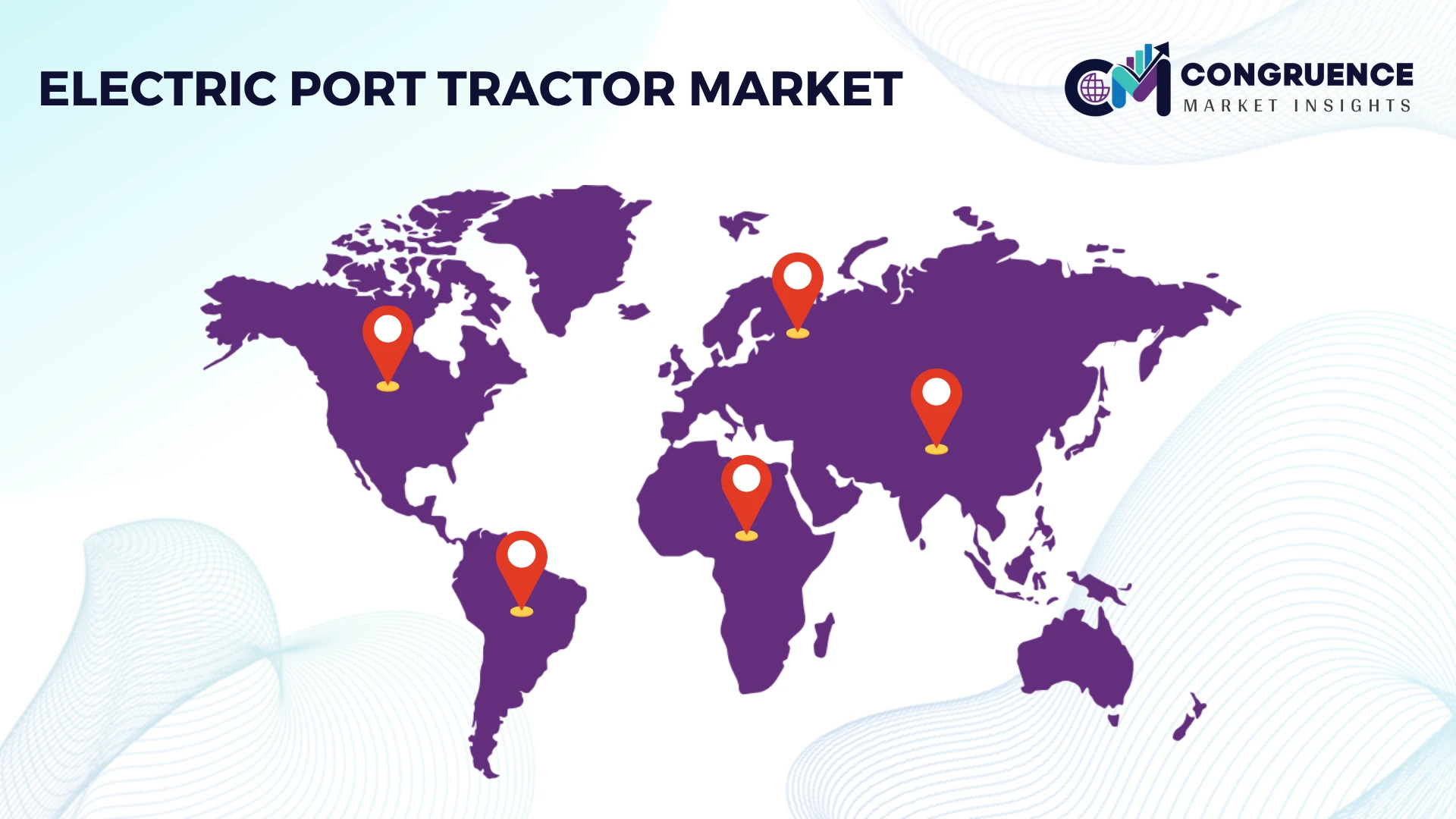
The report examines electric port tractors by powertrain, including battery-electric and emerging fuel-cell configurations, alongside charging and battery-swapping approaches. Application coverage includes container terminals, intermodal and rail yards, distribution centers, and industrial logistics facilities. End-user analysis distinguishes port authorities, terminal operators, third-party logistics providers, and inland freight operators. Regional coverage spans North America, Europe, Asia-Pacific, South America, and the Middle East and Africa, with country-level assessment of port infrastructure, equipment procurement, and electrification readiness.
Technology analysis covers battery systems, charging capacity, swapping infrastructure, telematics, energy management, and integration with terminal automation. Competitive benchmarking compares established equipment manufacturers with electric-vehicle specialists and integrated logistics-technology providers. Deployment examples, including 60-unit fleet programs and charging-linked investments, help assess scale-up requirements and operational readiness. The report supports investment planning, supplier selection, geographic expansion, and competitive positioning by evaluating uptime, maintenance economics, infrastructure needs, and service coverage. Its 2026–2033 outlook helps businesses prioritize product development and deployment strategies across mature and emerging port markets.
| Report Attribute/Metric | Report Details |
|---|---|
|
Market Revenue in 2025 |
USD 300.7 Million |
|
Market Revenue in 2033 |
USD 497.7 Million |
|
CAGR (2026 - 2033) |
6.5% |
|
Base Year |
2025 |
|
Forecast Period |
2026 - 2033 |
|
Historic Period |
2021 - 2025 |
|
Segments Covered |
By Type
By Application
By End-User
|
|
Key Report Deliverable |
Revenue Forecast, Growth Trends, Market Dynamics, Segmental Overview, Regional and Country-wise Analysis, Competition Landscape |
|
Region Covered |
North America, Europe, Asia-Pacific, South America, Middle East, Africa |
|
Key Players Analyzed |
Kalmar Corporation, Terberg Special Vehicles, Orange EV, Westwell Technology, SANY Group, TICO Tractors, Capacity Trucks, BYD Company Limited, Konecranes, GAUSSIN, ZPMC, MOL CY |
|
Customization & Pricing |
Available on Request (10% Customization is Free) |




