
Reports
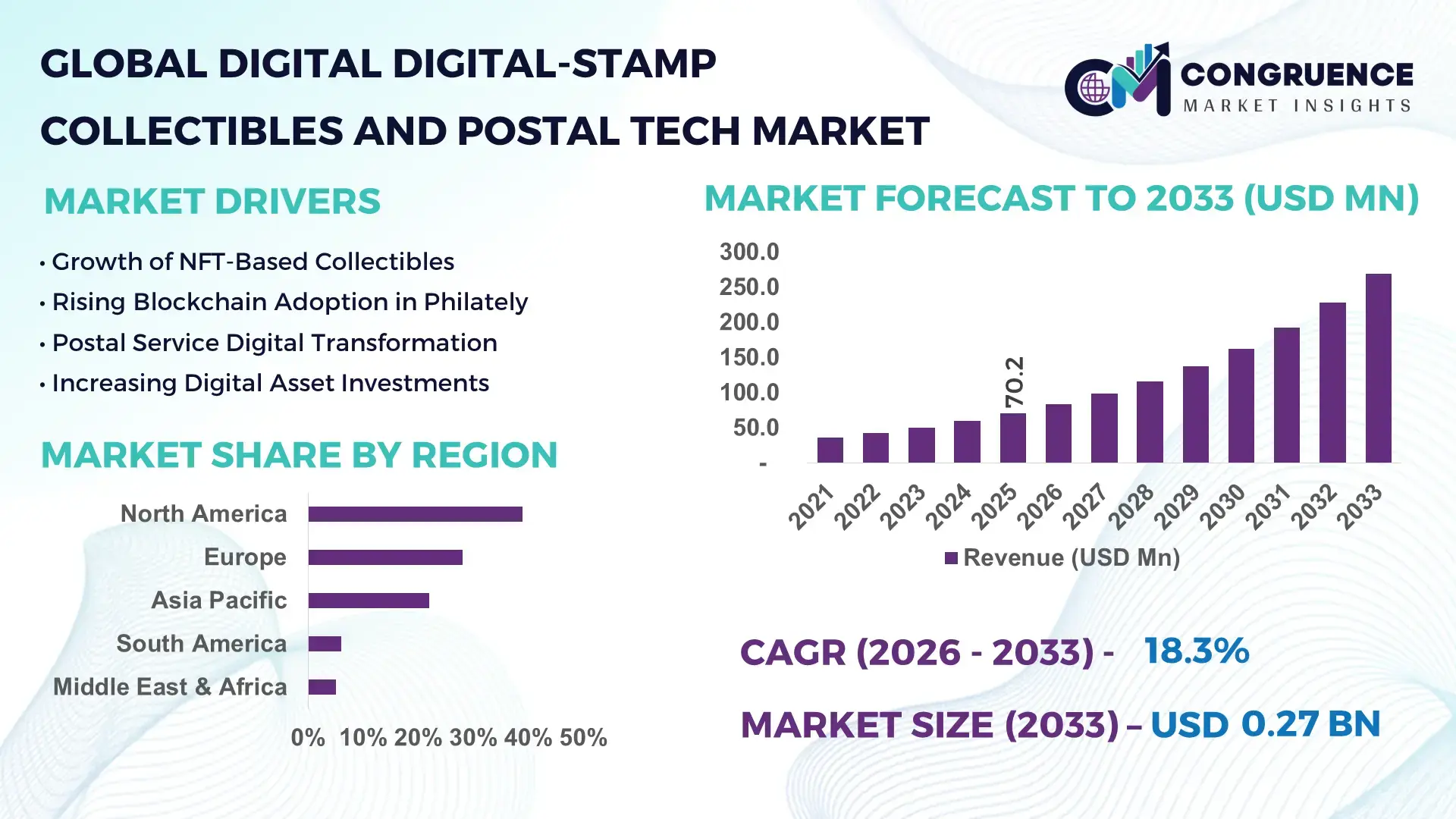
The Global Digital Digital-Stamp Collectibles and Postal Tech Market was valued at USD 70.2 Million in 2025 and is anticipated to reach a value of USD 269.2 Million by 2033 expanding at a CAGR of 18.3% between 2026 and 2033, according to an analysis by Congruence Market Insights. Growth is primarily driven by the rapid adoption of blockchain-based collectibles, increasing digitization of postal services, and the rising popularity of NFT-enabled philatelic assets among collectors and institutional investors.
The United States dominates technological innovation and deployment in the Digital Digital-Stamp Collectibles and Postal Tech Market through advanced postal digitalization programs and strong fintech infrastructure. The United States Postal Service (USPS)processes more than 128 billion mailpieces annually, creating a massive digital authentication opportunity for postal technologies. Over 42% of digital stamp collectible transactions globallyoriginate from U.S.-based collectors and trading platforms. More than 65 blockchain startupsare actively developing digital asset authentication tools for collectibles and postal memorabilia. In addition, over 30% of global NFT collectible marketplacesintegrate postal or philatelic digital assets, supported by investments exceeding USD 300 million in postal digital transformation initiatives.
Market Size & Growth:The market reached USD 70.2 Million in 2025 and is projected to reach USD 269.2 Million by 2033, expanding at 18.3% CAGR due to increasing digital asset adoption and blockchain-backed collectible authentication.
Top Growth Drivers:Blockchain authentication adoption increased 45%, digital collectible trading platforms grew 38%, and postal digitization initiatives improved operational efficiency by 32%.
Short-Term Forecast:By 2028, blockchain-based stamp verification systems are expected to reduce counterfeit collectibles by 40%and improve transaction transparency by 35%.
Emerging Technologies:Integration of NFT tokenization platforms, blockchain provenance tracking, and AI-powered collectible authentication systems is reshaping digital stamp marketplaces.
Regional Leaders:North Americais projected to reach USD 110 Million by 2033with strong NFT marketplace integration; Europemay reach USD 85 Milliondriven by postal heritage digitization programs; Asia-Pacificcould approach USD 60 Million with growing digital collectible communities.
Consumer/End-User Trends:Individual collectors account for nearly 54% of platform activity, while institutional investors and postal agencies collectively contribute over 30% of digital stamp issuance and trading volume.
Pilot or Case Example:In 2024, a European postal authority piloted blockchain-enabled collectible stamps, achieving 50% faster authenticationand reducing counterfeit trading cases by 28%.
Competitive Landscape:A leading digital collectibles platform holds approximately 22% market presence, followed by major competitors including OpenSea, Rarible, VeVe Digital Collectibles, and StampDAQ.
Regulatory & ESG Impact:Governments are implementing digital asset regulations and authentication standards, with over 35 countries introducing blockchain traceability frameworks for collectibles and digital intellectual property.
Investment & Funding Patterns:Venture capital and strategic investments in digital collectible platforms surpassed USD 1.2 Billion globally, supporting blockchain infrastructure and digital marketplace development.
Innovation & Future Outlook:Integration of AI-powered digital provenance verification, Web3 trading ecosystems, and postal service blockchain infrastructure is expected to transform digital philately and collectible investment markets.
Digital Digital-Stamp Collectibles and Postal Tech Market development is increasingly influenced by postal authorities (34%), private NFT platforms (41%), and fintech service providers (25%). Innovations such as tokenized limited-edition stamps, AI-based authenticity verification, and blockchain archival registries are strengthening market transparency. Regulatory frameworks for digital assets across North America and Europe are improving investor confidence, while Asia-Pacific digital collectors are expanding rapidly due to growing Web3 adoption and mobile-first trading platforms.
The Digital Digital-Stamp Collectibles and Postal Tech Market is gaining strategic relevance as postal operators and digital asset platforms converge to create authenticated, tradeable digital collectibles. Blockchain-enabled stamp issuance enables transparent ownership tracking, significantly improving authenticity verification compared to traditional physical philately systems. For example, blockchain provenance verification delivers nearly 60% faster authentication compared to manual archival verification methods, enabling collectors and institutional investors to trade digital stamps with greater confidence.
Digital postal technologies also provide operational advantages for postal agencies. Smart postal tracking platforms integrated with distributed ledgers improve record transparency and reduce counterfeit risks in collectible markets. Governments in North America and Europe are increasingly integrating digital collectible issuance into postal modernization strategies. North America dominates in transaction volume, while Asia-Pacific leads adoption growth with nearly 46% of new digital collectible users entering marketplaces through mobile-first platforms.
In the short term, the industry is expected to experience significant technological acceleration. By 2028, AI-powered authenticity verification and blockchain stamping platforms are projected to reduce counterfeit collectible circulation by nearly 45%, while improving marketplace transaction efficiency by approximately 30%. These technologies are increasingly integrated into Web3 ecosystems that support decentralized ownership and cross-platform trading.
Sustainability and ESG commitments are also shaping the market landscape. Postal agencies are transitioning toward digital-first collectible issuance models aimed at reducing paper-based collectible production by nearly 35% by 2030, aligning with broader environmental goals and reducing physical production costs.
A practical example occurred in 2024 when a European postal authority launched a blockchain-based digital stamp initiative, achieving a 40% improvement in transaction verification speedand expanding collector participation across more than 25 international trading platforms.
As digital ownership ecosystems evolve, the Digital Digital-Stamp Collectibles and Postal Tech Market is emerging as a strategic pillar for digital asset authentication, postal modernization, and sustainable collectible trading ecosystems, positioning the industry for long-term resilience, regulatory compliance, and technology-driven growth.
The Digital Digital-Stamp Collectibles and Postal Tech Market is influenced by a combination of digital asset innovation, blockchain technology adoption, and modernization initiatives across global postal services. The shift toward authenticated digital collectibles is transforming traditional philately into a digital investment ecosystem. Collectors and investors are increasingly participating through blockchain marketplaces where tokenized digital stamps ensure transparent ownership and provenance tracking.
Government-backed postal digitization programs are another key factor shaping market dynamics. Many national postal authorities are adopting blockchain-based issuance systems for collectible stamps to prevent counterfeiting and improve traceability. Digital collectible platforms are also expanding interoperability with Web3 infrastructure, enabling cross-market trading and digital asset portability.
The rise of NFT marketplaces has introduced new monetization channels for postal authorities, allowing them to issue limited-edition digital stamps to global collectors. Additionally, artificial intelligence tools are being integrated into collectible authentication systems to analyze metadata, verify ownership histories, and detect fraudulent tokens.
Growing consumer interest in digital collectibles, combined with institutional investments in blockchain infrastructure, is expected to further strengthen the market ecosystem. As postal services transition toward digitally verified assets and collectors seek diversified digital investments, the Digital Digital-Stamp Collectibles and Postal Tech Market is positioned for sustained technological and operational evolution.
Blockchain technology is a major growth driver for the Digital Digital-Stamp Collectibles and Postal Tech Market because it enables transparent, tamper-proof authentication of digital stamps and collectibles. Traditional stamp authentication relies heavily on physical documentation and expert verification, processes that can take days or even weeks. Blockchain-based digital ledgers allow instant ownership verification and traceability across marketplaces. More than 70% of new digital collectible platforms now utilize blockchain infrastructureto secure transaction records and verify authenticity. Tokenization technologies allow postal authorities to issue limited-edition digital stamps, each represented as a unique NFT with verifiable ownership data stored on decentralized networks. Collectors also benefit from improved liquidity and cross-border trading opportunities. Digital marketplaces enable real-time global trading of digital stamps, with transaction processing times reduced by more than 50% compared to conventional collectible exchanges. Additionally, blockchain smart contracts enable automated royalty payments for issuing authorities and artists, creating sustainable revenue streams. Postal agencies worldwide are exploring blockchain-based collectible issuance programs to enhance collector engagement while reducing counterfeit risks. As digital asset markets mature and collector communities expand globally, blockchain authentication continues to strengthen the credibility and efficiency of digital stamp ecosystems.
Despite rapid technological advancements, regulatory uncertainty surrounding digital assets and NFTs remains a significant restraint for the Digital Digital-Stamp Collectibles and Postal Tech Market. Many countries lack clear legal frameworks for digital collectibles, creating ambiguity regarding ownership rights, taxation, and intellectual property protection. More than 40 countries have yet to define regulatory classifications for NFT-based digital assets, which affects trading platforms and investors participating in collectible marketplaces. In some jurisdictions, digital collectibles are treated similarly to speculative crypto assets, resulting in compliance requirements that limit adoption among institutional investors. Consumer protection concerns also pose regulatory challenges. Authorities are increasingly monitoring digital asset markets to address fraud, counterfeit tokens, and intellectual property misuse. As a result, digital collectible platforms must invest heavily in compliance mechanisms such as identity verification, transaction monitoring, and anti-money laundering systems. Additionally, regulatory fragmentation across regions complicates cross-border trading. A digital stamp collectible issued in one country may face trading restrictions in another jurisdiction due to differing legal frameworks. These regulatory complexities create barriers to seamless marketplace integration and slow down global adoption among postal authorities and collectors.
The rapid growth of Web3 infrastructure presents significant opportunities for the Digital Digital-Stamp Collectibles and Postal Tech Market by enabling decentralized trading ecosystems for authenticated digital assets. Web3 platforms support peer-to-peer collectible exchanges, smart contract automation, and decentralized ownership verification. More than 200 Web3 marketplaces globally now support NFT-based collectibles, including digital art, gaming assets, and digital philatelic tokens. This infrastructure provides postal authorities with new global distribution channels for limited-edition digital stamps. Tokenized collectible issuance also enables fractional ownership models, allowing collectors to purchase shares of rare digital stamps rather than acquiring entire assets. This innovation significantly lowers the entry barrier for new investors and expands the collector base. Additionally, integration with metaverse platforms creates immersive digital collectible experiences. Virtual exhibitions, digital museums, and online collector communities allow stamp enthusiasts to showcase collections in interactive environments. As Web3 ecosystems expand and interoperability standards improve, digital stamps can be traded seamlessly across multiple platforms, creating a globally connected digital philately marketplace. These technological advancements are expected to unlock new revenue streams for postal authorities and collectible platforms worldwide.
Cybersecurity vulnerabilities present a critical challenge for the Digital Digital-Stamp Collectibles and Postal Tech Market because digital assets are highly attractive targets for cybercriminals. Hacking incidents targeting NFT marketplaces and blockchain platforms have increased in recent years, raising concerns about digital asset protection. More than USD 3 billion worth of NFT and crypto-related assets were affected by cyber incidents globally between 2022 and 2024, highlighting the scale of security risks in decentralized marketplaces. Phishing attacks, wallet compromises, and smart contract vulnerabilities are among the most common threats affecting digital collectible platforms. Collectors and investors often store digital stamps in blockchain wallets, which require strong security practices to prevent unauthorized access. However, user errors, such as sharing private keys or using insecure platforms, can lead to permanent asset loss. Postal authorities entering the digital collectible ecosystem must also invest heavily in cybersecurity infrastructure, including secure blockchain integrations, authentication systems, and fraud detection tools. These additional operational costs and technical complexities create barriers for smaller postal agencies seeking to participate in digital collectible markets.
Expansion of NFT-Based Postal Collectibles Platforms: The rise of NFT-enabled stamp issuance is transforming traditional philately into a digital investment market. Over 62% of newly launched digital collectible stamps since 2023 have been issued as blockchain-backed NFTs, enabling collectors to verify ownership and provenance instantly. Digital marketplaces recorded more than 2.5 million digital stamp transactions globally in 2024, with cross-border trading accounting for 48% of platform activity. Postal authorities in Europe and North America are increasingly launching limited-edition NFT stamp collections to engage younger digital collectors.
Integration of AI-Powered Authentication Technologies: Artificial intelligence is being integrated into digital collectible platforms to enhance authenticity verification and fraud detection. AI-based systems can analyze metadata, ownership history, and token structures to identify suspicious transactions. Recent industry pilots show that AI verification tools can detect counterfeit digital collectibles with 92% accuracy. More than 35 major digital collectible platforms now use AI-powered verification engines, significantly reducing fraudulent trading incidents and improving collector confidence.
Growth of Mobile-First Digital Collectible Marketplaces: Mobile applications are driving global participation in digital collectible trading. Approximately 58% of digital stamp transactions are now conducted through mobile platforms, particularly in Asia-Pacific markets where smartphone-based digital asset trading is widespread. Younger collectors aged 18–34 represent nearly 46% of new digital stamp buyers, indicating strong generational shifts in collectible investment behavior. Mobile-first platforms also support integrated digital wallets, enabling faster peer-to-peer trading.
Postal Service Digital Transformation Initiatives: National postal agencies are accelerating digital transformation initiatives to modernize collectible issuance. More than 20 postal authorities globally have launched digital stamp pilot programs, combining physical and digital collectible formats. Hybrid stamp models allow collectors to own both a physical stamp and a blockchain-verified digital counterpart. Early implementations show 35% higher engagement from collectors under 40 years old, demonstrating the effectiveness of digital collectibles in expanding the traditional philately audience.
The Digital Digital-Stamp Collectibles and Postal Tech Market is segmented based on type, application, and end-user groups, reflecting diverse technological and commercial use cases. These segments illustrate how digital asset technologies intersect with postal operations and collectible markets.
By type, blockchain-based digital stamps and NFT tokenized collectibles represent the most widely adopted formats, providing secure digital ownership verification. Hybrid collectible stamps combining physical and digital assets are also gaining traction among collectors seeking traditional philatelic value combined with digital authentication benefits.
From an application perspective, the market is used primarily in digital collectible trading platforms, postal service modernization programs, and digital asset investment ecosystems. Each application leverages blockchain authentication and decentralized marketplace technologies.
End-users include individual collectors, institutional investors, postal authorities, and digital marketplace operators. Individual collectors represent the largest user base due to the cultural and historical significance of stamps, while institutional investors are increasingly participating as digital collectibles become recognized alternative assets.
The Digital Digital-Stamp Collectibles and Postal Tech Market includes several product categories such as NFT-based digital stamps, blockchain-authenticated digital collectibles, hybrid physical-digital stamps, and digital philately trading tokens. NFT-based digital stamps currently dominate the segment, accounting for approximately 48% of total adoption, due to their secure blockchain-backed ownership records and compatibility with global NFT marketplaces. These stamps enable collectors to buy, sell, and trade verified digital assets through decentralized trading platforms. Hybrid physical-digital stamps hold roughly 27% adoption, offering collectors a physical stamp alongside a blockchain-authenticated digital token. This format is particularly popular among traditional philatelists transitioning into digital collectible markets. Blockchain-authenticated archival stamps represent about 15% of the segment, primarily used by postal authorities to digitize historical stamp collections and ensure long-term preservation. The fastest-growing category is NFT-based digital stamps, expanding at an estimated 21% CAGRdue to the increasing popularity of digital collectible ecosystems and the integration of Web3 trading platforms. The remaining segments, including tokenized philatelic investment assets and digital stamp authentication services, collectively account for nearly 10% of the marketbut continue to grow steadily as collector demand evolves.
In 2024, a national postal authority launched a limited-edition blockchain stamp collection with only 5,000 digital tokens, all sold within 48 hours, demonstrating strong demand for authenticated digital philatelic assets.
The Digital Digital-Stamp Collectibles and Postal Tech Market serves multiple application areas including digital collectible trading platforms, postal service modernization, digital asset investment, and digital museum or archival preservation. Digital collectible trading platforms represent the largest application area, accounting for approximately 46% of market adoption. These platforms allow collectors to trade digital stamps securely using blockchain verification systems and decentralized marketplaces. Postal service modernization initiatives account for nearly 29% adoption, as postal authorities digitize stamp issuance and implement blockchain-based authentication to prevent counterfeiting. Digital asset investment platforms represent around 17% adoption, with collectors and investors treating rare digital stamps as alternative investment assets. However, digital museum and archival preservation systems are emerging rapidly and are expected to surpass 25% adoption by 2033, expanding at nearly 19% CAGRas institutions digitize historical stamp collections. Consumer adoption trends indicate that 54% of digital stamp buyers are individual collectors, while 28% are institutional investorsseeking diversified digital assets. Additionally, approximately 41% of collectors prefer platforms that offer integrated digital wallet and trading features.
In 2025, a digital collectibles marketplace introduced blockchain-based postal stamps integrated into its platform, attracting more than 120,000 new users within the first six months.
End-users in the Digital Digital-Stamp Collectibles and Postal Tech Market include individual collectors, postal authorities, digital collectible marketplaces, and institutional investors. Individual collectors dominate the market, accounting for approximately 52% of total participation, driven by growing interest in digital philately and blockchain-based collectibles. These collectors often participate through NFT trading platforms where digital stamps are issued as limited-edition assets. Digital collectible marketplaces represent about 23% of end-user participation, providing infrastructure for trading, authentication, and digital asset storage. Postal authorities contribute around 15% of end-user activity, as they develop digital stamp issuance programs and blockchain-based authentication systems to modernize their collectible offerings. Institutional investors currently account for roughly 10% of the market, but this segment is expanding rapidly with an estimated 20% CAGR, as digital collectibles gain recognition as alternative investment assets. Adoption trends show that nearly 47% of collectors aged 18–35 prefer digital collectibles over traditional physical stamps, indicating strong generational shifts in philatelic investment behavior.
In 2024, a European postal service launched a blockchain-based digital stamp marketplace that attracted more than 70,000 collectors within its first year, demonstrating growing interest in authenticated digital philately platforms.
North America accounted for the largest market share at 39% in 2025 however, Asia-Pacific is expected to register the fastest growth, expanding at a CAGR of 20.1% between 2026 and 2033.
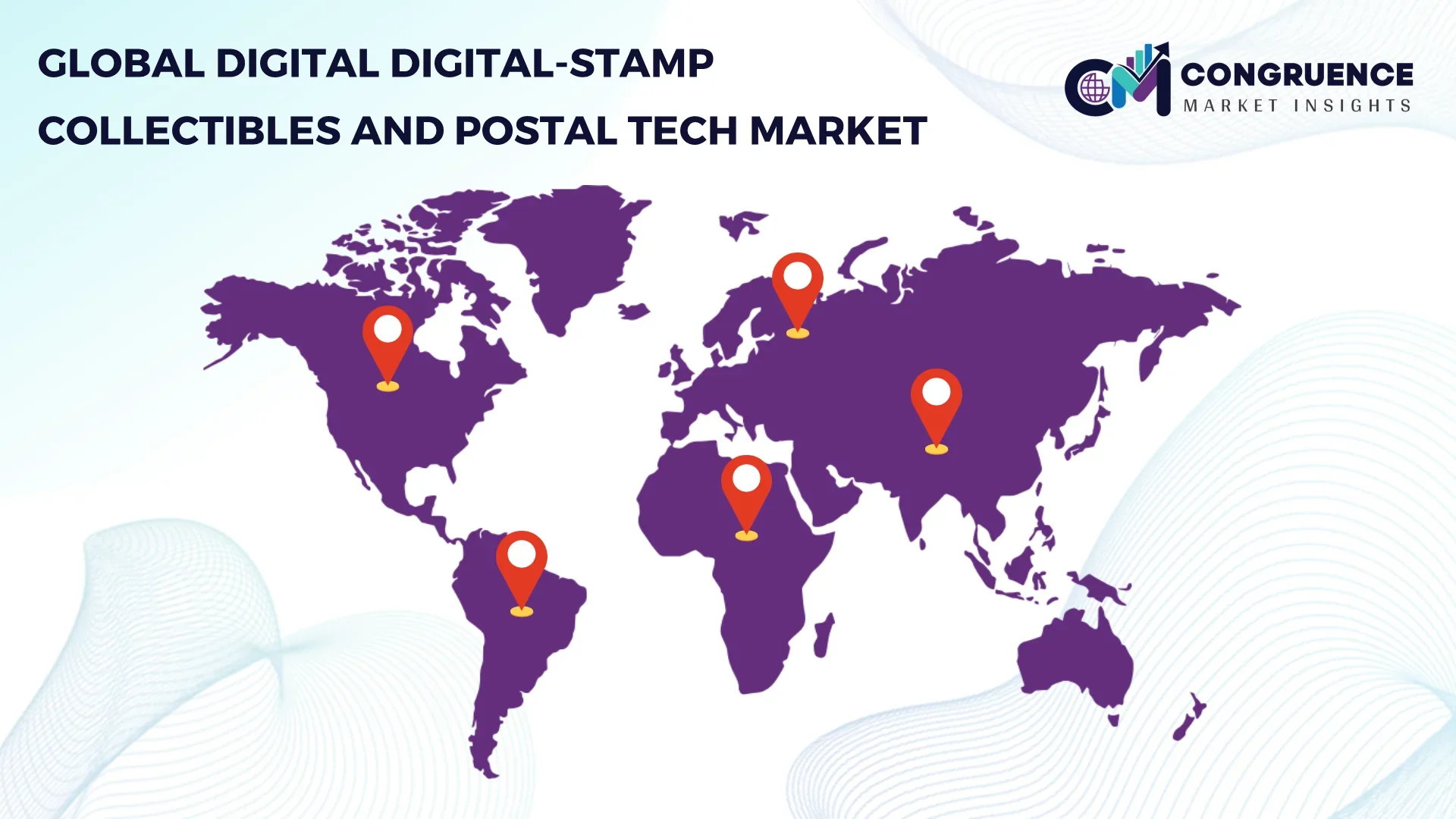
The regional distribution of the Digital Digital-Stamp Collectibles and Postal Tech Market reflects differences in digital asset adoption, postal modernization, and blockchain infrastructure. North America leads with nearly 39% of global digital stamp collectible transactions, supported by strong NFT marketplaces and digital postal initiatives. Europe follows with approximately 28% market share, driven by heritage philately digitization programs and regulatory frameworks for digital assets. Asia-Pacific currently accounts for around 22% of global activity, but its user base is expanding rapidly with over 3.5 million digital collectible usersacross China, Japan, and South Korea. South America contributes roughly 6% of global participation, mainly led by Brazil and Argentina where digital collectible trading communities are growing steadily. The Middle East & Africa holds approximately 5% of the market, supported by digital transformation initiatives in postal services across the UAE and South Africa. Across regions, more than 60% of digital collectible transactions now occur through mobile-based trading platforms, while over 25 national postal authorities worldwidehave introduced blockchain-based stamp issuance or pilot programs.
North America represents the largest regional hub for Digital Digital-Stamp Collectibles and Postal Tech adoption, accounting for approximately 39% of global market activity. The region’s dominance is driven by the presence of advanced blockchain infrastructure, large-scale NFT marketplaces, and strong institutional participation in digital asset trading. The United States remains the primary contributor, supported by digital collectible marketplaces and postal innovation initiatives that digitize philatelic assets. Demand is largely driven by digital collectible trading platforms, fintech services, and postal modernization programs. The United States Postal Service processes more than 128 billion mailpieces annually, creating significant opportunities for digital stamp authentication technologies and blockchain tracking systems. Regulatory developments are also shaping the market. Digital asset frameworks introduced by financial regulators are improving transparency and investor protection in NFT and collectible markets. More than 35% of digital collectible trading platforms operating globally are headquartered in North America, reflecting the region’s leadership in digital asset ecosystems. Technological innovation is another key factor. Blockchain-based provenance tracking, AI-powered collectible authentication, and Web3-enabled trading platforms are widely implemented across marketplaces. For example, a leading digital collectibles platform has introduced blockchain stamp trading modules enabling collectors to verify ownership instantly across more than 25 international trading platforms. Consumer behavior in the region also supports growth. North America shows higher institutional investor participation and enterprise adoption across fintech and digital asset platforms, while individual collectors represent nearly 50% of marketplace activity.
Europe holds approximately 28% of the global Digital Digital-Stamp Collectibles and Postal Tech Market, driven by strong philatelic traditions and government-led digitalization initiatives. Countries such as Germany, the United Kingdom, and Franceplay a central role in expanding digital stamp collectible ecosystems through national postal modernization programs. European postal authorities are increasingly launching hybrid physical-digital stamp programs, allowing collectors to obtain blockchain-verified digital counterparts of traditional stamps. More than 12 national postal agencies across Europehave introduced digital collectible pilot programs since 2023. Regulatory frameworks within the European Union also support digital asset development. Digital asset regulations introduced under financial and technology policies are encouraging transparency and standardization across NFT marketplaces. These policies are accelerating the adoption of blockchain authentication systems in collectible trading platforms. Technological innovation is particularly visible in heritage digitization programs. National postal archives in Germany and France are digitizing historical stamp collections using blockchain-based authentication registries, allowing collectors to access and trade verified digital replicas of rare philatelic artifacts. European consumer behavior is shaped by regulatory awareness and sustainability goals. Collectors in the region often prefer verified, traceable digital collectibles aligned with regulatory compliance, while environmentally conscious investors favor digital stamp issuance that reduces paper-based collectible production. Local players are also active in the ecosystem. Several European collectible platforms have integrated blockchain trading systems supporting cross-border collectible exchanges across more than 20 European digital marketplaces.
Asia-Pacific represents one of the fastest-growing regions for Digital Digital-Stamp Collectibles and Postal Tech adoption, accounting for roughly 22% of global digital collectible activity. Countries such as China, Japan, South Korea, and Indiaare major contributors due to expanding digital asset trading communities and strong mobile-first technology adoption. The region’s growth is driven by high smartphone penetration and digital commerce infrastructure. More than 65% of digital collectible transactions in Asia-Pacific occur through mobile applications, making mobile trading platforms a central component of the regional market. China and Japan are among the largest consumers of digital collectible assets in the region. China alone has more than 1.5 million digital collectible traders, while Japan’s philatelic collector base exceeds 800,000 active participantsacross online trading platforms. Technology innovation hubs in Tokyo, Shenzhen, and Singaporeare developing blockchain-based authentication systems for collectibles. These innovations include AI-powered provenance verification, tokenized stamp issuance platforms, and digital archive preservation tools. Regional companies are also actively developing collectible ecosystems. Several digital collectible platforms in Asia-Pacific have launched cross-platform trading integrations supporting more than 15 digital asset marketplaces. Consumer behavior reflects strong digital engagement. The region’s growth is largely driven by younger collectors aged 18–35, who represent nearly 48% of new digital stamp buyers, supported by strong mobile commerce adoption and Web3 community participation.
South America accounts for approximately 6% of the global Digital Digital-Stamp Collectibles and Postal Tech Market, with growing activity in Brazil and Argentina. These countries have expanding digital collectible communities supported by increasing internet penetration and rising interest in alternative digital assets. Brazil represents the largest market in the region, accounting for nearly 45% of South America’s digital stamp collectible trading activity. Argentina follows with approximately 25% participation, supported by growing blockchain startup ecosystems. Infrastructure improvements and government-backed digital innovation programs are helping expand digital asset markets across the region. Digital payment adoption has exceeded 70% among online collectors in Brazil, enabling faster integration of blockchain-based collectible platforms. Local players are also entering the ecosystem by developing NFT marketplaces tailored to regional collectors. Some platforms are integrating collectible trading features designed specifically for philatelic digital assets. Consumer behavior in South America shows strong interest in culturally themed collectibles and language-localized trading platforms. Demand is often tied to digital media platforms and localized collectible communities, which support cross-border trading with collectors in North America and Europe.
The Middle East & Africa region holds approximately 5% of the global Digital Digital-Stamp Collectibles and Postal Tech Market, supported by digital transformation initiatives and technology-driven postal modernization programs. Countries such as the United Arab Emirates and South Africaare leading regional adoption through investments in blockchain infrastructure and digital government services. The United Arab Emirates is actively integrating digital asset technologies into postal and government services. More than 40% of postal modernization initiatives in the country include blockchain-based authentication systems, enabling digital stamp issuance and collectible verification. South Africa represents a growing digital collectible trading hub with increasing participation from technology startups and fintech companies. Regional innovation hubs are exploring tokenized collectibles and digital asset marketplaces for cultural artifacts and postal memorabilia. Trade partnerships and digital economy policies are encouraging technology adoption across the region. Governments are also exploring Web3 infrastructure to expand digital commerce ecosystems. Consumer behavior reflects growing interest in blockchain-enabled collectibles and digital art markets. Collectors in the region increasingly participate in cross-border trading platforms and international NFT marketplaces, expanding access to global collectible communities.
United States – 34% market share: Strong blockchain infrastructure, large NFT marketplaces, and advanced postal digitization programs drive leadership in the Digital Digital-Stamp Collectibles and Postal Tech Market.
Germany – 12% market share: Strong philatelic heritage, digital archive programs, and advanced blockchain-based collectible authentication systems support high adoption.
The Digital Digital-Stamp Collectibles and Postal Tech Market is characterized by a moderately fragmented competitive structure, with more than 40 active digital collectible platforms and technology providersglobally participating in the ecosystem. These companies include blockchain developers, digital collectible marketplaces, postal technology providers, and fintech platforms supporting authentication and trading infrastructure.
The top five companies collectively account for nearly 42% of global platform activity, while numerous smaller blockchain startups and niche digital collectible platforms operate in regional markets. Competition is primarily driven by technological innovation, marketplace liquidity, platform security, and integration with Web3 ecosystems.
Strategic partnerships between postal authorities and digital collectible platforms are becoming increasingly common. Over 20 national postal agencies have collaborated with blockchain companiesto develop digital stamp issuance systems. These partnerships allow postal organizations to tokenize limited-edition stamps and distribute them globally through NFT marketplaces.
Product innovation also plays a key role in competition. Companies are introducing AI-based authenticity verification tools, decentralized trading platforms, and digital archival technologiesto enhance collector confidence and reduce fraud risks.
Mergers, acquisitions, and venture investments are further shaping the competitive landscape. Global investment in digital collectible technology platforms has exceeded USD 1 billion in recent years, enabling startups to develop scalable blockchain infrastructures and integrate advanced authentication capabilities.
As digital asset ecosystems mature, competition in the Digital Digital-Stamp Collectibles and Postal Tech Market is expected to intensify, particularly among platforms seeking to expand cross-border trading networks and attract global collector communities.
Rarible
VeVe Digital Collectibles
StampDAQ
CryptoStamps by Austrian Post
Mintable
SuperRare
KnownOrigin
MakersPlace
Enjin
WAX Blockchain
Dapper Labs
Nifty Gateway
Immutable
Foundation App
Technological advancements are playing a critical role in shaping the Digital Digital-Stamp Collectibles and Postal Tech Market, particularly through the adoption of blockchain infrastructure, artificial intelligence authentication systems, Web3 trading platforms, and digital archival technologies.
Blockchain technology remains the core infrastructure supporting digital stamp collectibles. Distributed ledger systems allow each digital stamp to be issued as a unique token, ensuring immutable ownership records and preventing duplication. More than 70% of digital stamp collectible platforms globally rely on blockchain networksto verify provenance and transaction history.
Artificial intelligence technologies are increasingly used to detect fraudulent tokens and verify metadata associated with digital collectibles. AI algorithms analyze token attributes, ownership records, and marketplace activity to identify suspicious transactions. Recent industry pilots show that AI-based authentication systems can detect counterfeit digital assets with over 90% accuracy.
Web3 technologies are also transforming the trading ecosystem. Decentralized marketplaces enable peer-to-peer collectible exchanges without traditional intermediaries. These platforms support smart contracts that automatically execute transactions and ensure secure payments between buyers and sellers.
Another key innovation is hybrid collectible technologies, where physical stamps are paired with blockchain-based digital tokens. These hybrid assets allow collectors to own both a physical artifact and a verified digital version, expanding the collectible ecosystem.
Digital archival technologies are also gaining importance. Postal authorities and cultural institutions are digitizing historical stamp collections using blockchain-based registries to preserve rare philatelic artifacts and provide global access to collectors.
These technologies collectively enhance transparency, reduce counterfeit risks, and create scalable digital collectible marketplaces capable of supporting millions of collectors worldwide.
• In February 2025,OpenSealaunched OS2, a rebuilt platform expanding its marketplace capabilities to include cross-chain token trading alongside NFTs. The update integrated improved search tools, aggregated listings across multiple marketplaces, and cross-chain purchasing across 22 blockchain networks, significantly enhancing digital collectible trading functionality. Source: www.prnewswire.com
• In October 2024,OpenSeaannounced a strategic partnership with Art Blocksto support generative artists through a new Art Blocks Engine contract integrationand a joint Artist Residency Program. The initiative allows artists to mint generative NFTs directly through OpenSea’s infrastructure while receiving funding, studio access, and exhibition opportunities.
• In May 2025,Austrian Postexpanded its blockchain-based Crypto Stamp programby releasing a new hybrid collectible series combining physical stamps with NFT tokens. Each stamp includes a unique blockchain token enabling digital ownership verification and secondary marketplace trading, strengthening digital philately adoption among collectors.
• In July 2025,OpenSeaacquired the Rally Web3 wallet and NFT trading application, enabling integrated wallet functionality and improving digital asset management within the OpenSea ecosystem. The acquisition supports secure NFT storage, simplified trading, and expanded Web3 interoperability across collectible marketplaces.
The Digital Digital-Stamp Collectibles and Postal Tech Market Report provides a comprehensive analysis of emerging digital philately ecosystems and postal technology innovations transforming collectible markets worldwide. The report evaluates the entire value chain of digital stamp collectibles, including blockchain issuance platforms, NFT marketplaces, postal authentication technologies, and digital archival systems.
The scope covers multiple market segments including product types, application areas, end-user industries, and geographic regions. Product segmentation includes NFT-based digital stamps, blockchain-authenticated collectible tokens, hybrid physical-digital stamps, and archival digital philately solutions. Each product category is analyzed based on adoption patterns, technological innovation, and integration with digital trading platforms.
Application areas examined in the report include digital collectible trading marketplacxes, postal service modernization programs, digital asset investment platforms, and cultural heritage archival systems. These applications highlight how digital stamp technologies intersect with broader digital asset ecosystems and Web3 infrastructures.
The report also evaluates end-user segments such as individual collectors, institutional investors, digital collectible marketplaces, and postal authorities. Individual collectors represent the largest user group, while institutional investors and digital platforms are rapidly expanding participation as digital collectibles gain recognition as alternative digital assets.
Geographic analysis spans North America, Europe, Asia-Pacific, South America, and the Middle East & Africa, covering more than 30 key national marketsand evaluating digital adoption patterns, technological investments, and regulatory frameworks.
Technology analysis includes blockchain infrastructure, AI-based authenticity verification, decentralized Web3 trading systems, hybrid collectible technologies, and digital archival registries. These technologies support secure ownership verification and scalable digital collectible ecosystems.
Overall, the report provides strategic insights into technological innovation, digital asset adoption trends, and evolving postal modernization initiatives shaping the global Digital Digital-Stamp Collectibles and Postal Tech Market.
| Report Attribute / Metric | Details |
|---|---|
| Market Revenue (2025) | USD 70.2 Million |
| Market Revenue (2033) | USD 269.2 Million |
| CAGR (2026–2033) | 18.3% |
| Base Year | 2025 |
| Forecast Period | 2026–2033 |
| Historic Period | 2021–2025 |
| Segments Covered |
By Type
By Application
By End-User Insights
|
| Key Report Deliverables | Revenue Forecast; Market Trends; Growth Drivers & Restraints; Technology Insights; Segmentation Analysis; Regional Insights; Competitive Landscape; Regulatory & ESG Overview; Recent Developments |
| Regions Covered | North America; Europe; Asia-Pacific; South America; Middle East & Africa |
| Key Players Analyzed | OpenSea; Rarible; VeVe Digital Collectibles; StampDAQ; Mintable; SuperRare; KnownOrigin; MakersPlace; Enjin; WAX Blockchain; Dapper Labs; Nifty Gateway; Immutable; Foundation App |
| Customization & Pricing | Available on Request (10% Customization Free) |




