
Reports
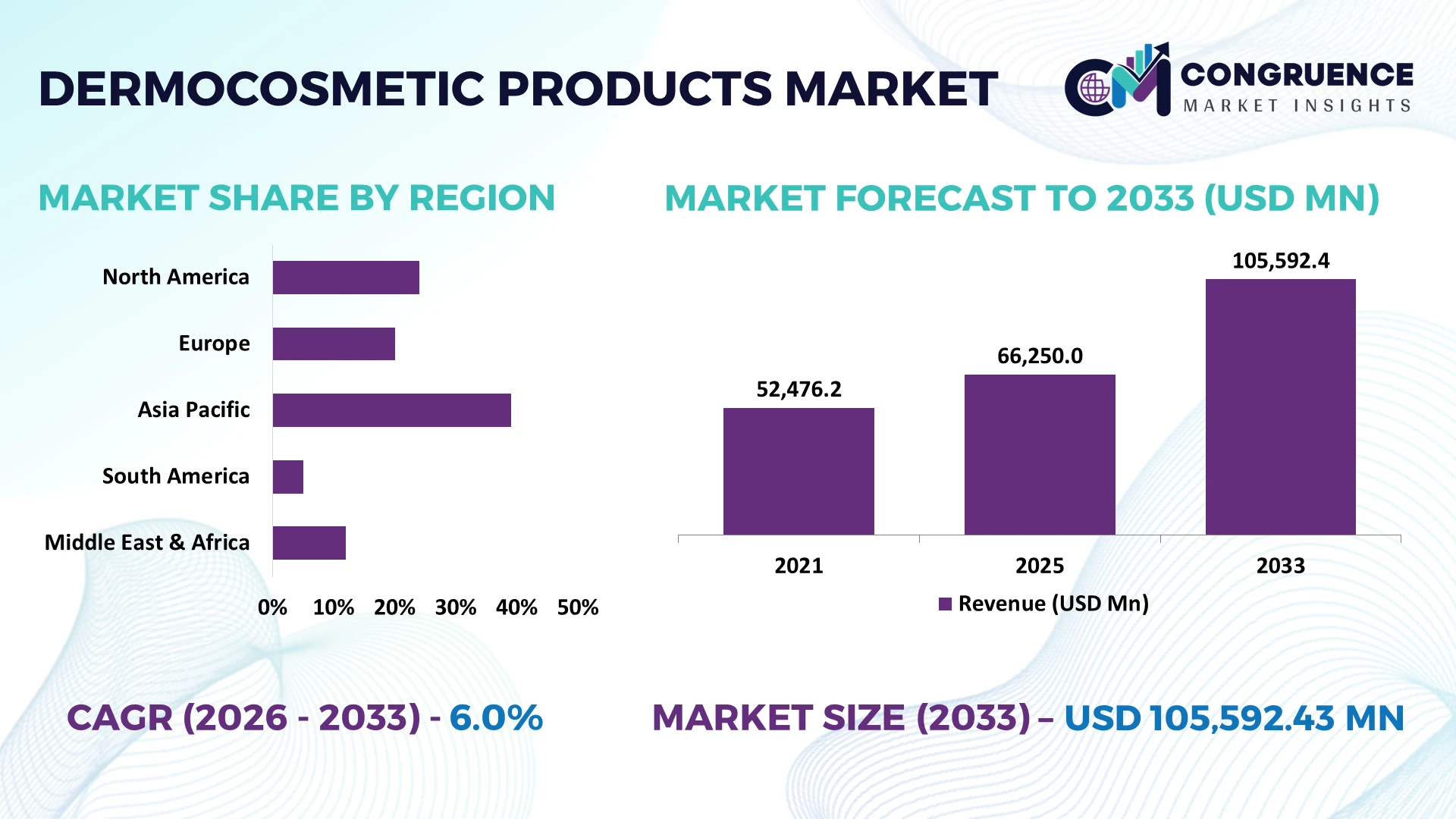
The Global Dermocosmetic Products Market was valued at USD 66250 Million in 2025 and is anticipated to reach a value of USD 105592.43 Million by 2033 expanding at a CAGR of 6% between 2026 and 2033. Growth is driven by dermatologist-recommended skincare, rising treatment of acne and barrier dysfunction, pharmacy-channel expansion, microbiome-focused formulations, and clinical-grade actives moving into mainstream personal care.
The United States accounts for an estimated 24–26% of global dermocosmetic demand, supported by strong dermatology access, premium skincare spending, and high penetration of retinoids, ceramides, and SPF-based products. France contributes roughly 8–10% and remains a formulation hub through pharmacy-led brands, while South Korea exceeds 30% online beauty penetration in major urban channels. EU ingredient restrictions and U.S.–EU regulatory differences continue reshaping formulation and sourcing strategies.
Strategically, companies should prioritize clinically validated actives, pharmacy and dermatology partnerships, localized regulatory portfolios, and high-repeat skin-barrier categories to strengthen premium positioning and defensible global expansion.
Market Size & Growth: USD 66,250 million in 2025 advances toward USD 105,592.43 million by 2033 at 6%, supported by clinical skincare adoption and pharmacy-channel expansion.
Top Growth Drivers: Dermatologist-recommended skincare contributes approximately 35%, barrier-repair demand 30%, and acne or pigmentation treatment 20% to structural category momentum.
Short-Term Forecast: By 2027, AI-assisted formulation and demand planning can reduce development or forecasting cycle inefficiency by approximately 10–15%.
Emerging Technologies: Microbiome science, encapsulated retinoids, AI skin diagnostics, peptide delivery, and biomimetic ceramides are improving targeting, tolerability, and formulation precision.
Regional Leaders: By 2033, North America approaches USD 34 billion, Europe USD 31 billion, and Asia-Pacific USD 30 billion, driven respectively by dermatology, pharmacy, and digital-beauty adoption.
Consumer/End-User Trends: More than 50% of sensitive-skin consumers increasingly seek fragrance-free, barrier-supporting, or dermatologist-tested products, strengthening clinical positioning over conventional cosmetics.
Pilot/Case Example: In 2025, AI-supported skin-analysis platforms shortened consultation and recommendation workflows by approximately 20–30% across selected digital beauty and dermatology deployments.
Competitive Landscape: L’Oréal leads with an estimated 12–14% global share, competing with Beiersdorf, Pierre Fabre, Galderma, Shiseido, and Unilever across pharmacy and premium skincare channels.
Regulatory & ESG Impact: EU microplastics restrictions and packaging rules are pushing reformulation and material redesign, with some polymer-dependent product systems requiring 10%+ formulation adjustment.
Investment & Funding: More than USD 1 billion in combined dermatology, skincare technology, manufacturing, and brand expansion activity supports clinical innovation, capacity growth, and digital diagnostics.
Innovation & Future Outlook: Next-generation growth centers on microbiome-targeted care, precision diagnostics, barrier-repair systems, and personalized regimens that shift dermocosmetics from product-led selling toward evidence-based skin-management ecosystems.
Dermocosmetic demand is concentrating around acne management, sensitive-skin care, pigmentation, anti-aging, scalp health, and barrier repair. Encapsulated retinoids, biomimetic ceramides, microbiome-oriented formulations, and AI skin diagnostics are accelerating product differentiation, while more than 50% of sensitive-skin users increasingly favor clinically positioned products. Regulatory tightening across Europe is simultaneously reshaping ingredient selection and packaging design, creating a stronger strategic focus on efficacy, compliance, and dermatology-led brand credibility.
Dermocosmetics are becoming strategically important because competition is shifting from conventional beauty positioning toward clinically validated skin management across acne, pigmentation, barrier repair, sensitive skin, scalp care, and photoaging. Digital skin analysis, pharmacy-led distribution, and stricter ingredient oversight are changing how brands develop and commercialize products. Europe’s tightening rules around certain polymers and claims are also pushing reformulation, traceability, and evidence generation deeper into product-development workflows.
Technology is improving both development efficiency and consumer targeting. AI-assisted skin assessment can shorten consultation and product-selection workflows by roughly 20–30% versus manual questionnaires, while encapsulated retinoid and active-delivery systems can improve tolerability and stability by approximately 10–20% over conventional formulations. France retains strength in pharmacy-led dermocosmetics and formulation science, while South Korea leads rapid digital beauty deployment and high-frequency product innovation.
Through 2026–2028, microbiome diagnostics, biomimetic lipids, peptide delivery, and AI-supported personalization will move further into mainstream portfolios. Companies are investing in dermatology partnerships, digital diagnostic tools, clinical testing, and localized formulation platforms. Competitive advantage will increasingly depend on combining measurable efficacy, regulatory readiness, diagnostic integration, and scalable repeat-use regimens rather than relying on cosmetic claims alone.
Demand is being pulled by persistent skin concerns that require repeat treatment rather than occasional cosmetic use. Acne affects roughly 80–85% of people during adolescence, while sensitive-skin prevalence exceeds 50% in several consumer surveys, supporting sustained demand for barrier-repair, anti-inflammatory, and non-comedogenic formulations. In the United States and France, dermatologists and pharmacies increasingly influence product selection, shifting purchasing toward clinically tested actives and fragrance-free systems. This changes product economics because efficacy-backed regimens generate higher repeat usage than trend-led beauty launches. Companies are expanding ceramide, niacinamide, retinoid, and SPF portfolios, strengthening dermatologist education, and investing in clinical substantiation. The strategic advantage lies in owning recurring treatment routines, where validated performance creates stronger retention than conventional cosmetic differentiation.
Dermocosmetic scalability is constrained by increasingly fragmented ingredient, claims, and packaging requirements across the EU, United States, China, and other major markets. Reformulation involving restricted polymers, preservatives, UV filters, or active concentrations can add 10–20% to development workloads, while clinical and stability validation can extend launch timelines by several months. European microplastics restrictions and tighter environmental standards are already forcing some brands to replace legacy texture-modifying ingredients. At the same time, imported specialty actives and pharmaceutical-grade ingredients remain exposed to supply volatility and currency movements. Companies are reducing risk through dual sourcing, regional formulation platforms, long-term supplier contracts, and standardized base formulas. Operationally, global harmonization is difficult; brands increasingly need modular formulations that can be adapted without rebuilding an entire product architecture.
AI diagnostics, microbiome profiling, biomimetic lipids, and digital skin tracking are creating a new layer of value beyond standalone products. Automated image analysis can reduce consultation time by approximately 20–30%, while personalized regimen engines can improve recommendation precision by 10–20% compared with static product-selection questionnaires. South Korea and the United States are leading deployment of digital skin-analysis tools in beauty retail and dermatology-linked channels, while India offers a large untapped base for mobile-first skin assessment. Companies are integrating diagnostic apps, teledermatology partnerships, and condition-specific product bundles into their ecosystems. The non-obvious opportunity is data continuity: brands that track skin progress over time can increase regimen adherence, reduce product switching, and convert one-time purchases into longer-duration clinical skincare relationships.
The long-term challenge is proving that product performance remains consistent across different skin tones, climates, ages, microbiomes, and treatment routines. A formulation showing a 15–20% improvement in a controlled test may perform differently in high-humidity India, dry European winters, or sensitive-skin populations, complicating global claims. AI diagnostic systems add another layer because model performance can vary when training datasets underrepresent darker skin tones or specific dermatological conditions. Companies must therefore invest in broader clinical cohorts, localized validation, algorithm auditing, and post-market monitoring. This raises development complexity but directly protects brand credibility. The strategic pressure is clear: dermocosmetic companies that cannot demonstrate reproducible efficacy across diverse users will struggle to scale premium claims, while those building stronger evidence infrastructure can defend clinical positioning and regulatory trust.
Barrier Repair Reframes Product Portfolios: Ceramide, panthenol, niacinamide, and lipid-replenishing formulations are moving from sensitive-skin niches into mainstream dermocosmetics. Sensitive-skin prevalence exceeds 50% in multiple consumer studies, while ceramide-focused launches have expanded by roughly 20% across major skincare portfolios. Companies are scaling barrier-focused ranges, simplifying ingredient decks, and using dermatologist testing to increase repeat purchasing and reduce dependence on seasonal beauty launches.
Clinical Claims Face Higher Scrutiny: European regulatory tightening is changing formulation workflows as brands reassess restricted polymers, environmental persistence, and substantiation standards. Reformulation can increase development workloads by 10–20%, while stability and efficacy validation commonly adds several months before commercialization. Manufacturers are consolidating base formulations, digitizing compliance documentation, and qualifying alternative ingredients, turning regulatory readiness into a measurable launch-speed advantage.
Premium Actives Enter Mass Channels: Retinoids, peptides, azelaic acid, niacinamide, and high-strength antioxidant systems are moving beyond specialist channels into pharmacy and mainstream retail. Acne affects approximately 80–85% of adolescents, while retinoid-led portfolios increasingly extend into younger adult skincare. Brands are deploying encapsulation and controlled-release systems to improve tolerability by approximately 10–20%, allowing clinically positioned ingredients to reach broader consumer groups.
Refill Systems Reshape Packaging Economics: Dermocosmetic brands are redesigning pumps, jars, and cartridges as packaging regulation and material-reduction targets intensify. Refill formats can reduce packaging material by 50–70% versus repeated full-container purchases, while lightweighting can lower component usage by 10–20%. Companies are standardizing containers, introducing replaceable cartridges, and partnering with packaging suppliers, reducing long-term material exposure while strengthening premium sustainability positioning.
Moisturizers lead the product mix with an estimated 28–31% share, supported by daily application, broad age coverage, and integration across barrier repair, sensitive skin, acne-support, and anti-aging routines. Their scalable emulsion platforms accommodate ceramides, hyaluronic acid, niacinamide, and other clinically positioned ingredients without fundamentally changing consumer usage behavior. Facial Cleansers account for approximately 18–20%, providing high-frequency replenishment but generally lower treatment differentiation. Sunscreens retain strategic importance through daily photoprotection and pigmentation-management routines.
Serums are the fastest-growing type as consumers shift toward concentrated actives, targeted regimens, and layered skincare. Encapsulation can improve stability or tolerability of selected actives by roughly 10–20%, strengthening premium positioning. Anti-Aging Creams remain established but increasingly compete with multifunctional serums delivering retinoids and peptides. Manufacturers are consequently prioritizing lightweight moisturizers, condition-specific serums, gentle cleansers, and integrated sunscreen products. Investment is moving toward delivery technology and clinically substantiated formulas rather than conventional texture or fragrance differentiation.
Anti-Aging Care represents approximately 27–30% of dermocosmetic application demand, supported by established use of retinoids, peptides, antioxidants, moisturizers, and photoprotection across repeat-use regimens. Acne Treatment contributes roughly 20–23%, benefiting from exceptionally broad clinical relevance because acne affects approximately 80–85% of adolescents at some stage. Sun Protection remains tightly integrated with both anti-aging and pigmentation routines, particularly where dermatologists emphasize prevention alongside corrective treatment.
Sensitive Skin Care is the fastest-growing application as barrier dysfunction, treatment-induced irritation, and consumer avoidance of harsh ingredients increase demand for minimalist formulations. Pigmentation Control is also strengthening through combinations of niacinamide, retinoids, acids, and daily sunscreen. Manufacturers are building regimen-based portfolios rather than isolated products, linking cleansers, treatment serums, moisturizers, and photoprotection around specific conditions. This approach improves cross-category purchasing while enabling clinical evidence to support multiple products, making condition-specific ecosystem development increasingly important for portfolio economics.
Individual Consumers dominate end-user demand with approximately 65–70% share because most dermocosmetic products are purchased for repeated home use through pharmacies, specialist retailers, brand platforms, and digital channels. Pharmacies represent the strongest professional retail interface, particularly in France, Germany, Italy, and other markets where pharmacist recommendations support clinical skincare positioning. Dermatology Clinics account for smaller direct purchasing volumes but exert disproportionate influence over acne, pigmentation, sensitive-skin, and post-procedure product selection.
Beauty Clinics are the fastest-growing end-user group as chemical peels, lasers, microneedling, and other aesthetic procedures create demand for pre-treatment and post-treatment skincare. Hospitals remain specialized users where dermatological conditions require medically supervised care. Digital consultation and recommendation platforms can shorten product-selection workflows by approximately 20–30%. Companies are therefore developing professional sampling, clinic-specific protocols, pharmacy education, and direct-to-consumer replenishment systems. Competitive positioning increasingly depends on connecting professional recommendation with convenient consumer repurchase rather than treating clinical and retail channels independently.
North America accounted for the largest market share at approximately 34% in 2025 however, Asia-Pacific is expected to register the fastest growth, expanding at a CAGR of approximately 7.8% between 2026 and 2033.
Clinical Skincare Moves Into Daily Care
North America represents approximately 34% of global dermocosmetic product demand, with the United States providing the principal concentration of dermatology infrastructure, premium skincare consumption, pharmacies, aesthetic clinics, and direct-to-consumer platforms. Acne affects up to 50 million Americans annually, creating substantial recurring demand for non-comedogenic cleansers, moisturizers, retinoid systems, and barrier-repair products. AI-enabled skin assessment and teledermatology are increasingly connecting diagnosis with product recommendations, while digitally integrated consultations can shorten assessment workflows by roughly 20–30%. Manufacturers are strengthening dermatologist partnerships, clinical substantiation, and condition-specific portfolios rather than relying primarily on cosmetic positioning. Canada complements this ecosystem through high pharmacy penetration and premium skincare adoption. Investment is increasingly directed toward microbiome science, encapsulated actives, clinical testing, and personalized digital skincare platforms.
United States Market Outlook: The United States accounts for approximately 80–85% of North American dermocosmetic demand and benefits from more than 13,000 practicing dermatologists alongside extensive pharmacy and beauty-specialty infrastructure. Strong consumer familiarity with retinoids, ceramides, niacinamide, and SPF supports sophisticated treatment regimens. Companies are integrating professional recommendation, online consultation, subscription replenishment, and clinically validated products to improve customer retention.
Pharmacy Heritage Meets Regulatory Modernization
Europe accounts for approximately 29% of global dermocosmetic demand, supported by established pharmacy distribution, dermatology-oriented brands, and advanced formulation capabilities concentrated in France, Germany, Italy, Spain, and the United Kingdom. France provides a particularly strong dermopharmacy ecosystem, while Germany combines pharmacy access with high demand for sensitive-skin and clinically positioned products. EU restrictions covering intentionally added microplastics are forcing manufacturers to evaluate polymers, exfoliating particles, and formulation systems, increasing reformulation requirements. Packaging modernization is also accelerating refillable, recyclable, and material-reduced designs, with refill systems capable of lowering packaging material requirements by 50–70%. Manufacturers are investing in ingredient substitution, regulatory data management, clinical validation, and standardized European formulations. The resulting competitive advantage increasingly favors companies able to combine pharmacy credibility with rapid compliance-led product engineering.
France Market Outlook: France remains Europe's strategic dermocosmetic center through its pharmacy channel, formulation laboratories, dermatological expertise, and globally recognized skincare manufacturing ecosystem. Pharmacies exceed 20,000 locations nationally, providing substantial professional distribution infrastructure. French companies leverage this network to commercialize sensitive-skin, barrier-repair, acne, anti-aging, and photoprotection products while using clinical positioning to support international expansion.
Digital Beauty Accelerates Clinical Adoption
Asia-Pacific contributes approximately 25% of global dermocosmetic demand, combining sophisticated skincare markets with large emerging consumer populations. South Korea leads rapid formulation cycles, digital beauty diagnostics, multifunctional serums, and pigmentation-focused skincare, while Japan maintains strength in sensitive-skin technology and photoprotection. China provides scale through e-commerce, dermatology clinics, and domestic beauty innovation; India adds a large consumer base experiencing increasing acne, pigmentation, and sun-protection awareness. Online beauty penetration exceeds 30% in digitally mature Asian urban markets, allowing companies to test condition-specific products quickly and personalize recommendations through skin-analysis platforms. Contract manufacturers in South Korea increasingly provide end-to-end formulation and production capabilities, shortening commercialization cycles for international brands. Companies are prioritizing localized pigmentation products, lightweight textures, microbiome research, AI diagnostics, and partnerships with digital marketplaces and dermatology providers.
South Korea Market Outlook: South Korea combines advanced cosmetic manufacturing, rapid product-development cycles, strong ODM infrastructure, and high digital skincare engagement. Seoul-centered manufacturers specialize in peptides, fermentation, barrier systems, delivery technologies, and lightweight formulations. Digital commerce representing more than 30% of beauty purchasing in advanced channels enables rapid consumer feedback, allowing manufacturers to refine formulations and scale successful dermocosmetic concepts internationally.
Brazil Builds Clinical Beauty Scale
South America represents approximately 7% of global dermocosmetic demand, with Brazil accounting for an estimated 55–60% of regional consumption. Brazil's large dermatology community, established cosmetics manufacturing base, pharmacy networks, and strong skincare culture support acne, pigmentation, anti-aging, sensitive-skin, and photoprotection products. High UV exposure also strengthens routine sunscreen integration within dermatological regimens. Local production reduces dependence on imported finished products, although specialty actives, packaging components, and currency volatility continue influencing formulation costs. Digital pharmacies and beauty marketplaces are widening product availability beyond major metropolitan centers. Manufacturers are responding through local production, dermatologist engagement, climate-adapted textures, and complexion-inclusive pigmentation products. Operationally, successful portfolios require premium clinical positioning without losing affordability, making local manufacturing and pack-size optimization important margin and accessibility levers.
Brazil Market Outlook: Brazil provides the region's strongest dermocosmetic infrastructure through São Paulo-centered pharmaceutical, cosmetic, clinical, and retail capabilities. The country has more than 10,000 dermatologists and a substantial pharmacy network, supporting professional recommendation at scale. Manufacturers increasingly develop oil-control, pigmentation, acne, and photoprotection formulations specifically for humid conditions and diverse skin tones, strengthening localization advantages.
Premium Clinics Expand Treatment Ecosystems
Middle East & Africa contributes approximately 5% of global dermocosmetic demand, with the UAE, Saudi Arabia, Israel, and South Africa providing the most developed clinical and premium skincare channels. Dubai and Riyadh are expanding aesthetic medicine, dermatology clinics, premium pharmacies, and beauty retail, increasing demand for post-procedure products, pigmentation management, barrier repair, and high-protection sunscreen. Year-round high UV exposure strengthens photoprotection as a foundational regimen component. Saudi Arabia's population is more than 60% below age 35, creating a sizeable consumer base for acne and preventive skincare. International brands are expanding through pharmacy partnerships, specialist distributors, clinic sampling, and e-commerce platforms. Africa remains more fragmented because specialist access and premium distribution vary considerably, making affordable clinical formulations and reliable distribution infrastructure central to scalable deployment.
United Arab Emirates Market Outlook: The UAE functions as a premium dermocosmetic launch and distribution hub connecting international brands with Gulf consumers. Dubai's concentration of dermatology clinics, aesthetic centers, pharmacies, luxury retail, and e-commerce supports high-value treatment regimens. Companies increasingly prioritize SPF 50+, pigmentation management, post-procedure recovery, and barrier-support products designed for high UV exposure, heat, and air-conditioned environments.
L'Oréal, Beiersdorf, Pierre Fabre, Galderma and Shiseido compete across pharmacy, dermatology and premium skincare channels, while digital-native brands challenge incumbents through targeted actives and faster launches. The top five groups hold approximately 35–40% of organized dermocosmetic sales. Competition centers on clinical efficacy, dermatologist credibility, formulation technology, distribution and personalization. Encapsulation can improve active stability or tolerability by 10–20%, while AI skin assessment can shorten recommendation workflows by 20–30%; refill systems reduce packaging material by 50–70%. L'Oréal and Beiersdorf scale dermatological portfolios, Pierre Fabre leverages pharmacy positioning, Galderma emphasizes medical dermatology adjacency, and Shiseido advances formulation science. Players are investing in microbiome research, diagnostics, clinical partnerships and localized manufacturing. Competition is shifting from ingredient-led claims toward validated treatment ecosystems. Clinical substantiation, regulatory compliance and professional trust create substantial entry barriers. Winning requires demonstrable efficacy, differentiated delivery technology, dermatologist endorsement, scalable distribution and continuous consumer engagement across channels and geographies.
L'Oréal
Beiersdorf AG
Pierre Fabre
Galderma
Shiseido Company, Limited
Unilever
Kao Corporation
Procter & Gamble
Rohto Pharmaceutical Co., Ltd.
Amorepacific Corporation
NAOS
Laboratorios ISDIN
Sesderma
Cantabria Labs
Current dermocosmetic technology centers on encapsulated actives, biomimetic ceramides, microbiome-supporting formulations, and AI-assisted skin assessment. Encapsulation can improve active stability and tolerability by 10–20%, while digital imaging can shorten skin-assessment workflows by 20–30%. Deployment is concentrated across dermatology clinics, premium pharmacies, and digitally enabled beauty channels, enabling faster product matching, improved regimen adherence, and stronger differentiation across acne, pigmentation, sensitive-skin, and barrier-repair categories globally.
Emerging technologies combine peptide delivery, postbiotics, multi-molecular hyaluronic acid, and advanced lipid systems. Compared with conventional emulsion-based delivery, optimized encapsulation can improve targeted active performance by approximately 15–25%. Adoption is expanding within premium clinical-skincare portfolios as manufacturers integrate formulation science with diagnostic platforms. Companies possessing in-house dermatological research, clinical validation, and formulation capabilities benefit through shorter development cycles, stronger efficacy claims, and more defensible premium positioning.
Disruptive pathways include longitudinal AI diagnostics, personalized formulation engines, bioengineered ingredients, and connected skin monitoring. Between 2026 and 2028, integrated diagnostics and automated formulation screening should reduce development and recommendation cycles by 15–25%. Brands linking diagnostic data with clinically validated actives will outperform fragmented product portfolios. Investment matters now because precision targeting improves formulation efficiency, professional credibility, treatment continuity, and repeat purchasing while establishing scalable personalized skincare ecosystems across channels worldwide.
January 2025 L’Oréal introduced Cell BioPrint at CES, a tabletop skin-analysis device developed with NanoEnTek that delivers personalized assessments in five minutes. The system evaluates biological skin characteristics, strengthening L’Oréal’s shift from conventional product recommendation toward precision skincare diagnostics. Source: loreal.com
February 2025 Beiersdorf launched Eucerin Advanced Hydration Face Sunscreen Lotion SPF 50 featuring its 5 AOX Shield antioxidant complex and all-day hydration positioning. The launch strengthened Eucerin’s clinically oriented photoprotection portfolio by combining high SPF performance with antioxidant and moisturizing functionality. Source: beiersdorf.com
April 2025 Shiseido developed next-generation mineral sunscreen technology that achieved up to 2.2-times higher UV protection than a formulation without the technology. The advancement strengthens sensitive-skin photoprotection development while improving performance potential from mineral UV filters without relying solely on higher concentrations. Source: shiseido.com
June 2026 FDA added bemotrizinol to the OTC sunscreen monograph, introducing the first new sunscreen active ingredient through this pathway in more than 25 years. The decision expands formulation options for dermocosmetic manufacturers developing advanced broad-spectrum photoprotection products for U.S. consumers. Source: fda.gov
The Dermocosmetic Products Market report covers Facial Cleansers, Moisturizers, Sunscreens, Serums, and Anti-Aging Creams across Acne Treatment, Anti-Aging Care, Pigmentation Control, Sensitive Skin Care, and Sun Protection. End-user assessment includes Dermatology Clinics, Hospitals, Pharmacies, Beauty Clinics, and Individual Consumers. Consumers represent approximately 65–70% of demand, while moisturizers account for an estimated 28–31% of type-level consumption, highlighting repeat-use clinical skincare concentration.
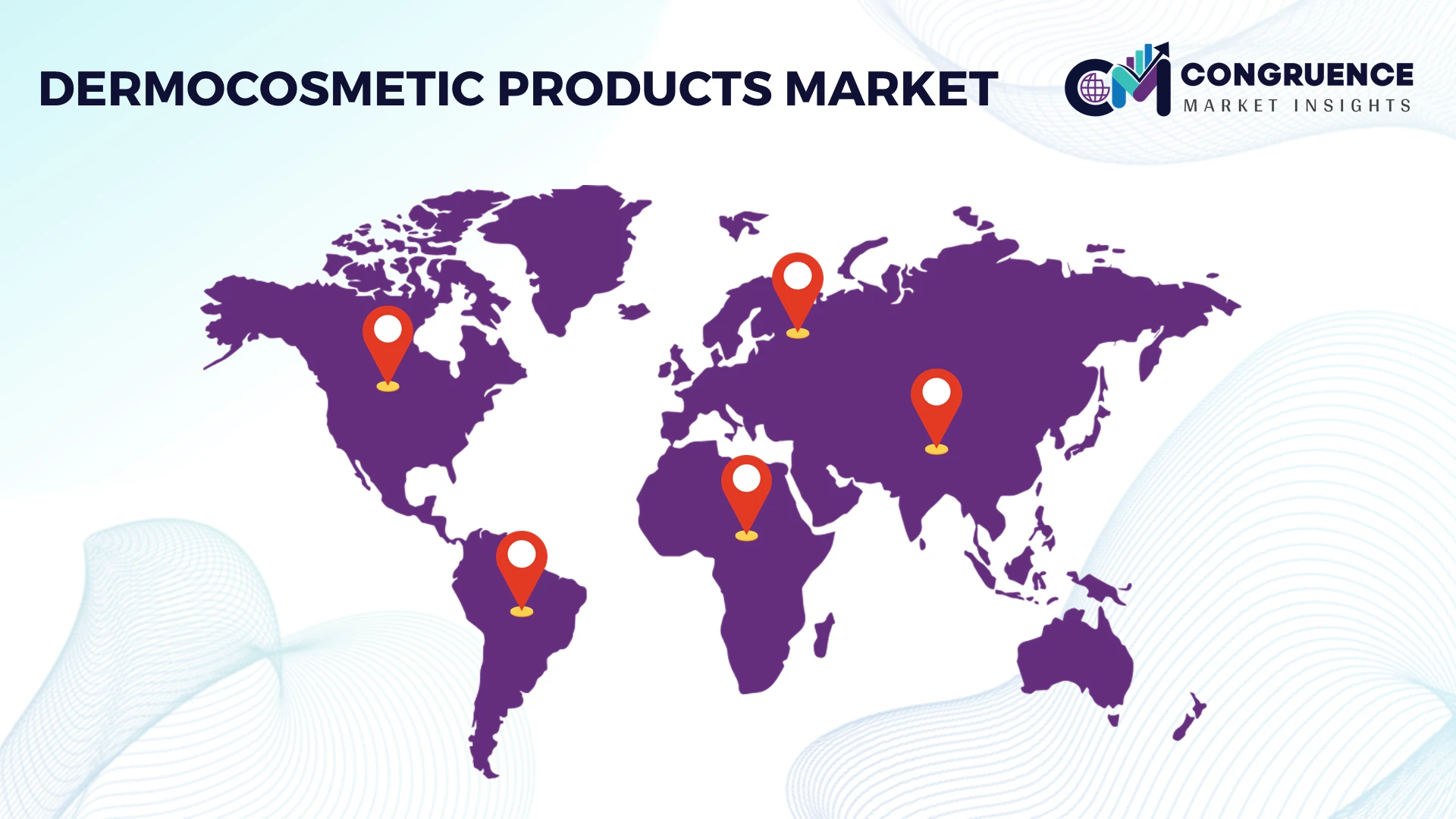
Regional analysis covers North America, Europe, Asia-Pacific, South America, and Middle East & Africa, examining pharmacy infrastructure, dermatology access, digital adoption, regulatory changes, and localized product strategies. Technology coverage includes AI skin diagnostics, encapsulation, microbiome science, biomimetic lipids, peptide delivery, digital monitoring, and personalized formulations. The report supports 2026–2033 investment planning, geographic expansion, portfolio prioritization, competitive benchmarking, clinical-channel partnerships, regulatory positioning, and identification of emerging precision-skincare opportunities.
| Report Attribute/Metric | Report Details |
|---|---|
Market Revenue in 2025 | USD 66250 Million |
Market Revenue in 2033 | USD 105592.43 Million |
CAGR (2026 - 2033) | 6% |
Base Year | 2025 |
Forecast Period | 2026 - 2033 |
Historic Period | 2021 - 2025 |
Segments Covered | By Type
By Application
By End-User
|
Key Report Deliverable | Revenue Forecast, Growth Trends, Market Dynamics, Segmental Overview, Regional and Country-wise Analysis, Competition Landscape |
Region Covered | North America, Europe, Asia-Pacific, South America, Middle East, Africa |
Key Players Analyzed | L'Oréal, Beiersdorf AG, Pierre Fabre, Galderma, Shiseido Company, Limited, Unilever, Kao Corporation, Procter & Gamble, Rohto Pharmaceutical Co., Ltd., Amorepacific Corporation, NAOS, Laboratorios ISDIN, Sesderma, Cantabria Labs |
Customization & Pricing | Available on Request (10% Customization is Free) |




