
Reports
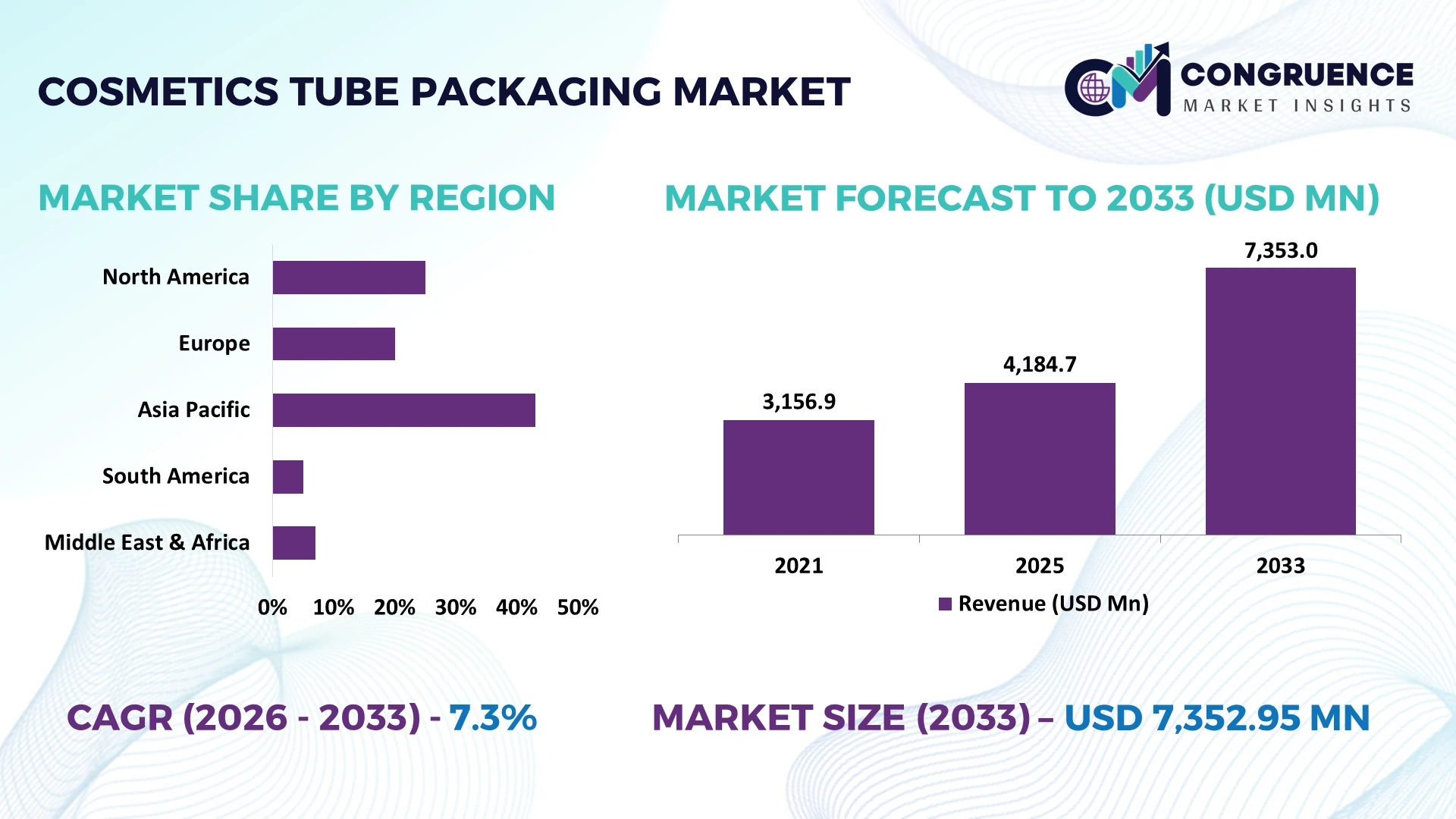
The Global Cosmetics tube Packaging Market was valued at USD 4184.7 Million in 2025 and is anticipated to reach a value of USD 7352.95 Million by 2033 expanding at a CAGR of 7.3% between 2026 and 2033. Skincare premiumization, airless dispensing, recyclable mono-material tubes, PCR integration, e-commerce-ready formats, and high-speed digital decoration are reshaping cosmetics tube packaging procurement.
China accounts for approximately 30% of global cosmetics tube packaging demand, supported by large skincare, personal-care, contract-manufacturing, plastic-converting, and beauty e-commerce industries. Modern tube-forming lines can exceed 200 units per minute, while lightweight PE structures reduce material consumption by approximately 10–20%. France commands a smaller volume base but leads premium beauty packaging innovation and decoration intensity. U.S.–China trade friction and global supply-chain diversification are accelerating dual-sourcing strategies, strengthening investment in localized tooling, printing, closures, and tube conversion across Asian production hubs.
Strategically, suppliers should prioritize recyclable mono-material platforms, PCR integration, premium decoration, airless functionality, and geographically diversified manufacturing to secure global beauty-brand packaging programs.
Market Size & Growth: USD 4,184.7 million in 2025 reaches USD 7,352.95 million by 2033 at 7.3% CAGR, supported by recyclable packaging conversion.
Top Growth Drivers: Skincare premiumization contributes 38%, sustainable-material conversion 34%, and beauty SKU proliferation 28% to incremental demand.
Short-Term Forecast: By 2027, optimized lightweight tube structures can reduce polymer consumption by approximately 10–20% per package.
Emerging Technologies: Mono-material PE, PCR resins, airless dispensing, and digital decoration target 15–25% faster SKU and artwork changeovers.
Regional Leaders: Asia-Pacific approaches USD 3.2 billion, Europe USD 1.75 billion, and North America USD 1.55 billion by 2033 as recyclable formats scale.
Consumer/End-User Trends: Skincare accounts for approximately 45% of cosmetics tube utilization, concentrating demand in creams, cleansers, serums, and sun-care products.
Pilot/Case Example: 2025 lightweighting programs delivered approximately 20% material reductions while maintaining premium decoration and dispensing functionality.
Competitive Landscape: Albéa holds an estimated 14% share, competing with EPL, Hoffmann Neopac, Berry Global, and Huhtamaki across advanced tube formats.
Regulatory & ESG Impact: Next-generation mono-material tubes target above 90% polyethylene content, strengthening compatibility with established PE recycling pathways.
Investment & Funding: Above USD 750 million in broader beauty-packaging expansion supports recyclable materials, decoration technology, automation, and regional manufacturing localization.
Innovation & Future Outlook: Smart decoration and airless tube platforms target 20%+ packaging-efficiency gains, shifting competition toward functionality, circularity, and premium differentiation.
Cosmetics tube packaging serves skincare, haircare, color cosmetics, sun care, cleansers, masks, and treatment products where controlled dispensing, portability, barrier performance, and shelf differentiation influence brand selection. Skincare represents approximately 45% of tube utilization, making creams, facial cleansers, moisturizers, and active formulations central demand areas. Innovation is advancing through mono-material PE structures, PCR incorporation, airless pumps, lightweight shoulders, digital printing, and premium tactile finishes. Europe’s tightening packaging circularity requirements are accelerating material redesign, while Asian beauty manufacturing strengthens localized supply. These developments make functionality, recyclability, and decoration capability central to the market’s strategic direction.
Cosmetics tube packaging is becoming strategically important as beauty brands compete through premium dispensing, rapid SKU launches, recyclable formats, and supply-chain resilience. Skincare represents approximately 45% of tube utilization, concentrating packaging investment around cleansers, moisturizers, treatments, and sun care. Europe’s packaging circularity transition is accelerating mono-material development, while global brands are diversifying sourcing beyond China to reduce dependence on single-country converting networks.
Mono-material PE tubes can reduce structural complexity while lightweight designs lower polymer consumption by approximately 10–20% versus conventional multilayer formats. Digital decoration also shortens artwork changeovers by 15–25% compared with plate-dependent workflows, improving economics for limited editions and regional SKUs. China retains manufacturing-scale advantages, whereas France and Germany concentrate premium decoration, dispensing, and sustainable-packaging engineering. Through 2028, PCR integration, airless systems, digital printing, and recyclable barriers will gain broader commercial deployment.
A skincare manufacturer can standardize one recyclable tube platform while changing graphics digitally across multiple product variants, reducing tooling complexity and inventory. Converters are expanding PCR qualification, mono-material R&D, decoration assets, and partnerships with resin and dispensing suppliers. Long-term advantage will belong to suppliers combining circular materials, premium functionality, rapid customization, and multi-region manufacturing.
Skincare’s approximately 45% share of cosmetics tube utilization makes product premiumization a direct packaging-volume and specification driver. Serums, facial cleansers, sun care, masks, and active treatments increasingly require controlled dispensing, stronger barrier performance, and high-definition decoration. Premium tubes can incorporate airless functionality while digital decoration reduces artwork changeover time by 15–25%, supporting expanding SKU portfolios. France’s beauty manufacturing ecosystem continues shifting packaging differentiation toward tactile finishes, precise dosing, and recyclable structures as prestige and dermocosmetic brands compete at shelf and online. Tube suppliers are expanding airless platforms, specialty applicators, digital printing, and decoration capabilities. The strategic insight is that dispensing precision increasingly protects formulation value: packaging functionality becomes more economically important as active-ingredient concentration and product positioning rise.
PCR resins, mono-material structures, barrier layers, specialty inks, and recyclable closures introduce performance variability that conventional virgin-polymer tubes avoid. PCR-based materials can carry approximately 10–20% processing or procurement premiums depending on quality and availability, while color consistency and mechanical-property variation can increase qualification workloads by 5–10%. European packaging rules are forcing simultaneous redesign of bodies, shoulders, caps, inks, and adhesives, increasing development complexity for converters serving multiple brands. Supply of cosmetic-grade recycled polymer remains more constrained than standard virgin resin, particularly for light-colored premium packaging. Manufacturers are mitigating exposure through long-term PCR contracts, dual sourcing, downgauging, and broader resin qualification. The key commercial restraint is aesthetic tolerance: premium beauty brands demand recycled content without accepting visible inconsistency, narrowing usable material specifications.
Airless dispensing, precision applicators, digitally decorated tubes, and high-barrier recyclable structures create opportunities beyond conventional squeeze packaging. Airless systems can deliver evacuation rates above 95%, reducing residual product while limiting repeated formulation exposure to ambient air. Lightweight tube designs can simultaneously lower polymer consumption by 10–20%, improving material economics for premium skincare. South Korea provides a strong innovation environment as sophisticated skincare routines support differentiated dispensing formats and rapid product launches. Through 2028, airless tubes integrated with mono-material bodies and PCR components will broaden addressable applications for sensitive formulations. Suppliers are investing in pump engineering, barrier development, applicator design, and brand co-development. The non-obvious opportunity lies in formulation enablement: better dispensing can support products requiring tighter oxygen protection, extending tubes into categories historically dominated by rigid pumps.
Beauty brands increasingly combine regional launches, limited editions, influencer collaborations, multiple shades, and product-specific applicators, creating manufacturing complexity beyond basic tube forming. High-speed lines exceeding 200 tubes per minute lose economics when frequent decoration, tooling, shoulder, or closure changes create 10–20% utilization losses. Digital printing reduces artwork disruption, but applicator changes still require mechanical qualification, dimensional control, and leak testing. China’s large converters can absorb SKU fragmentation through production scale, whereas smaller plants face greater scheduling and inventory pressure. Companies must invest in modular tooling, automated inspection, digital workflow management, flexible decoration, and standardized component platforms. The strategic challenge is manufacturing architecture: converters must deliver mass-production quality at short-run responsiveness, because future competitiveness depends on profitable complexity rather than maximum line speed alone.
PCR Content Moves Into Premium: Cosmetic brands are increasing post-consumer recycled polymer in tube bodies and closures, with selected commercial structures reaching 30–50% PCR content. European packaging regulation and corporate plastic-reduction targets are accelerating qualification. Converters are securing higher-grade recycled polyethylene, refining color control, and expanding multilayer processing. The operational shift makes resin traceability and aesthetic consistency procurement priorities rather than secondary sustainability attributes.
Digital Printing Compresses Launch Cycles: Beauty SKU proliferation is pushing converters toward digital decoration for limited editions, regional products, and promotional launches. Digital workflows can shorten artwork changeovers by 20–30% and reduce setup waste by approximately 15–25% compared with plate-intensive printing. French and South Korean beauty brands increasingly require shorter production campaigns. Tube manufacturers are adding digital presses and automated artwork management to convert customization into profitable capacity rather than scheduling disruption.
Lightweight Components Extend Beyond Bodies: Material reduction is expanding from tube webs into shoulders, caps, and dispensing components. Optimized designs can lower total package weight by 10–20%, while closure redesign can remove another 5–10% of polymer in selected formats. European circularity requirements are accelerating component-level engineering. Suppliers are combining downgauged walls with lighter shoulders and compact closures, creating a non-obvious advantage: transport and material savings accumulate without altering the consumer’s established dispensing behavior.
Decoration Processes Reduce Environmental Load: Converters are modernizing curing, inks, coatings, and printing workflows alongside structural redesign. LED-UV systems can reduce curing-energy requirements by 30–50%, while automated registration can cut print waste by 10–20%. German and Italian packaging plants are upgrading decoration assets as energy costs and premium graphics requirements converge. Companies are investing in low-migration inks, efficient curing, and inline inspection, improving manufacturing economics while maintaining high-end cosmetic shelf differentiation.
Plastic Tubes lead with an estimated 38% share, supported by scalable extrusion, lightweight construction, flexible decoration, squeeze performance, and competitive unit economics across mass-market cosmetics. Their compatibility with high-speed manufacturing above 200 tubes per minute reinforces deployment across moisturizers, cleansers, lotions, and haircare. Laminate Tubes remain strategically important where enhanced barrier performance and premium graphics are required, while Aluminum Tubes retain specialized positioning for formulations demanding strong light, oxygen, or contamination protection.
Mono-Material Tubes are the fastest-growing type as packaging specifications move toward polyethylene-rich structures compatible with established recycling streams. Commercial designs increasingly target above 90% PE content, while optimized lightweighting reduces polymer requirements by approximately 10–20%. Airless Tubes command a smaller but higher-value position where formulation protection and controlled evacuation matter. Suppliers are redirecting R&D toward recyclable shoulders, compatible closures, thinner walls, PCR incorporation, and airless functionality. Investment is therefore shifting from material complexity toward designs combining circularity, manufacturing speed, aesthetics, and dispensing performance.
Face Creams represent the leading application with an estimated 31% share, reflecting high tube penetration across moisturizers, anti-aging products, acne treatments, brightening formulations, and dermocosmetics. These products increasingly require controlled dispensing, barrier protection, premium decoration, and hygienic closure systems. Body Lotions provide larger pack-size opportunities but compete strongly with bottles and pumps, while Hair Care uses tubes extensively for masks, treatments, conditioners, and styling products. Makeup Products occupy specialized formats where applicator precision and visual differentiation command greater value per package.
Sunscreens are the fastest-growing application as daily SPF positioning extends sun protection beyond seasonal consumption. Lightweight tubes can reduce polymer use by 10–20%, while airless or precision-dispensing formats can achieve product evacuation above 95%. Australian, South Korean, Japanese, and European brands increasingly combine facial skincare and UV protection, expanding smaller premium tube formats. Packaging suppliers are developing high-barrier structures, travel-friendly closures, PCR options, specialized applicators, and decoration platforms capable of supporting both mass-market and premium sunscreen portfolios.
Cosmetic Manufacturers lead end-user demand with an estimated 36% share because diversified producers purchase tubes across skincare, makeup, sun care, body care, and treatment portfolios. Their multi-category scale supports direct converter qualification, standardized dimensions, automated filling, and large-volume material contracts. Personal Care Companies remain substantial buyers across lotions and multifunctional products, while Haircare Brands require specialized tubes for masks, conditioners, and concentrated treatments. Skincare Brands increasingly prioritize premium applicators, recyclable structures, and advanced decoration over lowest-cost standardized packaging.
Contract Manufacturers are the fastest-growing end-user group as independent and emerging beauty brands outsource formulation, filling, and packaging procurement. Aggregating multiple customers can improve packaging-line utilization by approximately 15–25%, while digital decoration can shorten artwork changeovers by 20–30%. Suppliers are targeting contract manufacturers with flexible minimum orders, standardized recyclable tube platforms, rapid tooling, digital printing, and technical support. Competitive influence is consequently shifting toward buyers capable of consolidating fragmented beauty-brand demand while requiring faster commercialization and broader packaging flexibility.
Asia-Pacific accounted for the largest market share at 41% in 2025 however, Asia-Pacific is expected to register the fastest growth, expanding at a CAGR of 8.6% between 2026 and 2033.
Premium Dispensing Reshapes Packaging Specifications
North America accounted for approximately 23% of global cosmetics tube packaging demand in 2025, with the United States concentrating premium skincare, sun care, dermocosmetics, hair treatments, and contract beauty manufacturing. Procurement is shifting toward PCR-containing tubes, precision applicators, digitally decorated short runs, and airless dispensing as brands increase SKU frequency and formulation value. High-speed tube operations exceeding 200 units per minute favor standardized bodies combined with customizable closures and decoration. Digital workflows can shorten artwork changeovers by approximately 20–30%, improving economics for limited editions and retailer-specific products. U.S. converters are expanding automated inspection, PCR qualification, modular tooling, and localized component sourcing. The operational advantage increasingly comes from handling short-run complexity without sacrificing the productivity required for national-scale beauty portfolios.
United States Market Outlook: The United States combines large beauty-brand portfolios, sophisticated contract manufacturing, e-commerce distribution, and premium skincare demand. Airless and precision-dispensing formats are gaining strategic importance for active formulations, while automated inspection can cover nearly 100% of tube output. Domestic converting capacity also helps brands shorten replenishment cycles and manage frequent promotional launches.
Circular Design Becomes Procurement Standard
Europe represented approximately 25% of global demand in 2025, supported by concentrated beauty manufacturing and packaging engineering in France, Germany, Italy, Switzerland, and the United Kingdom. Regulatory pressure is moving tube specifications toward mono-material structures, PCR content, lightweight components, and design-for-recycling principles. PE-dominant tubes increasingly target above 90% compatible polymer content, while downgauging can reduce material requirements by 10–20%. France drives premium beauty requirements around decoration and dispensing; Germany and Switzerland contribute advanced tube engineering and manufacturing technology. Converters are investing in recyclable shoulders, barrier optimization, low-impact decoration, PCR processing, and airless systems. The structural change is significant: packaging development is moving from isolated body redesign toward whole-pack compatibility covering tube walls, closures, applicators, inks, and adhesives.
France Market Outlook: France’s globally connected cosmetics manufacturing base makes it a critical commercialization market for premium tubes. Prestige skincare brands require decoration quality, tactile differentiation, precise dispensing, and increasingly recyclable construction within the same package. Digital printing can reduce artwork-changeover requirements by 20–30%, supporting limited editions and rapidly changing premium beauty portfolios without conventional tooling intensity.
Manufacturing Scale Meets Beauty Innovation
Asia-Pacific held approximately 41% of global demand in 2025, supported by extensive cosmetics manufacturing, plastic conversion, contract production, and component supply across China, South Korea, Japan, and India. China alone represents approximately 30% of global cosmetics tube packaging consumption, combining high-volume tube production with integrated resin, closure, printing, and tooling networks. South Korea and Japan strengthen the region’s position in premium skincare, applicator engineering, and compact packaging. Production lines exceeding 200 tubes per minute provide scale advantages, while localized component ecosystems reduce lead times for fast-changing beauty SKUs. Converters are adding digital decoration, mono-material platforms, PCR processing, and automated inspection. Supply-chain diversification is simultaneously directing incremental qualification toward India and Southeast Asia, reducing dependence on single-country production.
China Market Outlook: China retains the strongest manufacturing depth across tube extrusion, laminate conversion, closures, decoration, molds, and filling equipment. Integrated sourcing supports competitive lead times for both mass-market and premium packaging. Lightweight designs reducing polymer use by 10–20% are particularly valuable at Chinese production volumes, strengthening the economics of material optimization across large beauty programs.
Local Beauty Production Strengthens Tube Demand
South America represented approximately 5% of global cosmetics tube packaging demand in 2025, with Brazil dominating regional beauty manufacturing, formulation, filling, and packaging procurement. Tubes remain particularly relevant for hair treatments, body lotions, sunscreens, facial products, and mass-market skincare because they combine lightweight distribution with controlled dispensing. Brazilian manufacturers increasingly require localized tube supply to limit exposure to imported components, currency volatility, and extended replenishment cycles. Material lightweighting can reduce polymer consumption by approximately 10–20%, improving unit economics for high-volume personal-care portfolios. Local converters are expanding decoration flexibility, PCR qualification, mold capability, and shorter production campaigns. However, recycled-resin consistency and specialized dispensing-component availability remain operational constraints, keeping selected premium components dependent on international supply networks.
Brazil Market Outlook: Brazil combines substantial cosmetics consumption with established resin conversion, beauty manufacturing, and contract production. Its diverse haircare, body-care, sunscreen, and skincare portfolios create demand across multiple tube diameters and dispensing systems. Localized printing and closure procurement can materially reduce inventory exposure, while flexible production increasingly supports regional brands requiring smaller, more frequent packaging orders.
Beauty Localization Expands Packaging Infrastructure
Middle East & Africa accounted for approximately 6% of global demand in 2025, with the UAE, Saudi Arabia, South Africa, Egypt, and Morocco providing the strongest commercial packaging nodes. Gulf markets emphasize premium skincare, sun protection, fragrance-adjacent beauty products, and high-quality decoration, while African markets place greater weight on affordability and durable distribution formats. Localization programs in Saudi Arabia and the UAE are encouraging beauty and personal-care manufacturers to develop shorter regional supply chains. Lightweight tubes can reduce polymer requirements by 10–20%, improving freight and material economics across geographically dispersed markets. Packaging suppliers are responding through local decoration, flexible order quantities, distributor partnerships, and broader component inventories. Limited specialist tube-converting infrastructure outside major hubs remains the principal constraint on rapid localization.
Saudi Arabia Market Outlook: Saudi Arabia is strengthening domestic consumer-product manufacturing through industrial localization and private investment, creating opportunities for locally supplied cosmetic packaging. Premium skincare, sun-care, and personal-care portfolios favor high-quality graphics and controlled dispensing. Regional converters that localize decoration and component inventories can shorten lead times while reducing dependence on imported finished packaging.
Albéa, EPL, Hoffmann Neopac, Amcor, and Huhtamaki compete across premium beauty, mass-market skincare, recyclable tubes, and specialty dispensing, while regional converters pressure standardized formats on cost. The top five account for approximately 46% of organized market demand, reflecting global manufacturing footprints, brand approvals, material expertise, and decoration capability. Regional suppliers can price conventional tubes 10–20% below premium engineered formats, while lightweighting cuts polymer requirements by 10–20% and digital decoration shortens artwork changeovers by 20–30%. Leaders are expanding mono-material platforms, PCR processing, airless dispensing, digital printing, and geographically diversified production through partnerships and integrated component development. Consolidation is strengthening supply control; Amcor’s combination with Berry has broadened its packaging and dispensing platform. Qualification requirements, proprietary applicators, decoration precision, resin consistency, and multinational brand approvals create formidable entry barriers. Winning requires recyclable materials, premium aesthetics, flexible batch economics, dispensing innovation, and manufacturing redundancy without sacrificing high-speed production consistency across markets.
Albéa Group
EPL Limited
Hoffmann Neopac AG
Amcor plc
Huhtamaki Oyj
Montebello Packaging
Tubapack, a.s.
Lageen Tubes
Viva Healthcare Packaging
CTLpack
Pirlo Holding GmbH
CCL Industries Inc.
Auber Packaging Co., Ltd.
HCP Packaging
Current cosmetics tube technology combines multilayer PE extrusion, laminate barriers, offset or flexographic decoration, automated tube forming, and high-speed inspection. Lightweight coextruded structures can reduce plastic use by about 30%, while lines maintain compatibility with standard filling equipment. Digital inspection increasingly covers nearly 100% of output, protecting print registration, seal integrity, and surface quality across high-volume skincare production.
Emerging platforms integrate mono-material PE, PCR resins, EVOH barriers, digital printing, and airless dispensing. Commercial tubes now incorporate more than 60% PCR in selected skincare programs, while digital workflows can shorten artwork changeovers by 20–30%. Compared with legacy multi-component structures, optimized mono-material designs can cut plastic consumption by over 30%, benefiting brands and converters managing recyclability targets alongside SKU proliferation.
Disruptive development is shifting toward one-piece tubes, mono-PE airless pumps, AI-enabled vision control, and variable-data decoration. Advanced one-piece architectures demonstrate plastic reductions above 50%, while integrated airless systems extend recyclable tubes into sensitive skincare and dermocosmetics. During 2026–2028, wider deployment will center on recyclable dispensing systems, thinner walls, automated quality control, and digitally managed short runs. Converters integrating material science, applicators, decoration, and filling-line qualification gain specification advantage; investment now protects competitiveness as brands consolidate suppliers around measurable circularity and manufacturing agility.
June 2024 – Albéa and L’Occitane shifted Shea Butter Hand Cream to Greenleaf HDPE laminate and OctoTop, reducing materials from five to one and package weight 23%. The redesign improved recycling compatibility while retaining premium hand-care functionality. Source: Packaging Europe.
June 2025 – Amcor lightweighted Bulldog Skincare’s 50mm flexible tubes by reducing sleeve-wall thickness 16.67%, saving approximately 8.5 metric tonnes of plastic annually. Existing caps and shoulders remained compatible, preventing filling-line disruption while improving packaging efficiency without retooling. Source: Amcor.
August 2025 – EPL reported recyclable tubes reached 33% of its global portfolio while NeoSeam technology expanded into three new regions. The shift strengthened beauty and cosmetics offerings through 360-degree decoration, reduced material usage, and shorter multi-SKU production. Source: NSE.
February 2026 – Neopac showcased NeoDose Solo at Paris Packaging Week, combining a mono-PE airless pump with its Polyfoil MMB high-barrier tube. The Grade A RecyClass-rated structure extends commercial recycling-ready airless packaging into sensitive skincare and foundation applications. Source: Neopac.
The Cosmetics tube Packaging Market Report covers Plastic Tubes, Laminate Tubes, Aluminum Tubes, Mono-Material Tubes, and Airless Tubes across Face Creams, Body Lotions, Hair Care, Sunscreens, and Makeup Products. End-user analysis includes Cosmetic Manufacturers, Personal Care Companies, Skincare Brands, Haircare Brands, and Contract Manufacturers. Plastic Tubes account for approximately 38% of type-level demand, while Face Creams represent roughly 31% of application consumption.
Regional coverage spans North America, Europe, Asia-Pacific, South America, and Middle East & Africa, with Asia-Pacific representing approximately 41% of 2025 demand. Technology assessment includes mono-material PE, PCR integration, airless dispensing, EVOH barriers, digital decoration, lightweighting, automated inspection, and one-piece architectures. The 2026–2033 scope supports capacity planning, geographic expansion, supplier benchmarking, recyclable-format investment, competitive positioning, and identification of emerging opportunities in premium skincare, sun care, short-run customization, and outsourced cosmetics manufacturing.
| Report Attribute/Metric | Report Details |
|---|---|
Market Revenue in 2025 | USD 4184.7 Million |
Market Revenue in 2033 | USD 7352.95 Million |
CAGR (2026 - 2033) | 7.3% |
Base Year | 2025 |
Forecast Period | 2026 - 2033 |
Historic Period | 2021 - 2025 |
Segments Covered | By Type
By Application
By End-User
|
Key Report Deliverable | Revenue Forecast, Growth Trends, Market Dynamics, Segmental Overview, Regional and Country-wise Analysis, Competition Landscape |
Region Covered | North America, Europe, Asia-Pacific, South America, Middle East, Africa |
Key Players Analyzed | Albéa Group, EPL Limited, Hoffmann Neopac AG, Amcor plc, Huhtamaki Oyj, Montebello Packaging, Tubapack, a.s., Lageen Tubes, Viva Healthcare Packaging, CTLpack, Pirlo Holding GmbH, CCL Industries Inc., Auber Packaging Co., Ltd., HCP Packaging |
Customization & Pricing | Available on Request (10% Customization is Free) |




