
Reports
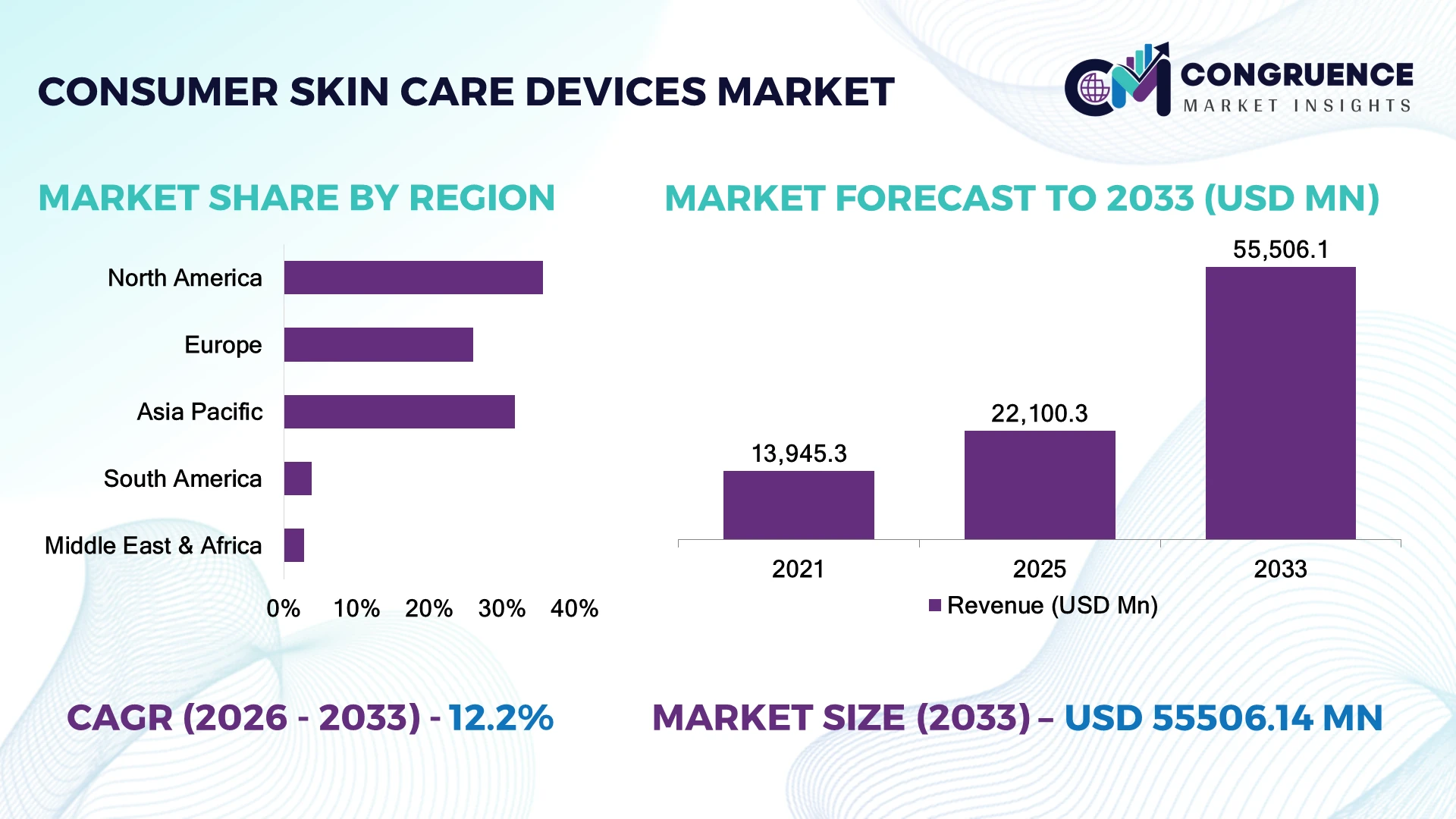
The Global Consumer Skin Care Devices Market was valued at USD 22,100.3 Million in 2025 and is anticipated to reach a value of USD 55,506.1 Million by 2033 expanding at a CAGR of 12.2% between 2026 and 2033. Growth is driven by rapid adoption of at-home aesthetic technologies, AI-enabled skin analysis, multifunctional beauty devices, and expanding direct-to-consumer distribution across premium skincare brands.
The United States dominates the global consumer skin care devices market with approximately 31% market share, supported by strong consumer spending, widespread adoption of connected beauty technologies, and continuous investment in aesthetic innovation. Compared with South Korea, the United States records higher premium device penetration, while South Korea leads in product innovation cycles and beauty-tech integration. More than 62% of premium home-use skin care devices now incorporate smart sensors or app connectivity. Global supply-chain diversification following U.S.–China trade realignment has accelerated localized manufacturing investments.
Companies investing in intelligent beauty ecosystems, clinical-grade performance, and omnichannel distribution are strengthening long-term competitive positioning in the evolving consumer skin care devices market.
Market Size & Growth: USD 22,100.3 million (2025) to USD 55,506.1 million (2033) at 12.2% CAGR, driven by connected beauty devices and home aesthetic treatments.
Top Growth Drivers: AI skin analysis (+34%), home beauty adoption (+29%), premium skincare spending (+21%).
Short-Term Forecast: By 2028, smart device usage increases 26% while treatment session efficiency improves 22%.
Emerging Technologies: AI diagnostics, LED phototherapy, RF microcurrent, and IoT-enabled beauty platforms expand personalized skincare.
Regional Leaders: North America (~USD 18.2 billion), Asia-Pacific (~USD 17.5 billion), Europe (~USD 11.8 billion), supported by premium beauty adoption.
Consumer/End-User Trends: Nearly 58% of consumers prefer multifunctional skin care devices over single-purpose products.
Pilot/Case Example: A 2026 connected skincare program improved personalized treatment adherence by 31%.
Competitive Landscape: Top five brands hold approximately 42% share, led by NuFACE, Foreo, YA-MAN, Philips, and L'Oréal.
Regulatory & ESG Impact: Rechargeable device adoption exceeds 48%, reducing disposable battery usage across premium product categories.
Investment & Funding: More than USD 2.5 billion supports beauty-tech innovation, manufacturing expansion, and strategic partnerships.
Innovation & Future Outlook: AI-powered personalization and digital skin monitoring are reshaping premium consumer skincare ecosystems.
Consumer skin care devices are expanding beyond facial cleansing into anti-aging, acne treatment, hair removal, skin tightening, and personalized wellness applications. AI-powered skin diagnostics, LED phototherapy, and radiofrequency technologies improve treatment precision while increasing personalized device usage by nearly 30%. Manufacturers are strengthening regional production capabilities and regulatory compliance for connected health devices, positioning the industry for broader digital beauty integration and setting the foundation for the strategic discussion below.
The consumer skin care devices market has become a strategic battleground where beauty brands, consumer electronics manufacturers, and medical aesthetics companies compete through technology differentiation rather than product portfolios alone. AI-enabled personalization, connected wellness ecosystems, and direct-to-consumer digital commerce are transforming purchasing behavior while encouraging manufacturers to restructure supply chains and localize production for faster product launches and improved resilience.
Modern AI-enabled skin analysis devices improve treatment personalization by approximately 35% compared with conventional timer-based devices while reducing unnecessary treatment cycles by nearly 20%. North America leads premium connected device adoption through established beauty technology ecosystems, whereas South Korea drives rapid product innovation with shorter commercialization timelines and advanced beauty engineering. Over the next two to three years, more than 55% of premium consumer skin care devices are expected to feature app connectivity, personalized treatment recommendations, or cloud-based user monitoring.
Manufacturers are increasingly partnering with dermatology clinics, beauty retailers, and digital wellness platforms to strengthen product validation and consumer engagement. Companies are also expanding investments in multifunctional devices combining cleansing, LED therapy, radiofrequency, and microcurrent technologies within single platforms. Businesses capable of integrating intelligent software, clinical-grade performance, sustainable product design, and personalized consumer experiences will establish stronger competitive advantage as home-based aesthetic care becomes an integral part of the global beauty industry.
The transition from conventional beauty tools to intelligent home-use skin care devices is reshaping consumer purchasing behavior and product innovation. Nearly 61% of premium skin care device launches now incorporate AI-enabled skin analysis, while multifunctional devices improve treatment efficiency by approximately 28% compared with single-function products. South Korea continues setting the pace through rapid beauty-tech commercialization, encouraging global brands to shorten product development cycles and integrate connected health features. This technology shift is increasing replacement demand and strengthening premium product sales. Companies are expanding R&D investments, partnering with dermatology technology firms, and introducing software-enabled ecosystems that combine personalized diagnostics, treatment tracking, and mobile applications to strengthen customer retention and long-term product engagement.
Medical-device classification differences and varying electrical safety regulations continue slowing international product commercialization. Approximately 32% of manufacturers require country-specific product modifications before market entry, while certification procedures increase launch timelines by nearly 20%. Dependence on precision optical sensors, LEDs, and semiconductor components remains a structural challenge, particularly as electronics supply chains continue adjusting after recent geopolitical trade realignments. These constraints increase production costs, complicate inventory planning, and reduce operational flexibility. Manufacturers are mitigating risks by diversifying component suppliers, localizing final assembly operations in Vietnam and Mexico, and establishing long-term procurement agreements to improve supply continuity and accelerate regulatory approvals.
The strongest opportunity lies in integrating consumer skin care devices with digital wellness platforms, AI diagnostics, and subscription-based skincare ecosystems. Personalized treatment recommendations improve user adherence by approximately 33%, while connected monitoring applications increase device engagement by nearly 26%. Japan and the United States are expanding digital health ecosystems that encourage interoperability between wearable wellness technologies and beauty devices. Manufacturers are investing in cloud-based analytics, dermatology partnerships, and software subscriptions that extend product value beyond hardware sales. A notable strategic advantage is the ability to monetize continuous consumer engagement through personalized skincare plans, remote performance tracking, and recurring digital service offerings rather than relying solely on one-time device purchases.
As intelligent skin care devices become increasingly connected, seamless integration across mobile applications, cloud platforms, and digital health ecosystems presents a growing execution challenge. Nearly 37% of consumers express concerns regarding biometric skin data privacy, while incompatible software environments delay feature integration by approximately 18%. The European Union's evolving digital privacy framework is increasing compliance requirements for connected consumer wellness products. These challenges influence consumer trust, ecosystem scalability, and long-term competitive differentiation rather than manufacturing capability. Companies must strengthen cybersecurity architecture, standardized software interfaces, encrypted cloud infrastructure, and strategic technology partnerships to deliver secure, interoperable, and scalable beauty technology ecosystems.
AI Skin Analysis Expansion: AI-powered skin assessment is becoming a standard feature across premium consumer devices, improving treatment personalization by approximately 35% while increasing diagnostic consistency by nearly 25%. Growing consumer acceptance of digital beauty consultations is accelerating deployment. Companies are integrating machine learning algorithms with mobile applications and expanding software partnerships to deliver personalized skincare experiences.
Multifunction Device Consolidation: Consumers increasingly prefer devices combining LED therapy, radiofrequency, microcurrent, and cleansing functions within a single platform. Multifunction product adoption has increased by approximately 30%, while average device usage frequency has improved by nearly 22%. Premium brands are consolidating product portfolios, simplifying manufacturing, and enhancing user convenience through integrated treatment ecosystems.
Localized Manufacturing Strategies: Beauty technology manufacturers are expanding production across Vietnam, South Korea, and Mexico to reduce component sourcing risks and shorten delivery lead times by approximately 18%. Supply-chain diversification following global electronics realignment is improving operational resilience. Companies are strengthening regional supplier partnerships and increasing localized assembly capacity to support faster product availability and inventory flexibility.
Clinical Validation Becomes Differentiator: Brands are increasing investment in dermatologist-supported product validation and consumer efficacy testing, improving purchase confidence by nearly 27% while reducing product return rates by approximately 15%. Regulatory expectations for wellness technologies continue strengthening product verification standards. Companies are expanding collaborations with clinical research organizations and aesthetic professionals to differentiate premium devices through measurable treatment performance rather than marketing claims alone.
LED therapy devices dominate the consumer skin care devices market, accounting for approximately 34% of global demand due to their non-invasive treatment profile, ease of home use, and compatibility with acne management, skin rejuvenation, and anti-aging routines. Their broad consumer acceptance and relatively affordable pricing make them the preferred choice across premium and mid-range product categories. Cleansing devices continue serving mature skincare routines through consistent daily usage, while hair removal devices maintain strong demand because of long product replacement cycles. Microcurrent and radiofrequency devices are expanding steadily within the premium segment as consumers seek professional-grade aesthetic treatments at home.
Radiofrequency skin care devices represent the fastest-growing type as demand shifts toward skin tightening and collagen-stimulation technologies. Adoption of AI-assisted treatment control has increased by nearly 28%, while multifunctional premium devices account for approximately 38% of new product launches. Manufacturers are investing in clinical validation, intelligent energy control systems, and dermatology collaborations while expanding connected product ecosystems. Investment priorities are increasingly moving toward premium multifunction platforms that combine several aesthetic technologies within a single consumer device.
According to findings released by the Consumer Technology Association during 2026, connected personal wellness and beauty devices continued recording higher adoption among premium consumer electronics categories, reflecting growing acceptance of intelligent home-care technologies.
Anti-aging applications account for approximately 39% of the consumer skin care devices market as consumers increasingly invest in home-use technologies supporting wrinkle reduction, skin tightening, and collagen stimulation. Continuous product innovation in LED therapy, microcurrent, and radiofrequency systems has strengthened demand among aging populations and premium beauty consumers. Acne treatment remains a mature application supported by blue-light technologies, while facial cleansing devices continue generating stable replacement purchases. Hair removal and skin rejuvenation applications are expanding steadily through improvements in energy efficiency, comfort, and multifunctional treatment capabilities.
Skin tightening represents the fastest-growing application as clinical-grade home devices become increasingly accessible. Smart treatment personalization has improved user satisfaction by approximately 30%, while integrated skincare applications have increased treatment adherence by nearly 25%. Companies are scaling AI-enabled software, expanding digital consultation services, and integrating companion mobile platforms to strengthen product differentiation. Demand is increasingly shifting toward personalized aesthetic treatments capable of delivering measurable outcomes without recurring clinic visits.
Industry observations published during 2025 by the American Academy of Dermatology highlighted increasing consumer interest in non-invasive home-based skin care technologies that complement professional dermatological treatment plans.
Individual consumers represent the largest end-user segment, accounting for approximately 72% of total market demand due to widespread adoption of home-use skin care devices, increasing beauty awareness, and preference for convenient self-treatment. Direct-to-consumer distribution, subscription-based skincare ecosystems, and connected mobile applications have strengthened long-term engagement within this segment. Beauty salons and spas continue using advanced devices to expand service offerings, while dermatology clinics increasingly recommend certified home-use devices as part of post-treatment maintenance programs.
Dermatology clinics are emerging as the fastest-growing end-user segment as physicians increasingly integrate clinically validated consumer devices into long-term skin management plans. Professional recommendation rates have increased by approximately 24%, while connected monitoring platforms improve treatment adherence by nearly 27%. Manufacturers are strengthening partnerships with dermatologists, introducing clinic-exclusive product programs, and offering customized pricing strategies that bridge professional treatments with home-based maintenance. Competitive positioning is steadily shifting toward clinically supported consumer ecosystems rather than standalone retail products.
According to a 2026 enterprise assessment released by the American Academy of Dermatology, dermatologists are increasingly incorporating clinically validated home-use skin care devices into patient maintenance protocols to improve treatment continuity and long-term skincare outcomes.
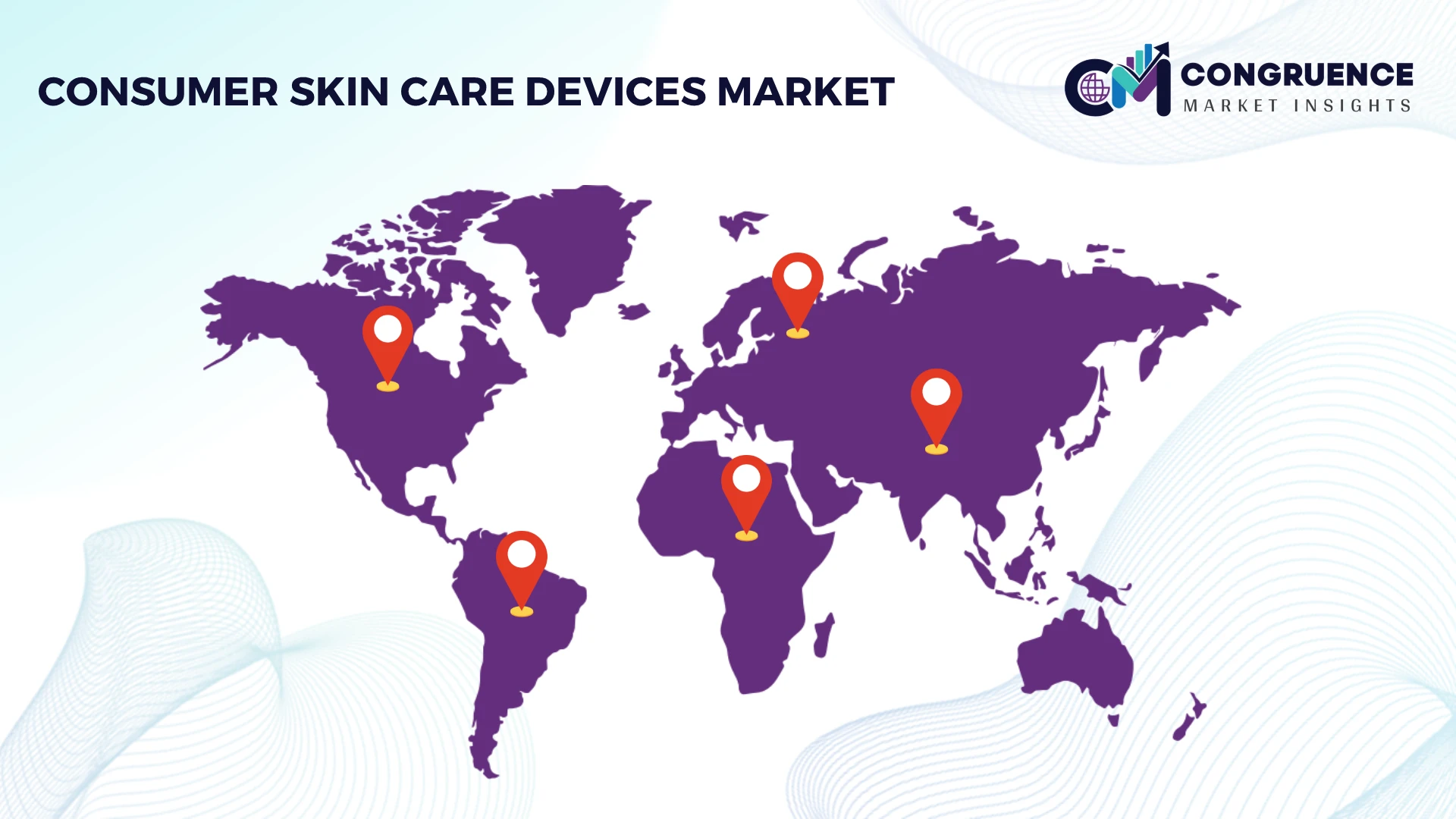
North America accounted for the largest market share at 35.6% in 2025 however, Asia-Pacific is expected to register the fastest growth, expanding at a CAGR of 13.8% between 2026 and 2033.
Connected Beauty Ecosystems Drive Premium Device Adoption
North America remains the largest regional market, contributing approximately 35.6% of global demand through strong consumer spending, established beauty technology brands, and widespread adoption of premium home-use aesthetic devices. AI-enabled skin diagnostics, connected wellness platforms, and dermatologist-supported consumer products are becoming standard across premium product categories. Nearly 64% of newly launched high-end skin care devices in the region feature smartphone connectivity or personalized treatment algorithms. Companies are expanding direct-to-consumer channels, strengthening partnerships with dermatology networks, and investing in domestic product development to accelerate innovation while improving customer engagement through integrated digital beauty ecosystems.
United States Market Outlook: The United States dominates regional demand through its advanced beauty technology ecosystem, high consumer adoption of premium wellness devices, and strong clinical aesthetics industry. Digital-first beauty brands continue introducing multifunctional devices integrating LED therapy, radiofrequency, and AI-powered skin analysis. More than 60% of premium consumer skin care device purchases occur through online retail and omnichannel platforms, encouraging manufacturers to strengthen personalized digital services, subscription skincare programs, and long-term customer engagement strategies.
Clinical Validation Strengthens Premium Positioning
Europe accounts for approximately 26% of the global market, supported by strong demand for clinically validated, dermatologist-recommended, and sustainable skin care technologies. Consumers increasingly prioritize certified home-use aesthetic devices that combine performance with product safety and energy efficiency. More than 52% of premium product introductions now emphasize recyclable materials or rechargeable designs alongside advanced treatment technologies. Manufacturers continue expanding clinical partnerships, investing in precision engineering, and strengthening regulatory compliance to differentiate products within highly quality-conscious consumer markets.
Germany Market Outlook: Germany leads the European market through advanced consumer electronics manufacturing, medical technology expertise, and high acceptance of premium wellness products. Domestic companies continue investing in intelligent skin analysis, precision manufacturing, and connected beauty technologies while retailers strengthen omnichannel distribution. Clinical validation and engineering quality remain major competitive advantages supporting sustained adoption across premium consumer segments.
Beauty Technology Innovation Accelerates Market Expansion
Asia-Pacific represents the fastest-expanding regional market, driven by rapid beauty technology innovation, strong manufacturing capabilities, and growing consumer preference for home aesthetic treatments. China, South Korea, and Japan collectively account for the majority of regional device production and innovation. More than 58% of newly launched beauty devices integrate AI-assisted personalization or multifunction treatment capabilities. Manufacturers are increasing investment in automated production, smart device development, and regional export capacity while strengthening collaboration with skincare brands to accelerate commercialization of connected beauty technologies.
South Korea Market Outlook: South Korea serves as a global innovation hub for consumer skin care devices through its advanced beauty technology ecosystem and rapid commercialization capabilities. Companies consistently launch clinically inspired home-use devices featuring LED therapy, microcurrent, and AI-powered diagnostics. Product development cycles are among the shortest globally, enabling manufacturers to respond quickly to changing consumer preferences while maintaining strong export competitiveness across premium beauty markets.
Premium Beauty Adoption Expands Urban Demand
South America is experiencing steady expansion as urban consumers increasingly adopt home-use beauty technologies for convenience and long-term cost savings. Brazil and Chile are driving premium device sales through growing awareness of non-invasive skincare treatments and expanding digital retail channels. Online beauty device purchases have increased by approximately 24%, while premium skincare subscriptions continue supporting repeat purchases. Manufacturers are strengthening regional distributor partnerships, expanding localized marketing strategies, and improving after-sales service despite import dependence and pricing sensitivity across several consumer segments.
Brazil Market Outlook: Brazil leads regional demand through one of the world's largest beauty and personal care industries, supported by strong consumer interest in aesthetic treatments. Beauty retailers increasingly promote multifunction skin care devices alongside premium cosmetic products, creating integrated consumer experiences. Companies continue expanding localized distribution networks and service capabilities to improve accessibility while adapting product portfolios to meet diverse consumer spending patterns.
Luxury Wellness Investment Supports Device Adoption
The Middle East & Africa market is benefiting from expanding premium wellness spending, luxury beauty retail growth, and increasing investment in aesthetic healthcare infrastructure. High-income consumers are adopting connected skin care technologies that complement professional cosmetic treatments and dermatology services. Approximately 34% of premium beauty retailers now offer intelligent skin care devices alongside personalized skincare consultations. Global manufacturers are strengthening regional partnerships, expanding premium distribution channels, and investing in localized consumer education to improve product adoption and long-term brand recognition.
United Arab Emirates Market Outlook: The United Arab Emirates has emerged as the region's leading market due to its advanced retail infrastructure, strong medical aesthetics sector, and premium consumer purchasing power. Luxury beauty retailers increasingly integrate connected skin care devices with digital skin assessment services, enhancing personalized consumer experiences. International brands continue prioritizing the UAE as a regional launch destination for next-generation beauty technologies supported by sophisticated retail and wellness ecosystems.
The market is moderately consolidated, with the top five players controlling approximately 42% of global demand. Philips, FOREO, YA-MAN, NuFACE, and L'Oréal compete through AI-enabled personalization and connected beauty ecosystems, while emerging beauty-tech brands challenge them with faster product launches and lower pricing. Competition centers on clinical efficacy, software integration, device versatility, and omnichannel distribution rather than hardware alone. AI-supported skin analysis improves treatment personalization by approximately 35%, multifunction devices increase consumer retention by nearly 28%, and localized manufacturing reduces product lead times by around 18%. Leading companies are expanding dermatology partnerships, integrating companion mobile applications, investing in beauty-tech acquisitions, and strengthening direct-to-consumer platforms. The competitive shift favors intelligent ecosystems combining hardware, software, and skincare products over standalone devices. Clinical validation, regulatory compliance, and proprietary sensor technologies remain significant entry barriers. Winning requires personalized technology, proven treatment performance, digital consumer engagement, and continuous innovation.
Philips N.V.
FOREO AB
YA-MAN Ltd.
NuFACE
L'Oréal S.A.
Panasonic Holdings Corporation
Silk'n (Home Skinovations Ltd.)
Tria Beauty, Inc.
MTG Co., Ltd.
CurrentBody
LightStim
Medicube (APR Co., Ltd.)
Consumer skin care devices are rapidly evolving from standalone beauty tools into intelligent personal wellness platforms. AI-powered skin diagnostics, LED phototherapy, radiofrequency, microcurrent stimulation, and smart sensor technologies now define premium product development. AI-assisted skin assessment improves treatment personalization by approximately 35%, while integrated sensor feedback enhances treatment consistency by nearly 22%. More than 60% of premium home-use devices now incorporate companion mobile applications or connected digital features, allowing manufacturers to strengthen customer engagement through personalized treatment guidance and continuous software updates.
Emerging technologies include proteomics-based skin analysis, cloud-connected beauty ecosystems, adaptive energy delivery, and digital twin skin profiling. Compared with conventional timer-based devices, AI-enabled treatment platforms improve treatment precision by approximately 30% while reducing unnecessary treatment cycles by nearly 20%. Around 45% of newly introduced premium beauty devices now integrate multiple treatment technologies within a single platform. Companies combining intelligent software, clinical validation, and multifunction hardware gain stronger differentiation through recurring digital services and premium consumer loyalty.
Between 2026 and 2028, predictive skin analytics, wearable beauty sensors, and generative AI-powered skincare recommendations will redefine home aesthetics. Connected ecosystems integrating hardware, skincare formulations, and digital diagnostics will become the primary competitive advantage. Manufacturers investing early in intelligent software platforms, personalized treatment algorithms, and dermatology partnerships will strengthen market leadership as consumers increasingly prioritize measurable outcomes, preventive skincare, and technology-enabled self-care experiences.
January 2025 – L'Oréal unveiled Cell BioPrint at CES 2025, introducing a lab-on-chip skin diagnostic device that delivers a personalized skin assessment in 5 minutes using advanced proteomics. The innovation strengthens AI-driven personalization and accelerates next-generation beauty technology adoption. Source: L'Oréal
October 2025 – Philips India launched OneBlade Intimate following research involving more than 6,000 Gen Z consumers, with nearly 90% of early users indicating it would become their primary grooming device. The launch expands Philips' premium personal care portfolio and strengthens direct consumer engagement. Source: Philips India
February 2026 – Philips highlighted AI-powered personalization as a core strategic direction for consumer beauty technologies, reporting that 62% of U.S. beauty and personal care buyers are interested in hyper-personalized products. The initiative reinforces continued investment in intelligent, sensor-enabled skin care devices. Source: Philips
June 2026 – L'Oréal showcased its latest Beauty Tech innovations at VivaTech 2026, integrating Cell BioPrint with AI-driven longevity skincare solutions and LED facial technologies to advance personalized beauty experiences. The strategy strengthens the company's leadership in connected consumer skin care ecosystems. Source: L'Oréal Press Release
This report provides a comprehensive evaluation of the global consumer skin care devices market across product types, applications, end-user categories, and major geographic regions. The analysis covers LED therapy, cleansing, microcurrent, radiofrequency, hair removal, and other advanced home-use devices serving anti-aging, acne treatment, skin tightening, facial cleansing, and personalized skincare applications. It evaluates North America, Europe, Asia-Pacific, South America, and the Middle East & Africa while examining technology adoption, consumer purchasing behavior, deployment trends, and competitive positioning across established and emerging beauty markets.
The report assesses AI-enabled diagnostics, connected beauty ecosystems, smart sensors, digital personalization, and multifunction treatment platforms shaping industry evolution between 2026 and 2033. More than 60% of premium consumer skin care devices now integrate intelligent digital capabilities, reflecting rapid technology convergence across beauty and wellness markets. The findings support investment planning, product development, expansion strategies, competitive benchmarking, partnership evaluation, and long-term positioning by identifying evolving consumer preferences, innovation priorities, and high-growth opportunities across the global beauty technology ecosystem.
| Report Attribute/Metric | Report Details |
|---|---|
|
Market Revenue in 2025 |
USD 22,100.3 Million |
|
Market Revenue in 2033 |
USD 55,506.1 Million |
|
CAGR (2026 - 2033) |
12.2% |
|
Base Year |
2025 |
|
Forecast Period |
2026 - 2033 |
|
Historic Period |
2021 - 2025 |
|
Segments Covered |
By Type
By Application
By End-User
|
|
Key Report Deliverable |
Revenue Forecast, Growth Trends, Market Dynamics, Segmental Overview, Regional and Country-wise Analysis, Competition Landscape |
|
Region Covered |
North America, Europe, Asia-Pacific, South America, Middle East, Africa |
|
Key Players Analyzed |
Philips N.V., FOREO AB, YA-MAN Ltd., NuFACE, L'Oréal S.A., Panasonic Holdings Corporation, Silk'n (Home Skinovations Ltd.), Tria Beauty, Inc., MTG Co., Ltd., CurrentBody, LightStim, Medicube (APR Co., Ltd.) |
|
Customization & Pricing |
Available on Request (10% Customization is Free) |




