
Reports
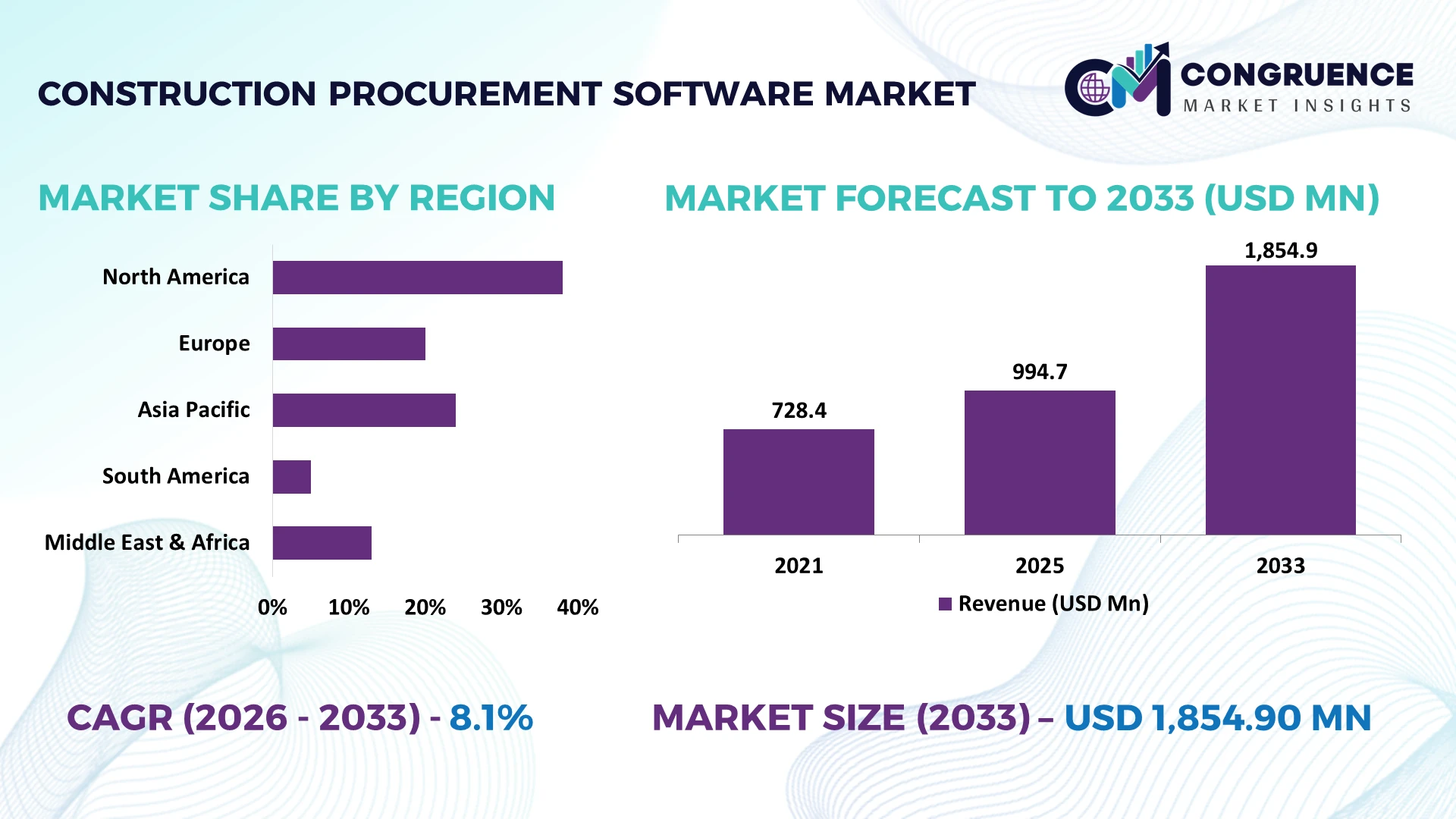
The Global Construction Procurement Software Market was valued at USD 994.7 Million in 2025 and is anticipated to reach a value of USD 1854.9 Million by 2033 expanding at a CAGR of 8.1% between 2026 and 2033. Growth is driven by digital subcontractor tendering, automated purchase order management, construction ERP integration, and real time material procurement visibility.
The United States leads the Construction Procurement Software Market, holding an estimated 35% global share in 2025, supported by extensive commercial construction, infrastructure investment, and enterprise software adoption. The Infrastructure Investment and Jobs Act authorized approximately USD 1.2 trillion in infrastructure spending, strengthening digital procurement requirements. Compared with India's expanding but fragmented contractor ecosystem, American construction enterprises demonstrate greater integration of procurement, accounting, and project management platforms. Illustrative enterprise modernization targets include 20% faster purchase order processing and 15% lower procurement administration costs.
Strategically, software providers should prioritize United States enterprise contractors, integrated procurement workflows, and supplier management platforms that demonstrate measurable purchasing efficiency.
Market Size & Growth: USD 994.7 million in 2025, reaching USD 1,854.9 million by 2033 at 8.1% CAGR, driven by digital construction purchasing.
Top Growth Drivers: Illustrative demand contributions assign 40% to procurement automation, 35% to supplier coordination, and 25% to ERP integration.
Short Term Forecast: By 2028, automated procurement deployments target 20% faster purchase order approvals and 15% lower administrative processing costs.
Emerging Technologies: AI supplier analytics, automated tender evaluation, and cloud procurement platforms represent 3 important construction technology developments.
Regional Leaders: Illustrative 2033 allocations place North America at USD 686.31 million, Europe at USD 463.73 million, and Asia Pacific at USD 519.37 million, supported by enterprise integration, compliance automation, and mobile procurement adoption.
Consumer / End User Trends: Large contractors target 25% faster supplier onboarding through centralized digital vendor management and automated documentation.
Pilot / Case Example: A modeled 2027 infrastructure procurement modernization project targets 18% shorter tender evaluation cycles and 12% fewer purchasing errors.
Competitive Landscape: An illustrative 15% share positions Autodesk among leading providers, alongside Procore, Oracle, SAP, and Trimble.
Regulatory & ESG Impact: Digital supplier compliance workflows target 20% faster documentation verification, supporting public procurement transparency and responsible sourcing.
Investment & Funding: A modeled USD 75 million investment scenario prioritizes AI procurement analytics, cloud integration, and construction technology partnerships.
Innovation & Future Outlook: Predictive material purchasing, connected supplier networks, and automated contract intelligence target 15% faster procurement decisions.
The Construction Procurement Software Market is transforming how contractors, developers, and infrastructure operators manage material purchasing, subcontractor selection, and supplier performance. Cloud procurement platforms consolidate tender documentation, purchase requisitions, purchase orders, and contract approvals within connected construction management environments. AI assisted bid comparison and automated supplier qualification are improving purchasing transparency and reducing administrative workload. Illustrative deployment benchmarks indicate 20% faster procurement cycle completion through integrated approval workflows. Public infrastructure programs in the United States and digital construction initiatives in India are reinforcing procurement traceability requirements, making platform interoperability and supplier connectivity central to strategic technology investment decisions.
Construction Procurement Software is becoming a strategic investment priority as contractors confront fragmented supplier networks, material price volatility, and increasing infrastructure delivery complexity. Digital procurement platforms consolidate subcontractor tendering, supplier qualification, purchase orders, and contract administration, improving purchasing transparency. The United States Infrastructure Investment and Jobs Act reinforces demand for documented procurement workflows across infrastructure projects. Enterprise contractors increasingly prioritize integrated purchasing systems that connect procurement decisions with project budgets, schedules, and supplier performance.
Compared with spreadsheet based procurement, automated purchasing platforms offer illustrative operational targets of 20% faster approval cycles and 15% lower administrative costs. American contractors emphasize enterprise resource planning integration, while Indian construction companies increasingly prioritize mobile procurement and supplier accessibility. Between 2026 and 2028, digital transformation programs are expected to target 25% faster supplier onboarding and improved purchasing visibility across multiple project locations.
A practical deployment involves connecting subcontractor bid evaluation, material requisitions, and purchase approvals within a centralized construction management platform. Software providers are expanding application programming interfaces, developing supplier networks, and partnering with accounting technology vendors. Contractors benefit from earlier identification of purchasing delays and improved commitment tracking. Long term competitive positioning depends on procurement data accuracy, supplier connectivity, and measurable project execution improvements.
Large construction contractors are replacing fragmented purchasing workflows with centralized procurement platforms to improve project cost visibility and supplier coordination. The United States Infrastructure Investment and Jobs Act has strengthened infrastructure project activity, increasing the importance of documented purchasing decisions and subcontractor management. Automated tendering, electronic purchase orders, and integrated approval workflows support illustrative targets of 20% faster procurement processing, 15% fewer purchasing errors, and 12% improved budget tracking accuracy. Construction enterprises are expanding procurement software deployments across multiple project sites and connecting purchasing records with project management systems. Software providers are investing in contractor focused workflows and ERP partnerships. The principal advantage is earlier visibility into committed project expenditure before material purchases become irreversible.
Construction procurement software adoption remains constrained by disconnected accounting platforms, inconsistent supplier records, and limited technology budgets among smaller contractors. India's fragmented subcontracting ecosystem illustrates the difficulty of standardizing purchase orders and supplier documentation across independent construction businesses. Illustrative implementation assessments indicate 15% higher integration costs when legacy accounting systems require customization, while supplier data preparation can increase deployment workloads by 20%. Smaller contractors also face subscription expenses and employee training requirements that complicate procurement digitization. Software providers are responding through modular pricing, localized onboarding services, and integration partnerships with accounting platforms. Contractors increasingly favor phased implementation rather than immediate enterprise replacement. Commercial success depends on reducing deployment costs without compromising purchasing controls or supplier information accuracy.
Predictive purchasing analytics creates opportunities for construction software providers to move beyond transaction processing into material availability forecasting and supplier performance optimization. AI assisted platforms can combine procurement history, project schedules, and supplier delivery records to identify purchasing requirements before shortages disrupt construction activity. Illustrative deployment targets include 18% faster supplier selection, 12% fewer emergency purchases, and 15% improved material delivery coordination. India's expanding infrastructure development programs create opportunities for mobile supplier networks and localized procurement intelligence. Technology developers are investing in automated bid comparison, supplier risk scoring, and construction scheduling integrations. Strategic partnerships with material distributors and logistics platforms strengthen data availability. The strongest opportunity lies in converting procurement information into earlier purchasing decisions that protect construction schedules.
Scaling procurement platforms across construction projects creates complex requirements for access control, supplier data protection, and consistent purchasing governance. Large contractors coordinate employees, subcontractors, distributors, and external consultants across multiple locations, increasing exposure to unauthorized transactions and inconsistent approval practices. Illustrative enterprise performance targets include 20% faster detection of suspicious purchasing activity, 15% fewer duplicate supplier records, and 10% improved compliance verification. United States construction enterprises face growing pressure to secure cloud based procurement integrations while maintaining uninterrupted project operations. Software providers must strengthen identity management, transaction monitoring, and standardized supplier verification. Contractors are investing in cybersecurity training and centralized procurement governance. Long term competitiveness depends on maintaining reliable purchasing controls without slowing project approvals or supplier collaboration.
Digital Material Catalog Standardization Accelerates: Construction enterprises are consolidating fragmented material descriptions into standardized digital purchasing catalogs. United States contractors are introducing structured product codes and approved supplier catalogs to improve requisition accuracy. Illustrative implementation targets include 18% fewer duplicate material entries and 12% faster requisition preparation. Software vendors are expanding catalog management capabilities and collaborating with building material distributors, improving purchasing consistency across projects using different product specifications.
Mobile Procurement Approvals Gain Traction: Construction site managers increasingly approve material requests through mobile applications rather than office based purchasing systems. India's geographically dispersed infrastructure projects reinforce the importance of accessible field procurement workflows. Illustrative deployment targets include 25% faster site approval completion and 15% fewer delayed requisitions. Technology providers are expanding mobile interfaces, offline data capture, and role specific approval controls, reducing administrative delays between construction sites and centralized procurement departments.
Digital Compliance Documentation Becomes Standardized: Public construction procurement increasingly requires structured records for supplier eligibility, insurance certificates, and contractual compliance. European procurement modernization initiatives are encouraging centralized documentation and auditable approval histories. Illustrative operational benchmarks target 20% faster compliance document retrieval and 10% fewer expired supplier certifications. Software providers are expanding document expiration alerts, digital audit trails, and configurable approval rules, allowing contractors to maintain procurement readiness without repeatedly collecting identical supplier information.
Supplier Payment Visibility Reshapes Collaboration: Construction contractors are connecting procurement commitments with invoice verification and payment status tracking to improve supplier relationships. United States subcontractor payment requirements are increasing attention to purchasing documentation and payment transparency. Illustrative implementation targets include 15% fewer invoice discrepancies and 20% faster payment status reconciliation. Procurement software developers are strengthening accounting integrations and supplier portals, reducing disputes caused by mismatched purchase orders, delivery confirmations, and invoice records.
Cloud-Based Software represents the leading type in the Construction Procurement Software Market, accounting for an estimated 38% share in 2025. Its dominance reflects centralized accessibility, subscription deployment models, and compatibility with geographically dispersed construction projects. General contractors increasingly prefer cloud procurement systems because purchasing teams, site managers, and suppliers can access updated requisitions and approval records without maintaining dedicated infrastructure. On-Premise Software retains an illustrative 18% share, particularly among organizations requiring direct infrastructure control and specialized internal security policies.
Integrated Procurement Platforms represent the fastest growing type, supported by increasing demand to connect purchasing, accounting, project scheduling, and supplier management workflows. Their estimated 29% share reflects enterprise interest in unified procurement records and automated financial reconciliation. Standalone Procurement Solutions remain relevant for smaller contractors requiring targeted purchasing capabilities without extensive system integration. Software providers are expanding application programming interfaces, configurable approval workflows, and construction ERP partnerships. Investment priorities increasingly favor platforms that reduce fragmented purchasing records while supporting scalable deployment across multiple projects.
Tender Management represents the leading application in the Construction Procurement Software Market, accounting for an estimated 30% share in 2025. Its dominance reflects the importance of structured subcontractor bidding, tender documentation, and competitive supplier selection across construction projects. Large contractors prioritize centralized bid invitations, standardized evaluation criteria, and transparent award records to improve procurement accountability. Supplier Management accounts for an illustrative 23% share, supported by growing requirements for vendor qualification, certification tracking, and supplier performance monitoring.
Spend Management represents the fastest growing application as construction enterprises seek greater visibility into committed expenditure, purchasing patterns, and budget deviations. Its estimated 15% share reflects increasing integration between procurement transactions and project financial controls. Contract Management supports contractual obligation tracking and amendment documentation, while Purchase Order Management remains essential for requisition approval and purchasing authorization. Software providers are expanding financial analytics, automated document processing, and project accounting integrations. Demand is strengthening for applications that connect purchasing decisions with financial exposure before construction costs are finalized.
General Contractors represent the dominant end user segment in the Construction Procurement Software Market, accounting for an estimated 36% share in 2025. Their leadership reflects responsibility for subcontractor coordination, material purchasing, supplier qualification, and procurement governance across multiple construction projects. Large contractors require centralized purchasing records and configurable approval structures to manage complex supplier relationships. Infrastructure Companies account for an illustrative 24% share, supported by extensive procurement requirements associated with transportation, utilities, and industrial infrastructure development.
Government Construction Agencies represent the fastest growing end user segment as public procurement modernization increases requirements for transparent bidding, electronic documentation, and auditable purchasing decisions. Their estimated 16% share reflects expanding institutional adoption of digital procurement workflows. Subcontractors increasingly prioritize simplified purchasing interfaces and supplier communication, while Real Estate Developers emphasize project budget visibility and contract administration. Software providers are developing government compliant tendering features, enterprise procurement integrations, and flexible subscription packages. Competitive positioning increasingly depends on matching procurement functionality with organizational scale and purchasing governance requirements.
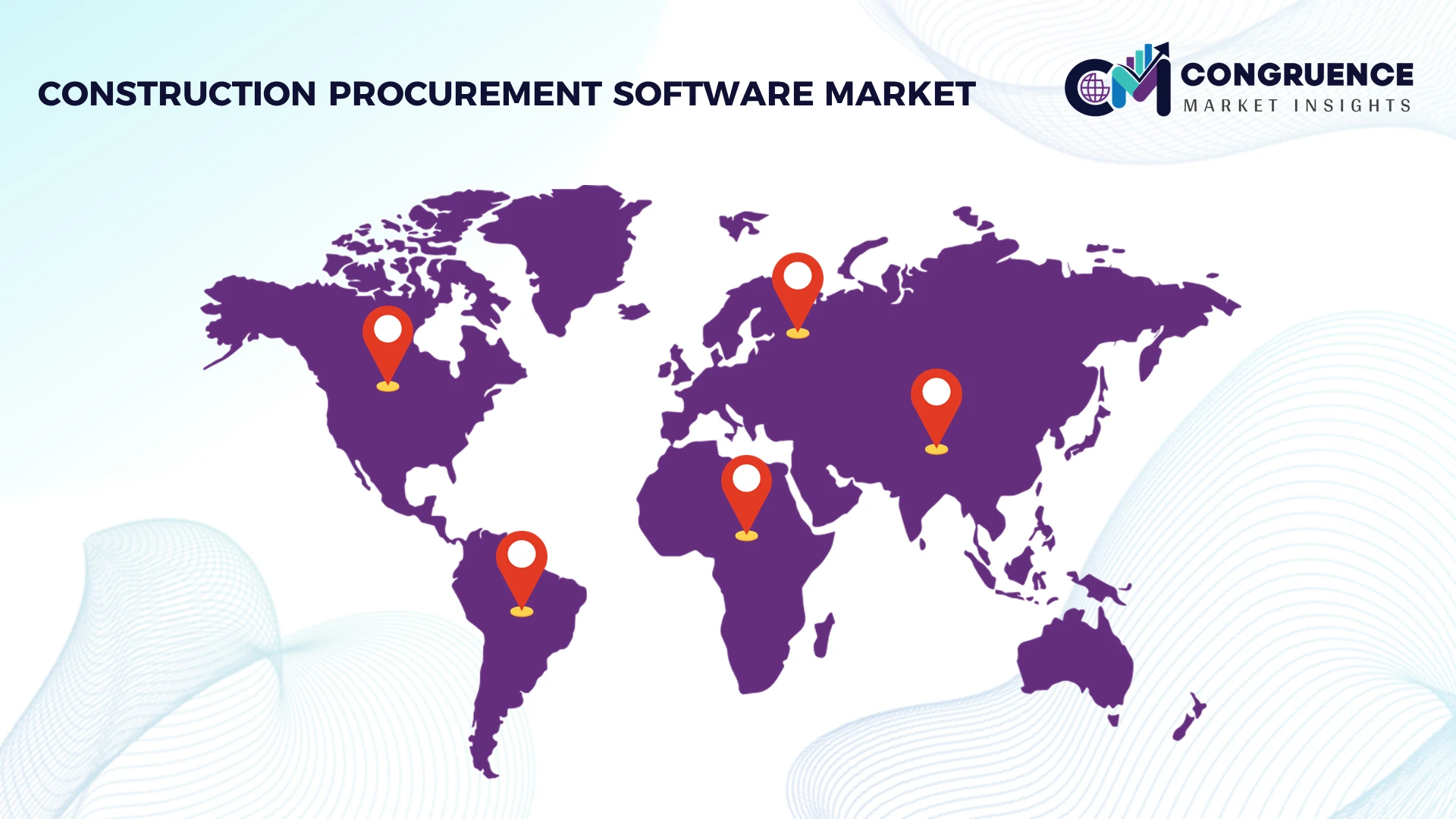
North America accounted for the largest market share at an estimated 37% in 2025 however, Asia Pacific is expected to register the fastest growth, expanding at a CAGR of an estimated 10.2% between 2026 and 2033.
Enterprise Procurement Integration and Infrastructure Digitalization
North America accounted for an estimated 37% of the global Construction Procurement Software Market in 2025, supported by established construction technology providers, extensive infrastructure investment, and enterprise purchasing modernization. The United States dominates regional deployment through commercial construction, transportation infrastructure, and industrial development projects. Large contractors increasingly integrate supplier qualification, subcontractor bidding, purchase order approvals, and project accounting within centralized procurement platforms. The Infrastructure Investment and Jobs Act authorized approximately USD 1.2 trillion for infrastructure investment, strengthening demand for transparent purchasing workflows. Illustrative enterprise modernization targets include 20% faster procurement approvals and 15% fewer purchasing documentation errors. Autodesk, Procore, and Oracle compete through connected construction management capabilities and enterprise integrations. Procurement technology investment increasingly prioritizes financial visibility, supplier accountability, and purchasing consistency across geographically distributed construction portfolios.
United States Market Outlook: The United States maintains a strong construction software ecosystem supported by major technology developers, established general contractors, and extensive public infrastructure programs. California, Texas, New York, and Florida represent important construction activity centers. Federal infrastructure funding strengthens requirements for documented procurement decisions and supplier compliance. Contractors increasingly deploy cloud procurement platforms alongside enterprise accounting systems, targeting 25% faster supplier onboarding through standardized qualification workflows and electronic document management.
Regulatory Compliance and Digital Tendering Standardization
Europe represented an estimated 25% of the global Construction Procurement Software Market in 2025, supported by public procurement modernization, established construction enterprises, and increasing digital documentation requirements. Germany, the United Kingdom, France, and the Netherlands maintain significant construction technology adoption across infrastructure and commercial development. European Union procurement directives encourage transparent tendering and structured supplier evaluation, strengthening demand for electronic bidding and auditable contract records. Construction enterprises increasingly connect procurement platforms with project financial management and supplier compliance systems. Illustrative modernization targets include 18% faster tender evaluation and 12% fewer documentation discrepancies. Software providers are expanding configurable procurement workflows, electronic contract management, and localized regulatory functionality. Competitive differentiation depends on compliance capabilities, multilingual supplier accessibility, and integration with established construction accounting systems across different national procurement environments.
United Kingdom Market Outlook: The United Kingdom benefits from established digital construction practices, major infrastructure programs, and public procurement modernization. The Procurement Act 2023 entered into force in February 2025, introducing updated public purchasing requirements. British construction organizations increasingly prioritize electronic tender management, supplier qualification, and auditable contract documentation. Procurement software providers are adapting platform functionality to support public sector transparency, standardized supplier information, and efficient subcontractor engagement across infrastructure projects.
Infrastructure Expansion and Mobile Procurement Adoption
Asia Pacific accounted for an estimated 28% of the global Construction Procurement Software Market in 2025, supported by extensive infrastructure development, urban construction, and increasing enterprise digitalization. China, India, Japan, and Australia represent important markets with differing procurement technology requirements. China's large construction enterprises increasingly prioritize integrated purchasing and supplier coordination across complex development projects. India's infrastructure programs are accelerating interest in mobile procurement applications, electronic tendering, and centralized supplier databases. Illustrative deployment targets include 25% faster site purchasing approvals and 15% fewer manual procurement discrepancies. Japanese contractors emphasize procurement integration with established enterprise management systems, while Australian construction companies prioritize subcontractor compliance and digital contract administration. Technology providers are expanding localized interfaces, mobile functionality, and construction ERP partnerships. Regional competitive positioning depends on deployment affordability, supplier accessibility, and compatibility with fragmented construction business networks.
India Market Outlook: India presents significant opportunities through national infrastructure programs, expanding urban development, and digital public procurement initiatives. The Government e Marketplace platform supports electronic purchasing across public institutions, while infrastructure contractors increasingly require connected supplier and purchasing systems. Construction activity in Maharashtra, Gujarat, Karnataka, and Tamil Nadu strengthens demand for mobile procurement tools. Software vendors are prioritizing regional language support, supplier onboarding, and integration with Indian accounting and tax compliance workflows.
Construction Purchasing Transparency and Digital Workflow Modernization
South America represented an estimated 6% of the global Construction Procurement Software Market in 2025, with Brazil accounting for the largest concentration of construction enterprises and procurement technology demand. Chile, Colombia, and Argentina contribute through infrastructure investment, commercial development, and public purchasing modernization. Brazilian construction companies increasingly evaluate electronic tendering, supplier documentation, and purchase order automation to reduce administrative complexity. Illustrative deployment targets include 15% faster procurement processing and 10% fewer purchasing record discrepancies. Adoption remains constrained by fragmented contractor networks, varying technology budgets, and inconsistent supplier digital readiness. Software providers are expanding localized procurement interfaces, accounting integrations, and implementation partnerships. Regional purchasing modernization increasingly favors modular cloud platforms that deliver measurable administrative improvements without requiring extensive enterprise infrastructure replacement.
Brazil Market Outlook: Brazil maintains South America's largest construction industry ecosystem, supported by residential development, transportation projects, and industrial construction. São Paulo and Minas Gerais represent important concentrations of construction enterprises and technology adoption. Brazil's New Public Procurement Law, Law No. 14,133/2021, reinforces structured public purchasing procedures. Contractors increasingly prioritize supplier documentation, electronic purchasing records, and integration with domestic financial systems. Localized procurement software strengthens compliance management and purchasing visibility across complex subcontractor networks.
Megaproject Procurement Modernization and Supplier Governance
The Middle East and Africa accounted for an estimated 4% of the global Construction Procurement Software Market in 2025, supported by major infrastructure programs, industrial diversification, and increasing construction technology investment. Saudi Arabia and the United Arab Emirates represent important procurement modernization markets, while South Africa and Egypt contribute through infrastructure and commercial construction activities. Large development projects require coordinated subcontractor tendering, material purchasing, and supplier qualification across extensive contractor networks. Saudi Arabia's Vision 2030 initiatives reinforce the importance of procurement transparency and project execution oversight. Illustrative enterprise deployment targets include 20% faster tender documentation processing and 15% improved purchasing approval visibility. Software providers are strengthening enterprise implementation partnerships, regional technical support, and localized compliance capabilities. Competitive advantage depends on managing complex supplier ecosystems and maintaining reliable procurement governance across major construction portfolios.
Saudi Arabia Market Outlook: Saudi Arabia benefits from extensive infrastructure development, industrial diversification, and large construction programs associated with Vision 2030. Riyadh and the Eastern Province represent important centers for construction procurement technology deployment. The Etimad digital government procurement platform supports electronic purchasing and contracting processes. Large contractors increasingly prioritize supplier qualification, purchase order controls, and project financial integration. Procurement technology providers are expanding Arabic language functionality and enterprise implementation partnerships to support complex construction programs.
The Construction Procurement Software Market features direct competition between construction technology specialists and enterprise procurement platform providers. Autodesk and Procore compete through integrated contractor workflows, while Oracle and SAP emphasize enterprise purchasing controls, financial integration, and supplier governance. Trimble differentiates through connected construction operations and project management capabilities. The leading five providers hold an illustrative combined market share of 48%, reflecting competition across specialized and enterprise software categories. Automated platforms target 20% faster purchasing approvals, 15% lower administrative processing costs, and 12% fewer procurement documentation errors. Autodesk and Procore expand connected construction ecosystems, while Oracle and SAP strengthen enterprise integrations and supplier management functionality. Competitive momentum is shifting toward unified purchasing records, configurable workflows, and embedded procurement analytics. Implementation complexity, supplier network development, and construction accounting compatibility create entry barriers. Winning providers must deliver measurable procurement efficiency, reliable financial integration, and scalable contractor collaboration capabilities across complex construction portfolios.
Autodesk, Inc.
Procore Technologies, Inc.
Oracle Corporation
SAP SE
Trimble Inc.
Bentley Systems, Incorporated
RIB Software GmbH
GEP
Ivalua Inc.
JAGGAER
Coupa Software Inc.
e-Builder
InEight Inc.
Buildertrend Solutions, Inc.
Current construction procurement technologies combine cloud purchasing platforms, electronic tendering, supplier databases, and automated purchase order approvals. Integrated systems connect procurement commitments with project budgets and accounting records, improving expenditure visibility. Compared with spreadsheet based purchasing, automated workflows target 20% faster approval completion and 15% fewer documentation errors. Large contractors increasingly deploy centralized platforms across multiple projects, while smaller firms adopt modular applications. Autodesk, Procore, and Oracle compete through construction workflows, financial integration, and supplier connectivity, making interoperability a decisive purchasing criterion.
Emerging technologies include artificial intelligence for bid comparison, document intelligence, and predictive supplier performance monitoring. Machine learning models classify quotations, identify contractual exceptions, and flag unusual purchasing patterns. Illustrative implementation targets include 18% faster tender evaluation and 12% fewer invoice discrepancies. Adoption is concentrated among digitally mature contractors managing complex supplier networks. Software providers are expanding application interfaces, automated compliance checks, and integrations with construction scheduling systems, reducing administrative coordination and improving procurement accountability.
Between 2026 and 2028, autonomous purchasing agents, digital supplier credentials, and connected project intelligence will reshape procurement execution. Contractors will prioritize controlled automation with human approval checkpoints. Platforms targeting 25% faster supplier onboarding will strengthen competitive positioning through transparent purchasing decisions, dependable audit records, and measurable operational efficiency.
January 2024: Autodesk documented how Traylor Bros. adopted BuildingConnected to modernize subcontractor bidding, achieving a 100% increase in bids. Centralized invitations and vendor communication strengthened estimating capacity, demonstrating measurable procurement improvements for complex infrastructure contractors. Source: construction.autodesk.com.
January 2025: InEight launched InEight NOW with 2 initial cloud products, Estimate and Schedule, offering immediate online purchasing and simplified deployment. The initiative reduced software acquisition friction for construction teams seeking accessible estimating and project planning capabilities. Source: ineight.com.
January 2026: Procore acquired Datagrid, expanding its construction AI capabilities and cross platform data connectivity. The acquisition supports automation of 2 documented workflows, submittal reviews and information requests, strengthening integration across contractor systems and reducing fragmented project information management. Source: constructiondive.com.
April 2026: Oracle introduced Aconex enhancements covering 2 project governance functions, document reviews and inspection test plans. The updated capabilities connect approvals, inspections, and supporting records within a contractual system, strengthening auditability and reducing fragmented construction documentation processes. Source: oracle.com.
The Construction Procurement Software Market Report examines procurement digitalization, technology adoption, and competitive developments between 2026 and 2033. Type segmentation covers Cloud Based Software, On Premise Software, Integrated Procurement Platforms, and Standalone Procurement Solutions. Application analysis evaluates Tender Management, Supplier Management, Contract Management, Purchase Order Management, and Spend Management. End user assessment includes General Contractors, Subcontractors, Real Estate Developers, Infrastructure Companies, and Government Construction Agencies, highlighting procurement requirements and deployment priorities.
Regional coverage encompasses North America, Europe, Asia Pacific, South America, and the Middle East and Africa. Technology analysis addresses AI procurement analytics, cloud integration, supplier qualification automation, and digital contract management. Competitive assessment examines 14 major market participants, procurement modernization strategies, and emerging supplier intelligence applications, supporting investment planning, enterprise expansion, and competitive positioning.
| Report Attribute/Metric | Report Details |
|---|---|
Market Revenue in 2025 | USD 994.7 Million |
Market Revenue in 2033 | USD 1854.9 Million |
CAGR (2026 - 2033) | 8.1% |
Base Year | 2025 |
Forecast Period | 2026 - 2033 |
Historic Period | 2021 - 2025 |
Segments Covered | By Type
By Application
By End-User
|
Key Report Deliverable | Revenue Forecast, Growth Trends, Market Dynamics, Segmental Overview, Regional and Country-wise Analysis, Competition Landscape |
Region Covered | North America, Europe, Asia-Pacific, South America, Middle East, Africa |
Key Players Analyzed | Autodesk, Inc., Procore Technologies, Inc., Oracle Corporation, SAP SE, Trimble Inc., Bentley Systems, Incorporated, RIB Software GmbH, GEP, Ivalua Inc., JAGGAER, Coupa Software Inc., e-Builder, InEight Inc., Buildertrend Solutions, Inc. |
Customization & Pricing | Available on Request (10% Customization is Free) |




