
Reports
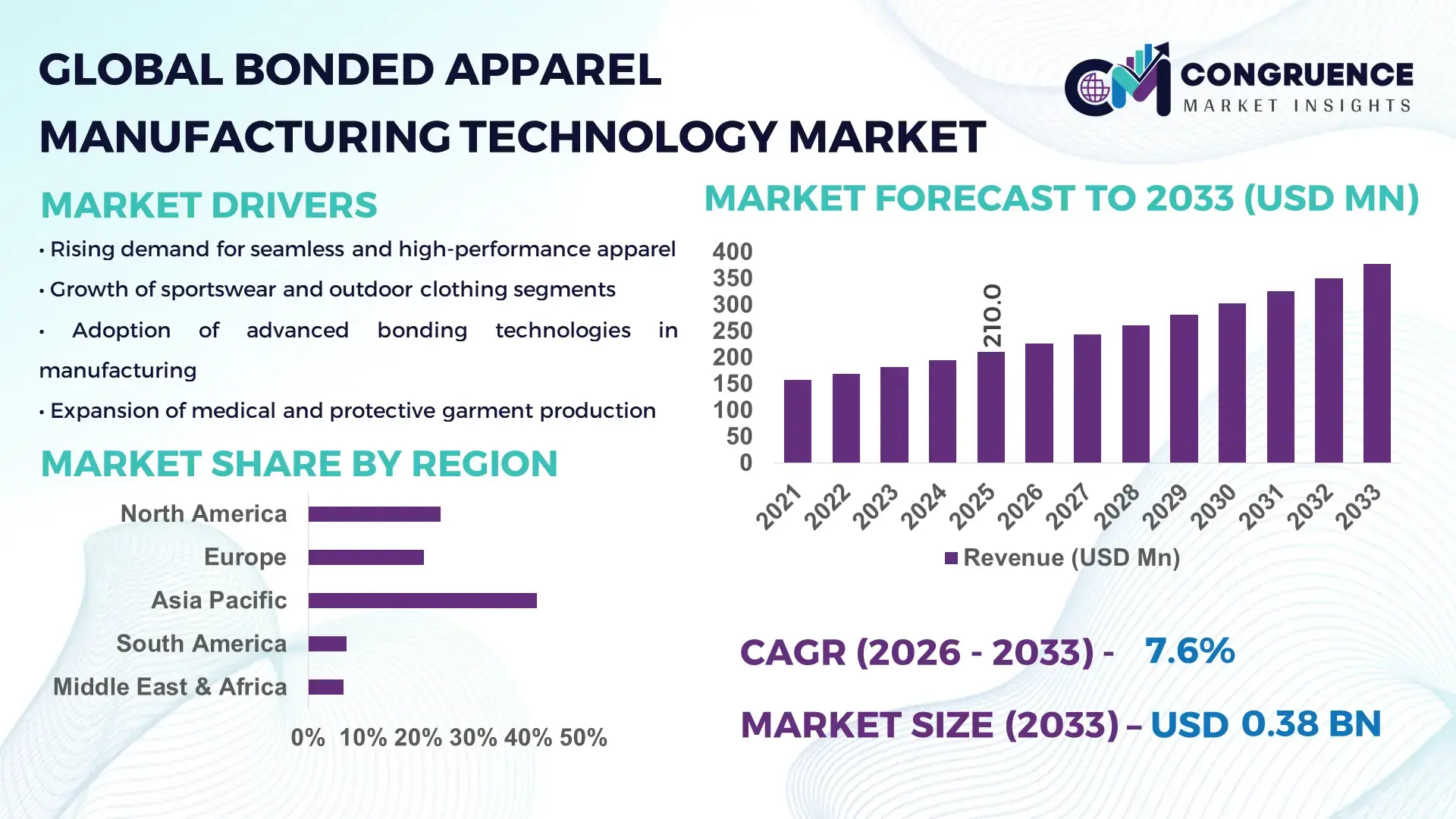
The Global Bonded Apparel Manufacturing Technology Market was valued at USD 210.0 Million in 2025 and is anticipated to reach a value of USD 377.3 Million by 2033 expanding at a CAGR of 7.6% between 2026 and 2033, according to an analysis by Congruence Market Insights. The market is expanding due to rising demand for seamless, lightweight, and high-performance garments in sportswear, medical textiles, and technical apparel applications where bonding technologies replace traditional stitching to enhance durability and comfort.
China represents one of the most significant production hubs for bonded apparel manufacturing technologies due to its large-scale apparel manufacturing infrastructure and continuous investment in advanced textile automation. The country accounts for more than 30% of the world’s apparel manufacturing output, with over 20,000 large textile and garment factories integrating automated heat-bonding and ultrasonic welding technologies. Industrial clusters in Guangdong, Zhejiang, and Jiangsu provinces are increasingly adopting adhesive lamination and thermoplastic bonding systems, particularly for sportswear and performance apparel. China also manufactures over 45% of the global synthetic fabric supply used in bonded garments, supporting large-scale production of waterproof outerwear, activewear, and medical protective clothing. Additionally, Chinese textile machinery manufacturers have expanded R&D investment by nearly 18% in the past five years to develop high-precision laser and ultrasonic bonding systems used in premium apparel manufacturing.
Market Size & Growth: The market was valued at USD 210.0 Million in 2025 and is projected to reach USD 377.3 Million by 2033, expanding at a CAGR of 7.6% due to increasing demand for seamless, lightweight, and performance-based apparel manufacturing technologies.
Top Growth Drivers: Nearly 48% adoption growth in automated bonding lines across apparel factories, 35% improvement in production efficiency using ultrasonic bonding systems, and 28% increase in demand for seamless sportswear garments.
Short-Term Forecast: By 2028, automated bonding technologies are expected to reduce garment assembly costs by approximately 18% while improving production throughput by nearly 22% in large textile facilities.
Emerging Technologies: Integration of ultrasonic welding machines, laser bonding equipment, and thermoplastic adhesive lamination systems is transforming high-precision apparel manufacturing lines.
Regional Leaders: Asia Pacific is projected to reach nearly USD 165 Million by 2033 driven by mass apparel manufacturing clusters, Europe is expected to reach about USD 92 Million with strong adoption in technical garments, while North America may exceed USD 70 Million due to innovation in performance sportswear production.
Consumer/End-User Trends: Approximately 60% of premium sportswear brands are transitioning toward bonded garment construction to improve comfort, waterproofing, and product durability.
Pilot or Case Example: In 2024, a large Asian sportswear manufacturer implemented ultrasonic seam bonding technology, improving garment assembly efficiency by 27% and reducing seam failure rates by 15%.
Competitive Landscape: Leading equipment providers account for nearly 32% of global installations, with major industry participants including Brother Industries, H&H Asia Group, Branson Ultrasonics, Dukane Corporation, and Juki Corporation.
Regulatory & ESG Impact: Sustainability initiatives targeting a 25% reduction in textile waste are accelerating adoption of bonding technologies that minimize thread usage and improve recyclable garment design.
Investment & Funding Patterns: Over USD 420 Million has been invested globally in textile automation, smart garment manufacturing equipment, and bonding technologies across industrial apparel production facilities.
Innovation & Future Outlook: Advancements in AI-enabled garment design software, robotic bonding systems, and automated fabric lamination lines are expected to reshape next-generation apparel manufacturing ecosystems.
Bonded apparel manufacturing technology is increasingly utilized across sportswear, outdoor apparel, protective clothing, and medical textile sectors, with sportswear contributing nearly 40% of technology adoption due to demand for seamless garments. Innovations in ultrasonic welding, thermoplastic adhesive films, and laser bonding systems are improving fabric durability and waterproof performance. Environmental regulations promoting reduced textile waste and recyclable garments are accelerating technology deployment, while Asia-Pacific continues to drive production growth through expanding technical textile manufacturing capacity.
The Bonded Apparel Manufacturing Technology Market holds increasing strategic relevance as apparel manufacturers shift toward high-precision, automated production techniques that enhance product performance while reducing manufacturing complexity. Bonding technologies such as ultrasonic welding, laser bonding, and thermoplastic adhesive lamination allow manufacturers to eliminate traditional stitching, producing seamless garments with improved durability, flexibility, and waterproofing capabilities. These technologies are particularly important in sportswear, outdoor apparel, medical protective clothing, and technical textiles where performance and comfort are critical design requirements.
Advanced ultrasonic bonding systems deliver nearly 35% faster production efficiency compared to traditional stitching machines, enabling large garment factories to scale production while maintaining consistent quality. Additionally, automated bonding technologies reduce material waste by nearly 20%, supporting sustainability objectives within global textile supply chains. Asia-Pacific dominates production volume due to its extensive apparel manufacturing base, while Europe leads adoption in premium technical garments with more than 40% of high-performance sportswear brands integrating bonded seam construction.
In the short term, technological integration across smart manufacturing platforms is expected to accelerate industry transformation. By 2028, AI-assisted garment design and automated bonding systems are projected to improve production line efficiency by approximately 25% by optimizing seam placement, fabric alignment, and bonding precision. Companies are also prioritizing sustainability targets, with several global apparel brands committing to 30% reductions in textile waste by 2030 through adoption of stitch-free garment construction methods.
A micro-scenario illustrates this transformation: in 2024, a South Korean technical apparel manufacturer integrated laser-based bonding systems into its outerwear production line, achieving a 22% improvement in seam durability and reducing manufacturing defects by nearly 14%. Such examples highlight how bonding technologies are redefining modern garment engineering.
Looking forward, the Bonded Apparel Manufacturing Technology Market is expected to become a foundational pillar for resilient, automated, and environmentally responsible apparel production systems, enabling manufacturers to meet rising global demand for performance garments while strengthening compliance with sustainability standards.
The Bonded Apparel Manufacturing Technology Market is experiencing steady transformation driven by evolving apparel manufacturing requirements, rising automation adoption, and increasing demand for high-performance textiles. Traditional sewing-based garment construction is gradually being complemented by advanced bonding technologies such as ultrasonic welding, thermoplastic adhesive bonding, and laser seam bonding. These technologies allow manufacturers to produce garments with smoother surfaces, improved waterproofing capabilities, and enhanced durability. Industries such as sportswear, outdoor apparel, medical textiles, and protective clothing are increasingly adopting bonding techniques to create seamless products that improve comfort and functionality.
Global apparel manufacturers are also investing in automated production lines to address labor shortages and improve operational efficiency. More than 45% of modern garment factories in major textile hubs have begun integrating automated bonding equipment into their production lines. Additionally, increasing demand for lightweight technical fabrics and sustainable manufacturing practices is encouraging the replacement of traditional stitching with adhesive or ultrasonic bonding processes that reduce material waste and thread consumption. As a result, bonded garment technologies are becoming an essential component of next-generation apparel manufacturing systems worldwide.
The growing global demand for seamless and high-performance apparel is a major driver accelerating adoption of bonded garment manufacturing technologies. Sportswear and activewear segments have experienced significant growth as consumers prioritize comfort, flexibility, and moisture management in clothing. Bonded seams eliminate bulky stitching, allowing garments to maintain smooth surfaces and improved elasticity. In modern athletic wear manufacturing, nearly 55% of premium sports garments incorporate bonded seams to improve durability and reduce friction during intense physical activity. Bonding technologies also enable waterproof and windproof construction, which is essential in outdoor apparel such as jackets, ski suits, and rainwear. Technical garments manufactured using thermoplastic adhesive bonding systems demonstrate 20–30% higher seam strength compared to conventional stitching methods. Global sportswear brands are also redesigning product lines using bonded construction to reduce garment weight by nearly 10–15%, improving athletic performance. In addition, the medical textile sector is increasingly adopting bonding technologies for protective garments and disposable surgical wear. Bonded seams prevent fluid penetration and reduce contamination risks, which is particularly critical in healthcare environments. These advantages are encouraging apparel manufacturers worldwide to transition toward bonded manufacturing technologies, driving sustained demand across multiple industry segments.
Despite its advantages, the Bonded Apparel Manufacturing Technology Market faces limitations due to the high cost associated with advanced bonding equipment and automation systems. Ultrasonic welding machines, laser bonding systems, and automated lamination equipment require substantial upfront investment compared to conventional sewing machines. A modern ultrasonic garment bonding unit can cost three to four times more than traditional industrial sewing equipment, making it difficult for small and medium-sized garment manufacturers to adopt the technology. In addition to equipment costs, bonded garment production requires specialized technical expertise and operator training. Factories must redesign production workflows and invest in advanced quality control systems to ensure consistent bonding strength across fabrics. For instance, variations in fabric thickness or composition can affect adhesive bonding performance, requiring precise temperature and pressure calibration during manufacturing. Another limitation arises from compatibility issues with certain textile materials. Natural fabrics such as cotton and wool may require additional coating or lamination layers to enable effective bonding, increasing material costs. These operational challenges and financial barriers can slow adoption in smaller apparel manufacturing facilities, particularly in developing textile markets where cost-sensitive production models dominate.
The rapid growth of technical textiles and smart apparel presents significant opportunities for bonded apparel manufacturing technologies. Technical garments used in sectors such as healthcare, defense, industrial safety, and sports performance require advanced fabrication techniques to integrate multiple fabric layers, sensors, and protective materials. Bonding technologies allow seamless integration of these components without compromising flexibility or comfort. The global technical textile industry produces more than 30 million metric tons of specialized fabrics annually, many of which require lamination or bonding processes to enhance performance characteristics such as waterproofing, thermal insulation, and abrasion resistance. In smart apparel manufacturing, bonding technologies are essential for embedding electronic components, conductive fabrics, and wearable sensors into garments without damaging the circuitry. Demand for protective clothing is also increasing in industrial environments. Fire-resistant suits, chemical protective garments, and medical isolation gowns often rely on bonded seams to ensure airtight and waterproof construction. Manufacturers are therefore expanding investments in advanced bonding technologies capable of handling multilayer composite fabrics and functional textile materials. As wearable technology and functional clothing continue to evolve, bonded manufacturing systems are expected to play a critical role in enabling next-generation apparel design.
One of the key challenges in the Bonded Apparel Manufacturing Technology Market is the complexity of material compatibility and supply chain integration. Bonded garment production requires specific thermoplastic films, adhesives, and compatible synthetic fabrics to ensure strong seam performance. Variations in fabric composition, coating treatments, or elasticity can significantly affect bonding results, leading to inconsistent seam strength or garment durability. Manufacturers must carefully source high-quality bonding materials that meet performance requirements such as heat resistance, flexibility, and waterproofing. For example, thermoplastic adhesive films used in bonded garments must maintain bonding integrity at temperatures above 120°C during industrial washing cycles, which limits the selection of compatible materials. Supply chain disruptions can also affect the availability of specialized bonding materials such as polyurethane adhesive films or laminated textiles. Global textile supply networks are highly fragmented, and delays in raw material shipments can slow garment production timelines. Additionally, integrating bonding technologies into traditional garment factories requires modifications to production layouts and quality testing procedures. These operational complexities create challenges for manufacturers attempting to scale bonded garment production across global apparel supply chains.
Expansion of Seamless Sportswear Production: The sportswear industry is rapidly increasing adoption of bonded garment construction techniques. Approximately 58% of premium athletic apparel brands now utilize bonded seams to reduce garment weight and improve flexibility. Seamless sportswear manufactured using ultrasonic bonding systems demonstrates up to 30% higher seam durability compared with stitched alternatives. Manufacturers are also reducing garment weight by nearly 12% through stitch-free construction, enabling better performance for athletes and fitness consumers.
Integration of Ultrasonic and Laser Bonding Equipment: Apparel factories are increasingly installing high-precision bonding machinery to improve manufacturing efficiency. Modern ultrasonic welding machines can complete garment seam bonding 40% faster than traditional sewing processes, while laser bonding systems achieve seam precision within ±0.2 millimeters. Nearly 35% of large apparel production facilities in Asia have implemented automated bonding lines, allowing manufacturers to produce complex multi-layer garments with greater consistency.
Growth of Waterproof and Technical Apparel: Demand for waterproof outdoor clothing and technical protective garments is increasing globally. Bonded seam technology provides superior waterproofing performance compared with stitched seams, preventing water penetration even under heavy rainfall conditions. More than 45% of high-end outdoor jackets now incorporate bonded seam construction, while over 25% of protective industrial garments rely on adhesive bonding methods to maintain airtight fabric structures.
Adoption of Sustainable Textile Manufacturing Practices: Sustainability concerns are encouraging apparel manufacturers to adopt bonding technologies that reduce textile waste. Traditional stitching methods can generate 8–10% material waste during garment assembly, whereas bonded construction can lower waste levels to nearly 5% through precision cutting and lamination. Additionally, some apparel brands have introduced recyclable thermoplastic bonding films capable of reducing garment disposal waste by nearly 20%, aligning with global textile sustainability initiatives.
The Bonded Apparel Manufacturing Technology Market is segmented based on technology type, application area, and end-user industry, reflecting the diverse ways bonding processes are integrated into modern garment production systems. Bonding technologies are widely used for creating seamless garments, waterproof apparel, and multi-layer textile products that require strong, flexible seams. Key technology types include ultrasonic bonding, adhesive lamination bonding, laser bonding, and heat-press bonding systems. These technologies are increasingly adopted in sportswear manufacturing, medical textiles, outdoor apparel production, and protective clothing industries.
Applications range from performance sportswear and waterproof garments to industrial safety clothing and healthcare protective garments. As garment functionality becomes more complex, bonding technologies enable manufacturers to integrate specialized fabrics, membranes, and protective layers without compromising flexibility or durability. End-users primarily include apparel manufacturers, sportswear brands, technical textile producers, and medical garment manufacturers. Growing demand for high-performance apparel and sustainable garment manufacturing practices continues to shape segmentation trends within this evolving market.
Bonded apparel manufacturing technologies include ultrasonic bonding systems, thermoplastic adhesive bonding systems, laser bonding technologies, and heat-press lamination systems, each designed to support different garment production requirements. Among these, ultrasonic bonding systems currently represent the leading segment with approximately 38% adoption across industrial apparel manufacturing facilities. Ultrasonic systems generate high-frequency vibrations that fuse synthetic fabrics without thread or adhesives, producing strong, flexible seams ideal for sportswear and performance garments. Thermoplastic adhesive bonding technologies account for nearly 27% of technology adoption, particularly in waterproof jackets and outdoor garments where adhesive films provide enhanced weather resistance. Laser bonding systems, though representing a smaller portion of installations today, are the fastest-growing technology segment with an estimated 9.2% adoption growth rate, driven by their ability to deliver high-precision seam construction for premium garments and technical textiles. Heat-press lamination systems and hybrid bonding technologies collectively represent nearly 35% of remaining installations, supporting specialized garment manufacturing processes such as multilayer fabric bonding and waterproof seam sealing. These technologies are particularly useful in protective clothing manufacturing where garments require high resistance to environmental exposure.
• In 2025, a major European sportswear manufacturer implemented ultrasonic seam bonding across its production facilities, enabling automated bonding of more than 2 million garments annually while reducing seam defect rates by nearly 18%.
Bonded apparel manufacturing technologies are widely applied across sportswear and activewear production, waterproof and outdoor garments, medical protective clothing, and industrial safety apparel manufacturing. Among these applications, sportswear and activewear currently represent the largest segment with approximately 42% adoption, driven by the demand for lightweight, flexible garments that enhance athletic performance. Seamless construction improves comfort while reducing fabric friction during physical activity. Outdoor and waterproof apparel accounts for nearly 28% of bonded garment production, where adhesive lamination and seam sealing technologies ensure complete waterproof protection. However, medical protective clothing is emerging as the fastest-growing application segment with an estimated 8.7% growth rate, driven by increasing global demand for protective gowns, isolation suits, and disposable medical garments. Other applications, including industrial safety apparel and specialized technical garments, collectively represent nearly 30% of technology utilization. These garments often require multilayer fabric bonding to achieve flame resistance, chemical protection, or insulation properties. In 2025, approximately 46% of global sportswear manufacturers reported integrating bonded seam technology in their garment production lines to improve product durability and aesthetics. Additionally, consumer surveys indicate that nearly 52% of performance apparel buyers prefer seamless garments due to improved comfort and mobility.
• In 2024, a large outdoor apparel manufacturer introduced bonded waterproof jackets using thermoplastic adhesive seam technology, enabling garments to withstand rainfall pressures exceeding 20,000 mm water resistance levels.
End-users of bonded apparel manufacturing technology primarily include large apparel manufacturing companies, sportswear brands, technical textile producers, and medical garment manufacturers. Among these, large apparel manufacturers represent the leading end-user segment with approximately 44% of technology adoption, as they operate large-scale production facilities capable of integrating automated bonding machinery into high-volume garment manufacturing lines. Sportswear brands account for nearly 30% of adoption, leveraging bonded construction techniques to develop lightweight athletic clothing with enhanced flexibility and durability. Many premium athletic brands now design entire product collections using bonded seams to improve product aesthetics and reduce stitching complexity. The technical textile and protective garment sector is the fastest-growing end-user segment with an estimated 9.5% adoption growth, driven by increasing demand for industrial safety clothing, fire-resistant garments, and medical protective wear. These garments require advanced bonding technologies to ensure airtight and waterproof seam construction. Other end-users, including fashion designers and niche apparel manufacturers, collectively contribute nearly 26% of the market landscape by adopting bonding technologies for innovative garment design and premium fashion products. In 2025, nearly 40% of global apparel brands reported experimenting with bonded garment construction to enhance product durability and manufacturing efficiency. Additionally, consumer research shows that over 55% of activewear buyers prefer seamless garments due to improved comfort and reduced seam irritation.
• In 2025, a national textile research institute collaborated with several apparel manufacturers to deploy bonded seam technology in protective medical garments, enabling production of over 5 million high-performance protective suits annually.
Asia-Pacific accounted for the largest market share at 41.6% in 2025 however, North America is expected to register the fastest growth, expanding at a CAGR of 8.3% between 2026 and 2033.
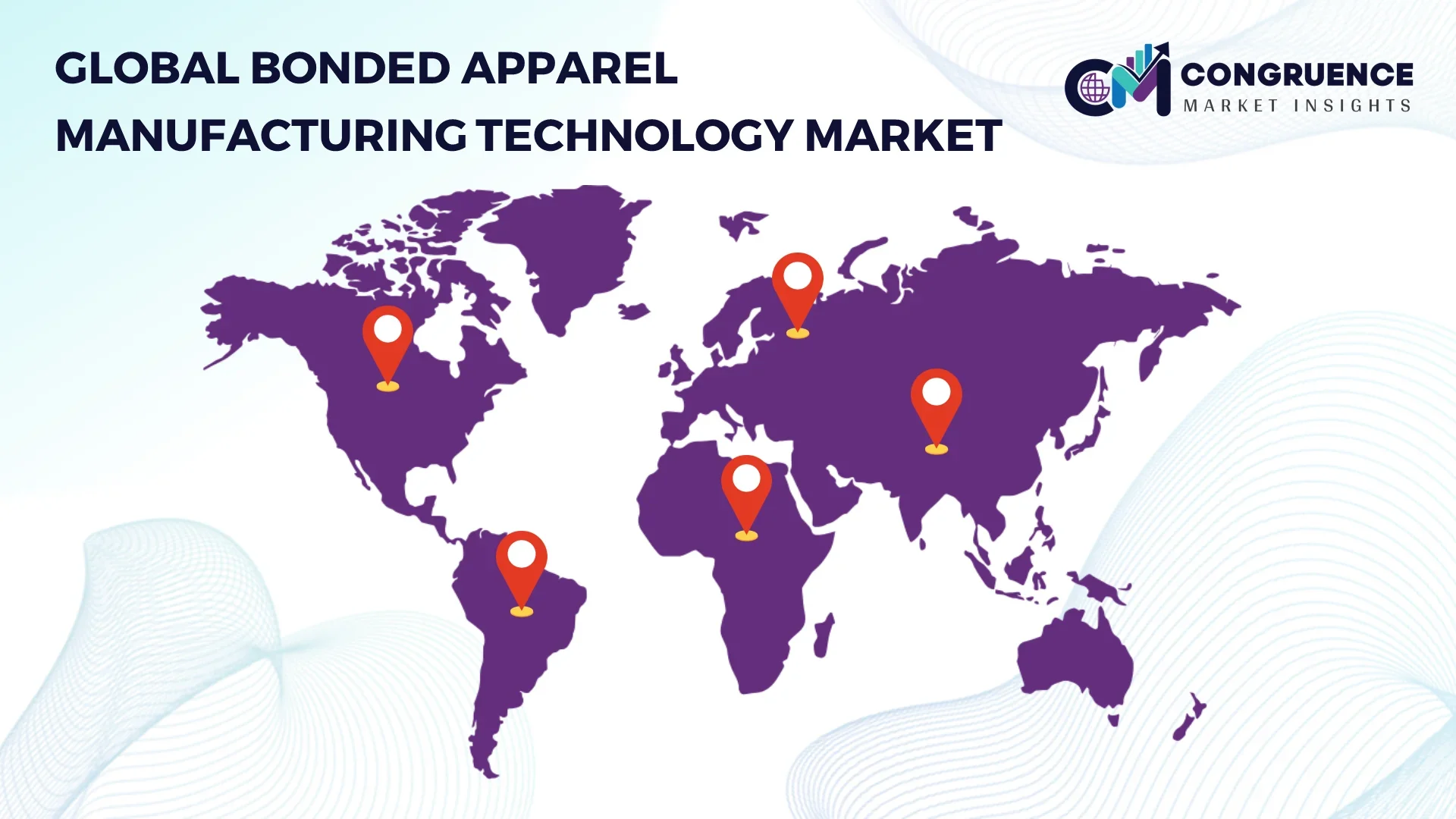
The global Bonded Apparel Manufacturing Technology Market shows strong regional disparities based on manufacturing infrastructure, technical textile demand, and adoption of advanced garment production technologies. Asia-Pacific leads the market primarily due to large-scale apparel manufacturing hubs in China, Vietnam, Bangladesh, and India, collectively accounting for more than 65% of global garment exports. North America follows with approximately 24% market share, driven by high demand for performance sportswear, technical garments, and advanced automated production equipment. Europe represents nearly 21% of global demand, supported by strong adoption of sustainable textile manufacturing technologies and regulatory frameworks promoting environmentally responsible production methods. Meanwhile, South America contributes roughly 7% of global market activity, with Brazil representing the region’s primary textile manufacturing hub. The Middle East & Africa collectively account for approximately 6.4% market share, supported by growing textile manufacturing investments and rising demand for protective garments across industrial sectors. Across regions, more than 48% of advanced apparel production facilities globally have begun integrating automated bonding technologies, reflecting a strong shift toward seamless garment manufacturing and sustainable textile processing methods.
North America accounts for approximately 24% of the global Bonded Apparel Manufacturing Technology Market share, supported by strong demand from sportswear, defense textiles, healthcare garments, and technical outdoor apparel industries. The United States represents nearly 78% of regional demand, followed by Canada with roughly 12%, while Mexico contributes about 10% through its growing textile manufacturing sector. Regional demand is driven largely by premium performance apparel manufacturers and medical textile producers adopting automated bonding technologies to enhance garment durability and reduce production complexity. Government-backed initiatives supporting advanced manufacturing and domestic textile production are also contributing to regional market expansion. Programs encouraging smart manufacturing and industrial automation adoption across over 3,500 U.S. textile facilities are accelerating deployment of ultrasonic bonding systems and laser seam technologies. Technological advancements including AI-driven garment design software, robotic bonding machines, and automated fabric lamination lines are increasingly integrated into production facilities. One example includes Dukane Corporation, which has expanded its ultrasonic welding solutions for textile and garment bonding applications, enabling manufacturers to achieve seam precision within ±0.15 mm and increase production efficiency by nearly 30% in large garment factories. Regional consumer behavior also influences demand. North America demonstrates higher adoption of premium technical apparel, particularly among outdoor sports enthusiasts and professional athletes, where seamless garments offer superior comfort and durability.
Europe represents approximately 21% of the global Bonded Apparel Manufacturing Technology Market, with major demand concentrated in Germany, the United Kingdom, France, and Italy, which together account for nearly 72% of regional installations of advanced garment bonding systems. Germany alone contributes nearly 29% of Europe’s technical textile manufacturing capacity, supported by a strong industrial base in engineering and textile machinery development. The region is strongly influenced by sustainability regulations and circular textile initiatives. European environmental policies targeting 30% reduction in textile waste by 2030 are encouraging apparel manufacturers to adopt bonded garment construction techniques that minimize thread usage and reduce production waste. Additionally, the European Textile Strategy promotes recyclable garments and eco-friendly production technologies, driving adoption of thermoplastic adhesive bonding systems and seam-sealing technologies. Emerging technologies including laser bonding systems, automated lamination equipment, and digital garment simulation software are widely adopted across premium apparel manufacturing facilities in Italy and France. A notable example is Branson Ultrasonics, which has introduced advanced ultrasonic bonding platforms used in European technical textile production facilities, enabling seam durability improvements of up to 28% compared with stitched seams. Consumer behavior in Europe also reflects regulatory influence. European apparel brands prioritize sustainability and product traceability, leading to strong demand for advanced bonded manufacturing technologies capable of supporting recyclable textile production.
Asia-Pacific represents the largest manufacturing hub for bonded apparel technologies, accounting for more than 41% of global market volume. The region hosts the world’s largest textile production ecosystem, with China, India, Japan, South Korea, and Vietnam representing the primary consuming and manufacturing countries. China alone contributes nearly 36% of global apparel production, while India accounts for approximately 8% of global garment exports, driving extensive demand for advanced garment bonding systems. The region contains more than 60,000 large and mid-sized garment factories, many of which are integrating automated bonding technologies to improve production efficiency and garment quality. Rapid expansion of e-commerce apparel brands across Asia has also increased demand for high-performance sportswear and seamless fashion garments. Innovation hubs in China’s Guangdong province and Japan’s Osaka textile technology cluster are actively developing next-generation garment bonding equipment, including automated ultrasonic welding lines capable of processing over 2,000 garments per day in large production facilities. One example includes Juki Corporation, a major Japanese textile machinery manufacturer that has expanded development of automated seam bonding equipment integrated with digital garment manufacturing platforms. Regional consumer behavior further accelerates adoption. Asia-Pacific markets show strong demand for affordable yet performance-driven apparel, driven by rising middle-class consumers and rapid growth of digital fashion retail platforms.
South America accounts for approximately 7% of the global Bonded Apparel Manufacturing Technology Market, with Brazil and Argentina representing the leading regional textile manufacturing economies. Brazil alone contributes nearly 55% of South America’s apparel production, supported by a domestic textile industry consisting of more than 25,000 manufacturing companies and employing over 1.4 million workers across the apparel value chain. Infrastructure improvements across industrial manufacturing zones and modernization of textile production equipment are gradually increasing adoption of bonding technologies across the region. Governments are also implementing trade incentives and tax policies designed to strengthen domestic textile manufacturing capabilities and reduce dependence on imported apparel products. Technological modernization initiatives across Brazilian garment factories have increased adoption of automated ultrasonic welding equipment and adhesive lamination systems, particularly for sportswear and industrial safety garments. For instance, H&H Asia Group has expanded distribution partnerships across Latin America to supply thermoplastic bonding films used in seamless garment production. Consumer demand trends also shape market dynamics. South America demonstrates strong demand for sportswear and athleisure clothing, particularly within Brazil’s rapidly growing fitness and sports culture, driving the adoption of bonded seam technologies for improved comfort and durability.
The Middle East & Africa region accounts for roughly 6.4% of the global Bonded Apparel Manufacturing Technology Market, supported by expanding textile production capabilities and rising demand for protective clothing across industrial sectors. Countries such as United Arab Emirates, Turkey, Egypt, and South Africa represent major growth markets within the region due to increasing investments in textile manufacturing infrastructure. Industrial sectors including construction, oil & gas, and mining require protective garments with high durability and resistance to environmental exposure, encouraging adoption of bonded seam technologies capable of producing airtight and waterproof clothing. Government initiatives supporting industrial diversification are also accelerating textile manufacturing growth. For example, the UAE’s industrial development strategy has encouraged establishment of several advanced garment production facilities in free trade zones, enabling manufacturers to integrate automated bonding technologies. Technological modernization trends include adoption of automated seam sealing equipment and heat-bonding machines across technical textile production facilities. A regional example includes Brother Industries, which supplies industrial garment bonding machinery to textile manufacturers operating across the Middle East textile sector. Consumer behavior variations also influence demand patterns. The region shows growing demand for durable workwear and protective garments, particularly among industrial workforce populations across energy and infrastructure sectors.
• China – 33% Market Share: It dominates due to its massive apparel manufacturing capacity and extensive adoption of automated garment production technologies across more than 20,000 textile factories.
• United States – 21% Market Share: TIt leads through strong demand for high-performance sportswear, advanced medical textiles, and continuous investment in automated garment manufacturing technologies.
The Bonded Apparel Manufacturing Technology Market is characterized by a moderately fragmented competitive landscape, with a mix of specialized textile machinery manufacturers, bonding technology providers, and adhesive film producers operating across global markets. The industry currently includes more than 85 active equipment manufacturers and technology providers, supplying ultrasonic bonding systems, laser seam welding equipment, adhesive lamination solutions, and heat-press bonding machinery to garment manufacturers worldwide.
The top five companies collectively account for approximately 34% of the global market share, reflecting a competitive environment where both global engineering firms and niche textile equipment specialists compete through product innovation and strategic partnerships. Major players are heavily investing in research and development, with several companies allocating 6–9% of annual operational budgets toward advanced textile machinery innovation, particularly focusing on automated garment production technologies.
Strategic partnerships between textile machinery manufacturers and global sportswear brands have become increasingly common. These collaborations enable companies to develop customized bonding equipment tailored for high-volume apparel production lines capable of processing 1,500 to 3,000 garments per day. Additionally, manufacturers are integrating AI-enabled production monitoring systems and robotic garment assembly technologies into bonding machines to improve operational efficiency.
Product launches remain a key competitive strategy. Between 2023 and 2025, more than 40 new textile bonding equipment models were introduced globally, focusing on high-precision ultrasonic welding systems, hybrid lamination machines, and multi-layer fabric bonding technologies. The competitive environment is expected to remain innovation-driven as companies continue developing automated and sustainable garment manufacturing technologies.
Juki Corporation
Dukane Corporation
Branson Ultrasonics
H&H Asia Group
Sonobond Ultrasonics
Herrmann Ultrasonics
Pfaff Industrial
Vetron Typical Europe
Hashima Co., Ltd.
Veit Group
Pegasus Sewing Machine Mfg. Co., Ltd.
Morgan Tecnica
Eastman Machine Company
Technological innovation is a central factor driving transformation in the Bonded Apparel Manufacturing Technology Market. Modern garment production facilities are increasingly adopting advanced bonding systems to replace traditional stitching processes, enabling seamless garment construction and improved performance characteristics. Key technologies currently shaping the industry include ultrasonic bonding, laser seam bonding, thermoplastic adhesive lamination, automated heat-press bonding systems, and hybrid bonding platforms combining multiple fabrication techniques.
Ultrasonic bonding technology has emerged as one of the most widely adopted solutions due to its ability to fuse synthetic fabrics using high-frequency vibrations without thread or adhesives. Modern ultrasonic welding machines operate at frequencies between 20 kHz and 40 kHz, enabling seam formation within 0.3 to 0.8 seconds per bonding point, significantly improving garment assembly speed. Large production facilities using ultrasonic bonding systems can produce up to 2,500 garments per day per production line, representing a substantial efficiency improvement compared with traditional sewing operations.
Laser bonding technology is another emerging innovation gaining traction in high-end garment manufacturing. Laser systems use precisely controlled heat energy to bond thermoplastic materials while maintaining seam accuracy within ±0.1 millimeters. This level of precision is particularly valuable in performance sportswear, waterproof jackets, and medical protective garments where seam durability and aesthetic quality are critical.
Thermoplastic adhesive film technology is also expanding rapidly within bonded apparel manufacturing. These films typically measure 0.05–0.2 millimeters in thickness and are applied using automated lamination systems operating at temperatures between 110°C and 160°C. Such materials enable bonding of multi-layer fabrics while maintaining flexibility and water resistance.
In addition to hardware innovation, digital transformation is influencing the sector through AI-assisted garment design software, automated cutting machines, robotic fabric handling systems, and real-time production monitoring platforms. Smart manufacturing technologies now allow apparel factories to monitor bonding parameters such as temperature, pressure, and vibration frequency across hundreds of production units simultaneously, improving quality control and reducing defect rates.
• In January 2025, Dukane Corporation introduced new patented Quadra Tech features for its vibration welding technology, integrating advanced capabilities such as Q-Factor control, Melt-Match® functionality, Low Amplitude Preheat, and ultra-high-frequency welding between 260–400 Hz, improving precision and bonding consistency for industrial material joining applications. Source: www.dukane.com
• In October 2024, Dukane Corporation showcased its patented SynQro™ ultrasonic sealing technology at PACK EXPO 2024, collaborating with Effytec and Hoffer Plastics to develop a mono-material packaging solution. The system synchronizes two ultrasonic generators to drive energy through dual sonotrodes, enabling faster and more precise sealing operations.
• In October 2024, VEIT Group unveiled several new garment processing innovations at Texcare International, including the SF 27 Shirt Finisher, capable of finishing up to 80 shirts per hour with 20 kg/h steam consumption through an advanced heat-recovery system that improves energy efficiency and garment finishing quality.
• In February 2026, Sonobond Ultrasonics published a technical blog highlighting the growing adoption of ultrasonic welding technologies for high-precision manufacturing, emphasizing the method’s ability to create durable bonds without adhesives, heat, or fasteners while reducing energy consumption and improving production reliability across industries including apparel and industrial textiles.
The Bonded Apparel Manufacturing Technology Market Report provides a comprehensive evaluation of technologies, applications, industry participants, and geographic markets influencing the development of advanced garment manufacturing systems. The report analyzes multiple technology segments including ultrasonic bonding equipment, thermoplastic adhesive lamination systems, laser seam bonding technologies, heat-press bonding machinery, and hybrid textile bonding platforms. These technologies collectively support seamless garment construction across various industrial apparel production environments.
From an application perspective, the report examines adoption trends across sportswear and activewear manufacturing, waterproof outdoor apparel production, medical protective garments, industrial safety clothing, and technical textile fabrication. Each application segment is evaluated based on production requirements, performance characteristics, and technology integration levels within modern garment factories. Additionally, the report evaluates end-user categories including large apparel manufacturers, sportswear brands, technical textile producers, medical garment suppliers, and specialized fashion manufacturers.
Geographically, the study covers five major regions comprising more than 35 individual countries, including North America, Europe, Asia-Pacific, South America, and the Middle East & Africa. The report analyzes regional manufacturing capacity, apparel export volumes, technology adoption levels, and industrial infrastructure supporting bonded garment production. Asia-Pacific is highlighted as the largest manufacturing base with thousands of apparel production facilities, while North America and Europe represent major innovation hubs for advanced textile machinery and technical garment development.
The scope also includes analysis of industry value chains, supply networks for bonding materials such as thermoplastic adhesive films and laminated fabrics, and technology integration trends within automated garment manufacturing systems. Emerging niche segments covered within the report include smart wearable apparel, multilayer protective garments, advanced technical textiles, and recyclable bonded garment technologies designed to support sustainable textile production. This broad analytical coverage enables decision-makers to evaluate technology adoption patterns, industry transformation trends, and strategic investment opportunities shaping the future of bonded apparel manufacturing.
| Report Attribute / Metric | Details |
|---|---|
| Market Revenue (2025) | USD 210.0 Million |
| Market Revenue (2033) | USD 377.3 Million |
| CAGR (2026–2033) | 7.6% |
| Base Year | 2025 |
| Forecast Period | 2026–2033 |
| Historic Period | 2021–2025 |
| Segments Covered |
By Type
By Application
By End-User
|
| Key Report Deliverables | Revenue Forecast; Market Trends; Growth Drivers & Restraints; Technology Insights; Segmentation Analysis; Regional Insights; Competitive Landscape; Regulatory & ESG Overview; Recent Developments |
| Regions Covered | North America; Europe; Asia-Pacific; South America; Middle East & Africa |
| Key Players Analyzed | Brother Industries; Juki Corporation; Dukane Corporation; Branson Ultrasonics; H&H Asia Group; Sonobond Ultrasonics; Herrmann Ultrasonics; Pfaff Industrial; Vetron Typical Europe; Hashima Co., Ltd.; Veit Group; Pegasus Sewing Machine Mfg. Co., Ltd.; Morgan Tecnica; Eastman Machine Company |
| Customization & Pricing | Available on Request (10% Customization Free) |




