
Reports
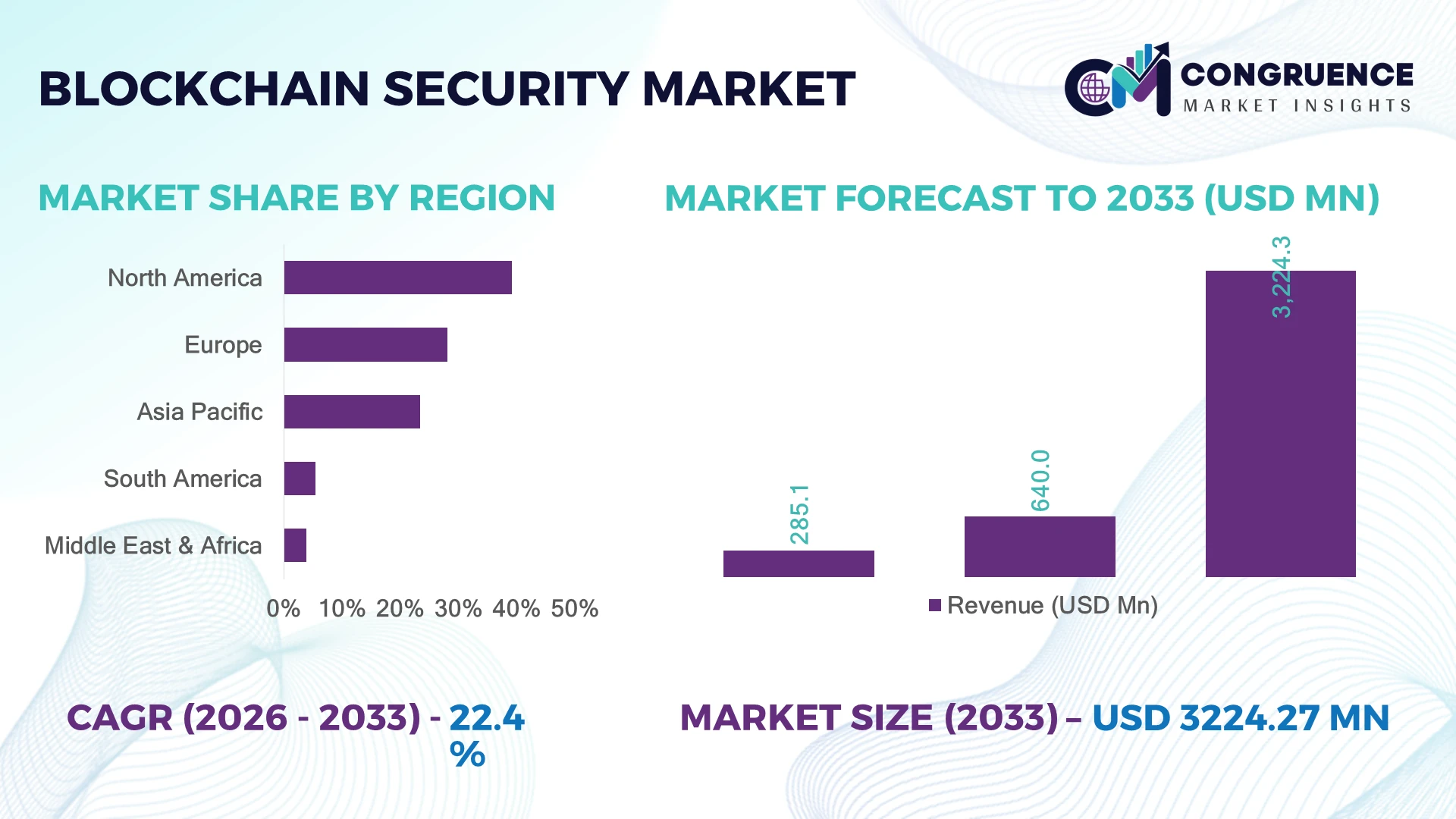
The Global Blockchain Security Market was valued at USD 640.0 Million in 2025 and is anticipated to reach a value of USD 3,224.3 Million by 2033 expanding at a CAGR of 22.4% between 2026 and 2033. Growth is driven by rising enterprise deployment of decentralized applications, expanding digital asset ecosystems, stricter cybersecurity compliance, and increasing adoption of zero-trust blockchain architectures across financial services, healthcare, and government networks.
The United States dominates the global Blockchain Security Market with approximately 38% share, supported by multi-billion-dollar cybersecurity investments, strong adoption across banking, defense, and cloud infrastructure, and over 65% of Fortune 500 enterprises actively evaluating or deploying blockchain-based security frameworks. Compared with Germany's rapidly expanding industrial blockchain initiatives, the U.S. maintains stronger commercialization through venture capital activity and enterprise-grade security innovation, further reinforced by evolving cybersecurity regulations and critical infrastructure protection programs.
Organizations prioritizing scalable blockchain security platforms with AI-enabled threat detection and compliance automation will secure stronger resilience, regulatory readiness, and long-term competitive differentiation.
Market Size & Growth: Valued at USD 640.0 Million in 2025, projected to reach USD 3,224.3 Million by 2033 at a CAGR of 22.4%, fueled by enterprise blockchain adoption and advanced cyber-risk management.
Top Growth Drivers: Enterprise blockchain deployment (+42%), digital asset transactions (+35%), and regulatory cybersecurity compliance initiatives (+31%) remain the three strongest growth catalysts.
Short-Term Forecast: By 2028, automated blockchain threat detection improves incident response efficiency by over 40% while reducing security investigation time by nearly 30%.
Emerging Technologies: AI-powered threat intelligence, zero-trust security architecture, confidential computing, and post-quantum cryptography accelerate next-generation blockchain protection.
Regional Leaders: North America (~USD 1.25 Billion), Europe (~USD 0.86 Billion), and Asia-Pacific (~USD 0.74 Billion) lead through financial digitization, regulatory modernization, and enterprise cloud adoption.
Consumer/End-User Trends: More than 58% of financial institutions prioritize blockchain-based identity protection and smart contract security for mission-critical applications.
Pilot/Case Example: In 2024, enterprise blockchain security deployments reduced smart contract vulnerabilities by approximately 45% through continuous automated auditing.
Competitive Landscape: IBM leads with nearly 14% market presence alongside Microsoft, Oracle, Palo Alto Networks, and Guardtime, strengthening global enterprise cybersecurity ecosystems.
Regulatory & ESG Impact: Cybersecurity compliance initiatives reduce security incidents by nearly 28% while strengthening digital trust across cross-border financial operations.
Investment & Funding: Over USD 3 Billion in cybersecurity and blockchain investments support strategic partnerships, cloud-native security platforms, and regional expansion initiatives.
Innovation & Future Outlook: Quantum-resistant encryption, decentralized identity platforms, and AI-driven security orchestration redefine competitive positioning across the global blockchain ecosystem.
Blockchain Security Market demand continues expanding across financial services, digital identity management, healthcare, and government infrastructure where secure decentralized transactions are becoming operational priorities. AI-assisted smart contract auditing, quantum-resistant cryptography, and decentralized identity solutions are reshaping enterprise security strategies. More than 60% of large organizations are strengthening blockchain risk governance as evolving cybersecurity regulations and cross-border digital transaction requirements accelerate enterprise modernization, setting the foundation for broader strategic transformation.
Blockchain security has become a strategic priority as enterprises accelerate digital transformation while protecting decentralized applications, digital assets, and cross-border transaction networks. Intensifying cyber threats, expanding tokenized ecosystems, and stronger regulatory oversight are reshaping security investment priorities across banking, healthcare, manufacturing, and government sectors. Infrastructure modernization and secure digital identity frameworks are encouraging organizations to integrate blockchain security into core enterprise architectures rather than treating it as a standalone cybersecurity function.
Modern AI-enabled blockchain security platforms detect suspicious network behavior nearly 45% faster than conventional rule-based monitoring while reducing manual investigation workloads by approximately 35% through automated analytics and continuous smart contract validation. North America leads in enterprise-scale deployments supported by mature cloud ecosystems and financial innovation, whereas Asia-Pacific records faster implementation across digital payments, public-sector blockchain programs, and manufacturing supply chains. During the next two to three years, enterprise adoption of automated blockchain governance and decentralized identity management is expected to become standard across critical digital infrastructures.
Organizations are increasingly deploying blockchain security to protect tokenized payment ecosystems, secure healthcare records, and strengthen software supply-chain integrity. Technology providers are expanding strategic alliances with cloud vendors, cybersecurity specialists, and financial institutions to accelerate secure platform integration. Companies investing in scalable, interoperable, and AI-driven blockchain security capabilities are establishing stronger competitive positioning, operational resilience, and long-term digital trust across increasingly connected global business environments.
Enterprise migration toward decentralized digital infrastructure is accelerating demand for advanced blockchain security platforms capable of protecting smart contracts, digital identities, and tokenized assets. More than 65% of large financial institutions have integrated blockchain into at least one operational workflow, while nearly 58% of enterprises prioritize decentralized identity protection and 44% are expanding AI-assisted threat monitoring. The United States continues strengthening cybersecurity standards for critical infrastructure, encouraging broader deployment of blockchain-based trust frameworks across finance and government. This regulatory and technology shift is reducing reliance on perimeter-based security, prompting vendors to expand cloud-native offerings, acquire specialist cybersecurity firms, and establish strategic partnerships that combine blockchain, AI, and continuous compliance monitoring. Organizations embedding automated security into blockchain infrastructure achieve stronger operational resilience and faster regulatory readiness.
Fragmented blockchain ecosystems continue limiting enterprise-scale security deployment as organizations struggle to protect assets across multiple distributed ledger protocols. Nearly 47% of enterprises identify interoperability as a primary implementation barrier, while compliance costs have increased by approximately 28% following stricter digital asset governance requirements. In Germany, highly regulated financial institutions often require extensive security validation before production deployment, extending implementation timelines and increasing operational expenditure. These structural constraints reduce deployment consistency, complicate cross-chain transaction security, and delay enterprise modernization initiatives. Companies are responding through standardized security frameworks, localized compliance capabilities, long-term technology partnerships, and interoperable encryption architectures that simplify governance while lowering operational complexity across heterogeneous blockchain environments.
The convergence of artificial intelligence with blockchain security creates substantial opportunities beyond traditional transaction protection. Automated smart contract auditing reduces vulnerability detection time by nearly 50%, while decentralized identity platforms lower digital verification costs by approximately 35% across enterprise ecosystems. Singapore continues promoting trusted digital infrastructure through progressive digital governance initiatives, accelerating enterprise experimentation with privacy-preserving identity solutions and blockchain authentication services. Technology providers are increasing R&D investment in quantum-resistant cryptography, confidential computing, and autonomous threat intelligence while expanding strategic alliances with cloud providers and fintech innovators. A significant emerging opportunity lies in securing machine-to-machine transactions within industrial IoT environments, creating differentiated value for organizations developing scalable blockchain security ecosystems instead of standalone cybersecurity products.
Maintaining consistent security across rapidly expanding multi-chain environments remains a major execution challenge despite accelerating enterprise adoption. More than 52% of organizations report difficulties integrating blockchain security with legacy enterprise infrastructure, while the cybersecurity skills gap exceeds 30% for advanced cryptography and decentralized architecture specialists. In the United Kingdom, financial institutions increasingly face operational pressure to secure tokenized assets while complying with evolving digital finance regulations and maintaining uninterrupted transaction performance. These complexities affect deployment consistency, increase integration timelines, and create governance challenges across hybrid cloud environments. Companies must strengthen workforce capabilities, invest in unified security orchestration platforms, and expand ecosystem partnerships to deliver scalable, interoperable protection that supports long-term competitiveness across increasingly interconnected blockchain networks.
AI-Powered Threat Intelligence Expansion Enterprise blockchain environments are rapidly integrating AI-driven anomaly detection and automated smart contract auditing, reducing manual security investigation workloads by nearly 40% while improving threat detection accuracy by approximately 45%. Following stricter cybersecurity requirements in the United States, organizations are embedding continuous monitoring into blockchain workflows instead of periodic assessments. Technology vendors are expanding AI partnerships and automating security operations to shorten response cycles, improve compliance readiness, and reduce operational costs across decentralized ecosystems.
Cloud-Native Security Becomes Standard Cloud deployments now account for over 62% of enterprise blockchain security implementations, driven by scalable infrastructure and centralized policy management. Organizations report deployment timelines shortened by almost 35% through containerized security services and automated configuration management. As enterprises modernize distributed applications, providers are restructuring platforms around Blockchain-as-a-Service integration, enabling faster updates, lower infrastructure complexity, and consistent protection across hybrid operating environments.
Digital Identity Security Accelerates Decentralized identity frameworks are becoming a core operational requirement as enterprises expand cross-border digital services. More than 55% of new blockchain initiatives now incorporate identity and access management capabilities, while secure credential verification reduces onboarding time by nearly 30%. Regulatory modernization across the European Union is encouraging organizations to integrate privacy-preserving authentication with blockchain infrastructure. Vendors are responding through interoperable identity platforms, strategic alliances, and embedded compliance capabilities that simplify trusted digital interactions.
Managed Security Services Rising The shortage of blockchain cybersecurity specialists is shifting enterprise preference toward managed security services, with outsourced monitoring demand increasing by nearly 38% and consulting engagements expanding by approximately 32%. Rather than building large in-house teams, enterprises are adopting continuous security operations delivered through specialized partners. A less obvious trend is the integration of blockchain security into broader enterprise cyber resilience programs, allowing organizations to consolidate governance, automate risk reporting, and improve operational consistency across multi-cloud environments.
The Solution segment dominates the Blockchain Security Market, accounting for approximately 68% of total deployments due to its ability to provide end-to-end protection for smart contracts, digital identities, cryptographic key management, and blockchain infrastructure. Large enterprises increasingly prefer integrated security platforms that combine threat detection, encryption, compliance management, and continuous monitoring within a single architecture, reducing operational complexity by nearly 35%. Vendors continue strengthening their product portfolios through AI-enabled analytics, automated vulnerability assessment, and cloud-native security capabilities. These investments are enabling faster enterprise deployment while improving regulatory compliance across highly regulated sectors such as BFSI and healthcare. The Services segment is the fastest-growing as organizations require consulting, integration, managed security, and incident response expertise to secure expanding blockchain ecosystems. Nearly 57% of enterprises now engage external cybersecurity specialists during blockchain implementation, while managed security services have improved operational efficiency by approximately 30%. Companies are expanding professional service capabilities through acquisitions, strategic partnerships, and dedicated blockchain security operations centers. As enterprise blockchain environments become increasingly complex, investment priorities are shifting toward long-term managed protection and continuous governance rather than one-time implementation projects.
The Cloud segment represents the largest application area, contributing nearly 62% of blockchain security deployments because organizations require scalable protection for distributed applications, digital assets, and multi-cloud infrastructure. Cloud-native security platforms reduce deployment time by almost 35% while enabling centralized monitoring, automated compliance, and continuous software updates. Financial institutions, technology providers, and government agencies increasingly adopt cloud environments to accelerate blockchain modernization without extensive on-premise infrastructure expansion. Security vendors are responding by integrating AI-powered monitoring, zero-trust architecture, and automated orchestration into cloud security platforms. The On-Premise segment remains strategically important for organizations managing highly confidential information, particularly within defense, government, and critical infrastructure sectors. Approximately 41% of highly regulated enterprises continue deploying on-premise blockchain security solutions to maintain greater control over sensitive cryptographic assets and compliance workflows. Organizations are modernizing legacy environments through hybrid deployment strategies that combine localized control with cloud scalability. Vendors continue enhancing interoperability and centralized policy management to support seamless protection across both deployment environments.
The BFSI sector remains the dominant end-user, accounting for approximately 39% of total blockchain security adoption owing to high transaction volumes, stringent regulatory obligations, and increasing deployment of digital payment platforms. Financial institutions continue investing in smart contract protection, fraud prevention, decentralized identity verification, and secure cross-border payment infrastructure. More than 60% of leading financial organizations now integrate blockchain security into broader cyber resilience strategies, while vendors strengthen industry-specific offerings through regulatory compliance features and AI-assisted threat detection. The Healthcare segment is the fastest-growing end-user category as hospitals, insurers, and life sciences organizations increasingly secure electronic health records, pharmaceutical supply chains, and digital patient identities. Secure blockchain-based healthcare deployments have improved record integrity by nearly 40%, while reducing unauthorized data access risks through decentralized authentication frameworks. Government, IT & Telecom, Retail & E-commerce, Energy & Utilities, and Others continue expanding adoption as digital transformation initiatives increase reliance on trusted decentralized infrastructure. Companies are responding through customized platforms, vertical-specific partnerships, and flexible subscription models that address sector-specific operational requirements.
North America accounted for the largest market share at 39.2% in 2025 however, Asia-Pacific is expected to register the fastest growth, expanding at a CAGR of 24.8%between 2026 and 2033.
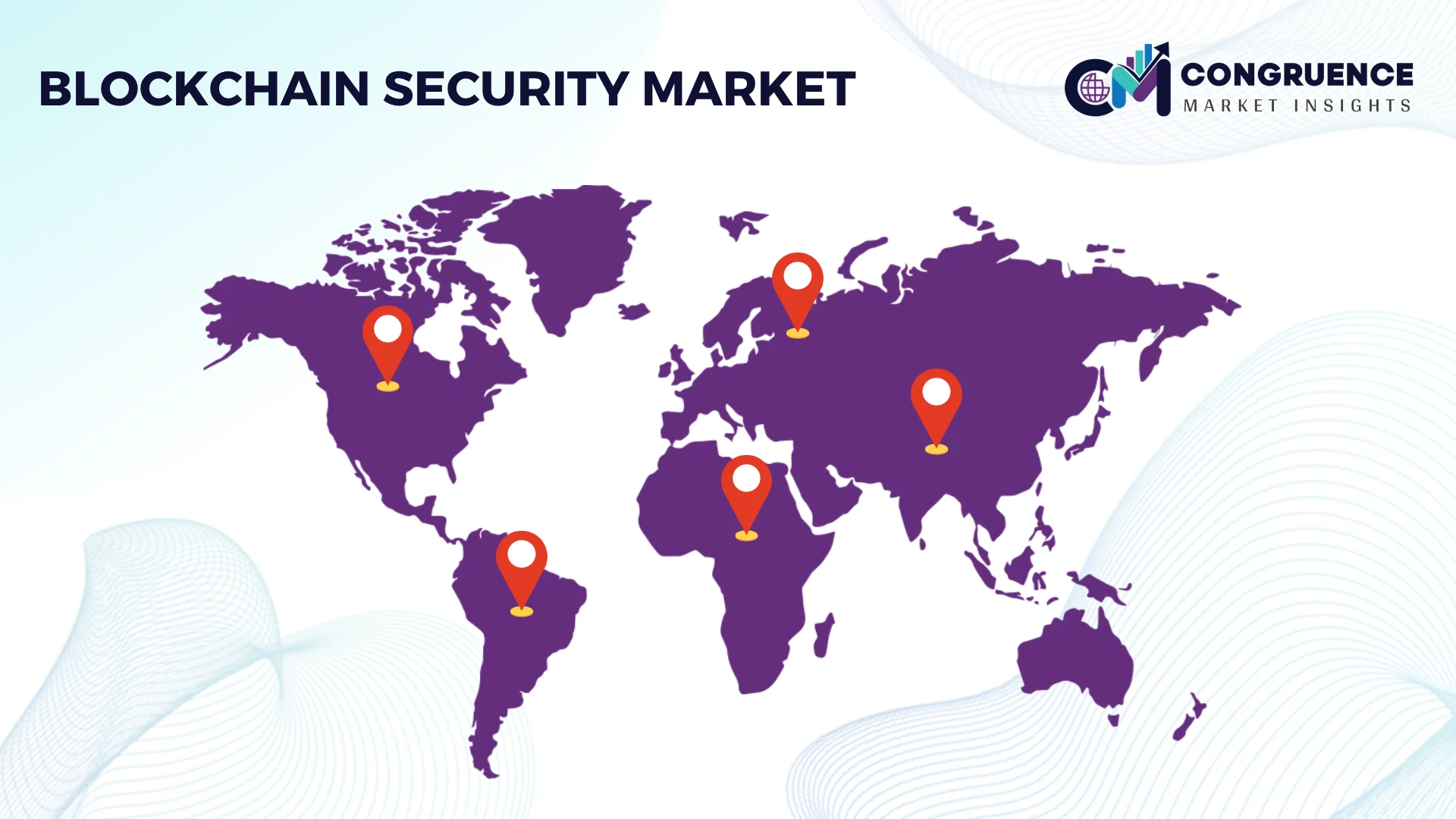
North America remains the largest Blockchain Security Market owing to widespread enterprise blockchain deployment, mature cloud infrastructure, and strong cybersecurity investment across finance, healthcare, defense, and government sectors. The region contributes nearly 39.2% of global demand, with more than 65% of large enterprises integrating blockchain into digital transformation initiatives. AI-enabled threat detection, decentralized identity platforms, and smart contract auditing are becoming standard enterprise capabilities. Strategic partnerships between cloud providers, cybersecurity firms, and blockchain developers continue accelerating deployment, while critical infrastructure modernization programs strengthen demand for resilient decentralized security architectures. Continuous compliance automation and zero-trust frameworks are improving operational efficiency across highly regulated industries.
United States Market Outlook: The United States remains the regional growth engine through its leadership in enterprise software, cloud computing, and financial technology innovation. More than 70% of Fortune 500 organizations are actively evaluating or deploying blockchain-enabled business processes requiring advanced security controls. Federal cybersecurity modernization initiatives, expanding digital asset ecosystems, and significant venture capital funding continue encouraging platform innovation. Technology companies are strengthening product portfolios through acquisitions, AI integration, and strategic alliances that enhance blockchain security capabilities across banking, healthcare, government, and critical infrastructure.
Europe continues expanding blockchain security adoption through digital sovereignty initiatives, financial modernization, and comprehensive cybersecurity regulations. The region represents approximately 28.1% of global market activity, supported by increasing deployment across banking, industrial manufacturing, healthcare, and public administration. Enterprise demand is accelerating as organizations implement decentralized identity management, secure digital documentation, and cross-border transaction protection. More than 52% of large European enterprises now prioritize blockchain security within broader digital resilience strategies. Investments in interoperable cybersecurity platforms and privacy-enhancing technologies are improving operational consistency while supporting trusted digital services throughout the region.
Germany Market Outlook: Germany leads European blockchain security deployment through its advanced manufacturing ecosystem, industrial digitalization programs, and strong enterprise software sector. Industrial organizations increasingly secure supply-chain transactions and digital manufacturing records using blockchain-enabled cybersecurity frameworks. Nearly 48% of major manufacturing enterprises have expanded investment in secure digital infrastructure supporting Industry 4.0 operations. German technology providers continue strengthening research collaborations, cybersecurity innovation, and enterprise integration capabilities that reinforce the country's position as a leading industrial blockchain security hub.
Asia-Pacific represents the fastest-expanding blockchain security landscape, supported by rapid digital payment adoption, cloud infrastructure expansion, and government-backed digital economy initiatives. The region contributes nearly 23.4% of global demand while enterprise blockchain deployments continue accelerating across finance, manufacturing, telecommunications, and public services. More than 60% of new blockchain implementations emphasize cybersecurity and digital identity management from project inception. Technology providers are expanding regional cloud infrastructure, localized security operations, and strategic partnerships to support growing enterprise requirements while improving deployment scalability and operational resilience.
China Market Outlook: China maintains the region's strongest enterprise blockchain ecosystem through large-scale digital infrastructure investment, industrial blockchain development, and government-supported innovation initiatives. The country continues expanding blockchain applications across manufacturing, logistics, financial services, and public administration while emphasizing secure infrastructure. More than 50% of enterprise blockchain pilot projects incorporate advanced security and cryptographic management capabilities. Domestic technology companies are accelerating platform development, AI integration, and cybersecurity innovation to strengthen trusted digital infrastructure across industrial and commercial sectors.
South America is witnessing steady blockchain security adoption as financial institutions, fintech companies, and government agencies accelerate digital service modernization. The region accounts for approximately 5.4% of global demand, supported by expanding cloud adoption and increasing focus on fraud prevention, secure digital identity, and payment modernization. Enterprise implementation continues improving despite infrastructure variability, while blockchain-based financial platforms are reducing transaction verification time by nearly 30%. Vendors are strengthening local partnerships, managed security offerings, and cloud deployment capabilities to improve accessibility and operational reliability across developing digital ecosystems.
Brazil Market Outlook: Brazil leads regional blockchain security deployment due to its mature financial services industry, growing fintech ecosystem, and supportive digital innovation environment. Financial institutions continue expanding blockchain-enabled payment security and identity verification solutions as digital banking adoption increases. Approximately 58% of major banks have accelerated investment in blockchain-related cybersecurity capabilities. Domestic technology providers and global cybersecurity companies are strengthening strategic collaborations to improve enterprise deployment, regulatory compliance, and secure digital financial infrastructure.
The Middle East & Africa market continues expanding through national digital transformation strategies, smart government initiatives, and increasing enterprise cybersecurity investment. The region contributes around 3.9% of global blockchain security demand while financial institutions and public agencies increasingly deploy blockchain-enabled identity management and secure transaction platforms. More than 45% of new digital government initiatives incorporate blockchain security considerations during system design. Technology vendors are expanding regional partnerships, cloud infrastructure, and cybersecurity service capabilities to support modernization programs and strengthen trusted digital ecosystems.
United Arab Emirates Market Outlook: The United Arab Emirates remains the region's technology leader through ambitious smart government initiatives, advanced digital infrastructure, and strong enterprise innovation policies. Financial institutions, logistics operators, and government organizations continue deploying blockchain solutions supported by advanced cybersecurity frameworks. More than 55% of public-sector blockchain initiatives emphasize secure identity verification and trusted digital document management. Continued investment in digital infrastructure, cloud ecosystems, and international technology partnerships positions the UAE as the leading blockchain security innovation hub across the Middle East and Africa.
The Blockchain Security Market is led by global technology providers including IBM, Microsoft, Oracle, Guardtime, Palo Alto Networks, and Thales, competing against specialized blockchain security innovators and regional cybersecurity firms. The top five players collectively control approximately 46% of the market, reflecting moderate consolidation driven by enterprise-scale deployments. Competition centers on AI-enabled threat detection, zero-trust architecture, cryptographic key management, and cloud-native security rather than price alone. Automated security platforms reduce incident response time by nearly 40%, while integrated compliance capabilities lower governance workloads by approximately 30%. Leading vendors are expanding through cloud partnerships, cybersecurity acquisitions, managed security services, and post-quantum cryptography investments. Meanwhile, niche providers compete through industry-specific customization for BFSI, healthcare, and government applications. The competitive landscape is shifting toward unified security platforms integrating blockchain, AI, and digital identity. High regulatory compliance requirements, enterprise trust, and interoperability create significant entry barriers. Sustainable leadership depends on scalable innovation, ecosystem partnerships, and enterprise-grade security performance.
Microsoft
Oracle
Guardtime
Palo Alto Networks
Thales
Infosys
Wipro
Accenture
LeewayHertz
Bitfury
Chainalysis
Rapid Innovation
ScienceSoft
Blockchain security technology is rapidly evolving from traditional encryption and access control toward AI-powered threat intelligence, decentralized identity, and quantum-resistant cryptography. More than 60% of enterprise blockchain deployments now incorporate automated security monitoring, while AI-assisted smart contract auditing improves vulnerability detection by approximately 45%. Organizations increasingly integrate blockchain protection with cloud-native security operations and zero-trust frameworks to improve governance across hybrid environments.
Emerging technologies such as confidential computing, secure multiparty computation, decentralized identity (DID), and post-quantum cryptographic algorithms are strengthening enterprise resilience. Compared with conventional rule-based monitoring, AI-driven behavioral analytics reduce security investigation workloads by nearly 35% while accelerating incident response. Large financial institutions, government agencies, and healthcare organizations benefit most because they require continuous compliance, trusted digital identities, and secure transaction validation across distributed infrastructures.
Between 2026 and 2028, enterprise investment will increasingly prioritize interoperable security orchestration, autonomous compliance management, and quantum-safe encryption. Vendors integrating AI, blockchain analytics, and cloud security into unified platforms will gain competitive advantage through faster deployment, simplified governance, and lower operational complexity. Organizations delaying migration from legacy cryptographic infrastructure risk higher compliance costs and reduced cyber resilience as decentralized applications and digital asset ecosystems continue expanding.
January 2025 – IBM and Telefónica Tech partnered to deliver quantum-safe cybersecurity services using IBM Quantum Safe technologies and NIST-aligned cryptography, strengthening enterprise resilience against future quantum threats. The initiative supports 2 standardized post-quantum algorithms for commercial deployments. Business impact: Accelerates enterprise migration toward quantum-resistant blockchain security. Source: www.newsroom.ibm.com
May 2025 – IBM and Oracle expanded their strategic partnership to integrate watsonx AI with Oracle Cloud Infrastructure, enabling secure multi-agent enterprise workflows across hybrid environments. IBM confirmed deployment across public, sovereign, government, and Oracle Alloy cloud regions. Business impact: Strengthens secure enterprise blockchain and cloud operations.
June 2025 – IBM introduced unified Guardium AI Security and watsonx.governance software supporting validation against 12 major governance frameworks, including the EU AI Act. Business impact: Simplifies enterprise governance, AI security, and blockchain-related compliance management through a single operational platform.
January 2025 – IBM and Palo Alto Networks released a global cybersecurity study showing 75% of surveyed organizations favor platform consolidation to reduce security complexity across AI, cloud, and cyber environments. Business impact: Reinforces demand for integrated blockchain security ecosystems rather than standalone security tools.
The report provides comprehensive analysis of the Blockchain Security Market across Solutions and Services, covering both Cloud and On-Premise deployment models and major end-user industries including BFSI, Healthcare, Government, IT & Telecom, Retail & E-commerce, Energy & Utilities, and Others. It evaluates adoption trends across North America, Europe, Asia-Pacific, South America, and the Middle East & Africa, highlighting enterprise deployment patterns, technology maturity, and regional investment priorities. More than 60% of enterprise blockchain implementations emphasize cloud-native security and automated governance capabilities.
The study examines competitive positioning, technology innovation, AI-driven cybersecurity, decentralized identity, smart contract protection, zero-trust architecture, and post-quantum cryptography while assessing operational trends shaping enterprise adoption between 2026 and 2033. Strategic insights support market entry, expansion planning, partnership evaluation, product development, and competitive benchmarking by identifying deployment priorities, evolving customer requirements, emerging application opportunities, and technology differentiation strategies across established and high-growth blockchain security ecosystems.
| Report Attribute / Metric | Details |
|---|---|
| Market Revenue (2025) | USD 640.0 Million |
| Market Revenue (2033) | USD 3,224.3 Million |
| CAGR (2026–2033) | 22.4% |
| Base Year | 2025 |
| Forecast Period | 2026–2033 |
| Historic Period | 2021–2025 |
| Segments Covered |
By Type
By Application
By End-User
|
| Key Report Deliverables | Revenue Forecast; Market Trends; Growth Drivers & Restraints; Technology Insights; Segmentation Analysis; Regional Insights; Competitive Landscape; Regulatory & ESG Overview; Recent Developments |
| Regions Covered | North America; Europe; Asia-Pacific; South America; Middle East & Africa |
| Key Players Analyzed | IBM; Microsoft; Oracle; Guardtime; Palo Alto Networks; Thales; Infosys; Wipro; Accenture; LeewayHertz; Bitfury; Chainalysis; Rapid Innovation; ScienceSoft |
| Customization & Pricing | Available on Request (10% Customization Free) |




