
Reports
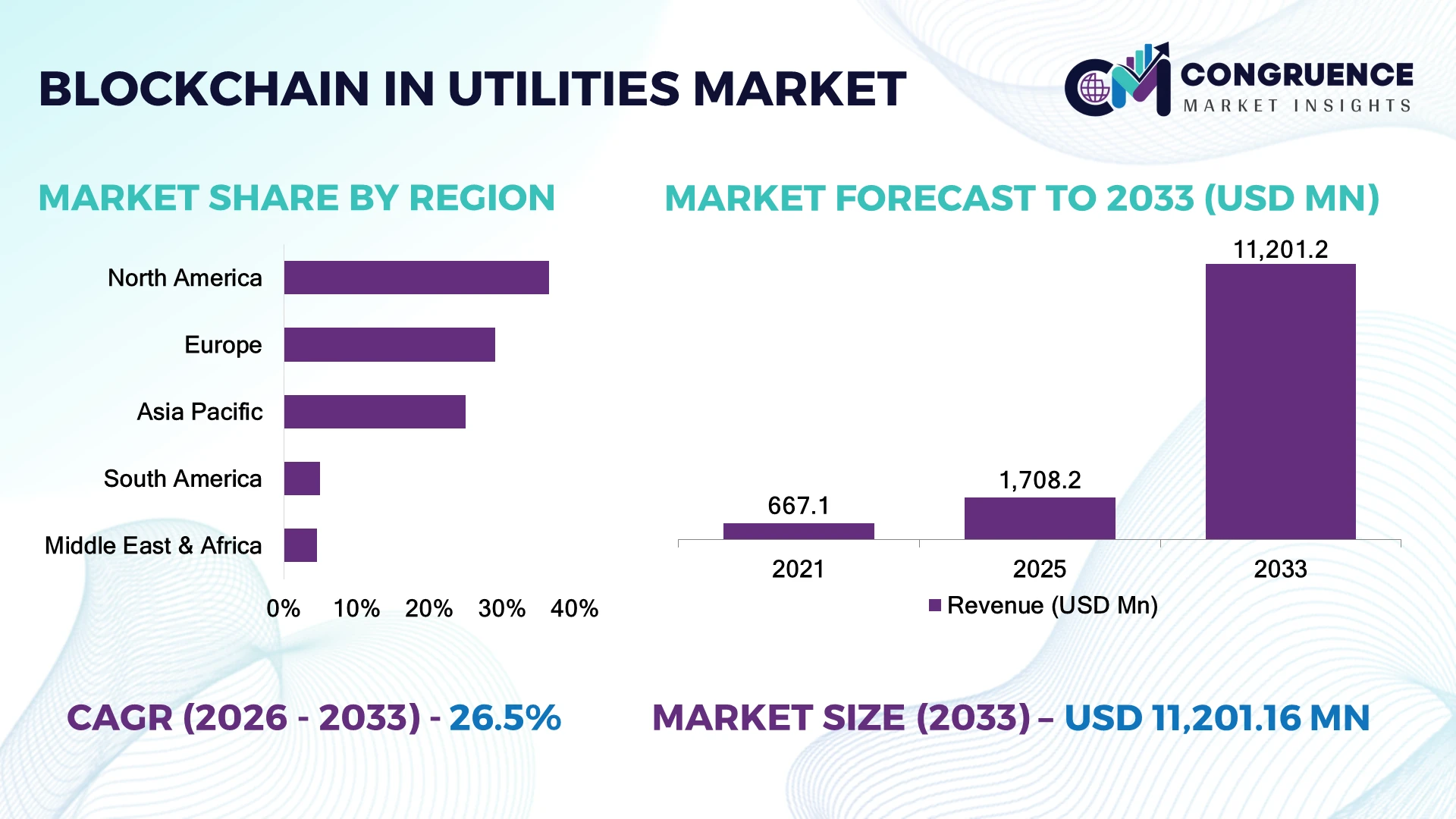
The Global Blockchain in Utilities Market was valued at USD 1,708.2 Million in 2025 and is anticipated to reach a value of USD 11,201.2 Million by 2033 expanding at a CAGR of 26.5% between 2026 and 2033. Growth is driven by decentralized energy trading, smart contract automation, renewable energy certificate management, and secure grid data exchange across digital utility networks.
The United States leads blockchain adoption in utilities with approximately 31% of global enterprise deployments, supported by more than USD 3.5 billion in digital grid and utility modernization investments. Compared with Germany, the United States operates nearly 40% more blockchain-enabled utility pilot projects, while over 58% of new deployments integrate smart meter data with distributed ledger platforms. Energy security initiatives following global geopolitical disruptions have accelerated resilient digital infrastructure investments.
Utilities investing in interoperable blockchain platforms, smart grid integration, and digital asset management are strengthening operational resilience and long-term competitive advantage.
Market Size & Growth: USD 1,708.2 million (2025) to USD 11,201.2 million (2033) at 26.5% CAGR, driven by decentralized energy trading and digital grid modernization.
Top Growth Drivers: Smart grids (+38%), renewable integration (+34%), digital energy trading (+29%).
Short-Term Forecast: By 2028, transaction processing costs decline by 22% while settlement speed improves by 45%.
Emerging Technologies: AI, smart contracts, and IoT integration enhance blockchain-enabled utility operations.
Regional Leaders: North America (~USD 3.8 billion), Europe (~USD 3.1 billion), Asia-Pacific (~USD 2.9 billion), driven by utility digitization.
Consumer/End-User Trends: More than 54% of utility blockchain deployments focus on peer-to-peer energy transactions.
Pilot/Case Example: A 2026 blockchain energy marketplace reduced settlement time by approximately 60%.
Competitive Landscape: Top providers control nearly 46% market share, led by IBM, Oracle, SAP, Accenture, and Infosys.
Regulatory & ESG Impact: Blockchain-based renewable certificate verification improves audit efficiency by approximately 35%.
Investment & Funding: More than USD 8 billion supports digital utility transformation and blockchain innovation.
Innovation & Future Outlook: Tokenized energy markets and interoperable utility ecosystems are reshaping digital infrastructure.
Blockchain in utilities is rapidly expanding across renewable energy trading, carbon credit verification, grid asset management, and decentralized billing platforms. Smart contracts reduce transaction processing time by approximately 40% while improving settlement transparency across utility networks. Increasing digital infrastructure investment and resilient energy system modernization continue strengthening enterprise adoption, providing the foundation for the strategic discussion below.
Blockchain in utilities has become strategically important as electricity providers modernize grid operations, decentralize energy transactions, and strengthen cybersecurity across increasingly digital infrastructure. Utilities are shifting from centralized data management toward distributed ledger platforms that improve transaction transparency, automate settlements, and support renewable energy integration. Regulatory support for smart grids and distributed energy resources is accelerating enterprise investment in blockchain-enabled utility ecosystems.
Blockchain-enabled smart contracts reduce settlement processing time by approximately 45% compared with conventional reconciliation systems while lowering administrative costs by nearly 25%. North America leads enterprise deployment through advanced digital utility programs, whereas Europe emphasizes renewable energy certification and peer-to-peer electricity trading across decentralized power markets. Over the next two to three years, more than 60% of newly deployed blockchain utility platforms are expected to integrate IoT-enabled smart meters and automated grid analytics.
Utilities are expanding strategic partnerships with cloud providers, software companies, and grid technology specialists to accelerate deployment of interoperable blockchain platforms. Energy companies are investing in decentralized billing, digital asset management, and renewable certificate verification while strengthening cybersecurity frameworks for distributed networks. Organizations combining blockchain interoperability, smart grid integration, and secure digital infrastructure will establish stronger competitive positioning as utilities continue transitioning toward intelligent, data-driven energy ecosystems.
Utility operators are rapidly integrating blockchain with smart grids to automate energy transactions, improve data integrity, and manage distributed energy resources more efficiently. More than 61% of newly deployed digital grid platforms now support distributed ledger integration, while blockchain-enabled smart contracts reduce transaction settlement time by approximately 45% and lower administrative processing by nearly 24%. Germany continues expanding decentralized renewable energy infrastructure, accelerating demand for secure peer-to-peer electricity trading platforms. This transition is encouraging utilities to invest in interoperable blockchain architectures, expand cloud partnerships, and deploy digital energy marketplaces. Companies capable of integrating blockchain directly with grid management platforms are establishing stronger operational differentiation and improving network transparency.
Fragmented blockchain architectures and inconsistent utility IT standards continue slowing enterprise-scale implementation. Nearly 39% of utility operators identify interoperability with existing SCADA, ERP, and billing systems as a major deployment barrier, while integration costs increase project implementation budgets by approximately 21%. The United States continues operating multiple utility platforms with varying digital standards, making cross-network interoperability increasingly complex. These limitations reduce deployment speed, delay enterprise integration, and increase operational complexity for multi-utility ecosystems. Companies are addressing these constraints through open API frameworks, hybrid blockchain platforms, strategic technology alliances, and standardized data exchange protocols to improve interoperability across existing utility infrastructure.
Blockchain-enabled tokenization of distributed energy resources is creating new commercial opportunities for utilities, prosumers, and renewable energy aggregators. Digital energy marketplaces improve transaction efficiency by approximately 33%, while automated renewable certificate verification reduces processing time by nearly 40%. Australia is expanding distributed solar participation through digital energy exchange initiatives that encourage decentralized electricity trading. Technology providers are investing in interoperable blockchain ecosystems, AI-assisted energy optimization, and strategic collaborations with smart meter manufacturers. A significant emerging opportunity lies in integrating blockchain with electric vehicle charging networks, enabling dynamic energy pricing and automated cross-platform settlement within decentralized energy ecosystems.
Enterprise deployment requires balancing blockchain security with evolving energy regulations, critical infrastructure protection, and cross-border data governance. Approximately 42% of utility executives continue prioritizing cybersecurity upgrades before expanding blockchain deployments, while regulatory compliance requirements extend implementation timelines by nearly 18%. The European Union's evolving digital governance framework continues influencing enterprise blockchain architecture and operational controls. These challenges directly affect long-term scalability, interoperability, and enterprise confidence rather than technology capability. Utilities must strengthen cybersecurity frameworks, develop standardized governance models, invest in digital identity management, and expand regulatory collaboration to ensure secure and sustainable blockchain adoption across critical energy infrastructure.
Peer-to-Peer Energy Expansion: Utilities are expanding blockchain-enabled peer-to-peer electricity trading platforms, increasing decentralized transaction volumes by approximately 35% while reducing settlement time by nearly 50%. Smart grid modernization is accelerating deployment. Companies are partnering with renewable energy aggregators and distributed energy providers to scale digital electricity marketplaces.
Smart Contract Automation: Automated smart contracts are replacing manual billing, renewable certificate verification, and energy settlement workflows. Processing efficiency has improved by approximately 30%, while administrative costs have declined by nearly 22%. Utilities are integrating blockchain with enterprise billing platforms and digital asset management systems to improve operational transparency and execution speed.
IoT Blockchain Integration: Utilities increasingly connect blockchain platforms with smart meters, grid sensors, and distributed energy resources for trusted real-time data exchange. Integrated deployments improve operational visibility by approximately 27% while reducing data reconciliation efforts by nearly 20%. Companies are expanding IoT partnerships and strengthening cloud-based blockchain infrastructure to enhance digital grid intelligence.
Carbon Credit Digitalization: Blockchain is transforming renewable energy certificate management and carbon credit verification through immutable digital registries. Verification efficiency has increased by approximately 38%, while audit processing time has declined by nearly 34%. Utilities are restructuring sustainability reporting, strengthening ecosystem collaborations, and deploying interoperable blockchain platforms to improve environmental compliance and transparent carbon accounting.
Public blockchain platforms account for approximately 44% of the global blockchain in utilities market due to their transparency, decentralized validation, and suitability for renewable energy certificate trading and peer-to-peer electricity markets. Their open architecture enables utilities to build trusted digital ecosystems supporting distributed energy resources and cross-party transaction verification. Private blockchain platforms remain widely deployed for internal utility operations because they offer stronger access control, lower latency, and improved data confidentiality, while consortium blockchains continue gaining traction for multi-utility collaboration and cross-organizational energy settlements.
Consortium blockchain is the fastest-growing segment as utility operators increasingly require secure collaboration across transmission operators, renewable energy producers, and electricity retailers. Consortium deployments have expanded by approximately 28%, while permissioned blockchain architectures reduce transaction validation time by nearly 35%. Technology providers are strengthening interoperability, expanding cloud-based blockchain services, and partnering with utility software vendors to accelerate enterprise implementation. Investment priorities continue shifting toward scalable hybrid blockchain ecosystems capable of balancing security, governance, and operational efficiency.
Industry observations released during 2026 by the World Economic Forum indicate that consortium blockchain adoption continues accelerating across energy ecosystems as utilities prioritize secure multi-party collaboration and digital infrastructure modernization.
Energy trading represents the largest application segment, accounting for approximately 39% of global market demand because blockchain enables transparent peer-to-peer electricity transactions, automated settlements, and trusted renewable energy exchanges. Utilities increasingly deploy distributed ledger platforms to streamline transaction validation, reduce intermediaries, and improve operational visibility. Renewable energy certificate management remains another important application, while billing and payment systems, grid asset management, and carbon credit tracking continue expanding as utilities accelerate digital transformation initiatives.
Peer-to-peer energy trading is the fastest-growing application as distributed renewable generation and prosumer participation expand globally. Blockchain-enabled trading platforms improve settlement efficiency by approximately 42%, while smart contracts reduce manual processing by nearly 30%. Utilities are integrating blockchain with smart meters, AI-powered forecasting, and digital grid platforms to strengthen automated energy exchanges. Demand is shifting toward interoperable platforms capable of supporting decentralized electricity markets, dynamic pricing, and trusted cross-network energy transactions.
A 2025 enterprise assessment published by the International Energy Agency highlighted increasing deployment of blockchain-enabled digital energy trading platforms supporting distributed renewable generation and automated electricity market participation.
Power utilities account for approximately 48% of blockchain deployments due to their responsibility for grid management, energy settlement, renewable integration, and customer billing. Large utility operators increasingly deploy blockchain to improve transaction security, automate operational workflows, and enhance grid transparency. Renewable energy companies represent another major customer group, while transmission system operators, electricity retailers, and microgrid operators continue expanding blockchain adoption to strengthen decentralized energy ecosystems and improve operational efficiency.
Renewable energy developers are the fastest-growing end-user segment, with blockchain adoption increasing by nearly 31% as distributed solar, wind, and battery storage projects require transparent energy certification and automated settlement. Blockchain integration improves renewable certificate verification efficiency by approximately 37%, encouraging developers to invest in interoperable digital platforms. Technology providers are expanding partnerships with utilities, smart grid companies, and cloud infrastructure providers while delivering customized blockchain solutions designed for evolving decentralized energy markets.
Industry findings published during 2026 by the World Economic Forum indicate that renewable energy operators continue accelerating blockchain implementation to improve traceability, decentralized market participation, and trusted digital energy transactions.
North America accounted for the largest market share at 36.4% in 2025 however, Asia-Pacific is expected to register the fastest growth, expanding at a CAGR of 29.1% between 2026 and 2033.
Digital Grid Platforms Accelerate Utility Transformation
North America leads the blockchain in utilities market with approximately 36.4% of global deployment, supported by advanced smart grid infrastructure, cloud adoption, and digital utility modernization. Electricity providers are integrating blockchain with distributed energy resources, renewable energy certificates, and automated settlement platforms to improve operational transparency and reduce transaction complexity. More than 62% of enterprise blockchain utility projects in the region integrate smart meter data with cloud-based analytics platforms. Utilities continue expanding strategic collaborations with enterprise software providers, cloud service companies, and cybersecurity specialists to strengthen secure digital infrastructure while improving interoperability across electricity networks.
United States Market Outlook: The United States dominates the regional market through large-scale smart grid deployment, advanced cloud infrastructure, and strong enterprise software capabilities. Utility companies continue investing in blockchain-enabled billing, decentralized energy trading, and renewable certificate management while expanding partnerships with technology providers. Digital transformation initiatives across transmission operators and electricity retailers continue strengthening enterprise blockchain adoption while improving operational resilience and customer transaction transparency.
Renewable Energy Integration Drives Adoption
Europe represents approximately 29% of global market demand, supported by aggressive renewable energy integration, decentralized electricity markets, and progressive digital energy policies. Utilities increasingly deploy blockchain to automate renewable energy certificate verification, peer-to-peer electricity trading, and cross-border energy settlements. More than 48% of enterprise blockchain utility deployments in the region support renewable energy management and digital asset traceability. Energy companies continue strengthening interoperability frameworks and expanding blockchain-enabled market platforms to improve transparency across increasingly decentralized electricity ecosystems.
Germany Market Outlook: Germany leads the European market through its mature renewable energy infrastructure, decentralized electricity generation, and advanced digital energy initiatives. Utilities continue deploying blockchain-enabled platforms supporting distributed solar generation, renewable energy certificates, and peer-to-peer electricity exchanges. Strong collaboration between energy companies, technology providers, and grid operators continues positioning Germany as a leading blockchain innovation hub for digital utility transformation.
Smart Energy Ecosystems Expand Rapidly
Asia-Pacific is the fastest-growing regional market as utilities accelerate digital transformation, distributed renewable integration, and intelligent energy infrastructure development. China, Japan, South Korea, and Australia are investing heavily in blockchain-enabled electricity trading, smart grid modernization, and decentralized energy management systems. More than 55% of newly announced utility blockchain initiatives across the region integrate AI, IoT, and cloud-native architectures. Technology companies continue expanding blockchain platforms while utilities strengthen digital partnerships to improve operational efficiency, settlement automation, and secure grid data management.
China Market Outlook: China leads regional blockchain deployment through extensive smart grid investments, digital infrastructure expansion, and large-scale renewable energy integration. State-owned utilities continue integrating blockchain into electricity trading platforms, carbon management systems, and grid operation workflows. Advanced digital infrastructure, expanding renewable generation, and strong enterprise technology capabilities continue positioning China as the region's largest blockchain-enabled utility ecosystem.
Utility Digitalization Supports Market Expansion
South America is gradually strengthening blockchain adoption through electricity market modernization, renewable energy investments, and digital utility initiatives. Brazil and Chile remain leading deployment centers where utilities are exploring blockchain for renewable certificate verification, customer billing, and decentralized energy trading. Digital utility projects have increased by approximately 19% across major electricity providers, encouraging technology vendors to expand regional implementation capabilities. Companies continue strengthening partnerships with utilities while adapting blockchain solutions to evolving regulatory environments and regional infrastructure requirements.
Brazil Market Outlook: Brazil represents the region's largest opportunity through its expanding renewable energy sector, electricity market reforms, and digital transformation initiatives. Utility companies continue investing in blockchain-enabled transaction management, distributed energy integration, and smart metering infrastructure. Growing solar and wind generation, combined with increasing enterprise technology adoption, continues strengthening blockchain deployment across the country's evolving electricity ecosystem.
Digital Infrastructure Investments Gain Momentum
The Middle East & Africa is experiencing steady blockchain adoption as utilities modernize electricity infrastructure, renewable energy projects, and digital customer services. Gulf countries increasingly deploy blockchain to improve electricity settlement, renewable certificate tracking, and utility data security while supporting broader digital economy initiatives. More than 30% of recently announced smart utility programs incorporate blockchain-ready digital infrastructure. Technology providers continue expanding strategic alliances with energy companies while strengthening cloud-based utility management capabilities across the region.
United Arab Emirates Market Outlook: The United Arab Emirates leads the regional market through ambitious smart city initiatives, advanced digital government programs, and strong investments in intelligent utility infrastructure. Utility operators continue implementing blockchain across electricity billing, renewable energy certification, and digital customer engagement platforms. Strong cloud infrastructure, supportive innovation policies, and expanding clean energy investments continue reinforcing the country's leadership in blockchain-enabled utility modernization across the Middle East.
The blockchain in utilities market is led by enterprise platform providers such as IBM, Oracle, SAP, and Microsoft competing against energy-focused innovators including Energy Web, Power Ledger, and Electron, while cloud-integrated solution developers challenge niche blockchain specialists on deployment flexibility. The top five participants collectively control approximately 52% of market activity through enterprise-scale implementations and utility partnerships. Competition centers on interoperability, cybersecurity, transaction speed, and regulatory compliance rather than price alone. Utilities increasingly prioritize platforms delivering 30–40% faster transaction validation and reducing settlement processing time by nearly 60%. Market leaders are expanding through strategic alliances with grid operators, cloud providers, and renewable energy companies while strengthening vertical integration across digital energy ecosystems. The competitive shift favors consortium-based blockchain networks over isolated proprietary platforms, creating higher entry barriers around utility certifications, cybersecurity, and grid integration expertise. Winning requires scalable blockchain architecture, proven utility deployments, regulatory alignment, and seamless integration with existing energy management infrastructure.
IBM Corporation
Oracle Corporation
SAP SE
Microsoft Corporation
Accenture plc
Energy Web Foundation
Power Ledger
Electron
LO3 Energy
WePower
Grid+
FlexiDAO
Infosys Limited
Fujitsu Limited
Permissioned blockchain platforms remain the primary technology foundation because they provide secure, compliant, and scalable transaction management for utility environments. More than 65% of enterprise deployments now integrate blockchain with cloud infrastructure, while smart contract automation reduces settlement processing time by approximately 55%. Utilities deploying distributed ledger technology achieve improved data traceability, automated renewable certificate verification, and faster peer-to-peer energy transactions with significantly lower manual intervention.
The market is rapidly shifting toward AI-integrated blockchain, decentralized digital identity, tokenized energy assets, and IoT-enabled grid verification. Nearly 48% of new blockchain projects combine real-time sensor data with smart contracts for automated energy settlement. Compared with legacy centralized reconciliation systems, blockchain-enabled transaction platforms improve operational efficiency by approximately 40% while reducing verification costs by nearly 35%. Technology leaders integrating blockchain, AI, and advanced analytics gain stronger competitive advantages through predictive automation and trusted data exchange across distributed energy resources.
Between 2026 and 2028, blockchain adoption will increasingly support virtual power plants, distributed renewable markets, carbon credit management, and cross-border electricity trading. More than 60% of advanced utility digital transformation programs are expected to incorporate blockchain-ready architectures supporting interoperability with existing enterprise systems. Companies investing early in modular blockchain ecosystems, API-based integration, and cybersecurity-enhanced distributed ledgers will strengthen operational resilience, accelerate digital energy transactions, and establish long-term leadership in increasingly decentralized electricity markets.
June 2024 Deloitte partnered with Utilidata to accelerate AI-enabled digital grid modernization using edge computing infrastructure for U.S. utilities, improving real-time renewable energy optimization and strengthening intelligent utility operations across distributed power networks. Source: deloitte.com (Deloitte)
December 2024 Renewables.Network launched the NRG decentralized physical energy network (DePEN), integrating blockchain with real-world electricity assets to improve transaction transparency and accelerate distributed renewable infrastructure deployment across emerging energy markets.
January 2025 UrbanChain secured £10.5 million in growth funding to expand its blockchain-based renewable electricity trading platform into the United States and Ireland, strengthening commercial deployment of peer-to-peer energy markets.
January 2025 Energy Web Foundation advanced its Blockchain4Energy collaboration supporting enterprise-grade distributed ledger deployment for energy companies, strengthening shared digital infrastructure and interoperability across utility ecosystems. Source: Energy Web Foundation
This report delivers comprehensive analysis of blockchain adoption across utility operations, covering deployment models, applications, end-users, and regional market performance between 2026 and 2033. It evaluates enterprise blockchain platforms, smart contracts, decentralized energy trading, renewable certificate management, carbon tracking, digital identity, and grid transaction automation. The assessment spans North America, Europe, Asia-Pacific, South America, and the Middle East & Africa while examining adoption trends across electricity, gas, water, and renewable utility ecosystems. More than 60% of evaluated deployment scenarios emphasize interoperability, cybersecurity, and cloud-native integration.
The report provides strategic intelligence supporting investment prioritization, technology selection, competitive benchmarking, and market expansion planning. It analyzes enterprise adoption patterns, deployment maturity, innovation pipelines, ecosystem partnerships, and company positioning across established and emerging utility segments. Coverage also includes digital grid modernization, distributed energy resource management, peer-to-peer electricity trading, blockchain-enabled compliance frameworks, and future opportunities shaping next-generation utility infrastructure.
| Report Attribute/Metric | Report Details |
|---|---|
|
Market Revenue in 2025 |
USD 1,708.2 Million |
|
Market Revenue in 2033 |
USD 11,201.2 Million |
|
CAGR (2026 - 2033) |
26.5% |
|
Base Year |
2025 |
|
Forecast Period |
2026 - 2033 |
|
Historic Period |
2021 - 2025 |
|
Segments Covered |
By Type
By Application
By End-User
|
|
Key Report Deliverable |
Revenue Forecast, Growth Trends, Market Dynamics, Segmental Overview, Regional and Country-wise Analysis, Competition Landscape |
|
Region Covered |
North America, Europe, Asia-Pacific, South America, Middle East, Africa |
|
Key Players Analyzed |
IBM Corporation, Oracle Corporation, SAP SE, Microsoft Corporation, Accenture plc, Energy Web Foundation, Power Ledger, Electron, LO3 Energy, WePower, Grid+, FlexiDAO, Infosys Limited, Fujitsu Limited |
|
Customization & Pricing |
Available on Request (10% Customization is Free) |




