
Reports
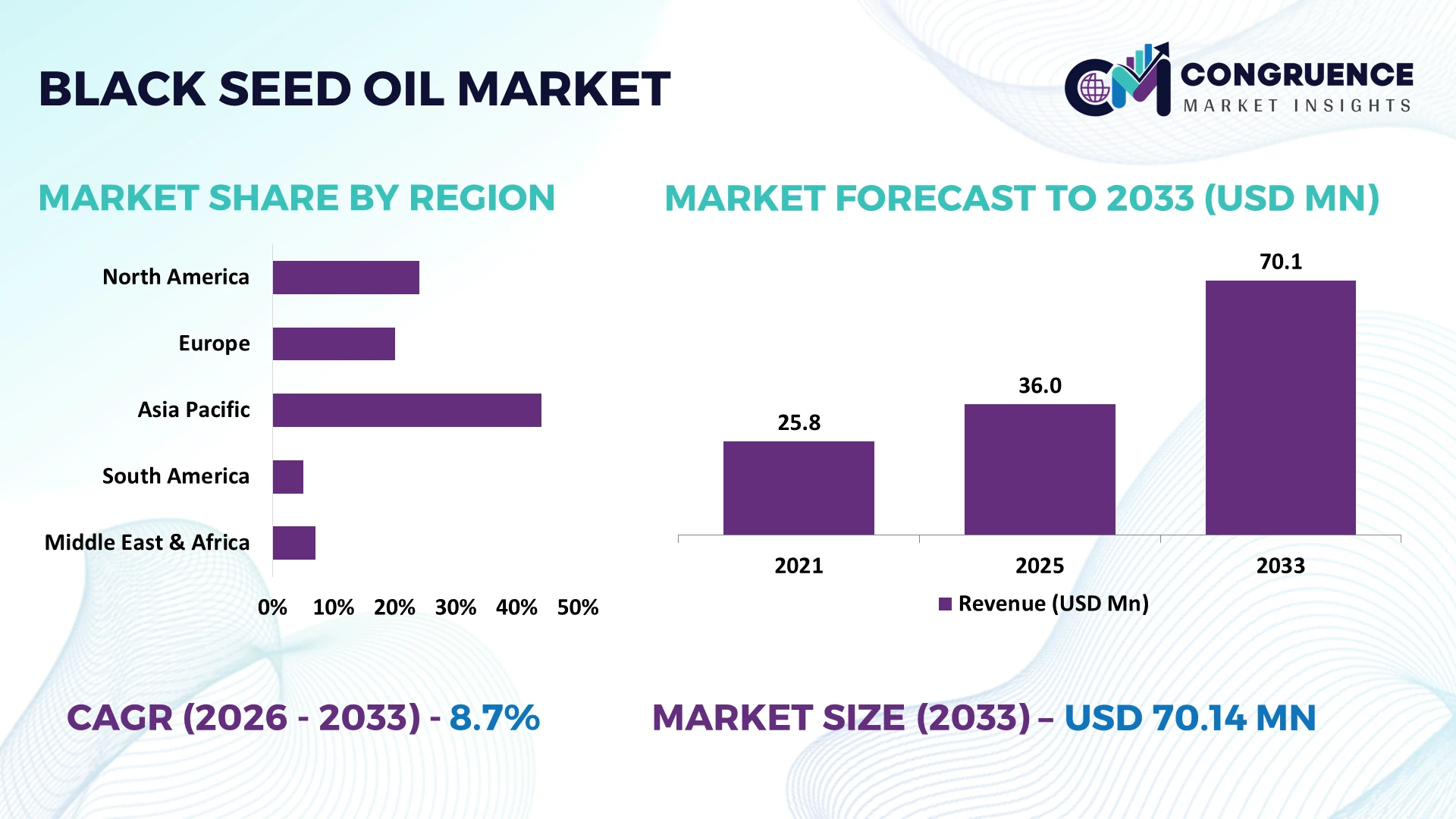
The Global Black Seed Oil Market was valued at USD 35.99 Million in 2025 and is anticipated to reach a value of USD 70.14 Million by 2033 expanding at a CAGR of 8.7% between 2026 and 2033. Growing adoption of cold-pressed extraction, expanding nutraceutical formulations, and wider use in premium personal care products are accelerating commercial demand while strengthening quality-focused global supply chains.
Türkiye remains the dominant production and processing hub, accounting for approximately 28% of global black seed oil output, supported by expanding seed cultivation, modern extraction facilities, and strong food and herbal wellness industries. India follows with nearly 16% of processing capacity, driven by nutraceutical manufacturing and export-oriented production. Ongoing trade diversification across Europe and the Middle East since regional supply-chain disruptions has further reinforced sourcing resilience.
Businesses should prioritize diversified sourcing partnerships, premium extraction technologies, and value-added formulations to strengthen long-term competitive positioning.
Market Size & Growth: USD 35.99 Million (2025) to USD 70.14 Million (2033) at 8.7% CAGR, supported by advanced cold-press processing and expanding nutraceutical manufacturing.
Top Growth Drivers: Functional wellness demand (+24%), premium cosmetic formulations (+19%), and clean-label food applications (+17%) continue strengthening global consumption.
Short-Term Forecast: By 2027, extraction efficiency improves by 14% while production waste declines by 11% through automated processing systems.
Emerging Technologies: AI-driven quality inspection, automated cold-press extraction, and precision filtration improve product consistency by over 15%.
Regional Leaders: Asia Pacific exceeds USD 24 Million through manufacturing expansion, Europe approaches USD 20 Million with clean-label adoption, while North America surpasses USD 15 Million through nutraceutical innovation.
Consumer/End-User Trends: Nearly 46% of premium wellness consumers prefer plant-based functional oils with verified purity and traceable sourcing.
Pilot/Case Example: In 2025, an advanced processing initiative improved extraction yield by 13% while reducing energy consumption by 10%.
Competitive Landscape: Leading producers collectively control approximately 38% of the global market, with KAZIMA Perfumers, Amazing Herbs, Hemani Herbals, Sabinsa Corporation, and Z-Company remaining prominent participants.
Regulatory & ESG Impact: Sustainable sourcing and improved traceability programs reduce operational waste by nearly 12% while supporting stricter international quality requirements.
Investment & Funding: More than USD 90 Million supports processing expansion, strategic partnerships, and regional supply-chain diversification across high-growth markets.
Innovation & Future Outlook: Advanced encapsulation technologies, standardized bioactive formulations, and premium wellness products continue reshaping long-term global market competition.
Growing demand across nutraceuticals, functional foods, cosmetics, and pharmaceutical formulations continues reshaping the Black Seed Oil Market as manufacturers introduce standardized thymoquinone-rich extracts and advanced cold-pressed products. More than 40% of premium product launches now emphasize purity and traceability, while evolving quality compliance requirements and diversified regional sourcing strategies strengthen supply-chain resilience, setting the stage for broader strategic market expansion.
The Black Seed Oil Market is becoming strategically important as manufacturers shift from commodity-based production to standardized, high-purity formulations that address pharmaceutical, nutraceutical, and premium personal care requirements. Supply-chain restructuring following disruptions in agricultural exports has encouraged processors to diversify seed procurement across Türkiye, India, and Egypt while strengthening traceability systems. This transition is improving procurement resilience, supporting premium pricing, and increasing investor interest in vertically integrated extraction and formulation capabilities.
Advanced cold-pressed extraction systems typically improve bioactive compound retention by approximately 18% while reducing processing energy consumption by nearly 12% compared with conventional solvent-based extraction. Türkiye continues to lead commercial-scale production through integrated processing infrastructure, whereas India is expanding value-added manufacturing focused on encapsulated nutraceutical products and export-ready formulations. Over the next two to three years, digital quality monitoring and standardized testing are expected to increase batch consistency by around 20%, supporting stricter compliance with international quality specifications.
A practical example is the deployment of automated filtration and traceability platforms within processing facilities, enabling faster quality verification and reduced product variation. Companies are increasing investments in premium extraction technologies, strategic cultivation partnerships, and contract farming to secure raw material availability. Businesses that combine reliable sourcing, standardized quality, and operational efficiency will strengthen competitive positioning as global buyers increasingly prioritize certified, traceable, and high-performance botanical ingredients.
The increasing commercialization of standardized black seed oil across nutraceutical, pharmaceutical, and premium cosmetic applications remains the primary market driver. More than 45% of new wellness product launches now emphasize botanical ingredients with verified active compound content, while demand for cold-pressed oils has increased by approximately 21% among premium manufacturers. India is expanding nutraceutical production capacity, and Türkiye continues investing in advanced extraction facilities to improve export competitiveness. This structural shift encourages companies to establish long-term cultivation partnerships, modernize extraction technology, and implement digital quality assurance systems, resulting in stronger supply reliability, improved product differentiation, and greater access to regulated international markets.
Seasonal cultivation patterns and inconsistent seed quality continue limiting production efficiency and standardized formulation development. Yield variations of nearly 18% between harvest seasons directly affect extraction consistency, while logistics expenses remain approximately 14% higher in certain import-dependent supply chains. Egypt and other producing countries face periodic climate-related cultivation challenges that influence raw material availability and processing schedules. To reduce operational exposure, manufacturers are diversifying procurement through multiple sourcing locations, strengthening contract farming programs, and increasing localized storage capacity. These measures improve inventory stability, reduce procurement uncertainty, and support more predictable production planning for premium-grade black seed oil.
High-value product innovation is creating significant opportunities beyond traditional retail applications. AI-assisted quality inspection, advanced filtration, and standardized bioactive testing improve batch consistency by approximately 20% while reducing quality control time by nearly 15%. India is accelerating investment in encapsulated nutraceutical ingredients, and Germany continues expanding demand for premium botanical formulations with documented quality specifications. Companies are responding through research collaborations, automated processing upgrades, and strategic partnerships with wellness brands. An emerging opportunity lies in pharmaceutical-grade botanical ingredients, where standardized composition and traceability provide stronger commercial differentiation and higher-value customer relationships.
Maintaining uniform product quality while expanding international operations remains a major execution challenge. Differences in cultivation practices can create active compound variation exceeding 16%, while certification and documentation processes extend export preparation timelines by approximately 10%. Manufacturers also face increasing pressure to implement digital traceability and comply with evolving botanical quality requirements across multiple countries. Companies are investing in laboratory infrastructure, integrated farm-to-factory monitoring, standardized processing protocols, and workforce training to address these issues. Organizations that successfully scale consistent quality management and traceable production systems will achieve stronger long-term competitiveness and greater acceptance in premium regulated markets.
Digital Traceability Expands Rapidly Processors in Türkiye and India are deploying blockchain-enabled traceability and digital batch monitoring, improving lot verification by approximately 22% and reducing documentation time by 18%. Stricter import quality requirements are accelerating implementation, while manufacturers are integrating supplier data platforms and certification workflows to improve buyer confidence and shorten export approval cycles.
Premium Extraction Standardization Companies are replacing conventional processing with advanced cold-press systems and precision filtration, increasing active compound retention by nearly 18% while lowering energy consumption by around 12%. Rising demand for standardized botanical ingredients is encouraging equipment modernization, strategic technology partnerships, and automated quality verification to strengthen production consistency and premium product positioning.
Contract Farming Gains Momentum Supply-chain volatility and climate-related production uncertainty have encouraged manufacturers to expand contract farming programs covering almost 25% more cultivation acreage in key producing countries. Enterprises are restructuring procurement through multi-origin sourcing, digital crop monitoring, and long-term grower agreements, reducing seasonal supply disruptions while improving raw material quality consistency for industrial-scale processing.
Value-Added Formulations Accelerate Encapsulation technologies and customized ingredient blends now represent more than 30% of new premium product development initiatives. Pharmaceutical and nutraceutical manufacturers are collaborating with specialized extract producers to streamline formulation workflows, improve ingredient stability by approximately 15%, and strengthen differentiation through scientifically standardized botanical products designed for regulated international markets.
Cold-Pressed Oil remains the dominant segment, accounting for approximately 39% of the market due to superior bioactive compound retention, minimal processing requirements, and broad acceptance across nutraceutical and cosmetic manufacturing. Companies continue expanding automated cold-press extraction facilities to improve production consistency and reduce quality variation. Organic Oil follows as a premium segment supported by certified cultivation practices, while Virgin Oil maintains strong demand in high-value wellness and personal care applications where purity remains a key purchasing criterion.
Encapsulated Oil represents the fastest-growing segment as pharmaceutical and nutraceutical manufacturers prioritize dosage accuracy, product stability, and convenient consumption formats. Refined Oil continues serving cost-sensitive industrial applications requiring standardized processing characteristics. Companies are increasing investment in encapsulation technology, premium packaging, and standardized extraction protocols, while nearly 27% of new product launches emphasize higher active compound consistency. Investment priorities are increasingly shifting toward premium formulations that deliver stronger differentiation in regulated export markets.
Dietary Supplements account for approximately 42% of total demand, supported by widespread integration into immunity, wellness, and preventive health formulations. Manufacturers continue expanding capsule, softgel, and liquid supplement production while automated filling technologies improve manufacturing efficiency by nearly 16%. Pharmaceuticals represent the fastest-growing application as standardized botanical extracts gain wider acceptance for evidence-based formulation development and higher-quality ingredient sourcing.
Personal Care continues expanding through premium skincare and haircare products emphasizing botanical ingredients, while Functional Foods increasingly incorporate black seed oil into fortified nutrition products. Aromatherapy remains strategically relevant within specialized wellness channels despite comparatively smaller deployment volumes. Around 31% of manufacturers have expanded product portfolios into multiple application categories, strengthening operational flexibility and reducing dependence on individual demand segments through diversified commercialization strategies.
Nutraceutical Companies remain the largest end-user group with approximately 41% market share, driven by extensive manufacturing infrastructure, standardized ingredient requirements, and continuous product portfolio expansion. Pharmaceutical Companies represent the fastest-growing buyers as demand increases for validated botanical ingredients with documented quality specifications. More than 24% of procurement contracts now prioritize long-term sourcing agreements to improve supply continuity and quality consistency.
Cosmetic Manufacturers continue increasing procurement of premium cold-pressed formulations for skincare and haircare applications, while Food & Beverage Manufacturers are gradually incorporating black seed oil into functional nutrition products. Retail Consumers remain an important demand channel through premium packaged oils and wellness products. Companies are responding with customized ingredient grades, strategic distribution partnerships, differentiated pricing models, and integrated product development programs, strengthening customer retention while positioning themselves for expanding demand across multiple industrial ecosystems.
Asia-Pacific accounted for the largest market share at 36.8% in 2025 however, Middle East & Africa is expected to register the fastest growth, expanding at a 9.4% CAGR between 2026 and 2033.
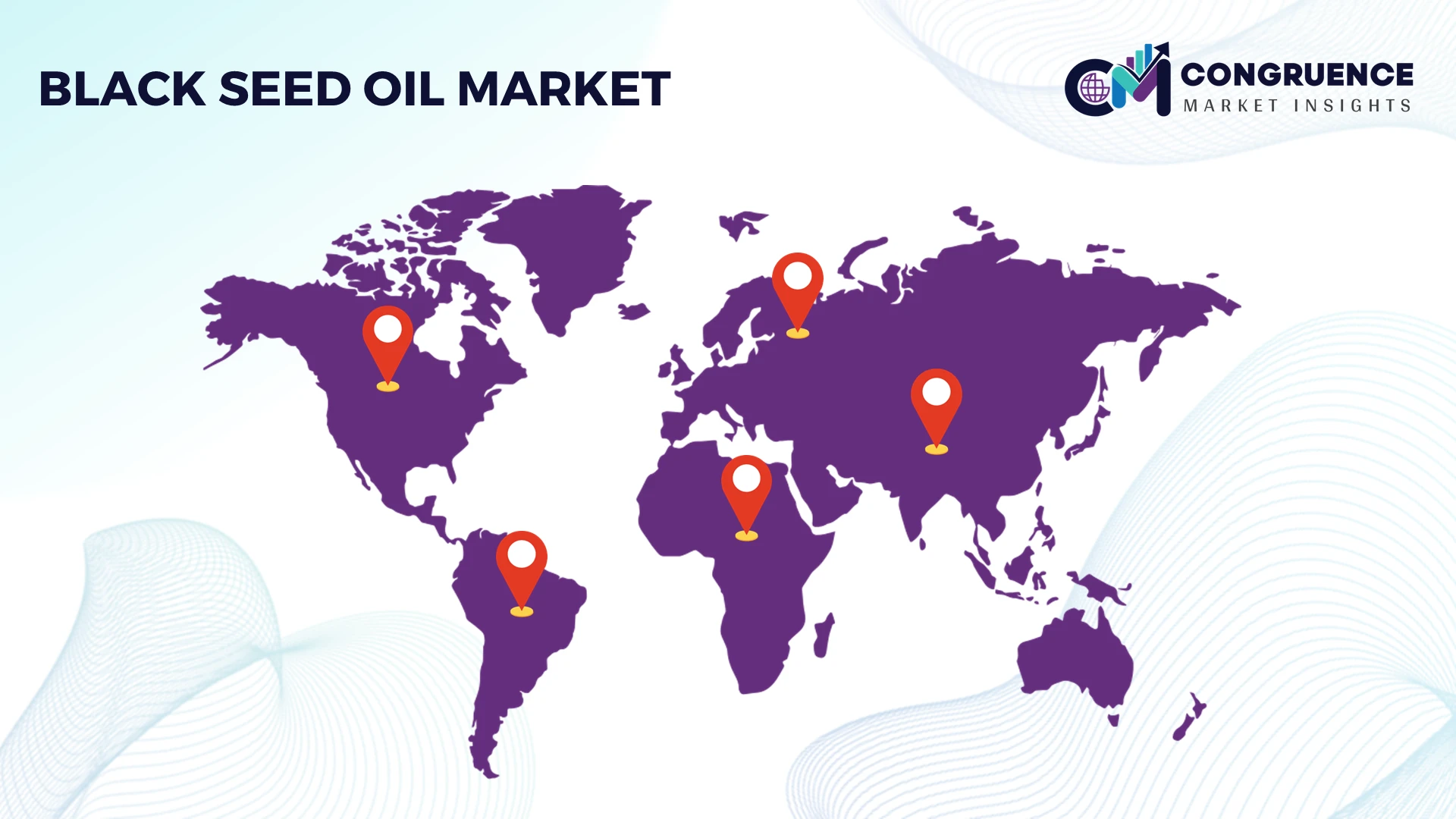
Advanced Nutraceutical Integration Strengthens Demand
North America accounts for approximately 24% of the global Black Seed Oil Market, supported by mature nutraceutical manufacturing, premium personal care production, and stringent ingredient quality standards. Manufacturers continue integrating standardized botanical extracts into high-value wellness formulations while expanding automated filling, encapsulation, and quality verification systems. More than 48% of premium botanical product launches in the region now incorporate traceable plant-derived ingredients. Strategic partnerships between ingredient suppliers and supplement manufacturers are shortening commercialization timelines, while investments in digital quality management improve batch consistency and export readiness. Operational focus remains centered on standardized formulations that satisfy evolving regulatory expectations and premium consumer positioning.
United States Market Outlook: The United States leads regional demand through its extensive nutraceutical manufacturing ecosystem and advanced botanical ingredient processing infrastructure. More than 55% of North American black seed oil formulation activity is concentrated in the country, supported by large-scale supplement manufacturers, contract development organizations, and sophisticated quality assurance systems. Companies continue expanding private-label production, automated encapsulation, and premium wellness portfolios while strengthening long-term procurement partnerships with international botanical suppliers.
Quality Certification Drives Market Expansion
Europe represents nearly 27% of the global market, with demand supported by premium botanical ingredients, clean-label product development, and rigorous product quality frameworks. Standardized extraction and documented traceability have become key procurement requirements across pharmaceutical and cosmetic manufacturers. Nearly 44% of enterprise purchasing decisions now prioritize certified botanical ingredients with verified composition. Companies are modernizing extraction processes, implementing digital documentation systems, and strengthening supplier qualification programs to improve operational transparency. Sustainability initiatives and efficient resource utilization continue influencing manufacturing priorities without compromising product consistency or export competitiveness.
Germany Market Outlook: Germany serves as the region's leading commercial hub through its advanced nutraceutical, pharmaceutical, and natural cosmetics industries. Domestic manufacturers continue investing in standardized botanical formulations, laboratory validation, and automated quality testing. Approximately 30% of premium botanical ingredient imports are processed into value-added formulations within Germany, reinforcing its strategic role in European product development, regulatory compliance, and high-value manufacturing.
Manufacturing Scale Supports Global Supply
Asia-Pacific leads the global market with approximately 36.8% share, supported by extensive processing capacity, competitive manufacturing costs, and expanding nutraceutical production. India and neighboring manufacturing hubs continue increasing investments in automated extraction facilities and standardized processing technologies. More than 40% of regional processing plants have upgraded quality monitoring systems to improve production consistency and export competitiveness. Strong integration between agricultural production, ingredient processing, and finished-product manufacturing enables efficient commercialization while supporting growing international demand for premium botanical ingredients.
India Market Outlook: India has emerged as the region's most influential processing and formulation center due to its large nutraceutical industry, pharmaceutical manufacturing capability, and export-oriented production infrastructure. Automated extraction capacity has expanded by approximately 18% during recent modernization initiatives, while manufacturers continue investing in encapsulation technologies, standardized testing laboratories, and integrated supply-chain partnerships. These developments strengthen India's position as a major supplier of premium black seed oil ingredients for global wellness markets.
Premium Wellness Adoption Accelerates
South America remains an emerging market where expanding wellness awareness and premium botanical product adoption continue strengthening commercial demand. Brazil accounts for the largest deployment activity through growing nutraceutical production and modern retail distribution networks. Approximately 21% of manufacturers have expanded botanical ingredient portfolios to address increasing demand for plant-based wellness products. Infrastructure development remains uneven across several countries, encouraging companies to rely on strategic import partnerships while gradually increasing localized formulation and packaging capabilities to improve operational efficiency.
Brazil Market Outlook: Brazil leads regional commercialization through its established food supplement industry, expanding cosmetic manufacturing base, and broad consumer distribution channels. Manufacturers continue introducing premium botanical formulations supported by automated packaging and improved quality assurance processes. Nearly one-quarter of new wellness product introductions include botanical ingredients, reflecting stronger enterprise investment in differentiated product portfolios and higher-value consumer health offerings.
Processing Investments Transform Regional Supply
The Middle East & Africa is strengthening its strategic position through expanding cultivation, processing modernization, and investment in export-oriented botanical industries. Regional manufacturers are increasing cold-press extraction capacity while improving storage, logistics, and traceability infrastructure. Processing efficiency has improved by approximately 15% following modernization initiatives in leading production hubs. Companies are establishing integrated supply networks that combine cultivation, extraction, and packaging operations, reducing dependency on fragmented procurement and supporting higher-value exports of standardized botanical products.
Türkiye Market Outlook: Türkiye remains the region's leading production and processing hub due to extensive black seed cultivation, advanced extraction facilities, and established export infrastructure. More than 28% of global production originates from Turkish operations, supported by continuous investment in automated processing, standardized quality control, and international certification programs. Manufacturers are expanding strategic partnerships with nutraceutical and cosmetic companies to strengthen long-term export competitiveness and secure premium global supply agreements.
The Black Seed Oil Market is led by KAZIMA Perfumers, Amazing Herbs, Hemani Herbals, Sabinsa Corporation, and Z-Company, with global ingredient specialists competing against regional cold-press producers and private-label botanical manufacturers. The top five players collectively account for approximately 43% of the market, while regional processors compete through localized sourcing and cost-efficient production. Competition is driven by standardized active compound content, traceable supply chains, and extraction technology, with premium formulations achieving nearly 18% higher customer retention and automated processing reducing production variability by around 15%. Leading companies are expanding cultivation partnerships, integrating extraction and packaging operations, and forming formulation alliances with nutraceutical and cosmetic manufacturers. The competitive landscape is shifting toward supply-chain control and vertically integrated business models as quality certification becomes a stronger purchasing criterion. New entrants face significant barriers from raw material standardization, international compliance requirements, and investment in advanced processing infrastructure. Winning requires dependable sourcing, validated product quality, efficient operations, and differentiated value-added formulations rather than competing primarily on price.
KAZIMA Perfumers
Amazing Herbs
Hemani Herbals
Sabinsa Corporation
Z-Company
Flavex Naturextrakte GmbH
Henry Lamotte Oils GmbH
Nature's Blends
BioPraep GmbH
HealthAid Ltd.
ConnOils LLC
The Blessed Seed
Botanica Natural Products
Nature In Bottle
Advanced cold-press extraction, precision filtration, and digital quality monitoring currently define the technological foundation of the Black Seed Oil Market. Compared with conventional solvent extraction, modern cold-press systems improve bioactive compound retention by approximately 18% while lowering processing energy consumption by nearly 12%. Around 46% of premium processing facilities have adopted automated monitoring platforms, enabling tighter quality control, faster batch validation, and stronger compliance with international botanical specifications.
Emerging technologies include AI-assisted quality inspection, blockchain-enabled traceability, and near-infrared spectroscopy for rapid composition analysis. Digital inspection reduces laboratory verification time by approximately 20%, while traceability platforms shorten supplier verification cycles by nearly 17%. Premium nutraceutical and pharmaceutical manufacturers benefit most because standardized ingredient quality supports regulatory readiness, premium pricing, and long-term customer contracts. Integration between cultivation, extraction, testing, and packaging is becoming a key competitive differentiator across international supply chains.
Between 2026 and 2028, automated extraction optimization, predictive equipment maintenance, and digital farm-to-factory platforms will reshape operational performance. Enterprises investing early in intelligent processing technologies are expected to improve overall production efficiency by approximately 15% compared with conventional facilities. Companies that combine standardized extraction, digital traceability, and data-driven quality management will secure stronger export competitiveness, faster commercialization, and greater resilience against tightening international quality requirements.
January 2026 Sabinsa inaugurated its Hassan Unit-2 herbal ingredients manufacturing facility in Karnataka, India, adding its ninth production site with a USD 15 million investment and reserving 30–40% of the land for future expansion, strengthening global botanical ingredient supply capabilities. Source: Sabinsa Asia
February 2026 Sabinsa announced the commercial showcase of its standardized Nigellin® black seed extract alongside advanced nutraceutical ingredients at Natural Products Expo West, reinforcing its science-backed botanical portfolio and supply-chain focus for premium formulation partners. Source: Sami-Sabinsa Group
October 2025 Sabinsa Japan expanded its presence at HI Japan Expo by presenting clinically researched botanical ingredient solutions, including standardized herbal extracts, supporting stronger partnerships with Asian nutraceutical manufacturers and accelerating regional product commercialization initiatives. Source: Sabinsa Europe
June 2026 Sabinsa highlighted Nigellin®, its standardized black seed extract, at SupplySide Connect New Jersey 2026, positioning clinically supported botanical ingredients for fast-growing delivery formats and strengthening innovation across immune and inflammatory health applications. Source: Sabinsa Vietnam
This report delivers a comprehensive assessment of the Black Seed Oil Market across the complete value chain, covering production, processing, formulation, distribution, and end-use commercialization. It analyzes five product types, five application segments, and five end-user categories while providing detailed regional and country-level evaluations across North America, Europe, Asia-Pacific, South America, and the Middle East & Africa. The study also evaluates adoption patterns, processing technologies, supply-chain developments, and competitive positioning across leading manufacturers.
The report examines operational trends including cold-pressed extraction, encapsulation technologies, digital quality monitoring, and traceability systems, with more than 40% of premium product launches emphasizing standardized botanical ingredients. Strategic insights cover investment priorities, sourcing diversification, partnership activity, manufacturing expansion, and technology deployment between 2026 and 2033. The analysis supports business decisions related to market entry, product development, geographic expansion, competitive benchmarking, procurement strategy, and long-term portfolio optimization across established and emerging black seed oil applications.
| Report Attribute/Metric | Report Details |
|---|---|
Market Revenue in 2025 | USD 35.99 Million |
Market Revenue in 2033 | USD 70.14 Million |
CAGR (2026 - 2033) | 8.7% |
Base Year | 2025 |
Forecast Period | 2026 - 2033 |
Historic Period | 2021 - 2025 |
Segments Covered | By Type
By Application
By End-User
|
Key Report Deliverable | Revenue Forecast, Growth Trends, Market Dynamics, Segmental Overview, Regional and Country-wise Analysis, Competition Landscape |
Region Covered | North America, Europe, Asia-Pacific, South America, Middle East, Africa |
Key Players Analyzed | KAZIMA Perfumers, Amazing Herbs, Hemani Herbals, Sabinsa Corporation, Z-Company, Flavex Naturextrakte GmbH, Henry Lamotte Oils GmbH, Nature's Blends, BioPraep GmbH, HealthAid Ltd., ConnOils LLC, The Blessed Seed, Botanica Natural Products, Nature In Bottle |
Customization & Pricing | Available on Request (10% Customization is Free) |




