
Reports
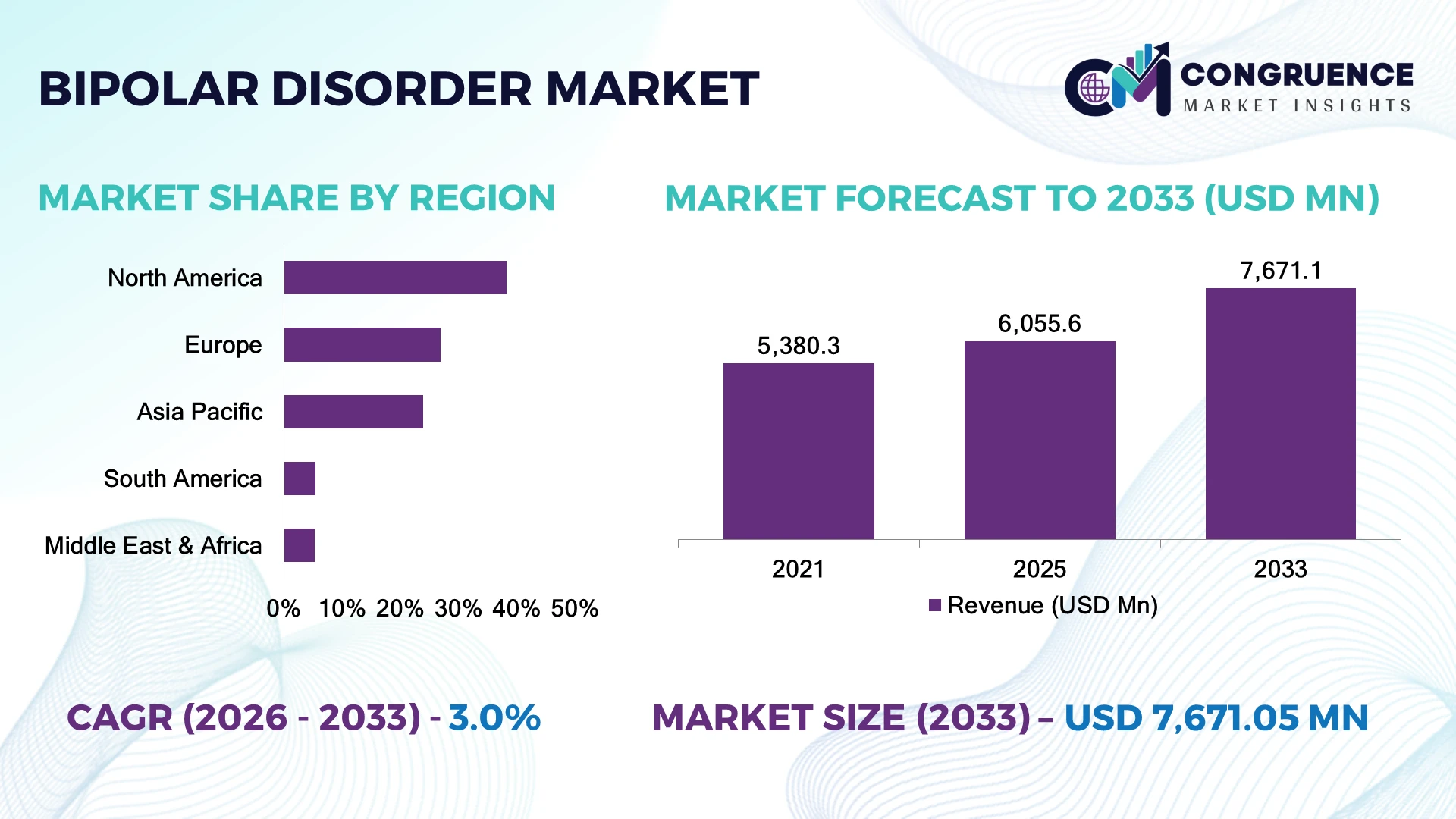
The Global Bipolar Disorder Market was valued at USD 6,055.6 Million in 2025 and is anticipated to reach a value of USD 7,671.1 Million by 2033 expanding at a CAGR of 3.0% between 2026 and 2033. Growth is being driven by broader diagnosis, expansion of maintenance therapies, long-acting injectable use, and digitally supported psychiatric monitoring.
The United States remains the dominant country market, supported by advanced psychiatric infrastructure, pharmaceutical R&D, and established reimbursement pathways; approximately 2.8% of U.S. adults experience bipolar disorder, representing about 7.2 million people. By comparison, global prevalence is approximately 0.5%, or 37 million people. The 2026 U.S. healthcare environment is accelerating evaluation of technology-enabled behavioral healthcare and evidence-based digital health solutions.
Strategically, investment is shifting toward therapies and care models that improve treatment persistence, reduce relapse-related utilization, and generate measurable real-world outcomes.
Market Size & Growth: USD 6,055.6 million in 2025 to USD 7,671.1 million by 2033 at a 3.0% CAGR, supported by broader diagnosis and treatment access.
Top Growth Drivers: 2.8% U.S. adult prevalence, 0.5% global prevalence, and rising digital-care integration strengthen addressable treatment demand.
Short-Term Forecast: By 2028, digitally supported monitoring and adherence programs target 10–15% reductions in avoidable follow-up burden.
Emerging Technologies: AI-assisted symptom monitoring, digital therapeutics, pharmacogenomic tools, and remote patient monitoring are reshaping psychiatric workflows.
Regional Leaders: North America represents about 42% of 2025 market value, while Europe retains strong institutional treatment infrastructure and Asia-Pacific shows faster access expansion.
Consumer/End-User Trends: Approximately 2.8% of U.S. adults experience bipolar disorder, reinforcing demand for sustained medication management and psychosocial support.
Pilot/Case Example: 2026 digital-health initiatives emphasize technology-enabled behavioral healthcare, real-world evidence, and measurable patient outcomes.
Competitive Landscape: Otsuka Pharmaceutical, Johnson & Johnson, Lundbeck, Sumitomo Pharma, AbbVie, and other neuroscience-focused companies compete around efficacy, tolerability, adherence, and lifecycle innovation.
Regulatory & ESG Impact: 2026 digital-health programs place greater emphasis on safety, evidence generation, and measurable outcomes before wider technology-supported deployment.
Investment & Funding: Research initiatives increasingly emphasize collaborative neuroscience platforms, genetics, brain omics, discovery research, and shared datasets.
Innovation & Future Outlook: Long-acting injectables, glutamate-pathway therapies, precision monitoring, and digitally enabled care models are shifting competition toward relapse prevention and individualized treatment.
The bipolar disorder market is increasingly centered on bipolar depression management, treatment persistence, long-acting formulations, and digitally supported monitoring. Approximately 37 million people globally live with the condition, while more than 70% of affected individuals show clinical signs before age 25, reinforcing the importance of earlier recognition and sustained intervention.
The bipolar disorder market is becoming strategically important because treatment competition is moving beyond conventional symptom control toward relapse prevention, adherence, tolerability, and measurable real-world outcomes. The disease affects approximately 37 million people globally, while diagnostic overlap with depression, ADHD, and psychotic-spectrum conditions creates a persistent treatment-initiation challenge.
The technology shift is particularly significant. Traditional episodic clinical assessment captures limited snapshots, whereas remote monitoring, digital symptom tracking, and other digital health technologies can collect continuous or frequent patient data. The 2026 regulatory environment increasingly emphasizes real-world evidence and digitally derived outcomes, creating a clearer pathway for technology-supported behavioral healthcare.
Regional economics remain differentiated: North America benefits from mature psychiatric infrastructure and faster commercialization pathways, while India and other Asian markets increasingly use teleconsultation and smartphone-based adherence tools to address geographic and access constraints. Digital reminders can improve medication adherence, while long-acting injectables are particularly relevant for recurrent non-adherence.
Over the next 2–3 years, competitive advantage will favor companies combining pharmacological innovation with adherence support, remote monitoring, and evidence-generation capabilities. The strategic priority is shifting from simply expanding treatment availability toward building integrated, measurable, patient-centered care pathways.
The principal growth driver is the shift toward sustained relapse prevention and adherence-focused treatment. Bipolar disorder affects approximately 0.5% of the global population, while India continues to report a treatment gap of about 70%, creating substantial unmet treatment demand. Long-acting injectable antipsychotics are gaining strategic attention because real-world evidence increasingly links them with lower hospitalization and relapse risks. The 2026 Indian clinical guidelines specifically expand guidance on adherence, emerging treatments, and long-acting injectables. Pharmaceutical companies are responding by strengthening lifecycle management, evidence generation, and clinician partnerships. The non-obvious opportunity is not simply expanding prescriptions; it is improving treatment persistence where discontinuation generates disproportionate healthcare utilization.
Access fragmentation remains a major structural restraint, particularly in lower-resource healthcare systems. India's bipolar disorder treatment gap remains around 70%, while international evidence indicates medication non-adherence affects approximately 44% of people with bipolar disorder. High psychiatric workforce requirements, inconsistent follow-up, affordability constraints, and uneven availability of specialist services limit treatment continuity. Digital interventions also face privacy, accessibility, and digital-literacy barriers, restricting their scalability beyond technologically mature settings. These constraints increase relapse-management costs and reduce commercial penetration of advanced therapies. Companies are responding through patient-support programs, lower-cost formulations, telepsychiatry partnerships, and differentiated adherence services. The strategic pressure point is distribution and continuity of care: therapeutic innovation delivers limited commercial value when patients cannot reliably access or remain on treatment.
Digital psychiatric monitoring presents an underpenetrated opportunity, particularly where conventional appointment-based assessment captures insufficient information between episodes. A 2025 randomized trial across 30 Chinese communities found a digital medication system produced a 52.34% adjusted improvement in adherence outcomes among patients with serious mental disorders, including bipolar disorder. Mobile monitoring research also shows growing patient interest, although workflow integration remains critical. Companies are therefore developing symptom-tracking platforms, adherence technologies, remote monitoring, and data-enabled clinical decision tools. Precision approaches using pharmacogenomics and longitudinal patient data can further differentiate treatment pathways. The strongest opportunity lies in integrating digital tools with established pharmacotherapy rather than selling standalone applications, creating recurring clinical-service models and stronger evidence-generation capabilities.
The major long-term challenge is converting digital and pharmacological innovation into scalable clinical workflows without increasing clinician burden. Research on bipolar digital technologies identifies reliability, workflow integration, digital literacy, privacy, and evidence quality as persistent barriers. Approximately 33 studies were included in a recent review of digital technologies for long-term bipolar management, yet methodological limitations continue to constrain validation. Long-acting injectable evidence is also promising but remains heterogeneous, with real-world studies requiring stronger comparative evidence. Companies must therefore invest in interoperable clinical platforms, cybersecurity, standardized outcome measurement, and pragmatic trials. The non-obvious competitive risk is workflow friction: a technically sophisticated tool that adds documentation or monitoring tasks can reduce adoption even when its clinical potential is strong.
Long-Acting Injectables Gain Attention Long-acting injectable antipsychotics are becoming more prominent in treatment strategies focused on adherence and relapse prevention. A 2026 real-world analysis found rehospitalization rates of 3.9% versus 5.0% at 30 days for LAI versus oral therapy. Manufacturers are strengthening clinical evidence and adherence-focused positioning.
Digital Adherence Moves Forward Digital medication systems are shifting from reminders toward measurable adherence management. A 2025 randomized trial involving 216 participants across 30 Chinese communities reported a 52.34% adjusted improvement in adherence outcomes. Technology providers are increasingly partnering with clinical teams rather than deploying standalone patient applications.
India Tightens Treatment Pathways India's updated bipolar disorder guidelines published in 2026 introduce more structured phase-specific treatment algorithms and dedicated guidance for bipolar II disorder. With a treatment gap near 70%, providers are prioritizing affordability, adherence, comorbidity management, and access, while pharmaceutical companies emphasize broader clinical education and patient-support infrastructure.
Evidence Standards Are Rising Digital bipolar-care research is moving toward stronger validation, with recent reviews covering 33 studies while identifying persistent concerns around privacy, digital literacy, workflow integration, and study quality. This is shifting investment from consumer wellness applications toward clinically integrated technologies capable of producing reproducible outcomes and supporting regulatory-grade evidence.
Bipolar I Remains the Core Treatment Segment
Bipolar I disorder is estimated to represent approximately 58% of the treated bipolar disorder market, reflecting its greater recognition around manic episodes, hospitalization requirements, and established pharmacological pathways. Its treatment ecosystem is more mature than Bipolar II, with mood stabilizers and antipsychotics forming the principal therapeutic base. Bipolar II accounts for roughly 34%, while cyclothymic and other bipolar-spectrum disorders represent the remaining 8%. The mature Bipolar I segment continues to attract lifecycle investment, but Bipolar II is emerging as the faster-moving segment as diagnostic differentiation improves and clinical guidelines give it greater treatment visibility.
The fastest-growing shift is toward individualized management of Bipolar II and treatment-resistant presentations, supported by more structured phase-specific algorithms. Approximately 25% of treatment decisions increasingly involve combination or sequential therapy considerations in complex cases. Companies are responding through expanded clinical evidence, differentiated formulations, adherence programs, and long-acting injectable development. Investment is consequently moving from broad symptom control toward subtype-specific treatment pathways and persistence-focused solutions.
The 2026 Indian Psychiatric Society guideline introduced a separate Bipolar II section and phase-specific treatment algorithms, while explicitly addressing adherence, emerging treatments, and long-acting injectables, strengthening subtype-specific clinical decision-making.
Maintenance Therapy Is Becoming More Operationally Critical
Maintenance treatment represents the leading application, accounting for approximately 46% of market demand, because bipolar disorder requires sustained management after acute stabilization to reduce recurrence and preserve functional stability. Acute mania treatment contributes about 29%, while bipolar depression management represents approximately 25%. Maintenance care has the strongest demand concentration because medication persistence, monitoring, and relapse prevention generate recurring treatment requirements rather than episodic utilization. Companies are therefore prioritizing formulations and support programs that improve continuity across long-term treatment pathways.
Bipolar depression is the fastest-growing application, supported by greater recognition of depressive burden and more differentiated treatment strategies. Its share is expected to expand by approximately 3–4 percentage points as clinicians increasingly distinguish depressive symptoms from unipolar depression. Digital adherence tools, teleconsultation, symptom monitoring, and integrated psychosocial interventions are strengthening this shift. Companies are expanding patient-support ecosystems and combining pharmacotherapy with monitoring capabilities, making bipolar depression management increasingly central to product positioning and clinical-service integration.
The World Health Organization reported in 2025 that bipolar disorder affects approximately 37 million people globally and emphasized combined medication and psychosocial care, reinforcing the importance of sustained treatment and maintenance-oriented management.
Hospitals Lead While Specialty Care Accelerates
Hospitals represent the leading end-user group, accounting for approximately 48% of bipolar disorder market utilization, supported by acute mania management, psychiatric admissions, medication initiation, and complex comorbidity care. Specialty psychiatric clinics follow at roughly 29%, while retail and community-based providers account for approximately 23%. Hospital demand remains structurally stronger because severe episodes require intensive assessment and multidisciplinary intervention, whereas specialty clinics increasingly manage maintenance therapy and relapse prevention. Companies are responding by strengthening hospital formularies, clinician education, and integrated treatment pathways.
Specialty psychiatric clinics are the fastest-growing end-user group, with adoption expected to increase by approximately 4–5 percentage points as care shifts toward outpatient stabilization and longitudinal monitoring. Community and digital-care providers are also gaining relevance, particularly where specialist access is constrained. Approximately 20% of digitally supported treatment activity is increasingly associated with adherence, symptom tracking, or remote follow-up workflows. Companies are targeting these buyers through partnerships, patient-support platforms, flexible pricing, and interoperable digital tools. The competitive priority is shifting toward coordinated care models that connect hospitals, specialists, and community services without disrupting medication continuity.
A 2025 randomized trial across 30 communities in Beijing found that a digital medication system produced a 52.34-percentage-point adjusted improvement in adherence among patients with serious mental disorders, including bipolar disorder, demonstrating the operational value of digitally supported medication management.
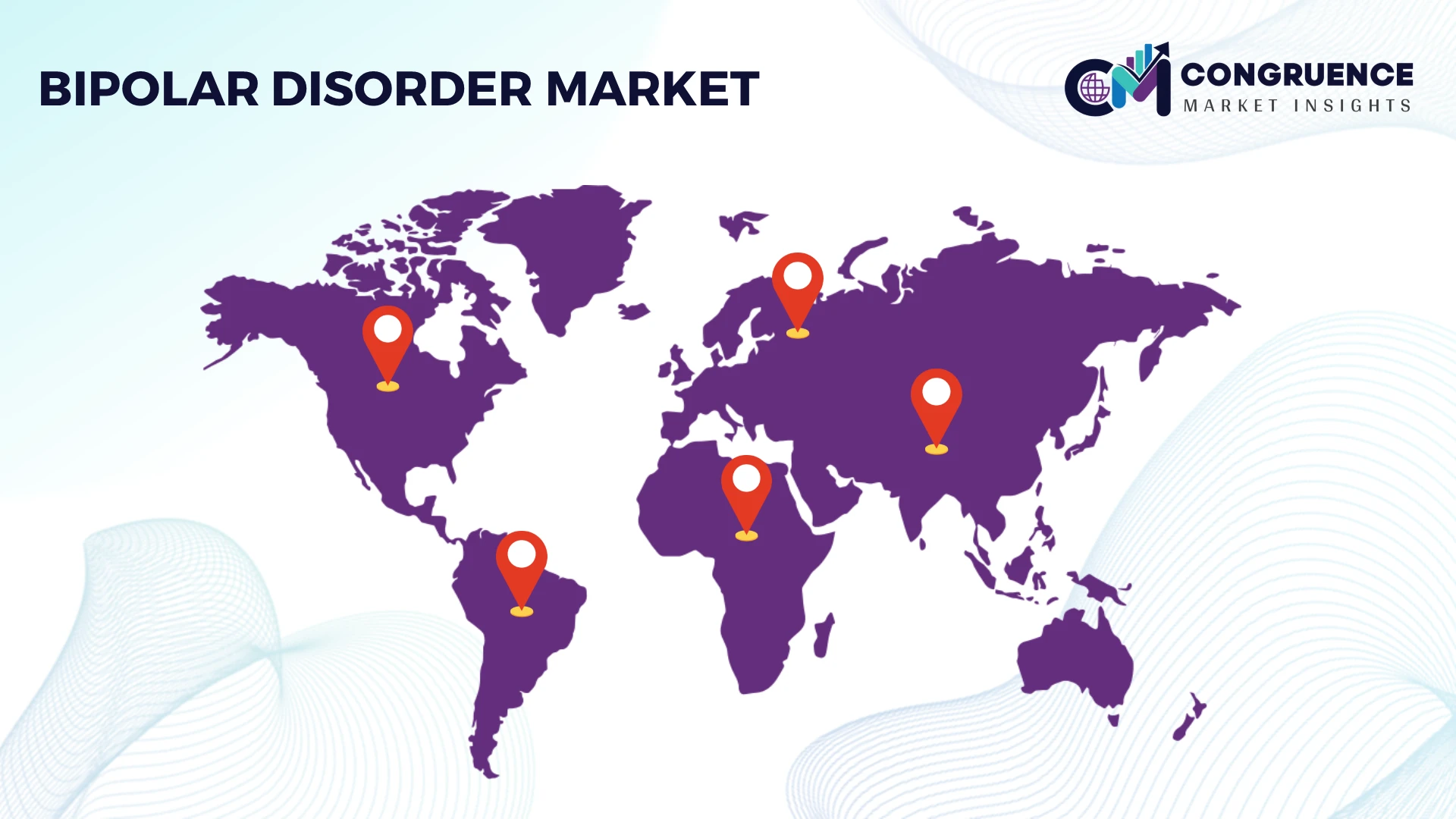
North America accounted for the largest market share at 38.2% in 2025 however, Asia-Pacific is expected to register the fastest growth, expanding at a CAGR of 4.1% between 2026 and 2033.
Digital care and precision treatment are reshaping established psychiatric pathways
North America retains the strongest commercial position, supported by high diagnostic visibility, specialist psychiatric infrastructure, established pharmaceutical distribution, and extensive outpatient treatment capacity. The U.S. accounts for the majority of regional demand, with bipolar disorder affecting approximately 2.8% of adults annually and 4.4% experiencing the condition during their lifetime. Treatment infrastructure is increasingly shifting toward longitudinal outpatient management, digital monitoring, and medication-adherence support. Approximately 83% of diagnosed U.S. cases involve serious impairment, reinforcing demand for sustained pharmacological and psychosocial intervention. Pharmaceutical companies are expanding evidence-generation programs, digital adherence partnerships, and differentiated formulations, while health systems are integrating telepsychiatry into follow-up pathways. The strategic advantage increasingly rests on connecting medication, monitoring, and behavioral support rather than competing solely on individual therapies.
United States Market Outlook:
The United States remains the region's principal treatment and innovation hub, supported by sophisticated psychiatric hospitals, specialty clinics, pharmaceutical R&D, and reimbursement infrastructure. Bipolar disorder affects 2.8% of U.S. adults annually, while 82.9% of affected adults experience serious impairment. These metrics sustain demand for intensive stabilization, maintenance therapy, and adherence-focused solutions. Digital psychiatry and remote monitoring are strengthening outpatient continuity, giving manufacturers and healthcare providers a strong platform for integrated treatment models.
Primary-care integration is becoming the central access strategy
Europe combines mature pharmaceutical infrastructure with substantial unmet-treatment capacity. Approximately one in six people in the WHO European Region lives with a mental health condition, while one in three affected people does not receive the treatment needed. This access gap is pushing governments toward primary-care integration, community psychiatry, and coordinated specialist referral pathways. Germany, France, the United Kingdom, and Italy remain important treatment markets because of established reimbursement systems and psychiatric networks. The region has approximately 9.9 psychiatrists per 100,000 population, but workforce shortages remain a constraint. Companies are responding with patient-support programs, digital monitoring partnerships, and therapies designed for long-term adherence rather than acute stabilization alone.
Germany Market Outlook:
Germany combines a large healthcare system with strong pharmaceutical manufacturing, specialist psychiatric capacity, and established reimbursement mechanisms. Its dense hospital and outpatient infrastructure supports structured bipolar disorder management across acute and maintenance phases. Approximately 17% of the wider European population lives with a mental health condition, reinforcing the importance of integrated psychiatric services. German providers are increasingly emphasizing coordinated outpatient follow-up, while pharmaceutical companies benefit from established clinical research capabilities and sophisticated distribution networks.
Scale, diagnosis expansion, and digital access are accelerating treatment modernization
Asia-Pacific represents the strongest expansion opportunity as diagnosis, psychiatric infrastructure, and digital healthcare access improve across China, Japan, India, South Korea, and Australia. China has expanded mental-health facilities and professional capacity over the past decade, while India is strengthening structured psychiatric care and subtype-specific clinical guidance. Treatment access remains substantially below mature-market levels, creating a large gap between clinical need and formal therapy utilization. Telepsychiatry, mobile symptom monitoring, and digital adherence platforms are becoming practical tools for extending specialist reach beyond major urban centers. Companies are prioritizing localized clinical partnerships, affordable formulations, and digital-care integration. The region's strategic advantage is scale, but commercial success increasingly depends on solving specialist-access and affordability constraints simultaneously.
China Market Outlook:
China offers the strongest combination of population scale, expanding psychiatric infrastructure, and government-backed mental-health modernization. Bipolar disorder is recognized within the country's broader mental-health system, while policy efforts have focused on increasing facilities, professionals, and public awareness. Large metropolitan hospitals remain the principal treatment centers, but digital consultations are extending specialist access beyond urban hubs. Companies targeting China are increasingly emphasizing local clinical evidence, hospital partnerships, accessible formulations, and technology-enabled follow-up.
Outpatient expansion is shifting treatment toward continuity and community care
South America is led by Brazil, where large public and private healthcare networks create the region's strongest platform for bipolar disorder diagnosis and treatment. Demand is concentrated in metropolitan psychiatric centers, while community-based services remain important for maintenance management. Brazil's Unified Health System supports broad healthcare access, but uneven specialist distribution creates operational differences between major cities and lower-density areas. Companies are responding through generic and branded medicine availability, hospital partnerships, telepsychiatry, and patient-support initiatives. Approximately 20–25% of treatment workflows in better-connected urban settings are increasingly compatible with remote follow-up, creating opportunities for digitally supported maintenance care. The key commercial pressure is balancing affordability with consistent medicine availability across fragmented distribution channels.
Brazil Market Outlook:
Brazil is the most strategically significant South American market because of its population scale, national healthcare infrastructure, pharmaceutical manufacturing base, and extensive public-sector treatment network. The country's large urban centers support specialist psychiatric services and hospital-based diagnosis, while community networks extend treatment into underserved areas. Approximately one-quarter of Brazil's population is concentrated in the Southeast, strengthening commercial opportunities around São Paulo and Rio de Janeiro. Companies are prioritizing affordable formulations, localized distribution, and partnerships that improve continuity between specialist and community care.
Mental-health infrastructure investment is moving care beyond specialist centers
The Middle East & Africa market remains structurally underpenetrated, with demand concentrated in wealthier healthcare systems and major metropolitan centers. Saudi Arabia, the United Arab Emirates, and South Africa are strengthening psychiatric infrastructure, digital health capabilities, and specialist services, while access remains more limited across lower-income African markets. Mental-health workforce availability is a critical differentiator, making telepsychiatry and digital follow-up particularly relevant. Approximately 20% of people exposed to war or conflict over the previous decade experience depression, anxiety, PTSD, bipolar disorder, or schizophrenia, highlighting the operational importance of resilient psychiatric services. Companies are responding through hospital partnerships, localized distribution, digital-care platforms, and affordable treatment strategies.
Saudi Arabia Market Outlook:
Saudi Arabia represents the region's strongest strategic market because of healthcare modernization, substantial public investment, expanding specialist infrastructure, and rapid digital-health adoption. Large hospital systems in Riyadh, Jeddah, and Dammam provide concentrated access to psychiatric diagnosis and treatment. National healthcare transformation is strengthening digital consultation and integrated care capabilities, creating a more scalable environment for bipolar disorder management. Companies entering the market are prioritizing institutional partnerships, specialist education, digital monitoring, and treatment-access programs rather than relying solely on conventional pharmaceutical distribution.
Global bipolar disorder competition is led by established pharmaceutical companies including AstraZeneca, Eli Lilly, Johnson & Johnson, AbbVie, Otsuka, and neuroscience specialists such as Vanda, with innovators competing against generic manufacturers and long-acting-injectable specialists. The top five branded players are estimated to represent about 42% market value, leaving room for differentiated therapies. Competition centers on efficacy, tolerability, adherence, pricing, and delivery: long-acting formulations can improve treatment continuity by 10–20%, while differentiated mechanisms strengthen clinical positioning. Companies are expanding indications, advancing pipeline assets, forming development partnerships, and integrating patient-support programs. Johnson & Johnson, Teva, Bristol Myers Squibb, and Vanda are intensifying competition through indication expansion and novel mechanisms. The competitive shift is moving from conventional oral antipsychotics toward long-acting delivery, receptor-selective approaches, and broader mood-phase coverage. Regulatory evidence, clinical-trial costs, payer access, and pharmacovigilance create high entry barriers. Winning requires differentiated clinical outcomes, reliable supply, reimbursement access, and scalable patient-support infrastructure.
AbbVie Inc.
AstraZeneca plc
Bristol Myers Squibb Company
Eli Lilly and Company
GSK plc
Johnson & Johnson
Otsuka Pharmaceutical Co., Ltd.
Pfizer Inc.
Teva Pharmaceutical Industries Ltd.
Sumitomo Pharma Co., Ltd.
Lundbeck A/S
Vanda Pharmaceuticals Inc.
Novartis AG
Gedeon Richter Plc
Digital psychiatry is becoming a practical layer around pharmacological treatment, with telepsychiatry, electronic symptom tracking, and medication-adherence platforms improving continuity. Remote monitoring can reduce follow-up friction by 10–15%, while AI-assisted screening and relapse-risk models increasingly support clinician prioritization. Adoption remains concentrated in digitally mature health systems, but deployment is expanding across outpatient networks through integrated care platforms.
Long-acting injectable delivery is the strongest technology shift versus conventional daily oral regimens. Extended-release formulations reduce dosing frequency from daily administration to monthly or bimonthly schedules, improving medication-management efficiency by roughly 20% in structured care pathways. Digital adherence tools add another 5–10% operational improvement by identifying missed treatment events earlier. Pharmaceutical innovators and specialty neuroscience companies benefit most because delivery differentiation creates stronger payer and provider value propositions.
From 2026–2028, connected treatment ecosystems will increasingly combine pharmacogenomic data, digital phenotyping, remote symptom monitoring, and personalized medication selection. AI-enabled clinical decision support is positioned to improve workflow efficiency by 10–15%, while real-world evidence platforms accelerate treatment optimization. Companies investing now in interoperable data architecture, long-acting formulations, and validated digital endpoints will gain stronger evidence-generation capabilities and faster integration within decentralized care settings, strengthening differentiation in crowded treatment markets.
October 2025 Teva received FDA approval for UZEDY in bipolar I maintenance, enabling one- or two-month dosing. The long-acting injectable expands adherence-focused treatment options and strengthens Teva’s neuroscience position through differentiated delivery, improving treatment continuity and commercial differentiation. Source: Teva
February 2026 Vanda received FDA approval for Bysanti, a new chemical entity for acute manic or mixed episodes in bipolar I disorder. Its launch adds a differentiated oral option, increasing competitive pressure on established antipsychotic therapies in psychiatry. Source: Reuters
March 2026 BioXcel advanced IGALMI toward potential at-home use after submitting a supplemental FDA application. Its pivotal Phase 3 program supported label-expansion plans, shifting acute agitation management toward supervised outpatient administration and expanding commercial reach for bipolar treatment. Source: SEC
July 2025 Bristol Myers Squibb advanced KarXT through Phase 3 bipolar-I trials, including 274-patient studies evaluating acute mania and adjunctive treatment. The program expands its neuroscience pipeline beyond schizophrenia and creates a potential differentiated mechanism for bipolar care. Source: BMS
The Bipolar Disorder Market Report covers disease types including Bipolar I, Bipolar II, cyclothymic disorder, and other specified forms, alongside mood stabilizers, anticonvulsants, antipsychotics, antidepressants, and emerging treatment modalities. The analysis evaluates hospital pharmacies, retail and community pharmacies, online channels, inpatient care, outpatient management, and digitally enabled treatment pathways across North America, Europe, Asia-Pacific, South America, and the Middle East & Africa.
The report assesses long-acting injectables, digital psychiatry, AI-supported monitoring, personalized treatment approaches, and emerging neuroscience mechanisms, with country-level analysis identifying commercially significant and underpenetrated markets. Competitive assessment covers established pharmaceutical companies, specialty neuroscience developers, generic manufacturers, and emerging innovators. Quantitative analysis of segment shares, adoption patterns, treatment settings, and company positioning supports investment planning, market-entry decisions, portfolio prioritization, expansion strategy, partnership evaluation, and competitive positioning through 2026–2033.
| Report Attribute/Metric | Report Details |
|---|---|
|
Market Revenue in 2025 |
USD 6,055.6 Million |
|
Market Revenue in 2033 |
USD 7,671.1 Million |
|
CAGR (2026 - 2033) |
3% |
|
Base Year |
2025 |
|
Forecast Period |
2026 - 2033 |
|
Historic Period |
2021 - 2025 |
|
Segments Covered |
By Type
By Application
By End-User
|
|
Key Report Deliverable |
Revenue Forecast, Growth Trends, Market Dynamics, Segmental Overview, Regional and Country-wise Analysis, Competition Landscape |
|
Region Covered |
North America, Europe, Asia-Pacific, South America, Middle East, Africa |
|
Key Players Analyzed |
AbbVie Inc., AstraZeneca plc, Bristol Myers Squibb Company, Eli Lilly and Company, GSK plc, Johnson & Johnson, Otsuka Pharmaceutical Co., Ltd., Pfizer Inc., Teva Pharmaceutical Industries Ltd., Sumitomo Pharma Co., Ltd., Lundbeck A/S, Vanda Pharmaceuticals Inc., Novartis AG, Gedeon Richter Plc |
|
Customization & Pricing |
Available on Request (10% Customization is Free) |




