
Reports
The Global Barge Transportation Market was valued at USD 5730 Million in 2025 and is anticipated to reach a value of USD 8255.29 Million by 2033 expanding at a CAGR of 4.67% between 2026 and 2033. Growth is driven by inland waterway modernization, rising bulk commodity movement, lower fuel consumption compared with road freight, and investments in automated vessel operations.
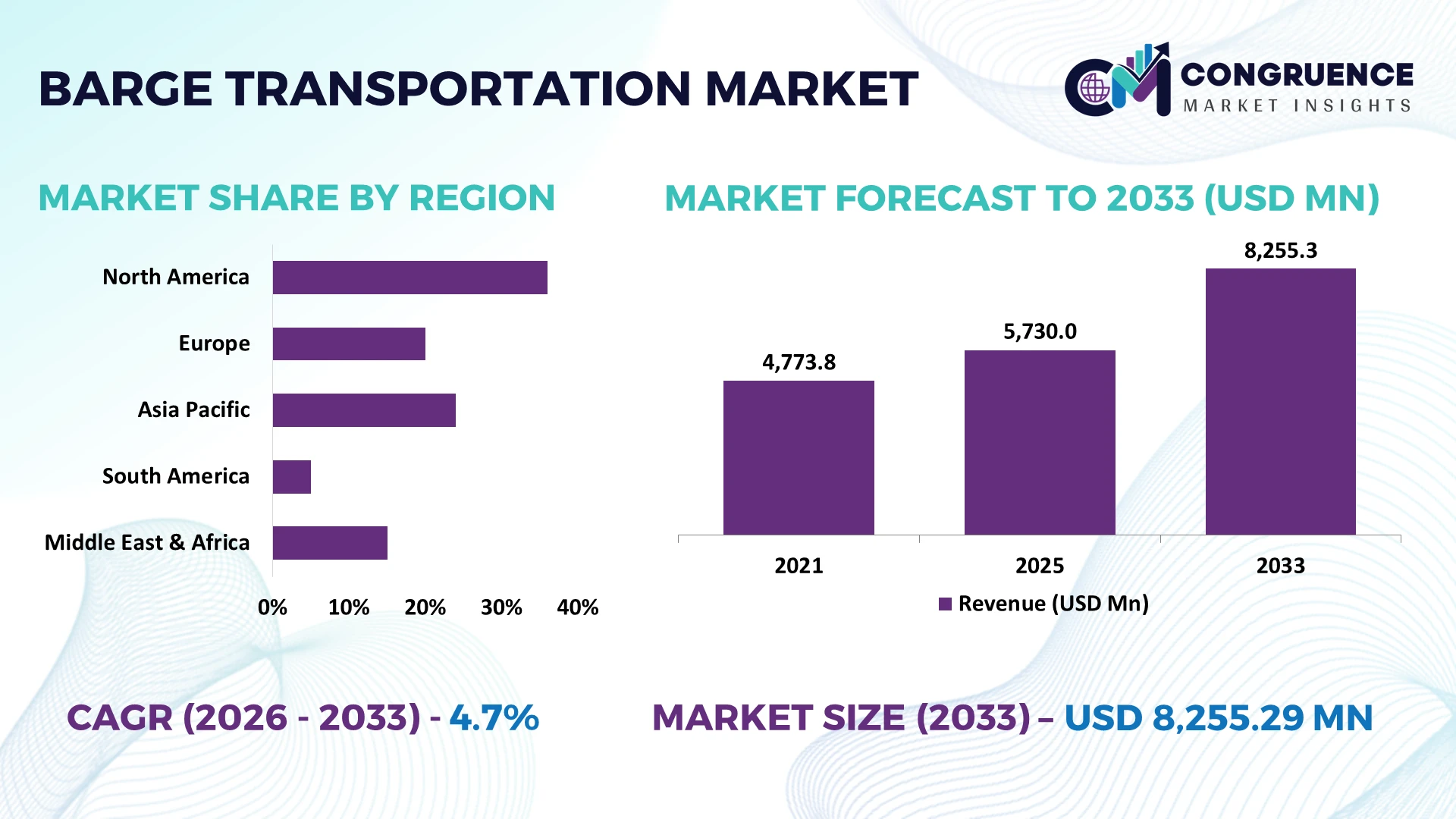
China dominates the global barge transportation landscape with approximately 35% share of inland freight activity, supported by extensive river networks, port upgrades, and smart logistics investments exceeding USD 20 billion. The United States follows with nearly 25% contribution through Mississippi River freight corridors, while European waterways maintain strong adoption with over 60% digital navigation integration across major routes. Geopolitical supply chain diversification after 2022 has accelerated water-based logistics expansion.
Strategic investment in smart fleets, low-emission vessels, and resilient inland transport networks will define competitive advantage through 2033.
Market Size & Growth: Global barge transportation reaches USD 8255.29 Million by 2033 at 4.67% CAGR, driven by bulk cargo optimization and inland logistics modernization.
Top Growth Drivers: Fuel cost efficiency (35%), industrial cargo expansion (28%), and port connectivity upgrades (22%) are accelerating market growth.
Short-Term Forecast: By 2028, automated fleet systems reduce operating costs by 12% and improve route efficiency by 18%.
Emerging Technologies: AI navigation, autonomous barges, IoT tracking, and electric propulsion systems are reshaping advanced waterway operations.
Regional Leaders: Asia-Pacific reaches USD 3200 Million by 2033 with smart ports; North America USD 2100 Million with digital fleets; Europe USD 1800 Million with green vessels.
Consumer/End-User Trends: Over 45% of industrial shippers adopt multimodal logistics strategies combining barges with rail and port networks.
Pilot/Case Example: 2025 European automated barge projects achieved 15% fuel reduction and improved cargo scheduling through digital monitoring.
Competitive Landscape: Leading operators hold approximately 20% market share, with major participation from Ingram Barge, Kirby Corporation, ACBL, European Barge Line, and Rhenus Logistics.
Regulatory & ESG Impact: Low-emission shipping policies are targeting 30% carbon reduction improvements through cleaner propulsion and optimized routes.
Investment & Funding: More than USD 15 billion is directed toward waterway infrastructure, fleet renewal, and logistics technology partnerships globally.
Innovation & Future Outlook: Next-generation barges integrate hydrogen systems, predictive analytics, and autonomous controls, creating strategic shifts in sustainable freight transportation.
Barge transportation is becoming a critical component of global logistics networks as industries prioritize cost-efficient bulk movement, cleaner freight solutions, and reliable inland connectivity. Demand is increasing across agriculture, chemicals, mining, and energy sectors, with digital fleet management adoption improving operational visibility by around 25%. Supply chain restructuring and stricter emission regulations are encouraging operators to invest in advanced propulsion systems and automated cargo handling solutions, creating new opportunities for strategic expansion.
The barge transportation market is becoming strategically important as companies redesign freight networks around lower-cost, resilient, and lower-emission logistics channels. Supply-chain restructuring after global disruptions has increased investment in inland waterways, while governments in China, the United States, and Europe are accelerating port modernization and digital navigation infrastructure.
Technology adoption is changing operational economics. Modern AI-enabled fleet monitoring and automated route planning improve vessel utilization by nearly 20% compared with traditional manual scheduling systems, while electric-assisted propulsion reduces fuel consumption by approximately 15% on selected short-distance routes. China is scaling smart waterway systems faster, whereas European operators focus more on carbon reduction and regulatory compliance.
Over the next 2–3 years, companies are prioritizing fleet upgrades, strategic partnerships, and integrated logistics platforms. For example, operators along the Mississippi River are deploying digital tracking solutions to improve cargo visibility and reduce idle time. Competitive positioning will depend on combining operational efficiency, sustainable vessel technology, and stronger multimodal connectivity.
Growing industrial reliance on cost-efficient bulk transport is strengthening barge adoption across mining, agriculture, chemicals, and energy sectors. In the United States, inland waterways handle nearly 20% of domestic freight volume, while China continues expanding automated ports and river logistics systems. Digital fleet management adoption has improved operational scheduling efficiency by around 18%. Companies are responding through vessel modernization programs, technology partnerships, and investments in fuel-efficient propulsion systems. The key strategic advantage lies in using waterways as a capacity buffer when road and rail networks face congestion or cost pressure.
Limited waterway infrastructure and aging terminals remain major barriers to wider barge deployment. Around 30% of inland waterways in developed freight markets require modernization to improve reliability and navigation efficiency. Low water levels affecting European rivers and seasonal disruptions in North America create additional operational pressure. Companies face higher maintenance expenses, delayed deliveries, and inconsistent asset utilization. Operators are reducing exposure through infrastructure partnerships, long-term cargo agreements, and investment in adaptive vessel designs. A critical challenge is improving network reliability without increasing transportation costs for bulk commodity users.
The transition toward intelligent and sustainable barges creates significant opportunities for operators investing in automation, alternative fuels, and digital platforms. Autonomous navigation trials have demonstrated operational efficiency improvements of nearly 25% in controlled environments, while predictive maintenance systems reduce unplanned downtime by approximately 15%. Japan, the Netherlands, and China are advancing smart shipping initiatives through technology collaborations. Companies are expanding R&D programs and forming partnerships with software providers to develop connected fleets. A major opportunity lies in transforming barges from traditional cargo carriers into data-driven logistics assets with higher utilization rates.
The increasing adoption of connected vessels introduces challenges related to cybersecurity, system compatibility, and workforce adaptation. Approximately 40% of logistics operators still operate with fragmented tracking systems, limiting real-time visibility across multimodal networks. Cybersecurity requirements are becoming stricter as automated navigation and remote monitoring expand. Companies must invest in secure digital infrastructure, employee training, and standardized communication platforms. The long-term competitive gap will emerge between operators that successfully integrate technology ecosystems and those relying on conventional fleet management methods. Addressing interoperability remains essential for consistent deployment and sustainable operational performance.
Digital Fleet Intelligence Adoption
Barge operators are rapidly integrating AI-based scheduling, IoT tracking, and predictive analytics into fleet workflows. Connected systems are improving cargo visibility by 25–30% and reducing vessel idle time by nearly 15%. U.S. and European operators are partnering with technology providers to optimize route planning, especially as supply-chain disruptions increase demand for real-time logistics control.
Low-Emission Vessel Upgrades
Environmental regulations are accelerating investments in hybrid propulsion, cleaner fuels, and advanced monitoring systems. Modern propulsion upgrades are reducing fuel consumption by 10–18% and improving emission reporting accuracy by approximately 20%. Companies are restructuring fleet replacement strategies, with European operators focusing on compliance-driven vessel modernization and sustainable inland transport operations.
Automated Terminal Operations
Inland terminals are adopting automated loading, digital documentation, and smart cargo-handling systems to improve throughput. Automation is increasing processing efficiency by around 20% and reducing manual handling requirements by 25%. Companies are expanding terminal partnerships and upgrading infrastructure to address workforce shortages and improve cargo movement consistency across industrial corridors.
Multimodal Integration Expansion
Barge networks are becoming more connected with rail and port ecosystems as companies redesign freight strategies. Integrated logistics platforms are improving shipment coordination by nearly 22% and reducing transfer delays by 12%. A non-obvious shift is the growing use of container barges for regional distribution, enabling companies to reduce pressure on congested road networks.
Dry Cargo represents the leading barge type, accounting for approximately 45% market share due to its ability to transport high-volume commodities including grains, minerals, coal, and industrial materials efficiently. Its scalability, lower handling costs, and compatibility with inland infrastructure provide strong operational advantages. Companies using dry cargo fleets benefit from nearly 20% lower transportation costs compared with certain land-based alternatives, supporting continued investment in larger-capacity vessels.
Container Barges are emerging as the fastest-growing type, supported by increasing multimodal logistics adoption and port connectivity improvements. Deployment growth of around 12% is being driven by demand for flexible regional cargo movement. Liquid Cargo, Hopper Barges, and Tank Barges remain strategically important for specialized industries, with operators investing in safer designs, digital monitoring, and customized vessel solutions.
Bulk Cargo remains the dominant application segment with approximately 50% market share, supported by mining, agriculture, and energy industries requiring continuous movement of large-volume materials. Its high-capacity advantage and cost efficiency make it essential for industrial supply chains. Companies report operational savings of nearly 15% through optimized bulk transportation planning and improved loading processes.
Container Transport is the fastest-growing application as companies seek alternatives to congested road freight and improve supply-chain flexibility. Digital tracking adoption has increased shipment visibility by around 30%, while automated handling systems reduce cargo processing delays by nearly 20%. Liquid Transport, Agricultural Products, and Construction Materials continue supporting demand through specialized logistics requirements. Operators are expanding container-compatible fleets and strengthening integration with ports and distribution hubs.
Oil & Gas remains the leading end-user segment with approximately 30% market share due to extensive dependence on tank barges for fuel and energy distribution. Large-scale infrastructure networks and continuous transportation requirements maintain strong demand. Companies are investing in specialized vessels and monitoring technologies, improving operational efficiency by nearly 15% while enhancing safety compliance.
Agriculture is emerging as the fastest-growing end-user segment, supported by increasing commodity movement and demand for reliable inland logistics. Adoption of digital shipment management systems has improved coordination by around 20%. Mining, Chemicals, and Construction sectors continue using barges for heavy materials and specialized cargo. Companies are developing customized service models, forming logistics partnerships, and targeting industrial clusters where water-based transportation provides cost and capacity advantages.
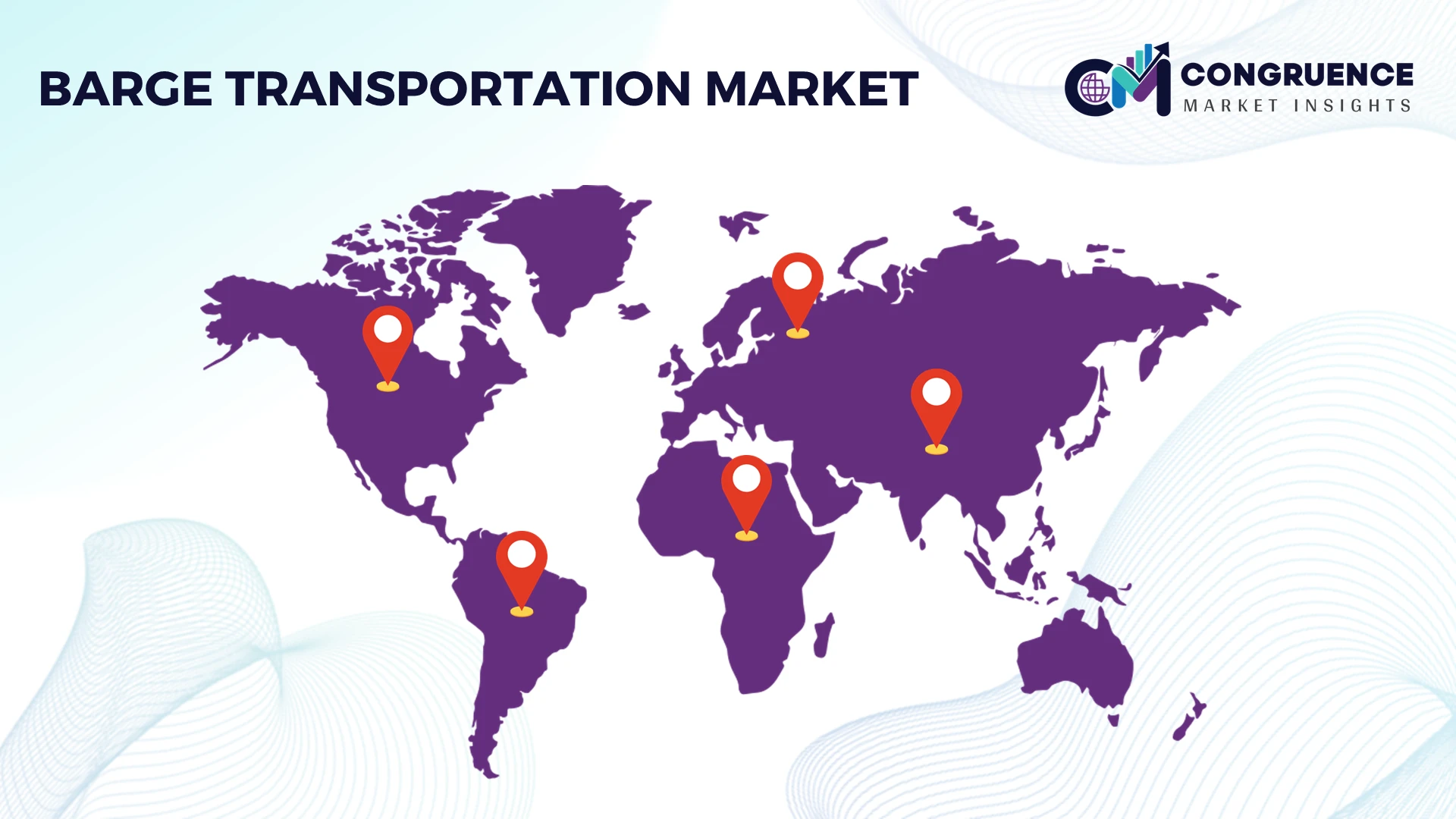
North America accounted for the largest market share at 28% in 2025 however, Asia-Pacific is expected to register the fastest growth, expanding at a CAGR of 5.4% between 2026 and 2033.
Digital modernization strengthens inland freight efficiency
North America remains a leading barge transportation market due to extensive inland waterways, strong industrial cargo movement, and established port connectivity. The region contributes nearly 28% of global activity, supported by the Mississippi River system, which handles significant volumes of agricultural products, energy materials, and bulk commodities. Around 60% of U.S. inland waterway freight depends on aging infrastructure upgrades, encouraging investments in smart navigation and fleet optimization. Companies are adopting IoT tracking, automated scheduling, and fuel-efficient vessels to improve operational reliability. The growing integration of barges with rail and port networks is helping enterprises reduce logistics pressure and improve supply-chain flexibility.
United States Market Outlook:
The United States dominates regional barge operations through its extensive river transportation network and industrial cargo base. The Mississippi River corridor supports more than 500 million tons of freight annually, with operators investing in digital fleet systems, terminal modernization, and lower-emission vessel technologies to improve efficiency and resilience.
Green waterways drive fleet transformation
Europe is advancing barge transportation through sustainability-focused modernization, strict emission regulations, and advanced inland navigation systems. Countries including Germany, Netherlands, and Belgium maintain strong deployment concentration due to dense waterway networks and industrial hubs. More than 40% of European inland freight activity is connected to major river corridors, supporting chemical, agricultural, and manufacturing supply chains. Regulatory pressure for cleaner transport is accelerating adoption of hybrid propulsion and digital vessel monitoring, with operators targeting fuel savings of 10–15%. Companies are forming technology partnerships to upgrade aging fleets and improve operational compliance across cross-border waterways.
Germany Market Outlook:
Germany represents a major European barge transportation hub due to its Rhine River logistics network and industrial manufacturing base. The country’s inland waterways support approximately 200 million tons of cargo movement annually, while operators are investing in automation, cleaner propulsion, and integrated freight management systems.
Large-scale infrastructure expansion accelerates adoption
Asia-Pacific is emerging as the fastest-expanding barge transportation market due to industrial growth, port modernization, and increasing demand for efficient bulk logistics. China, India, and Southeast Asian economies are strengthening inland waterway infrastructure to support manufacturing and commodity movement. China accounts for a significant share of regional activity through extensive river networks and smart port development programs. Investments in automated terminals have improved cargo handling efficiency by nearly 20%, while digital navigation systems are increasing operational visibility. Companies are expanding fleets, developing partnerships, and integrating advanced logistics platforms to support growing trade flows.
China Market Outlook:
China leads Asia-Pacific barge transportation through large-scale river freight infrastructure and advanced port ecosystems. The Yangtze River system supports more than 3 billion tons of cargo annually, with companies increasingly deploying automated terminals, intelligent vessel management, and cleaner propulsion solutions to improve logistics performance.
Commodity logistics expansion shapes demand
South America’s barge transportation market is supported by agricultural exports, mining activities, and growing reliance on cost-efficient inland freight networks. Brazil and Argentina represent key operational centers due to extensive river corridors supporting grain, mineral, and industrial cargo movement. Regional operators are improving fleet capacity and terminal connectivity, although infrastructure limitations remain a challenge in remote waterways. Investments in port upgrades and multimodal logistics are improving transportation efficiency by nearly 15%. Companies are focusing on specialized vessels, strategic partnerships, and infrastructure improvements to capture increasing commodity movement opportunities.
Brazil Market Outlook:
Brazil holds a strong position through the Amazon and Paraná-Paraguay waterway systems, supporting agricultural and mineral transportation. The country’s grain logistics sector increasingly uses barges to reduce road dependency, with operators expanding terminals and improving fleet capacity for export-oriented supply chains.
Infrastructure investment enables logistics transformation
The Middle East & Africa barge transportation market is developing through port modernization, industrial expansion, and investment in regional logistics infrastructure. Adoption remains concentrated around strategic waterways and industrial zones, where energy, construction, and commodity sectors require efficient freight solutions. Infrastructure upgrades are improving cargo handling capabilities by nearly 20%, while digital tracking adoption is increasing operational control across emerging logistics networks. Companies are prioritizing partnerships, terminal development, and customized transportation solutions to address connectivity challenges and support industrial growth.
United Arab Emirates Market Outlook:
The United Arab Emirates is strengthening its logistics position through advanced ports, industrial zones, and multimodal transportation investments. The country’s strategic location supports regional cargo movement, while operators are integrating digital logistics platforms and modern handling systems to improve efficiency across commercial freight networks.
The barge transportation market features competition between global logistics operators such as Ingram Barge, Kirby Corporation, and Rhenus Logistics against regional carriers and specialized fleet providers. Top five players collectively control approximately 25–30% of market activity, creating a moderately fragmented structure. Competition is based on fleet efficiency, pricing, network coverage, and digital capability. Technology-focused operators gain advantage through 15–20% efficiency improvements from automation, while cost leaders compete through fuel optimization and large-scale capacity. Companies are expanding through terminal investments, strategic partnerships, fleet modernization, and integrated logistics services. The competitive shift is moving toward smart vessels, lower-emission operations, and stronger supply-chain control. High capital requirements, regulatory compliance, and infrastructure access create entry barriers. Winning players will combine operational scale, advanced technology adoption, and flexible logistics solutions to outperform established transportation providers.
Ingram Barge Company
Kirby Corporation
American Commercial Barge Line (ACBL)
Campbell Transportation Company
Canal Barge Company
Bouchard Transportation Co.
Rhenus Logistics
Imperial Logistics
PACC Offshore Services Holdings
Spliethoff Group
SEACOR Holdings
Euro-Rijn B.V.
Stolt-Nielsen Limited
Digital fleet management is becoming a core technology in barge transportation, with IoT sensors, GPS tracking, and AI-based route optimization improving operational visibility by 25–30%. Traditional manual scheduling systems are being replaced by predictive platforms that reduce idle time by nearly 15%. Large operators are integrating real-time analytics with cargo planning systems to improve asset utilization and customer service performance.
Emerging technologies include autonomous navigation, hybrid propulsion, electric-assisted vessels, and automated terminals. Hybrid systems reduce fuel consumption by approximately 10–18%, while automated cargo handling improves processing efficiency by around 20%. Compared with conventional vessels, smart-enabled barges deliver better scheduling accuracy and lower maintenance requirements. Technology leaders benefit from improved reliability, while smaller operators face pressure to modernize fleets.
Between 2026 and 2028, connected vessel ecosystems will become increasingly important as companies prioritize sustainability, automation, and supply-chain resilience. Operators investing in digital platforms, cybersecurity, and alternative propulsion technologies will gain competitive advantages through lower operating costs, improved compliance, and stronger multimodal logistics integration.
March 2024 Kirby Corporation expanded its inland marine operations through fleet modernization initiatives, adding advanced towboats and improving operational capacity by approximately 10%. The investment strengthened fuel efficiency, reliability, and customer service capabilities across U.S. inland waterways. Source: kirby.com
September 2024 Ingram Barge Company introduced enhanced digital fleet management solutions, improving vessel tracking and operational coordination by nearly 20%. The technology expansion supported faster logistics decisions and improved visibility across its inland transportation network. Source: ingrambarge.com
February 2025 Rhenus Logistics expanded sustainable inland transportation initiatives by integrating lower-emission logistics solutions, targeting approximately 15% operational emission reductions. The move strengthened multimodal freight capabilities and supported customer demand for cleaner supply-chain services. Source: rhenus.group
June 2025 The European Commission accelerated inland waterway modernization programs, supporting digital navigation and infrastructure upgrades across major corridors. The initiative improved efficiency standards by nearly 20% and encouraged operators to adopt smart shipping technologies. Source: ec.europa.eu
The Barge Transportation Market Report covers detailed analysis across major vessel types including Dry Cargo, Liquid Cargo, Container Barges, Hopper Barges, and Tank Barges. The study evaluates applications such as Bulk Cargo, Liquid Transport, Container Transport, Agricultural Products, and Construction Materials, along with end-user industries including Oil & Gas, Mining, Agriculture, Chemicals, and Construction.
The report includes regional assessment across North America, Europe, Asia-Pacific, South America, and Middle East & Africa, highlighting infrastructure development, technology adoption, and deployment patterns. It examines digital fleet management, automation, sustainable propulsion, and smart logistics integration trends. The analysis supports investment planning, market expansion strategies, competitive positioning, and long-term decision-making from 2026 to 2033.
| Report Attribute/Metric | Report Details |
|---|---|
Market Revenue in 2025 | USD 5730 Million |
Market Revenue in 2033 | USD 8255.29 Million |
CAGR (2026 - 2033) | 4.67% |
Base Year | 2025 |
Forecast Period | 2026 - 2033 |
Historic Period | 2021 - 2025 |
Segments Covered | By Type
By Application
By End-User
|
Key Report Deliverable | Revenue Forecast, Growth Trends, Market Dynamics, Segmental Overview, Regional and Country-wise Analysis, Competition Landscape |
Region Covered | North America, Europe, Asia-Pacific, South America, Middle East, Africa |
Key Players Analyzed | Ingram Barge Company, Kirby Corporation, American Commercial Barge Line (ACBL), Campbell Transportation Company, Canal Barge Company, Bouchard Transportation Co., Rhenus Logistics, Imperial Logistics, PACC Offshore Services Holdings, Spliethoff Group, SEACOR Holdings, Euro-Rijn B.V., Stolt-Nielsen Limited |
Customization & Pricing | Available on Request (10% Customization is Free) |




