
Reports
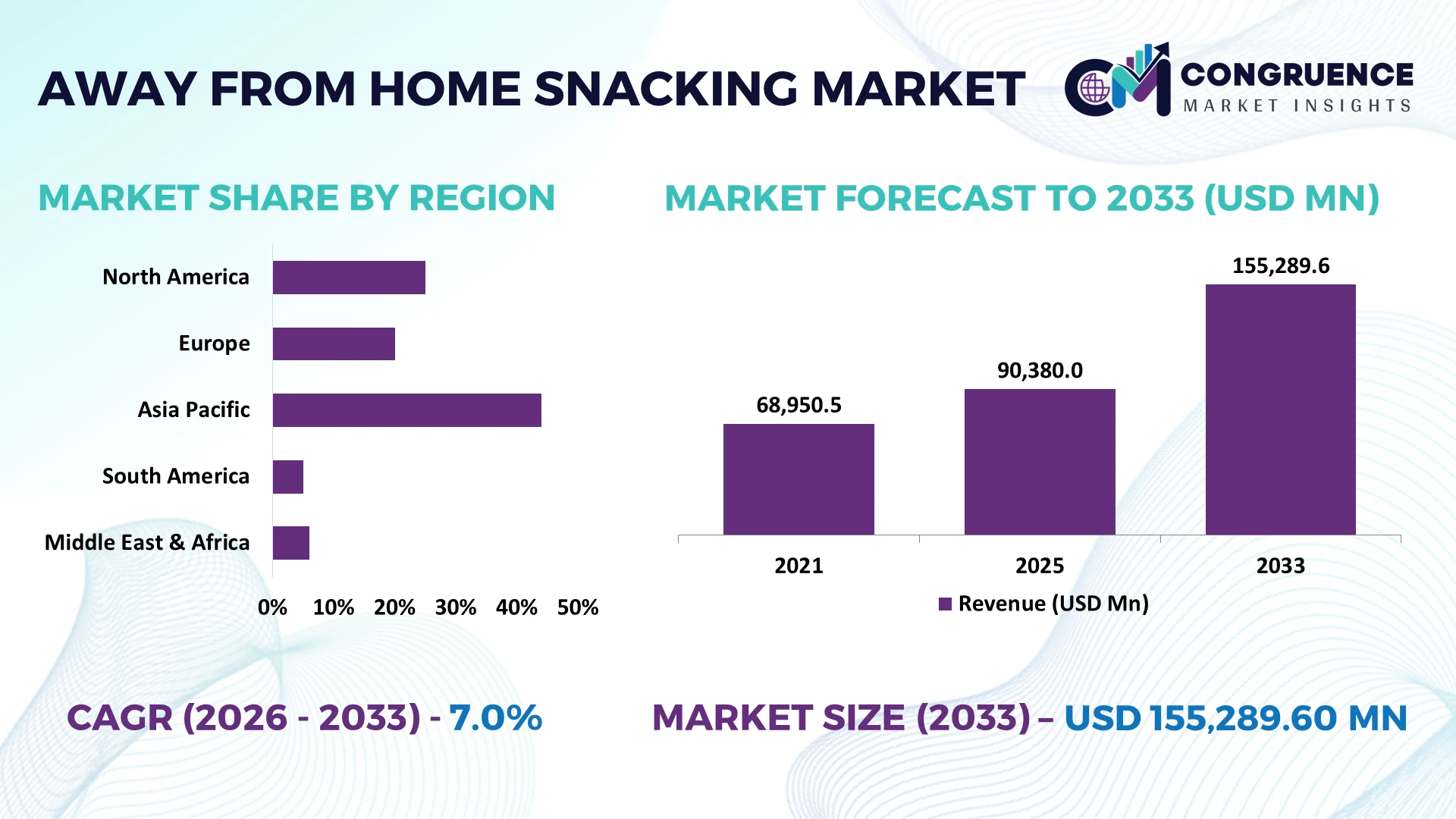
The Global Away From Home Snacking Market was valued at USD 90380 Million in 2025 and is anticipated to reach a value of USD 155289.6 Million by 2033 expanding at a CAGR of 7% between 2026 and 2033. Growth is driven by convenience store foodservice expansion, automated vending deployment, mobile ordering integration, and increasing snack purchases during commuting, workplace attendance, and recreational activities.
The United States dominates commercial away from home snacking infrastructure, supported by more than 152,000 convenience stores in 2025 and extensive quick service restaurant networks. Approximately 63% of American convenience stores are independently operated, creating opportunities for distributed snack suppliers and technology providers. Compared with China, where mobile payment integration strengthens automated retail, the United States benefits from established fuel retail and foodservice infrastructure. Operators are investing in self checkout, digital loyalty platforms, and refrigerated grab and go merchandising to improve transaction speed and product availability.
Strategic implication: Companies integrating high traffic retail locations, automated replenishment, and convenient snack formats gain stronger distribution economics and competitive positioning.
Market Size & Growth: USD 90,380 million in 2025, reaching USD 155,289.6 million by 2033 at 7% CAGR, supported by convenience retail expansion and automated snack distribution.
Top Growth Drivers: Modeled contributions include convenience retail penetration at 40%, workplace snacking at 32%, and travel consumption at 28%.
Short Term Forecast: By 2028, AI inventory forecasting targets 12% lower stockouts and 10% faster replenishment across advanced snack retail networks.
Emerging Technologies: AI demand forecasting, cashless vending, and computer vision checkout target 15% faster transactions and improved inventory visibility.
Regional Leaders: Illustrative 2033 allocations place North America at USD 55,904 million, Asia Pacific at USD 49,693 million, and Europe at USD 35,717 million, supported by convenience stores, mobile commerce, and automated vending.
Consumer / End User Trends: A modeled 35% purchase frequency concentration among commuters and workplace consumers highlights the importance of accessible snack distribution.
Pilot / Case Example: A proposed 2027 smart vending deployment targets 15% fewer stockouts through automated inventory monitoring and digital replenishment.
Competitive Landscape: PepsiCo represents a major participant; a hypothetical 12% segment share illustrates competition with Mondelēz, Nestlé, Mars, and Kellanova.
Regulatory & ESG Impact: European packaging regulations encourage recyclable formats, with optimized packaging programs targeting 15% lower material consumption.
Investment & Funding: An illustrative USD 250 million investment scenario prioritizes automated retail equipment, refrigerated merchandising, and digital distribution partnerships.
Innovation & Future Outlook: By 2033, connected vending, personalized promotions, and automated micro markets target 20% higher operational productivity.
The Away From Home Snacking Market is increasingly shaped by convenience stores, transportation hubs, workplaces, educational institutions, and entertainment venues. Consumers prioritize portable packaging, immediate product availability, and convenient digital payments, encouraging manufacturers to develop single serving snacks, protein enriched products, and differentiated flavor formats. Smart vending machines and connected retail systems improve inventory visibility, with optimized replenishment programs targeting approximately 12% fewer stockouts. In the United States, convenience retail infrastructure supports broad distribution, while China's mobile payment ecosystem accelerates unattended retail adoption. These operational developments are redefining competitive priorities across snack manufacturing, merchandising, and last mile distribution.
The Away From Home Snacking Market is becoming strategically important as convenience retailers, foodservice operators, and packaged snack manufacturers compete for consumer spending across workplaces, transportation hubs, and recreational venues. The United States operates more than 152,000 convenience stores, providing extensive infrastructure for immediate consumption products. Digital payments, automated merchandising, and integrated distribution networks are reshaping purchasing behavior. Companies are prioritizing high traffic locations, product availability, and faster checkout systems to strengthen transaction frequency and operational efficiency.
Technology integration is transforming snack retail economics. Compared with manual inventory monitoring, AI enabled replenishment systems can target 10% to 15% fewer stockouts under optimized operating conditions. Cashless vending and automated checkout reduce transaction friction while improving purchasing convenience. China's established mobile payment ecosystem supports unattended retail expansion, whereas Germany emphasizes automated vending and workplace foodservice infrastructure. Between 2026 and 2028, advanced operators are targeting 12% faster inventory replenishment and improved product availability through connected merchandising systems.
A practical deployment involves installing connected vending machines in corporate offices, integrating digital payments, and monitoring product movement through centralized dashboards. Manufacturers are strengthening partnerships with facility operators and investing in localized snack assortments. Competitive advantage increasingly depends on distribution density, reliable replenishment, and technology enabled purchasing convenience.
Expansion of convenience stores, transportation retail, and workplace foodservice infrastructure is strengthening away from home snack purchasing. The United States operates more than 152,000 convenience stores, creating extensive distribution opportunities for packaged snacks and ready to eat products. Industry estimates indicate that approximately 63% of American convenience stores are independently operated, encouraging manufacturers to develop flexible distribution partnerships. Automated replenishment systems target 10% to 15% fewer stockouts, while digital merchandising improves product visibility and purchasing convenience. China's widespread mobile payment infrastructure is accelerating unattended retail integration. Snack manufacturers are expanding single serving product portfolios, strengthening convenience retail partnerships, and investing in demand forecasting technology. Distribution accessibility and consistent product availability increasingly determine competitive performance.
Away from home snacking operators face structural pressure from ingredient price fluctuations, transportation expenses, and fragmented retail distribution. Cocoa supply disruptions in West Africa have increased procurement uncertainty for chocolate snack manufacturers, while edible oil and packaging material prices influence savory snack production economics. For operators working with illustrative gross margins of 25%, a 5% increase in product procurement costs can materially reduce profitability without corresponding price adjustments. Smaller convenience retailers also face distribution inefficiencies, with fragmented deliveries potentially increasing handling expenses by 10% to 15% compared with consolidated routes. Manufacturers are responding through diversified ingredient sourcing, regional warehousing, and negotiated supply contracts. Efficient route density and procurement flexibility remain critical for protecting margins across high frequency snack distribution networks.
Connected micro markets and automated workplace retail present opportunities to capture snack purchases beyond conventional convenience stores. Smart shelving, digital payments, and AI demand forecasting enable unattended purchasing while reducing dependence on staffed checkout operations. Optimized micro market deployments target 15% lower replenishment costs and 10% fewer inventory shortages compared with manually monitored vending operations. India presents opportunities through expanding corporate campuses, technology parks, and organized commercial infrastructure in Bengaluru, Hyderabad, and Pune. Operators are developing subscription based workplace snack programs, digitally managed assortments, and automated inventory replenishment partnerships. Between 2026 and 2028, connected retail providers are prioritizing scalable deployment models and personalized product recommendations. The strongest opportunity lies in converting underutilized workplace locations into recurring, data informed purchasing environments.
Scaling automated snack retail networks requires reliable payment integration, equipment maintenance, cybersecurity controls, and consistent inventory synchronization across dispersed locations. Connected vending systems depend on network availability, secure transaction processing, and compatible inventory management platforms. Operators targeting 99% equipment availability must coordinate preventive maintenance, payment connectivity, and remote diagnostics. A 2% increase in equipment downtime can disrupt purchasing access and reduce location productivity. India's expanding digital retail infrastructure creates deployment opportunities but also requires integration across multiple payment providers and facility management systems. Companies are investing in centralized monitoring, standardized equipment interfaces, and specialized technical support partnerships. Long term competitiveness depends on maintaining operational reliability while expanding connected retail networks without proportionate increases in servicing complexity.
Protein Enriched Snacking Gains Shelf Space: United States snack manufacturers are expanding protein focused assortments across convenience stores and travel retail outlets. Products containing 10 to 20 grams of protein per serving increasingly differentiate premium snack portfolios. Retailers are adjusting shelf allocation and merchandising strategies to accommodate functional nutrition preferences. Manufacturers are investing in reformulation, portion controlled packaging, and partnerships with convenience distributors, strengthening product differentiation and improving assortment profitability.
Smaller Portions Reshape Snack Packaging: Food manufacturers are introducing portion controlled snack formats to address calorie awareness and affordability pressures. Single serving products commonly contain 25 to 50 grams, while selected snack formulations target 100 to 200 calories per pack. United Kingdom packaging regulations and nutritional labeling requirements reinforce transparent product information. Companies are redesigning multipack configurations, optimizing package weights, and expanding smaller formats to improve purchasing accessibility and inventory turnover.
Travel Retail Assortments Become More Localized: Airport and railway retailers are tailoring snack portfolios to passenger demographics, journey duration, and destination preferences. Commercial merchandising increasingly distinguishes 2 purchasing occasions: immediate consumption and journey provisions. Indian railway retail operators are expanding packaged regional snack selections, while airport concessionaires combine international brands with local specialties. Suppliers are adjusting product assortments and distributor partnerships to improve location relevance, reduce unsold inventory, and strengthen purchasing conversion.
Premium Flavor Innovation Accelerates Product Rotation: Snack manufacturers are introducing limited edition flavors and regionally inspired formulations to maintain consumer interest across competitive retail environments. Product development teams increasingly evaluate 2 commercial indicators: repeat purchase performance and promotional conversion. South Korean and Japanese snack brands emphasize distinctive savory flavors and seasonal product releases. Manufacturers are accelerating formulation testing, coordinating retailer launches, and refining promotional calendars to increase shelf productivity without relying exclusively on permanent assortment expansion.
Savory Snacks represent the leading product category, accounting for an estimated 38% of the global Away From Home Snacking Market. Potato chips, extruded snacks, crackers, and flavored savory products benefit from established manufacturing capacity, ambient storage compatibility, and extensive convenience retail distribution. Their portability and immediate consumption characteristics support strong purchasing frequency across transportation hubs and commercial locations. Sweet Snacks hold an estimated 25% share, supported by chocolate, confectionery, and packaged dessert products. Manufacturers are adjusting portion sizes and introducing differentiated flavor profiles to protect product visibility in competitive retail environments.
Protein Snacks represent the fastest growing category, supported by increasing demand for convenient nutrition and products containing 10 to 20 grams of protein per serving. Bakery Snacks retain relevance through pastries, muffins, and packaged baked products, particularly in workplace and travel settings. Fruit and Nut Snacks attract consumers seeking recognizable ingredients and convenient portion control. Manufacturers are investing in protein formulation, packaging innovation, and distribution partnerships. Competitive priorities increasingly favor products combining nutritional differentiation, shelf stability, and strong merchandising performance.
On-the-Go Consumption represents the largest application segment, accounting for an estimated 36% of global away from home snacking activity. Convenience stores, urban retail outlets, and transportation adjacent locations support frequent purchases among consumers seeking immediate food availability. Portable packaging, accessible merchandising, and rapid checkout processes strengthen this segment's commercial position. Workplace Snacking accounts for approximately 24%, supported by office cafeterias, corporate foodservice operations, and employee purchasing occasions. Food manufacturers are tailoring product sizes and nutritional profiles to accommodate different consumption environments while strengthening partnerships with institutional distributors.
Travel Snacking represents the fastest growing application, supported by airport passenger activity, railway travel, and expanding transportation retail infrastructure. School and College Snacking remains important through campus cafeterias and institutional vending arrangements, where affordability and nutritional standards influence purchasing decisions. Social and Leisure Snacking benefits from cinemas, entertainment venues, and recreational facilities. Operators are developing location specific assortments and coordinated replenishment schedules. Investment priorities increasingly emphasize high traffic travel locations, diversified product portfolios, and improved merchandising efficiency across institutional consumption channels.
Retail Consumers represent the dominant end user category, accounting for an estimated 34% of global Away From Home Snacking Market demand. Their purchasing activity concentrates across convenience stores, transportation retail outlets, and accessible commercial locations. Product availability, portion size, brand familiarity, and immediate consumption convenience influence purchasing decisions. Office Workers account for approximately 23%, supported by workplace cafeterias, corporate snack programs, and recurring consumption during working hours. Manufacturers are differentiating products through convenient packaging, functional nutrition, and customized assortments suited to workplace purchasing patterns.
Travelers represent the fastest growing end user segment, benefiting from expanding airport infrastructure, railway passenger activity, and organized travel retail operations. Students contribute through school cafeterias, university retail outlets, and campus foodservice channels, where affordability and nutritional requirements shape purchasing behavior. Foodservice Operators represent institutional purchasing customers that prioritize dependable supply, standardized packaging, and predictable inventory requirements. Companies are strengthening distributor partnerships, developing travel focused product formats, and adjusting institutional pricing strategies. Competitive advantage increasingly depends on matching product specifications with distinct purchasing occasions and distribution environments.
North America accounted for the largest market share at an estimated 36% in 2025 however, Asia Pacific is expected to register the fastest growth, expanding at a CAGR of approximately 9.1% between 2026 and 2033.
Convenience Retail Infrastructure Strengthens Snack Distribution
North America commands an estimated 36% of global away from home snacking demand, supported by extensive convenience retail networks, established packaged food manufacturing, and high consumer purchasing frequency. The United States leads commercial activity, while Canada contributes through organized convenience stores, transportation retail, and institutional foodservice. More than 152,000 American convenience stores provide substantial distribution infrastructure for packaged snacks and immediate consumption products. PepsiCo, Mondelēz International, and Mars maintain established relationships with retail distributors and foodservice operators. Manufacturers are expanding portion controlled products, protein snacks, and premium flavor assortments to strengthen shelf productivity. Digital loyalty integration and automated merchandising improve purchasing visibility and inventory coordination. Retailers implementing advanced replenishment systems target approximately 12% fewer stockouts. Competitive positioning increasingly depends on distribution density, merchandising efficiency, and reliable access to high traffic consumer locations.
United States Market Outlook: The United States benefits from extensive snack manufacturing capacity, sophisticated retail distribution, and established consumer packaged goods infrastructure. Texas, California, and Florida represent important convenience retail markets, supported by large populations and transportation activity. Approximately 63% of American convenience stores are independently operated, creating opportunities for flexible wholesale distribution agreements. Manufacturers are strengthening direct store delivery capabilities, introducing differentiated product formats, and coordinating promotional campaigns with convenience retailers to improve purchasing frequency.
Automated Retail and Nutritional Regulation Reshape Distribution
Europe represents an estimated 23% of global away from home snacking activity, supported by established vending infrastructure, transportation retail networks, and workplace foodservice operations. Germany, the United Kingdom, France, and Italy represent important commercial markets with distinct purchasing environments. Germany benefits from extensive automated vending operations, while the United Kingdom maintains established convenience retail and packaged snack distribution networks. European Union food labeling regulations influence ingredient disclosure, nutritional information, and product positioning. Manufacturers are reformulating selected snack portfolios and expanding portion controlled packaging to accommodate changing purchasing preferences. Automated vending operators are integrating contactless payments and remote inventory monitoring to improve equipment utilization. Optimized merchandising programs target approximately 10% lower inventory handling costs. Competitive differentiation increasingly depends on nutritional transparency, accessible retail locations, and efficient distribution partnerships.
Germany Market Outlook: Germany maintains a strong competitive position through established vending infrastructure, advanced food manufacturing, and extensive transportation networks. Berlin, Munich, and Frankfurt provide important concentrations of workplace purchasing, railway retail, and commercial foodservice activity. German vending operators benefit from established equipment servicing capabilities and widespread electronic payment infrastructure. Manufacturers prioritize standardized packaging, nutritional labeling compliance, and reliable wholesale replenishment. Industrial automation expertise supports the integration of connected vending equipment with centralized inventory management platforms.
Urban Mobility and Digital Commerce Accelerate Retail Transformation
Asia Pacific accounts for an estimated 32% of global away from home snacking demand, supported by extensive urban populations, expanding convenience retail infrastructure, and sophisticated packaged food manufacturing. China, Japan, India, and South Korea represent important consumption and production markets. Japan maintains established convenience store networks, while China benefits from extensive mobile payment adoption and digitally integrated retail operations. India offers expanding opportunities through organized foodservice, railway retail, and urban commercial infrastructure. Manufacturers are developing localized flavors, portable packaging, and affordable snack formats suited to diverse purchasing environments. Automated retail technologies are improving inventory visibility and purchasing convenience across metropolitan locations. Advanced operators target approximately 15% faster checkout processing through integrated payment systems. Regional competitiveness increasingly depends on localized product development, distribution efficiency, and partnerships with organized retail operators.
China Market Outlook: China benefits from extensive snack manufacturing infrastructure, sophisticated digital commerce capabilities, and established urban retail distribution networks. Shanghai, Beijing, Shenzhen, and Guangzhou provide substantial concentrations of commercial purchasing activity. Mobile payment platforms such as Alipay and WeChat Pay support convenient transactions across automated retail and conventional foodservice outlets. Manufacturers are integrating digital promotions, regional flavor development, and flexible packaging formats. Extensive domestic logistics infrastructure enables coordinated distribution across metropolitan convenience retail networks.
Organized Convenience Retail Expands Urban Snack Accessibility
South America represents an estimated 5% of global away from home snacking demand, with Brazil, Argentina, Chile, and Colombia supporting commercial activity through packaged food manufacturing, urban retail, and transportation infrastructure. Brazil provides the largest industrial and consumer base, supported by established snack manufacturers and extensive grocery distribution networks. Chile benefits from organized convenience retail, while Colombia offers opportunities through expanding urban commercial infrastructure. Packaged savory snacks, confectionery, and bakery products remain important purchasing categories across transportation locations and neighborhood retailers. Distribution fragmentation and transportation expenses create operational constraints outside major metropolitan areas. Manufacturers are strengthening regional warehousing, wholesale partnerships, and localized product assortments. Consolidated delivery programs target approximately 10% lower handling expenses compared with fragmented distribution arrangements. Competitive advantage depends on affordable product formats, efficient replenishment, and dependable access to urban purchasing locations.
Brazil Market Outlook: Brazil benefits from extensive packaged food manufacturing, established agricultural ingredient supply chains, and significant urban consumer activity. São Paulo and Rio de Janeiro provide important concentrations of convenience retail, commercial workplaces, and transportation infrastructure. Local snack manufacturers compete through affordable portion sizes, distinctive regional flavors, and established distribution relationships. Brazil's food labeling requirements, administered by ANVISA, influence nutritional disclosures and packaging development. Companies prioritize regional distribution partnerships and efficient product merchandising to improve commercial reach.
Hospitality Investment and Modern Retail Infrastructure Drive Transformation
The Middle East and Africa region represents an estimated 4% of global away from home snacking demand, supported by expanding hospitality infrastructure, organized convenience retail, and transportation related foodservice activity. Saudi Arabia and the United Arab Emirates are investing in tourism facilities, airports, and commercial entertainment infrastructure, creating additional snack purchasing locations. South Africa contributes through established packaged food manufacturing and organized retail networks. International snack manufacturers are expanding distribution partnerships and adapting product portfolios to local dietary preferences. Modern retail operators increasingly emphasize portable packaging, temperature stable products, and reliable replenishment systems. Automated merchandising investments target approximately 10% improvements in inventory handling efficiency. Distribution limitations across less developed markets encourage partnerships with established local wholesalers. Commercial success depends on accessible retail infrastructure, localized product specifications, and dependable supply chain execution.
Saudi Arabia Market Outlook: Saudi Arabia benefits from substantial tourism investment, expanding hospitality infrastructure, and modernization initiatives under Vision 2030. Riyadh, Jeddah, and major pilgrimage destinations provide important purchasing locations for packaged snacks and convenient food products. The country's tourism strategy targets 150 million annual visits by 2030, strengthening the strategic relevance of transportation retail and hospitality foodservice. Manufacturers are expanding locally appropriate product assortments, strengthening distribution partnerships, and prioritizing packaging suitable for high temperature storage environments.
The global Away From Home Snacking Market features competition between PepsiCo, Mondelēz International, Mars, Nestlé, and Ferrero, alongside regional snack manufacturers and convenience retail specialists. These leading groups collectively represent an estimated 35% of branded market activity, although channel specific shares vary substantially. PepsiCo competes through savory snack distribution, while Mondelēz and Mars emphasize confectionery, biscuits, and impulse purchasing. Nestlé and Ferrero differentiate through recognizable brands and premium product positioning. Advanced inventory programs target 10% to 15% fewer stockouts, while packaging optimization initiatives seek approximately 8% lower material consumption. Manufacturers are expanding retailer partnerships, developing localized flavors, and strengthening direct distribution capabilities. Competitive pressure increasingly centers on shelf availability, product differentiation, and access to high traffic purchasing locations. Distribution infrastructure, retailer relationships, and promotional investment create substantial entry barriers. Winning requires dependable replenishment, distinctive products, disciplined pricing, and commercially productive retail partnerships.
PepsiCo, Inc.
Mondelēz International, Inc.
Mars, Incorporated
Nestlé S.A.
Ferrero Group
The Hershey Company
General Mills, Inc.
Campbell's Company
Conagra Brands, Inc.
Grupo Bimbo, S.A.B. de C.V.
Intersnack Group
Calbee, Inc.
ITC Limited
Kellanova
Connected vending machines, cashless payment terminals, and automated inventory systems are transforming snack distribution across workplaces, airports, and convenience stores. Compared with manual stock inspections, sensor based inventory monitoring targets 10% to 15% fewer stockouts through automated replenishment alerts. Contactless checkout systems can reduce transaction processing time by approximately 20% under optimized operating conditions. Deployment is concentrated in technologically advanced retail networks across the United States, Japan, and China. Operators integrating payment connectivity with inventory dashboards gain stronger product availability, faster purchasing experiences, and improved merchandising control.
Emerging technologies include artificial intelligence demand forecasting, computer vision checkout, and connected refrigeration monitoring. Predictive analytics targets 12% better replenishment accuracy, while automated checkout workflows offer potential labor efficiency improvements of 15%. Adoption is expanding through convenience retail modernization and institutional foodservice partnerships. Manufacturers benefit from improved demand visibility, whereas independent retailers face greater integration costs. Smart refrigeration monitoring also supports temperature compliance and reduces product deterioration across refrigerated snack assortments.
Between 2026 and 2028, integrated retail platforms will increasingly combine personalized promotions, automated purchasing, and centralized equipment diagnostics. Operators targeting 99% equipment availability will prioritize secure payment infrastructure and remote maintenance. Competitive advantage will favor companies connecting consumer purchasing data with efficient distribution execution.
January 2025: PepsiCo completed its $1.2 billion acquisition of Siete Foods, adding grain free chips and Mexican inspired snacks. Siete's presence across 40,000 retailers strengthens PepsiCo's ability to distribute differentiated products through established channels. Source: pepsico.com.
December 2025: Mars completed its acquisition of Kellanova, combining Pringles, Cheez It, and other snack brands with its confectionery portfolio. The integration creates a business operating across more than 145 markets, strengthening global distribution and product diversification. Source: mars.com.
November 2025: The Hershey Company completed its acquisition of LesserEvil, expanding organic popcorn and puffed snack offerings. Its 2025 annual filing recorded consideration of $815.2 million, strengthening manufacturing capabilities and broadening Hershey's portfolio of convenient snacking products. Source: sec.gov.
December 2025: The European Commission approved Mars' acquisition of Kellanova following an in depth competition investigation. The decision enabled consolidation of major snack portfolios after 28 regulatory clearances, reshaping competitive distribution capabilities across European and international markets. Source: ec.europa.eu.
The Away From Home Snacking Market Report examines industry developments from 2026 to 2033 across five product categories: Savory Snacks, Sweet Snacks, Bakery Snacks, Protein Snacks, and Fruit and Nut Snacks. Application coverage includes On the Go Consumption, Workplace Snacking, Travel Snacking, School and College Snacking, and Social and Leisure Snacking. End user analysis evaluates Office Workers, Students, Travelers, Foodservice Operators, and Retail Consumers. Geographic coverage includes North America, Europe, Asia Pacific, South America, and the Middle East and Africa.
The report evaluates automated vending, AI inventory forecasting, contactless payments, digital merchandising, and connected retail infrastructure. It assesses an estimated 36% North American market concentration alongside emerging Asian distribution opportunities. Competitive analysis supports investment planning, product innovation, distribution partnerships, geographic expansion, and operational positioning through 2033.
| Report Attribute/Metric | Report Details |
|---|---|
Market Revenue in 2025 | USD 90380 Million |
Market Revenue in 2033 | USD 155289.6 Million |
CAGR (2026 - 2033) | 7% |
Base Year | 2025 |
Forecast Period | 2026 - 2033 |
Historic Period | 2021 - 2025 |
Segments Covered | By Type
By Application
By End-User
|
Key Report Deliverable | Revenue Forecast, Growth Trends, Market Dynamics, Segmental Overview, Regional and Country-wise Analysis, Competition Landscape |
Region Covered | North America, Europe, Asia-Pacific, South America, Middle East, Africa |
Key Players Analyzed | PepsiCo, Inc., Mondelēz International, Inc., Mars, Incorporated, Nestlé S.A., Ferrero Group, The Hershey Company, General Mills, Inc., Campbell's Company, Conagra Brands, Inc., Grupo Bimbo, S.A.B. de C.V., Intersnack Group, Calbee, Inc., ITC Limited, Kellanova |
Customization & Pricing | Available on Request (10% Customization is Free) |




