
Reports
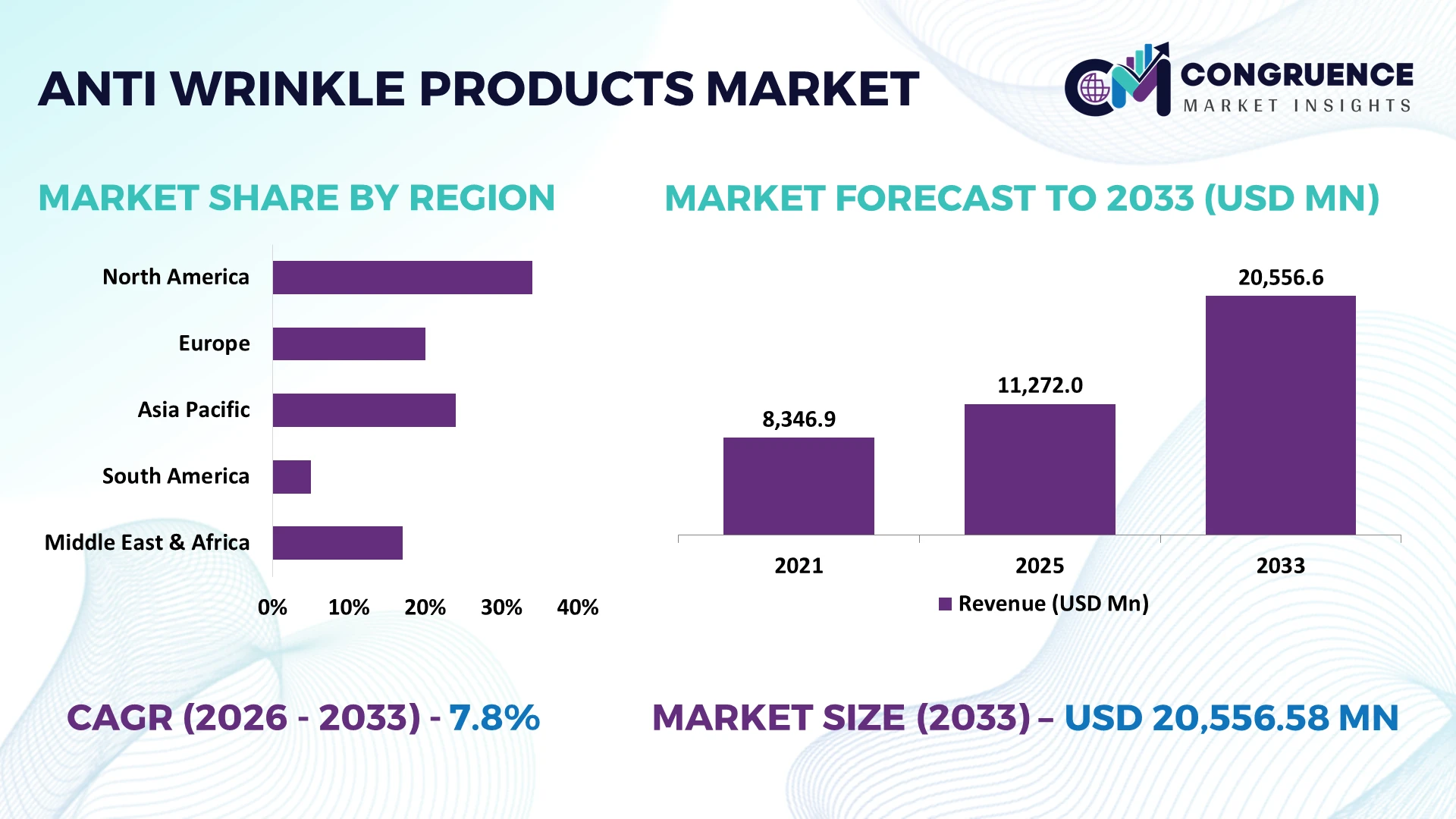
The Global Anti-wrinkle Products Market was valued at USD 11272 Million in 2025 and is anticipated to reach a value of USD 20556.58 Million by 2033 expanding at a CAGR of 7.8% between 2026 and 2033. Growth is driven by preventive anti-aging routines, higher penetration of retinoid and peptide formulations, dermocosmetic expansion, and clinically positioned multifunctional products combining wrinkle correction with hydration and photoprotection.
The United States is the dominant country market, accounting for approximately 22% of global demand, supported by high premium-skincare penetration, established dermatology channels, and rapid adoption of retinol, peptides, niacinamide, and hyaluronic-acid formulations. More than 40% of U.S. facial-skincare consumers prioritize anti-aging benefits, strengthening premium treatment adoption. South Korea, by comparison, has a smaller consumption base but higher innovation intensity, supported by K-beauty manufacturers investing in biotechnology, fermentation, encapsulation, and multifunctional formulations. Korea’s cosmetics exports exceeded USD 10 billion in 2024, reinforcing its global product-development influence. EU restrictions on retinol concentrations are simultaneously accelerating reformulation toward lower-dose retinoids and alternative actives.
Strategically, brands controlling clinically substantiated actives, compliant formulations, premium distribution, and rapid Asian innovation transfer are positioned to capture the strongest global anti-wrinkle product opportunities.
Market Size & Growth: USD 11,272 million in 2025 is projected to reach USD 20,556.58 million by 2033 at 7.8% CAGR, supported by preventive skincare and clinically positioned active ingredients.
Top Growth Drivers: Preventive anti-aging adoption contributes approximately 35% of momentum, premium dermocosmetics 30%, and advanced retinoid, peptide, and multifunctional formulations 25%.
Short-Term Forecast: By 2028, encapsulation and controlled-delivery technologies are expected to improve active-ingredient stability by approximately 20%, supporting higher-performance formulations with reduced irritation exposure.
Emerging Technologies: AI skin diagnostics, microencapsulation, biotechnology-derived peptides, exosomes, and precision fermentation are reshaping advanced anti-wrinkle formulation, testing, personalization, and product-development cycles.
Regional Leaders: North America is positioned near USD 6.3 billion, Asia-Pacific around USD 5.8 billion, and Europe approximately USD 5.1 billion by 2033, supported respectively by premiumization, K-beauty innovation, and dermocosmetic adoption.
Consumer/End-User Trends: More than 40% of facial-skincare consumers in major developed markets increasingly prioritize anti-aging functionality, encouraging earlier adoption of retinol, peptides, antioxidants, and SPF-integrated products.
Pilot/Case Example: In 2024, AI-enabled skin-analysis platforms expanded personalized product matching, with advanced imaging systems capable of assessing 8–10 facial parameters to improve targeted skincare recommendations.
Competitive Landscape: L’Oréal holds an estimated 10–12% category position globally, while Estée Lauder, Procter & Gamble, Shiseido, and Beiersdorf intensify competition through premium active formulations and dermatological positioning.
Regulatory & ESG Impact: EU rules cap retinol-equivalent concentrations at 0.3% in facial products, forcing formulation redesign and strengthening commercial opportunities for peptides, bakuchiol, antioxidants, and alternative anti-aging actives.
Investment & Funding: Major beauty groups collectively allocate more than USD 1 billion annually to R&D, with biotechnology partnerships, Asian innovation centers, AI diagnostics, and formulation laboratories receiving increased strategic investment.
Innovation & Future Outlook: Next-generation peptides, longevity-inspired skincare, microbiome science, regenerative actives, and AI personalization will shift competition from basic wrinkle moisturization toward measurable biological performance and clinically validated outcomes.
The Anti-wrinkle Products Market is shifting from conventional age-correction creams toward preventive, clinically substantiated skincare targeting collagen loss, fine lines, pigmentation, hydration, and barrier deterioration simultaneously. Retinoids remain a benchmark active, while peptides, niacinamide, hyaluronic acid, antioxidants, bakuchiol, and biotechnology-derived ingredients are widening formulation options. Premium consumers increasingly expect visible efficacy alongside tolerability, with more than 40% of facial-skincare users in developed markets prioritizing anti-aging functionality. Innovation is consequently moving toward encapsulated actives, personalized regimens, AI-assisted skin assessment, and multifunctional SPF products. At the same time, European retinoid concentration restrictions are accelerating reformulation and alternative-active development, creating a clear strategic transition toward efficacy-backed, regulation-ready product portfolios.
Anti-wrinkle products are becoming strategically important as competition shifts from conventional moisturization toward clinically validated actives, preventive skincare, and measurable skin-performance claims. Retinol remains influential, accounting for 57% of preferences in a 2025 anti-aging ingredient poll versus 33% for peptides. Regulatory change is simultaneously reshaping formulation strategy: European requirements limit retinol equivalents to 0.3% in most facial products, accelerating investment in peptides, bakuchiol, encapsulation, and lower-irritation delivery systems.
Advanced delivery technology provides a clear performance advantage over legacy formulations. Encapsulated retinol systems have demonstrated more than 85% encapsulation efficiency, approximately ninefold longer retinol half-life, and 12–23% lower irritation than established controlled-release systems. South Korea is scaling innovation faster through biotechnology-led K-beauty development, while the United States remains stronger in premium consumption and dermatologist-influenced product positioning. Korean cosmetics exports increased 20.3% in 2024, demonstrating the commercialization speed available to innovation-led suppliers.
Through 2026–2028, companies will prioritize controlled-release actives, peptide combinations, AI-assisted skin assessment, and multifunctional wrinkle-care products. One practical model combines 0.1% stabilized retinol with peptides to improve multiple photoaging parameters over eight weeks. Competitive advantage will increasingly depend on clinically substantiated formulations, regulatory adaptability, and faster translation of ingredient science into scalable premium products.
Preventive skincare and evidence-backed active ingredients are the strongest structural drivers of anti-wrinkle product demand. Retinol secured 57% preference in a 2025 anti-aging ingredient poll, compared with 33% for peptides and 10% for vitamin C, highlighting consumers’ increasing focus on proven efficacy. South Korean cosmetics exports expanded 20.3% in 2024, while shipments to the United States increased approximately 57%, reinforcing cross-border demand for advanced skincare formulations. This shift is moving anti-wrinkle products from basic moisturizers toward treatment-oriented combinations using retinoids, peptides, niacinamide, antioxidants, and hyaluronic acid. Companies are responding through clinical testing, dermatology partnerships, encapsulated delivery systems, and premium product extensions. The strategic advantage lies in converting ingredient credibility into repeat purchasing and stronger premium positioning.
Regulatory tightening around vitamin A derivatives is creating immediate formulation and compliance constraints for established anti-wrinkle portfolios. European safety requirements limit retinol equivalents to 0.3% in facial and most leave-on products and 0.05% in body lotions, directly affecting high-strength retinol formulations. Reformulation can require stability testing, efficacy validation, packaging adjustments, and new consumer communication, increasing development complexity and slowing international product harmonization. Retinol also remains intrinsically unstable under light, oxygen, and heat, while conventional formulations can lose functional activity significantly faster than protected delivery systems. Companies are reducing exposure by diversifying into peptides, retinal alternatives, bakuchiol, antioxidants, and encapsulated retinol. The operational priority is increasingly regulatory-compatible efficacy rather than maximizing active concentration, rewarding suppliers with flexible formulation platforms and strong toxicology capabilities.
The largest emerging opportunity lies in combining biotechnology-derived actives with precision delivery and digital skin assessment. Lipid nanocarrier research has maintained more than 90% of retinol concentration after four weeks under temperatures up to 50°C while delivering approximately 2.2 times greater skin penetration than bare retinol. AI-based dermatological image systems have also demonstrated 89–92% accuracy for automated skin-tone classification using advanced classification frameworks, strengthening the technical foundation for more personalized skincare recommendations. South Korean formulators are particularly well positioned to commercialize peptide complexes, fermented actives, encapsulated retinoids, and longevity-oriented skincare rapidly. Companies are expanding R&D partnerships with ingredient developers, biotechnology specialists, and diagnostic-platform providers. The non-obvious opportunity is not simply stronger formulations, but products delivering equivalent efficacy at lower active exposure with better tolerability and personalization.
The central long-term challenge is maintaining clinically consistent performance across skin types, climates, formulations, and digital recommendation systems while shortening innovation cycles. AI dermatology applications evaluated in India recorded top-diagnosis accuracy ranging from approximately 47% to 59%, showing that consumer-facing skin analysis still requires stronger validation across diverse populations. Retinol delivery systems also vary substantially, with advanced encapsulation efficiencies ranging from about 67% to 88% depending on carrier composition. This variability complicates claim substantiation, product standardization, and multinational launches. Companies must therefore invest in diverse clinical cohorts, standardized imaging, accelerated stability testing, bioinstrumentation, and formulation-platform partnerships. Competitive sustainability will depend on proving repeatable outcomes rather than launching the highest number of novel ingredients; brands that cannot translate laboratory performance into reproducible consumer results will lose credibility and premium positioning.
Preventive Regimens Move Earlier: Anti-wrinkle routines are shifting toward prevention rather than late-stage correction, with 75% of global beauty consumers linking consistent routines with wellbeing and 46% prioritizing a healthy appearance. Brands are responding with lower-strength retinoids, peptide combinations, and daily-use formats designed for consumers entering treatment routines earlier.
Clinical Claims Reshape Premium Positioning: Product differentiation is moving from ingredient presence toward measurable efficacy, tolerability, and dermatological validation. Controlled-delivery retinol systems can retain more than 85% encapsulation efficiency while reducing irritation by roughly 12–23%. Premium brands are expanding instrumental testing, clinical panels, and dermatologist-supported claims to strengthen conversion and justify higher positioning.
Digital Discovery Alters Purchase Workflows: Product selection increasingly begins with digital consultation, ingredient education, and peer validation. In the United States, 94% of aesthetic consumers use rating-and-review platforms when selecting providers, while nearly 50% consider provider social-media presence. Skincare companies are integrating diagnostic tools, virtual consultations, and algorithmic product matching into direct-to-consumer workflows.
Portfolio Reformulation Accelerates Rapidly: European retinoid restrictions are forcing manufacturers to redesign established anti-wrinkle portfolios around the 0.3% retinol-equivalent facial-product limit. Companies are shifting formulation capacity toward peptides, retinal alternatives, antioxidants, and stabilized delivery platforms. A non-obvious effect is faster SKU rationalization, as brands consolidate overlapping retinol strengths and redirect testing budgets toward multifunctional formulations.
Creams lead the Anti-wrinkle Products Market with approximately 31.4% share, supported by established daily-use behavior, broad retail scalability, and the ability to combine moisturization with retinoids, peptides, ceramides, antioxidants, and SPF-compatible systems. Their formulation flexibility supports both mass and premium positioning, keeping creams central to mature anti-aging routines. Eye creams retain strategic relevance for localized fine-line treatment, while gels serve consumers seeking lightweight textures, particularly in humid climates and younger preventive-skincare cohorts.
Serums are the fastest-advancing type as consumers move toward concentrated actives and multi-step treatment routines. Around 66% of surveyed consumers addressing oxidation-related skin concerns reported using serums, compared with 21% using facial creams and 15% using lotion or toner formats. Lotions are also gaining relevance through lightweight hydration and larger-area application. Companies are therefore allocating more formulation investment to high-potency serums, encapsulated actives, peptide complexes, and cream-serum layering systems, while creams remain the volume anchor and serums increasingly drive premiumization.
Facial Care dominates application demand with an estimated 55–60% share because wrinkles, fine lines, elasticity loss, pigmentation, and photodamage are most visibly concentrated on the face. Daily facial regimens also support higher product-use frequency than Neck Care, Hand Care, or Body Care. Brands consequently prioritize facial creams, serums, retinoid treatments, peptide complexes, and antioxidant systems, creating broader product ladders across preventive, corrective, and premium clinical positioning.
Eye Care is the fastest-strengthening application as consumers increasingly treat crow’s feet, under-eye texture, dryness, and loss of firmness separately from general facial aging. Eye-specific formulations typically use lower active concentrations and specialized delivery systems to manage sensitivity. Neck Care is moving beyond niche positioning through combined face-and-neck products, while Hand Care benefits from increased attention to photoaging and pigmentation. Body Care remains more hydration-led but is incorporating retinol and firming actives. Companies are expanding targeted treatment architectures and bundling complementary application zones to increase regimen depth and repeat purchasing.
Individual Consumers account for approximately 70% of anti-wrinkle product demand because most creams, serums, lotions, gels, and eye treatments are purchased for continuous home use rather than professional application. E-commerce, ingredient education, dermatological content, and direct-to-consumer subscription models are increasing self-directed product selection. Cosmetic Retailers remain strategically important for discovery and comparison, while Beauty Salons support professional recommendations and bundled skincare services without matching household purchase frequency.
Aesthetic Clinics represent the fastest-expanding end-user opportunity as topical anti-wrinkle products are increasingly integrated with injectables, energy-based procedures, microneedling, and post-treatment maintenance. Dermatology Clinics retain stronger clinical credibility for retinoid guidance and sensitive-skin management. In a practitioner study, 94.2% used polyrevitalization for aesthetic purposes, 79.9% specifically for wrinkles, and 50.2% combined treatment with microneedling. Brands are responding through professional-only ranges, clinic partnerships, sampling programs, treatment protocols, and dermatologist education. Future competitive positioning therefore depends on linking consumer retail scale with clinically credible professional ecosystems.
North America accounted for the largest market share at 35.8% in 2025 however, Asia-Pacific is expected to register the fastest growth, expanding at a CAGR of 9.2% between 2026 and 2033.
Premium Clinical Skincare Gains Scale
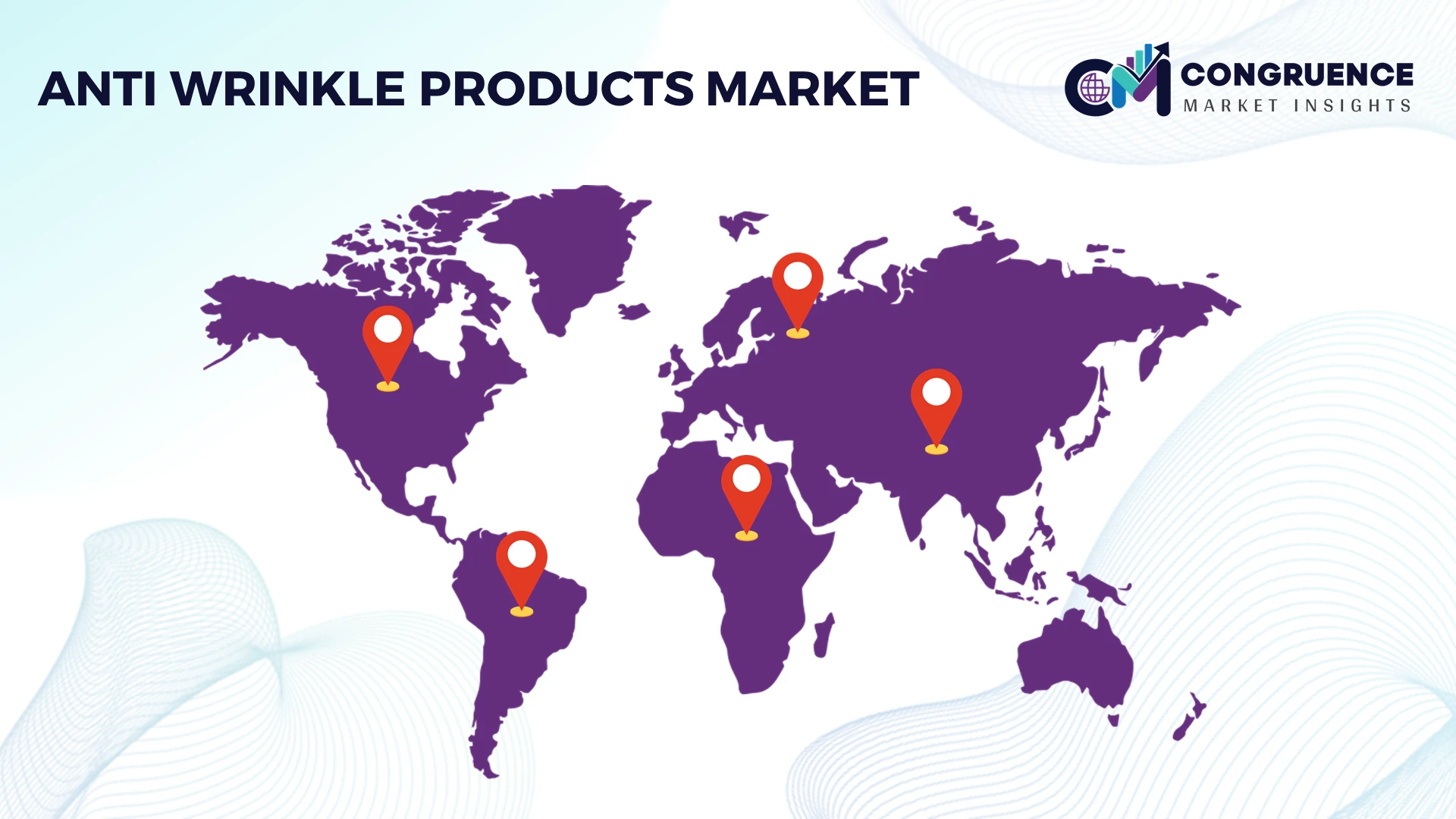
North America represents approximately 35.8% of global anti-wrinkle product demand, anchored by high skincare expenditure, sophisticated specialty retail, dermatology networks, and strong penetration of clinically positioned products. The United States concentrates regional demand as consumers increasingly combine retinoids, peptides, antioxidants, and hyaluronic acid within multi-step routines. Digital commerce is also altering product discovery: online beauty sales continue gaining share as ingredient transparency, reviews, virtual consultation, and personalized recommendations influence purchasing. Professional aesthetics reinforce topical-product adoption, with 70% of surveyed U.S. consumers considering cosmetic procedures. Major skincare groups are responding through dermatologist partnerships, clinical substantiation, AI-assisted consultation, and premium direct-to-consumer channels. Canada provides a smaller but attractive market, particularly for sensitive-skin, fragrance-free, and multifunctional formulations. Competitive advantage increasingly depends on connecting home skincare with professional aesthetic ecosystems.
United States Market Outlook: The United States benefits from dense dermatology infrastructure, premium beauty retail, high e-commerce penetration, and rapid commercialization of active-led formulations. Around 94% of aesthetic consumers use ratings and review platforms when selecting providers, demonstrating how digital validation influences skincare decisions. Brands are strengthening omnichannel distribution, dermatologist education, clinical testing, and personalized regimen tools to defend premium positioning.
Regulation Reshapes Active Formulation Portfolios
Europe accounts for approximately 27% of global anti-wrinkle product demand, with France, Germany, the United Kingdom, Italy, and Spain supporting mature premium and dermocosmetic consumption. Regulation is becoming the defining structural force. European requirements restrict retinol equivalents to 0.3% in facial and other leave-on products and 0.05% in body lotions, prompting manufacturers to reformulate high-strength portfolios and reassess product claims. This transition is redirecting formulation investment toward peptides, bakuchiol, antioxidants, retinal technologies, and controlled-release systems. France retains a strategic advantage through established cosmetic laboratories, pharmacy-led skincare, luxury beauty expertise, and multinational R&D operations. Germany contributes strong pharmacy and sensitive-skin channels, while British consumers support digitally led premium brands. Companies are consolidating overlapping SKUs, strengthening safety assessment, and designing formulations that can meet multiple European compliance requirements without sacrificing efficacy.
France Market Outlook: France combines global beauty-brand headquarters, contract formulation capabilities, pharmacy distribution, and advanced cosmetic research infrastructure. French cosmetics exports exceeded €22 billion in 2024, demonstrating the scale of its international beauty supply chain. Anti-wrinkle manufacturers benefit from established ingredient-development ecosystems and strong dermocosmetic credibility, supporting faster commercialization of peptides, stabilized retinoids, and clinically tested age-management formulations.
K-Beauty Accelerates Formulation Innovation
Asia-Pacific holds approximately 25% of global anti-wrinkle product demand but exhibits the strongest innovation and adoption momentum, supported by South Korea, China, Japan, and increasingly India. South Korean manufacturers are accelerating peptide complexes, fermentation-derived ingredients, encapsulation, multifunctional essences, and high-efficacy lightweight formulations, while Japanese brands retain strength in premium longevity skincare and formulation precision. Korea’s cosmetics exports increased 20.3% in 2024 and surpassed USD 10 billion, demonstrating the region’s expanding influence on international product pipelines. China combines enormous digital-commerce scale with domestic beauty innovation, whereas India is widening the addressable consumer base through premiumization and specialist online retail. Manufacturers are shortening launch cycles, localizing textures for climate and skin preferences, and expanding cross-border distribution. The strategic shift is from adopting Western anti-aging concepts toward exporting Asian formulation technologies and preventive-skincare routines globally.
South Korea Market Outlook: South Korea is the region’s strongest innovation and export hub, combining advanced ODM manufacturing, biotechnology expertise, rapid formulation cycles, and sophisticated digital beauty channels. Cosmetics shipments to the United States increased approximately 57% in 2024. Korean suppliers are leveraging this momentum to scale peptide, fermented-active, barrier-repair, and multifunctional anti-wrinkle products through global retail and brand partnerships.
Brazil Anchors Premiumization and Localization
South America contributes approximately 7% of global anti-wrinkle product demand, with Brazil representing the principal commercial and manufacturing center. High beauty-product engagement, strong direct-selling networks, pharmacy distribution, and domestic cosmetic manufacturing support adoption of facial creams, serums, eye treatments, and increasingly multifunctional sun-and-aging products. Brazil’s cosmetics industry operates thousands of manufacturing businesses, giving international and domestic brands access to established formulation, packaging, and distribution capabilities. High UV exposure also creates a commercially important intersection between photoaging prevention, antioxidants, pigmentation management, and daily photoprotection. Companies are localizing textures, pack sizes, botanical ingredients, and pricing to address purchasing-power differences. Argentina, Chile, and Colombia provide additional premium urban demand, although currency volatility and imported ingredient dependence complicate inventory planning. Local manufacturing and sourcing therefore provide a meaningful cost and supply-continuity advantage.
Brazil Market Outlook: Brazil combines large-scale personal-care consumption with established domestic manufacturing and direct-selling infrastructure. The country has more than 3,500 cosmetics and personal-care companies, creating a broad production and distribution ecosystem. Anti-wrinkle suppliers are increasingly integrating sun protection, hydration, antioxidants, and botanical actives to address photoaging while reducing dependence on narrowly positioned corrective products.
Gulf Premium Beauty Investment Accelerates
Middle East & Africa represents approximately 5% of global anti-wrinkle product demand, with commercial activity concentrated in the United Arab Emirates, Saudi Arabia, South Africa, and affluent urban centers. Gulf markets are distinguished by premium beauty expenditure, luxury retail infrastructure, international tourism, and expanding aesthetic-clinic networks. The UAE functions as a regional distribution and re-export hub, while Saudi Arabia’s retail modernization is widening access to prestige skincare and international brands. High solar exposure strengthens demand for anti-wrinkle formulations combining antioxidants, hydration, pigmentation management, and photoprotection. Companies are expanding through luxury retail partnerships, pharmacy channels, e-commerce platforms, and clinic-linked product positioning. South Africa provides a more diversified mass-premium market but faces greater affordability constraints. Success increasingly requires climate-adapted textures, localized consumer education, authenticated distribution, and formulations addressing both photoaging and pigmentation concerns.
United Arab Emirates Market Outlook: The UAE offers concentrated premium demand through Dubai and Abu Dhabi, supported by international retail groups, medical-aesthetic clinics, tourism, and cross-border distribution. With expatriates representing roughly 88% of the population, brands serve unusually diverse skin types and beauty preferences. This encourages broader shade, sensitivity, hydration, pigmentation, and anti-aging product architectures alongside premium clinic-retail partnerships.
The Anti-wrinkle Products Market is led by L’Oréal, Estée Lauder Companies, Procter & Gamble, Shiseido, and Beiersdorf, which compete against premium specialists and dermatologist-positioned skincare brands. The top five collectively control approximately 38% of global demand, leaving substantial space for clinically differentiated challengers. L’Oréal and Estée Lauder compete through premium innovation and brand portfolios, while P&G and Beiersdorf leverage mass distribution and dermatological credibility; Shiseido differentiates through Asian formulation science. Advanced retinoid, peptide, and delivery technologies can improve active stability by more than 20%, while digital personalization can shorten consumer product-selection journeys by roughly 15%. Players are expanding clinical testing, biotechnology partnerships, direct-to-consumer channels, and localized innovation centers. Competition is shifting from celebrity-led anti-aging claims toward substantiated efficacy, controlled delivery, and personalized regimens. Regulatory reformulation costs and clinical-validation requirements create meaningful entry barriers. Winning requires defensible ingredient science, regulatory agility, omnichannel scale, rapid commercialization, and consistently demonstrated consumer outcomes across major markets worldwide.
L’Oréal
The Estée Lauder Companies
Procter & Gamble
Shiseido Company
Beiersdorf AG
Unilever
Kao Corporation
Amorepacific Corporation
Natura &Co
Galderma
Pierre Fabre
Clarins Group
Rohto Pharmaceutical Co., Ltd.
Coty Inc.
Current anti-wrinkle technology centers on stabilized retinoids, peptide complexes, liposomes, and microencapsulation that protect oxidation-sensitive actives and improve skin delivery. Encapsulated retinol systems can exceed 85% loading efficiency and reduce irritation by 12–23% versus conventional delivery, supporting stronger efficacy claims, longer shelf stability, and premium positioning. Adoption is expanding across dermatologist-led and prestige skincare portfolios.
Emerging platforms combine AI skin diagnostics, biomarker analysis, computational chemistry, and biotechnology-derived actives. L’Oréal’s predictive AI approach can accelerate molecular discovery by up to 100 times, while longevity platforms analyze hundreds of biomarkers to identify aging pathways before visible wrinkles intensify. These tools shorten formulation screening, improve personalization, and favor companies with proprietary datasets, clinical infrastructure, and biotechnology partnerships. Deployment is already extending from laboratories into premium consumer interfaces.
Disruptive development is moving toward LED photobiomodulation, regenerative peptides, microneedling-assisted delivery, and digitally connected treatment routines. New light-based devices target fine lines, sagging, and uneven tone without replacing topical products, creating integrated product-device ecosystems. Compared with legacy trial-and-error formulation screening, AI-enabled discovery offers roughly 99% faster computational evaluation. Through 2026–2028, adoption will concentrate among premium brands, dermatology networks, and technology-rich formulators; acting now secures stronger intellectual property, faster launches, differentiated clinical claims, and defensible consumer retention.
January 2026 — L’Oréal introduced an ultra-thin LED Face Mask targeting fine lines, sagging, and uneven tone, developed with iSmart and scheduled for 2027 commercialization. The CES Innovation Award recognition strengthens L’Oréal’s device-integrated longevity skincare positioning and clinical validation. Source: loreal-finance.com
September 2025 — Galderma launched Cetaphil Skin Activator Hydrating & Firming, using microdosed mandelic acid and encapsulated CICA; 88% of cream users reported less-crepey-looking skin within two days. The launch expands dermatologist-developed skincare into age-related skin fragility and routines. Source: galderma.com
April 2024 — Shiseido expanded its renewed Vital Perfection age-defying range using SafflowerRED and ReNeuraRED technologies, reporting 35% firmer, brighter, more lifted-looking skin after one week and 55% after eight weeks, strengthening high-efficacy prestige differentiation across Asian prestige channels. Source: cosmeticsdesign-asia.com
July 2026 — Clarins launched a longevity research center focused on preventive wellness, epigenetics, and cellular skin health as the wellness economy reached $6.8 trillion in 2024. The move shifts anti-aging R&D toward science-backed longevity platforms for premium skincare. Source: beautymatter.com
The Anti-wrinkle Products Market Report covers creams, serums, lotions, gels, and eye creams across facial care, eye care, neck care, hand care, and body care. End-user analysis spans individual consumers, beauty salons, dermatology clinics, aesthetic clinics, and cosmetic retailers. Regional coverage includes North America, Europe, Asia-Pacific, South America, and Middle East & Africa, with country-level assessment of the United States, France, South Korea, Brazil, and the United Arab Emirates.
The report evaluates retinoids, peptide systems, encapsulation, AI skin diagnostics, biotechnology-derived actives, LED photobiomodulation, and longevity-focused skincare platforms. Individual consumers account for roughly 70% of demand, while creams hold about 31% of type-level share. Analysis supports investment planning, portfolio expansion, market-entry decisions, partnership strategy, competitive benchmarking, and technology prioritization between 2026 and 2033, including emerging opportunities in clinical skincare, personalized regimens, and product-device ecosystems.
| Report Attribute/Metric | Report Details |
|---|---|
Market Revenue in 2025 | USD 11272 Million |
Market Revenue in 2033 | USD 20556.58 Million |
CAGR (2026 - 2033) | 7.8% |
Base Year | 2025 |
Forecast Period | 2026 - 2033 |
Historic Period | 2021 - 2025 |
Segments Covered | By Type
By Application
By End-User
|
Key Report Deliverable | Revenue Forecast, Growth Trends, Market Dynamics, Segmental Overview, Regional and Country-wise Analysis, Competition Landscape |
Region Covered | North America, Europe, Asia-Pacific, South America, Middle East, Africa |
Key Players Analyzed | L’Oréal, The Estée Lauder Companies, Procter & Gamble, Shiseido Company, Beiersdorf AG, Unilever, Kao Corporation, Amorepacific Corporation, Natura &Co, Galderma, Pierre Fabre, Clarins Group, Rohto Pharmaceutical Co., Ltd., Coty Inc. |
Customization & Pricing | Available on Request (10% Customization is Free) |




