
Reports
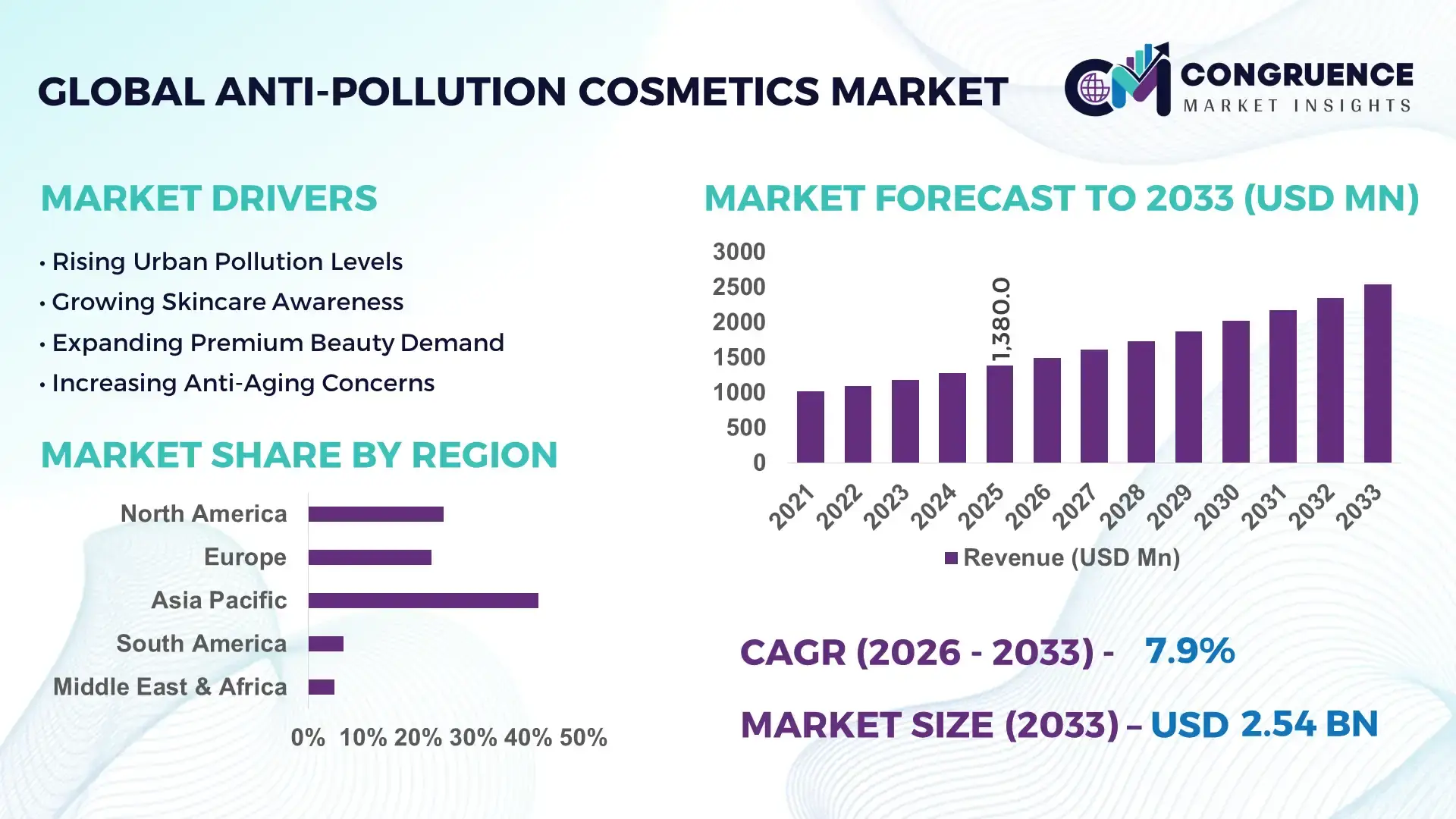
The Global Anti-Pollution Cosmetics Market was valued at USD 1,380.0 Million in 2025 and is anticipated to reach a value of USD 2,535.4 Million by 2033 expanding at a CAGR of 7.9% between 2026 and 2033. Rising urban particulate exposure, increasing incorporation of antioxidant bioactives, and accelerated development of pollution-shield skincare formulations are driving sustained product innovation across premium and mass-market cosmetic portfolios.
China remains the dominant country, accounting for approximately 31% of global anti-pollution cosmetics consumption, supported by over 65% urbanization, strong domestic beauty manufacturing, and extensive e-commerce penetration exceeding 85% among beauty shoppers. Compared with India, where premium anti-pollution skincare penetration remains below 20%, China benefits from larger production ecosystems and higher consumer spending on functional cosmetics. Government air-quality initiatives following the Blue Sky Protection Campaign have further accelerated demand for pollution-defense formulations incorporating advanced botanical and microbiome-support technologies.
Strategically, companies that align product development with urban environmental stress protection and science-backed efficacy claims are positioned to strengthen market differentiation and premiumization.
Market Size & Growth: USD 1,380.0 million in 2025 reaching USD 2,535.4 million by 2033 at 7.9% CAGR, supported by advanced antioxidant complexes and pollution-defense skincare innovation.
Top Growth Drivers: Urban pollution exposure (+28%), functional skincare adoption (+34%), and premium beauty product penetration (+22%) are accelerating demand.
Short-Term Forecast: By 2028, product efficacy validation costs are expected to decline by nearly 15% through AI-assisted formulation testing.
Emerging Technologies: AI-driven ingredient screening, microbiome-support formulations, and encapsulated antioxidant delivery systems are reshaping product performance.
Regional Leaders: Asia Pacific (~USD 980 million), Europe (~USD 620 million), and North America (~USD 520 million) lead through premium skincare adoption and innovation investments.
Consumer/End-User Trends: More than 57% of urban skincare consumers actively seek pollution-protection claims in daily beauty routines.
Pilot/Case Example: In 2024, smart antioxidant formulation programs improved ingredient stability by approximately 18% during product development cycles.
Competitive Landscape: Leading brands collectively hold nearly 38% market share, with L'Oréal, Shiseido, Unilever, Beiersdorf, and Estée Lauder maintaining strong portfolios.
Regulatory & ESG Impact: Clean-beauty compliance initiatives increased sustainable ingredient adoption by nearly 26% across new product launches.
Investment & Funding: More than USD 750 million has been directed toward beauty-tech partnerships, formulation research, and manufacturing expansion programs.
Innovation & Future Outlook: Next-generation biomimetic barriers, blue-light protection technologies, and multifunctional skincare platforms are strengthening competitive positioning.
Anti-pollution cosmetics are evolving beyond basic protective skincare toward multifunctional formulations combining antioxidant defense, microbiome support, and environmental stress recovery. Demand is particularly strong in urban beauty, premium skincare, and dermocosmetic segments, where product efficacy influences purchasing decisions. More than 40% of new launches now feature advanced anti-pollution claims, while stricter clean-label requirements and ingredient traceability initiatives are encouraging manufacturers to optimize sourcing strategies and accelerate innovation pipelines, setting the stage for deeper strategic market evaluation.
Anti-pollution cosmetics have become strategically important as beauty brands compete through scientifically validated skin-protection claims rather than traditional moisturizing or aesthetic benefits alone. Increasing urban environmental exposure, stricter ingredient transparency requirements, and consumer preference for multifunctional skincare are transforming product development priorities. Supply-chain restructuring toward traceable botanical extracts and specialty active ingredients is also influencing procurement and manufacturing strategies across the beauty sector.
Technology adoption is improving both formulation performance and development efficiency. AI-assisted ingredient screening can reduce early-stage formulation assessment time by nearly 30% compared with conventional laboratory-intensive approaches, enabling faster commercialization cycles. China and South Korea continue to lead innovation and product deployment, while European manufacturers emphasize clinical validation and sustainability-focused differentiation. Across major beauty markets, over 50% of premium skincare launches now incorporate environmental protection positioning within product claims.
Companies are increasingly expanding partnerships with biotechnology firms, dermatological research institutes, and ingredient specialists to strengthen product credibility. For example, several global skincare manufacturers have integrated encapsulated antioxidant technologies to improve active ingredient stability and shelf-life performance. Over the next two to three years, increased adoption of microbiome-focused skincare platforms and digital consumer diagnostics will reinforce competitive differentiation. Organizations that combine scientific validation, agile innovation pipelines, and premium brand positioning will secure stronger long-term market relevance and operational advantage.
Growing exposure to airborne particulate matter and environmental stressors is increasing demand for specialized skincare solutions with proven protective benefits. More than 55% of urban consumers report concerns regarding pollution-related skin damage, while premium skincare penetration has expanded by approximately 24% across major metropolitan markets. China's beauty sector has accelerated development of antioxidant-rich and barrier-repair formulations following intensified environmental awareness initiatives. This shift is directly influencing purchasing behavior, pushing brands toward clinically supported efficacy claims. In response, leading cosmetic companies are increasing R&D budgets, expanding dermatological testing programs, and partnering with biotechnology suppliers to develop differentiated anti-pollution ingredients. A notable strategic insight is that consumers increasingly associate environmental protection claims with premium quality, allowing brands to strengthen pricing power while improving portfolio competitiveness.
The market faces structural pressure from fluctuating prices of botanical extracts, specialty antioxidants, and biotechnology-derived active ingredients. Ingredient procurement costs for selected premium formulations have increased by 12–18% over recent years, while regulatory testing and product substantiation requirements have expanded by more than 20% in several developed markets. European cosmetic compliance standards and evolving claim-verification frameworks continue to increase product launch complexity. These factors directly affect profitability, product scalability, and commercialization timelines. To mitigate risks, manufacturers are diversifying sourcing networks, localizing procurement operations, and establishing long-term supplier agreements. An important operational insight is that companies with vertically integrated ingredient ecosystems are better positioned to maintain product consistency and margin stability during supply-chain disruptions.
Advanced biotechnology platforms are creating opportunities for highly targeted pollution-defense products with enhanced efficacy and ingredient sustainability. Consumer interest in microbiome-support skincare has increased by nearly 35%, while demand for clean-label formulations exceeds 45% among premium beauty buyers. South Korea and Japan are accelerating commercialization of fermented bioactives, peptide-based skin protectants, and encapsulated antioxidant systems that improve ingredient delivery efficiency. Simultaneously, digital skin-diagnostic tools are enabling personalized anti-pollution skincare recommendations and higher customer engagement. Companies are responding through innovation partnerships, research collaborations, and investment in precision formulation technologies. A key strategic opportunity lies in combining environmental protection, personalization, and biotechnology into integrated skincare ecosystems capable of generating stronger consumer retention and brand loyalty.
Long-term market expansion depends on the industry's ability to establish consistent and measurable anti-pollution performance standards. More than 40% of consumers seek scientific validation before purchasing premium skincare products, while efficacy-testing requirements continue to expand across multiple jurisdictions. Differences in pollution exposure levels, skin types, and testing methodologies create challenges for standardized product claims. Manufacturers must also manage increasing pressure from digital consumer communities, where product performance transparency directly influences brand perception. To address these issues, companies are investing in clinical studies, advanced biomarker testing, and partnerships with dermatological institutions. A critical strategic insight is that brands capable of delivering globally recognized efficacy validation frameworks will achieve stronger consumer trust, greater market credibility, and more sustainable competitive differentiation.
Microbiome-Centric Product Development More than 32% of newly launched anti-pollution skincare products now incorporate microbiome-support ingredients as brands shift from surface protection toward long-term skin resilience. Clinical testing programs have expanded by nearly 25%, while consumer preference for skin-barrier-focused formulations has increased by 28%. This transition is improving product differentiation and premium positioning. Companies are expanding biotechnology partnerships and accelerating development of probiotic and postbiotic ingredient platforms to strengthen efficacy claims and improve formulation performance.
AI-Led Formulation Acceleration Advanced ingredient-screening platforms have reduced early-stage formulation evaluation time by approximately 30%, while predictive efficacy modeling has improved candidate selection accuracy by 20%. Beauty manufacturers in South Korea and Japan are increasingly integrating AI into R&D workflows to streamline testing cycles and reduce development bottlenecks. The result is faster product launches and lower reformulation costs. Leading companies are scaling digital laboratories and deploying machine-learning systems to optimize ingredient combinations and shorten commercialization timelines.
Traceable Ingredient Supply Chains Following heightened ingredient transparency requirements, over 40% of premium beauty brands have expanded traceability programs across sourcing networks. Clean-label verification processes have increased by nearly 22%, particularly for botanical extracts and specialty antioxidants. Supply-chain visibility is becoming a competitive differentiator rather than a compliance exercise. Manufacturers are restructuring supplier relationships, implementing digital traceability systems, and localizing procurement strategies to improve sourcing reliability and reduce operational disruptions.
Multifunctional Urban Protection Formats Demand for products combining pollution defense, blue-light protection, and antioxidant recovery has increased by nearly 35%, while single-benefit skincare launches have declined by approximately 15%. Urban consumers increasingly prefer streamlined routines with higher functional value. This shift is improving inventory efficiency and supporting premium pricing strategies. Companies are consolidating product portfolios, expanding multifunctional formulations, and investing in encapsulation technologies that improve active ingredient stability and performance across multiple environmental stress conditions.
Creams & Moisturizers remain the leading segment, accounting for approximately 38% of total product demand due to their compatibility with daily skincare routines, ease of formulation integration, and ability to deliver antioxidant and barrier-protection ingredients effectively. Their dominance is further supported by strong repeat-purchase behavior and broad availability across premium and mass-market channels. Serums represent the fastest-growing segment, with adoption increasing by nearly 14% annually as consumers seek concentrated active ingredients capable of addressing pollution-induced oxidative stress. Brands are increasingly incorporating niacinamide, vitamin C derivatives, and encapsulated antioxidants into serum portfolios to improve efficacy and product differentiation. Face Masks continue to hold strategic relevance within premium skincare regimens, particularly in China and South Korea where intensive treatment products account for more than 25% of advanced skincare purchases. Cleansers remain a foundational category, benefiting from rising awareness around particulate removal and skin purification. Meanwhile, other formats such as mists and hybrid protective products are gaining traction among younger consumers. Companies are prioritizing innovation in multifunctional formulations, resulting in greater investment toward high-performance creams and targeted serum platforms.
Daily Protection represents the largest application segment, contributing approximately 42% of market demand as consumers increasingly integrate pollution-defense products into everyday skincare routines. Urban populations exposed to elevated particulate levels are driving consistent usage patterns, particularly across East Asian metropolitan markets. Products designed for routine environmental protection benefit from higher purchase frequency and stronger customer retention. Anti-Aging is the fastest-growing application, supported by rising consumer awareness of pollution-induced collagen degradation and premature skin aging. More than 35% of premium skincare launches now combine anti-pollution and anti-aging claims within a single formulation. Skin Brightening remains an important category, especially in Asian beauty markets where uneven skin tone associated with environmental stress is a key consumer concern. Moisturizing applications continue to support volume demand due to broad consumer appeal and compatibility with multifunctional formulations. Companies are responding by integrating multiple benefits into single products, improving operational efficiency while strengthening premium positioning. This shift is accelerating investment in multifunctional active ingredients capable of supporting protection, hydration, and visible skin improvement simultaneously.
Women remain the dominant end-user group, accounting for approximately 68% of total market consumption due to higher skincare engagement, broader product adoption, and stronger participation in premium beauty categories. This segment continues to drive demand for advanced formulations featuring antioxidant complexes, barrier-support ingredients, and clinically validated protection claims. However, the Men segment is emerging as the fastest-growing category, supported by increasing skincare awareness, expanding grooming routines, and greater availability of male-focused protective skincare products. Male anti-pollution skincare adoption has increased by nearly 20% in major urban markets over the past few years. The Unisex segment is also gaining momentum as brands emphasize inclusivity, simplified routines, and multifunctional product positioning. Younger consumers increasingly prefer gender-neutral skincare solutions that prioritize efficacy and convenience over traditional category distinctions. Companies are responding through customized marketing strategies, targeted product development, and digital engagement initiatives aimed at expanding addressable consumer bases. These evolving preferences are shifting competitive priorities toward flexible portfolios capable of serving multiple demographic groups while maintaining operational efficiency.
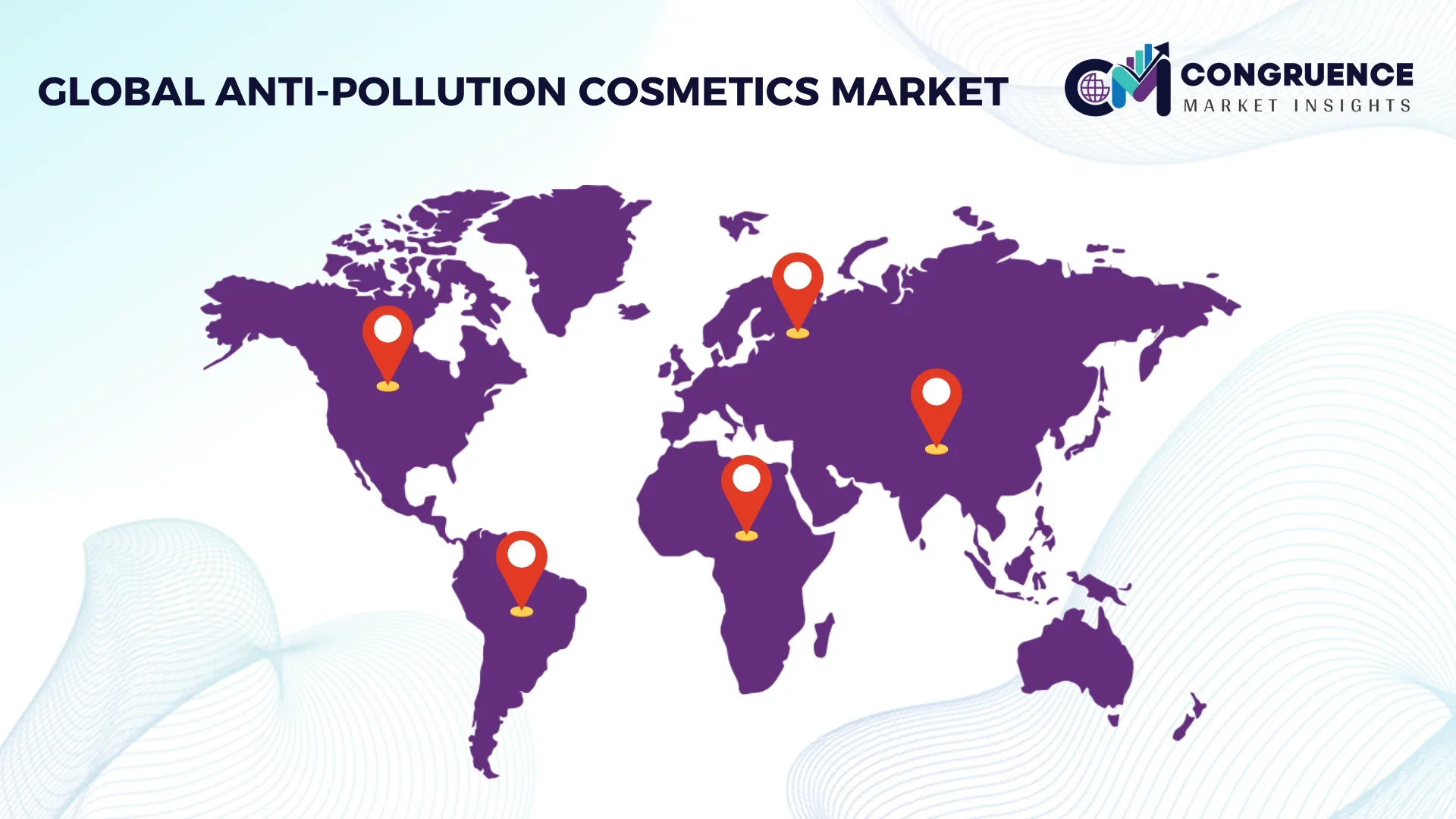
Asia-Pacific accounted for the largest market share at 41.8% in 2025 however, Middle East & Africa is expected to register the fastest growth, expanding at a CAGR of 9.1% between 2026 and 2033.
North America represented approximately 24.6% of global market demand in 2025, supported by strong consumer spending on functional skincare and widespread adoption of dermatologist-recommended formulations. The region benefits from advanced cosmetic R&D infrastructure, extensive ingredient innovation capabilities, and high penetration of premium beauty brands. More than 55% of newly launched environmental-defense skincare products now incorporate clinically validated antioxidant systems or microbiome-support ingredients. Strategic partnerships between cosmetic manufacturers and biotechnology firms are accelerating formulation development cycles and improving product differentiation. Growing demand for multifunctional skincare products is also encouraging portfolio consolidation and operational efficiency across leading beauty companies.
United States Market Outlook: The United States remains the largest contributor within North America due to its strong beauty innovation ecosystem, mature premium skincare segment, and extensive e-commerce penetration. More than 60% of anti-pollution product launches in the region originate from U.S.-based manufacturers. Advanced dermatological research networks and biotechnology collaborations continue to support product innovation. Beauty brands are increasingly investing in AI-assisted formulation development and consumer skin-diagnostic platforms to strengthen personalization capabilities and accelerate commercialization of next-generation environmental protection skincare solutions.
Europe accounted for nearly 22.4% of global market activity in 2025, driven by stringent ingredient transparency standards, sustainability initiatives, and strong consumer preference for clean-label cosmetics. Regulatory scrutiny surrounding product claims and ingredient traceability has encouraged manufacturers to adopt advanced testing frameworks and transparent sourcing practices. More than 45% of premium anti-pollution skincare launches now feature sustainably sourced active ingredients. Cosmetic manufacturers are increasingly modernizing production facilities and integrating digital traceability systems to improve compliance efficiency while strengthening consumer trust. Product innovation remains focused on environmentally responsible formulations with measurable skin-protection performance.
France Market Outlook: France maintains a strategic leadership position through its globally recognized cosmetics industry, extensive formulation expertise, and concentration of premium beauty manufacturers. The country hosts a significant share of European skincare innovation activities and continues to attract investment into sustainable ingredient development. French cosmetic enterprises are expanding partnerships with biotechnology companies and specialty ingredient suppliers, while advanced laboratory testing capabilities support product validation and premium brand positioning. This combination of manufacturing strength and scientific expertise reinforces France’s influence within the anti-pollution cosmetics value chain.
Asia-Pacific held the largest market position with approximately 41.8% share in 2025, supported by dense urban populations, extensive beauty manufacturing infrastructure, and increasing consumer awareness regarding pollution-related skin concerns. The region accounts for more than half of global anti-pollution skincare product manufacturing activity and remains the primary innovation hub for multifunctional skincare formats. Strong digital commerce penetration and rapid product commercialization cycles enable faster deployment of advanced formulations. Cosmetic companies continue expanding production capacity, ingredient sourcing networks, and research collaborations to support growing consumer demand and shorten product launch timelines.
China Market Outlook: China serves as the region’s most influential market, supported by large-scale cosmetic manufacturing ecosystems, strong domestic beauty brands, and advanced e-commerce integration. Urban consumers account for a substantial proportion of premium skincare purchases, while local manufacturers increasingly invest in biotechnology-derived active ingredients and microbiome-focused formulations. More than 65% of beauty purchases in major metropolitan areas involve digital channels, enabling rapid consumer feedback and product iteration. Ongoing investment in innovation centers and formulation laboratories continues to strengthen China's competitive advantage in anti-pollution skincare development.
South America represented approximately 6.4% of global market activity in 2025, supported by rising urbanization, growing skincare awareness, and increasing premium beauty product availability. Consumer interest in environmental skin protection is expanding alongside broader adoption of advanced skincare routines. However, market development remains influenced by economic fluctuations and uneven distribution infrastructure. Manufacturers are responding by strengthening local partnerships, expanding regional production capabilities, and introducing affordable multifunctional formulations. Investment in localized marketing strategies is also helping brands improve consumer engagement and market penetration across major metropolitan centers.
Brazil Market Outlook: Brazil remains the largest anti-pollution cosmetics market in South America due to its extensive beauty industry, large consumer base, and strong domestic manufacturing capabilities. The country accounts for a substantial share of regional cosmetics production and benefits from established distribution networks. Local companies increasingly focus on botanical-based formulations leveraging Brazil’s biodiversity resources. Growing investment in digital retail platforms and direct-to-consumer sales channels is supporting wider product accessibility while enabling brands to respond more effectively to evolving consumer preferences and skincare trends.
Middle East & Africa accounted for approximately 4.8% of global demand in 2025, yet it is emerging as one of the most dynamic markets due to expanding premium beauty consumption, modernization of retail infrastructure, and increasing awareness of environmental skin stress. Rising investment in beauty retail ecosystems and digital commerce platforms is improving product accessibility across key urban markets. More than 30% of premium skincare launches in major Gulf markets now include environmental protection positioning. Companies are strengthening distribution partnerships and expanding regional product portfolios to capture evolving consumer demand patterns.
Saudi Arabia Market Outlook: Saudi Arabia has emerged as the region’s most strategically significant market due to strong consumer purchasing power, retail modernization initiatives, and expanding premium beauty demand. Beauty and personal care distribution networks continue to benefit from broader economic diversification programs and digital transformation efforts. Online beauty retail adoption has accelerated significantly, creating new channels for premium skincare brands. International cosmetic manufacturers are increasing local partnerships, enhancing distribution infrastructure, and introducing specialized anti-pollution product ranges tailored to urban consumers seeking advanced environmental skin protection solutions.
The competitive landscape is led by global beauty innovators including L'Oréal, Shiseido, Beiersdorf, Estée Lauder, and Unilever, competing directly against regional Asian skincare specialists and emerging science-driven beauty brands. The top five players collectively control approximately 42–46% of market activity, creating a moderately consolidated structure where technology leadership increasingly outweighs scale alone. Competition centers on formulation efficacy, ingredient innovation, supply-chain control, and commercialization speed. Clinical validation claims influence nearly 60% of premium product purchases, while digital beauty engagement contributes to over 50% of product discovery activity. Global leaders leverage biotechnology partnerships, proprietary active ingredients, and dermatological testing, whereas regional brands compete through faster product cycles and localized formulations. Companies are expanding manufacturing capacity, investing in microbiome science, acquiring niche skincare brands, and vertically integrating ingredient sourcing. The competitive shift is moving from traditional cosmetic branding toward evidence-based skin protection platforms. High R&D requirements, regulatory substantiation standards, and specialized ingredient access create significant entry barriers. Winning requires scientific credibility, rapid innovation execution, and differentiated environmental skin-defense performance.
Shiseido Company, Limited
Beiersdorf AG
Estée Lauder Companies Inc.
Unilever PLC
Procter & Gamble Company
Amorepacific Corporation
Kao Corporation
Coty Inc.
Revlon Inc.
Clarins Group
Natura &Co
Oriflame Holding AG
Anti-pollution cosmetics are increasingly built around advanced active-delivery systems, skin-barrier analytics, and biotechnology-derived ingredients. Encapsulation technologies improve antioxidant stability by nearly 25–35% compared with conventional formulations, allowing longer-lasting protection against environmental stressors. More than 40% of premium skincare launches now incorporate targeted delivery mechanisms designed to improve ingredient penetration and efficacy. Companies utilizing these systems gain stronger product differentiation and improved formulation performance in highly competitive premium skincare categories.
Emerging technologies include AI-assisted formulation development, microbiome-support platforms, and digital skin diagnostics. AI-driven ingredient screening reduces early-stage formulation assessment time by approximately 30%, accelerating commercialization cycles. Personalized skincare technologies are also gaining traction, with around one-third of premium beauty brands incorporating diagnostic or recommendation tools into customer engagement strategies. Compared with traditional trial-and-error formulation approaches, digital R&D workflows improve development efficiency and reduce reformulation costs. Companies with strong data capabilities and biotechnology partnerships are positioned to benefit most from these advancements.
Between 2026 and 2028, epigenetic skincare research, biomimetic barrier technologies, and predictive skin-health analytics are expected to reshape competitive positioning. New-generation technologies demonstrate up to 20% higher performance in targeted skin-protection applications compared with legacy antioxidant-only solutions. As scientific validation becomes a key purchasing criterion, companies that invest early in advanced formulation science and personalized skincare ecosystems will secure stronger operational advantages and premium market positioning.
April 2024 – Beiersdorf AG introduced its patented GLYCOSTOP™ active ingredient after screening approximately 1,700 ingredients over ten years. The technology prevents glycation formation by up to 68%, strengthening anti-aging and environmental skin-protection performance while expanding science-backed skincare differentiation. Source: www.beiersdorf.com
April 2024 – Beiersdorf AG and Rubedo Life Sciences announced a multi-year strategic partnership focused on cellular senescence research and next-generation skin rejuvenation solutions. The collaboration combines biotechnology innovation with commercial skincare expertise, accelerating advanced product development and long-term innovation capacity.
September 2024 – Beiersdorf AG launched its first Eucerin Epigenetic Serum utilizing patented skin-specific “Age Clock” technology developed through more than 15 years of epigenetics research. The innovation strengthens precision skincare positioning and expands advanced anti-aging technology deployment across premium skincare portfolios.
December 2025 – Shiseido Company developed an enhanced “Second Skin” technology platform that improved under-eye bag appearance after two weeks of continuous use. The contractile film technology supports collagen restructuring and strengthens Shiseido’s position in advanced skin-performance innovation and premium skincare differentiation.
The report provides comprehensive analysis across creams & moisturizers, serums, face masks, cleansers, and other product categories, evaluating their strategic positioning, adoption patterns, and innovation trajectories. Application coverage includes daily protection, anti-aging, skin brightening, and moisturizing segments, while end-user assessment examines women, men, and unisex consumer groups. Regional analysis spans North America, Europe, Asia-Pacific, South America, and Middle East & Africa, covering market concentration, manufacturing ecosystems, technology deployment, and evolving consumer behavior.
The study evaluates emerging technologies including microbiome-support formulations, encapsulated antioxidant delivery systems, AI-assisted formulation development, epigenetic skincare platforms, and digital skin diagnostics. More than 40% of premium product launches now incorporate multifunctional environmental protection positioning, highlighting evolving competitive priorities. The report further examines company strategies, partnership activity, innovation pipelines, supply-chain developments, and investment trends to support expansion planning, competitive benchmarking, portfolio optimization, and long-term strategic decision-making between 2026 and 2033.
| Report Attribute / Metric | Details |
|---|---|
| Market Revenue (2025) | USD 1,380.0 Million |
| Market Revenue (2033) | USD 2,535.4 Million |
| CAGR (2026–2033) | 7.9% |
| Base Year | 2025 |
| Forecast Period | 2026–2033 |
| Historic Period | 2021–2025 |
| Segments Covered |
By Type
By Application
By End-User
|
| Key Report Deliverables | Revenue Forecast; Market Trends; Growth Drivers & Restraints; Technology Insights; Segmentation Analysis; Regional Insights; Competitive Landscape; Regulatory & ESG Overview; Recent Developments |
| Regions Covered | North America; Europe; Asia-Pacific; South America; Middle East & Africa |
| Key Players Analyzed | L'Oréal S.A.; Shiseido Company, Limited; Beiersdorf AG; Estée Lauder Companies Inc.; Unilever PLC; Procter & Gamble Company; Amorepacific Corporation; Kao Corporation; Coty Inc.; Revlon Inc.; Clarins Group; Natura &Co; Oriflame Holding AG |
| Customization & Pricing | Available on Request (10% Customization Free) |




