
Reports
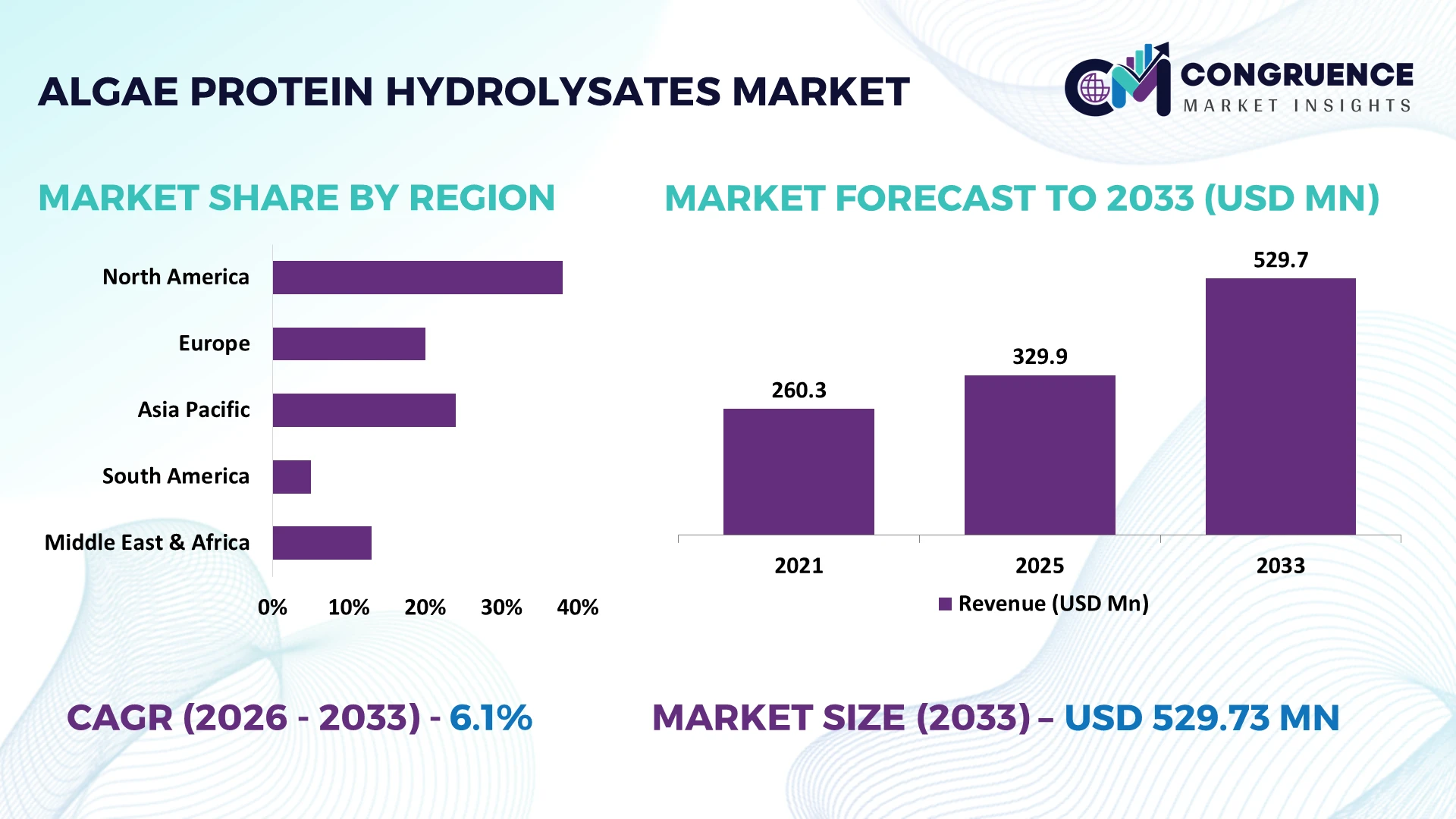
The Global Algae Protein Hydrolysates Market was valued at USD 329.86 Million in 2025 and is anticipated to reach a value of USD 529.73 Million by 2033 expanding at a CAGR of 6.1% between 2026 and 2033. Growth is driven by enzymatic protein hydrolysis, expanding microalgae cultivation, bioactive peptide extraction, aquaculture feed reformulation, and increased use of algae-derived ingredients in functional nutrition.
China represents a major algae production hub, supported by established spirulina cultivation, chlorella processing, and aquatic biotechnology infrastructure. The country accounts for approximately 59% of global farmed aquatic algae production, providing substantial upstream biomass availability, although its specific hydrolysate market share remains unverified. Compared with Japan's emphasis on premium functional ingredients, China benefits from large-scale cultivation and processing infrastructure. Spirulina typically contains 55–70% protein by dry weight, supporting peptide extraction for nutraceuticals, aquaculture feed, and specialized food formulations.
Strategically, producers should prioritize standardized peptide profiles, food-grade enzymatic processing, and traceable algae biomass procurement to strengthen access to high-value nutrition and aquaculture applications.
Market Size & Growth: USD 329.86 million in 2025, reaching USD 529.73 million by 2033 at 6.1% CAGR, supported by enzymatic peptide extraction and functional nutrition applications.
Top Growth Drivers: Spirulina contains 55–70% protein, selected red algae achieve 85.7–87.3% digestibility, and enzymatic hydrolysis reaches 33.7% in controlled studies.
Short-Term Forecast: By 2028, producers targeting 15% shorter hydrolysis cycles will prioritize enzyme optimization and continuous processing; the improvement remains an operational target.
Emerging Technologies: Three processing innovations—membrane ultrafiltration, enzyme-assisted extraction, and photobioreactor cultivation—strengthen peptide fractionation and biomass consistency.
Regional Leaders: Illustrative 2033 allocations place Asia-Pacific at USD 238.38 million, Europe at USD 132.43 million, and North America at USD 105.95 million, reflecting cultivation, nutrition, and biotechnology specialization.
Consumer/End-User Trends: Reported algae protein digestibility ranges from 40% to 90%, encouraging formulators to select species and hydrolysis conditions according to nutritional performance.
Pilot/Case Example: A 2025 Spirulina hydrolysis study achieved 33.7% hydrolysis using chymotrypsin, demonstrating controlled peptide production for functional ingredient development.
Competitive Landscape: Brevel, Corbion, DIC Corporation, Cyanotech, and Aliga Microalgae participate in algae ingredient supply chains; hydrolysate-specific leadership shares remain unverified.
Regulatory & ESG Impact: Approximately 97% of global algae production originated from aquaculture in 2022, emphasizing the importance of cultivation traceability and food safety controls.
Investment & Funding: Brevel expanded its seed financing to USD 25 million in March 2025, supporting commercial microalgae protein manufacturing and product development.
Innovation & Future Outlook: Enzyme-specific hydrolysis achieved 15.6–33.7% conversion degrees in laboratory testing, supporting differentiated peptide formulations and advanced ingredient commercialization.
The Algae Protein Hydrolysates Market is transitioning toward specialized peptide ingredients for functional foods, dietary supplements, aquaculture nutrition, and cosmetic formulations. Enzyme-assisted processing and membrane separation enable manufacturers to control peptide molecular weight, solubility, and functional characteristics. Research published in 2025 demonstrated hydrolysis degrees reaching 33.7% using chymotrypsin, highlighting the importance of enzyme selection. Meanwhile, China's algae cultivation infrastructure and European biotechnology innovation are influencing ingredient sourcing strategies. Increasing emphasis on peptide standardization, contaminant testing, and reproducible processing performance is shaping supplier qualification and establishing the foundation for strategic market development.
Algae protein hydrolysates are gaining strategic importance as food, nutraceutical, and aquaculture manufacturers seek differentiated peptide ingredients with controlled nutritional and functional properties. The shift from conventional protein concentrates toward enzyme-treated bioactive fractions is changing ingredient procurement and product formulation. Spirulina contains approximately 55–70% protein by dry weight, providing substantial feedstock potential. China's established algae cultivation infrastructure supports biomass availability, while European biotechnology companies emphasize peptide characterization, food safety validation, and specialized processing technologies. Manufacturers are strengthening traceable sourcing and investing in standardized hydrolysis processes to secure premium ingredient contracts.
Technology differentiation increasingly centers on enzymatic hydrolysis, membrane fractionation, and controlled bioprocessing. Research has demonstrated hydrolysis degrees ranging from 15.6% to 33.7% under different enzyme conditions, representing an 18.1 percentage point difference in protein bond cleavage. Unlike conventional untreated algae proteins, hydrolyzed fractions provide opportunities to modify solubility and peptide distribution. Between 2026 and 2028, manufacturers will prioritize reproducible peptide profiles, processing efficiency, and application-specific functional validation.
Brevel's commercial microalgae protein manufacturing expansion illustrates investment in scalable cultivation and ingredient processing infrastructure. Companies are pursuing enzyme optimization, strategic cultivation partnerships, and downstream formulation capabilities. Competitive positioning increasingly depends on consistent peptide functionality, verified safety, and efficient conversion of algae biomass into commercially qualified ingredients.
Increasing utilization of bioactive peptides in functional nutrition and specialized aquaculture feed is strengthening algae protein hydrolysate development. Spirulina biomass contains approximately 55–70% protein, supporting concentrated peptide extraction. Controlled enzymatic studies have demonstrated hydrolysis degrees reaching 33.7%, while selected red algae proteins exhibit reported digestibility of 85.7–87.3%. These characteristics encourage ingredient manufacturers to investigate algae-derived peptides for digestibility improvement, solubility modification, and functional food formulation. China's extensive algae cultivation infrastructure supports upstream biomass procurement, while European ingredient developers prioritize standardized processing. Companies are investing in enzyme screening, membrane filtration, and application-specific peptide characterization. Commercial differentiation depends on translating laboratory hydrolysis performance into reproducible industrial batches with documented functional properties.
Algae protein hydrolysate production faces structural limitations from inconsistent biomass composition, energy-intensive harvesting, and specialized downstream processing requirements. Spirulina protein concentration typically ranges from 55% to 70%, creating a 15 percentage point variation that affects extraction yield and batch standardization. Reported algae protein digestibility ranges from approximately 40% to 90% across different species and processing conditions, complicating ingredient qualification. Furthermore, approximately 97% of global algae production originates from aquaculture, concentrating supply dependence on cultivation conditions and water quality management. Chinese producers face additional challenges involving drying efficiency, contamination control, and food-grade processing infrastructure. Manufacturers are responding through controlled cultivation contracts, alternative biomass sourcing, and standardized enzyme treatment protocols to stabilize production costs and ingredient consistency.
Advanced enzyme engineering and membrane separation technologies are creating opportunities to develop application-specific algae peptide ingredients with differentiated molecular characteristics. Research demonstrating hydrolysis degrees between 15.6% and 33.7% highlights the potential to control peptide generation through enzyme selection. Spirulina's 55–70% protein concentration supports targeted extraction strategies, while selected red algae digestibility levels exceeding 85% indicate potential for specialized nutritional applications. In Japan, established functional food development infrastructure provides opportunities for peptide-rich formulations requiring documented quality characteristics. Manufacturers are investing in enzyme immobilization, ultrafiltration, and precision bioprocess monitoring to improve fraction consistency. Between 2026 and 2028, companies combining peptide characterization with validated formulation performance will strengthen access to premium nutrition, aquaculture, and cosmetic ingredient applications.
Commercializing algae protein hydrolysates requires consistent peptide functionality across industrial production volumes, creating challenges involving enzyme activity, molecular weight distribution, and downstream purification. Laboratory studies report hydrolysis degrees ranging from 15.6% to 33.7%, demonstrating substantial process sensitivity to enzyme selection and operating conditions. Spirulina protein concentrations vary by approximately 15 percentage points across the commonly reported 55–70% range, complicating reproducible conversion performance. Industrial processors must also manage protein oxidation, microbial contamination, and peptide stability during drying and storage. European food ingredient regulations require appropriate safety documentation and ingredient classification, increasing qualification complexity. Manufacturers must invest in automated bioreactor controls, validated analytical methods, and standardized quality specifications to maintain product consistency while expanding manufacturing capacity.
Species-Specific Protein Sourcing Gains Importance: Ingredient manufacturers are differentiating algae feedstocks by protein concentration and processing behavior. Spirulina contains approximately 55–70% protein, compared with 40–60% for many Chlorella preparations. This variation influences extraction yields and processing costs. Chinese suppliers are strengthening biomass grading, cultivation monitoring, and protein testing to improve consistency before hydrolysis and support reliable ingredient specifications.
Membrane Processing Strengthens Peptide Quality Control: Manufacturers are integrating ultrafiltration membranes with molecular weight cutoffs of 1–10 kDa to separate algae-derived peptide fractions. Selected systems additionally use 3 kDa membranes to concentrate smaller peptides. This processing shift improves molecular weight consistency and enables differentiated ingredient grades. European biotechnology companies are refining filtration workflows and membrane cleaning procedures to reduce batch variability and strengthen product qualification.
Functional Food Formulations Emphasize Digestibility: Food manufacturers are evaluating algae-derived protein fractions for nutritional applications requiring improved ingredient functionality. Selected red algae proteins demonstrate reported digestibility of 85.7–87.3%, while broader algae protein digestibility varies between 40% and 90%. Japanese ingredient developers are adjusting formulation techniques, flavor masking, and peptide purification to improve sensory performance and strengthen suitability for specialized nutritional products.
Cultivation Traceability Reshapes Ingredient Procurement: Approximately 97% of global algae production originates from aquaculture, increasing the importance of cultivation records and contaminant monitoring. Spirulina biomass containing 55–70% protein requires consistent drying and storage controls to preserve processing quality. In response to stricter food safety expectations, manufacturers are implementing batch identification, water quality monitoring, and supplier qualification systems to improve traceability and reduce rejected material.
Enzymatic Hydrolysates Lead Precision Peptide Processing
Enzymatic Hydrolysates represent the leading type in the Algae Protein Hydrolysates Market, with an indicative 65% market share in 2025, reflecting their suitability for controlled peptide production and food-grade ingredient development. Enzyme-assisted processing allows manufacturers to regulate peptide molecular weight, hydrolysis intensity, and functional characteristics through targeted reaction conditions. Controlled studies have demonstrated hydrolysis degrees reaching 33.7%, highlighting the technology's ability to generate differentiated peptide fractions. Acid Hydrolysates retain relevance where extensive protein breakdown and relatively straightforward processing are prioritized, although harsh reaction conditions can affect amino acid integrity and downstream purification requirements. Manufacturers are investing in enzyme optimization and controlled reaction systems to improve product consistency.
Enzymatic Hydrolysates are also positioned as the fastest-growing type, supported by increasing demand for specialized nutritional ingredients and reproducible peptide functionality. Alkaline Hydrolysates remain relevant for industrial processing applications requiring strong protein solubilization and extensive breakdown. Research demonstrating hydrolysis degrees between 15.6% and 33.7% under different enzyme conditions reinforces the importance of process selection. Suppliers are prioritizing food-grade enzyme systems, controlled processing parameters, and application-specific ingredient specifications.
Aquaculture Feed Leads Commercial Protein Utilization
Aquaculture Feed represents a leading application for algae protein hydrolysates, with an indicative 32% market share in 2025, supported by demand for digestible protein ingredients and specialized aquatic nutrition formulations. Hydrolyzed algae proteins offer peptide fractions that can be evaluated for feed palatability, nutrient utilization, and formulation flexibility. Spirulina contains approximately 55–70% protein by dry weight, supporting its suitability as a concentrated feedstock. Animal Feed remains an established application, particularly in specialized livestock and companion animal nutrition. Manufacturers are developing standardized peptide ingredients and conducting species-specific feeding evaluations to establish practical inclusion levels and functional performance.
Dietary Supplements represent a rapidly developing application as manufacturers investigate algae-derived peptides for specialized nutritional formulations. Food and Beverages applications emphasize solubility, flavor management, and ingredient compatibility, while Agricultural Biostimulants utilize protein hydrolysates in crop nutrition and physiological response formulations. Selected red algae proteins exhibit reported digestibility of 85.7–87.3%, supporting continued evaluation of nutritional applications. Companies are expanding formulation testing, peptide characterization, and application-specific processing to differentiate products and improve commercial qualification.
Aquaculture Feed Manufacturers Anchor Commercial Demand
Aquaculture Feed Manufacturers represent a leading end-user group, with an indicative 30% market share in 2025, supported by established aquatic feed production infrastructure and demand for differentiated protein ingredients. Hydrolyzed algae proteins provide opportunities to develop specialized feed formulations requiring controlled peptide composition and consistent ingredient quality. Approximately 97% of global algae production originates from aquaculture, supporting extensive upstream cultivation infrastructure. Animal Feed Producers represent another established buyer group, emphasizing nutritional consistency, ingredient availability, and formulation costs. Food and Beverage Manufacturers prioritize functional properties including solubility, flavor compatibility, and protein concentration, particularly for specialized nutritional products.
Nutraceutical Companies represent a rapidly developing end-user category as interest increases in algae-derived bioactive peptides and targeted nutritional formulations. Agricultural Input Manufacturers are evaluating protein hydrolysates for biostimulant applications involving crop stress management and nutrient efficiency. Spirulina protein concentrations of 55–70% support concentrated ingredient development, while enzyme-specific hydrolysis enables differentiated peptide fractions. Suppliers are expanding application testing, customized ingredient grades, and technical partnerships to improve customer qualification and strengthen commercial relationships.
Asia-Pacific accounted for the largest market share at an estimated 43% in 2025 however, Asia-Pacific is expected to register the fastest growth, expanding at an estimated CAGR of 7.2% between 2026 and 2033.
Advanced Microalgae Processing and Functional Nutrition Commercialization
North America accounted for an estimated 25% of the global algae protein hydrolysates market in 2025, supported by biotechnology infrastructure, specialized ingredient manufacturing, and functional nutrition development. The United States dominates regional activity through established microalgae cultivation, protein extraction research, and nutraceutical formulation capabilities. Companies including Corbion and Cyanotech participate in algae ingredient production, supporting downstream opportunities for specialized peptide processing. Spirulina contains approximately 55–70% protein by dry weight, providing substantial potential for concentrated protein ingredient development. American manufacturers are investing in enzymatic processing, membrane filtration, and analytical characterization to improve peptide consistency and functional performance. Canada contributes through biotechnology research and alternative protein innovation, particularly in specialized nutritional applications. Regional commercialization increasingly emphasizes ingredient traceability, validated safety specifications, and application-specific functionality, strengthening supplier qualification requirements across food, supplements, and aquaculture nutrition.
United States Market Outlook: The United States benefits from established biotechnology research infrastructure, advanced food ingredient processing, and specialized microalgae cultivation facilities. Hawaii supports commercial spirulina production through companies including Cyanotech, while California maintains extensive alternative protein development capabilities. Food and Drug Administration requirements governing ingredient safety and labeling encourage manufacturers to strengthen analytical testing, contaminant monitoring, and documented processing controls for algae-derived peptide ingredients.
Regulated Ingredient Innovation and Advanced Bioprocessing Integration
Europe represented an estimated 27% of the global algae protein hydrolysates market in 2025, supported by specialized biotechnology companies, functional ingredient developers, and advanced food processing infrastructure. Germany, France, the Netherlands, and Denmark contribute through microalgae research, protein fractionation, and industrial biotechnology capabilities. European manufacturers emphasize controlled enzymatic hydrolysis, membrane purification, and standardized peptide characterization to develop differentiated ingredients for nutritional applications. Selected algae protein studies report digestibility levels reaching 85.7–87.3%, reinforcing interest in optimized protein processing. The European Union's Novel Food Regulation requires authorization for qualifying novel ingredients, creating additional safety assessment and documentation requirements. Companies are investing in food-grade processing infrastructure, ingredient traceability, and technical partnerships with formulation developers. Regional competitive positioning increasingly depends on regulatory readiness, verified peptide functionality, and reliable manufacturing processes rather than cultivation volume alone.
Germany Market Outlook: Germany maintains an established industrial biotechnology ecosystem supported by enzyme engineering, precision fermentation research, and specialized food ingredient manufacturing. Companies and research institutions are developing microalgae processing technologies for nutritional and industrial applications. Germany's technical infrastructure supports controlled hydrolysis, protein purification, and analytical quality testing, positioning domestic manufacturers to supply standardized algae-derived ingredients across European functional food and nutraceutical markets.
Large-Scale Algae Cultivation and Integrated Peptide Manufacturing
Asia-Pacific accounted for an estimated 43% of the global algae protein hydrolysates market in 2025, supported by extensive algae cultivation infrastructure, aquaculture feed production, and established nutritional ingredient supply chains. China represents the region's principal upstream production center, contributing approximately 59% of global farmed aquatic algae production. Japan maintains advanced functional food research and specialized ingredient processing capabilities, while India supports spirulina cultivation and expanding biotechnology applications. Regional manufacturers benefit from established biomass supply networks and industrial drying infrastructure, supporting scalable protein extraction operations. Spirulina protein concentrations of 55–70% provide opportunities for concentrated peptide production through enzymatic processing. Companies are integrating cultivation monitoring, standardized biomass preparation, and membrane filtration to strengthen ingredient consistency. Regional competition increasingly emphasizes raw material availability, processing efficiency, and export quality compliance across nutritional and aquaculture applications.
China Market Outlook: China benefits from extensive aquatic algae cultivation, established spirulina production, and integrated food ingredient manufacturing infrastructure. Coastal provinces including Fujian and Shandong support algae production and processing activities. Domestic manufacturers are developing enzymatic extraction, protein concentration, and specialized ingredient purification capabilities. China's established aquaculture supply chains strengthen opportunities for algae-derived feed ingredients, while export-oriented producers prioritize contaminant testing, standardized peptide specifications, and food-grade processing certification.
Aquaculture Nutrition and Agricultural Biotechnology Expansion
South America accounted for an estimated 3% of the global algae protein hydrolysates market in 2025, supported by aquaculture nutrition, agricultural biotechnology, and emerging functional ingredient manufacturing. Brazil represents the principal regional development center through established food processing, animal nutrition, and biotechnology industries. Chile contributes through its salmon aquaculture sector, creating opportunities for specialized protein ingredients and feed formulation research. Brazil's aquaculture production exceeded 900,000 tonnes in 2024, reflecting substantial demand for formulated aquatic feed. Regional manufacturers are evaluating algae-derived protein fractions for digestibility, nutritional functionality, and specialized agricultural applications. Processing limitations include restricted industrial hydrolysis capacity, inconsistent biomass supply, and dependence on imported enzyme technologies. Companies are responding through research partnerships, localized cultivation initiatives, and application-specific formulation development to improve ingredient availability and commercial feasibility.
Brazil Market Outlook: Brazil benefits from extensive agricultural biotechnology capabilities, established animal feed manufacturing, and expanding aquaculture production. São Paulo supports specialized food ingredient research and biotechnology enterprises, while southern states maintain aquaculture and agricultural processing activities. Domestic manufacturers are evaluating spirulina cultivation, enzymatic protein processing, and algae-derived biostimulants to diversify ingredient supply and strengthen local value-added production.
Controlled Algae Cultivation and Biotechnology Infrastructure Development
The Middle East & Africa accounted for an estimated 2% of the global algae protein hydrolysates market in 2025, supported by emerging biotechnology infrastructure, aquaculture investment, and controlled-environment cultivation initiatives. The United Arab Emirates and Saudi Arabia are developing alternative protein technologies through food security programs and specialized biotechnology investments. Controlled photobioreactor systems offer opportunities to manage algae production under arid climatic conditions, although cooling requirements and processing costs influence commercial feasibility. South Africa contributes through algae biotechnology research and agricultural ingredient development. Spirulina biomass containing 55–70% protein provides a potential feedstock for specialized nutritional processing. Regional manufacturers are evaluating integrated cultivation, water recycling, and enzyme-assisted extraction to improve production efficiency. Partnerships with biotechnology developers and research institutions are strengthening technical capabilities, particularly in aquaculture nutrition and specialized food ingredients.
United Arab Emirates Market Outlook: The UAE is developing alternative protein and biotechnology capabilities through food security initiatives, research partnerships, and controlled-environment production systems. Abu Dhabi and Dubai provide infrastructure for advanced food technology development and specialized ingredient commercialization. Manufacturers are evaluating photobioreactor cultivation, water-efficient algae production, and protein extraction technologies to support domestic nutritional ingredient supply and reduce dependence on imported specialty proteins.
Competition in algae protein hydrolysates involves Corbion, DIC Corporation, Cyanotech, Brevel, and Aliga Microalgae, alongside specialized peptide processors and regional biomass suppliers. The estimated combined share of the leading five companies remains unverified because hydrolysate-specific sales are not separately disclosed. Spirulina protein concentrations of 55–70% influence extraction economics, while experimental hydrolysis degrees of 15.6–33.7% demonstrate processing differentiation. Selected algae proteins achieve 85.7–87.3% digestibility, strengthening nutritional positioning. Corbion and DIC emphasize established algae ingredient manufacturing, while Brevel and Aliga develop alternative cultivation and protein processing technologies. Competition increasingly centers on enzyme specificity, peptide purity, traceability, and application-specific formulation support. Manufacturers are expanding through biotechnology partnerships, controlled cultivation investments, and downstream purification capabilities. Food safety qualification, biomass consistency, and industrial processing costs create significant entry barriers. Competitive leadership requires reproducible peptide functionality, reliable feedstock procurement, and validated commercial processing performance across specialized nutritional applications.
Corbion N.V.
DIC Corporation
Cyanotech Corporation
Brevel Ltd.
Aliga Microalgae
Roquette Frères
Allmicroalgae Natural Products S.A.
AstaReal AB
Euglena Co., Ltd.
Phycom B.V.
Algama SAS
Pond Technologies Holdings Inc.
Microphyt
E.I.D. Parry (India) Limited
Current processing combines enzyme-assisted hydrolysis, temperature-controlled reactors, and ultrafiltration to produce algae peptides with specified molecular weights. Spirulina contains 55–70% protein by dry weight, making biomass quality important to conversion economics. Laboratory hydrolysis degrees of 15.6% and 33.7% under different enzyme conditions indicate an 18.1 percentage point processing difference, not a guaranteed yield improvement. Producers pair enzyme screening with chromatography and contaminant testing to qualify food and feed ingredients.
Emerging systems integrate membrane fractionation, automated sampling, and digital process monitoring. One and three kilodalton membrane cutoffs separate peptide populations for formulation requirements, while inline pH control limits batch variation. Compared with untreated protein, enzyme hydrolysis changes peptide size and solubility; a measured 33.7% hydrolysis degree versus 15.6% represents more than double the bond cleavage under experimental conditions. Companies investing in pilot validation benefit from tighter specifications rather than assumed cost savings.
Disruptive illuminated fermentation combines indoor cultivation with light exposure, reducing reliance on variable outdoor pond conditions. Brevel reports that 90% of chlorella supply remains pond grown, highlighting the scale of the production transition. From 2026 through 2028, competitive advantage will depend on linking cultivation data, hydrolysis recipes, and batch traceability. Integrated manufacturers gain ingredient qualification and supply certainty.
April 2025: DIC Corporation opened its California spirulina cultivation facility, incorporating AI monitoring and automated controls across a 420,000 square meter site. Annual output of 550 tonnes strengthens traceable biomass supply for downstream algae ingredient processing and manufacturing. Source: dic-global.com
July 2025: Microphyt inaugurated its SCALE industrial microalgae biorefinery in France, integrating photobioreactor cultivation and downstream processing. More than 5,000 square meters of infrastructure strengthens European production capacity for specialized algae ingredients and supports commercial-scale manufacturing operations. Source: microphyt.eu
March 2026: Brevel introduced Purallis chlorella using illuminated indoor fermentation and mechanical cell disruption. With approximately 90% of global chlorella traditionally pond grown, the launch offers nutraceutical manufacturers a controlled cultivation alternative supporting consistent ingredient specifications and purity requirements. Source: prnewswire.com
April 2026: Corbion announced a United States patent for its DHA-rich algae biomass suspension, extending intellectual property protection across multiple markets. The patented liquid format improves handling flexibility for aquafeed producers, strengthening differentiated algae ingredient commercialization globally. Source: corbion.com
The Algae Protein Hydrolysates Market Report evaluates production technologies, commercial applications, supply chain structures, and competitive developments between 2026 and 2033. Type segmentation covers Enzymatic Hydrolysates, Acid Hydrolysates, and Alkaline Hydrolysates. Application analysis examines Animal Feed, Aquaculture Feed, Food and Beverages, Dietary Supplements, and Agricultural Biostimulants. End-user coverage includes Food and Beverage Manufacturers, Animal Feed Producers, Aquaculture Feed Manufacturers, Nutraceutical Companies, and Agricultural Input Manufacturers.
Geographic analysis spans North America, Europe, Asia-Pacific, South America, and the Middle East & Africa. Technology coverage includes enzymatic processing, membrane fractionation, photobioreactors, illuminated fermentation, and peptide characterization. With spirulina containing 55–70% protein by dry weight, the report examines feedstock utilization, processing efficiency, and ingredient qualification. Competitive assessment supports investment planning, production expansion, supplier selection, and positioning in specialized nutritional and agricultural applications.
| Report Attribute/Metric | Report Details |
|---|---|
Market Revenue in 2025 | USD 329.86 Million |
Market Revenue in 2033 | USD 529.73 Million |
CAGR (2026 - 2033) | 6.1% |
Base Year | 2025 |
Forecast Period | 2026 - 2033 |
Historic Period | 2021 - 2025 |
Segments Covered | By Type
By Application
By End-User
|
Key Report Deliverable | Revenue Forecast, Growth Trends, Market Dynamics, Segmental Overview, Regional and Country-wise Analysis, Competition Landscape |
Region Covered | North America, Europe, Asia-Pacific, South America, Middle East, Africa |
Key Players Analyzed | Corbion N.V., DIC Corporation, Cyanotech Corporation, Brevel Ltd., Aliga Microalgae, Roquette Frères, Allmicroalgae Natural Products S.A., AstaReal AB, Euglena Co., Ltd., Phycom B.V., Algama SAS, Pond Technologies Holdings Inc., Microphyt, E.I.D. Parry (India) Limited |
Customization & Pricing | Available on Request (10% Customization is Free) |




