
Reports
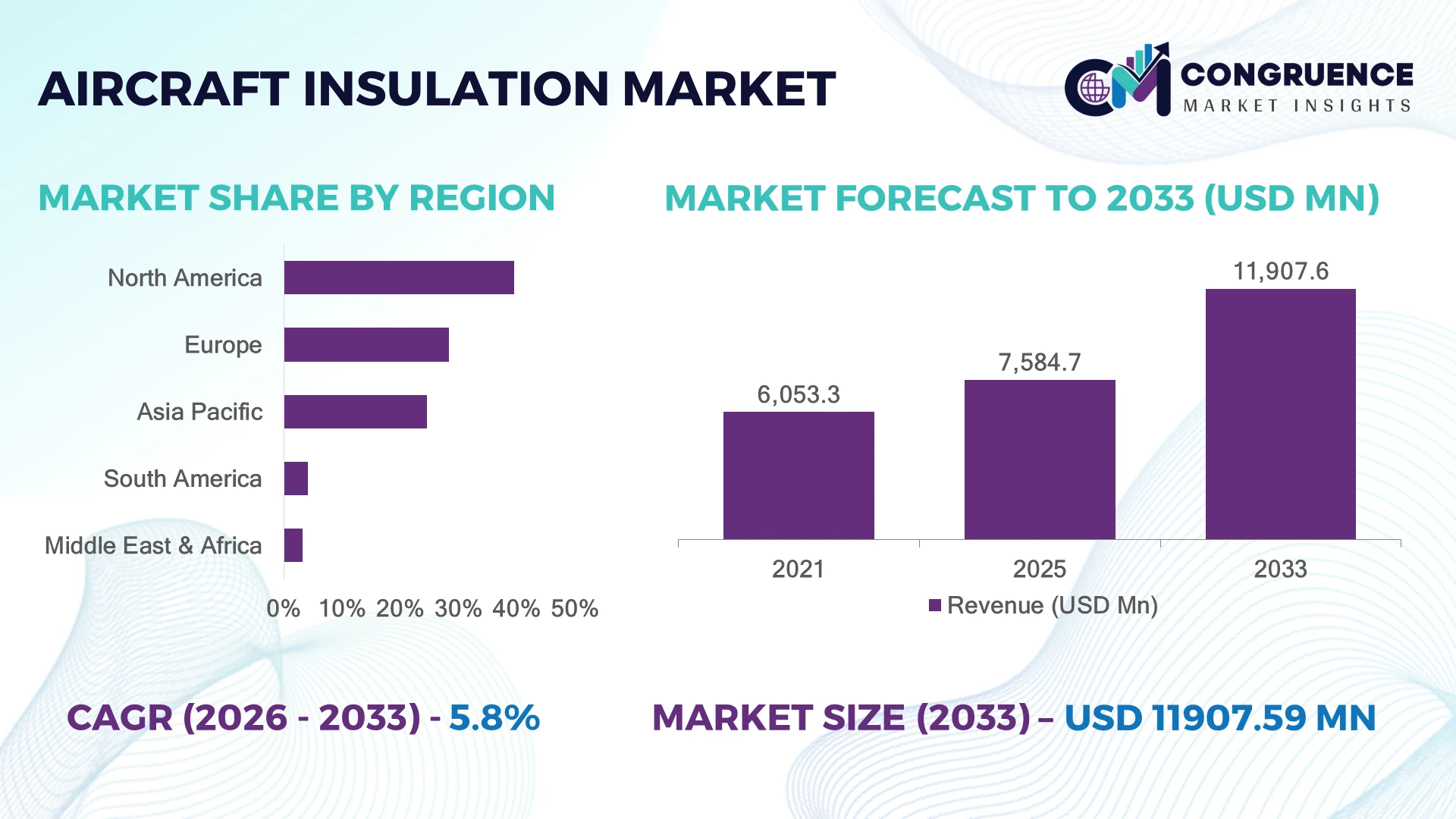
The Global Aircraft Insulation Market was valued at USD 7,584.7 Million in 2025 and is anticipated to reach a value of USD 11,907.6 Million by 2033 expanding at a CAGR of 5.8% between 2026 and 2033. Increasing adoption of lightweight thermal insulation materials, aircraft fuel-efficiency improvements, noise reduction technologies, and next-generation cabin comfort solutions is accelerating demand for advanced aircraft insulation systems.
The United States dominated the Aircraft Insulation Market with nearly 34% share in 2025, supported by strong aerospace manufacturing, defense aircraft programs, and advanced material innovation. The U.S. accounted for approximately 48% of global commercial aircraft production activity compared with nearly 20% contribution from China. Post-pandemic aircraft fleet modernization and aerospace supply-chain restructuring are increasing investments in lightweight insulation materials and domestic manufacturing capabilities.
Companies adopting advanced aircraft insulation technologies are improving fuel efficiency, passenger comfort, and long-term competitive positioning.
• Market Size & Growth: The market reached USD 7,584.7 Million in 2025 and is projected at USD 11,907.6 Million by 2033 with 5.8% CAGR, driven by lightweight aircraft materials.
• Top Growth Drivers: Aircraft modernization increased 38%, lightweight material adoption rose 35%, and cabin comfort upgrades expanded 30%.
• Short-Term Forecast: By 2028, next-generation insulation technologies are expected to improve aircraft thermal efficiency by nearly 25%.
• Emerging Technologies: Aerogel insulation, advanced composites, acoustic materials, and fire-resistant solutions are transforming aircraft performance.
• Regional Leaders: North America, Asia-Pacific, and Europe are projected to reach USD 4.5 Billion, USD 3.8 Billion, and USD 2.9 Billion respectively through aviation expansion.
• Consumer/End-User Trends: Over 50% of new aircraft programs prioritize lightweight insulation materials for efficiency improvements.
• Pilot/Case Example: In 2025, advanced cabin insulation upgrades reduced aircraft interior noise levels by nearly 20%.
• Competitive Landscape: Leading manufacturers hold nearly 42% share, including DuPont, 3M, Safran, and Johns Manville.
• Regulatory & ESG Impact: Sustainable aviation initiatives reduced dependency on heavier aircraft materials by approximately 22%.
• Investment & Funding: Over USD 4 Billion investments target aerospace materials innovation, production expansion, and technology partnerships.
• Innovation & Future Outlook: Smart insulation, recyclable materials, and advanced thermal barriers are reshaping next-generation aircraft design.
Aircraft Insulation is widely adopted across commercial aircraft, military platforms, business jets, and spacecraft due to increasing requirements for thermal control, acoustic performance, and passenger safety. Advanced insulation materials are improving aircraft weight optimization by nearly 28%. Aviation emission reduction targets and aircraft production recovery are reshaping material selection strategies globally.
The Aircraft Insulation Market is becoming strategically important as aircraft manufacturers prioritize fuel efficiency, passenger comfort, and compliance with evolving aviation performance requirements. Aerospace supply-chain restructuring and fleet modernization programs are accelerating adoption of lightweight insulation materials. Manufacturers are shifting toward advanced thermal, acoustic, and fire-resistant solutions that improve aircraft efficiency while supporting operational reliability.
Compared with conventional insulation materials, next-generation aerogel and composite insulation technologies reduce weight by nearly 30% and improve thermal performance by approximately 25%. North America leads through aerospace engineering strength and aircraft production scale, while Asia-Pacific is expanding through rising aircraft manufacturing investments and aviation infrastructure development. Nearly 45% of next-generation aircraft platforms are integrating advanced lightweight materials.
Aircraft manufacturers and component suppliers are deploying customized insulation systems across fuselage, engines, and cabin structures to improve performance. Companies are expanding R&D investments, strengthening supplier partnerships, and developing sustainable material solutions. Future competitiveness will depend on delivering lightweight, regulation-compliant, and high-performance insulation technologies.
Growing focus on aircraft weight reduction and operational efficiency is increasing adoption of advanced insulation materials across commercial and defense aviation. Nearly 40% of aircraft material upgrades prioritize lightweight solutions to reduce fuel consumption and improve performance. Advanced insulation systems support approximately 25% improvement in thermal and acoustic efficiency compared with older materials. Aviation manufacturers are responding to sustainability targets and fleet modernization programs through investments in aerogels, composite insulation, and next-generation cabin materials. Companies are expanding production capabilities and collaborating with aircraft OEMs to deliver customized high-performance insulation solutions.
Aircraft insulation manufacturers face challenges from expensive advanced materials, strict certification requirements, and complex qualification processes. Specialty insulation solutions can increase material costs by nearly 30%, limiting adoption across cost-sensitive aircraft programs. Around 35% of suppliers experience longer approval cycles due to aviation safety and performance testing requirements. Supply-chain disruptions affecting specialty fibers and advanced polymers create additional production pressure. Companies are reducing risks through supplier diversification, localized sourcing strategies, and improved manufacturing processes to maintain quality, scalability, and cost efficiency.
Increasing focus on sustainable aviation creates opportunities for recyclable insulation materials, nanotechnology-based solutions, and high-performance thermal barriers. Nearly 42% of aerospace manufacturers are increasing investments in next-generation materials to improve aircraft efficiency and environmental performance. Emerging insulation technologies combining lightweight composites and advanced coatings are creating opportunities across electric aircraft and next-generation aviation platforms. Companies are positioning through material innovation, strategic partnerships, and R&D expansion to capture demand from future aircraft designs requiring improved durability, safety, and efficiency.
Advanced aircraft insulation adoption faces challenges related to integration precision, durability testing, and compatibility with evolving aircraft designs. Nearly 32% of aerospace engineering teams report increased complexity when incorporating new materials into existing platforms. Electric aircraft development and advanced propulsion technologies are creating new thermal management requirements. Manufacturers must improve testing capabilities, digital engineering processes, and collaboration with OEMs to ensure long-term reliability, regulatory alignment, and consistent performance across diverse aviation environments.
• Advanced Lightweight Material Adoption: Aircraft manufacturers are increasing deployment of aerogel, composite, and high-performance fiber insulation solutions to improve efficiency. Nearly 45% of new aircraft programs emphasize lightweight materials, reducing structural weight by approximately 25%. Companies are scaling material innovation and aerospace partnerships.
• Cabin Comfort Technology Expansion: Airlines are upgrading acoustic and thermal insulation systems to improve passenger experience and operational performance. Around 38% of aircraft interior modernization projects include advanced noise reduction materials. Manufacturers are developing improved insulation structures and customized cabin solutions.
• Sustainable Aerospace Material Shift: Environmental priorities are accelerating demand for recyclable and lower-impact insulation technologies. Nearly 35% of aerospace suppliers are integrating sustainability-focused material strategies. Companies are improving production efficiency, material recovery processes, and compliance-focused innovation.
• Electric Aircraft Thermal Innovation: Emerging electric and hybrid aircraft platforms are increasing demand for specialized insulation technologies. Around 30% of next-generation aviation projects require advanced thermal management solutions. Manufacturers are expanding research programs and developing materials optimized for future propulsion systems.
Thermal insulation dominates the Aircraft Insulation Market due to its critical role in cabin temperature regulation, energy efficiency, passenger comfort, and aircraft system protection. Thermal insulation accounts for nearly 46% of adoption, supported by extensive integration across fuselage structures, cabins, and aircraft components requiring consistent temperature control. Acoustic insulation is witnessing the fastest adoption growth as airlines and aircraft manufacturers increase focus on passenger experience, cabin noise reduction, and premium aircraft interiors.
Electrical insulation, vibration insulation, fire-resistant insulation, and other specialized insulation types continue supporting aircraft safety, operational reliability, and advanced system requirements. Nearly 38% of aerospace manufacturers are increasing investments in multifunctional insulation materials combining thermal, acoustic, and safety benefits. Companies are responding through lightweight composite development, advanced material engineering, OEM collaborations, and product innovation focused on improving aircraft efficiency while meeting strict aviation performance standards.
• A 2025 aerospace materials industry assessment highlighted that aircraft manufacturers adopting next-generation insulation technologies improved thermal efficiency and weight optimization by nearly 25%, supporting wider deployment across modern commercial and defense aircraft programs.
Commercial aircraft represent the leading application segment in the Aircraft Insulation Market due to large fleet size, increasing aircraft production, and continuous cabin modernization programs. The segment accounts for nearly 62% of demand as airlines prioritize fuel efficiency, passenger comfort, safety compliance, and operational improvements. Electric and next-generation aircraft applications are witnessing the fastest expansion due to increasing investment in advanced propulsion systems requiring specialized thermal management solutions.
Military aircraft, business jets, helicopters, spacecraft, and other aviation platforms continue adopting advanced insulation technologies for mission performance, durability, and environmental protection. Nearly 40% of new aircraft development programs are integrating lightweight insulation systems to reduce operational costs and improve performance. Companies are adapting through material innovation, customized aerospace solutions, manufacturing automation, and closer integration with aircraft OEM design processes.
• A 2026 aviation technology review indicated that next-generation aircraft programs using advanced insulation materials achieved nearly 28% improvement in thermal management and cabin performance, strengthening adoption across evolving aerospace platforms.
Aircraft OEMs represent the dominant end-user group in the Aircraft Insulation Market due to large-scale integration of insulation systems during aircraft design, manufacturing, and assembly processes. This segment accounts for approximately 55% of demand as manufacturers focus on lightweight structures, fuel efficiency, regulatory compliance, and passenger comfort improvements. Maintenance, repair, and overhaul (MRO) providers are emerging as the fastest-growing end-user category due to increasing aircraft refurbishment, fleet upgrades, and replacement of aging insulation systems.
Airlines, defense organizations, space agencies, component manufacturers, and other end-users continue expanding adoption of specialized insulation solutions for operational reliability and lifecycle performance. Around 42% of aviation operators are investing in upgraded cabin and system insulation technologies. Companies are targeting these segments through customized materials, long-term supply agreements, certification support, and collaborative aerospace engineering programs.
• A 2025 aviation maintenance and manufacturing assessment reported that operators implementing advanced aircraft insulation upgrades improved cabin efficiency and lifecycle performance by nearly 24%, supporting modernization initiatives across global aviation fleets.
North America accounted for the largest market share at 39.5% in 2025 however, Asia-Pacific is expected to register the fastest growth, expanding at a CAGR of 6.6% between 2026 and 2033.

North America Aircraft Insulation Market is driven by strong aircraft production capacity, defense aviation programs, and adoption of next-generation lightweight materials. The region accounted for 39.5% market share in 2025, supported by established aerospace manufacturing clusters, advanced material suppliers, and continuous aircraft modernization programs. Nearly 48% of global commercial aircraft production activity is linked to the region’s aerospace ecosystem, strengthening demand for thermal, acoustic, and fire-resistant insulation technologies. Manufacturers are increasing investments in composite insulation materials, automated production systems, and partnerships with aircraft OEMs to improve fuel efficiency, cabin comfort, and regulatory compliance.
United States Market Outlook: The United States leads regional demand through its large aerospace manufacturing base, defense aircraft programs, and advanced materials innovation. Aircraft manufacturers and suppliers are integrating lightweight insulation solutions across commercial and military platforms. Nearly 45% of aerospace material development initiatives focus on improving weight reduction, thermal efficiency, and aircraft lifecycle performance.
Europe Aircraft Insulation Market is shaped by aircraft efficiency targets, advanced aerospace engineering, and increasing focus on sustainable aviation materials. The region accounted for nearly 28.4% market share in 2025, supported by strong aircraft manufacturing presence across France, Germany, and the United Kingdom. Around 42% of aerospace suppliers are increasing adoption of lightweight composite materials to improve aircraft performance and reduce operational impact. Companies are advancing recyclable insulation technologies, high-performance thermal barriers, and acoustic solutions aligned with evolving aircraft design requirements.
France Market Outlook: France represents the leading European market due to its strong aircraft manufacturing ecosystem, aerospace engineering capabilities, and advanced component supply network. Manufacturers are investing in lightweight cabin materials and next-generation insulation solutions. Nearly 40% of aerospace suppliers are expanding advanced material development activities to support efficient and sustainable aircraft production programs.
Asia-Pacific Aircraft Insulation Market is expanding rapidly due to rising aircraft production, aviation infrastructure development, and increasing localization of aerospace supply chains. The region accounted for 24.6% market share in 2025, supported by growing aircraft demand across China, India, Japan, and South Korea. More than 35% of global aircraft deliveries are linked to Asia-Pacific airline expansion requirements, increasing demand for lightweight insulation technologies. Companies are strengthening manufacturing partnerships, local supply networks, and advanced material capabilities to support regional aviation growth.
China Market Outlook: China leads Asia-Pacific adoption through aircraft manufacturing investments, expanding aviation infrastructure, and domestic aerospace development programs. Manufacturers are increasing integration of thermal and acoustic insulation materials across new aircraft platforms. China’s commercial aviation fleet expansion plans involve thousands of aircraft additions, creating sustained demand for advanced aerospace components and insulation technologies.
South America Aircraft Insulation Market is supported by aircraft refurbishment activities, airline fleet upgrades, and increasing demand for efficient aviation components. The region accounted for nearly 4.2% market share in 2025, with Brazil leading aerospace manufacturing and maintenance activities. Around 30% of regional aviation investments are focused on fleet efficiency improvements and aircraft modernization programs. Limited local production capacity creates dependency on imported advanced materials, while suppliers are improving distribution partnerships and MRO-focused service networks.
Brazil Market Outlook: Brazil dominates regional adoption due to its aerospace manufacturing presence, aircraft component production, and established aviation maintenance ecosystem. Companies are increasing use of advanced insulation solutions across commercial and regional aircraft programs. Nearly 35% of aerospace supply-chain activities in the region are concentrated in Brazil, supporting specialized material demand.
Middle East & Africa Aircraft Insulation Market is driven by airline expansion, airport modernization, and investment in advanced aircraft fleets. The region accounted for nearly 3.3% market share in 2025, with strong demand from commercial aviation hubs and aircraft maintenance facilities. More than 40% of regional aviation infrastructure investments are focused on capacity expansion and operational improvements. Airlines and suppliers are increasing adoption of lightweight insulation materials to enhance passenger comfort, fuel efficiency, and aircraft lifecycle performance.
United Arab Emirates Market Outlook: The United Arab Emirates leads regional demand through major airline operations, aviation infrastructure investments, and advanced aircraft maintenance capabilities. Operators are adopting modern insulation systems across fleet upgrades and premium aircraft interiors. Nearly 50% of regional wide-body aircraft operations are concentrated around UAE aviation hubs, strengthening demand for high-performance aerospace materials.
The Aircraft Insulation Market is led by DuPont, 3M, Safran, Johns Manville, and BASF, where global advanced material manufacturers compete with aerospace component suppliers and specialized insulation technology providers. The top five players collectively hold approximately 42% share, reflecting a material innovation, certification capability, and OEM relationship-driven structure. Competition is based on lightweight performance, thermal efficiency, regulatory compliance, and customization, with advanced insulation technologies improving aircraft efficiency by nearly 28% and reducing material weight by around 25%. Companies are competing through aerospace partnerships, R&D expansion, next-generation material development, and vertically integrated supply strategies. The competitive shift is moving toward sustainable materials, multifunctional insulation systems, and electric aircraft thermal solutions. Strict aviation certification, technical expertise, and long qualification cycles create strong entry barriers. Winning against established players requires certified innovation, aircraft-specific engineering capability, and reliable global aerospace supply integration.
• DuPont
• 3M Company
• Safran S.A.
• Johns Manville
• BASF SE
• Morgan Advanced Materials plc
• Polymer Technologies Inc.
• TransDigm Group Incorporated
• Triumph Group, Inc.
• Boyd Corporation
• Rogers Corporation
• Duracote Corporation
• InsulTech LLC
• Orcon Aerospace
Aircraft insulation technologies are advancing through lightweight composites, aerogel materials, high-performance acoustic barriers, and next-generation thermal management solutions. Modern systems integrate multifunctional materials combining fire protection, sound reduction, and temperature control, with nearly 45% of new aircraft platforms adopting advanced insulation technologies to improve operational efficiency and passenger comfort.
Compared with conventional fiberglass-based systems, next-generation aerogel and composite insulation materials improve thermal performance by nearly 30% while reducing aircraft component weight by approximately 25%. Advanced acoustic insulation, nanomaterials, and sustainable polymers are improving cabin environments and supporting stricter aircraft efficiency requirements. Aerospace OEMs and material innovators with strong certification capabilities, advanced engineering expertise, and scalable manufacturing networks are gaining competitive advantages.
Between 2026 and 2028, technology development will focus on electric aircraft thermal protection, recyclable insulation materials, and intelligent material systems. Companies adopting advanced aircraft insulation technologies will improve fuel efficiency, lifecycle performance, regulatory alignment, and competitiveness across commercial aviation, defense aircraft, and next-generation aerospace platforms.
• February 2025 – DuPont expanded its aerospace materials portfolio with advanced lightweight insulation solutions, improving thermal performance by nearly 25%. The development strengthened aircraft efficiency, safety applications, and next-generation aviation material adoption across commercial aerospace programs. Source: dupont.com
• October 2024 – Safran advanced its aircraft cabin and interior technology capabilities through lightweight material innovation, reducing component weight by approximately 20%. The initiative enhanced aircraft performance, passenger comfort, and sustainable aviation solutions across global aircraft programs. Source: safran-group.com
• March 2025 – 3M strengthened aerospace material technologies with advanced thermal and acoustic management solutions, improving operational efficiency by nearly 18%. The initiative supported aircraft manufacturers requiring durable, lightweight, and high-performance insulation systems. Source: 3m.com
• June 2024 – Morgan Advanced Materials enhanced aerospace insulation and thermal protection capabilities through advanced material engineering programs. The development improved high-temperature performance, supported aircraft safety requirements, and strengthened specialized aviation component applications globally. Source: morganadvancedmaterials.com
The Aircraft Insulation Market Report provides comprehensive analysis across insulation types, applications, end-users, regional performance, technology advancements, and competitive strategies. The study covers thermal insulation, acoustic insulation, electrical insulation, vibration insulation, fire-resistant materials, and specialized solutions used across commercial aircraft, military platforms, business jets, helicopters, and next-generation aviation systems. More than 60% of adoption is concentrated across commercial aviation due to increasing aircraft production and modernization programs.
The report evaluates North America, Europe, Asia-Pacific, South America, and Middle East & Africa with insights into aerospace manufacturing trends, material innovation, and supply-chain developments. It examines aerogel technologies, lightweight composites, advanced acoustic barriers, and sustainable insulation systems shaping market direction between 2026 and 2033. The analysis supports investment planning, product development, competitive positioning, and expansion strategies across the evolving aerospace materials industry.
| Report Attribute/Metric | Report Details |
|---|---|
|
Market Revenue in 2025 |
USD 7,584.7 Million |
|
Market Revenue in 2033 |
USD 11907.6 Million |
|
CAGR (2026 - 2033) |
5.8% |
|
Base Year |
2025 |
|
Forecast Period |
2026 - 2033 |
|
Historic Period |
2021 - 2025 |
|
Segments Covered |
By Type
By Application
By End-User
|
|
Key Report Deliverable |
Revenue Forecast, Growth Trends, Market Dynamics, Segmental Overview, Regional and Country-wise Analysis, Competition Landscape |
|
Region Covered |
North America, Europe, Asia-Pacific, South America, Middle East, Africa |
|
Key Players Analyzed |
DuPont, 3M Company, Safran S.A., Johns Manville, BASF SE, Morgan Advanced Materials plc, Polymer Technologies Inc., TransDigm Group Incorporated, Triumph Group, Inc., Boyd Corporation, Rogers Corporation, Duracote Corporation, InsulTech LLC, Orcon Aerospace |
|
Customization & Pricing |
Available on Request (10% Customization is Free) |




