
Reports
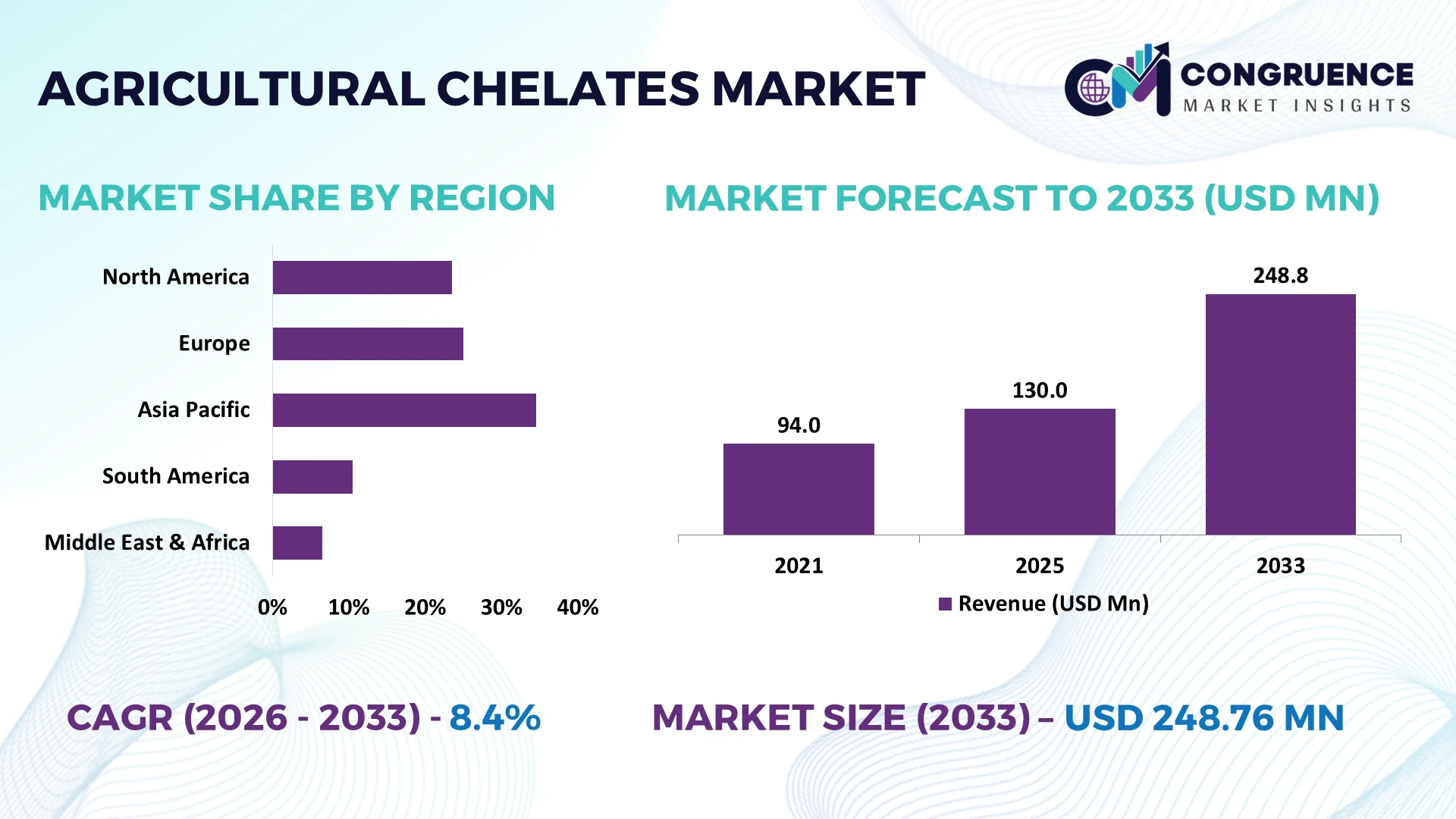
The Global Agricultural Chelates Market was valued at USD 130.0 Million in 2025 and is anticipated to reach a value of USD 248.8 Million by 2033 expanding at a CAGR of 8.45% between 2026 and 2033. Increasing micronutrient deficiencies in agricultural soils, expanding fertigation practices, and rising cultivation of high-value crops are accelerating demand for agricultural chelates.
China represents a major agricultural chelates market, supported by extensive fertilizer manufacturing infrastructure and approximately 119 million hectares of grain cultivation. China produces over 700 million tonnes of grain annually, compared with approximately 330 million tonnes in India in 2023–2024. The country's fertilizer efficiency initiatives and global food security pressures are encouraging investments in precision nutrient management, particularly for greenhouse vegetables and commercial fruit production.
Strategic investments in pH-stable chelating agents, crop-specific formulations, and localized distribution networks will strengthen manufacturers' competitive positioning.
Market Size & Growth: USD 130.0 Million in 2025, reaching USD 248.8 Million by 2033 at 8.45% CAGR, supported by precision micronutrient management.
Top Growth Drivers: Micronutrient deficiency management (40%), precision fertigation (35%), and high-value crop cultivation (25%), based on indicative driver weightings.
Short-Term Forecast: By 2028, optimized chelated nutrient programs target 10–15% reductions in micronutrient application wastage.
Emerging Technologies: Three prominent innovations include biodegradable chelating agents, sensor-based fertigation, and advanced multi-micronutrient formulations.
Regional Leaders: Indicative 2033 projections include Asia Pacific (USD 99.5 Million), Europe (USD 62.2 Million), and North America (USD 54.7 Million), supported by precision cultivation.
Consumer/End-User Trends: High-value horticultural growers increasingly target 10–20% improvements in nutrient-use efficiency through controlled micronutrient application.
Pilot/Case Example: A representative 2025 greenhouse deployment targets 15% lower micronutrient wastage through automated chelate-based fertigation.
Competitive Landscape: Nouryon represents an established supplier, alongside BASF, Yara International, Syngenta, and Haifa Group; individual market shares remain unverified.
Regulatory & ESG Impact: The European Union targets a 50% reduction in nutrient losses by 2030, encouraging efficient fertilizer formulations.
Investment & Funding: An illustrative USD 10 Million expansion program prioritizes biodegradable formulations, production modernization, and distribution partnerships.
Innovation & Future Outlook: Two strategic priorities dominate product development: environmentally compatible chelation chemistry and digitally optimized nutrient delivery.
Agricultural chelates are increasingly utilized in horticulture, greenhouse farming, hydroponics, and commercial field crop production to improve micronutrient availability. Advanced EDDHA-based iron chelates remain effective in alkaline soils approaching pH 9, while optimized fertigation programs target 15% lower nutrient wastage. Growing emphasis on fertilizer-use efficiency is shifting competitive priorities toward environmentally compatible formulations and integrated crop nutrition solutions.
Agricultural chelates are becoming strategically important within specialty fertilizer portfolios as agricultural producers prioritize crop productivity, nutrient absorption, and input efficiency. Rising soil alkalinity and intensive cultivation are exposing limitations in conventional inorganic micronutrient fertilizers. European nutrient-loss reduction policies and China's fertilizer efficiency initiatives are accelerating the transition toward targeted nutrient delivery systems, strengthening commercial opportunities for specialized chelate manufacturers.
Unlike conventional iron salts, which readily precipitate under alkaline conditions, EDDHA-based iron chelates maintain nutrient availability at soil pH levels approaching 9. Optimized fertigation programs target 10–20% reductions in unnecessary micronutrient applications. China and India provide extensive agricultural deployment opportunities, whereas the Netherlands emphasizes technologically advanced greenhouse cultivation, automated dosing, and controlled nutrient delivery.
Between 2026 and 2029, commercial growers are expected to expand sensor-assisted nutrient management, targeting 10–15% improvements in application efficiency. Greenhouse tomato producers demonstrate practical deployment through automated iron-chelate dosing systems that respond to nutrient solution conditions. Manufacturers are consequently prioritizing biodegradable chelating agents, agronomic research partnerships, and regional formulation facilities. Competitive advantage will increasingly depend on delivering measurable crop performance improvements rather than competing solely on fertilizer volume and pricing.
Widespread micronutrient deficiencies across intensively cultivated agricultural soils are accelerating demand for agricultural chelates. Indian soil assessments have historically identified zinc deficiency in approximately 36% of sampled soils and iron deficiency in around 12%, creating substantial requirements for targeted nutrient supplementation. India's Soil Health Card initiative is strengthening soil-specific fertilizer recommendations and encouraging balanced nutrient application. Chelated micronutrients maintain greater solubility under unfavorable soil conditions, improving nutrient availability and reducing precipitation losses. Manufacturers including Yara International and Haifa Group are expanding specialty nutrition portfolios and agronomic support capabilities. The strongest commercial advantage lies in crop-specific formulations that address localized deficiencies without increasing overall fertilizer application intensity.
Agricultural chelate manufacturing remains exposed to fluctuations in petrochemical-derived feedstocks, metal salts, energy costs, and specialized synthesis requirements. The European Union's natural gas consumption declined approximately 18% between August 2022 and March 2023 against its historical reference period, reflecting significant energy-market disruption affecting chemical producers. Additionally, commercial iron chelates commonly contain approximately 6% iron in EDDHA formulations and 11% in DTPA formulations, requiring careful cost-per-available-nutrient comparisons. Higher upfront prices restrict adoption among price-sensitive farmers, particularly in India and developing agricultural economies. Manufacturers are mitigating procurement risks through diversified raw material sourcing, localized blending, and optimized production processes. Formulation efficiency remains critical to maintaining profitability without compromising chelation stability.
Biodegradable chelating agents and digitally controlled fertigation systems offer significant opportunities for agricultural chelate manufacturers seeking differentiated product portfolios. The European Union's 2030 environmental objectives target a 50% reduction in nutrient losses and at least a 20% reduction in fertilizer use, encouraging more efficient nutrient delivery technologies. GLDA-based chelating agents offer an alternative development pathway to persistent conventional aminopolycarboxylate compounds. Advanced greenhouse operations in the Netherlands provide commercialization opportunities through automated dosing and closed-loop nutrient circulation. Manufacturers are prioritizing formulation research, irrigation technology partnerships, and crop-specific field validation. Integrating chelates with precision dosing platforms creates opportunities to generate recurring specialty fertilizer demand while reducing nutrient discharge and application inefficiencies.
Ensuring consistent chelate performance across diverse soil conditions, irrigation systems, and crop varieties remains a significant commercialization challenge. Agriculture accounts for approximately 70% of global freshwater withdrawals, while irrigated agriculture occupies around 20% of cultivated land and contributes approximately 40% of global food production. Variations in irrigation water alkalinity, soil pH, competing metal ions, and nutrient concentrations complicate standardized chelate application. Commercial growers in India and China require reliable field-level recommendations to prevent micronutrient imbalances and unnecessary input expenditure. Manufacturers must strengthen multi-location field trials, agronomic training, and compatibility testing with existing fertilizer programs. Long-term competitiveness depends on translating laboratory chelation stability into reproducible nutrient uptake and economically measurable crop performance.
Shift Toward Concentrated Liquid Formulations: Agricultural chelate manufacturers are expanding liquid product portfolios to simplify handling, storage, and fertilizer preparation. Commercial liquid iron formulations typically contain 3–6% iron, while concentrated EDTA-based zinc products contain up to 14% zinc in dry form. Suppliers are introducing pre-dissolved formulations and automated blending systems to reduce preparation time and improve dosing consistency.
Increasing Demand for Customized Nutrient Blends: Commercial growers are replacing separate micronutrient applications with integrated formulations containing three to six essential trace elements. Standard iron chelates contain approximately 6–13% iron, depending on chelation chemistry. Manufacturers are expanding customized blending capabilities and partnering with fertilizer distributors to consolidate procurement, simplify application schedules, and reduce nutrient compatibility problems.
Greater Emphasis on Chelate Purity: Specialty fertilizer suppliers are strengthening quality control around active chelate content and isomer composition. Commercial EDDHA products commonly contain 6% total iron, with premium formulations providing approximately 4.8% ortho-ortho chelated iron. Manufacturers are investing in analytical testing and production standardization as growers increasingly evaluate effective nutrient availability rather than nominal metal concentration.
Regional Distribution and Packaging Expansion: Fertilizer supply-chain disruptions are encouraging manufacturers to establish localized blending, packaging, and inventory facilities. Commercial agricultural chelates are increasingly distributed through packaging formats ranging from 1-kilogram retail packs to 25-kilogram industrial bags. Suppliers are restructuring distribution partnerships to improve replenishment flexibility and reduce inventory exposure across seasonal agricultural markets.
EDTA chelates represent the leading type, with an indicative market share of approximately 40% in 2025, supported by economical production, extensive commercial availability, and compatibility with conventional fertilizer formulations. Their widespread utilization in neutral and moderately acidic soils strengthens demand across field crops, horticulture, and foliar nutrition programs. DTPA chelates maintain an established position in greenhouse cultivation and hydroponic applications, with commercial iron-DTPA formulations typically containing 11% iron. EDDHA chelates represent the fastest-growing type in the indicative segmentation outlook, supported by superior iron stability under alkaline soil conditions.
Commercial EDDHA formulations generally contain 6% iron, providing differentiated performance in calcareous soils. IDHA and other specialized chelates are gaining commercial relevance through environmentally compatible nutrient management. Companies including Nouryon, BASF, and Haifa Group are prioritizing specialized formulations, chelation stability, and application-specific product development. Investment priorities are shifting toward chelates that deliver consistent micronutrient availability across challenging soil conditions while supporting commercially viable application costs.
Soil application represents the leading application segment, with an indicative market share of approximately 42% in 2025, supported by extensive utilization across field crops, commercial orchards, and conventional fertilizer programs. Direct soil application enables growers to address persistent micronutrient deficiencies throughout crop development. Foliar application maintains considerable commercial relevance through targeted deficiency correction and rapid nutrient uptake, particularly during critical growth stages. Fertigation represents the fastest-growing application in the indicative outlook as commercial producers integrate water-soluble agricultural chelates into drip irrigation and automated nutrient delivery systems.
Optimized fertigation programs target 10–20% reductions in unnecessary micronutrient applications, depending on crop requirements and operating conditions. Seed treatment remains a specialized application focused on early-stage nutrient availability and seedling establishment. Manufacturers are expanding water-soluble product portfolios, developing irrigation-compatible formulations, and establishing partnerships with agricultural equipment suppliers. Demand is increasingly shifting toward application methods that combine precise nutrient delivery with reduced labor requirements and improved operational control.
Commercial farms constitute the leading end-user segment, with an indicative market share of approximately 45% in 2025, supported by extensive cultivated acreage, recurring fertilizer procurement, and established crop nutrition programs. Large agricultural producers in China, India, and the United States prioritize economical micronutrient formulations that support consistent crop quality and productivity. Greenhouse and hydroponic growers represent the fastest-growing end-user segment in the indicative outlook, driven by controlled-environment agriculture and increasingly sophisticated nutrient management systems.
These operators target 10–15% improvements in nutrient application efficiency through automated dosing and crop-specific formulations. Small and medium-sized farms remain important buyers through agricultural cooperatives, regional distributors, and affordable packaging formats. Agricultural research institutions utilize specialized chelates for nutrient absorption studies, formulation validation, and crop performance assessments. Manufacturers including Yara International and Haifa Group are strengthening agronomic support, customized product offerings, and distribution partnerships. Competitive positioning increasingly depends on balancing affordability for conventional farms with technical performance for intensive cultivation systems.
Asia Pacific accounted for the largest market share at 34.5% in 2025 however, North America is expected to register the fastest growth, expanding at a CAGR of 10.2% between 2026 and 2033.
North America accounted for approximately 23.5% of the global Agricultural Chelates Market in 2025, supported by mechanized farming, established specialty fertilizer distribution networks, and advanced crop nutrition practices. Commercial producers increasingly utilize chelated micronutrients to address nutrient deficiencies across corn, soybean, citrus, and vegetable cultivation. Approximately 27% of U.S. farms and ranches reported using precision agriculture practices in 2023, establishing a favorable operational environment for targeted micronutrient delivery. Canada contributes through extensive grain and oilseed cultivation, while Mexico supports demand through export-oriented horticulture and protected cultivation. Agricultural input suppliers are expanding water-soluble micronutrient portfolios and strengthening partnerships with agronomic service providers. Integration of soil testing, variable-rate application, and crop-specific nutrient recommendations is shifting purchasing decisions toward formulations offering consistent nutrient availability and measurable agronomic performance.
United States Market Outlook: The United States leads regional demand through extensive commercial farming infrastructure, established agricultural research capabilities, and sophisticated fertilizer distribution channels. Corn planting covered approximately 90.6 million acres in 2024, creating substantial opportunities for targeted micronutrient supplementation. Specialty fertilizer manufacturers are strengthening relationships with agricultural cooperatives and independent crop advisers to improve formulation selection, field-level application accuracy, and customer retention.
Europe accounted for approximately 25.0% of the global Agricultural Chelates Market in 2025, supported by advanced horticultural infrastructure, established specialty chemical manufacturing, and stringent agricultural environmental standards. The European Union's Farm to Fork Strategy targets a 50% reduction in nutrient losses and at least a 20% reduction in fertilizer use by 2030, encouraging more efficient micronutrient delivery. Spain, Germany, France, and the Netherlands represent important consumption and innovation centers, particularly for greenhouse vegetables, vineyards, orchards, and commercial field crops. Agricultural chelate manufacturers are strengthening product traceability, formulation purity, and environmental compatibility to align with evolving fertilizer regulations. Established chemical production capabilities support advanced chelation technologies, while partnerships with greenhouse equipment manufacturers facilitate specialized nutrient delivery. Competitive differentiation increasingly depends on regulatory compliance, technical documentation, and demonstrable nutrient-use efficiency.
Netherlands Market Outlook: The Netherlands maintains a strategically significant position through its technologically advanced greenhouse industry, covering approximately 10,000 hectares. Commercial greenhouse operators utilize controlled nutrient solutions, automated dosing equipment, and recirculating irrigation systems requiring highly soluble micronutrient formulations. Dutch agricultural technology companies and specialty chemical manufacturers are strengthening collaborative research to improve chelate compatibility with closed-loop cultivation environments and export-oriented horticultural production.
Asia Pacific accounted for approximately 34.5% of the global Agricultural Chelates Market in 2025, supported by extensive agricultural production, widespread micronutrient deficiencies, and expanding commercial horticulture. China and India represent major consumption centers, while Japan, South Korea, and Australia contribute through technologically advanced cultivation practices. India's horticultural production reached approximately 367.7 million tonnes during 2024–2025, reinforcing opportunities for specialized micronutrient formulations across fruits, vegetables, and plantation crops. Expanding agricultural input distribution networks and government-supported soil management programs are improving access to crop-specific nutrient products. Regional manufacturers benefit from established chemical processing infrastructure and competitive formulation capabilities. International suppliers are strengthening local partnerships, technical support, and distribution coverage to address diverse soil conditions. The market's competitive structure increasingly favors manufacturers capable of combining affordable formulations with reliable agronomic performance across fragmented farming systems.
China Market Outlook: China dominates regional agricultural chelate demand through extensive fertilizer manufacturing infrastructure, large-scale commercial cultivation, and government-supported agricultural modernization. National grain production exceeded 706 million tonnes in 2024, demonstrating the scale of its agricultural input requirements. Domestic manufacturers are expanding specialized chelating agent production and improving formulation quality, while commercial growers increasingly adopt targeted micronutrient programs to support intensive vegetable and fruit cultivation.
South America accounted for approximately 10.5% of the global Agricultural Chelates Market in 2025, supported by extensive soybean, maize, sugarcane, coffee, and fruit cultivation. Brazil and Argentina represent major agricultural input markets, while Chile and Peru contribute through export-oriented horticulture requiring consistent crop quality and nutrient management. Brazil's grain production reached approximately 350 million tonnes during the 2024–2025 agricultural season, reinforcing demand for specialized crop nutrition products. Commercial farming enterprises increasingly incorporate chelated micronutrients into soil and foliar application programs to address localized nutrient deficiencies. However, imported specialty chemical dependency, transportation costs, and uneven agricultural infrastructure constrain wider adoption. Manufacturers are strengthening regional blending facilities, distributor partnerships, and agronomic support networks. Suppliers offering reliable product availability and formulations adapted to tropical soil conditions are positioned to strengthen relationships with commercial agricultural producers.
Brazil Market Outlook: Brazil represents the region's largest agricultural chelates consumption opportunity, supported by extensive commercial farming and established agricultural input distribution infrastructure. Soybean cultivation covered approximately 47 million hectares during the 2024–2025 season. Agricultural enterprises increasingly prioritize targeted zinc, manganese, and iron supplementation to manage nutrient availability in highly weathered tropical soils. Specialty fertilizer suppliers are expanding localized formulation capabilities and technical partnerships with agricultural cooperatives.
Middle East & Africa accounted for approximately 6.5% of the global Agricultural Chelates Market in 2025, supported by agricultural modernization, expanding protected cultivation, and increasing requirements for micronutrient management in alkaline soils. Saudi Arabia, the United Arab Emirates, Israel, Egypt, Morocco, and South Africa represent strategically important markets for specialty agricultural nutrition. Morocco's agricultural modernization initiatives have supported the expansion of localized irrigation across more than 700,000 hectares, creating opportunities for water-soluble chelated micronutrients. Commercial growers increasingly prioritize formulations compatible with saline irrigation water and challenging soil conditions. Limited agricultural infrastructure, imported chemical dependency, and affordability constraints restrict broader deployment across several African markets. Manufacturers are strengthening partnerships with irrigation technology providers, regional distributors, and agricultural development organizations. Competitive positioning depends on delivering stable micronutrient formulations adapted to water scarcity and demanding cultivation environments.
Saudi Arabia Market Outlook: Saudi Arabia represents a strategically important market through government-supported food security investments, greenhouse expansion, and controlled-environment agriculture. The country's agricultural sector produces more than 1.5 million tonnes of dates annually, creating significant requirements for specialized orchard nutrition. Agricultural input suppliers are targeting commercial date producers and protected vegetable cultivation through alkaline-stable iron chelates, irrigation-compatible micronutrient blends, and localized agronomic support services.
Nouryon, BASF, Yara International, Haifa Group, and Valagro compete through differentiated chelation chemistry, established distribution networks, and integrated crop nutrition portfolios. The five leading suppliers collectively account for an estimated 45% of the market, reflecting moderate concentration. Global chemical manufacturers compete against regional fertilizer formulators through product consistency, technical expertise, and manufacturing scale. Competition increasingly centers on nutrient concentration, formulation stability, and application economics, with commercial EDTA zinc formulations containing up to 14% zinc and EDDHA iron formulations typically containing 6% iron. Established suppliers are expanding specialty nutrition portfolios, strengthening distributor partnerships, and investing in customized micronutrient blends. Regional manufacturers emphasize competitive pricing and localized agronomic support. Competitive differentiation is shifting from standardized chelates toward crop-specific formulations and environmentally compatible chemistry. Specialized synthesis capabilities, regulatory compliance, and field validation create substantial entry barriers. Winning requires reliable chelation performance, competitive production economics, localized distribution, and demonstrable agronomic advantages across diverse cultivation environments.
Nouryon
BASF SE
Yara International ASA
Haifa Group
Valagro (Syngenta Biologicals)
ICL Group
Van Iperen International
COMPO EXPERT GmbH
BRANDT, Inc.
Trade Corporation International (Rovensa Next)
Aries Agro Limited
ATP Nutrition Ltd.
Conventional EDTA, DTPA, and EDDHA chelation technologies underpin commercial micronutrient formulations, with performance differentiation determined by metal binding stability and soil alkalinity. EDTA zinc formulations typically contain 14% zinc, while DTPA iron products contain 11% iron. Advanced EDDHA formulations maintain iron availability under alkaline conditions approaching pH 9, supporting reliable nutrient delivery where conventional inorganic salts experience precipitation and reduced availability.
Emerging technologies include biodegradable chelating agents, concentrated liquid formulations, and automated micronutrient blending. Compared with conventional EDTA chemistry, readily biodegradable GLDA demonstrates over 60% biodegradation within standardized 28-day testing conditions. Commercial adoption remains concentrated in specialized fertilizer development and environmentally sensitive cultivation systems. Manufacturers possessing advanced chemical synthesis capabilities benefit from formulation differentiation, improved regulatory positioning, and opportunities to establish premium product portfolios.
Digital integration is transforming agricultural chelate deployment through automated fertigation, soil diagnostics, and sensor-assisted nutrient dosing. Approximately 27% of United States farms and ranches reported using precision agriculture practices in 2023, indicating established infrastructure for targeted nutrient delivery. Between 2026 and 2028, optimized dosing systems will target 10–15% reductions in unnecessary micronutrient applications. Suppliers integrating formulation expertise with irrigation technology partnerships will strengthen customer retention, improve application consistency, and establish competitive advantages through measurable crop nutrition performance improvements.
October 2025: Nouryon highlighted its HBED iron chelation technology during World Fertilizer Day on October 13. The technology addresses iron precipitation in alkaline soils, strengthening Nouryon’s competitive differentiation in specialized micronutrient formulations designed for challenging agricultural growing conditions. Source: nouryon.com
January 2026: Yara International reported that its new Howden specialty crop nutrition facility was approximately 70% complete, representing an investment of USD 165 million. The facility is designed to double production capacity, strengthening global micronutrient and biostimulant supply capabilities. Source: yara.com
July 2024: ICL Group acquired Custom Ag Formulators for approximately USD 60 million, adding two manufacturing facilities in the United States. The acquisition strengthens customized agricultural nutrient formulation capabilities, regional distribution efficiency, and responsiveness to specialized crop nutrition requirements. Source: icl-group.com
February 2025: Haifa Group introduced Haifa Soluble DUO at HortiContact in the Netherlands, offering two water-soluble fertilizer formulations with 10% and 34% calcium oxide respectively. This complementary fertigation innovation strengthens nutrient management flexibility across commercial greenhouse and horticultural operations. Source: haifa-group.com
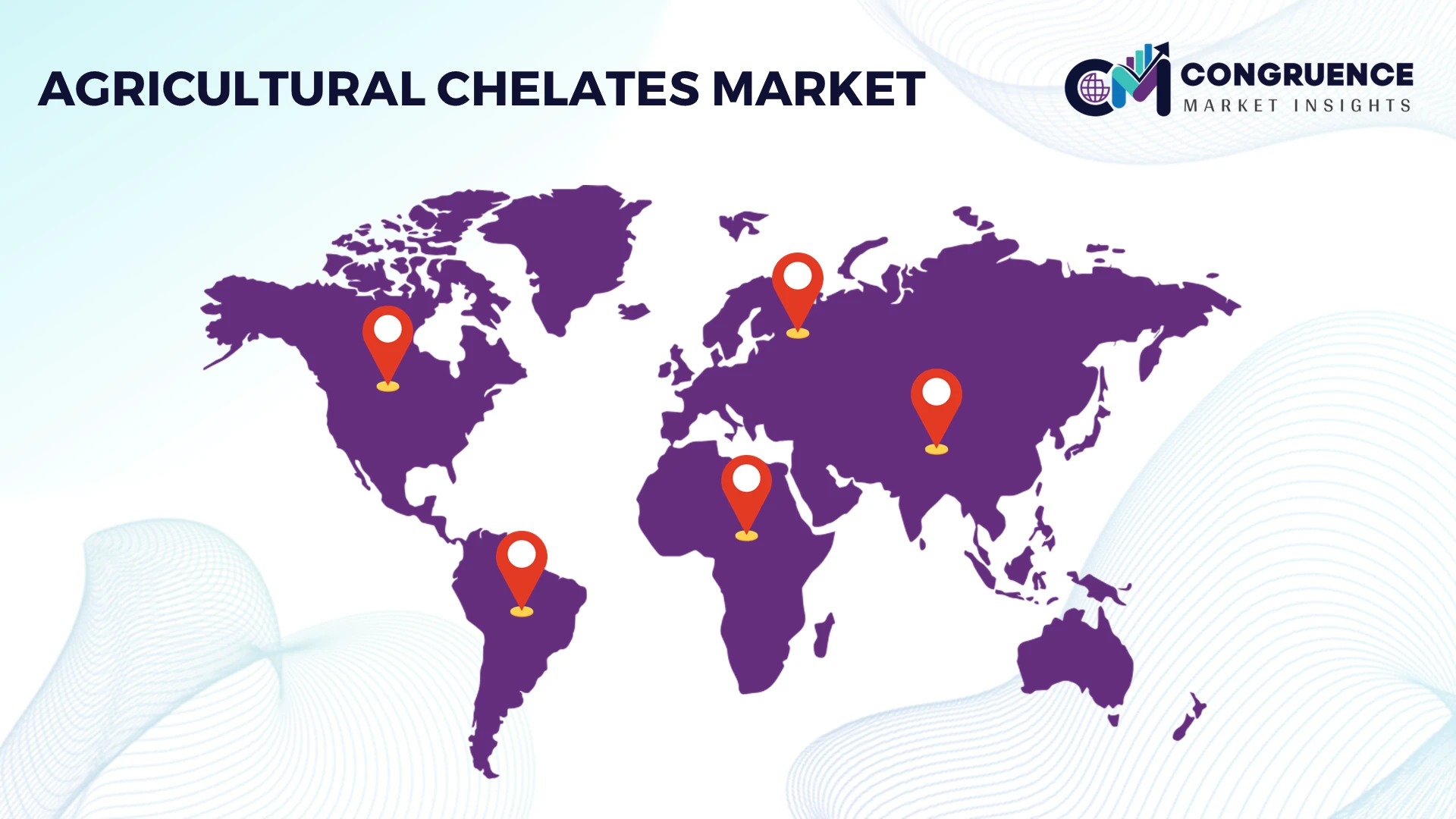
The Agricultural Chelates Market Report provides comprehensive analysis across five type categories, including EDTA, DTPA, EDDHA, IDHA, and other specialized chelates. Application coverage encompasses soil application, foliar application, fertigation, and seed treatment, while end-user analysis includes commercial farms, small and medium-sized farms, greenhouse and hydroponic growers, and agricultural research institutions. The report evaluates market dynamics across North America, Europe, Asia Pacific, South America, and Middle East & Africa.
The report examines advanced chelation chemistry, biodegradable formulations, concentrated liquid micronutrients, precision nutrient delivery, and automated fertigation technologies. Strategic analysis covers competitive positioning, manufacturing capabilities, product differentiation, regulatory developments, distribution partnerships, and emerging investment opportunities. Detailed segmentation and country-level assessments support stakeholders in identifying attractive agricultural markets, optimizing product portfolios, strengthening expansion strategies, and evaluating long-term commercial opportunities between 2026 and 2033.
| Report Attribute / Metric | Details |
|---|---|
| Market Revenue (2025) | USD 130.0 Million |
| Market Revenue (2033) | USD 248.8 Million |
| CAGR (2026–2033) | 8.45% |
| Base Year | 2025 |
| Forecast Period | 2026–2033 |
| Historic Period | 2021–2025 |
| Segments Covered |
By Type
By Application
By End-User
|
| Key Report Deliverables | Revenue Forecast; Market Trends; Growth Drivers & Restraints; Technology Insights; Segmentation Analysis; Regional Insights; Competitive Landscape; Regulatory & ESG Overview; Recent Developments |
| Regions Covered | North America; Europe; Asia-Pacific; South America; Middle East & Africa |
| Key Players Analyzed | Nouryon; BASF SE; Yara International ASA; Haifa Group; Valagro (Syngenta Biologicals); ICL Group; Van Iperen International; COMPO EXPERT GmbH; BRANDT, Inc.; Trade Corporation International (Rovensa Next); Aries Agro Limited; ATP Nutrition Ltd. |
| Customization & Pricing | Available on Request (10% Customization Free) |




