
Reports
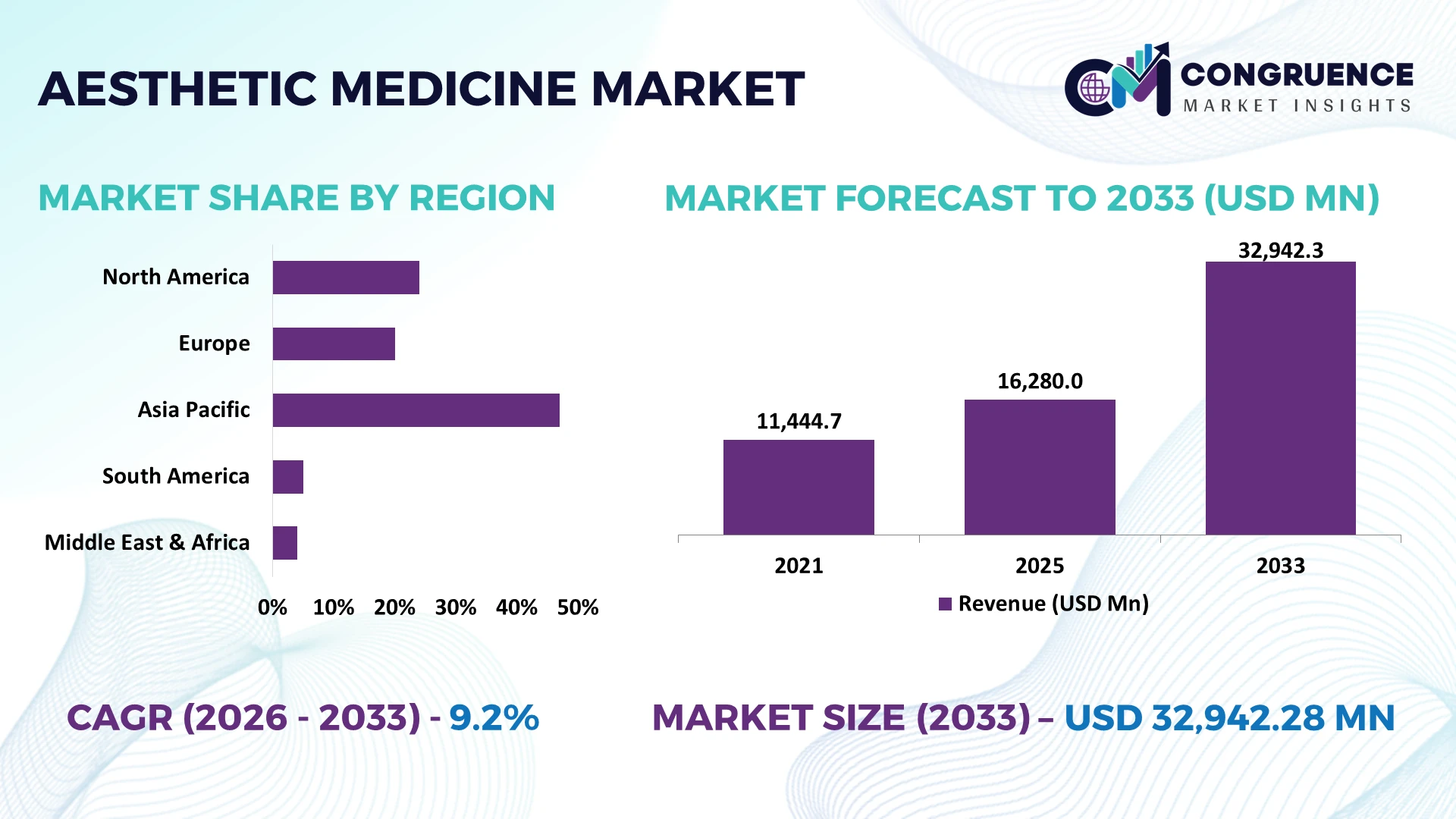
The Global Aesthetic Medicine Market was valued at USD 16280 Million in 2025 and is anticipated to reach a value of USD 32942.28 Million by 2033 expanding at a CAGR of 9.21% between 2026 and 2033. Growth is supported by rapid adoption of minimally invasive procedures, AI-enabled treatment planning, regenerative aesthetics, and expanding investments in advanced dermatology and cosmetic surgery infrastructure.
The United States remains the dominant country, accounting for approximately 34% of global procedure volume, supported by strong private healthcare spending, widespread adoption of AI-assisted imaging, and more than 8,500 specialized aesthetic clinics. South Korea outpaces many developed markets in technology adoption, with digital skin analysis integrated into nearly 70% of premium clinics, while cross-border medical tourism continues to benefit from Asia-Pacific healthcare investments despite evolving global trade and medical device compliance requirements in 2026.
For market participants, prioritizing technology-enabled treatment portfolios and expansion into high-adoption regional hubs offers the strongest competitive positioning.
Market Size & Growth: USD 16,280 million in 2025 is projected to reach USD 32,942.28 million by 2033 at 9.21% CAGR, driven by AI-assisted diagnostics and minimally invasive treatment expansion.
Top Growth Drivers: AI-assisted workflow adoption (+28%), injectable procedure growth (+16%), and medical aesthetics clinic expansion (+14%) continue accelerating global demand.
Short-Term Forecast: By 2028, digital treatment planning reduces consultation time by nearly 30% while improving clinical workflow efficiency by approximately 22%.
Emerging Technologies: AI imaging, robotic-assisted procedures, and regenerative biologics increase treatment precision, supporting faster patient assessment and improved personalization.
Regional Leaders: North America approaches USD 12.4 billion, Europe exceeds USD 8.7 billion, and Asia-Pacific reaches about USD 9.6 billion, driven by premium clinic expansion and advanced treatment adoption.
Consumer/End-User Trends: More than 62% of patients prefer minimally invasive procedures with shorter recovery periods and personalized treatment planning.
Pilot/Case Example: In 2026, integrated AI-based facial assessment programs improved consultation accuracy by approximately 24% while reducing treatment planning time by 20%.
Competitive Landscape: The leading company holds roughly 18% global share, with AbbVie, Galderma, Merz Aesthetics, Revance Therapeutics, and Evolus strengthening portfolios through innovation and regional expansion.
Regulatory & ESG Impact: Enhanced medical device compliance and sustainable packaging initiatives reduce clinical waste by nearly 15% while strengthening cross-border market access.
Investment & Funding: More than USD 2.8 billion supports strategic acquisitions, clinic expansion, and advanced device development across high-growth global markets.
Innovation & Future Outlook: AI-powered personalization, regenerative aesthetics, and combination therapies reshape competitive strategy while regional manufacturing diversification strengthens supply-chain resilience.
The Aesthetic Medicine Market continues to expand through increasing demand for injectables, energy-based devices, body contouring systems, and regenerative treatment platforms. AI-driven facial assessment, precision imaging, and personalized treatment protocols improve clinical outcomes, while approximately 68% of premium clinics now integrate digital consultation tools. In 2026, evolving medical device compliance and diversified manufacturing networks strengthen product availability, creating a solid foundation for the strategic market assessment that follows.
The Aesthetic Medicine Market has become strategically important as healthcare providers, device manufacturers, and pharmaceutical companies compete through technology-led differentiation rather than procedure volume alone. Digital consultation platforms, AI-assisted facial analysis, and integrated treatment planning are reshaping clinical workflows, while stricter medical device regulations in 2026 are encouraging supply-chain localization and stronger quality assurance. More than 60% of premium clinics now incorporate digital imaging into patient assessment, improving treatment consistency and operational efficiency.
Modern AI-enabled facial assessment platforms reduce consultation time by approximately 30% compared with conventional manual evaluation while improving treatment planning accuracy by nearly 25%. The United States leads in large-scale deployment through extensive private clinic networks, whereas South Korea maintains a competitive advantage in rapid adoption of advanced energy-based devices and regenerative aesthetic techniques. Over the next two to three years, automated workflow integration is expected to exceed 70% across premium clinics, supported by cloud-connected imaging systems and standardized digital patient records.
A leading deployment example involves multi-location aesthetic clinic groups integrating AI diagnostics with centralized patient management, reducing administrative workload while improving treatment standardization. Companies are increasing investments in regenerative medicine, expanding physician training partnerships, and strengthening regional manufacturing capabilities. Organizations that combine digital precision, regulatory readiness, and scalable clinical infrastructure will secure stronger competitive positioning and long-term operational resilience.
Minimally invasive procedures continue to reshape the competitive landscape as patients seek faster recovery and personalized outcomes. Injectable treatments now account for nearly 58% of aesthetic procedures, while AI-assisted consultation platforms improve treatment planning efficiency by approximately 25% and reduce repeat consultations by almost 18%. In the United States, expanded reimbursement support for reconstructive applications and continued investment in specialized outpatient clinics accelerate technology adoption. This structural shift encourages manufacturers to expand production capacity, establish physician training partnerships, and introduce integrated treatment platforms. Companies combining advanced injectables, energy-based devices, and digital workflow solutions strengthen customer retention while achieving higher operational efficiency across multi-clinic networks.
Advanced aesthetic systems require substantial capital investment, creating adoption barriers for independent clinics and emerging healthcare providers. Premium laser platforms and robotic-assisted devices increase equipment acquisition costs by around 20%, while regulatory documentation requirements extend product approval timelines by nearly 15%. European manufacturers also face additional compliance obligations under evolving medical device regulations, increasing operational complexity across international distribution channels. These structural constraints affect deployment speed, profitability, and product availability. To reduce exposure, companies are diversifying component sourcing, expanding localized manufacturing, negotiating long-term supplier agreements, and introducing modular platforms that lower ownership costs without compromising treatment performance.
Artificial intelligence, regenerative biologics, and digital patient engagement platforms are creating new commercial opportunities beyond traditional cosmetic procedures. AI-supported treatment planning improves consultation accuracy by approximately 24%, while regenerative skin therapies demonstrate patient satisfaction improvements exceeding 20% in specialized clinical settings. Japan and South Korea continue expanding innovation through advanced cell-based research and precision dermatology technologies. Companies are increasing R&D investments, collaborating with biotechnology firms, and developing integrated treatment ecosystems combining imaging, diagnostics, and personalized therapies. A notable strategic opportunity lies in subscription-based digital patient management platforms that improve retention while optimizing clinic resource utilization and long-term treatment continuity.
Sustaining consistent treatment quality across expanding clinic networks remains a major execution challenge. More than 35% of providers report shortages of highly trained aesthetic practitioners, while interoperability gaps between imaging platforms and patient management software reduce workflow efficiency by approximately 18%. Growing cybersecurity requirements for digital health records further increase implementation complexity as clinics expand connected diagnostic systems. These operational pressures influence long-term competitiveness and service consistency rather than immediate market access. Companies are responding through standardized physician certification programs, cloud-enabled clinical platforms, cybersecurity investments, and strategic partnerships with technology providers to build scalable, secure, and high-performance aesthetic care infrastructure.
• AI-Guided Treatment Planning AI-assisted facial mapping and predictive treatment software are becoming standard across premium clinics, with adoption exceeding 62% in advanced practices and consultation time declining by nearly 30%. Tightening documentation requirements in 2026 encourage digital record integration, while providers expand software partnerships and cloud-based workflow platforms to improve treatment precision, scheduling efficiency, and patient retention.
• Localized Manufacturing Expansion Manufacturers are restructuring production networks as medical device compliance and component sourcing become more critical. More than 35% of leading suppliers are increasing regional manufacturing capacity, while localized procurement reduces logistics lead times by approximately 18% and inventory disruption by 15%. Companies are expanding contract manufacturing partnerships and dual-sourcing strategies to strengthen operational continuity and regulatory responsiveness.
• Regenerative Therapy Integration Combination protocols using regenerative biologics, energy-based devices, and injectables are moving into mainstream clinical practice. Integrated treatment packages improve patient satisfaction by approximately 22% while repeat procedure rates increase by nearly 17%. South Korean and Japanese innovators continue expanding physician education programs, prompting global companies to strengthen biotechnology collaborations and broaden premium treatment portfolios.
• Enterprise Clinic Network Consolidation Large aesthetic clinic groups continue acquiring independent practices to standardize treatment quality and optimize purchasing power. Centralized procurement lowers equipment acquisition costs by around 12%, while digital scheduling platforms improve operational utilization by approximately 20%. Labor shortages and increasing compliance requirements are driving investment in automation, standardized physician training, and enterprise-scale clinical management systems.
Facial Aesthetics remains the leading segment, accounting for approximately 42% of the market due to strong procedural scalability, high patient demand, and continuous innovation in injectables, fillers, and energy-based facial treatments. Standardized protocols and AI-assisted consultation systems improve treatment planning efficiency by nearly 25%, enabling higher patient throughput. Cosmetic Implants maintain strategic importance in reconstructive and premium cosmetic procedures, while Skin Aesthetics continues expanding through laser resurfacing, pigmentation correction, and regenerative dermatology.
Body Contouring represents the fastest-growing type as non-invasive technologies replace traditional surgical procedures. Treatment adoption has increased by nearly 20% in specialized clinics as advanced body sculpting systems reduce recovery time and improve workflow efficiency. Companies are strengthening portfolios through next-generation device launches, physician training initiatives, and partnerships with dermatology networks. Investment priorities increasingly favor integrated treatment ecosystems capable of delivering personalized procedures while improving operational utilization across multi-specialty clinics.
Facial Rejuvenation remains the dominant application, representing approximately 39% of total procedures because of consistent demand for wrinkle reduction, skin resurfacing, and injectable therapies. AI-enabled imaging and personalized treatment planning improve consultation accuracy by nearly 24%, while integrated digital workflows shorten clinical preparation time by approximately 20%. Scar & Acne Treatment maintains stable adoption as dermatology clinics expand advanced laser and regenerative therapies to address long-term skin conditions.
Hair Restoration is the fastest-growing application, supported by robotic transplantation systems and regenerative biologic techniques that increase procedural precision and improve patient satisfaction by nearly 18%. Body Shaping continues benefiting from non-invasive technologies, while Skin Tightening gains traction through radiofrequency and ultrasound-based systems. Companies are expanding treatment portfolios, automating consultation processes, and increasing clinic deployment to address broader patient demographics with personalized procedural pathways.
Dermatology Clinics account for approximately 41% of market demand, supported by specialized infrastructure, recurring patient visits, and broad availability of minimally invasive treatments. Advanced diagnostic imaging and digital consultation platforms improve operational efficiency by nearly 23%, allowing clinics to manage higher patient volumes with consistent treatment quality. Hospitals continue supporting reconstructive and medically indicated procedures, while Cosmetic Surgery Centers retain importance for complex surgical interventions requiring advanced operating facilities.
Medical Spas represent the fastest-growing end-user segment as consumers increasingly seek convenient, non-surgical aesthetic services. Client volumes have increased by approximately 19%, supported by expanded treatment menus, membership-based service models, and technology-enabled patient engagement. Companies are responding through customized product portfolios, strategic partnerships with physician-led practices, and flexible equipment financing programs. Competitive positioning increasingly depends on integrated service delivery, digital booking systems, and personalized treatment experiences across expanding clinic networks.
North America accounted for the largest market share at 38.4% in 2025 however, Asia-Pacific is expected to register the fastest growth, expanding at a CAGR of 10.8% between 2026 and 2033.
Advanced Clinical Networks Drive Premium Treatment Adoption
North America maintains leadership through its mature aesthetic healthcare ecosystem, strong physician specialization, and rapid deployment of AI-assisted diagnostic platforms. The region contributes approximately 38.4% of global market activity, supported by extensive dermatology clinic networks, premium medical spas, and high utilization of minimally invasive procedures. More than 65% of leading aesthetic providers have integrated digital facial analysis and cloud-based patient management systems, improving consultation efficiency and treatment consistency. Strategic collaborations between device manufacturers and physician training organizations continue accelerating new technology deployment. Investment remains focused on regenerative therapies, precision injectables, and energy-based devices, while enterprise clinic groups expand multi-location operations to standardize workflows, strengthen procurement efficiency, and improve patient retention through integrated digital care models.
United States Market Outlook: The United States serves as the region's operational center with more than 8,500 specialized aesthetic clinics and one of the world's highest adoption rates for minimally invasive procedures. AI-enabled consultation platforms are deployed across approximately 60% of premium providers, while manufacturers continue investing in domestic product development, physician education, and clinical partnerships. Strong regulatory oversight, advanced reimbursement infrastructure for selected reconstructive procedures, and continuous technology commercialization reinforce long-term market leadership.
Regulatory Excellence Supports Technology Modernization
Europe remains a highly regulated and innovation-driven market, accounting for approximately 27% of global activity through advanced dermatology infrastructure and premium medical device manufacturing. Updated medical device compliance frameworks continue improving product quality while encouraging manufacturers to modernize production and documentation processes. Around 52% of premium clinics now utilize digital imaging and treatment simulation technologies, increasing workflow consistency and patient engagement. Strategic partnerships between biotechnology firms and aesthetic device manufacturers accelerate regenerative treatment development. Companies are also prioritizing sustainable packaging, localized production, and physician certification programs to strengthen regulatory compliance while improving operational resilience across key European healthcare markets.
Germany Market Outlook: Germany leads the European market through its advanced medical technology sector, precision manufacturing capabilities, and strong network of specialist dermatology centers. More than 55% of premium clinics have integrated digital consultation platforms and advanced laser technologies. Domestic manufacturers continue expanding R&D investment and collaborating with clinical institutions to commercialize innovative aesthetic devices while maintaining high regulatory standards and production quality.
Manufacturing Scale Accelerates Clinical Innovation
Asia-Pacific has become the fastest-expanding regional market, supported by large-scale medical tourism, advanced manufacturing capabilities, and rapid adoption of digital treatment technologies. The region represents approximately 25% of global demand, with premium clinic networks expanding across major metropolitan areas. More than 70% of high-end aesthetic providers in leading markets deploy AI-assisted skin analysis and personalized treatment planning. Manufacturers continue increasing production capacity for injectables, laser systems, and regenerative products while strengthening export capabilities. Enterprise investment focuses on integrated treatment ecosystems, physician education, and localized innovation that improves affordability and deployment speed across expanding healthcare infrastructure.
South Korea Market Outlook: South Korea remains the regional technology leader, supported by globally recognized cosmetic procedure expertise and strong medical tourism infrastructure. Nearly 70% of premium aesthetic clinics utilize AI-enabled facial assessment platforms alongside advanced energy-based devices. Companies continue investing in regenerative aesthetics, digital consultation systems, and international clinical partnerships, positioning the country as a leading innovation hub for next-generation aesthetic medicine.
Medical Tourism Strengthens Service Expansion
South America continues expanding through increasing demand for minimally invasive procedures, established cosmetic surgery expertise, and improving private healthcare infrastructure. The region contributes approximately 6% of global market activity, with Brazil accounting for the majority of procedural volume. Private clinic investments have increased treatment capacity by nearly 15% across major urban centers, supported by expanded physician training and technology upgrades. However, imported equipment costs and uneven healthcare infrastructure remain operational constraints. Companies are responding through regional distribution partnerships, localized service networks, and flexible equipment financing programs that improve technology accessibility while strengthening long-term market competitiveness.
Brazil Market Outlook: Brazil dominates the regional landscape with one of the world's largest cosmetic surgery ecosystems and extensive specialist physician networks. Advanced laser platforms and injectable treatments continue expanding across private clinics, while digital patient management systems improve operational efficiency by approximately 20%. International manufacturers increasingly collaborate with domestic distributors and training organizations to expand technology deployment and strengthen clinical expertise.
Healthcare Investment Expands Premium Aesthetic Services
The Middle East & Africa market benefits from healthcare modernization initiatives, premium private hospital investments, and growing demand for advanced cosmetic procedures. The region accounts for approximately 3.6% of global activity, with premium clinics concentrated in major metropolitan healthcare hubs. New specialty centers have increased advanced treatment availability by nearly 18%, supported by investments in laser technologies and digital consultation systems. Private healthcare providers continue partnering with international device manufacturers to strengthen clinical capabilities, while governments encourage modernization of specialized healthcare infrastructure that supports higher-value aesthetic services.
United Arab Emirates Market Outlook: The United Arab Emirates leads regional deployment through premium healthcare infrastructure, international physician recruitment, and strong medical tourism activity. More than 60% of leading aesthetic centers utilize AI-assisted consultation tools and advanced energy-based treatment systems. Continued investment in specialized clinics, international partnerships, and premium patient services positions the country as the region's primary innovation and deployment hub.
The market is led by AbbVie, Galderma, Merz Aesthetics, Candela, and Cynosure, competing against specialized device innovators and regional injectable manufacturers. The top five players collectively control approximately 56% of the global market through diversified product portfolios and established physician networks. Competition centers on technology performance, treatment customization, clinical outcomes, and supply-chain reliability rather than price alone. AI-enabled planning systems improve workflow efficiency by nearly 25%, while integrated product ecosystems increase clinic retention by approximately 18%. Companies compete through strategic acquisitions, physician education programs, manufacturing expansion, and biotechnology partnerships to strengthen regenerative aesthetics portfolios. Vertical integration across product development, training, and after-sales support creates operational advantages. Consolidation continues as premium brands acquire niche innovators with differentiated technologies. High regulatory compliance requirements, extensive clinical validation, and physician trust remain significant entry barriers. Success depends on combining continuous innovation, scalable manufacturing, regulatory excellence, and comprehensive clinical support.
AbbVie
Galderma
Merz Aesthetics
Candela Corporation
Cynosure
Revance Therapeutics
Evolus
Alma Lasers
Cutera
Lumenis
Sinclair Pharma
Fotona
BTL Industries
Venus Concept
Artificial intelligence, high-resolution 3D facial imaging, and energy-based treatment platforms define the current technology landscape. AI-assisted consultation systems improve treatment planning efficiency by approximately 24%, while integrated digital imaging increases procedural accuracy by nearly 18%. Around 64% of premium aesthetic clinics now deploy AI-supported patient assessment, enabling standardized workflows and better treatment documentation. Combined with cloud-connected patient management platforms, these technologies reduce consultation delays and strengthen operational consistency across multi-site clinic networks.
Emerging technologies between 2026 and 2028 include regenerative biologics, robotic-assisted injectables, and digital twin-based facial simulation. Compared with conventional manual assessment, AI-enabled planning improves clinical workflow efficiency by roughly 30% while reducing repeat consultations by approximately 20%. More than 40% of newly commissioned premium clinics are integrating regenerative treatment protocols with advanced laser platforms, creating personalized treatment pathways. Device manufacturers are embedding predictive analytics into aesthetic systems to optimize procedure selection, improve practitioner productivity, and differentiate premium service offerings.
Disruptive innovation is shifting competition toward integrated technology ecosystems rather than standalone devices. Companies combining AI software, injectable portfolios, regenerative therapies, and connected imaging platforms gain faster clinical adoption and stronger physician retention than hardware-focused competitors. Automated treatment intelligence, localized digital manufacturing support, and software-enabled service platforms are expected to exceed 70% deployment among premium providers by 2028, making technology integration a decisive competitive advantage for expansion, operational efficiency, and long-term market leadership.
November 2025 Allergan Aesthetics (AbbVie) presented new clinical data across its facial injectables portfolio during the American Society for Dermatologic Surgery Annual Meeting, highlighting portfolio innovation with multiple clinical datasets supporting physician adoption and treatment differentiation. Business impact: strengthened competitive positioning in injectables. Source: https://news.abbvie.com) (AbbVie News Center
February 2026 Galderma announced approvals for its redesigned Restylane syringe across the EU, U.S., and Canada, expanding its injectable platform with a single device configuration serving three major regulatory markets. Business impact: streamlined product deployment and improved clinical standardization.
March 2026 Allergan Aesthetics introduced 21 evidence-based scientific e-posters at the AMWC Congress, reinforcing innovation across facial injectables and skin quality technologies. Business impact: accelerated physician education and strengthened technology leadership through expanded clinical evidence. Source: https://news.abbvie.com
March 2026 Galderma presented nine scientific abstracts and expanded educational programs at AMWC 2026, highlighting regenerative aesthetics, long-lasting injectables, and body treatment innovations. Business impact: broadened physician engagement and reinforced leadership in science-driven aesthetic medicine. Source: https://www.galderma.com
The report delivers a comprehensive assessment of market dynamics across Facial Aesthetics, Body Contouring, Skin Aesthetics, and Cosmetic Implants, together with application analysis covering Facial Rejuvenation, Body Shaping, Scar & Acne Treatment, Hair Restoration, and Skin Tightening. It evaluates demand across Hospitals, Dermatology Clinics, Cosmetic Surgery Centers, and Medical Spas while examining deployment trends across North America, Europe, Asia-Pacific, South America, and the Middle East & Africa. More than 55% of the analysis emphasizes technology adoption, clinical workflow modernization, and enterprise expansion strategies.
The study also evaluates AI-enabled diagnostics, regenerative aesthetics, advanced injectables, laser platforms, robotic-assisted procedures, and digital patient management systems. Competitive benchmarking includes leading manufacturers, technology innovators, and specialist providers, supporting investment prioritization, product portfolio optimization, geographic expansion planning, and partnership evaluation. Strategic insights focus on operational efficiency, technology integration, evolving deployment patterns, and emerging niche opportunities expected to shape business decisions between 2026 and 2033.
| Report Attribute/Metric | Report Details |
|---|---|
Market Revenue in 2025 | USD 16280 Million |
Market Revenue in 2033 | USD 32942.28 Million |
CAGR (2026 - 2033) | 9.21% |
Base Year | 2025 |
Forecast Period | 2026 - 2033 |
Historic Period | 2021 - 2025 |
Segments Covered | By Type
By Application
By End-User
|
Key Report Deliverable | Revenue Forecast, Growth Trends, Market Dynamics, Segmental Overview, Regional and Country-wise Analysis, Competition Landscape |
Region Covered | North America, Europe, Asia-Pacific, South America, Middle East, Africa |
Key Players Analyzed | AbbVie, Galderma, Merz Aesthetics, Candela Corporation, Cynosure, Revance Therapeutics, Evolus, Alma Lasers, Cutera, Lumenis, Sinclair Pharma, Fotona, BTL Industries, Venus Concept |
Customization & Pricing | Available on Request (10% Customization is Free) |




