
Reports
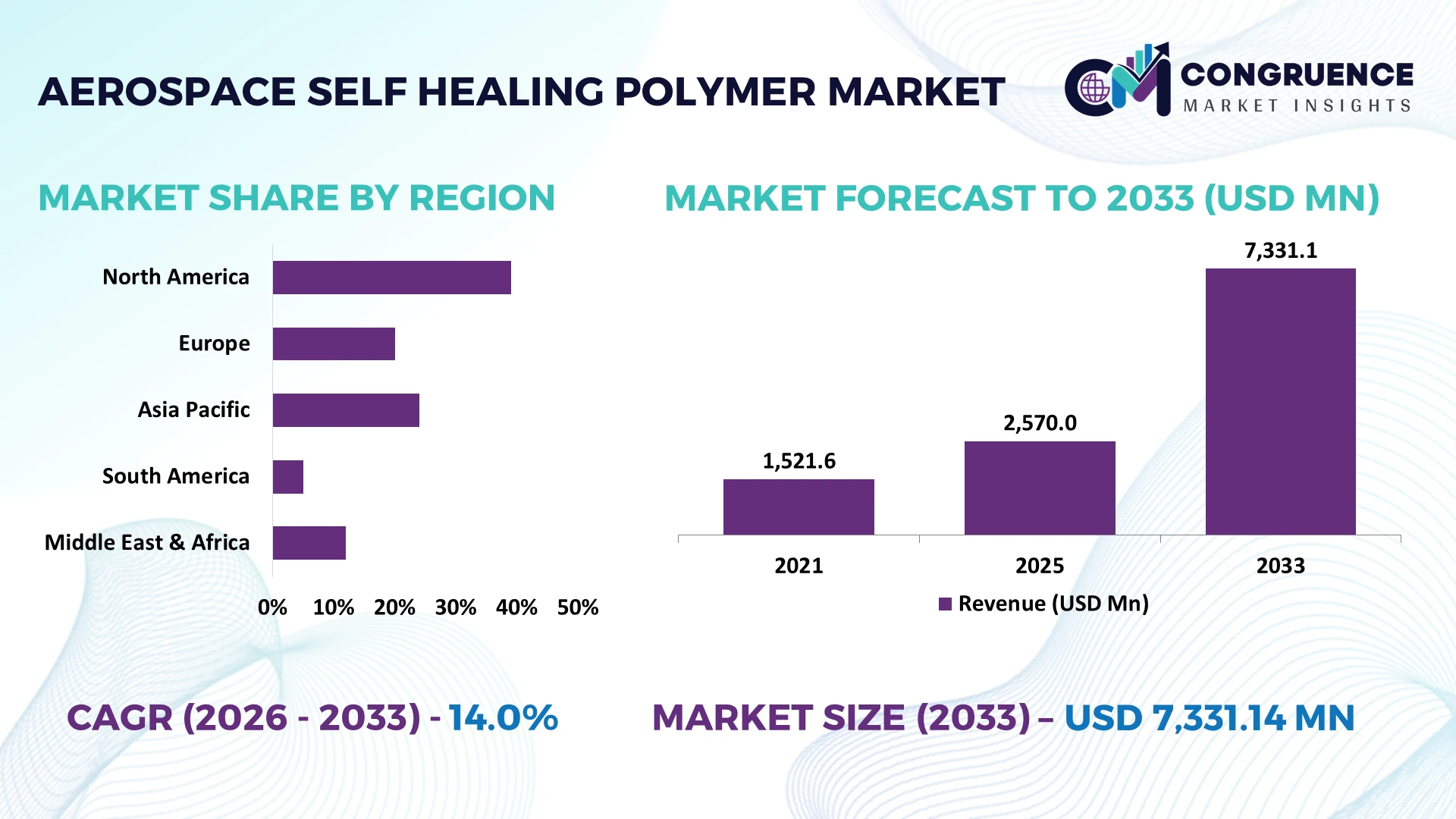
The Global Aerospace Self-Healing Polymer Market was valued at USD 2570 Million in 2025 and is anticipated to reach a value of USD 7331.14 Million by 2033 expanding at a CAGR of 14% between 2026 and 2033. Market expansion is driven by autonomous composite damage repair, increasing aircraft maintenance requirements, and advances in microencapsulated healing agents and reversible polymer networks for aerospace structures.
The United States represents a strategically important market, supported by advanced aerospace manufacturing, defense research, and composite material development. Boeing delivered 348 commercial aircraft in 2024, compared with 766 deliveries by European manufacturer Airbus. Both companies operate extensive composite material research and manufacturing programs, although commercial adoption of self healing structural polymers remains limited. NASA and the United States Air Force support advanced materials research, creating opportunities for autonomous damage detection, polymer repair technologies, and lightweight aerospace components.
Strategically, material suppliers should prioritize aerospace certification, repeatable healing performance, and partnerships with aircraft manufacturers to convert laboratory innovations into qualified commercial applications.
Market Size & Growth: USD 2,570 million in 2025, reaching USD 7,331.14 million by 2033 at 14% CAGR, supported by autonomous composite repair technologies.
Top Growth Drivers: Three priorities include composite damage management, lightweight aircraft structures, and improved maintenance efficiency, supporting the projected 14% annual market expansion.
Short Term Forecast: By 2028, development programs will increasingly evaluate 3 qualification metrics: healing efficiency, mechanical strength recovery, and repeated repair performance.
Emerging Technologies: Three technologies are reshaping aerospace polymer research: microencapsulated healing agents, reversible polymer networks, and automated damage monitoring.
Regional Leaders: North America, Europe, and Asia Pacific represent 3 strategic development regions, supported by aerospace manufacturing, advanced materials research, and expanding aircraft production.
Consumer and End User Trends: Aircraft manufacturers, maintenance providers, and defense aerospace organizations represent 3 important customer groups evaluating advanced damage management technologies.
Pilot and Case Example: A 2024 research direction involving reversible polymer networks demonstrated the potential for repeated damage repair, establishing mechanical strength recovery as a critical performance indicator.
Competitive Landscape: Competition involves established aerospace material suppliers and specialized polymer innovators, including 3M, Hexcel, Huntsman, and Solvay. Verified company specific market shares remain unavailable.
Regulatory and ESG Impact: Aerospace qualification requires evaluation of 3 critical properties: mechanical integrity, environmental durability, and material performance consistency.
Investment and Funding: Aerospace material development increasingly connects 3 investment priorities: advanced polymer chemistry, automated composite manufacturing, and collaborative research programs.
Innovation and Future Outlook: Next generation technologies emphasize 3 capabilities: autonomous crack repair, repeated healing cycles, and integration with structural health monitoring systems.
The Aerospace Self-Healing Polymer Market is evolving through advances in autonomous material repair, lightweight composite structures, and intelligent aircraft maintenance technologies. Microencapsulated healing agents and reversible polymer networks are expanding research into materials capable of restoring mechanical performance following localized damage. Modern commercial aircraft demonstrate the importance of advanced composites, with the Boeing 787 incorporating approximately 50% composite materials by structural weight. Aerospace certification requirements remain a critical commercialization consideration, particularly for structural applications. These developments are directing investment toward validated healing performance, manufacturing compatibility, and partnerships between polymer developers and aerospace manufacturers.
Expansion of Automated Material Characterization: Aerospace research laboratories are integrating automated mechanical testing with polymer damage analysis to improve experimental reproducibility. Boeing 787 aircraft incorporate approximately 50% composite materials by weight, compared with 53% for the Airbus A350. These substantial material proportions reinforce the importance of reliable characterization. Manufacturers are investing in automated testing equipment, standardized fracture analysis, and digital material databases to accelerate formulation screening and improve development consistency.
Increasing Adoption of Reprocessable Polymer Systems: Aerospace material research is shifting toward reversible chemical networks that permit repeated processing and localized damage recovery. Conventional thermoset composites generally require specialized repair procedures, while reversible polymer formulations introduce additional material restoration pathways. The 50% and 53% composite content of the Boeing 787 and Airbus A350 illustrate the industrial relevance of polymer performance. Chemical manufacturers are expanding research partnerships to improve processing temperatures, network reversibility, and mechanical property retention.
Strengthening Aerospace Material Traceability Requirements: Aircraft manufacturers are introducing more detailed digital material documentation and process monitoring to strengthen manufacturing consistency. The Boeing 787 and Airbus A350 represent two major commercial aircraft platforms with substantial composite utilization. Material qualification requires documented processing conditions, environmental durability, and mechanical performance. Suppliers are implementing digital batch records, automated inspection procedures, and improved quality management systems to support advanced polymer development and reduce manufacturing variability.
Growing Focus on Multifunctional Surface Protection: Aerospace coating developers are investigating polymer systems combining localized damage repair with corrosion resistance and environmental protection. Experimental microcapsule technologies enable localized release of healing agents following coating damage. Unlike conventional passive coatings, these formulations introduce an additional protective mechanism. Manufacturers are refining capsule dispersion, coating adhesion, and environmental durability while collaborating with aerospace maintenance specialists to identify practical applications.
Extrinsic Polymers represent an established category in aerospace self healing material research because embedded healing agents enable localized damage repair without requiring complete polymer network restructuring. An illustrative market scenario assigns this category approximately 35% of demand, although verified commercial segment shares remain unavailable. Microcapsule-Based systems represent an important implementation approach within extrinsic technologies, offering relatively straightforward integration into selected polymer matrices. Their research maturity supports continued formulation development, particularly for protective coatings and specialized composite applications. However, capsule loading, distribution, and limited healing agent availability influence performance and manufacturing decisions.
Intrinsic Polymers represent an important emerging development category because reversible molecular interactions support repeated damage recovery without relying exclusively on stored healing agents. Reversible Polymers provide a particularly relevant technological approach within this category, using dynamic chemical bonds to restore material integrity under suitable conditions. Vascular Polymers offer alternative capabilities through embedded healing agent delivery networks. Material developers are prioritizing reversible chemistry, controlled healing activation, and manufacturing compatibility. Investment decisions increasingly depend on balancing repeatability, processing complexity, and retained mechanical performance.
Composites represent a strategically important application for aerospace self healing polymer development because aircraft manufacturers increasingly depend on lightweight polymer matrix materials. The Boeing 787 incorporates approximately 50% composite materials by weight, while the Airbus A350 incorporates approximately 53%. These figures establish the industrial importance of advanced composites but do not represent self healing polymer adoption. An illustrative segmentation scenario assigns Composites approximately 35% of application demand, subject to commercial market validation. Aircraft Structures represent another important application, although their demanding qualification requirements create substantial commercialization barriers. Material developers are concentrating on localized matrix damage repair and improved mechanical performance.
Coatings represent an emerging commercialization pathway because localized surface repair can be evaluated without immediately modifying primary load bearing structures. Adhesives and Sealants provide additional opportunities for reversible bonding and localized damage recovery. Interior Components offer potential applications where material durability and maintenance requirements influence product selection. Manufacturers are developing specialized formulations, automated characterization procedures, and application specific testing programs. Commercial investment increasingly prioritizes applications offering measurable repair performance alongside manageable qualification requirements.
Aircraft Manufacturers represent a strategically important customer group because they establish material specifications, manufacturing requirements, and qualification procedures for commercial aircraft. An illustrative market scenario assigns this group approximately 40% of demand, although verified purchasing shares remain unavailable. Boeing and Airbus operate aircraft platforms containing approximately 50% and 53% composite materials by weight, respectively. These figures demonstrate the importance of advanced polymer engineering rather than established self healing material adoption. Aerospace Suppliers support material development through specialized resin chemistry, composite manufacturing, and mechanical characterization. Their technical capabilities are essential for converting experimental formulations into manufacturable products.
MRO Providers represent an emerging customer group because localized repair technologies offer potential applications in aircraft maintenance and surface protection. Defense Contractors are investigating advanced materials for demanding operational environments, while Space Companies require specialized polymer performance under extreme environmental conditions. Material developers are targeting these customer groups through application specific formulations, collaborative testing, and qualification partnerships. Commercial priorities increasingly distinguish between materials suitable for near term maintenance applications and technologies requiring extensive structural validation.
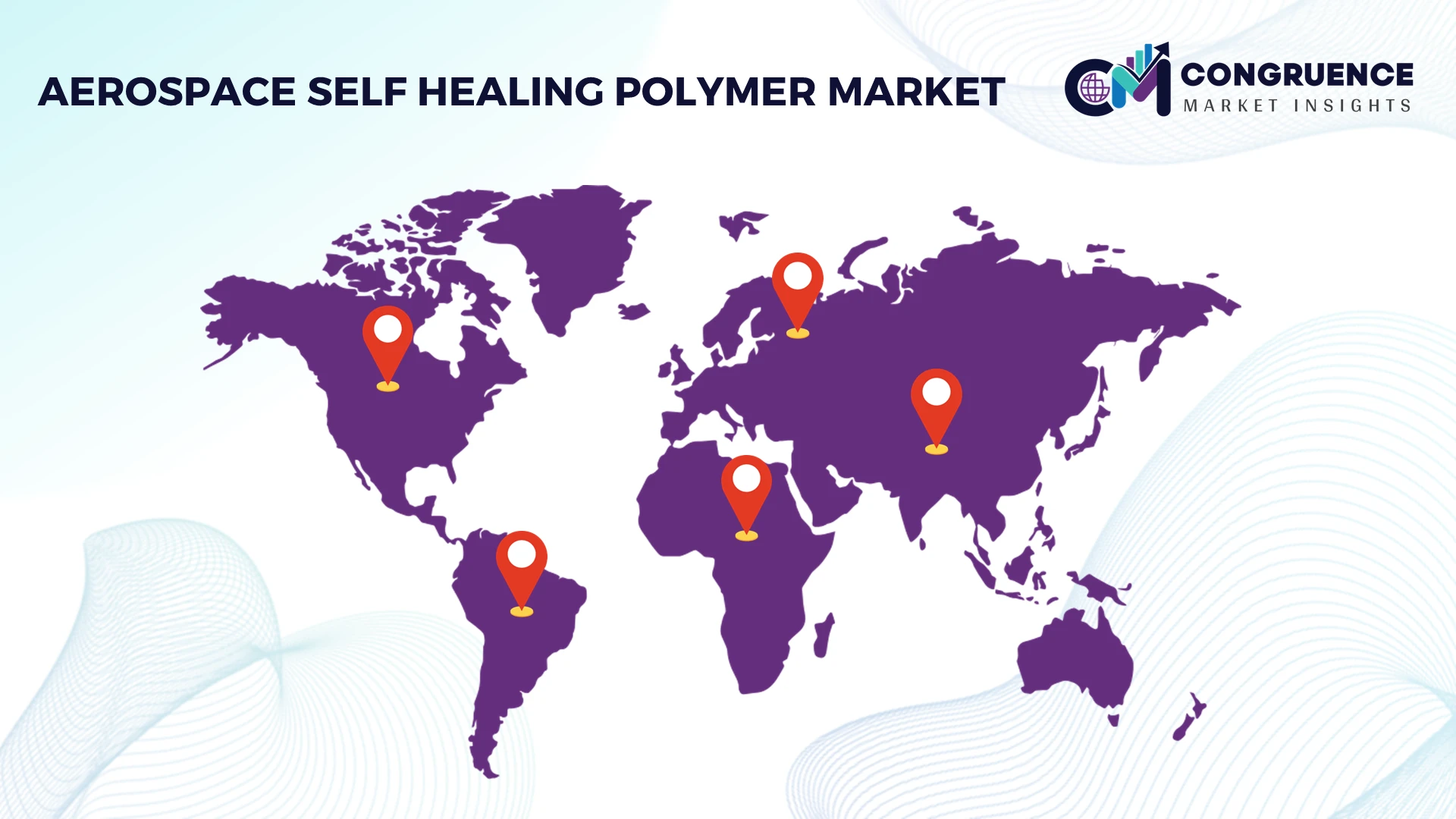
North America represents a major aerospace self healing polymer research and development hub, while Asia Pacific offers expanding opportunities through aircraft manufacturing and advanced materials investment. Verified regional market shares and comparative growth rates remain unavailable.
Advanced Composite Research and Aerospace Material Innovation
North America benefits from established aerospace manufacturing infrastructure, advanced polymer research, and extensive defense technology development. The United States provides substantial industrial capabilities through aircraft manufacturers, specialized composite suppliers, and government research institutions. Boeing delivered 348 commercial aircraft in 2024, demonstrating the scale of its manufacturing operations and associated material supply chains. NASA and American defense research programs investigate multifunctional materials, autonomous damage repair, and advanced composite technologies. Canada contributes aerospace manufacturing capabilities and specialized materials research, particularly through established industrial and academic partnerships. Regional material developers are investigating microencapsulated healing systems, reversible polymer networks, and specialized protective coatings. Commercial opportunities concentrate on applications where localized damage recovery offers measurable maintenance advantages without requiring immediate modification of certified primary aircraft structures.
United States Market Outlook: The United States maintains established aerospace material research capabilities supported by NASA, defense research organizations, and specialized chemical manufacturers. The Boeing 787 incorporates approximately 50% composite materials by weight, demonstrating the importance of advanced polymer engineering. Research partnerships between material suppliers and aerospace institutions support the development of specialized healing formulations, automated testing procedures, and application specific qualification strategies.
Advanced Polymer Engineering and Sustainable Composite Development
Europe combines established aircraft manufacturing infrastructure with advanced polymer chemistry and specialized composite research capabilities. Airbus delivered 766 commercial aircraft in 2024, illustrating the scale of its manufacturing ecosystem and supporting materials supply chain. Germany, France, and the United Kingdom maintain research capabilities in advanced polymers, composite manufacturing, and aerospace material characterization. European research initiatives investigate reversible chemical networks, multifunctional composites, and improved material processing technologies. Sustainability considerations are also encouraging research into recyclable and repairable polymer systems, although industrial adoption of structural self healing materials remains limited. Aerospace material developers are concentrating on laboratory validation, specialized coatings, and manufacturing compatibility. Collaboration between research institutions, chemical manufacturers, and aircraft suppliers supports the transition from experimental polymer formulations toward industrially relevant applications.
Germany Market Outlook: Germany benefits from established chemical manufacturing capabilities, aerospace engineering expertise, and specialized materials research institutions. The German Aerospace Center contributes to advanced aerospace technology development, while domestic industrial suppliers support composite manufacturing and material characterization. Research into reversible polymer networks and advanced protective materials creates opportunities for specialized chemical producers to establish aerospace qualification partnerships.
Expanding Aircraft Manufacturing and Advanced Materials Research
Asia Pacific presents opportunities through expanding aerospace manufacturing capabilities, advanced chemical research, and investment in domestic aircraft technologies. China is developing commercial aircraft manufacturing infrastructure, while Japan and South Korea maintain established expertise in advanced polymers and composite materials. China's COMAC C919 program represents an important industrial development supporting domestic aerospace supply chain expansion. Japan contributes specialized polymer chemistry and precision manufacturing capabilities, creating opportunities for research collaboration and advanced material development. India is also expanding aerospace manufacturing and defense production activities. Regional suppliers are investigating multifunctional polymers, composite manufacturing compatibility, and specialized material characterization. However, commercial deployment of self healing aerospace polymers remains at an early stage, making research partnerships and application specific qualification essential for successful market development.
China Market Outlook: China benefits from expanding domestic aircraft manufacturing capabilities and government support for aerospace industrial development. The COMAC C919 entered commercial passenger service in 2023, establishing an important domestic aircraft manufacturing milestone. China's growing aerospace supply chain creates opportunities for advanced composite suppliers, polymer research institutions, and specialized material developers to collaborate on future aircraft technologies.
Aircraft Manufacturing Expertise and Specialized Material Development
South America's aerospace self healing polymer opportunities are concentrated around Brazil's established aircraft manufacturing ecosystem and associated composite material expertise. Embraer provides an industrial foundation for advanced aerospace materials research, manufacturing processes, and specialized supplier development. The region's established aircraft maintenance activities also create potential applications for advanced protective coatings and localized material repair technologies. However, specialized polymer synthesis infrastructure and aerospace qualification capabilities remain less extensive than those available in established North American and European research ecosystems. Regional development therefore depends on international technology partnerships, specialized research collaboration, and access to advanced material characterization facilities. Material suppliers should prioritize applications compatible with existing aircraft maintenance procedures while building the technical capabilities required for more demanding composite applications.
Brazil Market Outlook: Brazil maintains an established aerospace manufacturing ecosystem supported by Embraer and specialized engineering institutions. Its industrial capabilities provide opportunities for advanced composite research and collaboration with international polymer developers. Brazilian aerospace research institutions can support experimental material characterization and specialized coating development. Commercial opportunities depend on connecting local engineering expertise with qualified material suppliers and established aerospace testing infrastructure.
Aircraft Maintenance Infrastructure and Specialized Coating Applications
The Middle East and Africa offer emerging opportunities associated with aircraft maintenance infrastructure, aerospace industrial investment, and specialized protective material applications. The United Arab Emirates maintains established aviation maintenance capabilities, while Saudi Arabia is expanding its aerospace industrial development initiatives. South Africa contributes aerospace engineering expertise and specialized research capabilities. Regional commercial opportunities are primarily associated with maintenance applications and industrial partnerships rather than established production of self healing aerospace polymers. Advanced protective coatings provide a potential entry point because their performance can be evaluated independently of primary structural material replacement. Suppliers pursuing regional expansion must establish technical support capabilities, qualified distribution arrangements, and partnerships with aerospace maintenance organizations. Successful commercialization depends on demonstrating practical maintenance benefits and compliance with existing aerospace material specifications.
United Arab Emirates Market Outlook: The United Arab Emirates possesses established aviation infrastructure and aircraft maintenance capabilities, creating opportunities for specialized aerospace materials. Its industrial development initiatives support collaboration with international technology providers and advanced manufacturing companies. Material suppliers can investigate protective coating applications and localized repair technologies through partnerships with maintenance organizations, subject to applicable aircraft material qualification requirements.
Competition in aerospace self healing polymers involves established composite suppliers, specialty chemical manufacturers, and research driven material innovators. Hexcel and Toray compete through aerospace composite expertise, while Huntsman, BASF, and Syensqo contribute polymer chemistry and advanced material capabilities. Their participation in broader aerospace materials does not establish equivalent commercial positions in self healing polymers. Verified combined market share for the five largest suppliers remains unavailable. Competition centers on healing efficiency, retained mechanical strength, manufacturing compatibility, and aerospace qualification. Established suppliers possess manufacturing infrastructure and customer relationships, while specialized developers emphasize proprietary reversible chemistry and embedded healing technologies. Aircraft platforms incorporating approximately 50% composite materials by weight demonstrate the industrial importance of advanced polymer performance. Suppliers are strengthening research partnerships and application specific testing capabilities. Aerospace certification, repeated healing reliability, and production consistency remain significant entry barriers. Competitive differentiation requires validated repair performance, established manufacturing compatibility, and direct qualification relationships with aerospace customers.
Hexcel Corporation
Toray Industries
Huntsman Corporation
BASF
Syensqo
3M
Arkema
Evonik Industries
Covestro
Autonomic Materials
NEI Corporation
CompPair Technologies
Advanced aerospace self healing polymers increasingly incorporate microencapsulated healing agents, thermally activated resins, and reversible molecular networks. CompPair's HealTech technology demonstrates localized composite repair through controlled heating, while conventional thermoset composites generally require external repair procedures. Its aerospace propeller blade application achieved 30% greater crack resistance. Commercial deployment remains concentrated in specialized components and demonstration programs rather than certified primary aircraft structures, making qualification essential for wider adoption.
Emerging technologies combine reversible polymer chemistry with embedded optical sensors, automated damage detection, and integrated heating elements. The European Space Agency's Cassandra project demonstrated composite repair at temperatures between 100°C and 140°C using integrated heating grids. Compared with conventional repair approaches, CompPair reports repair speeds reaching 480 times faster in selected applications, although performance varies by component. These developments benefit specialized aerospace suppliers seeking shorter maintenance intervals and improved component availability.
Between 2026 and 2028, technology development will prioritize scalable resin processing, repeated healing validation, and integration with automated composite manufacturing. CompPair's space research demonstrated healing temperatures between 130°C and 160°C for specialized cryogenic tank materials. Industrial partnerships will increasingly connect polymer developers, composite manufacturers, and spacecraft engineering companies. Suppliers demonstrating consistent mechanical recovery, reliable processing, and application specific certification will strengthen their competitive positioning across reusable aerospace structures and maintenance applications.
March 2026: CompPair, CSEM, and Com&Sens demonstrated autonomous composite damage detection and repair through the European Space Agency's Cassandra project. Integrated optical sensors and heating grids enabled controlled repair at 100°C to 140°C, advancing reusable spacecraft material development.
July 2025: CompPair reported successful aerospace integration of its HealTech materials into Axalp's advanced propeller blades. The application achieved 30% greater crack resistance alongside improved vibration damping, demonstrating practical advantages for aircraft component durability and maintenance efficiency.
August 2025: CompPair's European Space Agency research demonstrated HealTech CS03 composites incorporating Hexcel AS7 carbon fibers. Testing established compatibility with cryogenic conditions and repair activation between 130°C and 160°C, supporting development of repairable spacecraft pressure vessels.
January 2025: Researchers from Texas A&M University and the University of Tulsa published research investigating four aromatic thermosetting copolyester vitrimer formulations. Their work evaluated thermally activated surface damage repair, advancing reversible polymer chemistry for aerospace coating applications.
The Aerospace Self-Healing Polymer Market Report examines industry developments between 2026 and 2033, covering material technologies, manufacturing processes, commercial applications, and competitive positioning. Segmentation includes extrinsic polymers, intrinsic polymers, microcapsule based systems, vascular polymers, and reversible polymers. Application coverage encompasses aircraft structures, coatings, composites, adhesives, sealants, and interior components. End user analysis evaluates aircraft manufacturers, aerospace suppliers, defense contractors, space companies, and maintenance providers.
Regional analysis covers North America, Europe, Asia Pacific, South America, and the Middle East and Africa. Technology assessment examines autonomous damage repair, reversible polymer networks, embedded sensors, and advanced composite manufacturing. The report evaluates material qualification requirements, specialized manufacturing capabilities, competitive developments, and commercialization opportunities to support investment planning, geographic expansion, product development, and strategic positioning.
| Report Attribute/Metric | Report Details |
|---|---|
Market Revenue in 2025 | USD 2570 Million |
Market Revenue in 2033 | USD 7331.14 Million |
CAGR (2026 - 2033) | 14% |
Base Year | 2025 |
Forecast Period | 2026 - 2033 |
Historic Period | 2021 - 2025 |
Segments Covered | By Type
By Application
By End-User
|
Key Report Deliverable | Revenue Forecast, Growth Trends, Market Dynamics, Segmental Overview, Regional and Country-wise Analysis, Competition Landscape |
Region Covered | North America, Europe, Asia-Pacific, South America, Middle East, Africa |
Key Players Analyzed | Hexcel Corporation, Toray Industries, Huntsman Corporation, BASF, Syensqo, 3M, Arkema, Evonik Industries, Covestro, Autonomic Materials, NEI Corporation, CompPair Technologies |
Customization & Pricing | Available on Request (10% Customization is Free) |




