
Reports
The Global Offshore Oil & Gas Paints and Coatings Market was valued at USD 403.28 Million in 2024 and is anticipated to reach a value of USD 556.18 Million by 2032 expanding at a CAGR of 4.1% between 2025 and 2032.
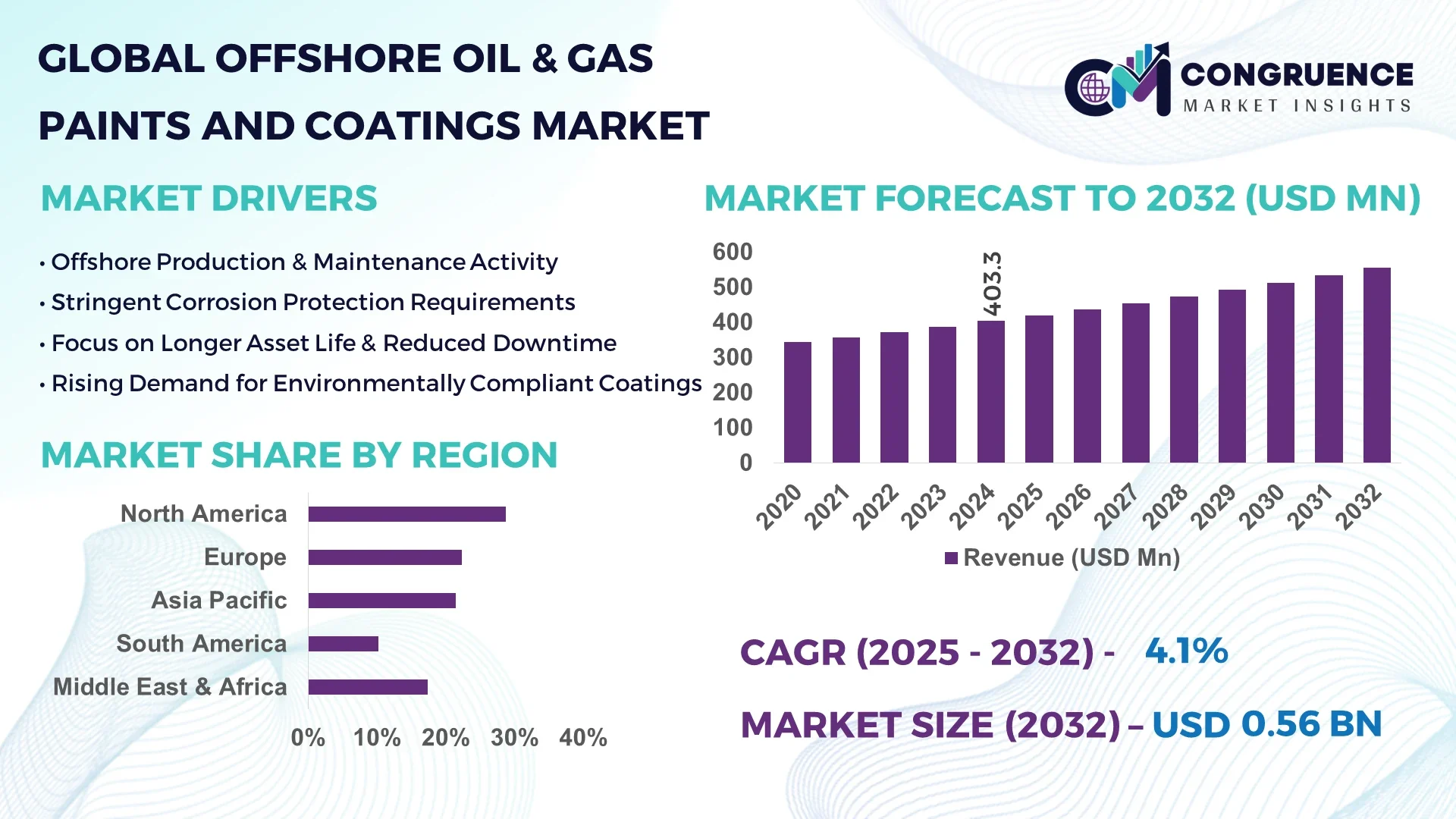
In the United States, dominance in this market is underpinned by substantial production capacity, elevated capital deployment in research and manufacturing facilities, strategic deployment across offshore drilling rigs and subsea pipelines, and continuous technological integration including advanced polymer-based formulations and corrosion-resistant resin systems. Major applications span from topside and hull coatings to protective internal tank systems, supported by rigorous investment in innovation and testing.
Key industry sectors driving the Offshore Oil & Gas Paints and Coatings Market include epoxy-based corrosion protection systems, advanced antifouling coatings, and abrasion‑resistant polymer formulations. Innovations such as nanotechnology-enhanced resins, eco‑friendly water-based and VOC-compliant coatings, and UV/heat‑curable systems are transforming performance and environmental profiles. Regulatory and environmental drivers—especially stringent marine emission standards and lifecycle cost mandates—are accelerating adoption of sustainable coatings. Regional consumption patterns show high uptake in Asia‑Pacific and North America, propelled by expanding offshore exploration, aging infrastructure, and deep‑water development in Southeast Asia and the Gulf of Mexico. Emerging trends include multifunctional smart coatings with self-healing properties, integration of lifecycle asset data analytics, and emphasis on eco-friendly formulations. The future outlook points toward robust growth, underpinned by infrastructure expansion, stringent safety norms, and technological convergence supporting longer asset life and reduced operational expenditure.
Within the Offshore Oil & Gas Paints and Coatings Market, artificial intelligence is redefining operational efficiency and precision across the value chain. AI-driven predictive maintenance systems are being deployed to monitor coating integrity in real time, detecting early signs of wear, corrosion, or damage on offshore structures. This capability helps extend maintenance intervals, reduce unplanned shutdowns, and optimize asset lifecycle management. Intelligent image recognition tools powered by machine learning now analyze high-resolution inspections—such as drone or robotic footage—to automatically identify coating flaws like delamination, rust, or fouling, improving both speed and accuracy of condition assessments.
Supply chain operations benefit from AI for demand forecasting and inventory optimization, ensuring seamless availability of critical coating materials while minimizing overstocking and waste. In product development, AI-enabled simulation models are accelerating formulation design by predicting performance parameters—such as UV resistance, adhesion, and cure time—based on compositional inputs, thereby reducing experimental iterations and time to market. Quality control processes leverage machine vision systems trained to flag batch inconsistencies, enhancing consistency across production facilities.
Overall, AI integration brings significant efficiency gains, enhanced quality assurance, and smarter asset management to the Offshore Oil & Gas Paints and Coatings Market, equipping industry decision-makers with stronger insights and predictive control across operations.
“AI is now used to evaluate seismic data in the Gulf of Mexico in just eight to 12 weeks rather than six to 12 months, accelerating planning to optimize offshore applications.”
The Offshore Oil & Gas Paints and Coatings Market is characterized by rapid innovation, stringent environmental regulations, and increased demand for corrosion protection in deep-sea environments. As offshore drilling expands into harsher and more remote locations, the demand for advanced coatings capable of withstanding high salinity, pressure, and UV exposure continues to grow. Industry stakeholders are investing heavily in high-performance resin blends, solvent-free systems, and application automation to enhance durability, safety, and compliance. Additionally, global shifts in energy infrastructure, particularly the rejuvenation of mature offshore assets and floating production storage and offloading (FPSO) units, are driving increased consumption of protective coatings. As environmental regulations tighten—especially concerning VOC emissions and marine life impact—coatings manufacturers are adapting product lines to offer environmentally compliant alternatives without compromising performance.
The ongoing expansion of offshore exploration projects, especially in ultra-deep-water regions such as the Gulf of Mexico, West Africa, and Southeast Asia, is significantly boosting the Offshore Oil & Gas Paints and Coatings Market. These environments require highly specialized coating systems with extended durability against saltwater corrosion, extreme hydrostatic pressure, and abrasive seabed contact. The increase in investments in subsea production systems, pipelines, and floating platforms has created a continuous demand for multi-functional protective coatings that extend equipment lifespan and reduce operational risk. For instance, epoxy phenolic coatings and high-build polyurethanes are being increasingly deployed in deepwater rigs due to their superior resistance to water ingress and chemical attack. As ultra-deep-water reserves become more central to global energy supply, this trend is expected to sustain long-term demand for advanced offshore coatings.
Volatility in global crude oil prices continues to impose significant constraints on the Offshore Oil & Gas Paints and Coatings Market. Fluctuations often result in deferred or cancelled offshore development projects, particularly those requiring capital-intensive investments like subsea pipelines and deep-sea platforms. When oil prices dip below profitability thresholds, companies reduce their exploration budgets and maintenance schedules, directly impacting the volume of coatings required for new builds and refurbishment. These reductions are most pronounced in emerging markets and small to mid-size operators who are more sensitive to capital availability. Additionally, uncertainty in long-term oil demand due to geopolitical instability and renewable energy transitions adds another layer of hesitation for investment in offshore infrastructure and its related protective coatings.
The transition toward sustainable and intelligent technologies presents a major opportunity in the Offshore Oil & Gas Paints and Coatings Market. With global emphasis shifting to low-VOC, solvent-free, and biocide-free formulations, manufacturers are investing in waterborne and hybrid coating systems that comply with evolving marine environmental standards. Simultaneously, smart coatings—integrated with embedded sensors or responsive materials—are emerging as a key innovation area. These coatings provide real-time performance feedback, alerting operators about degradation, corrosion hotspots, or fouling, thus enabling predictive maintenance and reducing downtime. For example, self-healing coatings using microencapsulated polymers are being tested for use in splash zones and subsea structures. As regulatory agencies increase pressure to minimize ecological impact and improve asset safety, demand for intelligent and sustainable solutions will likely accelerate across key offshore regions.
Meeting international compliance standards remains a major challenge in the Offshore Oil & Gas Paints and Coatings Market. Coating systems must pass rigorous performance tests such as NORSOK M-501, ISO 12944, and other offshore-specific certifications before deployment, especially for high-risk components like subsea structures, risers, and topside modules. These qualification processes require time-intensive trials, expensive test protocols, and third-party validations, leading to elevated entry barriers for new products and manufacturers. Furthermore, the customization required to meet diverse climatic and operational conditions increases the complexity and cost of coating system design. For smaller manufacturers, the investment required to achieve certification can be prohibitive, limiting innovation and market entry. This regulatory burden not only slows product deployment but also elevates the overall project cost in the offshore sector.
• Rise in Modular and Prefabricated Construction: The growing shift toward modular construction in offshore projects is altering the demand landscape for protective coatings. Modular units such as topside structures, living quarters, and piping systems are increasingly prefabricated in controlled environments before being transported offshore. This trend reduces on-site labor requirements and enhances coating quality by enabling consistent environmental conditions during application. Europe and North America are leading this transition, with manufacturers focusing on quick-curing, high-durability coatings compatible with prefabrication workflows.
• Surge in Low-VOC and Solvent-Free Coatings Adoption: Environmental mandates are driving a measurable increase in the use of low-VOC and solvent-free offshore coatings. These eco-friendly formulations are particularly in demand across North Sea and Gulf of Mexico operations, where emission control and occupational safety standards are most stringent. In 2024, adoption of waterborne epoxies and UV-curable topcoats increased by over 18%, as operators aim to reduce hazardous air pollutants without sacrificing performance in harsh marine settings.
• Integration of Robotic Application Systems: Automated and robotic application technologies are revolutionizing coating processes on offshore rigs and FPSOs. Remote-operated spray systems and robotic crawlers enable uniform application over large or complex surfaces, significantly reducing human exposure and improving coating precision. In Asia-Pacific shipyards, robotic coating units now account for over 30% of all offshore surface preparation and painting tasks, cutting application time by nearly 40%.
• Growth in Smart and Self-Healing Coating Technologies: Smart coatings incorporating corrosion sensors, microencapsulation, and self-healing polymers are gaining traction in the Offshore Oil & Gas Paints and Coatings market. These advanced formulations respond dynamically to environmental conditions, such as mechanical damage or pH changes, by triggering protective responses. Pilot projects in ultra-deepwater installations have shown that self-healing coatings can reduce corrosion-related maintenance cycles by up to 25%, highlighting their value in extending asset life in difficult environments.
The Offshore Oil & Gas Paints and Coatings market is segmented based on type, application, and end-user. Types include epoxy coatings, polyurethane coatings, acrylic coatings, alkyds, and inorganic zinc coatings. Among applications, key segments are topside structures, risers, decks, storage tanks, and subsea pipelines. End-users include oil exploration firms, offshore rig contractors, FPSO operators, and subsea equipment manufacturers. Epoxy coatings dominate the product landscape due to their excellent corrosion resistance, while riser and subsea pipeline coatings lead in application due to the challenging conditions they endure. Offshore oilfield operators remain the largest end-user category, but growing investments in FPSOs and deep-sea exploration are reshaping demand patterns. The segmentation reflects how technical requirements and environmental conditions influence coating selection and usage across different stages of offshore infrastructure lifecycle management.
Epoxy coatings lead the Offshore Oil & Gas Paints and Coatings market due to their excellent corrosion resistance, mechanical strength, and adhesion properties. Their suitability for topside structures, subsea pipes, and ballast tanks makes them the preferred choice in extreme offshore conditions. Polyurethane coatings are experiencing the fastest growth, driven by their UV resistance, color retention, and flexibility. They are increasingly used on external surfaces exposed to sun, rain, and mechanical stress, particularly in floating offshore platforms. Acrylic coatings, though less durable, are valued for rapid drying and aesthetic applications, often in auxiliary offshore infrastructure. Inorganic zinc coatings are primarily used as primers in multi-layer systems, providing robust cathodic protection for structural steel. Alkyd coatings, while largely phased out in high-performance sectors, continue to serve niche applications in non-critical offshore components due to their cost-effectiveness and ease of application.
Topside structures represent the leading application in the Offshore Oil & Gas Paints and Coatings market. These areas, exposed to harsh environmental elements, demand multilayer protective systems that guard against salt spray, UV radiation, and mechanical wear. High-performance epoxies and polyurethanes are widely used here. Subsea pipelines and risers are the fastest-growing application areas due to increased deep-water exploration and subsea tiebacks. These components require highly durable, chemically resistant coatings capable of withstanding hydrostatic pressure and abrasion. Storage tanks and decks also represent significant market segments where internal and external protection is critical. Coatings for splash zones and helidecks face especially harsh conditions and must combine anti-skid properties with extreme durability. As offshore projects become more complex, application-specific coating systems are becoming more specialized and technologically advanced to meet performance and longevity expectations.
Offshore oil exploration and production companies remain the leading end-user segment in the Offshore Oil & Gas Paints and Coatings market. These companies are the primary consumers of high-performance coatings, especially for topside, subsea, and wellhead protection. FPSO operators represent the fastest-growing end-user group as global investments in floating production units continue to rise, particularly in Brazil, West Africa, and Southeast Asia. Their unique operational demands—such as mobility, extended service life, and reduced maintenance intervals—drive demand for superior coating solutions. Offshore rig contractors also contribute substantially, particularly in retrofit and refurbishment projects for aging platforms. Subsea equipment manufacturers, while smaller in market share, are increasingly influencing demand for specialized coatings in connectors, manifolds, and control modules. The diversity of end-user needs is shaping the development of highly customized and performance-oriented coating systems across the market landscape.
United States accounted for the largest market share at 28.7% in 2024 however, China is expected to register the fastest growth, expanding at a CAGR of 5.6% between 2025 and 2032.
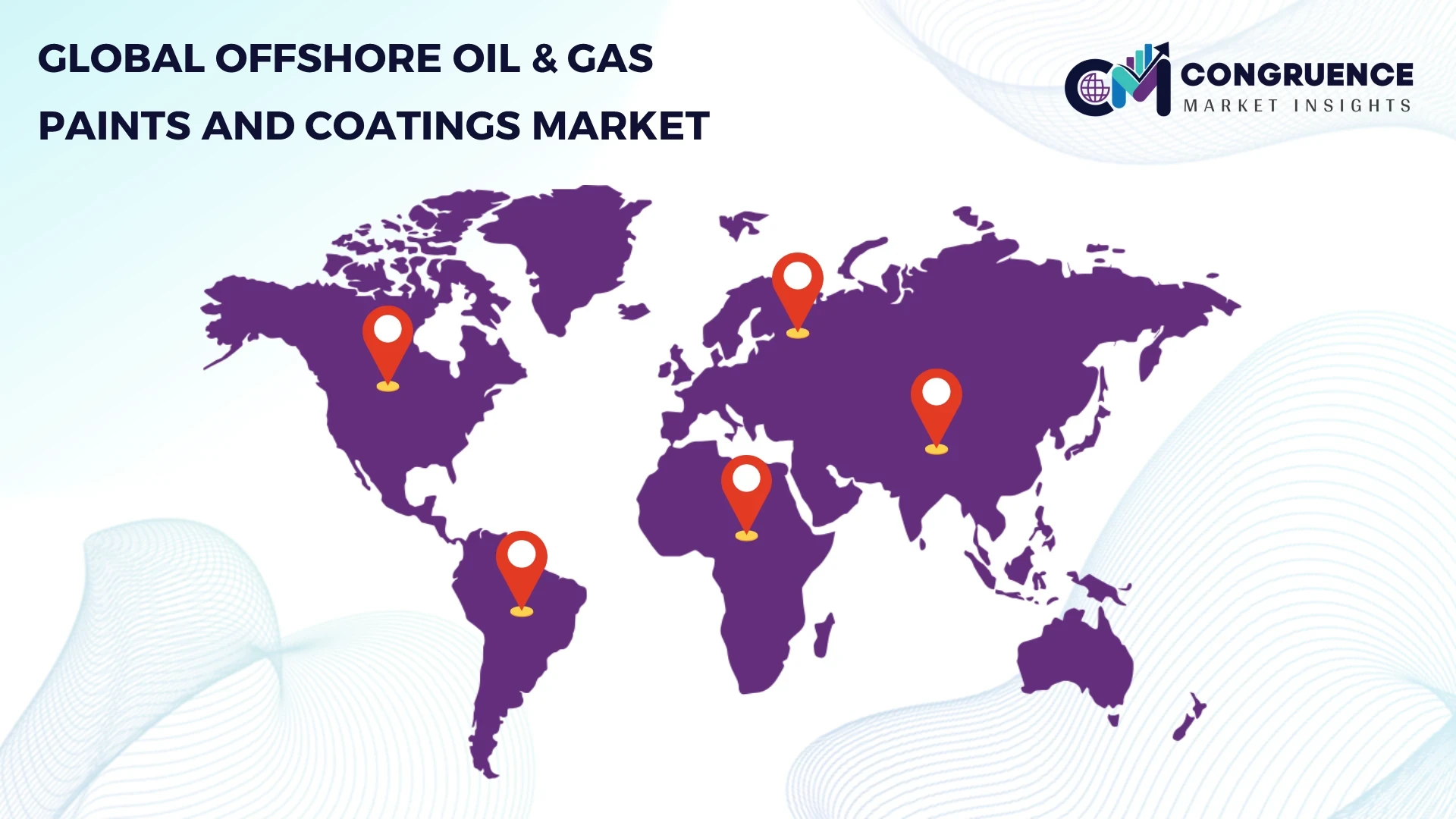
The dominance of the U.S. is driven by large-scale offshore exploration projects in the Gulf of Mexico and substantial investments in subsea production systems and modular offshore platforms. China's acceleration is propelled by massive expansion in offshore wind installations and the development of deep-sea oil infrastructure in the South China Sea. Across regions, the Offshore Oil & Gas Paints and Coatings Market is shaped by evolving maritime regulations, rising demand for advanced corrosion-resistant coatings, and digital monitoring technologies integrated into protective layers. The market is experiencing a transition from traditional solvent-based products to sustainable, high-performance formulations including smart and low-VOC coatings. Additionally, increased exploration in untapped reserves and technological partnerships in offshore energy are amplifying regional consumption across both mature and emerging economies.
Technological Adaptation Driving Next-Gen Offshore Coatings
In 2024, this region held a commanding 28.7% share of the Offshore Oil & Gas Paints and Coatings Market, supported by robust exploration activities and infrastructure upgrades in the Gulf of Mexico. The offshore drilling and FPSO sectors are the primary drivers of demand for high-performance epoxy and polyurethane coatings. Regulatory updates from the U.S. Bureau of Safety and Environmental Enforcement (BSEE) are pushing for environmentally compliant, low-VOC coating formulations. Technological advancement is centered around robotic application systems and predictive maintenance tools, which are reducing labor dependency and increasing coating life expectancy. Additionally, government-backed innovation programs focused on reducing carbon emissions are encouraging the adoption of smart coatings for long-term asset protection.
Sustainability Goals Fueling Coating Innovations in Offshore Assets
Holding 22.3% of the global market in 2024, this region is led by key markets such as Norway, the UK, and Germany. Offshore operations in the North Sea demand high-durability coatings due to extreme environmental exposure, driving investment in nano-enhanced and self-healing systems. Regulatory frameworks led by the European Chemicals Agency (ECHA) are fostering the adoption of low-toxicity, environmentally friendly coatings. The region is also witnessing growing deployment of robotic and AI-supported inspection and application tools. Sustainability initiatives under the EU Green Deal are influencing procurement strategies, prioritizing coating products that meet circular economy and recyclability benchmarks.
Offshore Expansion Accelerates Advanced Coating Demand
This region ranks second in volume consumption and is the fastest-growing in the Offshore Oil & Gas Paints and Coatings Market. China, India, and Japan are the leading consumers, driven by infrastructure development in deep-water fields and LNG projects. Offshore platforms and subsea assets in the South China Sea and Bay of Bengal are major application areas for corrosion-resistant coatings. The region’s coating manufacturers are expanding R&D capabilities to develop advanced polymer blends suitable for high-pressure underwater environments. Digital innovation hubs in Singapore and South Korea are also fostering AI-based coating application and monitoring technologies, improving efficiency and performance standards across offshore operations.
Growing Offshore Investments Reshaping Protective Coatings Demand
Brazil and Argentina are the primary contributors to this region’s Offshore Oil & Gas Paints and Coatings Market, which accounted for 10.2% of the global share in 2024. Brazil’s Petrobras-led pre-salt exploration zones are generating strong demand for high-performance coatings, especially for FPSO hulls and subsea structures. The Brazilian government’s investment incentives for offshore oilfield expansion are bolstering local manufacturing and supply of coating products. Argentina, with growing offshore ambitions in the Vaca Muerta basin, is adopting protective coating systems tailored for both exploration rigs and auxiliary platforms. Regional growth is also supported by trade partnerships that ease the import of advanced coating technologies.
Energy Modernization Spurs Coating Adoption Across Offshore Assets
This region is experiencing a steady rise in offshore demand, with countries like UAE and South Africa leading technological modernization of offshore oilfields. The Offshore Oil & Gas Paints and Coatings Market is driven by investment in both oil exploration and infrastructure projects in the Red Sea and West African coastlines. UAE is integrating nanotechnology-based coatings into offshore platforms to enhance corrosion resistance in high-salinity environments. Local regulations emphasizing operational safety and maintenance cost reduction are further propelling the adoption of high-durability, low-maintenance protective systems. Strategic partnerships with international suppliers are enabling technology transfer and accelerating access to premium coating solutions across regional markets.
United States – 28.7% Market Share
Dominance is driven by high offshore production capacity and extensive use of smart coating systems in deepwater platforms.
China – 19.4% Market Share
Leadership stems from large-scale offshore infrastructure projects and strong demand from domestic oil and gas operators.
The Offshore Oil & Gas Paints and Coatings market is characterized by a moderately consolidated competitive environment, with approximately 25 to 30 active global and regional players operating in the space. Leading companies maintain strong footholds in mature markets such as North America and Europe, while regional challengers are gaining momentum in Asia-Pacific and Latin America through localized production and customized solutions. Competitive dynamics are shaped by product innovation, regulatory compliance capabilities, and long-term service contracts with offshore operators.
Firms are increasingly focusing on high-performance, environmentally compliant coatings tailored to subsea, splash zone, and topside applications. Strategic initiatives such as partnerships with offshore engineering contractors, mergers with regional coating providers, and investments in R&D labs near key shipping yards are prevalent. In 2024, multiple players introduced nano-infused and smart coating systems capable of real-time corrosion monitoring. Furthermore, digitalization of coating inspection processes and robotic application technologies are becoming key differentiators. The competition is also influenced by agility in meeting regional VOC and emissions regulations, making compliance-centric product portfolios a strategic asset for market leadership.
AkzoNobel N.V.
Hempel A/S
Jotun Group
PPG Industries, Inc.
Sherwin-Williams Company
Kansai Paint Co., Ltd.
Berger Paints Marine
Teknos Group
RPM International Inc.
Chugoku Marine Paints, Ltd.
The Offshore Oil & Gas Paints and Coatings Market is undergoing a significant transformation driven by advancements in formulation chemistry, application technology, and integrated monitoring systems. One of the most prominent developments is the rise of smart coatings equipped with embedded sensors capable of detecting corrosion, mechanical damage, or temperature shifts. These coatings provide real-time feedback, enabling predictive maintenance and reducing downtime on critical offshore assets. Another major trend is the shift toward low-VOC and solvent-free formulations that meet stringent environmental regulations without compromising performance. Waterborne epoxy and polyaspartic coatings are gaining market traction, particularly for topside and splash zone applications. These systems offer rapid curing times, strong adhesion, and high resistance to marine conditions.
Robotic and automated application technologies are becoming standard in large-scale offshore projects. Remote-operated systems, such as crawler-based spray applicators, ensure uniform coating distribution across irregular surfaces and hard-to-reach zones, while reducing human exposure to hazardous environments. In parallel, AI-powered inspection tools using machine vision are improving the accuracy of post-application assessments. Nano-coatings infused with materials like graphene and silica are also entering the commercial landscape. These coatings enhance resistance to abrasion, UV degradation, and chemical exposure, particularly in ultra-deepwater installations. The integration of such technologies is positioning coatings not just as protective layers but as intelligent systems embedded into offshore asset management strategies.
• In March 2024, Jotun launched its Hull Skating Solutions for FPSOs operating in tropical offshore zones, reducing fouling-related fuel consumption by 14% and improving coating longevity in high-growth marine environments.
• In September 2023, AkzoNobel introduced a new solvent-free epoxy tank lining system designed specifically for offshore oil storage tanks, cutting curing time by 30% and enabling faster turnaround during maintenance operations.
• In April 2024, Sherwin-Williams announced the deployment of its AI-powered corrosion detection tool in collaboration with a U.S.-based offshore operator, improving inspection speed by 40% across subsea pipeline networks.
• In November 2023, Hempel inaugurated its high-performance coating R&D facility in Singapore, aimed at developing custom protective solutions for Asia-Pacific’s offshore wind and oil platforms, with an annual testing capacity of over 300 prototype systems.
The Offshore Oil & Gas Paints and Coatings Market Report offers a comprehensive analysis of the global industry, covering a wide range of segments including product types, application areas, and end-user sectors. The report evaluates epoxy, polyurethane, acrylic, alkyd, and inorganic zinc coatings, examining their usage in critical offshore applications such as topside structures, subsea pipelines, storage tanks, and risers. Emphasis is placed on the performance attributes required for specific environments—such as high salinity, pressure variation, UV exposure, and mechanical wear.
The geographic scope includes key regions such as North America, Europe, Asia-Pacific, South America, and the Middle East & Africa, with country-level data for major markets including the United States, China, Brazil, UAE, and the United Kingdom. The report also covers technological developments including smart coatings, nanotechnology-based formulations, AI-integrated inspection systems, and robotic application tools that are reshaping operational standards in offshore infrastructure.
Additionally, it highlights regulatory frameworks, environmental considerations, and regional trade policies that influence procurement and deployment. The scope also includes emerging segments such as bio-based coatings, eco-friendly marine paints, and multifunctional coatings for hybrid energy platforms. The content provides valuable strategic insight for stakeholders involved in R&D, procurement, compliance, and investment planning in the global offshore coatings ecosystem.
| Report Attribute/Metric | Report Details |
|---|---|
|
Market Revenue in 2024 |
USD 403.28 Million |
|
Market Revenue in 2032 |
USD 556.18 Million |
|
CAGR (2025 - 2032) |
4.1% |
|
Base Year |
2024 |
|
Forecast Period |
2025 - 2032 |
|
Historic Period |
2020 - 2024 |
|
Segments Covered |
By Types
By Application
By End-User
|
|
Key Report Deliverable |
Revenue Forecast, Growth Trends, Market Dynamics, Segmental Overview, Regional and Country-wise Analysis, Competition Landscape |
|
Region Covered |
North America, Europe, Asia-Pacific, South America, Middle East, Africa |
|
Key Players Analyzed |
AkzoNobel N.V., Hempel A/S, Jotun Group, PPG Industries, Inc., Sherwin-Williams Company, Kansai Paint Co., Ltd., Berger Paints Marine, Teknos Group, RPM International Inc., Chugoku Marine Paints, Ltd. |
|
Customization & Pricing |
Available on Request (10% Customization is Free) |




